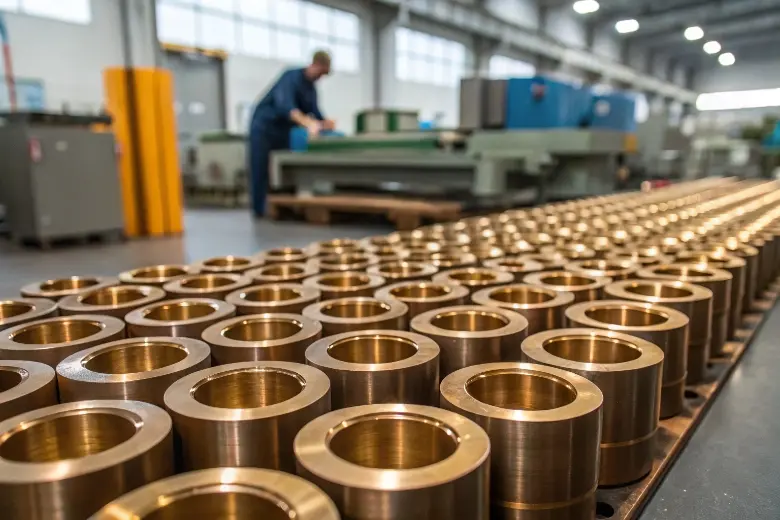
Are you struggling to choose between bronze and brass for your bushings? This choice impacts machine life and performance, so getting it right is crucial for avoiding unnecessary downtime.
The best choice depends on your specific needs. Bronze bushings are ideal for high-load, high-wear, and low-speed applications. Brass bushings are a great, cost-effective option for light-duty applications where lubrication is consistent and loads are low.
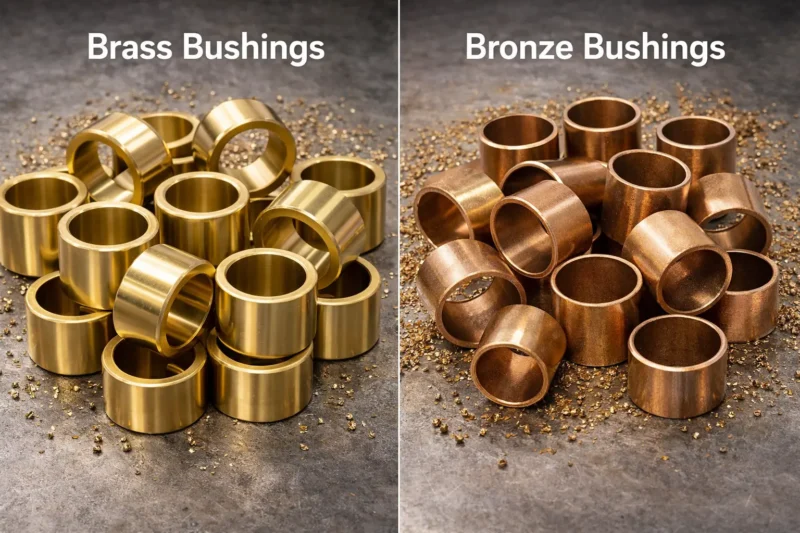
I've been in the bearing manufacturing[^1] business for a long time, and this is one of the most common questions we get from engineers and procurement managers. On the surface, bronze and brass seem similar. They are both copper-based alloys. But their performance in the real world is completely different. Choosing the wrong one can lead to premature failure, while the right one can keep a machine running smoothly for years. Let's break down the key differences so you can make an informed decision that saves you time and money.
Does Your Application Involve Heavy Loads?
Using a bushing that can't handle the machine's load is a recipe for disaster. It leads to rapid wear, deformation, and eventually, catastrophic failure and expensive downtime.
For heavy loads, high impact, or shock loading, you must choose bronze bushings. For light-to-medium loads with consistent speeds, standard brass bushings are often a more cost-effective choice.
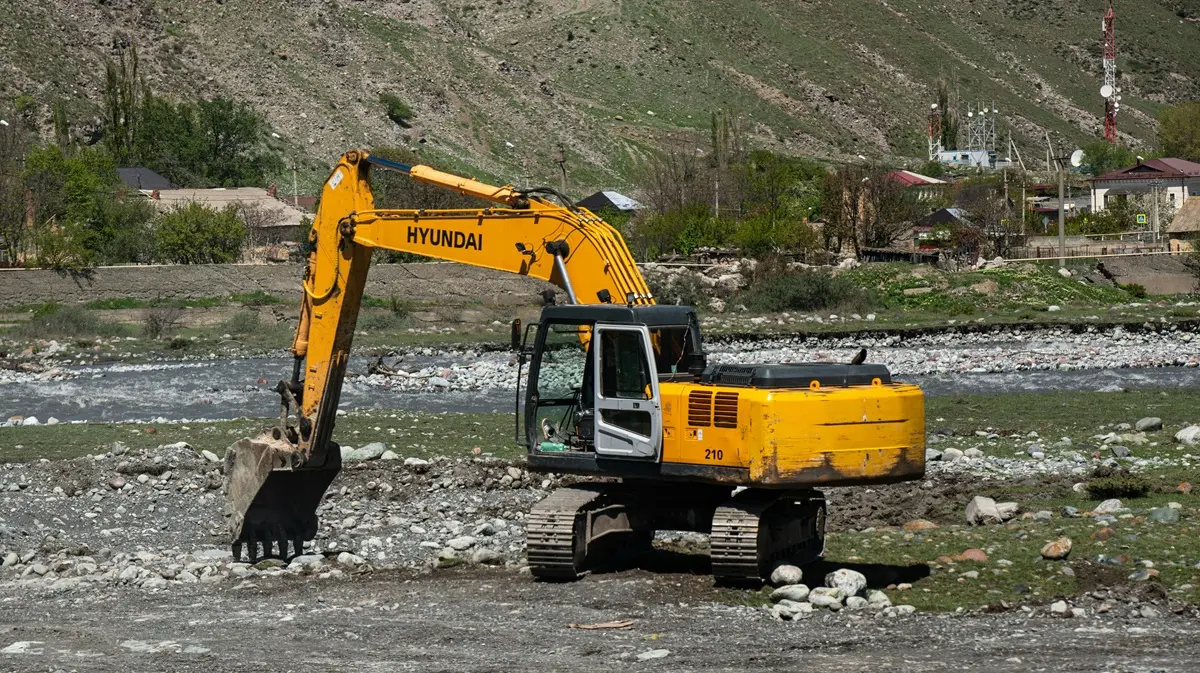
The main difference here comes down to the alloying elements. Bronze is primarily copper alloyed with tin, aluminum, or manganese. These elements give bronze superior strength and wear resistance. It can take a beating. This is why we see bronze bushings used in the toughest jobs, like the pivot points on an excavator arm or in heavy industrial presses. They are designed to withstand constant high pressure and sudden impacts without deforming or wearing out quickly.
Brass, on the other hand, is copper alloyed with zinc. Standard brass is softer and not as strong as most bronze alloys. It works perfectly well in applications with lower stress, like in small electric motors or light-duty conveyor systems. There is an exception, though: high-strength brass. This special type of brass contains additional elements that significantly increase its strength, allowing it to handle heavier loads, sometimes rivaling bronze.
Material Selection Based on Load
| Load Condition | Recommended Material | Why? |
|---|---|---|
| Light Load | Standard Brass | Most cost-effective, easy to machine. |
| Medium Load | High-Strength Brass / Bronze | Brass can work if lubrication is good; bronze offers more safety margin. |
| Heavy Load | Bronze (e.g., Tin Bronze) | Excellent compressive strength and wear resistance[^2]. |
| Impact/Shock Load | Bronze (e.g., Aluminum Bronze) | High toughness and resistance to deformation under sudden force. |
How Important Is Lubrication and Maintenance?
Forgetting to lubricate a bushing can destroy it in hours. This seizes the shaft, stops production, and creates a massive headache that could have been easily avoided.
If you can lubricate the bushing regularly, brass is a viable option. For maintenance-free operation or hard-to-reach locations, self-lubricating bronze[^3] bushings are the superior choice.
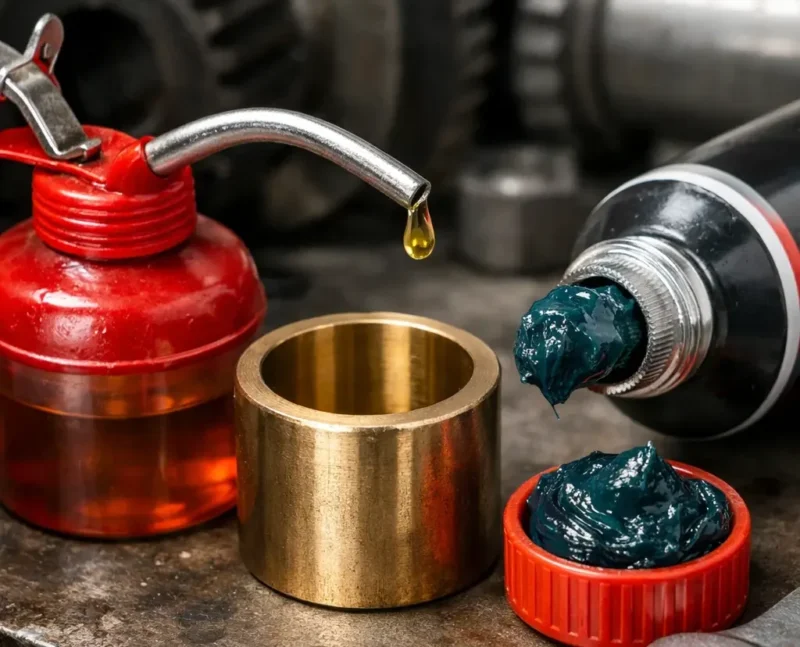
Let's dive deeper into how lubrication works with these materials. Most standard brass bushings rely on an external source of grease or oil. We often machine them with grooves and holes on the inside surface. These features act as reservoirs, holding grease and helping to distribute it evenly across the shaft as it rotates. This system is effective, but it requires a consistent maintenance schedule. Someone has to remember to apply the grease.
Bronze offers much more flexibility. You can get bronze bushings, like wrapped bronze (CuSn8), that also have oil pockets or grooves for external lubrication. But the real advantage of bronze is its ability to be self-lubricating. There are two common types we produce:
- Sintered Bronze: We make these by pressing metal powder into a shape and heating it. This creates a porous structure, like a sponge, that we then impregnate with oil. When the bushing heats up or is put under pressure, it releases a thin film of oil onto the shaft.
- Graphite-Plugged Bronze: For these, we drill holes into a solid bronze bushing and press solid graphite plugs into them. Graphite is a fantastic dry lubricant, especially in high-temperature environments where oil or grease would simply burn off.
Lubrication Strategy Comparison
| Bushing Type | Lubrication Method | Best For | Maintenance Level |
|---|---|---|---|
| Standard Brass | External (Grease/Oil) | Applications where regular maintenance is easy. | High |
| Wrapped Bronze | External or Self-Lubricating (Oil Pockets) | Medium-to-heavy loads with some lubrication. | Medium |
| Sintered Bronze | Self-Lubricating (Oil Impregnated) | Maintenance-free, light-to-medium loads. | None |
| Graphite-Plugged Bronze | Self-Lubricating (Solid Graphite) | High-temperature or maintenance-free applications. | None |
Will Your Bushing Operate in a Harsh Environment?
Placing the wrong bushing in a corrosive or high-heat environment is asking for trouble. It can lead to seized parts, unexpected failures, and emergency repairs in difficult conditions.
For corrosive environments like saltwater, aluminum bronze is an excellent choice. For high-temperature applications, graphite-plugged bronze bushings are ideal because the solid lubricant won't burn away.
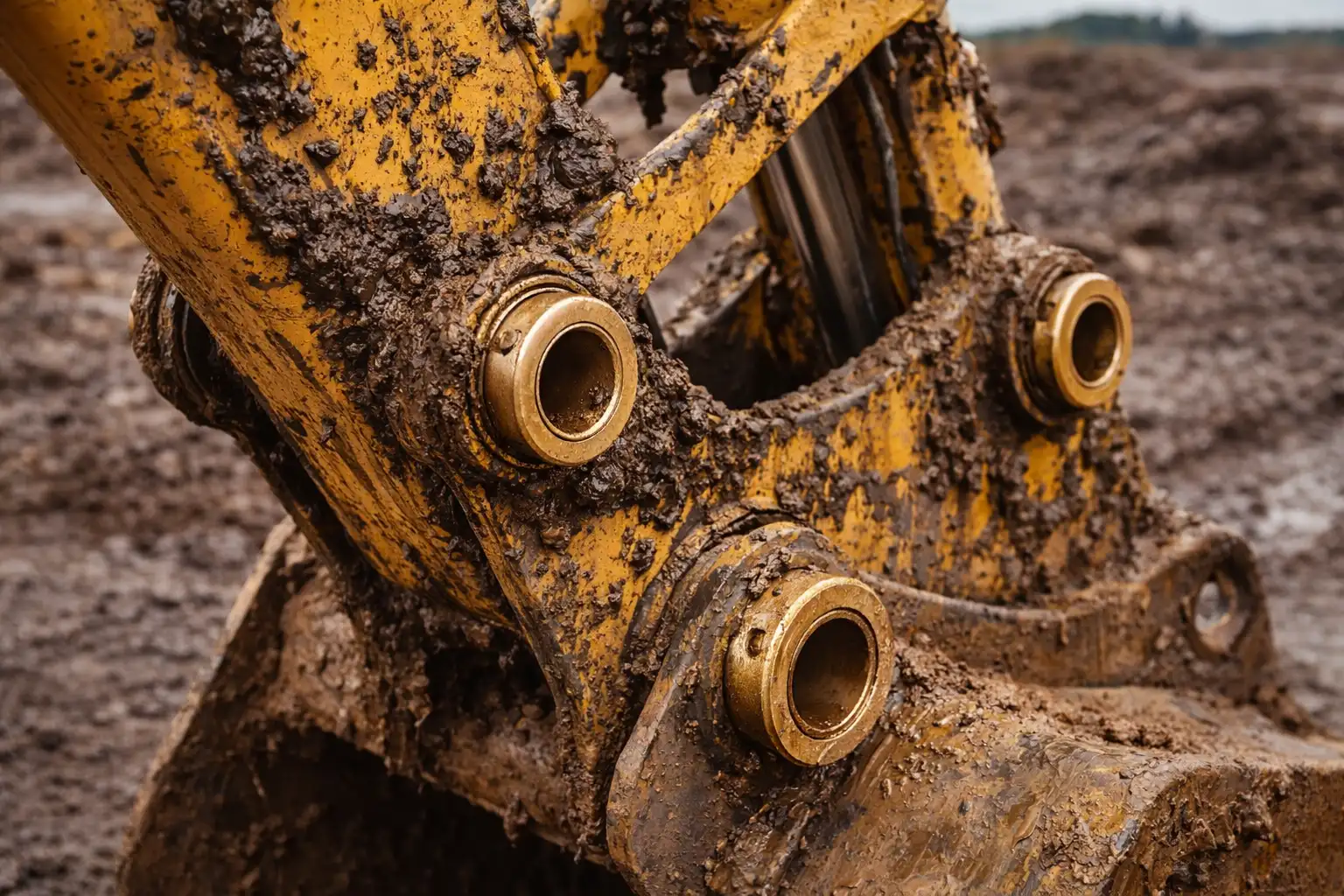
The operating environment is a critical factor that many people overlook. Standard brass offers decent corrosion resistance for general atmospheric conditions, but it can struggle with certain chemicals or saltwater. This is where specific bronze alloys really shine. Aluminum bronze, for example, is one of our go-to materials for marine applications. It forms a tough, protective oxide layer that makes it highly resistant to corrosion from seawater. We supply these for ship rudder systems and offshore equipment.
Temperature is another major challenge. As I mentioned earlier, standard oil and grease break down at high temperatures. If your bushing is in an oven, a furnace, or near a hot engine exhaust, a standard lubricated brass or bronze bushing will fail quickly. The lubricant will either liquefy and run out or burn into a hard, abrasive carbon residue. This is precisely the problem that graphite-plugged bronze bushings solve. Graphite is stable at temperatures far beyond the limits of oil, providing continuous dry lubrication to keep parts moving freely in extreme heat, such as in the molds for steel casting.
Environmental Performance Guide
| Environment | Good Choice | Better Choice | Best Choice |
|---|---|---|---|
| General Industrial | Standard Brass | Tin Bronze | - |
| Marine / Saltwater | - | Tin Bronze | Aluminum Bronze |
| High Temperature (>150°C) | - | - | Graphite-Plugged Bronze |
| Chemical Exposure | (Depends on chemical) | (Depends on chemical) | Custom Alloy (Consult Us) |
Are You Focused on Upfront Cost or Total Lifecycle Value?
Choosing the cheapest bushing available seems like an easy way to save money. But this often leads to much higher costs down the road from frequent replacements and lost production.
Standard brass bushings[^4] typically have a lower initial purchase price. However, in demanding applications, bronze bushings provide a lower total cost of ownership due to their longer life and reduced maintenance needs.
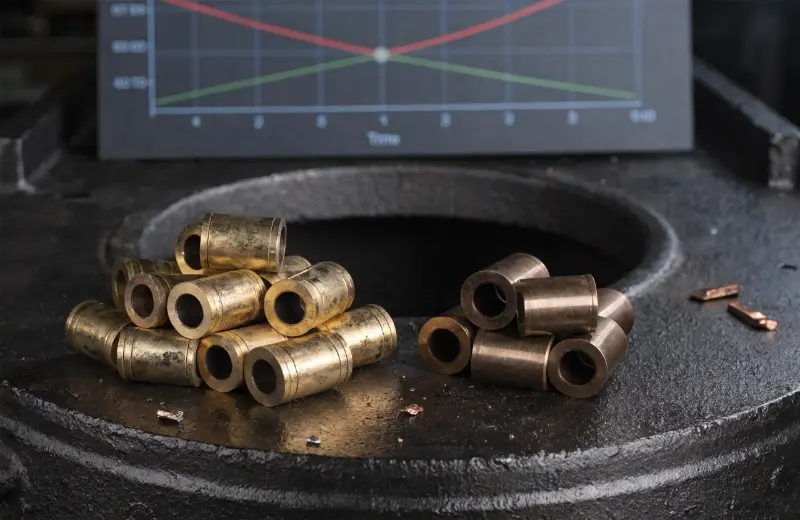
This is a conversation I have with customers all the time. It's about looking beyond the initial invoice and considering the Total Cost of Ownership (TCO). Yes, on a per-unit basis, a standard brass bushing is almost always cheaper to buy. Zinc is less expensive than tin, and brass is generally easier to machine, which lowers our production costs. So, if you're looking at a price list, brass looks very attractive.
But what happens after a year of operation in a demanding environment, like a rock crusher? The cheaper brass bushing may have already been replaced two or three times. Each replacement involves not just the cost of the new part, but also the labor to install it and, most importantly, the cost of the machine being out of service. When you add all that up, the "cheap" bushing becomes very expensive. A properly specified bronze bushing, while costing more upfront, might run for years in the same application with zero maintenance. This is why focusing on TCO is so important. It ensures you are choosing the most economically sound solution for the long term, not just the cheapest one today.
If you are not sure about your operating conditions, we can provide material selection advice and custom sizing services to ensure you get the right part.
Conclusion
The right choice between bronze and brass is about matching the material to your load, lubrication, and environment to get the best performance and lowest total lifecycle cost.
[^1]: Stay updated on the latest trends in bearing manufacturing to enhance your knowledge and practices. [^2]: Find out which materials provide superior wear resistance to enhance machinery longevity. [^3]: Find out how self-lubricating bronze bushings can reduce maintenance and improve efficiency. [^4]: Learn why brass bushings are cost-effective for light-duty applications and how they perform.