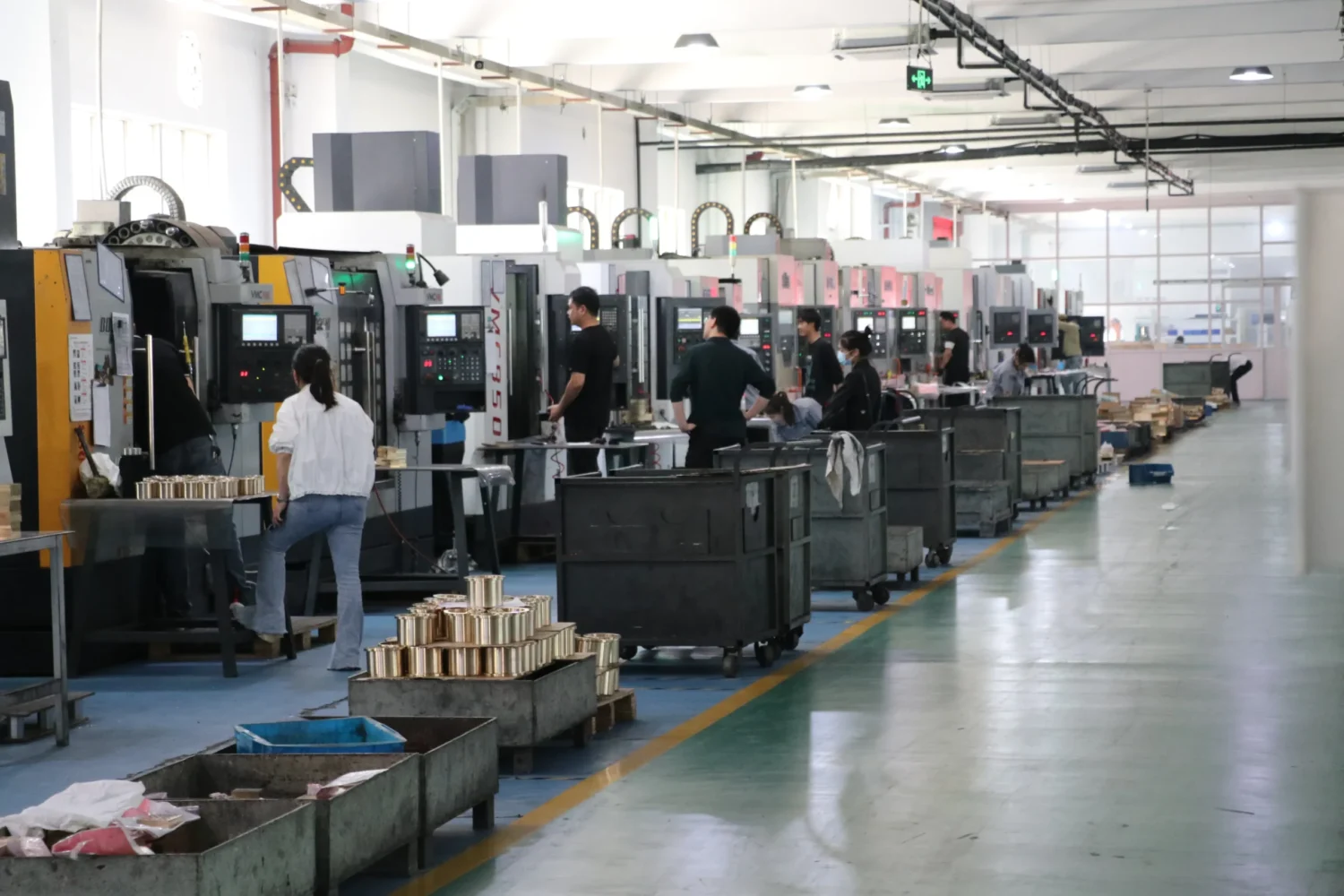
Are you tired of equipment failures caused by poor lubrication? Constant maintenance is costly and time-consuming. These bearings offer a simple, built-in solution that keeps your machinery running smoothly.
Oil-impregnated bronze bearings[^1] are made using a process called powder metallurgy[^2]. Bronze powder is first pressed into shape, then heated in a furnace. This creates a strong but porous part. Finally, oil is forced into these pores under a vacuum, creating a self-lubricating bearing.
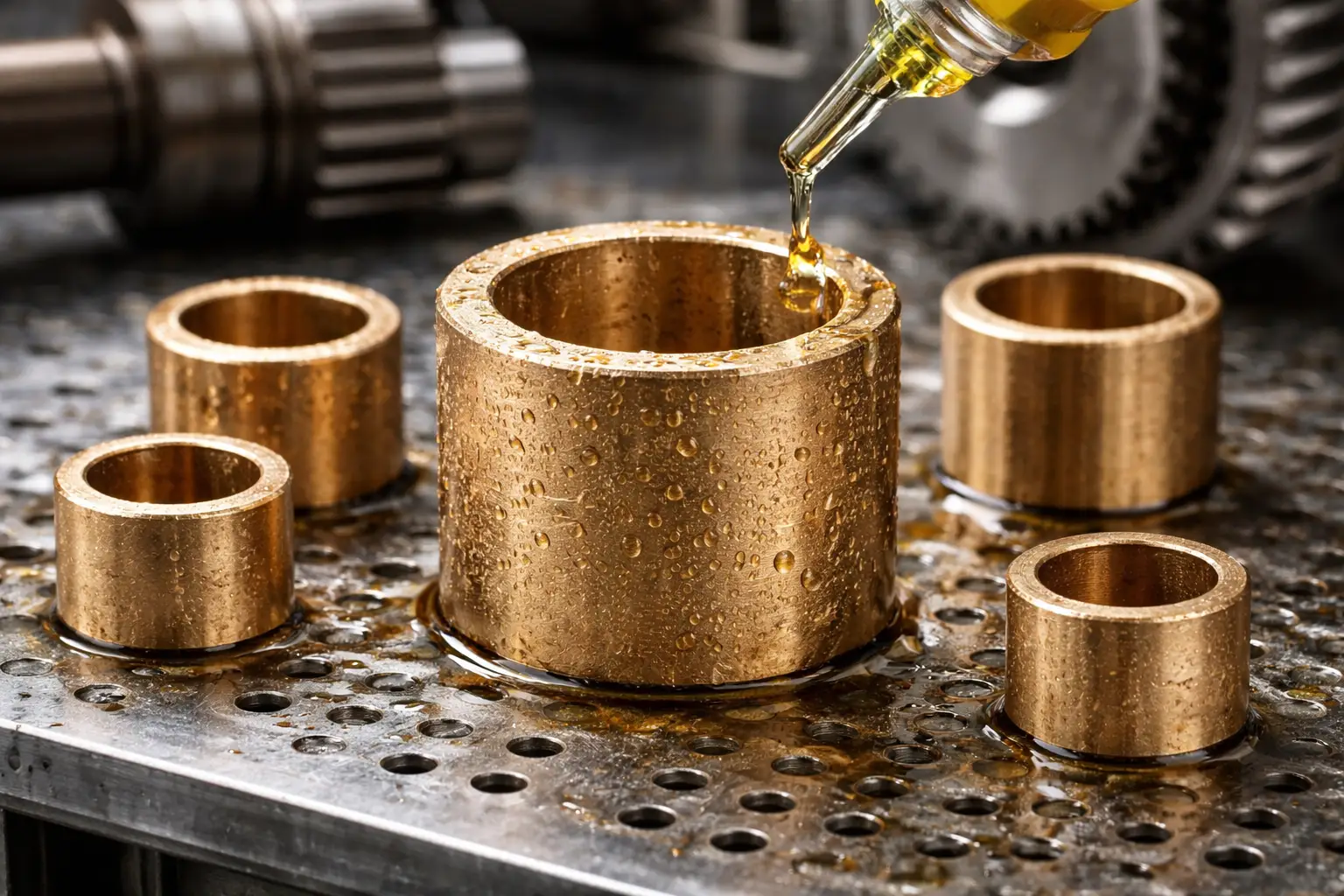
This manufacturing method is what makes these components so unique and reliable. It’s a precise process we have perfected at our factory to ensure every bearing performs exactly as it should. Understanding how they are made helps you see why they are such a powerful choice for so many applications. Let's walk through the process step-by-step.
How is the porous structure[^3] actually formed?
Getting oil inside a solid piece of metal seems impossible, right? And just making a weak, spongy part won't work. The solution is a precise, multi-step powder metallurgy process.
The porous structure is made by pressing bronze powder into the desired shape (compacting) and then heating it below its melting point (sintering). This fuses the metal particles together but leaves a network of tiny, connected pores that make up 15-30% of the bearing's volume.
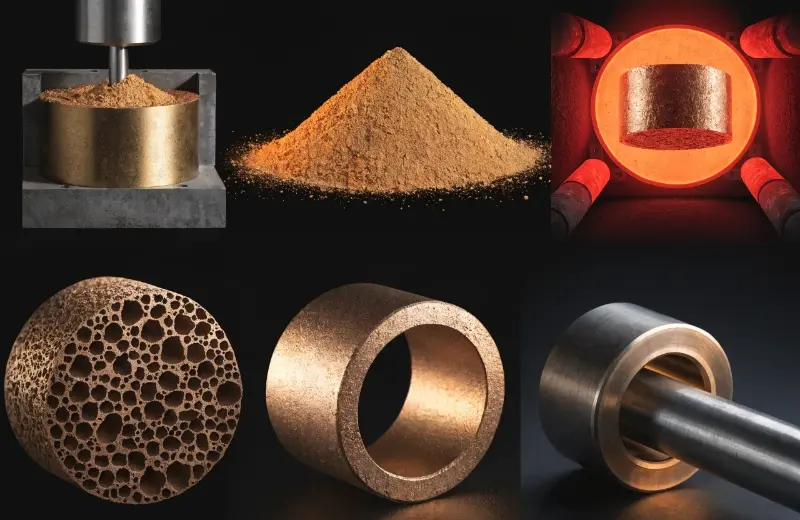
The creation of this strong, sponge-like structure is the most critical part of the entire process. It’s a balance between creating enough empty space to hold oil and ensuring the final part is strong enough to handle high loads. At our facility, we control this with incredible precision. It all starts with the right raw materials and follows a strict production sequence.
Step 1: Mixing the Right Powders
Everything begins with the raw material. We don't just use any bronze. We typically use a specific blend of copper and tin powder, often in a 90/10 ratio (CuSn10). This specific alloy provides excellent strength and wear resistance. The size and shape of the powder particles are also very important. They directly influence the final porosity and strength of the bearing. We carefully mix these powders to ensure a completely uniform blend. This guarantees that every bearing we produce has the same material properties from start to finish.
Step 2: Compacting into Shape
Next, the blended powder is fed into a high-pressure press. This press contains a precision-machined die, which is the exact shape of the final bearing. The powder is compacted under immense pressure, forcing the metal particles into close contact. This step, known as compacting, forms the "green" part. It has the shape and dimensions of the final product, but it's still fragile, like a tightly packed sandcastle. We carefully control the pressure to achieve a specific density, which is usually between 70% and 90% of a solid bronze part. This leaves just enough empty space between the particles for the next step.
Step 3: Sintering for Strength
The green parts are then moved to a high-temperature sintering furnace. They are heated to about 800-900°C, which is below the melting point of the bronze alloy. At this temperature, the metal particles don't melt. Instead, they fuse together at their contact points through a process called solid-state diffusion. This bonds the entire part into a single, strong metallic piece. The process is carefully timed to create a strong bond while preserving the network of interconnected pores. The result is a strong, rigid bearing that is also a metal sponge.
How does the oil get inside the bearing and stay there?
A porous bearing is just a metal sponge and is useless without oil. But you can't just dip it in oil and hope for the best. We use a specialized vacuum process.
We use vacuum impregnation to get oil inside. The bearings are placed in a vacuum chamber to remove all air from the pores. Then, oil is introduced. Atmospheric pressure forces the oil deep into the empty pores, ensuring the bearing is completely saturated with lubricant.
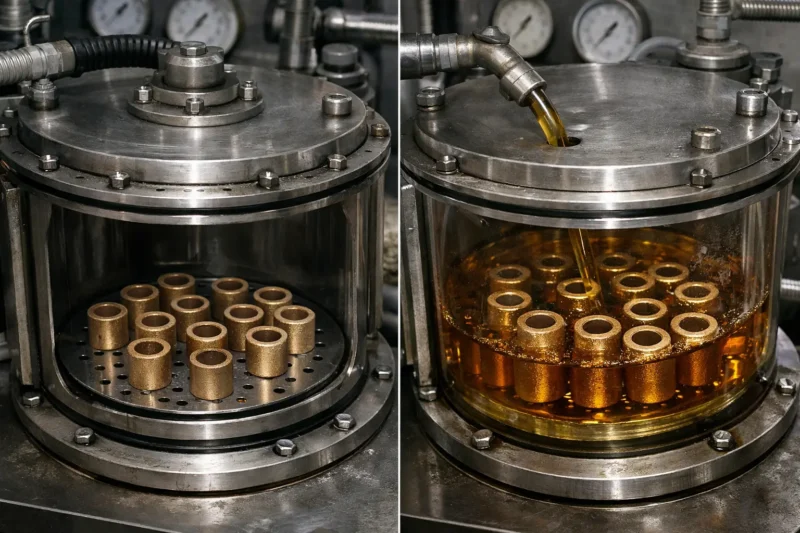
This step is what transforms the porous metal shell into a self-lubricating component. It’s not a simple soak; it’s a high-tech process designed to ensure that the oil penetrates every microscopic void within the bearing's structure. This stored oil is the secret to the bearing's long, maintenance-free life. The way it releases and reabsorbs the oil is what makes it so efficient.
The Vacuum Impregnation Process
After sintering, the bearings are strong but completely dry. We load batches of these bearings into a sealed chamber. A powerful pump removes all the air from the chamber. More importantly, it sucks all the air out from the network of pores inside each bearing. This creates a near-perfect vacuum within the metal's structure. Once the vacuum is stable, we flood the chamber with a high-quality lubricating oil that has been pre-heated to lower its viscosity. Finally, we release the vacuum. The returning atmospheric pressure acts like a giant piston, pushing the oil deep into the now-empty pores. This ensures up to 30% of the bearing's volume is filled with oil.
The Self-Lubricating Cycle
This is where the magic happens. When a shaft begins to rotate inside the bearing, the friction generates a small amount of heat. This heat causes the oil in the pores to expand slightly and become thinner. The oil then seeps out onto the bearing's surface, creating a perfect, low-friction oil film between the bearing and the shaft. The machine runs smoothly and quietly. When the machine stops, the bearing cools down. Capillary action, the same force that pulls water up a paper towel, draws the oil from the surface back into the pores. The oil is stored safely, ready for the next time the machine starts. It's a perfect closed-loop system.
Why choose this type of bearing for your equipment?
Choosing the right bearing can be difficult. The wrong choice can lead to frequent downtime and high maintenance costs. Oil-impregnated bearings offer a reliable, simple, and cost-effective solution for many B2B needs.
You should choose these bearings for any application that needs consistent lubrication without regular maintenance. They are ideal for reducing labor costs and increasing the reliability of equipment, especially when bearings are hard to access. Their mass-production efficiency makes them a top choice for OEMs.
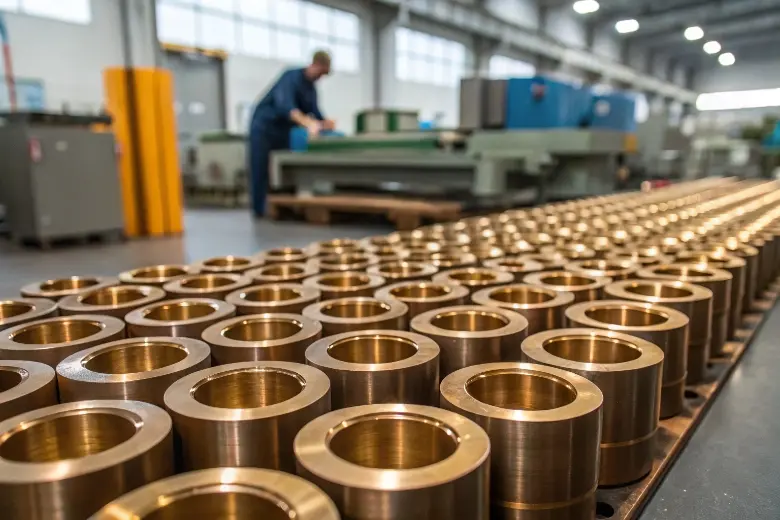
For equipment manufacturers and large industrial projects, reliability and total cost of ownership are everything. I've worked with many clients, from agricultural machinery OEMs to automation equipment producers, who switched to these bearings to solve persistent field-service issues. The benefits go beyond just "no more greasing." It's about building a more reliable and cost-effective product.
Key Advantages for OEMs and Bulk Buyers
The powder metallurgy process is fundamentally different from machining a bearing from solid bar stock. This difference creates several key advantages for businesses that need parts in volume.
| Feature | Sintered Bronze Bearing | Machined Solid Bronze Bearing |
|---|---|---|
| Manufacturing Process | Powder Metallurgy (Net-shape) | Machining from Bar Stock |
| Material Waste | Very Low | High (Swarf/Chips) |
| Cost at High Volume | Lower | Higher |
| Self-Lubrication | Inherent | Requires Grease Grooves & Oil |
| Maintenance | None / Very Low | Regular Greasing Needed |
Solving the Maintenance Puzzle
For an OEM, a product that requires less maintenance is a huge competitive advantage. Many machines have bearings located in places that are difficult or dangerous to access. Sintered bearings eliminate the need for grease nipples, grease lines, and scheduled lubrication. This reduces the lifetime operating cost of the machine and prevents failures caused by someone forgetting to grease a part. It simplifies the machine design and makes the end product more attractive to the final customer.
Performance, Consistency, and Cost
Because the lubrication is delivered automatically, performance is incredibly consistent. You get a stable oil film every time the machine runs, which means less friction, less heat, and a longer service life. For a company producing thousands of units, this consistency is vital. The powder metallurgy process is also highly automated and produces very little material waste, making it extremely cost-effective for high-volume production runs. This allows our OEM and distributor partners to secure a reliable supply of high-quality, price-competitive components for their products and projects.
Conclusion
Oil-impregnated bearings are made by sintering bronze powder and filling the resulting pores with oil. This creates a reliable, self-lubricating component perfect for high-volume production and maintenance-free applications.
[^1]: Discover the advantages of using oil-impregnated bronze bearings for your machinery and how they can enhance performance. [^2]: Learn about the powder metallurgy process and its significance in creating high-quality bearings. [^3]: Understand how a porous structure contributes to the efficiency and longevity of bearings.