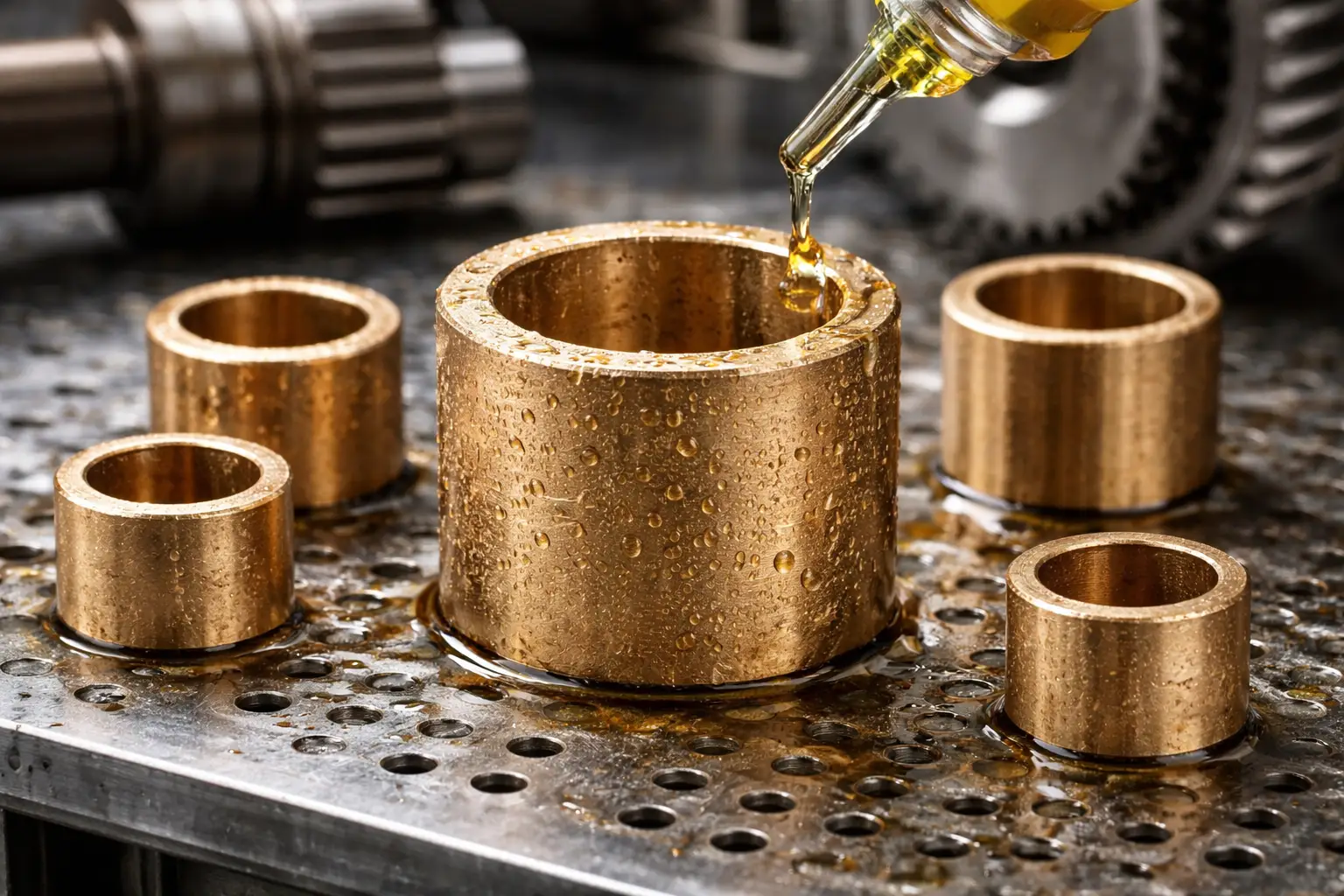
Tired of constant greasing and maintenance? Machine downtime costs you money. Self-lubricating bearings[^1] solve this by providing their own lubrication, keeping your equipment running smoothly without extra work.
Self-lubricating bearings work by using materials that either contain solid lubricants or are designed to hold oil. As the bearing operates, this lubricant is automatically released to the surface, reducing friction without needing external grease or oil.
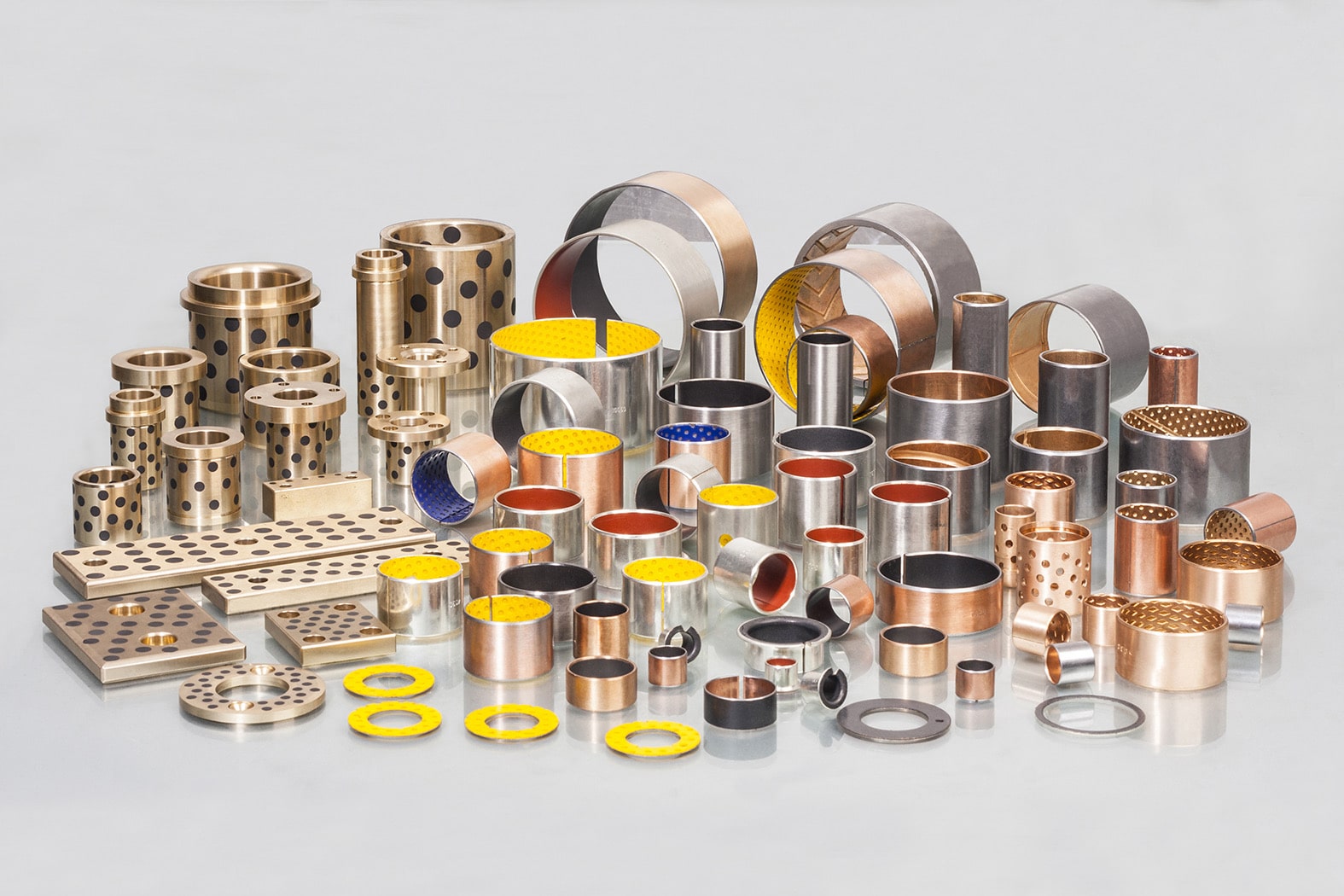
As a factory that has produced millions of these components, we see the inner workings every day. It's not magic, but clever engineering that makes them so reliable. These bearings are designed to handle tough jobs, from heavy construction equipment to precise automation systems. The core idea is simple: build the lubrication directly into the part. This eliminates a major point of failure and a constant maintenance task[^2]. Let's break down exactly how the most common types achieve this.
How do composite bushings[^3] lubricate themselves?
Friction is a constant enemy, wearing down parts and causing failures. This means you spend more time and money on replacements. Composite bushings use special polymer layers to solve this problem.
Composite bushings have a sliding layer made of materials like PTFE or POM. When a shaft rotates, a very thin film of this polymer transfers to the shaft's surface, creating a low-friction barrier[^4] that lubricates the connection.
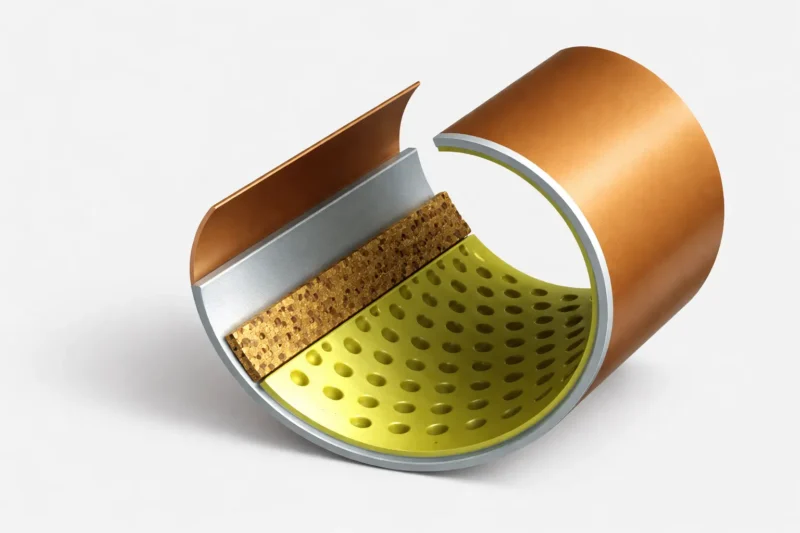
The real genius of a composite bushing is in its layered structure. It’s not just a piece of plastic. We start with a strong steel backing for support. On top of that, we sinter a thin layer of porous bronze. This bronze layer acts like a strong anchor for the final, most important part: the self-lubricating overlay. This overlay is typically a mix of PTFE (Teflon[^5]) or POM (Acetal) with fillers. When you first run the machine, a small amount of this material transfers from the bushing to the shaft. This creates a solid lubricant film that separates the two metal surfaces. From that point on, the shaft is essentially riding on this slick, low-friction film, not on the bushing itself. This is why they can run completely dry, without a single drop of grease.
The Magic of Material Transfer
The process is simple but very effective. The key is establishing that initial transfer film.
| Material | Key Feature | Common Use Case |
|---|---|---|
| PTFE | Extremely low friction | Dry running, high-speed, low-load applications |
| POM | High wear resistance | Greased or oiled applications, high-load, slow-speed |
This design means the bushing lubricates itself for its entire service life.
Are bronze bushings[^6] also self-lubricating?
High-load jobs put immense stress on bearings. Keeping them lubricated under this pressure is a major challenge. Bronze bushings are a classic solution, combining strength with built-in lubrication features.
Many bronze bushings are designed to be self-lubricating by incorporating grooves, pockets, or holes. These features are packed with grease during installation, which is then distributed during operation to provide continuous lubrication.
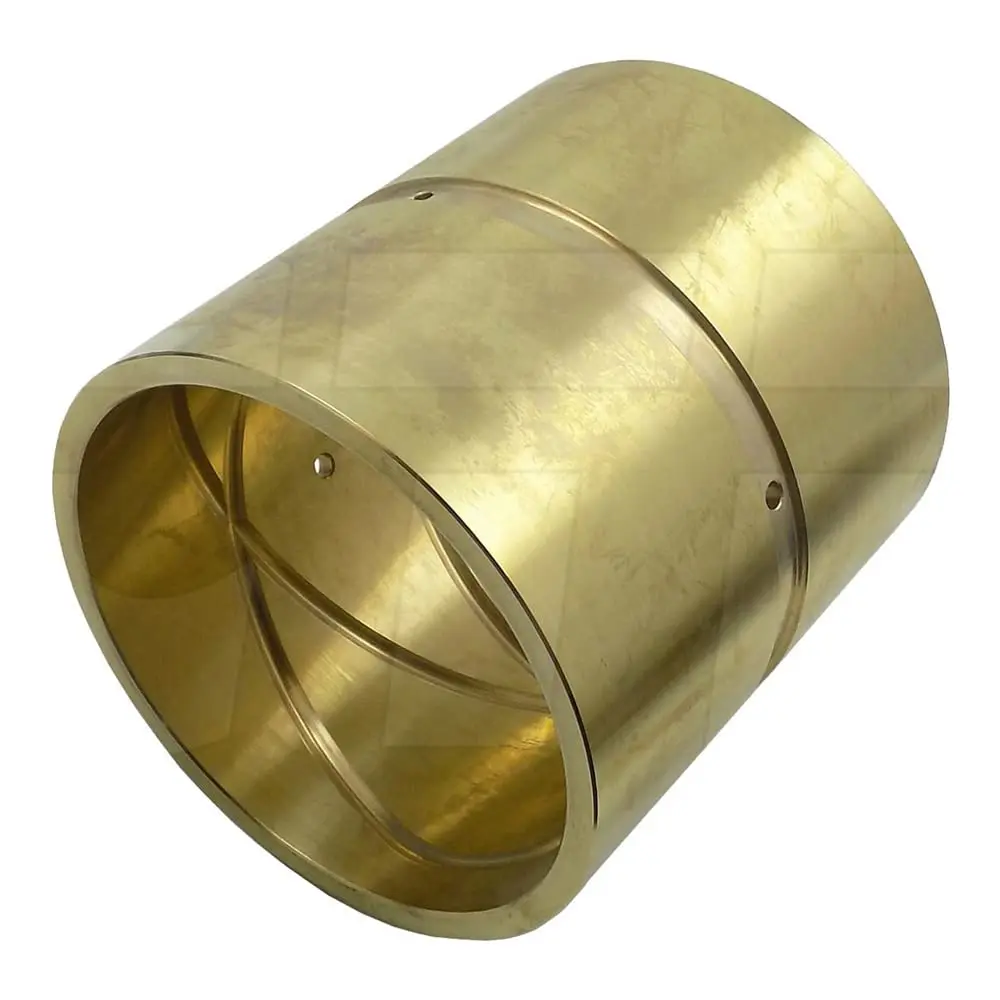
When people think of bronze bushings, they often think of solid metal. But the most effective ones are engineered for lubrication. At our factory, we don't just machine a simple cylinder. We precisely cut patterns into the inner surface. These aren't for decoration; they are lubricant reservoirs. When an engineer installs one of our bronze bushings, they pack these grooves and pockets[^7] with grease. As the shaft begins to turn, the motion and a small amount of heat help draw the grease out of the reservoirs and spread it evenly across the entire surface. This creates a stable hydrodynamic film[^8] that separates the shaft from the bearing, drastically reducing friction and wear. So, while they need grease initially, they are designed to hold and manage it over a long period, which is a form of self-lubrication.
More Than Just Metal: The Role of Grooves and Pockets
The design of the groove pattern is critical for performance.
| Groove Pattern | Description | Best For |
|---|---|---|
| Circular Groove | A simple ring in the center. | Slow-speed, oscillating movements. |
| Figure Eight | A continuous figure-eight pattern. | Distributes grease well in both directions. |
| Straight Groove | A linear groove along the axis. | Good for linear motion. |
| Oil Pockets | Indentations instead of grooves. | Traps grease for slow, high-load jobs. |
These features ensure the lubricant is always where it needs to be, right at the point of contact.
What makes sintered bearings[^9] self-lubricating?
Small devices like fans and motors need bearings that are quiet and last a long time. Traditional bearings can be noisy and need frequent oiling. Sintered bearings solve this with a unique, oil-filled structure[^10].
Sintered bearings are made from metal powder that is pressed and heated to create a porous, sponge-like structure. This structure is then filled with oil, which it releases during operation to lubricate the shaft.
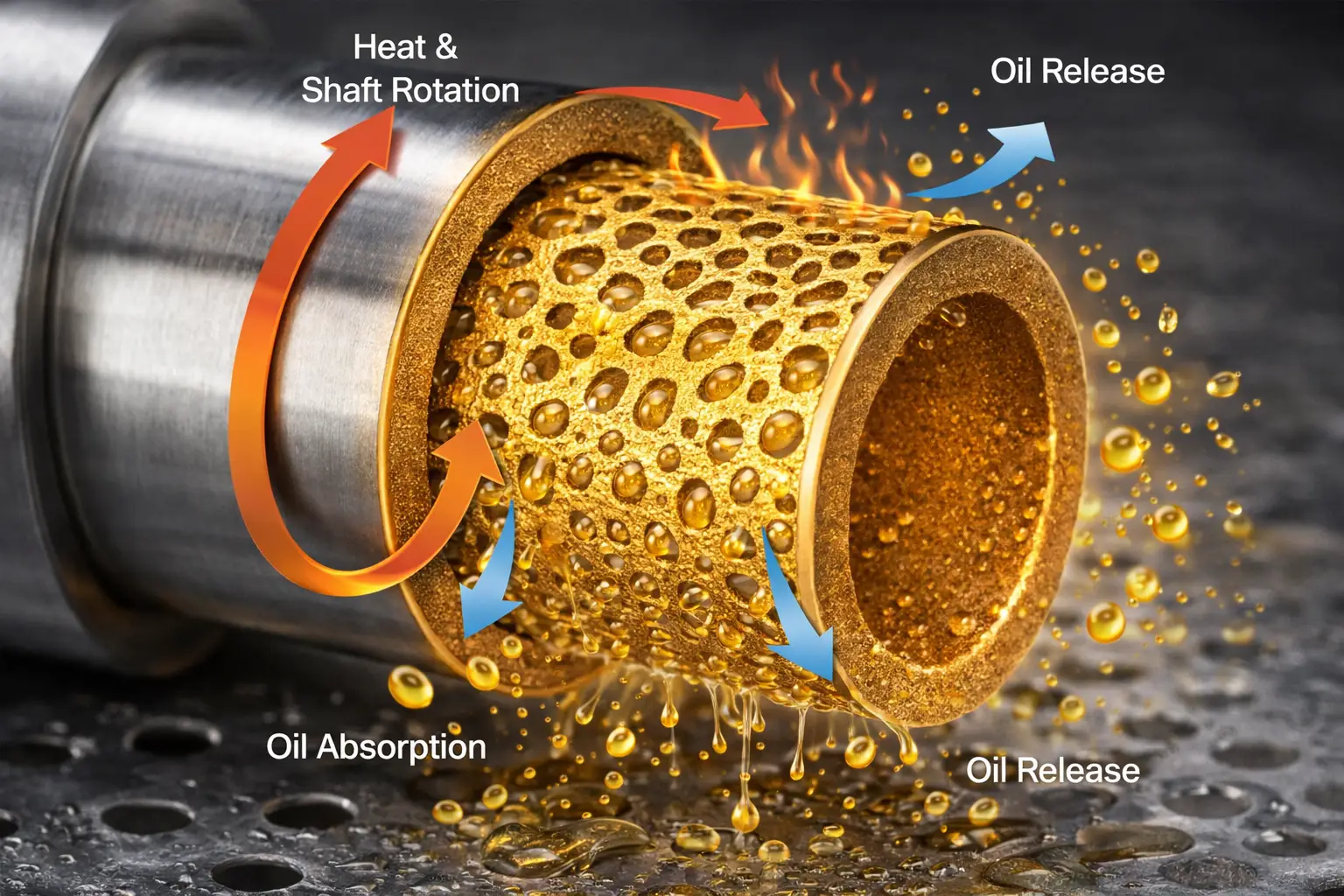
The manufacturing process for sintered bearings is fascinating. We start with a very fine metal powder, usually a bronze or iron alloy. We pour this powder into a die and compact it under extreme pressure to form the shape of the bushing. Then, we move it to a furnace for sintering. We heat the part to just below its melting point. This fuses the metal particles together but leaves a network of tiny, interconnected pores throughout the entire structure, making up about 20-30% of its volume. The final step is oil impregnation. We place the bearings in a vacuum chamber, remove all the air from the pores, and then flood the chamber with a high-quality lubricating oil. The vacuum pulls the oil deep into the bearing's structure. When the bearing is in use, the heat from friction causes the oil to expand and seep out onto the surface, providing perfect lubrication. When it stops and cools, the capillary action of the pores draws the oil back in, ready for the next use.
A Sponge Made of Metal
This "oil-filled sponge" design is incredibly efficient and is the reason sintered bearings are so common in small machinery. It's a closed-loop lubrication system[^11].
- Start-up: Shaft begins to rotate.
- Operation: Friction generates slight heat.
- Lubrication: Heat causes oil in pores to expand and flow to the surface.
- Cool-down: Shaft stops, bearing cools.
- Re-absorption: Capillary action pulls the surface oil back into the pores.
This cycle repeats thousands of times, making the bearing self-sufficient for a very long time.
Conclusion
Self-lubricating bearings use smart designs like polymer layers, grease reservoirs, or oil-filled metal to eliminate manual greasing. This makes machines more reliable, quieter, and much easier to maintain.
[^1]: Explore this link to understand the innovative technology behind self-lubricating bearings and their benefits. [^2]: Find out how self-lubricating bearings can save time and costs in maintenance. [^3]: Learn about the unique design of composite bushings and how they reduce friction effectively. [^4]: Discover how low-friction barriers enhance the performance and longevity of bearings. [^5]: Explore this link to understand how Teflon enhances performance and longevity in self-lubricating bearings. [^6]: Investigate the self-lubricating features of bronze bushings and their applications. [^7]: Understand the importance of groove patterns in ensuring effective lubrication. [^8]: Learn about the role of hydrodynamic films in reducing friction and wear in bearings. [^9]: Explore the fascinating manufacturing process of sintered bearings and their benefits. [^10]: Learn about the mechanics of oil-filled structures and their efficiency in lubrication. [^11]: Explore the concept of closed-loop lubrication systems and their advantages in machinery.