Struggling to find the right bushing size? This challenge wastes time and delays projects. Choosing the right manufacturing partner is the key to solving this problem and getting perfect-fit parts.
To find the right bronze bushing size, you must first determine your required Inner Diameter (ID)[^1], Outer Diameter (OD)[^2], and Length. Then, decide if a standard metric/inch size works or if a custom size is needed for a perfect fit with your equipment.
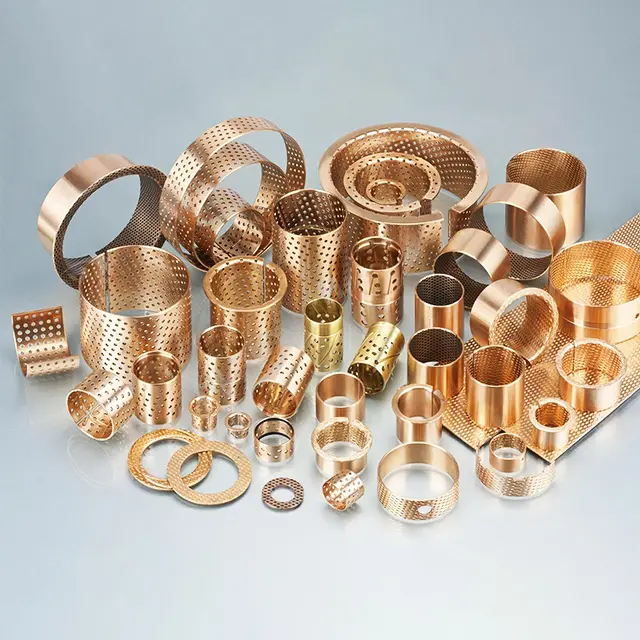
Finding the right part can feel overwhelming. I've spoken with many procurement managers, like Sofia from the Middle East, who spend weeks searching for a specific bushing size. They get stuck trying to match dimensions, only to find that suppliers don't have what they need or have high minimum order quantities for custom parts. It’s a common headache in the B2B world. But it doesn't have to be this complicated. The journey to finding the perfect bushing starts with understanding a few basic choices. Let's break it down so you can source parts with confidence and keep your projects moving forward.
Metric or Inch Sizes: Which Bronze Bushing Do You Need?
Is the choice between metric and inch sizes[^3] causing confusion for your international projects? The wrong choice leads to parts that don't fit, causing delays and costly reorders.
To choose correctly, check your equipment's original design specifications. Designs from Europe and Asia typically use metric (mm) sizes. Designs from North America often use the imperial (inch) system. A flexible manufacturer can easily produce parts for both systems.
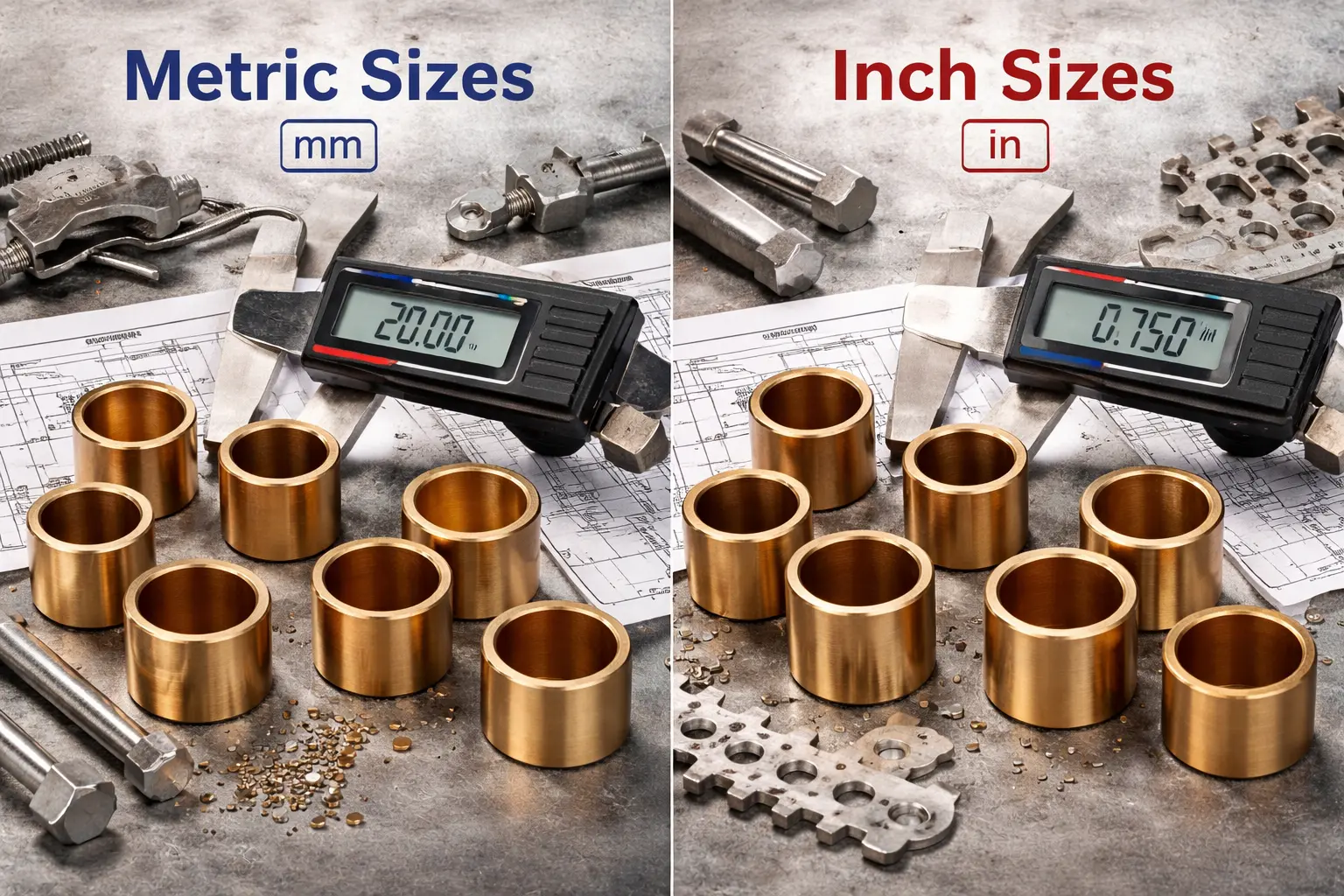
When we get an inquiry for a bronze bushing, one of the first questions we ask is about the unit of measurement. It seems simple, but it's a critical detail. Mixing up millimeters and inches is a recipe for disaster in precision machinery. A part that's off by even a fraction of a millimeter won't assemble correctly.
Metric System (Millimeters)
The metric system is the global standard for most industries today. If you are an OEM in Europe or Asia, or if your equipment designs originate from these regions, you are almost certainly working with metric dimensions. All measurements are in millimeters (mm). This system is straightforward and makes calculations simple. As a factory, we produce millions of metric-sized bushings every year. It's our most common request.
Inch System (Imperial)
The inch system, also known as the imperial system, is still widely used in the United States and for older equipment designs from North America. Measurements are specified in fractions or decimals of an inch. While less common globally, it's essential for many of our clients, especially those in the agricultural machinery or classic automotive sectors. We have dedicated processes to manufacture inch-sized bushings with the same precision as our metric parts.
| Feature | Metric System | Inch System (Imperial) |
|---|---|---|
| Unit | Millimeter (mm) | Inch (in) |
| Common Regions | Europe, Asia, most of the world | North America, legacy equipment |
| Best For | Modern, international designs | US-based or older American designs |
| Our Capability | Full production and customization | Full production and customization |
Straight, Flanged, or Washer: Which Bushing Shape Fits Your Design?
You have the dimensions, but have you considered the shape? Choosing the wrong bushing structure can cause parts to wear out quickly and lead to equipment failure.
Choose a straight (sleeve) bushing for radial loads. Use a flanged bushing for both radial and light axial loads. Opt for a thrust washer when you only need to handle axial loads. The right shape depends on the forces in your application.
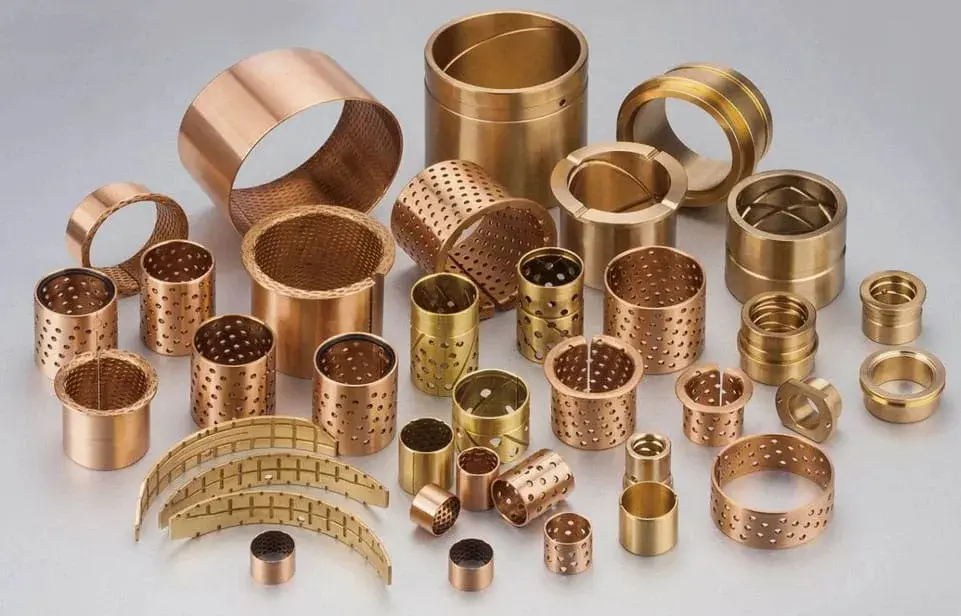
The size of a bushing is only part of the story. The shape is just as important because it determines how the bushing handles forces. A bushing's job is to manage loads between moving parts. These loads can be radial (pushing from the side) or axial (pushing from the end). Choosing the right shape ensures the bushing can do its job effectively and for a long time. As a manufacturer, we produce all common shapes to provide a complete solution.
Straight Bushings (Sleeve Bushings)
These are simple cylindrical sleeves. Their only job is to handle radial loads, like the force on a pin in a pivot point. They are the most common type of bushing and are used in countless applications where a shaft rotates inside a housing.
Flanged Bushings
A flanged bushing is a straight bushing with a lip or "flange" at one end. This flange acts as a built-in washer. It's designed to handle light axial loads, preventing the component from moving sideways. It's perfect for applications where you need to locate a part and support a rotating shaft at the same time.
Thrust Washers
These are flat, disc-shaped parts. Their sole purpose is to handle axial loads, also known as thrust loads. They are used between two rotating faces to prevent wear. Think of them as simple bearings for face-to-face contact.
| Bushing Type | Primary Load | Common Application |
|---|---|---|
| Straight Bushing | Radial | Pivot points, rotating shafts |
| Flanged Bushing | Radial & Axial | Wheel assemblies, guide posts |
| Thrust Washer | Axial | Gear sets, rotating platforms |
How Do You Choose the Right ID, OD, and Length for Your Bronze Bushing?
Picking bushing dimensions seems easy, but small mistakes can be very costly. A bushing that's too tight won't fit, and one that's too loose will cause vibration and damage.
Match the Inner Diameter (ID) to your shaft size, adding a small clearance. Match the Outer Diameter (OD) to your housing bore for a press-fit. Choose the Length based on the load-bearing surface area needed for your application.
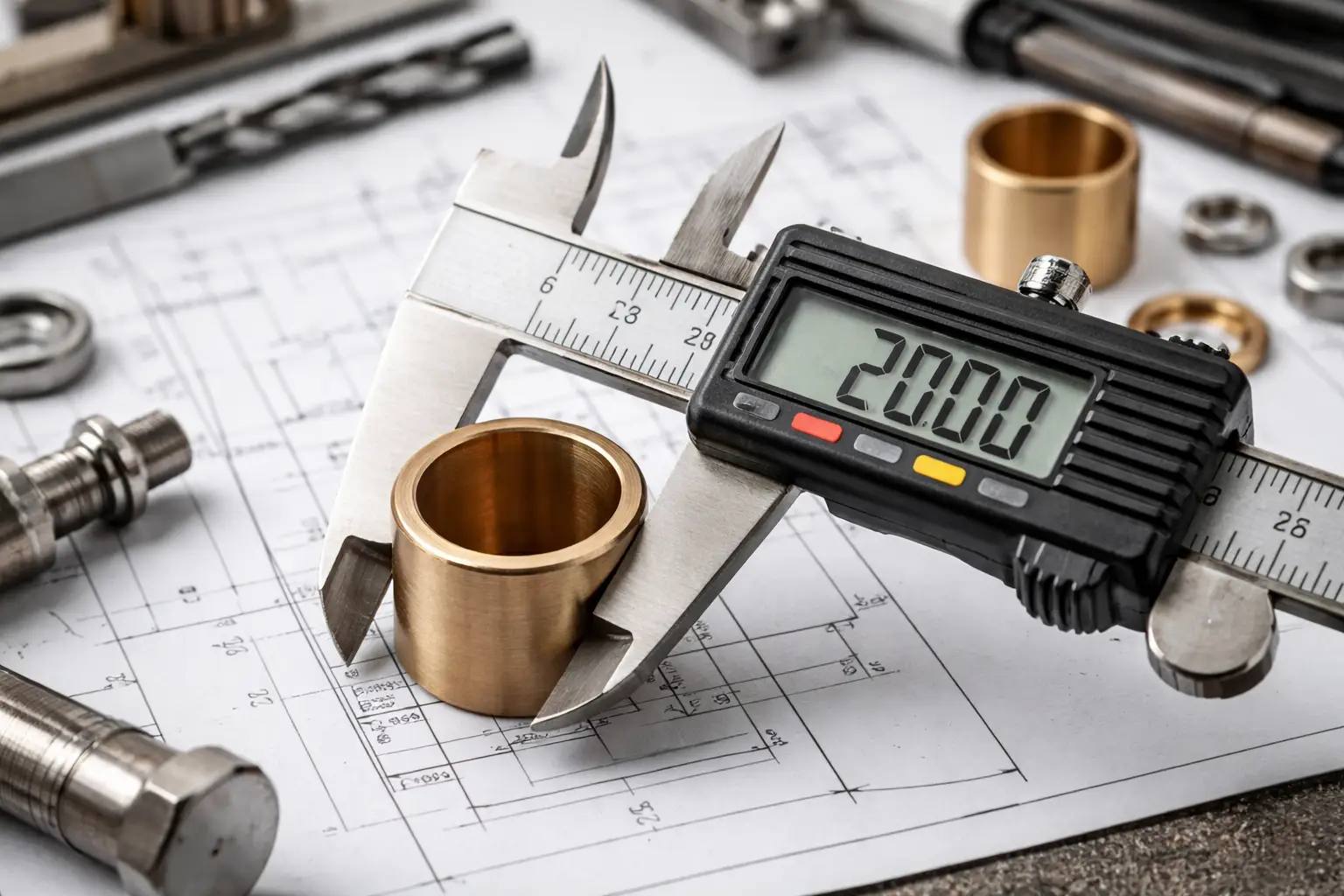
Getting the dimensions right is a science. It’s not just about making a part that fits; it’s about making a part that performs reliably for thousands of hours. For our OEM clients, this precision is non-negotiable. It’s the difference between a successful product and a warranty claim. Let’s look at the three critical dimensions one by one.
Inner Diameter (ID): The Shaft's Best Friend
The ID is the hole in the middle of the bushing. It must be slightly larger than the diameter of the shaft that will rotate inside it. This small gap, called running clearance, is essential. It allows a thin film of lubricant to form between the shaft and the bushing, which reduces friction and wear. The exact clearance depends on the application's speed, load, and temperature.
Outer Diameter (OD): The Housing's Grip
The OD is the measurement of the bushing's outer wall. In most cases, the bushing is held in place with a "press-fit" or "interference fit." This means the OD of the bushing is made slightly larger than the ID of the housing it fits into. When pressed in, the housing compresses the bushing, holding it firmly in place so it doesn't spin.
Length: The Load Bearer
The length of the bushing determines its load-carrying capacity. A longer bushing has more surface area to distribute the load from the shaft. This reduces the pressure on any single point (measured in PSI or MPa). For high-load applications, like the bushings in truck brake calipers that we produce, a sufficient length is critical to prevent premature wear and ensure safety.
Standard or Custom Bronze Bushings: Which is Better for Your Business?
Should you find a standard-sized bushing or get one custom-made? A standard part might be faster, but it could compromise performance. Custom parts are a perfect fit but seem more complex.
Standard sizes offer speed and lower costs, making them great for common repairs or prototypes. Custom sizes provide a perfect fit, maximizing equipment life and performance. For OEMs and long-term projects, customization is almost always the better long-term investment.
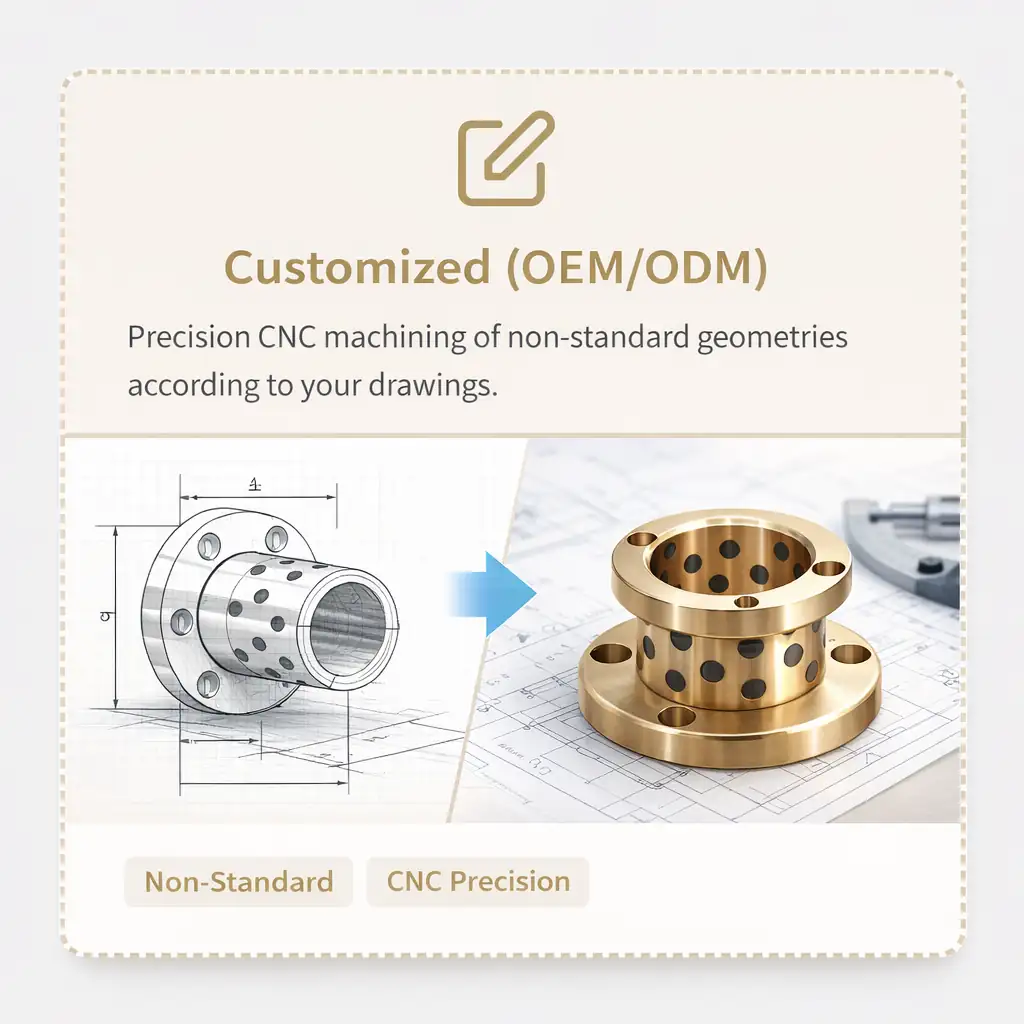
This is a conversation I have with B2B customers every day. The right choice depends entirely on your business goals. Are you trying to get a machine back online quickly, or are you designing a new product line that needs to be perfect? As a factory that does both, we see clear patterns in what our most successful clients choose.
For one-off repairs or general maintenance, a standard off-the-shelf size often makes sense. The priority is speed. However, for our core customers—OEMs, large-scale projects, and industrial distributors—customization is the standard. Why? Because "close enough" is not good enough when you are building thousands of units. A slight mismatch in size can lead to performance issues that damage a brand's reputation.
Most of our long-term partners, like Sofia, eventually move to fully custom solutions. They provide us with a drawing, and we manufacture a bushing that is perfectly optimized for their application. This ensures maximum performance, extends the life of their equipment, and simplifies their assembly process. Since we are the manufacturer, the process is surprisingly simple and cost-effective at scale.
| Factor | Standard Sizes | Custom Sizes |
|---|---|---|
| Fit | May require design compromises | Perfect fit for the application |
| Performance | Good | Optimized for maximum life |
| Lead Time | Fast (for in-stock items) | Longer for first order, then stable |
| Cost | Lower for small quantities | More cost-effective at scale |
| Best For | Repairs, prototypes, generic use | OEM production, long-term projects |
Conclusion
Finding the right bronze bushing size is simple when you know what to look for. Partner with a manufacturer who can deliver both standard and custom solutions for your needs.
---

[^1]: Measuring the ID correctly is crucial for ensuring a proper fit and optimal performance.
[^2]: The OD is essential for a secure fit; learn how to measure it accurately.
[^3]: Inch sizes are crucial for older equipment; knowing when to use them can prevent costly mistakes.