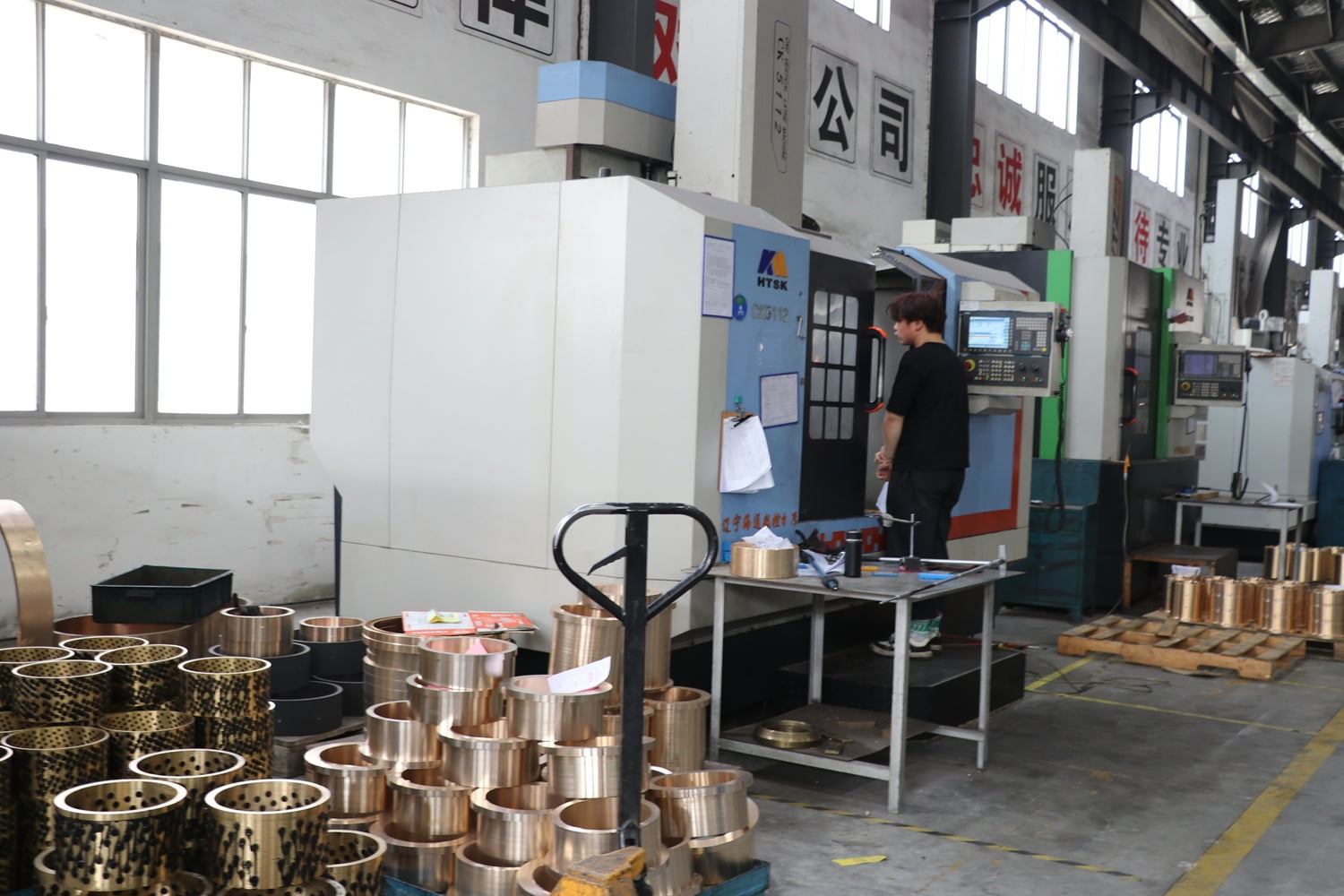
Confused by bearing terminology? Using the wrong name can lead to sourcing mistakes. Let's clarify what self-lubricating bearings[^1] are and what they are commonly called in the industry.
Self-lubricating bearings are often called bushings, plain bearings[^2], sleeves, or dry-running bearings. These names refer to bearings that operate without external lubrication, thanks to materials like PTFE[^3], POM[^4], or graphite embedded within their structure to reduce friction.
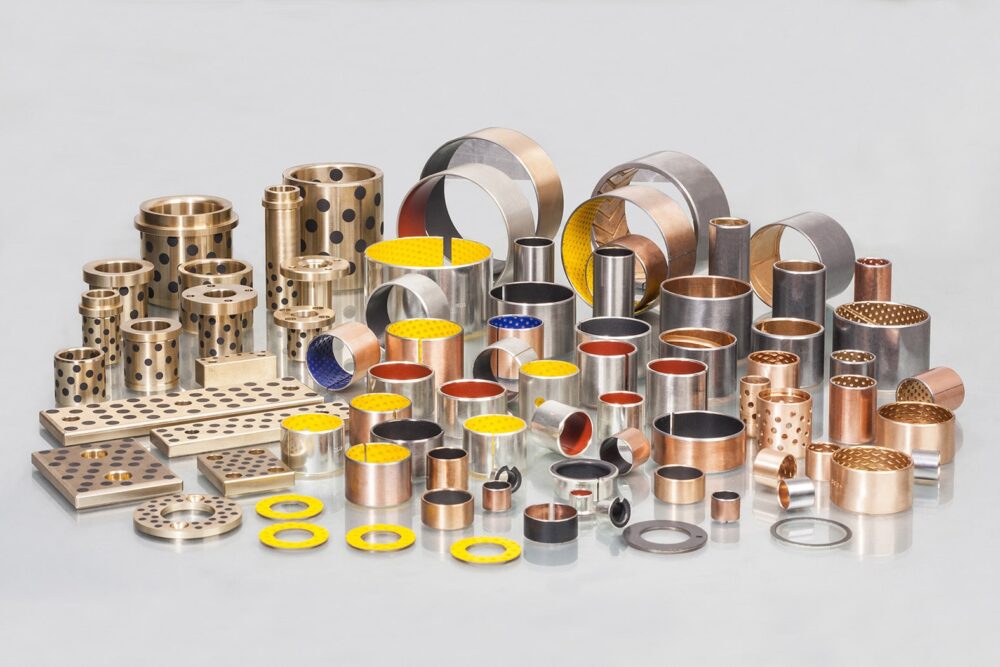
Understanding the different names is the first step. But the real question is why there are so many names. It all comes down to the different types and materials, each designed for a specific job. These variations in construction and material are what give rise to the different terms you hear. Let's explore these types to see how they got their names and what they do.
Why are composite bushings a popular type of self-lubricating bearing?
Need a maintenance-free bearing for your equipment? Traditional bearings require constant greasing, which leads to downtime and higher labor costs. Composite bushings offer a simple, self-lubricating solution.
Composite bushings are popular because they offer excellent wear resistance[^5] and low friction without needing oil or grease. Their layered structure, often with a PTFE or POM surface, provides reliable performance in dry-running conditions, which significantly reduces maintenance.
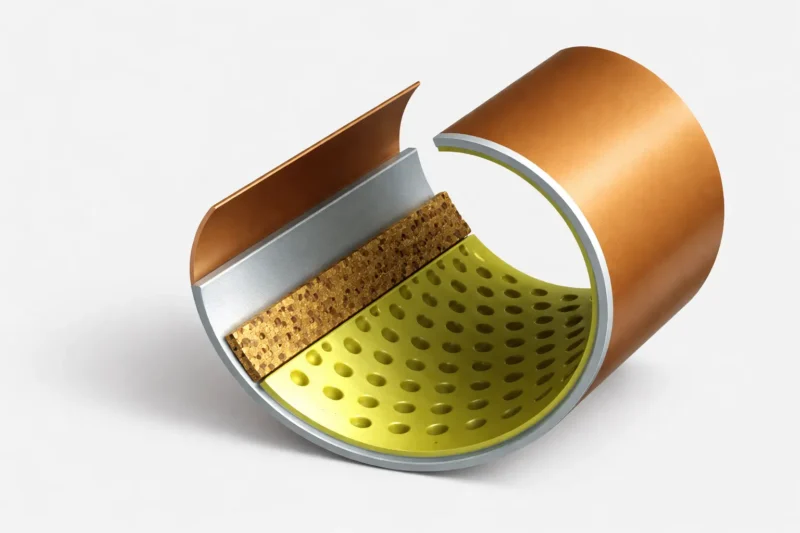
Composite bushings are one of the most common types we manufacture, and for good reason. Their performance comes from their unique multi-layer design. It's not just a single piece of material; it's an engineered system designed to handle specific loads and movements.
The Three-Layer Structure
The magic of a composite bushing is in its layers. First, you have a steel backing. This provides the structural strength and allows the bushing to be press-fit into a housing without deforming. Next is a middle layer, which is typically a porous sintered bronze. This layer serves two purposes: it bonds the polymer layer to the steel backing and it helps dissipate heat generated during operation. The final, innermost layer is the polymer, which is the actual sliding surface. This is usually made from Polytetrafluoroethylene (PTFE) or Polyoxymethylene (POM). As a factory, we pay very close attention to the bonding process between these layers. A weak bond is a point of failure, which is unacceptable for our OEM clients who depend on consistency.
| Feature | PTFE-Based Bushing | POM-Based Bushing |
|---|---|---|
| Common Name | DU, Dry Bearing | DX, Marginal Lubrication Bearing |
| Friction | Extremely Low | Low |
| Lubrication | For dry running only | Requires initial grease or oil |
| Wear Resistance | Good | Excellent |
| Max Load | High | Very High |
| Primary Use | Constant sliding, no lubricant | Intermittent motion, high loads |
Are bronze bushings[^6] always self-lubricating?
Choosing the wrong bronze bearing can lead to premature failure and equipment damage. Not all bronze is self-lubricating by nature, and understanding the difference is critical for your application.
Not all bronze bushings are truly self-lubricating. Wrapped bronze bushings often have oil pockets that require grease. Solid bronze bushings can be made self-lubricating by embedding solid lubricants[^7] like graphite plugs[^8] into the material.
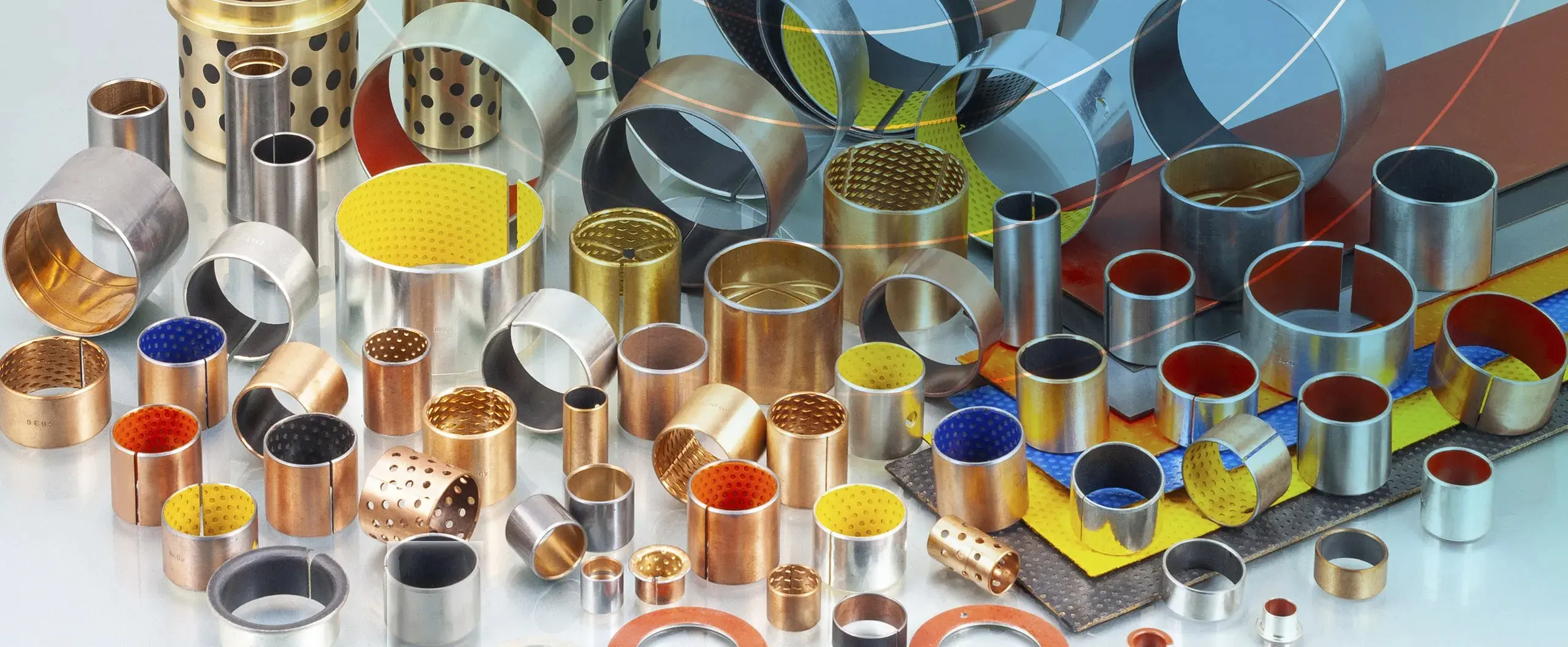
When a customer asks for a "bronze bushing," my first question is always about the application. The term is too broad. We need to know about the load, speed, and lubrication environment to recommend the right part. This is where the distinction between different types of bronze bushings becomes very important.
Wrapped Bronze Bushings
These are made from a flat bronze strip that is rolled into a cylinder. They are not inherently self-lubricating. Instead, their surface is machined with indentations, which can be diamond-shaped or circular pockets. These pockets act as reservoirs for grease. When the bearing is installed, it's packed with grease, which is then slowly released during operation. This is technically a form of marginal lubrication[^9], not true self-lubrication. I remember working with an agricultural equipment manufacturer who needed a robust solution for a pivot point on a harvester. We supplied them with a wrapped bronze bushing with a specific diamond groove pattern. It held the grease perfectly under heavy, dirty conditions, significantly extending their maintenance intervals.
Solid Bronze Bushings with Solid Lubricants
These are what most people mean when they ask for a self-lubricating bronze bushing. These parts are machined from a solid piece of cast bronze. Then, we drill holes into the bearing wall and press-fit plugs of solid lubricant, most commonly graphite. The graphite provides a continuous lubricating film as the shaft rotates. This design is perfect for high-load, low-speed applications, or in environments with very high temperatures where oil or grease would burn off.
| Type | Lubrication Method | Best For |
|---|---|---|
| Wrapped Bronze | Grease held in indentations | Medium-high loads, lubricated conditions |
| Solid Bronze w/ Graphite | Solid lubricant plugs | High loads, low speeds, high temperatures |
How do sintered bearings[^10] achieve self-lubrication?
Do your small motors or appliances seize up unexpectedly? The cause is often a failed bearing. Sintered bearings provide a unique, long-lasting lubrication solution for these precise applications.
Sintered bearings are self-lubricating because their metallic structure is porous. They are made from pressed metal powder and then impregnated with oil. The oil is held within the pores and released onto the bearing surface during operation.
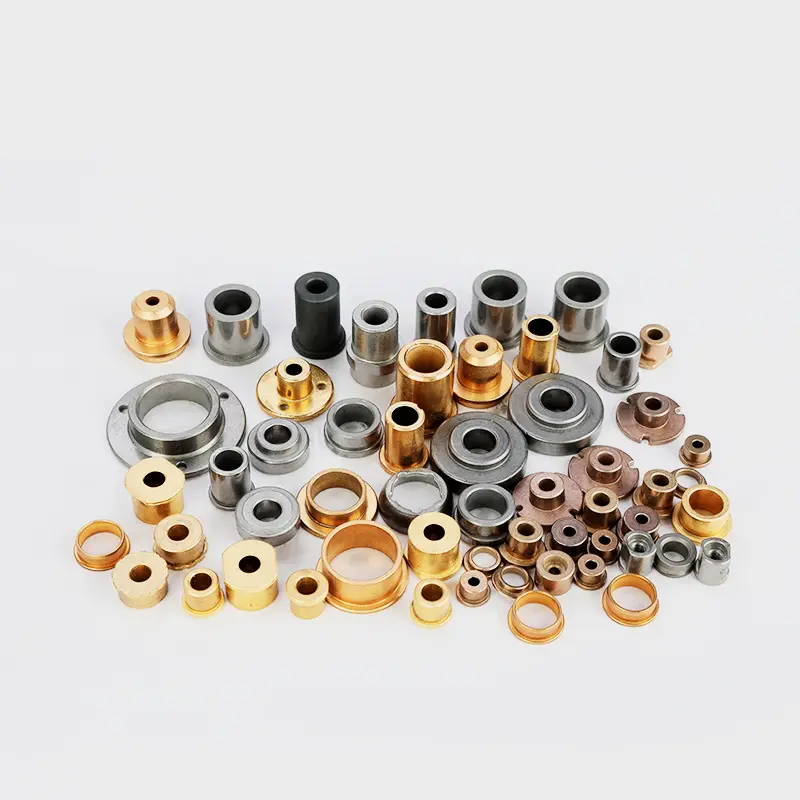
Sintered bearings, also known as powder metallurgy bearings, are a fascinating piece of engineering. They are not solid metal in the traditional sense. Their ability to self-lubricate comes from a very specific manufacturing process that we have perfected for large-scale production.
The Sintering and Impregnation Process
We start with a fine metal powder, usually bronze or iron. This powder is poured into a die and compressed under extreme pressure to form the shape of the bushing. This "green" part is fragile. Next, it goes into a sintering furnace. The furnace heats the part to a temperature just below the metal's melting point. This fuses the metal particles together, creating a strong but porous structure[^11]. The final step is oil impregnation. The bearings are submerged in a high-quality lubricating oil, often under a vacuum. The vacuum pulls all the air out of the pores, and when it's released, atmospheric pressure forces the oil deep into the porous structure. This process can fill 10% to 30% of the bearing's volume with oil. When the shaft rotates, friction generates a small amount of heat. This heat causes the oil to expand and seep out onto the surface, creating a perfect hydrodynamic film[^12]. When the shaft stops, the bearing cools, and capillary action pulls the oil back into the pores. It’s a closed-loop, self-contained lubrication system. We produce millions of these for small electric motor and fan manufacturers, where consistent porosity is key to long life.
What other names should you know for self-lubricating bearings[^1]?
Sourcing the right part is difficult when you don't use the exact name. You might be searching for a "sleeve" when your supplier's catalog lists it as a "bushing."
Besides "bushing" and "plain bearing," you will hear terms like "sleeve," "dry-running bearing," or "maintenance-free bearing." Specific types, like bronze-graphite bushings, are often named after their materials, describing exactly what they are and how they work.
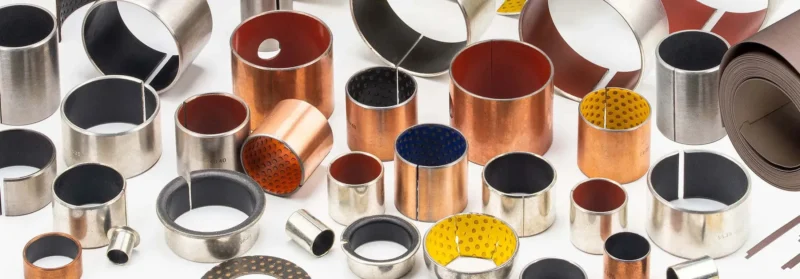
In my experience dealing with B2B clients globally, terminology can be a real barrier. A purchasing manager like Sophia in the Middle East might send an RFQ for a "metal sleeve," but the engineering team actually needs a steel-backed, PTFE-lined composite bushing for a hydraulic cylinder. Part of my job is to help customers translate their needs into precise technical specifications. The name is just the starting point; the application details are what truly matter for us as a factory.
Decoding the Terminology
Understanding these common terms helps clarify communication between buyers and manufacturers. While some are used interchangeably, they often hint at a specific function or design. For instance, calling something a "dry-running bearing" immediately tells me that the customer cannot use any liquid lubricant. This points me directly toward our PTFE composite or graphite-embedded products. It's a much more descriptive term than just "bushing." Clear communication prevents errors and ensures the client gets a part that performs reliably for the long term.
| Term | Common Meaning & Implication |
|---|---|
| Sleeve / Sleeve Bearing | A general term for a simple cylindrical bushing. Often used interchangeably with "bushing." |
| Plain Bearing | The broad engineering category for any bearing that uses sliding motion, not rolling elements. All bushings are plain bearings. |
| Dry-Running Bearing | Emphasizes its ability to operate completely without liquid lubricant. Points to PTFE or graphite materials. |
| Maintenance-Free Bearing | A practical term highlighting the key benefit for the end-user. It's more of a marketing term but implies a self-lubricating design. |
Conclusion
Knowing the different names for self-lubricating bearings[^1], from bushings to sleeves, helps you specify the right part. The material and design define its true function and proper name.
[^1]: Explore this link to understand the mechanics and benefits of self-lubricating bearings in various applications. [^2]: Discover the unique features of plain bearings and their advantages in engineering. [^3]: Understand the properties of PTFE and its role in enhancing bearing performance. [^4]: Explore the benefits of POM in bearings and its impact on friction reduction. [^5]: Discover the significance of wear resistance in prolonging bearing life. [^6]: Understand the different types of bronze bushings and their lubrication methods. [^7]: Learn about solid lubricants and their role in enhancing bearing performance. [^8]: Discover how graphite plugs provide lubrication in solid bronze bushings. [^9]: Understand the concept of marginal lubrication and its applications in bearings. [^10]: Explore the unique manufacturing process of sintered bearings and their benefits. [^11]: Discover how a porous structure enhances lubrication in sintered bearings. [^12]: Learn about hydrodynamic films and their importance in reducing friction.