Struggling with frequent equipment maintenance? Greasing bearings costs time and money. What if your bearings could lubricate themselves, reducing downtime and costs for your entire operation?
Self-lubricating bearings[^1] are made from various material combinations. Common types include composite bushings[^2] with PTFE[^3] or POM[^4] liners, bimetal bearings[^5] with a bronze layer, solid bronze with graphite plugs[^6], and oil-impregnated sintered metal[^7]. Each material structure is designed for specific loads and speeds.
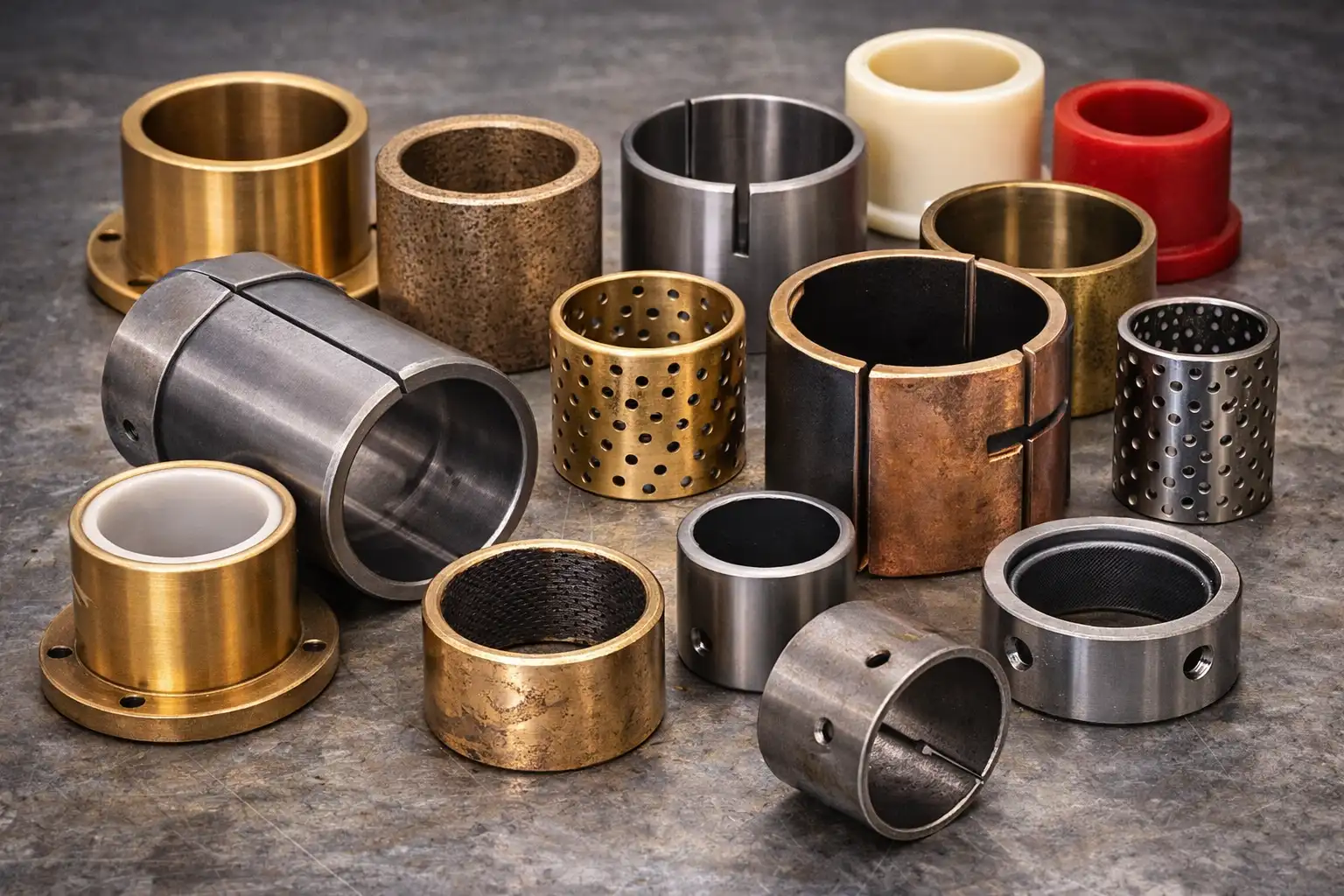
Now that you have a basic idea, you might wonder which type is right for your specific application. The material composition is the key to their performance and reliability in your machinery. Let's look at the most common structures one by one to understand how they work and where they fit best. This will help you make a better choice for your next OEM project[^8] or large-scale supply need.
How Are Composite Self-Lubricating Bushings Constructed?
Need a maintenance-free bearing[^9] for high loads and low speeds? Standard greased bearings can fail in these conditions. Composite bushings offer a reliable, self-lubricating solution for demanding applications.
Composite bushings have a layered structure. They typically consist of a steel backing for strength, a sintered bronze interlayer to bond the layers, and a self-lubricating liner made from materials like PTFE or POM. This design provides excellent wear resistance and low friction.
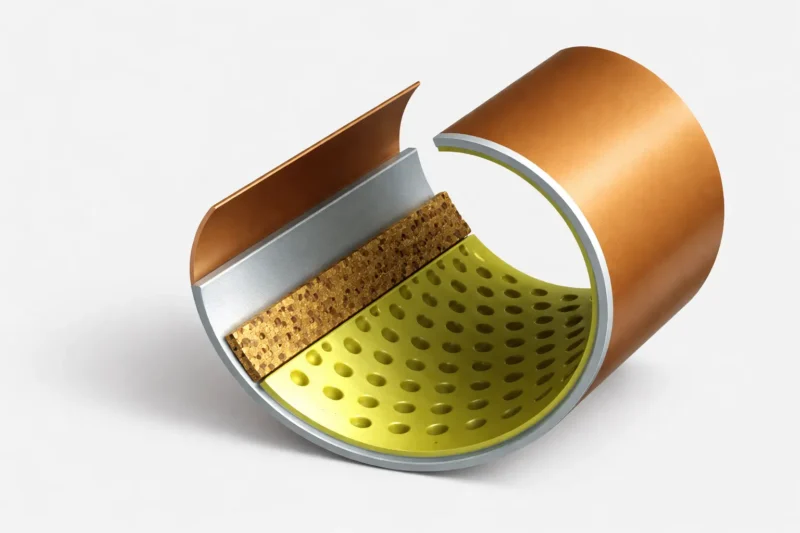
When we manufacture composite bushings, we focus on the unique function of each layer. This multi-layer design is what gives them their special properties. It's not just a simple piece of metal; it’s an engineered component designed for performance.
The Role of Each Layer
The foundation of the bushing is the steel backing. It provides mechanical strength and ensures the bushing holds its shape under heavy loads[^10]. It's the backbone of the entire structure. On top of the steel, we sinter a thin, porous layer of bronze powder. This middle layer does two important jobs. First, it strongly bonds the lubricating liner to the steel back. Second, its porous nature helps to dissipate heat generated during operation. The final and most critical layer is the self-lubricating liner. This is the surface that comes into contact with the shaft. It is typically made from either PTFE (Polytetrafluoroethylene) or POM (Polyoxymethylene). The choice between these two materials depends entirely on the application's needs.
| Feature | PTFE Liner (DU-type) | POM Liner (DX-type) |
|---|---|---|
| Lubrication | Dry (Maintenance-free) | Boundary (Grease-assisted) |
| Surface | Smooth | Indented (Oil Pockets) |
| Common Colors | Red, Black, White | Yellow, Blue, Black |
| Application | Completely dry running | Needs an initial grease fill |
For our OEM clients, this means they can select a bushing perfectly matched to their equipment's maintenance schedule. PTFE-lined bearings are for "fit and forget" applications, while POM-lined bearings are for situations that can have an initial lubrication to extend service life even further.
What's The Difference Between Bimetal and Wrapped Bronze Bearings?
Are you working with applications that need lubrication but face heavy loads[^10]? Greased solid bearings can be expensive. Bimetal and wrapped bronze bearings[^11] offer a cost-effective, high-performance alternative.
Bimetal bearings have a steel back with a sintered bronze layer, making them ideal for high loads in lubricated conditions. Wrapped bronze bearings are made entirely from a bronze sheet, often with oil pockets or holes, offering good corrosion resistance[^12] and grease distribution.
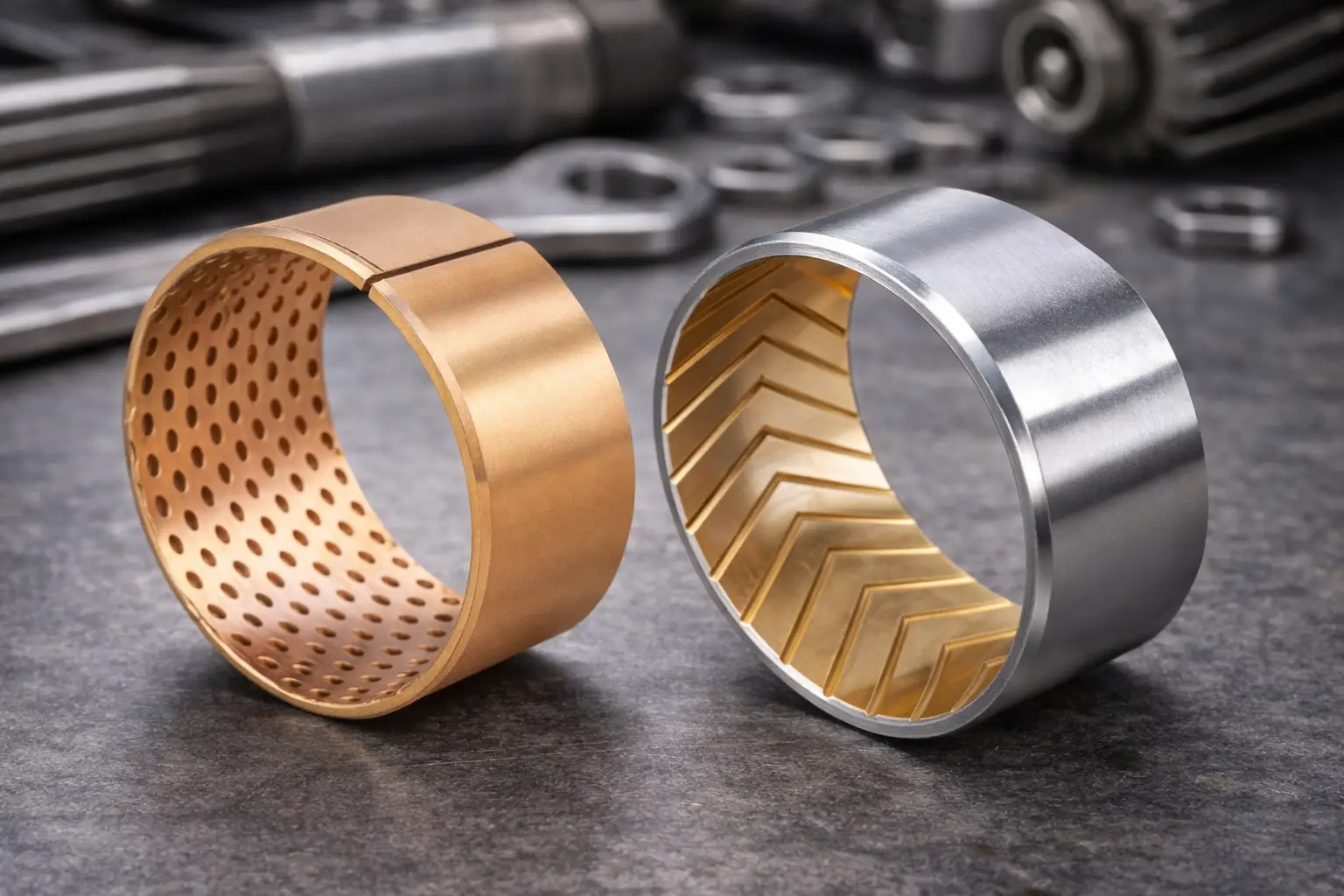
Both of these bearing types are designed for environments where lubricant is present. However, their construction and material makeup lead them to be used in very different types of machinery. As a factory, we produce both in large volumes because our customers in industries like construction and automotive have distinct needs for each one. Understanding their core differences helps you source the right component for your production line.
Bimetal Bearing Composition
A bimetal bearing is, as the name suggests, made of two different metals. It starts with a strong steel backing. We then sinter a layer of bronze alloy powder (like CuPb10Sn10) onto this steel strip. This bronze layer is the functional surface. It is relatively soft, so it can embed small contaminant particles, protecting the shaft from damage. But its main job is to work with oil or grease. The surface is often machined with grooves or pockets to hold lubricant and ensure a consistent oil film is maintained between the bearing and the shaft. This makes them incredibly durable under high loads and oscillating movements, which is why they are common in engine connecting rods and heavy machinery pivot points.
Wrapped Bronze Bearing Features
Wrapped bronze bearings, on the other hand, are made from a single sheet of bronze alloy, usually CuSn8 or CuSn6.5. We stamp this sheet with a pattern of indents—either diamond-shaped or circular—before rolling it into a bushing. These indents act as reservoirs for grease. When the bearing is in motion, the grease is distributed across the entire surface, ensuring smooth operation. Because the entire body is bronze, these bearings have better natural corrosion resistance than standard steel-backed bimetal bearings[^5]. They are a go-to choice for our customers in agricultural and construction equipment manufacturing, where machinery is often exposed to the elements.
| Feature | Bimetal Bearings | Wrapped Bronze Bearings |
|---|---|---|
| Backing | Steel | Bronze |
| Load Capacity | Very High | High |
| Corrosion Resistance | Moderate (depends on plating) | Good |
| Typical Use | Engine bearings, connecting rods | Hydraulic cylinders, construction machinery |
When Should You Use Solid Brass or Sintered Bearings?
Do you need bearings for extreme loads or for high-speed, low-load applications? These opposite needs require very different materials. Solid brass and sintered bearings[^13] provide specialized self-lubricating solutions.
Solid brass bearings, often with graphite plugs[^6], are for very high loads and slow movements. Sintered bearings are made from porous metal filled with oil, perfect for high-speed, low-load applications like small electric motors where quiet, continuous self-lubrication is essential.
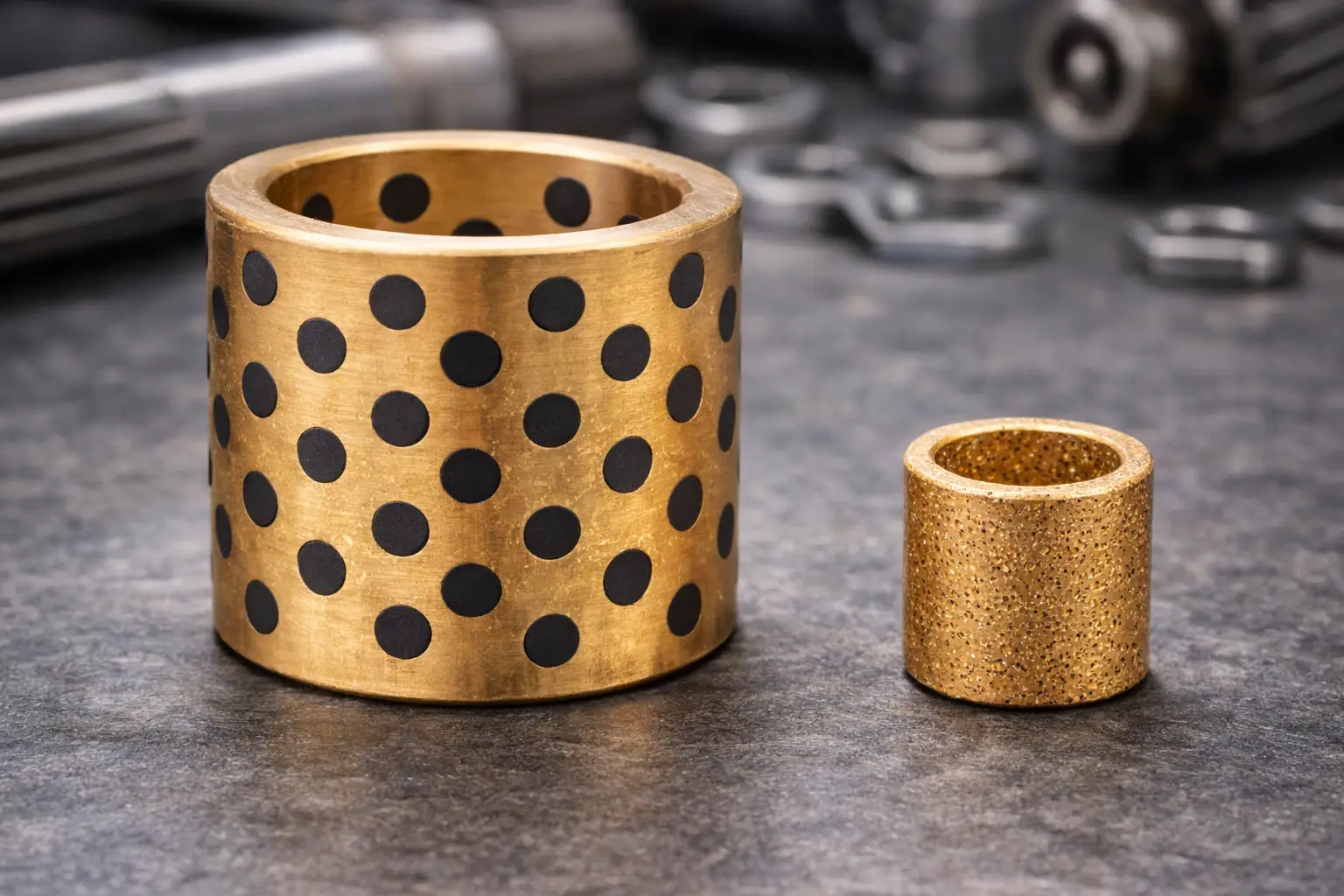
These two types represent some of the most specialized self-lubricating solutions we manufacture. They solve problems at opposite ends of the performance spectrum. One is about brute strength and durability, while the other is about precision, speed, and quiet operation. For our B2B partners, having access to both types from a single, reliable factory simplifies their supply chain, whether they are building massive industrial presses or small household appliances.
Solid Brass with Solid Lubricant
For applications with extremely high loads and slow, oscillating movements, nothing beats a solid brass bushing with graphite plugs. We start with a solid tube of high-strength brass or brass. Then, we machine it to the exact dimensions required by our client. The next step is to drill a specific pattern of holes into the bearing wall. We then press solid graphite plugs into these holes. The graphite is the key to self-lubrication. As the shaft moves, it makes contact with the graphite plugs, and a thin, low-friction film of graphite is transferred to the shaft. This provides continuous lubrication without any need for oil or grease. These bearings are incredibly tough and are often used in dam gates, steel mill equipment, and injection molding machines.
Sintered (Powder Metallurgy) Bearings
Sintered bearings are completely different. We create them using a process called powder metallurgy. We take fine metal powder, usually bronze or iron, and press it into a mold under high pressure. This forms a "green" part, which is then heated in a furnace at a temperature just below its melting point. This process, called sintering, fuses the metal particles together, creating a solid but porous structure. The finished bearing is like a metal sponge, with up to 30% of its volume being tiny, interconnected pores. We then impregnate this bearing with a special lubricating oil in a vacuum. In operation, as the shaft rotates and heats up, the oil expands and seeps out of the pores to lubricate the shaft. When the shaft stops and cools, the bearing's capillary action draws the oil back in. This makes them perfect for small electric motors, fans, and office equipment where long life and quiet operation are critical.
Conclusion
Self-lubricating bearings use different material structures, from layered composites to oil-filled metals. Choosing the right one depends on your specific load, speed, and maintenance requirements for your equipment.
[^1]: Explore this link to understand the technology behind self-lubricating bearings and their benefits for reducing maintenance. [^2]: Learn about composite bushings and how they can enhance performance in demanding applications. [^3]: Discover the properties of PTFE and its role in self-lubricating bearings for maintenance-free solutions. [^4]: Find out how POM performs in self-lubricating applications and its advantages over PTFE. [^5]: Understand the construction and benefits of bimetal bearings for high-load applications. [^6]: Explore the role of graphite plugs in self-lubricating bearings and their benefits. [^7]: Learn about oil-impregnated sintered metal and its effectiveness in lubrication. [^8]: Explore key considerations for selecting bearings in OEM projects to ensure optimal performance. [^9]: Understand the advantages of maintenance-free bearings for reducing downtime and costs. [^10]: Learn about the best bearing options for handling heavy loads effectively. [^11]: Explore the unique features of wrapped bronze bearings and their suitability for various machinery. [^12]: Learn about the importance of corrosion resistance in bearings for longevity and performance. [^13]: Discover the manufacturing process of sintered bearings and their applications in quiet operations.