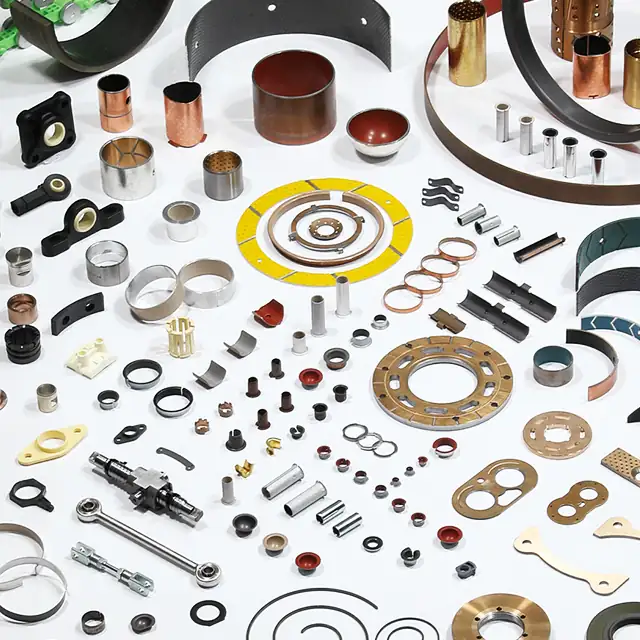
Are you confused by the huge variety of bushings available? Choosing the wrong one can cause equipment failure. This guide will help you understand the main types and their uses.
There are several main categories of bushings based on their material and structure. The most common types include self-lubricating composite bushings, bronze wrapped bushings, solid metal bushings (bronze or brass), and powder metallurgy (sintered) bushings. Each type is designed for different load, speed, and lubrication conditions.
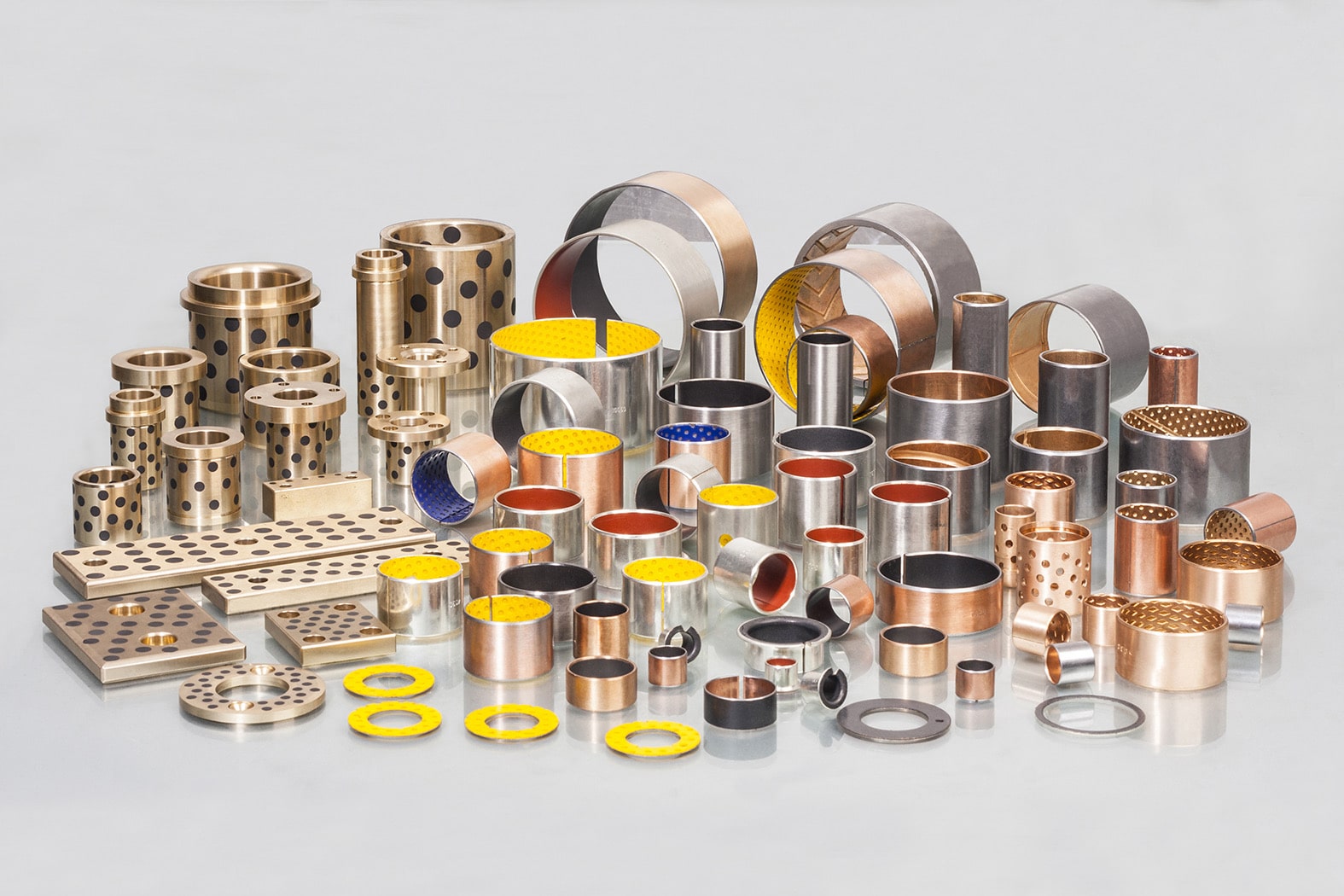
Choosing the right bushing is critical for the performance and lifespan of your machinery. As a manufacturer, I've seen firsthand how a small component can make a huge difference. A customer once came to us after experiencing repeated failures in a high-load application. They were using a standard bushing that just wasn't up to the task. By switching to the correct material, we solved their problem and saved them from costly downtime. This experience highlights why understanding the different types is so important. Let's break down the main categories to help you make the right choice every time.
What are composite bushings and when should you use them?
Struggling with applications that need to run without grease or oil? Standard metal bushings can seize up. Composite bushings offer a self-lubricating solution for these maintenance-free applications.
Composite bushings, also known as self-lubricating bushings, have a layered structure. They typically feature a steel backing, a sintered bronze middle layer, and a low-friction polymer lining like PTFE or POM. They are ideal for dry-running, high-load, low-speed applications where external lubrication is impossible or undesirable.
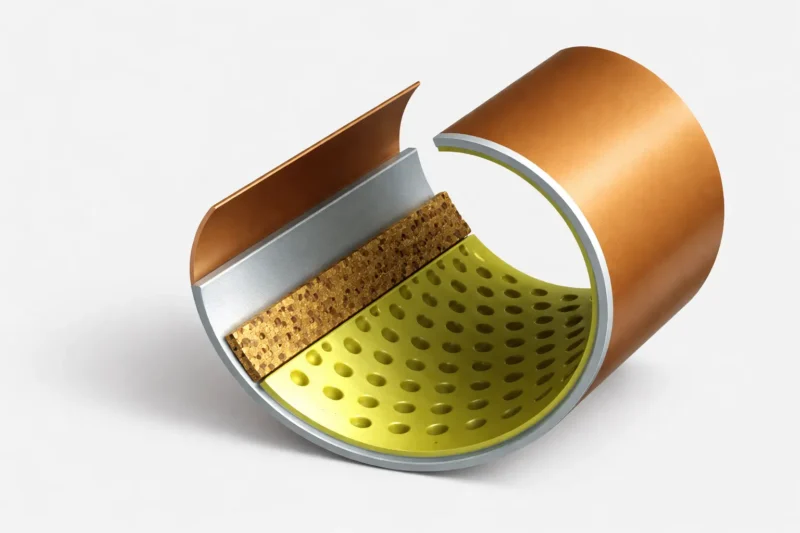
These bushings are our go-to for many modern industrial applications. Their clever design solves a lot of problems. The steel backing gives them strength and makes them easy to press-fit. The porous bronze layer acts as a strong bond for the liner and helps dissipate heat. The real magic happens in the top layer.
Material Composition and Function
- PTFE-based (DU/SF-1 type): This is the most common type for completely dry operation. The PTFE layer, often mixed with fillers like lead or fiber, transfers a thin film to the mating shaft during initial movement. This creates an excellent solid lubricant surface. They are perfect for slow, oscillating movements found in hinges, pivots, and linkage systems.
- POM-based (DX/SF-2 type): These bushings are designed for applications with marginal or boundary lubrication. The POM (acetal) surface has small indents or pockets to hold grease. They work best when you can apply a little bit of lubricant at the start, which will last a very long time. They are great for automotive steering systems and suspension components.
| Feature | PTFE-Based (DU) | POM-Based (DX) |
|---|---|---|
| Lubrication | Dry running (self-lubricating) | Marginal lubrication (grease-retaining) |
| Friction | Very Low | Low |
| Best For | No maintenance, slow movements | Minimal maintenance, higher speeds |
| Common Uses | Hydraulic pumps, textile machinery | Automotive suspension, material handling |
Are bronze wrapped bushings right for your application?
Do your machines operate under heavy loads but have access to lubrication? Using the wrong bushing can lead to rapid wear. Bronze wrapped bushings are a tough, reliable choice for these demanding jobs.
Bronze wrapped bushings, like our FB090 series, are made from a special bronze alloy strip that is rolled into a cylinder. They feature patterns like diamond-shaped pockets or oil holes on their surface to retain grease or oil, ensuring consistent lubrication under heavy loads and medium speeds.
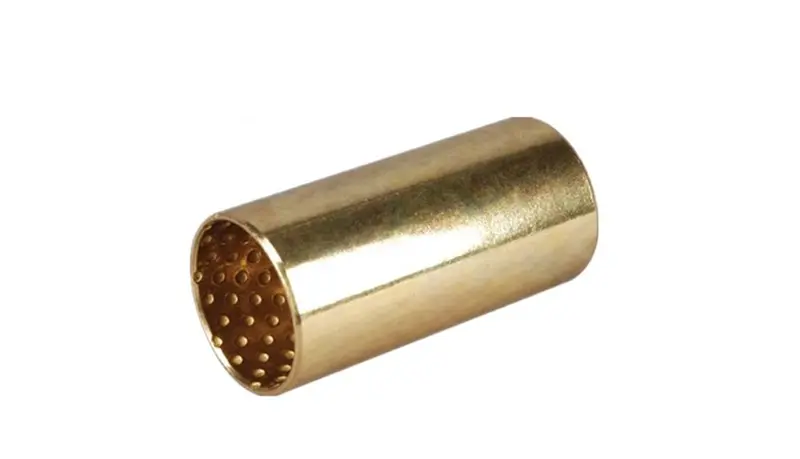
When I think of a classic, hardworking bushing, this is what comes to mind. We produce tons of these for the construction and automotive industries. They are a simple, effective, and economical solution. Unlike composite bushings that rely on a polymer liner, these are solid metal. Their strength comes directly from the high-quality bronze alloy we use. The key to their success is the design of the lubrication pockets.
Lubrication and Application
The surface isn't smooth; it's engineered to work with lubricants.
- Diamond or Circular Pockets: These indents act as reservoirs for grease. When the machine starts, the grease is distributed across the surface, creating a protective film that separates the shaft and the bushing. This dramatically reduces friction and wear. They are excellent for equipment that gets lubricated periodically.
- Through Holes: For applications with circulating oil systems, we can machine through-holes in the bushings. This allows oil to flow continuously, providing cooling and flushing away contaminants.
A perfect example is truck brake calipers. The movement is intermittent but the forces are high. Our FB090 wrapped bronze bushings are used here because they hold grease well and can withstand the harsh conditions. They are also widely used in the chassis of construction vehicles and agricultural machinery.
| Feature | Bronze Wrapped Bushing (FB090) |
|---|---|
| Material | Rolled Bronze Alloy (CuSn8P) |
| Lubrication | Requires grease or oil |
| Load Capacity | High |
| Speed | Low to Medium |
| Common Uses | Truck brake calipers, construction machinery, lifting gear |
Why choose solid bronze or brass bushings for heavy-duty jobs?
Are you designing equipment for extreme loads and harsh environments? Some jobs are just too tough for composite or wrapped bushings. For the biggest challenges, you need a solid metal solution.
Solid bronze or brass bushings are machined from a single piece of metal. They offer the highest load capacity and excellent corrosion resistance. They are the best choice for very heavy-duty, low-speed applications like those found in wind turbines, mining equipment, and marine environments where longevity is critical.
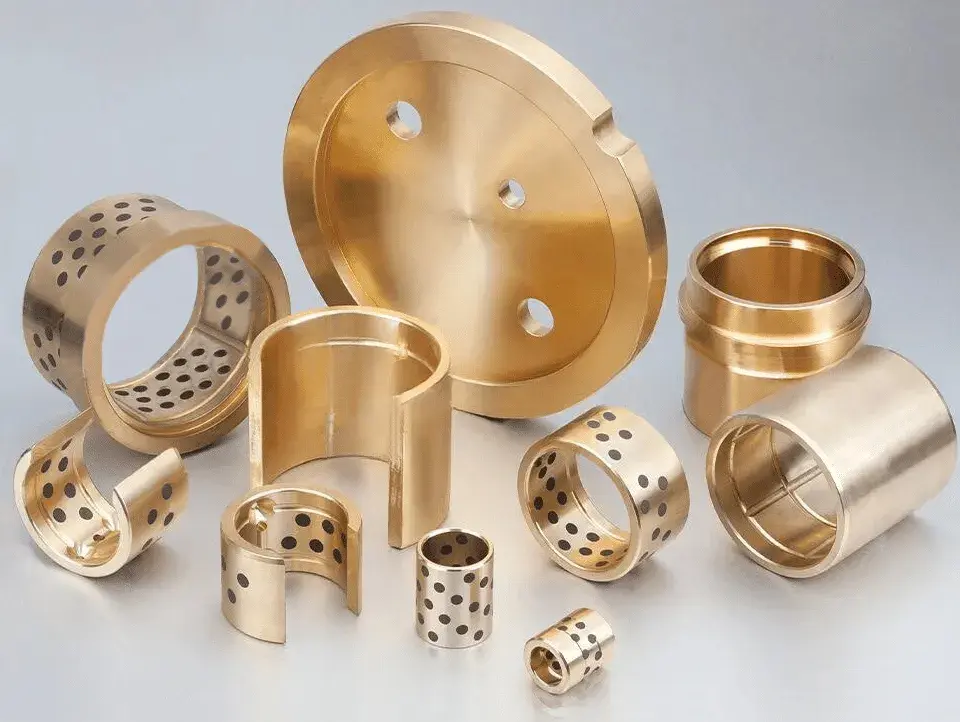
When a customer needs a part that will last for years with almost no maintenance, we often recommend a solid bronze or brass bushing. These aren't rolled from a sheet; they are machined from solid billets of material. This process allows for thick walls and custom features that are impossible with other types. I remember a project for a wind power company. They needed blade pitch bushings that could withstand immense forces and operate for decades in a remote location. We manufactured custom solid brass bushings with graphite plugs for them.
Material Choices and Customization
- Solid Bronze/Brass: These materials are inherently strong and resistant to wear and corrosion. We can machine them to extremely tight tolerances for a perfect fit. They are often designed with internal grooves that are manually packed with heavy-duty grease.
- Graphite-Plugged Bronze: For low-maintenance or high-temperature applications, we can add solid graphite plugs. The graphite acts as a continuous dry lubricant as the bushing wears. This makes them ideal for equipment that is difficult to access for regular greasing, like in hydroelectric dams or large cranes.
Because they are machined from solid stock, we can create almost any shape, including complex flanges, grooves, and non-standard sizes. This makes them the ultimate problem-solver for unique engineering challenges.
| Feature | Solid Bronze/Brass Bushing |
|---|---|
| Material | Machined Bronze or Brass Alloy |
| Lubrication | Grease (grooved) or Self-Lubricating (graphite-plugged) |
| Load Capacity | Very High |
| Speed | Very Low |
| Common Uses | Wind turbines, injection molding machines, marine equipment |
When are sintered or powder metallurgy bushings the best choice?
Do you need a quiet, self-lubricating bushing for a high-speed application? Motors and small gearboxes need precise, low-friction components. Sintered bushings are specifically designed for these types of machines.
Sintered bushings, also known as powder metallurgy or "oil-impregnated" bearings, are made by pressing bronze powder into a shape and heating it. This creates a porous structure that is then soaked in oil. The oil provides constant, reliable lubrication for high-speed, low-load applications.
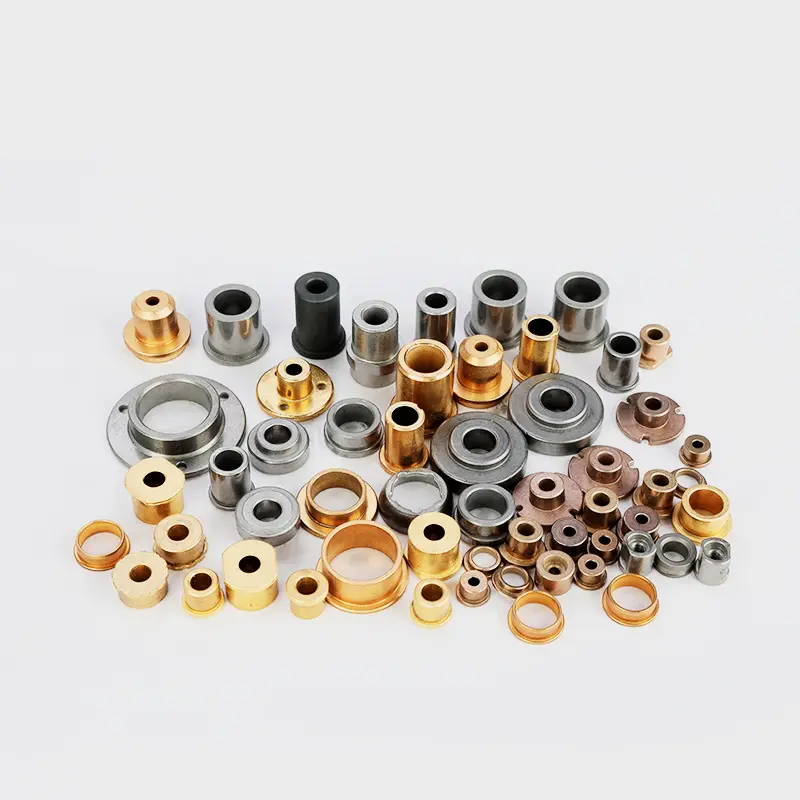
These little bushings are everywhere, even if you don't see them. They are inside home appliances, power tools, and office equipment. Their manufacturing process is fascinating. We start with a fine metal powder, press it into a mold under high pressure, and then "sinter" it in a furnace. The process fuses the powder together but leaves millions of tiny, interconnected pores, like a metal sponge. We then vacuum-impregnate this structure with a special lubricating oil.
How They Work
The magic of a sintered bushing is its self-lubricating mechanism.
- Operation: When the shaft starts to rotate, the friction generates a small amount of heat. This heat causes the oil in the pores to expand and flow out onto the bearing surface, creating a perfect hydrodynamic film.
- Rest: When the shaft stops, the cooling effect and capillary action draw the oil back into the pores of the bushing. This means the oil is constantly recycled, and the bushing can run smoothly and quietly for thousands of hours without any external lubrication.
They are an incredibly efficient and cost-effective solution for mass-produced goods. As a B2B manufacturer, we supply these in huge quantities for assembly lines producing electric motors, fans, and automation equipment. Their precision and reliability are essential for these products.
| Feature | Sintered Bronze Bushing |
|---|---|
| Material | Sintered Bronze Powder (oil-impregnated) |
| Lubrication | Self-lubricating (internal oil) |
| Load Capacity | Low to Medium |
| Speed | High |
| Common Uses | Small electric motors, household appliances, power tools |
Conclusion
In short, bushings are categorized by material: composite, wrapped bronze, solid metal, and sintered bronze. Each type is engineered for specific loads, speeds, and environments, ensuring optimal machinery performance.