Is your equipment running rough or making strange noises? A tiny bushing could be the hidden cause, leading to costly downtime if you don't spot the warning signs.
The most common signs of a bad bushing[^1] are unusual noises[^2] like squeaking or grinding, noticeable looseness or vibration[^3] in joints, and a sudden increase in temperature. These symptoms often mean the bushing is worn out and requires immediate inspection to prevent major equipment failure.
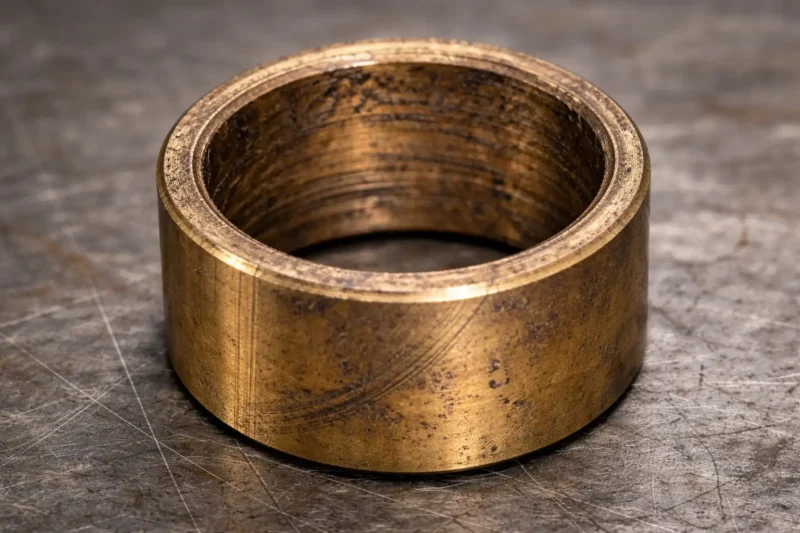
As a manufacturer, I've seen it all. A simple component like a bushing rarely fails overnight. It gives you clues first. Ignoring these clues is what turns a small fix into a big problem. Let's break down each of these warning signs so you can catch them early and keep your machinery running smoothly.
Is unusual noise a sign of bushing failure?
Do you hear a new squeak, grind, or clunk from your machine? Ignoring that sound could lead to serious damage as metal parts begin to rub directly against each other.
Yes, strange noises are one of the most direct signs of a failing bushing. This often happens when the self-lubricating layer[^4] is completely worn away, or when the bushing itself is cracked, causing direct metal-to-metal contact[^5], especially when starting up or moving at low speeds.
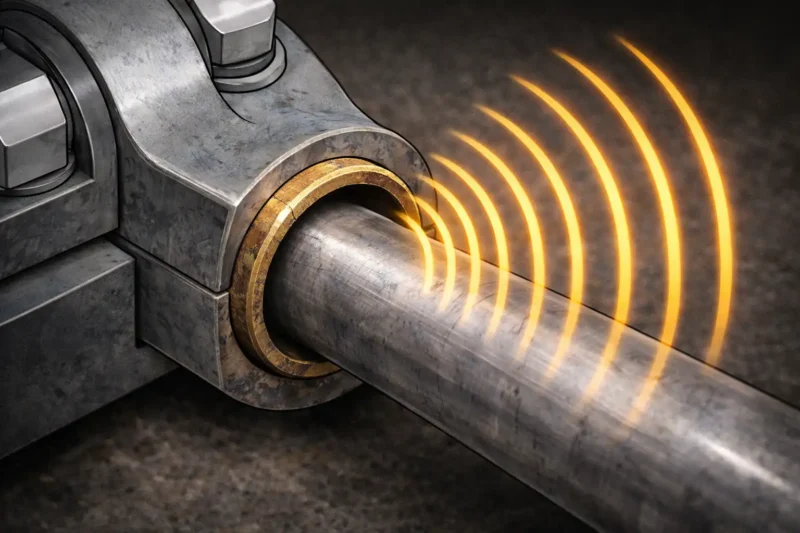
From our factory's perspective, we design bushings to operate silently. When they start making noise, it’s a clear signal that something is wrong. The sound is a symptom of a deeper issue, usually related to wear and friction. The type of noise can even tell you what kind of problem you might have. For example, a high-pitched squeak[^6] often points to dry friction, while a deeper clunking or knocking[^7] sound suggests there is too much space, or clearance, inside the connection. These noises are most obvious when the machine is just starting or moving slowly because there isn't enough speed or momentum to mask the sound of the failing component.
The Source of the Sound
The noise you hear is a direct result of a change in the bushing's condition. A healthy self-lubricating bushing, like our metal-polymer composite types, has a layer (often PTFE) that ensures low-friction movement. When that layer wears through, the shaft starts rubbing against the bushing's metal structure. This creates a very different, and much louder, interaction.
When to Listen Closely
Pay special attention during these moments:
- Startup: The initial movement can create knocking if there's too much clearance.
- Low-Speed Operation: Squealing and grinding are more pronounced without the inertia of high-speed motion.
- Direction Changes: A clunk when a linkage reverses direction is a classic sign of excessive clearance.
| Noise Type | Possible Cause | What It Means for Your Equipment |
|---|---|---|
| High-Pitched Squeaking | Lubricating layer is worn out; dry friction. | Increased wear, higher energy use, and heat buildup. |
| Grinding or Scraping | Severe wear; metal-on-metal contact. | Imminent failure of the bushing and potential damage to the shaft. |
| Clunking or Knocking | Excessive clearance; bushing is worn oversized. | Loss of precision, impact loads, and vibration. |
Does a loose connection mean the bushing is worn?
Do you feel a wobble or shake in a part that should be solid? This loss of precision can impact your machine's performance and even lead to bigger mechanical failures.
Absolutely. A loose connection or increased clearance is a clear symptom of a worn-out bushing. As the bushing material wears away, the gap between the shaft and the bushing grows, causing unwanted movement, poor alignment, and instability in the entire assembly.
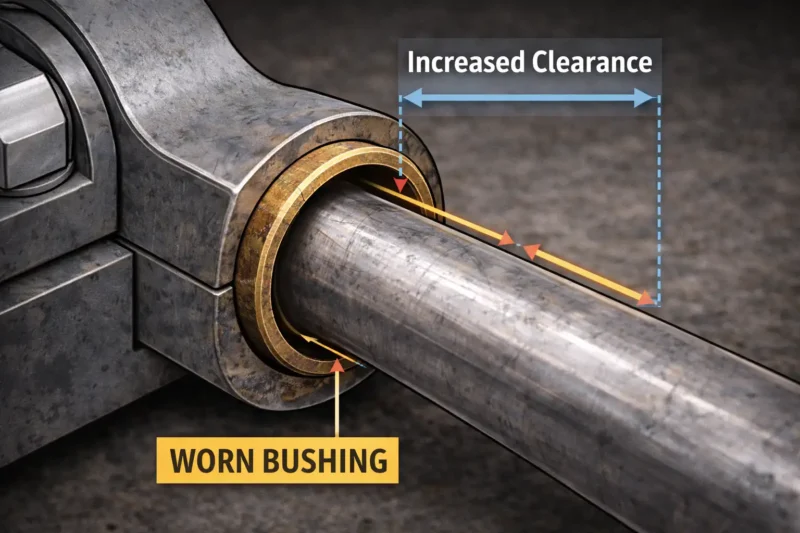
Bushings are made to hold parts in precise alignment. Their job is to provide a smooth surface for rotation or sliding while keeping everything tight. When I talk to OEM clients, we focus heavily on manufacturing tolerances because we know that even a tiny bit of extra space can cause problems. As the bushing wears, this controlled space grows. You might feel it as a slight wobble in a control lever or see it as an arm that doesn't stop exactly where it should. In heavy equipment, this can mean an excavator arm that shakes. In a production line, it could mean a robotic arm that isn't accurate anymore. This looseness is not just an annoyance; it’s a sign that the bushing can no longer do its primary job of supporting the load correctly.
Understanding Clearance
Every bushing is installed with a specific, tiny gap called "operating clearance[^8]." This space is necessary to allow for a lubricant film and thermal expansion[^9]. The problem starts when this gap grows beyond its design limits due to wear.
- Radial Looseness: This is up-and-down or side-to-side movement. You can often feel it by trying to wiggle the shaft inside the housing.
- Axial Looseness: This is back-and-forth movement along the length of the shaft. It indicates wear on the flange of a flanged bushing or on the thrust washers.
The Domino Effect of Looseness
A loose bushing doesn't just affect one joint. It creates a chain reaction. The extra movement creates impact loads every time the direction changes, which accelerates wear on the bushing and the shaft. It also puts more stress on surrounding components, including seals, gears, and the machine's frame.
| Type of Looseness | Impact on Equipment | Common Example |
|---|---|---|
| Radial Wobble | Loss of positioning accuracy, vibration. | An unstable pivot arm on a piece of construction machinery. |
| Axial Play | Misalignment, potential interference with other parts. | A conveyor roller shifting side-to-side on its shaft. |
Why is my machine vibrating more and harder to control?
Is your equipment shaking more than it used to? This excessive vibration makes operation difficult, reduces precision, and can even be a safety concern for the operator.
Yes, increased vibration is a strong indicator of a bad bushing[^1]. Bushings don't just guide movement; they also absorb small shocks and vibrations. When they wear out, they lose this damping ability, and you start to feel every little imperfection in the system.
Think of bushings as the small, unsung heroes that keep things running smoothly. They create a buffer between moving parts. In our manufacturing process, we select materials that not only have low friction but also have properties to dampen vibration. A new, well-fitted bushing absorbs micro-shocks and helps the equipment operate with a feeling of stability. However, as a bushing wears down, the clearance increases. Now, instead of absorbing impacts, the shaft rattles inside the bushing. This constant rattling is what you feel as increased vibration. For an operator, this can make a machine feel unstable and difficult to control precisely. For the machine itself, this vibration is a destructive force that accelerates wear on all connected parts.
The Role of a Bushing as a Damper
A good bushing acts like a shock absorber on a very small scale. It fills the space between parts and cushions the microscopic impacts that happen during operation. This is especially true for our composite bushings, where the polymer layer provides excellent damping properties. When this layer is gone or the fit becomes loose, that cushioning effect disappears.
From Vibration to Instability
The vibration you feel is just the beginning. This instability can lead to:
- Reduced Positional Accuracy: Critical for CNC machines, robotics, and automation.
- Operator Fatigue: Constant vibration makes equipment uncomfortable and tiring to use.
- Accelerated Wear: Vibration is a destructive force that hammers away at bearings, seals, and structural components.
- Sensor and Electronics Issues: Excessive vibration can damage sensitive electronic components mounted on the machine.
What starts as a worn bushing can quickly cascade into a much larger problem, affecting the entire machine's health and performance.
What should I look for during a visual bushing inspection?
You have the machine apart for regular maintenance. How do you tell if the bushing you are looking at is still good, or if it is about to fail?
During a visual inspection[^10], you should look for a few key signs. An inner diameter that has worn into an oval shape, deep scratches[^11] or scoring on the surface, or any peeling of the self-lubricating layer[^4] (like the gray PTFE layer) are all red flags.
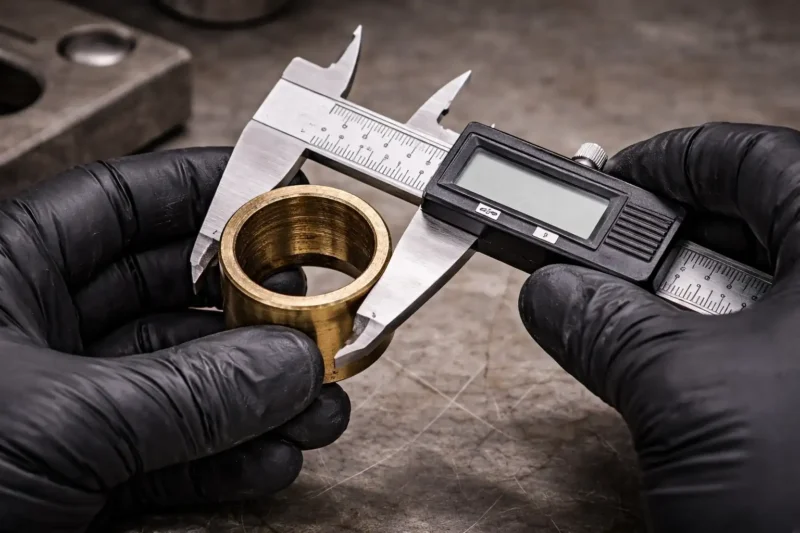
When we produce bushings at our factory, we are obsessed with consistency. The surface must be perfect, and the dimensions must be exact. Any deviation can lead to premature failure. When you are inspecting a used bushing, you are essentially looking for these deviations. Don't just glance at it; take a moment to really look. Is the inside bore still perfectly round? You can sometimes feel an oval shape with your finger. Look at the surface finish. It should be smooth. Deep scratches or grooves mean that dirt or metal particles have gotten into the joint and have been grinding away at the surface. For composite bushings, pay close attention to the liner. If you see it flaking, peeling, or worn down to the bronze or steel layer underneath, the bushing's service life is over.
Interpreting the Damage
Each visual sign tells a story about what went wrong. Understanding these signs helps you not only replace the part but also fix the root cause.
- Elliptical Bore (Oval Shape): This indicates that the load was concentrated in one direction instead of being distributed evenly. It's a classic sign of high, unidirectional loads.
- Surface Scratches: This is almost always caused by contamination. Dirt, sand, or metal debris entered the joint and acted like sandpaper. This points to a failure in the seals or a very dirty operating environment.
- Lubricating Layer Delamination: Seeing the top layer (e.g., PTFE or POM) peel away from the metal backing indicates that the bushing has likely been overloaded or has overheated, causing the bonding to fail.
What to Look For: A Checklist
| Visual Sign | Potential Cause | What It Means |
|---|---|---|
| Elliptical Inner Diameter | Uneven or high unidirectional load. | The bushing has worn significantly and lost its shape. |
| Deep Scratches/Scoring | Contamination in the joint. | The operating environment is too harsh, or seals have failed. |
| Liner Peeling/Flaking | Overheating, excessive load, or chemical exposure. | The self-lubricating properties are gone; failure is imminent. |
| Polished/Shiny Spots | Metal-to-metal contact. | The lubricating liner is completely worn through in that area. |
Could high temperatures point to a bad bushing[^1]?
You notice that a pivot point or joint on your machine is running unusually hot. This excess heat is a warning sign that something is creating a lot of friction.
Yes, a sudden or sustained increase in temperature around a bushing is a critical sign of failure. A healthy bushing operates with very little friction, generating minimal heat. When it fails, friction skyrockets, and that energy is released as heat.
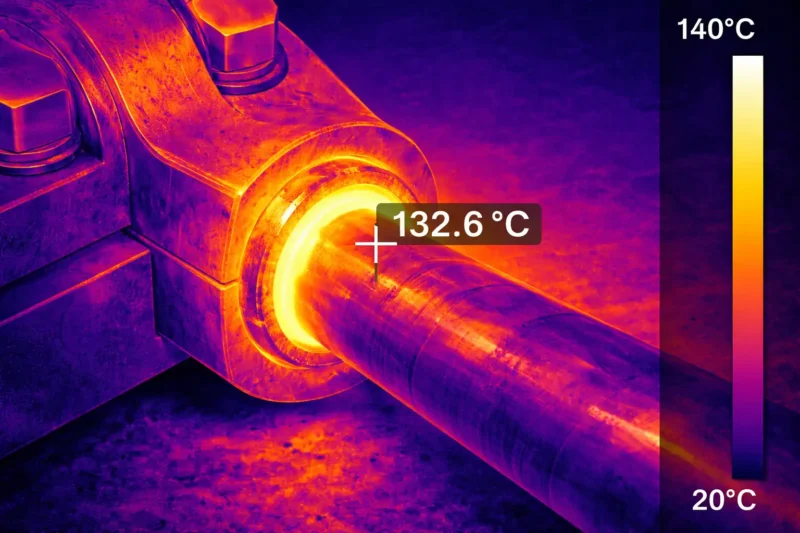
In my experience, heat is one of the most overlooked symptoms. People notice noise and vibration, but heat can build up silently. The basic physics are simple: friction creates heat[^12]. Our job as a bushing manufacturer is to create products with a very low coefficient of friction. This means movement happens easily, without wasting energy. When a bushing wears out and the surfaces become rough, or when lubrication fails, the friction coefficient increases dramatically. Now, the motor or hydraulic system has to work much harder to create the same movement. That extra energy isn't put to good use; it's converted directly into heat. A simple, inexpensive infrared temperature gun[^13] can be a powerful diagnostic tool. If you regularly check the temperature of key joints, you can spot a failing bushing long before it seizes completely.
Friction: The Silent Killer
Friction doesn't just create heat; it actively works against your machine's power source. A failing bushing essentially acts like a brake, forcing your engine or motor to work harder. This leads to:
- Increased Energy Consumption: Your machine uses more fuel or electricity to do the same amount of work.
- Higher Load on Drive Components: Motors, pumps, and engines are put under greater strain, which can shorten their lifespan.
- Material Degradation: Excessive heat can damage the bushing itself, as well as nearby seals, lubricants, and even the shaft's heat treatment.
Measuring the Impact
You don't always need special tools to detect a problem. Sometimes, you can carefully feel the heat with your hand (use caution!). However, for a more systematic approach:
- Establish a Baseline: When the machine is healthy, use a temperature gun to measure key pivot points during normal operation.
- Regularly Check: Incorporate temperature checks into your routine maintenance schedule[^14].
- Investigate Spikes: A significant rise in temperature from the baseline is a clear signal to investigate the bushing and joint for wear or lubrication issues.
A hot joint is a joint that is crying for help. Addressing it early prevents the heat from causing a cascade of other, more expensive problems.
Conclusion
In short, listen for unusual noises[^2], feel for looseness and vibration, and watch for high temperatures. These signs indicate your bushing is likely failing and needs immediate attention.
[^1]: Understanding the signs of a bad bushing can help you prevent costly equipment failures. [^2]: Identifying unusual noises early can save you from major repairs and downtime. [^3]: Learn how looseness and vibration can lead to significant mechanical issues. [^4]: Explore how self-lubricating layers work to enhance equipment longevity. [^5]: Discover the dangers of metal-to-metal contact and how to avoid it. [^6]: A high-pitched squeak can indicate serious wear; learn how to address it. [^7]: Clunking sounds can signal excessive clearance; learn how to diagnose it. [^8]: Understanding operating clearance is key to maintaining machinery performance. [^9]: Understanding thermal expansion helps in maintaining proper bushing fit. [^10]: A thorough visual inspection can help catch issues before they escalate. [^11]: Deep scratches can signal contamination; learn how to prevent this. [^12]: Learn about the relationship between friction and heat to prevent failures. [^13]: An infrared temperature gun can be a powerful tool for diagnosing issues. [^14]: A well-planned maintenance schedule can prevent unexpected equipment failures.