Experiencing harsh vibrations and noise from your equipment's moving arms? This often leads to premature wear and costly repairs. A simple component, the arm bushing[^1], is designed to solve this.
**An arm bushing is a cruciaExperiencing harsh vibrations and noise from your equipment's moving arms? This often leads to premature wear and costly repairs. A simple component, the arm bushing[^1], is designed to solve this.
An arm bushing is a crucial component installed at the pivot points[^2] of control arms or linkages. Its primary job is to absorb shock, reduce vibration, and allow for a specific, controlled range of movement between two connected parts, preventing direct metal-on-metal contact.
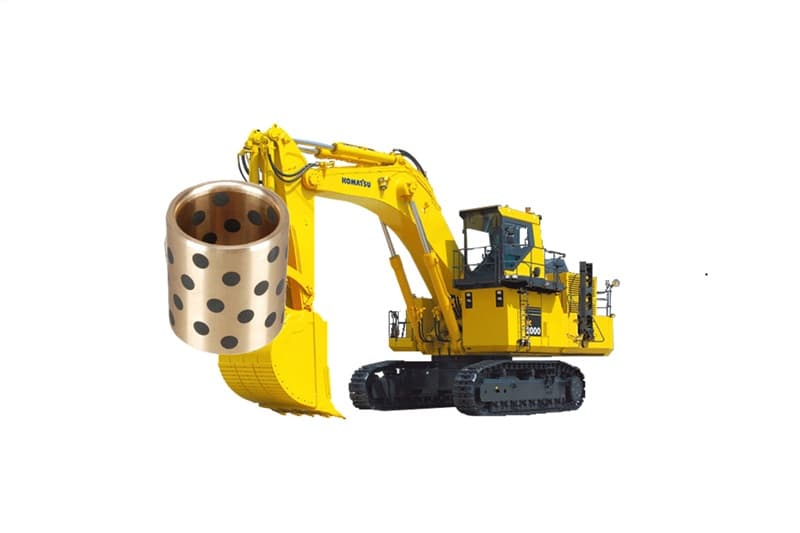
As a manufacturer of industrial bushings[^3], I've seen firsthand how these small parts play a massive role in the performance and longevity of heavy machinery. They are not just simple spacers; they are engineered to provide an "elastic connection." This means they allow parts to move as intended but with a cushion that protects the entire assembly. Instead of a rigid, jarring connection, an arm bushing introduces flexibility and control. This seemingly minor detail is the key to smoother operation, greater precision, and a much longer service life for your equipment. Let's explore the specific jobs these components do.
Why is absorbing shock and vibration so important?
Does your machinery suffer from constant shaking and jarring movements? This not only creates a noisy and uncomfortable operating environment but also transmits damaging forces throughout the entire machine structure.
Arm bushings absorb these shocks and vibrations using materials like rubber, polyurethane[^4], or advanced composites. By acting as a cushion between metal parts, they isolate the vibration at the source, leading to smoother and quieter operation and protecting sensitive components from damage.
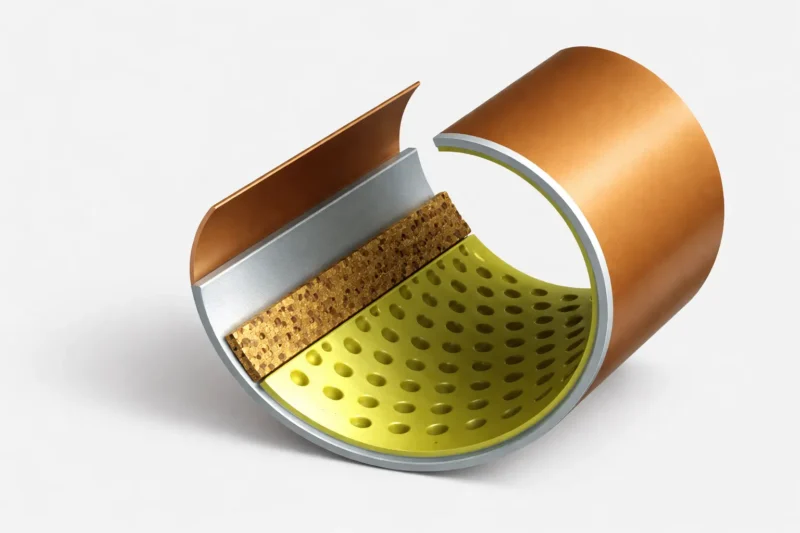
In our factory, we focus heavily on the material science[^5] behind bushings. The material is the key to shock absorption[^6]. A moving arm, like on an excavator or a tractor, is constantly subjected to impacts and oscillation[^7]s. Without a bushing, these forces travel directly from the arm into the machine's frame. This is where the bushing's material does its job. It compresses and deforms slightly to dissipate the energy from an impact, much like the suspension on a car. This prevents the shock from becoming a sharp jolt. We often work with clients to select the right material for their specific load and environmental conditions.
Bushing Materials for Vibration Damping
| Material | Key Feature | Best Use Case |
|---|---|---|
| Rubber | High elasticity | Automotive suspension, general-purpose applications |
| Polyurethane (PU) | High durability & stiffness | High-performance or heavy-load applications |
| Metal-Polymer Composite | Low friction & self-lubricating | High-cycle, maintenance-free industrial arms |
Choosing the right material ensures the bushing effectively dampens vibration for thousands of operating hours.
How do arm bushings provide controlled movement[^8]?
Do you find that your equipment's arms have sloppy, imprecise movements? This lack of control can make accurate work impossible and can even become a safety hazard over time.
An arm bushing provides a tight, yet flexible, connection. It allows the arm to pivot within a designed range but prevents excessive or unwanted motion. This ensures the equipment operates with the precision and stability required for the task, improving operator control.
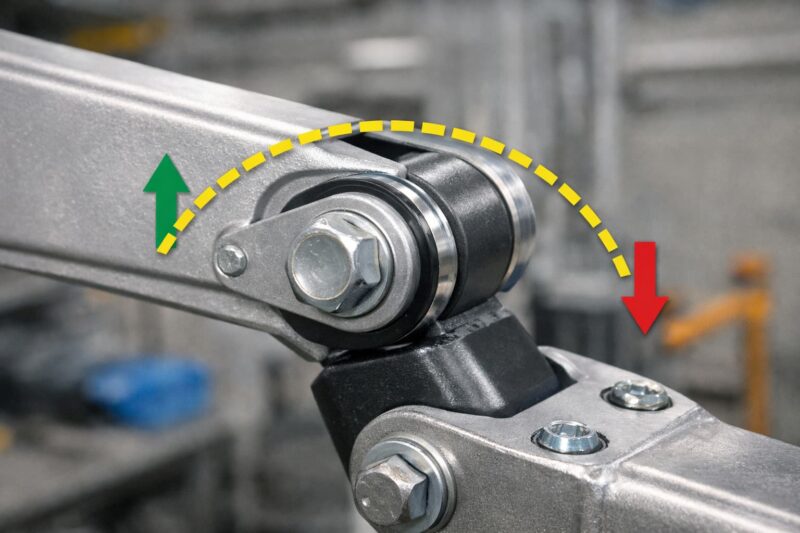
Think of it like a human joint. Your elbow can bend, but ligaments stop it from bending backward. An arm bushing functions in a similar way for a machine. It's not a bearing designed for 360-degree rotation. Instead, it's made for oscillation[^7]—back and forth or up and down movement within a specific arc. For a piece of equipment like a backhoe, this is critical. The operator needs to know that the bucket will move precisely where they direct it, without extra wobble or play. The bushing's design and material stiffness are engineered to provide this exact level of control. It keeps the pivot point firm, translating the operator's input into precise action and preventing the arm from shifting out of alignment under load.
The Impact of Controlled vs. Uncontrolled Movement
| Scenario | Without Bushing (or with worn bushing) | With a Properly Functioning Bushing |
|---|---|---|
| Excavator Digging | Bucket position is sloppy and hard to control. | Precise and repeatable bucket placement. |
| Vehicle Suspension | Poor handling, wandering steering. | Stable, predictable handling and control. |
| Industrial Robot Arm | Inaccurate positioning, failed tasks. | High-precision, repeatable movements. |
How do bushings prevent expensive metal-on-metal wear[^9]?
Are you facing frequent and expensive repairs of major components like pivot pins and control arms? This is often caused by direct metal-on-metal grinding at connection points, which quickly destroys parts.
An arm bushing acts as a sacrificial, replaceable wear surface. It sits between the pin and the arm housing, taking on all the friction and wear. This protects the much more expensive and integral parts of the machine from damage, drastically lowering maintenance costs[^10].
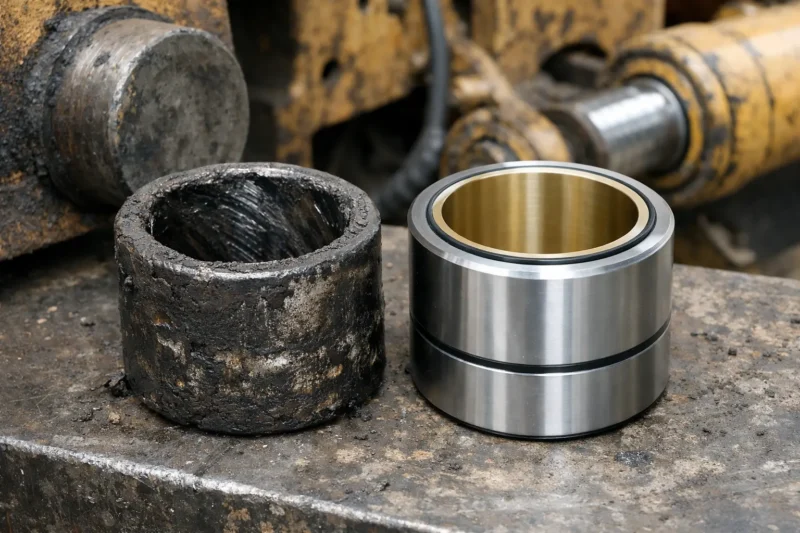
From my perspective as a manufacturer, this is one of the most important functions of a bushing. We design our products to be the first point of failure. That might sound strange, but it's a core principle of good mechanical design. Replacing a control arm or re-boring a worn-out housing on a large piece of machinery is a major job. It involves significant downtime and very high costs. Replacing a small, press-fit bushing, however, is a simple and inexpensive maintenance task. The bushing is designed to wear out over time. It's a consumable part. By sacrificing itself, it protects the structural integrity of the machine. This simple strategy saves our customers thousands of dollars over the life of their equipment and makes maintenance schedules predictable and manageable.
Is an arm bushing different from a regular bushing?
Do you get confused by the different names for bushings in catalogs and technical manuals? Terms like "plain bearing[^11]," "sleeve bearing," and "arm bushing" can seem interchangeable and confusing.
An "arm bushing" is simply a name that describes a bushing's application. It is a type of plain bushing or sleeve bearing specifically designed and installed in the pivot point of an arm. The fundamental technology is the same; the name just tells you where it's used.
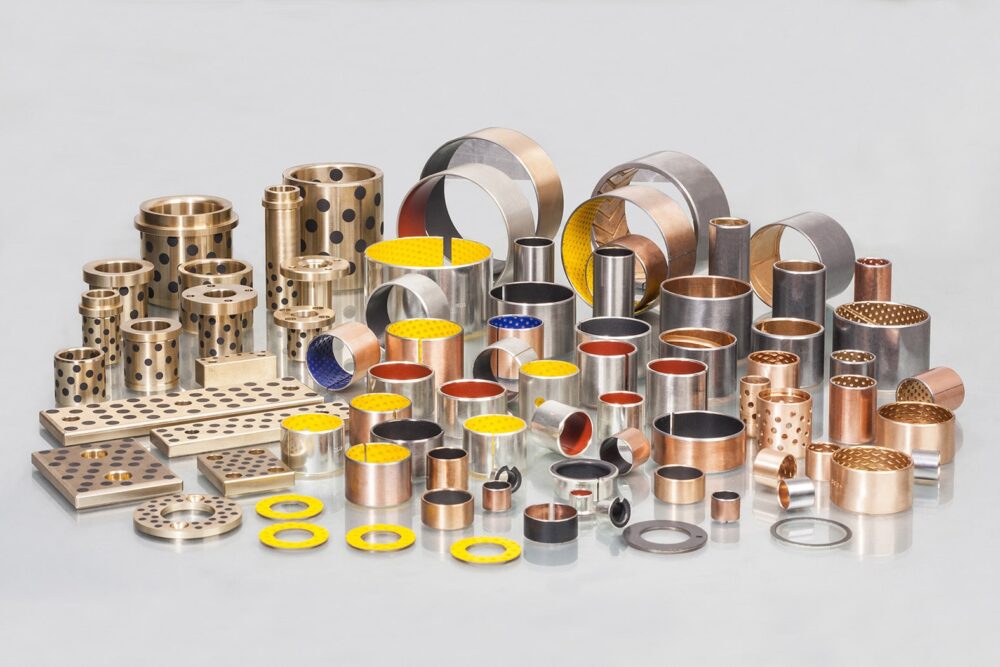
In the industry, we often use different terms for the same core product. "Bushing" is a general term. "Plain Bearing" is the more technical engineering term for a bearing that works through sliding motion, as opposed to a rolling-element bearing like a ball bearing. An "arm bushing" falls squarely into this category. It's a plain bearing that has been optimized for the specific loads, movements, and environment found in a control arm or linkage. For example, the materials might be chosen to handle high-impact loads, or it might have a flange to handle axial (side-to-side) forces. So, while the name is specific to its job, it is still a member of the wider family of plain bearings that we manufacture every day.
Understanding Bushing Terminology
| Term | Scope | Common Application |
|---|---|---|
| Plain Bearing | Broad Technical Category | Any sliding contact application |
| Bushing / Sleeve Bearing | General Component Name | Electric motors, gearboxes, pivot points |
| Arm Bushing | Application-Specific Name | Vehicle suspension, excavator arms[^12], linkages |
Conclusion
In summary, an arm bushing is a vital component that absorbs shock, controls movement, and prevents wear in equipment arms, significantly lowering long-term maintenance costs and improving operational performance.
[^1]: Understanding the function of an arm bushing can help you appreciate its role in machinery performance. [^2]: Learn about pivot points to understand their critical role in machinery functionality. [^3]: Learn about industrial bushings to understand their vital role in various machinery. [^4]: Polyurethane offers unique advantages; learn how it enhances bushing performance. [^5]: Explore how material science influences bushing effectiveness and machinery longevity. [^6]: Explore the science behind shock absorption to enhance your knowledge of machinery efficiency. [^7]: Learn about oscillation to better understand its effects on machinery performance. [^8]: Discover the significance of controlled movement for precision and safety in equipment operation. [^9]: Preventing wear can save costs; find effective strategies to protect your equipment. [^10]: Discover strategies to lower maintenance costs, ensuring your machinery runs efficiently. [^11]: Understanding plain bearings can clarify their applications and advantages in machinery. [^12]: Understanding excavator arms can enhance your knowledge of heavy machinery operations.