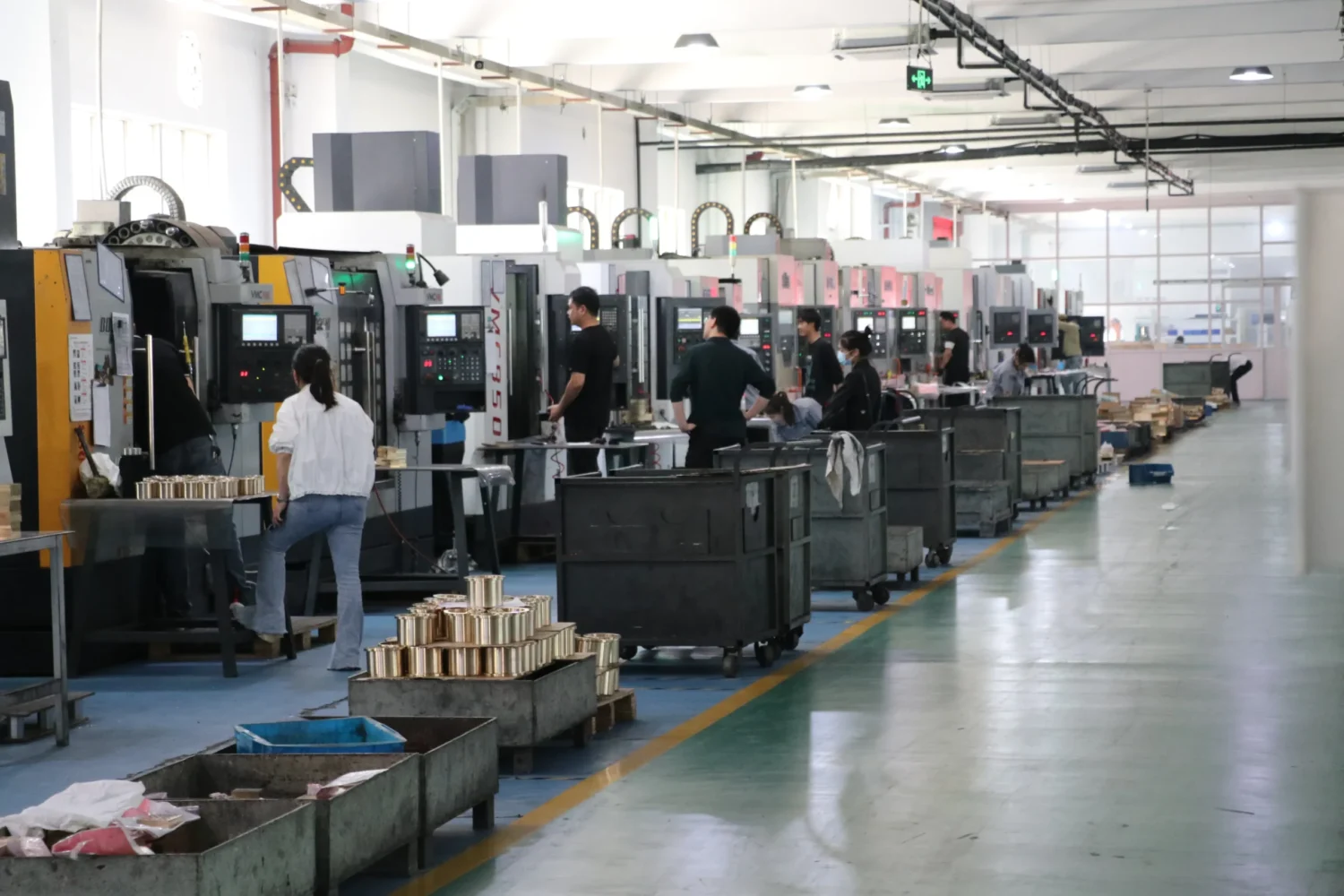
Choosing the wrong lubricant[^1] can lead to equipment failure[^2] and costly downtime. This mistake can cause seized parts, damaged machinery, and unexpected production stops, hurting your bottom line.
There is no single "best" lubricant for all bushings. The ideal choice depends on the bushing's material[^3], load, speed, and operating environment. The most common options include oil[^4], grease[^5], and various solid lubricants like graphite[^6] or PTFE[^7], each suited for different conditions.
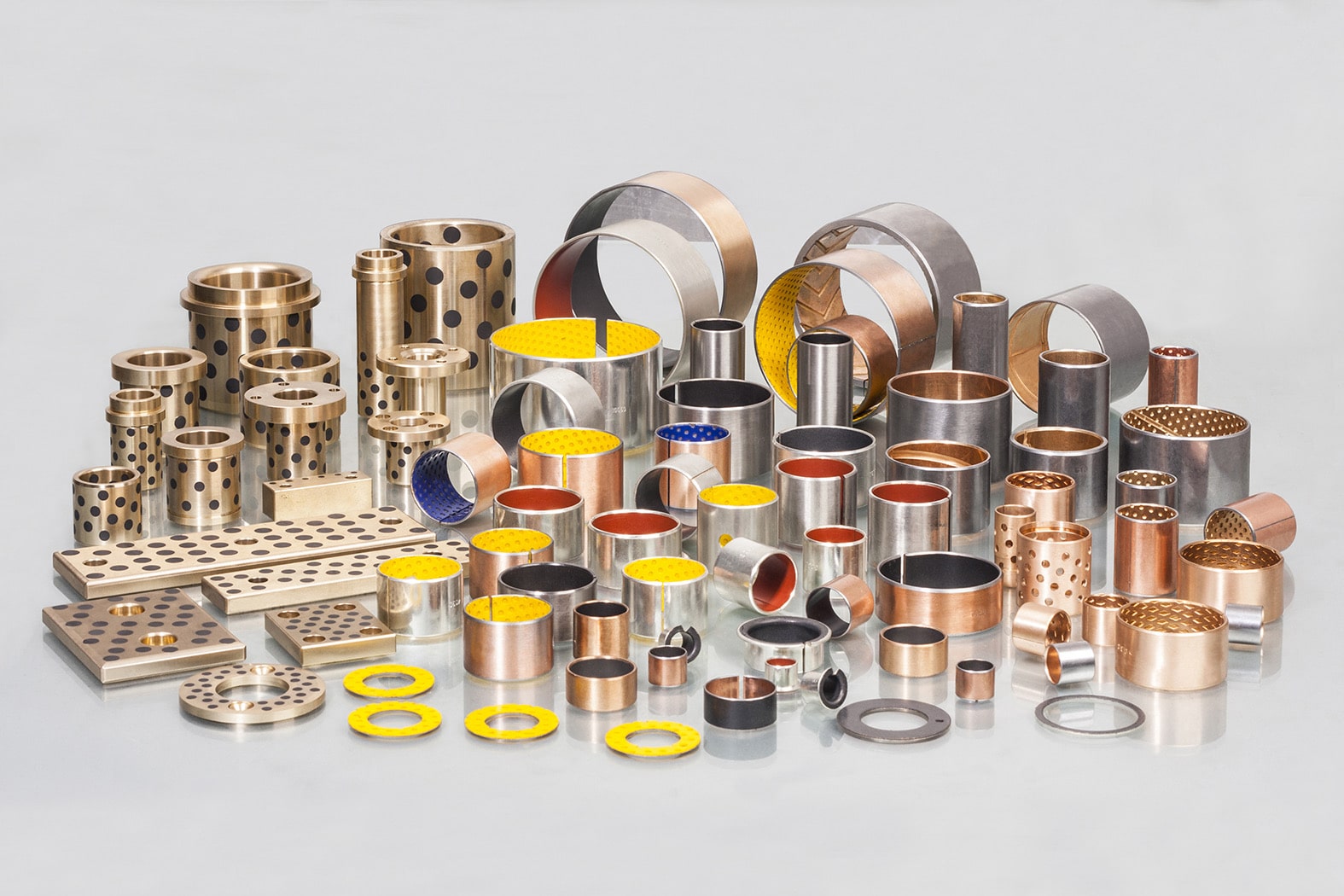
So, how do you navigate these choices to prevent premature wear and failure? The answer isn't always straightforward, but understanding the fundamentals can make a huge difference. Let's break down the options together to help you find the perfect match for your specific application and keep your machinery running smoothly.
Should you use oil or grease for your bushings?
Are you confused about whether to use oil or grease? Picking the wrong one can lead to poor lubrication, overheating, or contamination, causing unnecessary wear on your equipment.
Use oil for high-speed and low-load applications where it can also help carry away heat. Use grease for low-speed, high-load situations, as its thicker consistency helps it stay in place and seal out dirt and moisture.
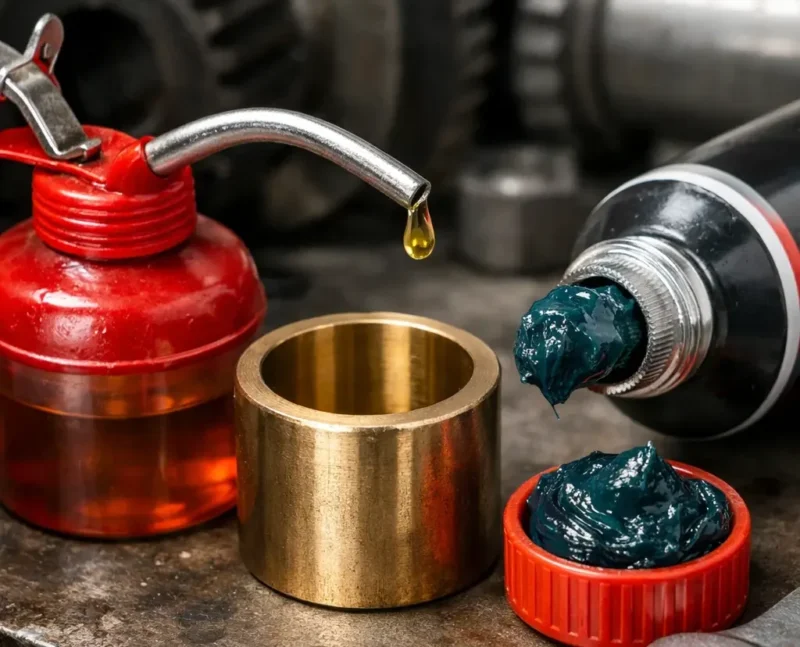
Let's dive deeper into this common question. I often speak with engineers who treat oil and grease as interchangeable, but they are designed for very different jobs. Choosing correctly is critical for the bushing's lifespan.
Oil Lubrication
Oil is great for applications that involve high rotational speeds. Its low viscosity means it flows easily into tight clearances and can effectively create a hydrodynamic film. This film separates the shaft and bushing, drastically reducing friction and wear. Another key benefit is its ability to transfer heat away from the bearing zone, which is crucial in high-speed machinery[^8] to prevent overheating. However, oil requires a good sealing system to keep it from leaking out and to prevent contamination from getting in.
Grease Lubrication
Grease is essentially oil mixed with a thickener. This thickener gives it a semi-solid consistency, allowing it to stay put. This makes it perfect for low-speed, high-load, and oscillating movements where oil would simply be squeezed out. It also acts as a great sealant, protecting the bushing from dust, water, and other contaminants. I remember a client in the agricultural machinery sector who switched to a specific grease for their pivot points. It dramatically reduced their maintenance intervals because the grease stayed in place despite the dirty and wet conditions.
Here is a simple table to help you decide:
| Feature | Oil | Grease |
|---|---|---|
| Speed | High | Low to Moderate |
| Load | Low to Moderate | High |
| Sealing | Requires separate seals | Provides some self-sealing |
| Heat Dissipation | Excellent | Poor to Fair |
| Application | Drip, Splash, Circulating | Manual, Grease Gun |
What are solid lubricants and when should you use them?
Are you worried about lubrication in extreme temperatures or clean environments where oil and grease just won't work? Traditional lubricants can burn off or cause contamination, leading to sudden failure.
Solid lubricants, like graphite or PTFE, are used when liquid lubricants are impractical. They are often embedded into the bushing material itself, providing continuous self-lubrication in high-temperature, vacuum, or food-grade applications without needing maintenance.
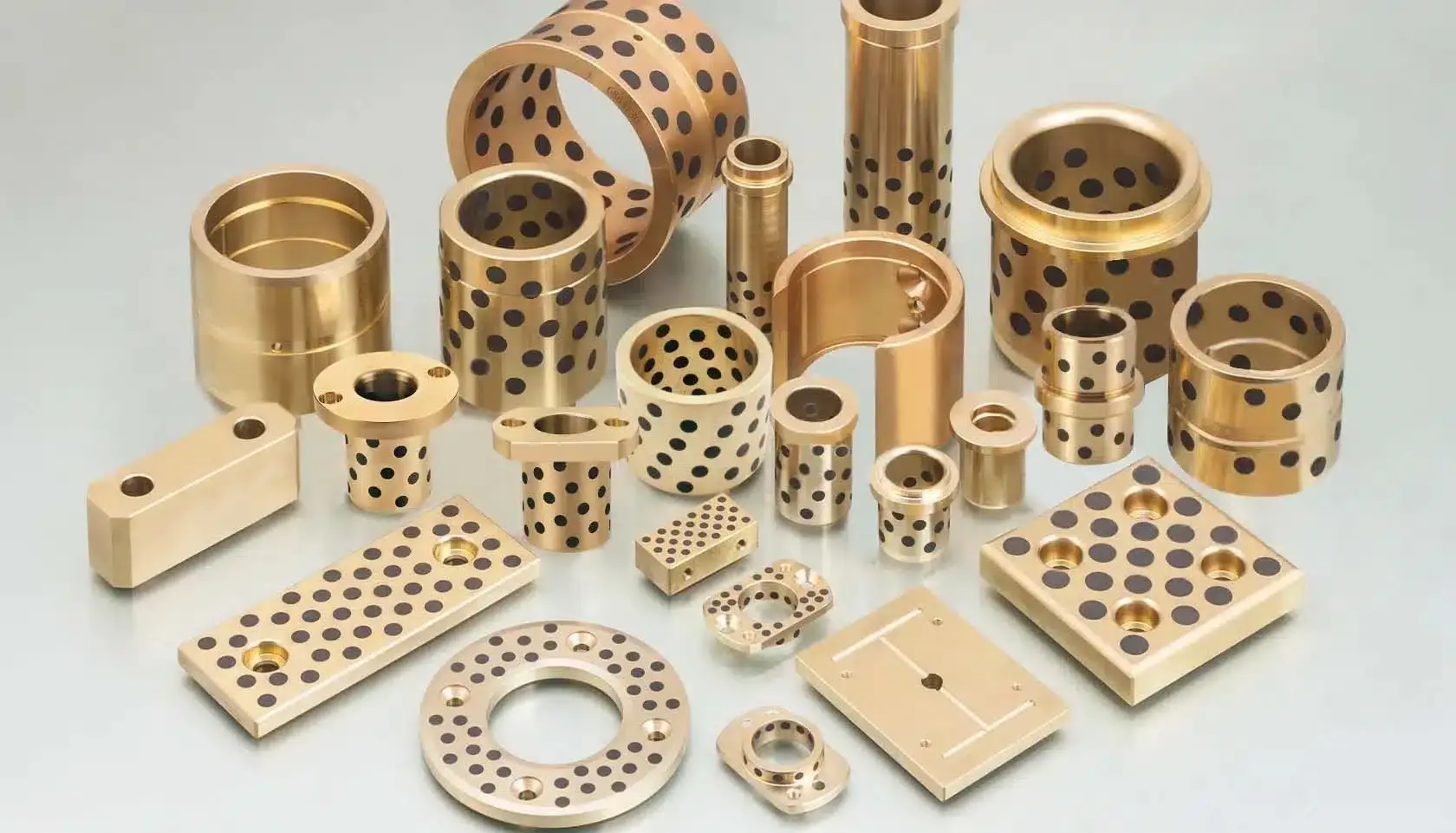
Solid lubricants are a fantastic solution for some of the toughest engineering challenges. At our factory, we produce many bushings that rely on this technology. They work by transferring a very thin layer of the solid material onto the mating surface, creating a low-friction film.
Graphite Lubricants
Graphite is one of the most traditional solid lubricants. We often see it used in bronze bushings. We manufacture these by drilling patterns into a cast bronze bushing and then pressing graphite plugs into the holes. As the bushing operates, a fine layer of graphite is transferred to the shaft, providing excellent lubrication. It performs very well in high-temperature environments where oil or grease would break down and carbonize. It is also great for slow, oscillating movements, like those found in dam gates or large construction equipment hinges.
PTFE (Teflon) Lubricants
PTFE is known for its incredibly low coefficient of friction. It's the key component in many of our maintenance-free[^9] composite bushings. For these, we bond a layer of PTFE mixed with other fillers onto a metal backing. This creates a self-lubricating surface that requires no external oil or grease for its entire life. These are ideal for applications where maintenance is difficult or impossible, or in industries like food processing where contamination from lubricants is a major concern.
Here’s a quick comparison:
| Lubricant | Primary Use Case | Temperature Limit | Key Feature |
|---|---|---|---|
| Graphite | High-load, low-speed, high-temp | Up to 450°C (842°F) | Good for harsh, dirty environments |
| PTFE | Maintenance-free, clean environments | Up to 260°C (500°F) | Extremely low friction |
How do bushing features like oil grooves[^10] affect lubrication?
Have you ever wondered if those holes and grooves on a bushing actually do anything? Ignoring their purpose can lead to lubricant starvation[^11] and cause your bushing to fail much sooner than expected.
Features like oil grooves, holes, and indentations are not random. They are carefully designed reservoirs that help store and distribute lubricant, like oil or grease, evenly across the bearing surface to ensure consistent and reliable performance.
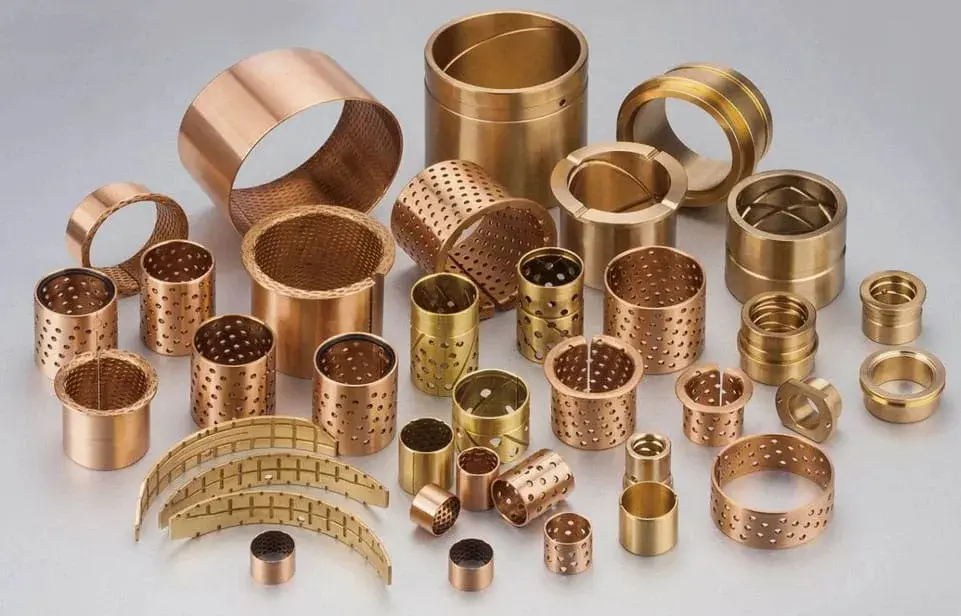
As a manufacturer, we spend a lot of time getting these features right. They are critical for turning a simple bushing into a reliable part of a lubrication system. They ensure that lubricant gets to where it is needed most.
Oil Grooves and Channels
Grooves are machined or formed onto the inner surface of the bushing to create a path for the lubricant. The pattern of the groove is very important. For example, a simple circular groove in the middle of a bushing can help distribute oil along its length. A figure-eight or double-loop groove is better for distributing lubricant during both rotational and oscillating movements. When a customer sends us a drawing, the groove design tells us a lot about the application it's intended for. We can then ensure our manufacturing process, whether it's for rolled bronze or machined bronze bushings, creates these patterns with precision.
Oil Holes and Pockets
Oil holes provide a path for lubricant to get from the outside of the bushing to the inside surface. These are often aligned with a grease fitting on the housing. Indentations, or oil pockets, are small dimples on the surface. We often produce rolled bronze bushings with these features. These pockets act as small reservoirs for grease or oil. They are especially effective during startup before a full lubricating film has been established, providing that initial lubrication to prevent metal-to-metal contact. They help ensure the entire surface remains lubricated, even under heavy loads.
Conclusion
The best lubricant is not a single product. It is a careful choice based on your bushing material, operating load, speed, and environment to ensure long-lasting and reliable machine performance.
[^1]: Understanding the risks of using the wrong lubricant can help you avoid costly equipment failures. [^2]: Explore the common causes of equipment failure to better protect your machinery and investments. [^3]: Learn how different bushing materials influence lubricant selection for optimal performance. [^4]: Discover the ideal applications for oil to ensure effective lubrication and machinery longevity. [^5]: Find out why grease is often preferred for certain applications and how it can enhance performance. [^6]: Explore the unique benefits of graphite lubricants for high-temperature applications. [^7]: Learn about PTFE's low friction properties and its applications in maintenance-free systems. [^8]: Find out which lubricants are most effective for high-speed applications to prevent overheating. [^9]: Discover the advantages of maintenance-free lubricants in reducing downtime and costs. [^10]: Understand the importance of oil grooves in ensuring effective lubricant distribution. [^11]: Learn about lubricant starvation and its impact on machinery performance.