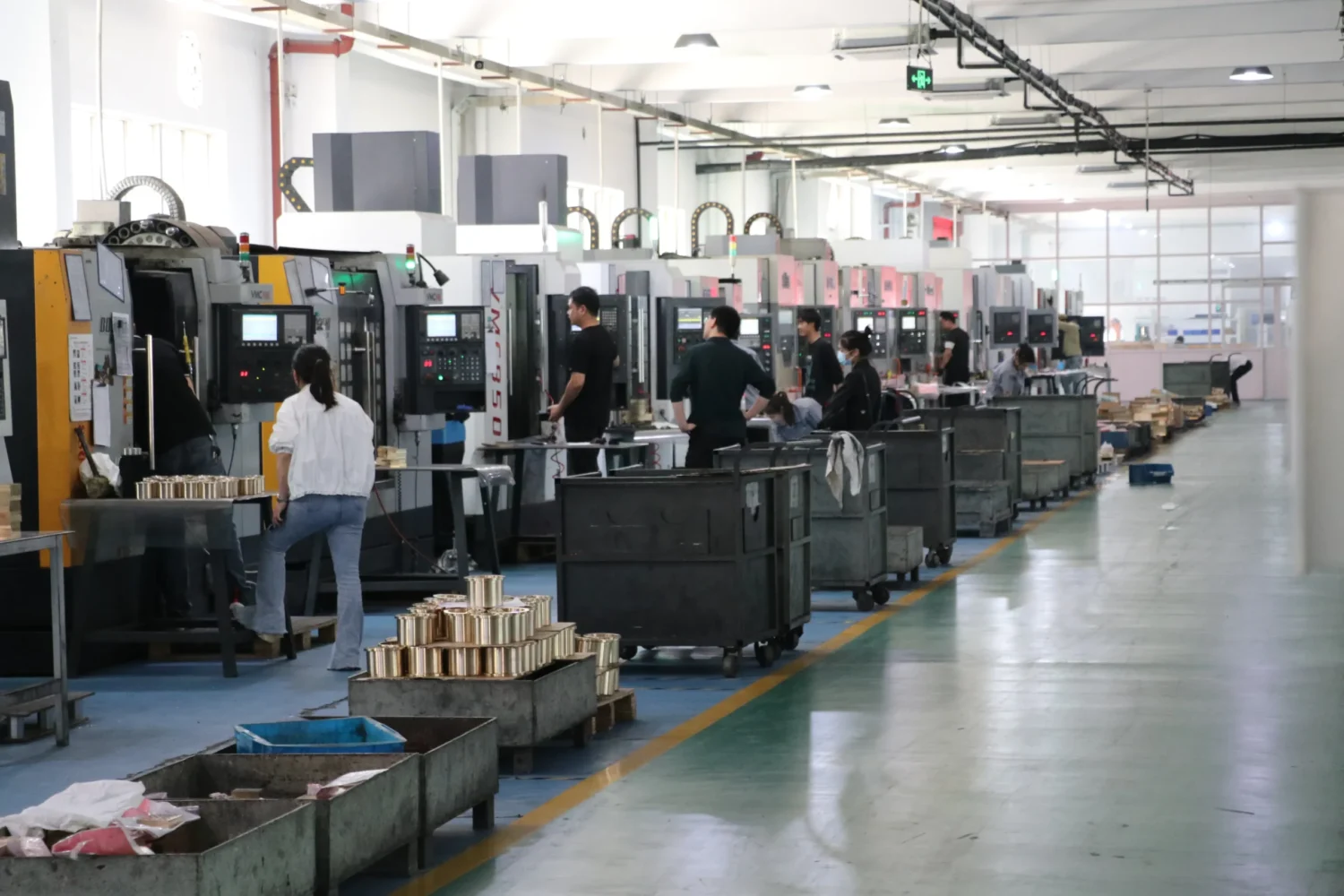
Choosing the wrong bronze can lead to equipment failure and costly downtime. You need a material that matches your load, environment, and maintenance needs perfectly.
For most industrial applications, Tin Bronze[^1] (like CuSn8[^2]) is the best all-around choice due to its high wear resistance and strength. For extreme loads or corrosive environments, Aluminum Bronze[^3] is superior. For self-lubricating needs, consider Graphite Plugged or Sintered Bronze[^4].
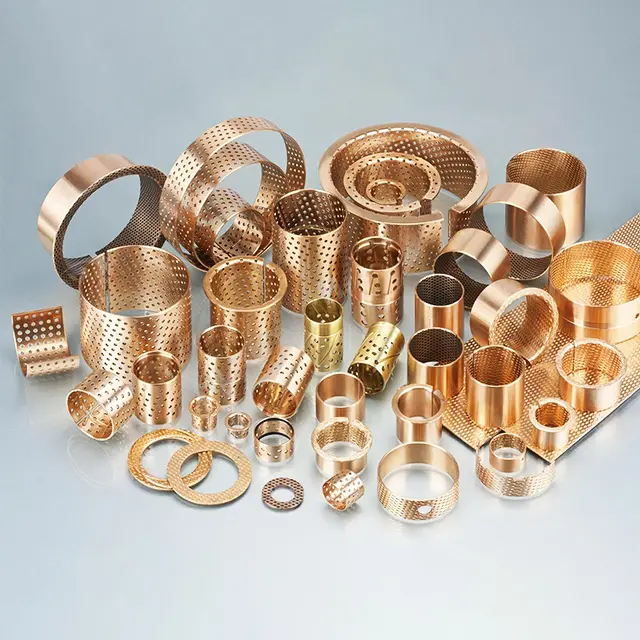
As a manufacturer, I talk to engineers and procurement managers every day. A common point of confusion is bronze. Many people think "bronze" is a single material. But it's actually a family of alloys, each with very different properties. Choosing the right one is critical for performance. Let's break down the most common types so you can make an informed decision for your next project.
What is the most versatile choice for industrial equipment?
Are you looking for a reliable, all-purpose bronze bushing? Picking a material that isn't strong enough can lead to premature wear and unexpected breakdowns in your machinery.
Tin Bronze is the most common and versatile choice for medium-to-high load industrial equipment. Alloys like CuSn8 offer a great balance of wear resistance, strength, and fatigue resistance, making them a safe and reliable default option for many applications.
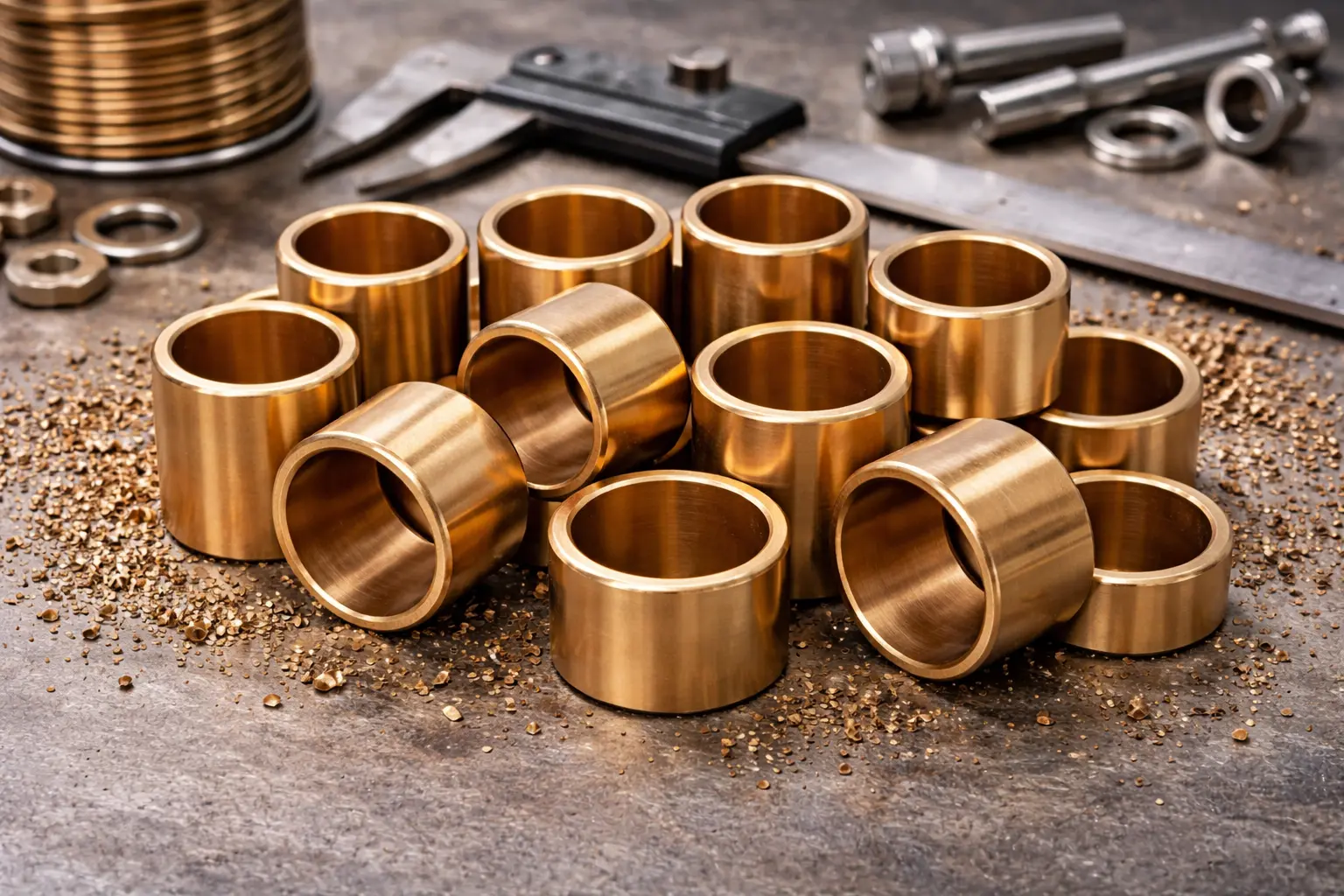
When we get a request for a "standard" bronze bushing, the customer is usually thinking of Tin Bronze. I often call it the default choice because it performs so well across a wide range of conditions. It's the workhorse of the bronze family. Its reliability comes from the addition of tin to copper, which significantly increases the material's hardness and strength. This makes it tough enough to handle the pressures found in most industrial machinery.
I remember a client who was developing a new line of industrial gearboxes. They needed a dependable bushing that could handle consistent loads without failing. We recommended CuSn8 Tin Bronze. Its proven performance gave them the confidence they needed for mass production. It's the go-to material when you need a solid, predictable solution without extreme environmental challenges.
Key Characteristics of Tin Bronze
Tin bronze's primary advantage is its balanced mechanical properties. It is not the strongest or the most self-lubricating, but it provides an excellent combination of features that make it suitable for a huge number of applications. The higher the tin content, the harder and stronger the alloy becomes, but it can also become more brittle.
Common Grades and Applications
| Grade | Key Feature | Typical Application |
|---|---|---|
| CuSn8 | High wear resistance, good strength | General machinery, gearboxes, pumps |
| CuSn10 | Higher strength and hardness | Heavy-duty gears, high-pressure parts |
| CuSn12 | Very high strength, for high pressure | Worm wheels, heavy load bearing surfaces |
For most projects, CuSn8 provides the best value and performance. It's a very forgiving material for parts that are regularly lubricated and operate under moderate to heavy loads.
When should you use high-strength Aluminum Bronze?
Do your machines operate under extreme loads or in corrosive environments? Using a standard bronze in these conditions can lead to rapid degradation and catastrophic failure of critical components.
You should use Aluminum Bronze for heavy-duty applications facing high impact, heavy loads, or corrosive environments like saltwater. Its exceptional strength and corrosion resistance make it a premium material for extreme conditions where other alloys would fail.
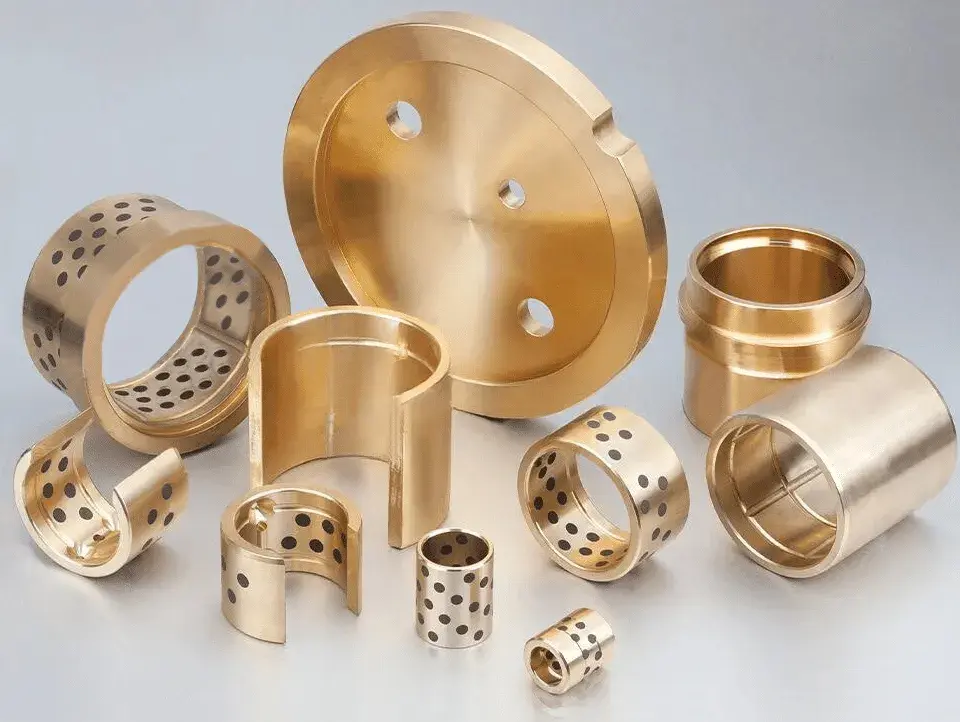
Aluminum Bronze is what I recommend when a customer says, "I need something tougher." This isn't your everyday bushing material; it's a high-performance alloy for the most demanding jobs. The addition of aluminum (and often iron and nickel) to copper creates a material with mechanical strength comparable to some steels. This makes it perfect for equipment that experiences high shock loads and immense pressure, like in mining or construction machinery.
A few years ago, a company that builds marine equipment approached us. Their parts were constantly exposed to seawater, and traditional bronze bushings were corroding too quickly. We switched them to an Aluminum Bronze alloy. The material's natural resistance to saltwater corrosion completely solved their problem and significantly extended the service life of their equipment. It's a perfect example of matching an advanced material to a specific, challenging environment. It is a premium material, but in these cases, it prevents much more costly failures.
Why Choose Aluminum Bronze?
Its primary benefit is its toughness. It can withstand forces that would deform or break other bronze alloys. It also forms a thin but very tough and adherent layer of aluminum oxide on its surface, which provides excellent protection against corrosion, especially from seawater, chlorides, and mild acids.
Ideal Use Cases for Aluminum Bronze
- Marine & Offshore: Propeller shafts, underwater fittings, and deck equipment where saltwater corrosion is a major concern.
- Heavy Construction Machinery: Pivot points, articulation joints, and landing gear parts on excavators, cranes, and earthmovers.
- Mining Equipment: High-load bearings in crushing and grinding machinery that endure intense impact and abrasive dust.
- Aerospace: Components like landing gear bushings that require high strength-to-weight ratio and reliability.
If your equipment operates at the edge of performance, Aluminum Bronze provides the extra margin of safety and durability you need.
What are the best options for lubricated systems?
Are you designing a system where lubrication is available but you want to optimize for low friction? Or maybe you need a part that can run for long periods with minimal attention?
For systems with reliable lubrication, Leaded Bronze offers excellent low-friction properties. For high-speed, light-load applications needing built-in lubrication, Sintered Bronze is the ideal choice as it is impregnated with oil.
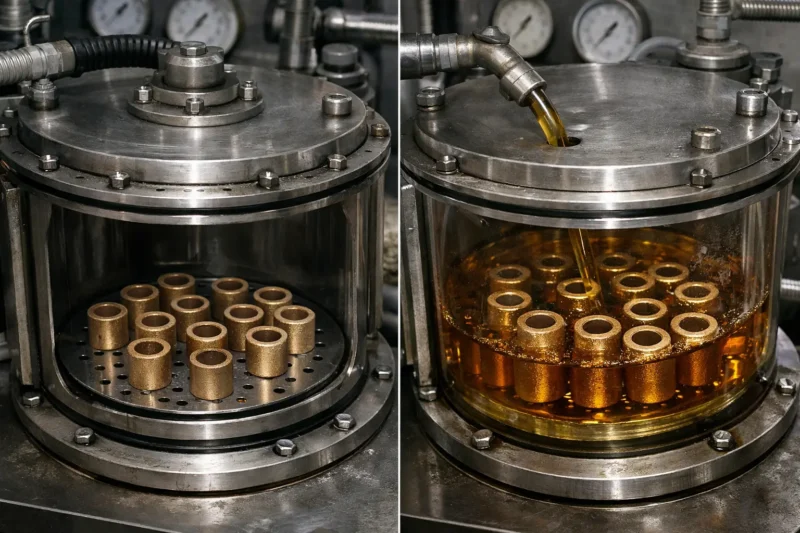
When friction is the main enemy, Leaded Bronze and Sintered Bronze offer unique solutions. They are not about pure strength, but about smooth operation. Leaded Bronze contains lead particles distributed throughout the copper-tin matrix. The lead acts as a solid lubricant, smearing across the surface during operation. This significantly reduces the coefficient of friction, which is great for parts that can be greased but might experience temporary oil starvation. It's also very easy to machine, which can be a plus for custom parts. However, it's important to note that environmental regulations in some regions restrict the use of lead, so you must check local requirements.
Sintered Bronze works differently. It is made from bronze powder that is pressed into shape and then heated (sintered). This process creates a porous structure, like a metal sponge. We then impregnate this structure with oil. During operation, the rotation and heat draw the oil out to the surface, providing a constant, self-lubricating film. This makes it perfect for small, high-speed applications like electric motors and fans where external lubrication is impractical.
Comparing Lubrication Specialists
| Material | Structure & Mechanism | Best For | Limitations |
|---|---|---|---|
| Leaded Bronze | Solid alloy with lead particles for solid lubrication. | Medium-speed, lubricated systems. Easy to machine. | Environmental restrictions on lead content in some areas. |
| Sintered Bronze | Porous, oil-impregnated structure for self-lubrication. | High-speed, light-load, precision equipment. | Lower load capacity than solid bronze. Limited to its own oil. |
Choosing between them depends on your load, speed, and maintenance strategy. Leaded Bronze is for lubricated systems needing an extra layer of protection, while Sintered Bronze is for creating a self-contained, lubricated system from the start.
Do you need a truly maintenance-free bronze bushing?
What if you have a pivot point that is impossible to grease? Or a bearing in a high-temperature environment where oil would burn off? These situations require a different kind of solution.
Yes, for a truly maintenance-free solution in demanding conditions, Graphite Plugged Bronze bushings are the answer. They provide continuous self-lubrication in high-temperature, heavy-load, or inaccessible locations where traditional lubrication is impossible.
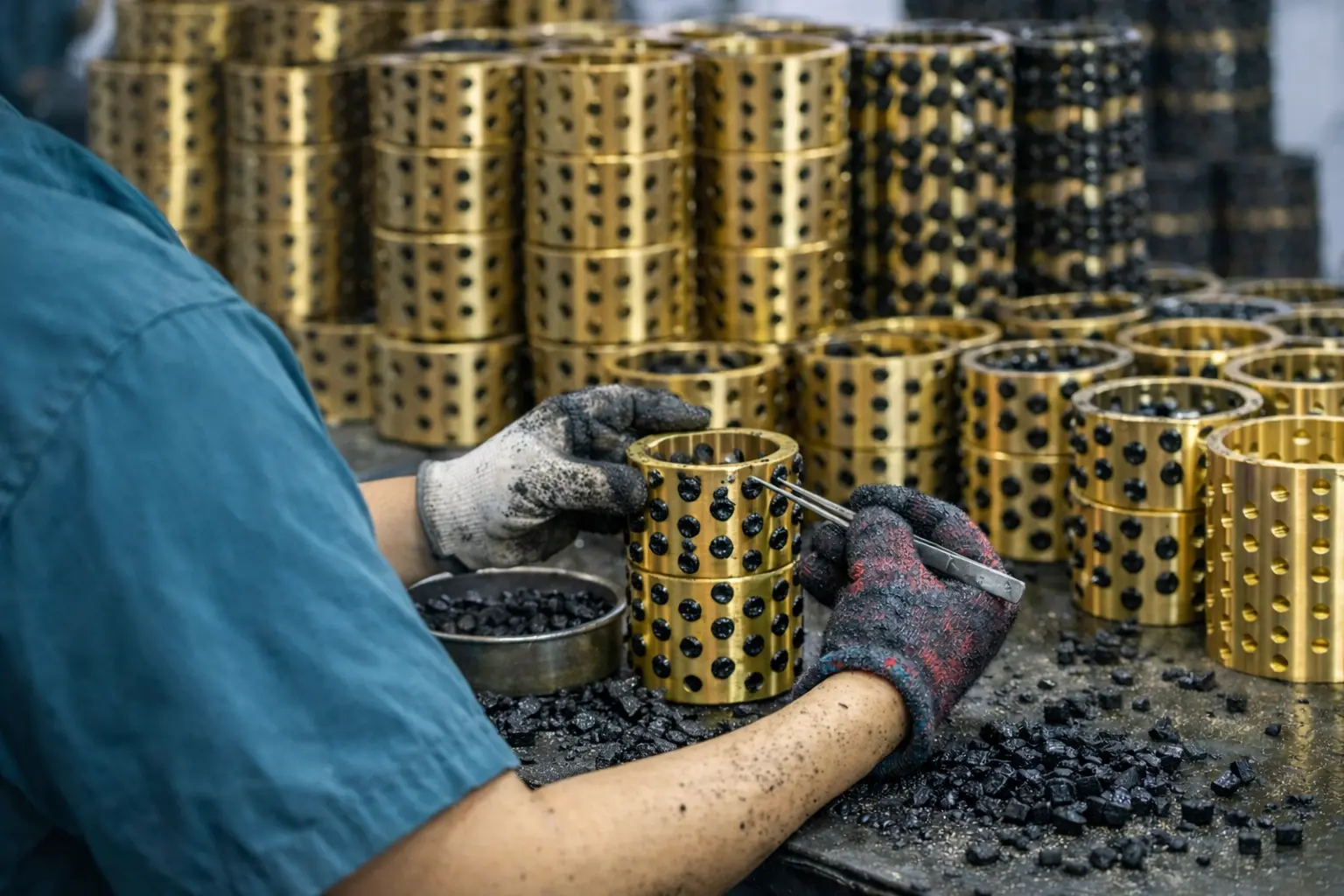
Graphite Plugged Bronze[^5] is not just a material upgrade; it's a completely different approach to lubrication. We start with a strong bronze base material, like tin bronze or aluminum bronze. Then, we machine a precise pattern of holes or grooves into the bushing and press solid graphite plugs into them. The graphite is a solid lubricant. As the bushing operates, a thin film of graphite transfers to the shaft, creating a durable, low-friction surface. This process works without any oil or grease, making it a "fit and forget" solution.
I often recommend this to clients in industries like steel manufacturing or food processing. In a steel mill, the high temperatures would vaporize any oil. In a food plant, grease contamination is unacceptable. Graphite plugged bushings solve both problems. They are perfect for slow-moving, high-load applications like oven hinges, conveyor rollers, or dam gates—any place where maintenance is difficult, costly, or simply not an option. It's an engineered solution designed to eliminate the need for lubrication entirely.
How Graphite Plugged Bushings Work
The principle is simple but effective. The bronze base provides the structural strength to handle heavy loads, while the graphite plugs deliver lubrication exactly where it's needed.
- Load Handling: The solid bronze body carries the full load, ensuring the bushing does not deform under pressure.
- Self-Lubrication: Motion causes microscopic particles of graphite to transfer from the plugs to the mating surface, creating a solid lubricating film.
- Wide Temperature Range: Graphite is stable at temperatures far higher than oil or grease, making it suitable for extreme heat.
This technology is ideal for applications that must run reliably for years without any intervention. It represents the peak of maintenance-free bearing design.
How do you select the right bronze material for your needs?
With all these options, how do you make the final choice? The wrong selection can compromise performance, while over-engineering can increase costs without adding real value to your product.
Select your bronze material by first considering the load, then the lubrication conditions, and finally the operating environment. This systematic approach ensures you choose the most effective and economical material for your specific application.
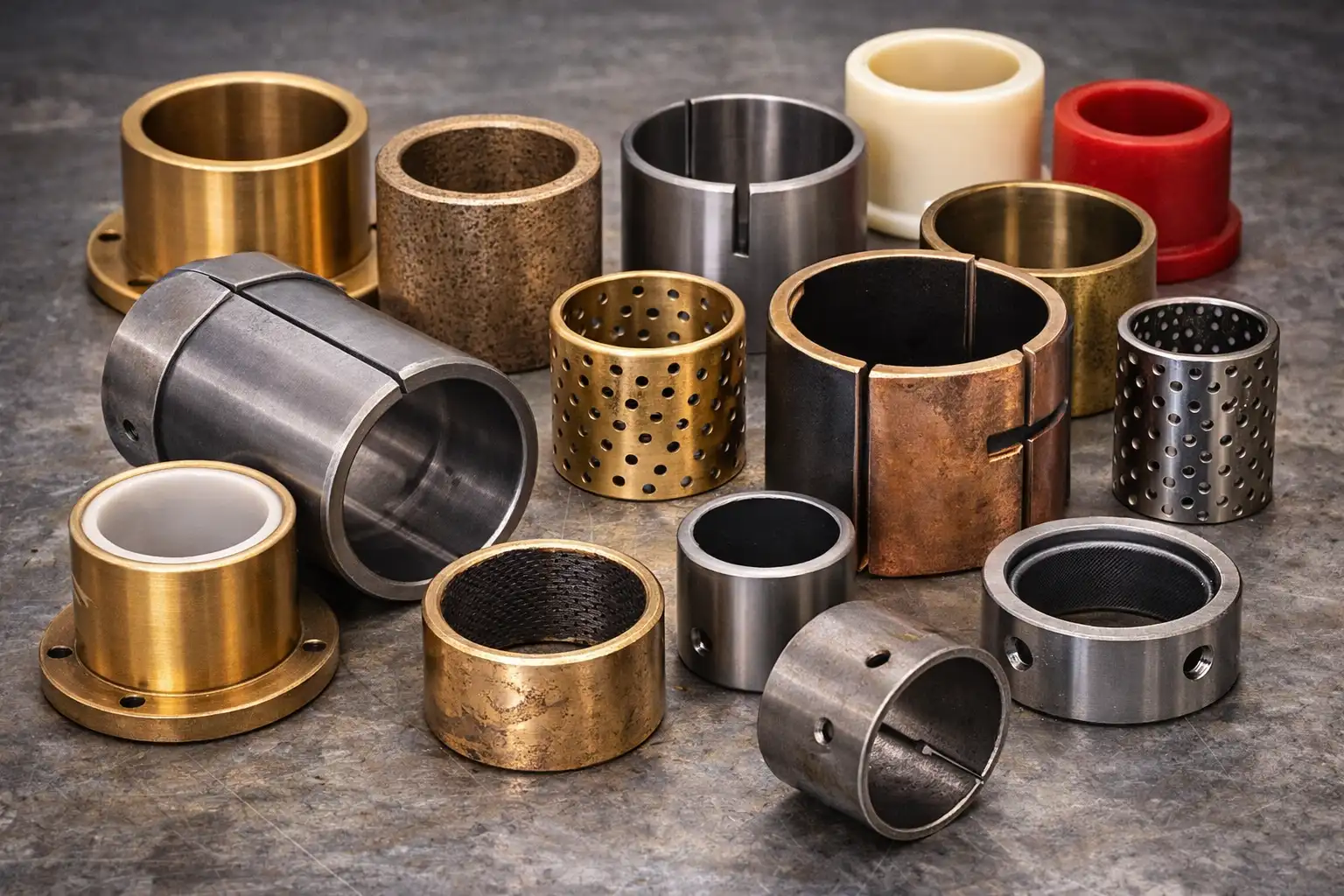
Over the years, I've helped hundreds of customers navigate this choice. We've developed a simple, three-step process to narrow down the options. It's not about finding a single "best" bronze, but about finding the right bronze for your machine. The key is to match the material's properties to the demands of the job. A material's hardness generally determines its wear resistance, its strength dictates load capacity, and its structure determines whether it can be maintenance-free.
Think of it as a funnel. You start with broad questions about the forces involved and get more specific about lubrication and environment. This helps you move from a wide range of possibilities to the one or two best candidates. I always tell my clients that while we can manufacture bushings from many specific alloys, understanding these main categories is the most important first step. It empowers them to design better, more reliable equipment.
A Simple Selection Guide
Here is a quick way to think about your selection process.
1. Select by Load:
- Heavy Load / High Impact: Start with Aluminum Bronze or Graphite Plugged Bronze (with a high-strength base).
- Medium-to-High Load: Tin Bronze is your most reliable choice.
- Light-to-Medium Load: Leaded Bronze or Sintered Bronze are excellent options.
2. Select by Lubrication:
- No Lubrication Possible: Graphite Plugged Bronze is the only true "no-lube" option.
- Intermittent or Manual Lubrication: Tin Bronze and Leaded Bronze perform very well.
- Built-in Self-Lubrication: Sintered Bronze is designed for this.
3. Select by Environment:
- Corrosive (e.g., Saltwater): Aluminum Bronze is the clear winner.
- High Temperature: Graphite Plugged Bronze excels where oils fail.
- Clean/Standard Environment: Any standard bronze like Tin Bronze will be sufficient.
By following this logic, you can confidently specify the right bronze bushing for your project, ensuring both performance and cost-effectiveness.
Conclusion
Choosing the right bronze material is key to your machine's reliability. By matching the alloy to your load, lubrication, and environment, you ensure long-lasting performance and avoid costly failures.
[^1]: Explore the advantages of Tin Bronze, known for its high wear resistance and strength, making it ideal for various industrial uses. [^2]: Learn about CuSn8, a popular Tin Bronze alloy, and its exceptional performance in machinery and equipment. [^3]: Discover why Aluminum Bronze is the go-to choice for extreme loads and corrosive environments. [^4]: Find out how Sintered Bronze offers built-in lubrication for high-speed, light-load applications. [^5]: Understand the unique self-lubricating properties of Graphite Plugged Bronze and its applications.