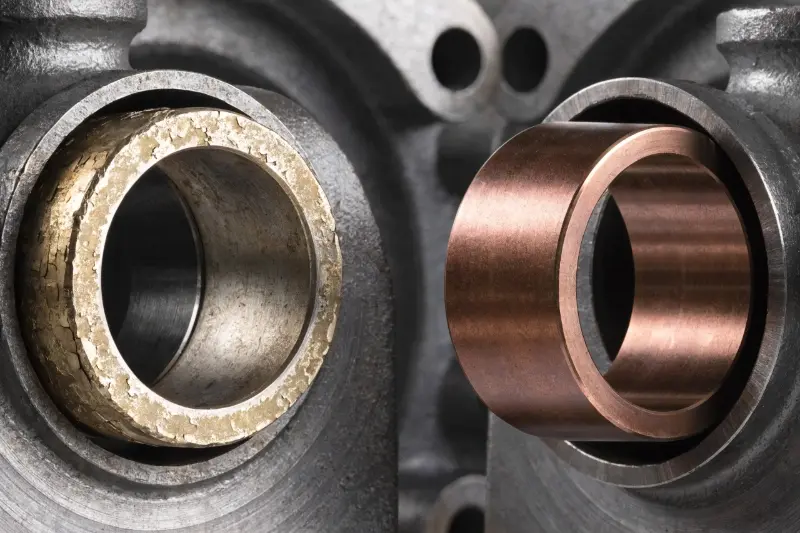
Choosing the right bushing feels complicated. You see steel and think "stronger," but a wrong choice can lead to seized shafts, costly downtime, and damage to your expensive equipment.
The best choice depends on your priority. Steel bushings offer high strength for impact loads.[^1] Bronze bushings provide superior anti-seizure properties and protect expensive shafts by wearing down first. The right material depends on whether you prioritize structural integrity or shaft protection.
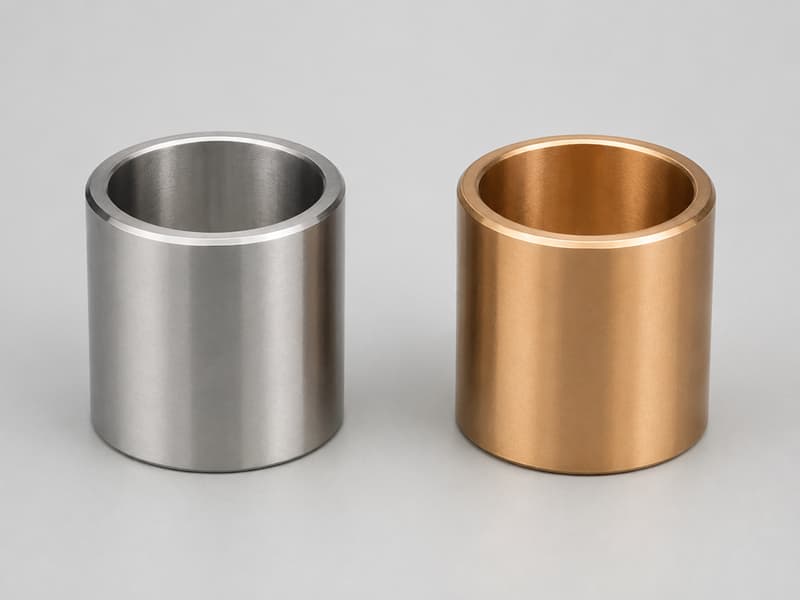
As a manufacturer, I talk to buyers every day, and this question comes up a lot. Many people believe a harder material is always better, but it's not that simple. The bushing is just one part of a larger system. Thinking about how all the parts work together is the key to making a smart decision that saves you money and headaches down the road. Let's break down this common idea that harder always means better.
Is a Harder Bushing Always More Durable?
Many buyers assume a harder steel bushing will naturally outlast a softer bronze one. This assumption can lead to unexpected failures and costly repairs when the expensive shaft gets damaged.
No, a harder bushing is not always more durable for the whole system. Durability depends on how all parts work together. Bronze bushings are often designed to wear out first, protecting the more expensive shaft. A hard steel bushing can destroy the shaft if lubrication fails.[^2]
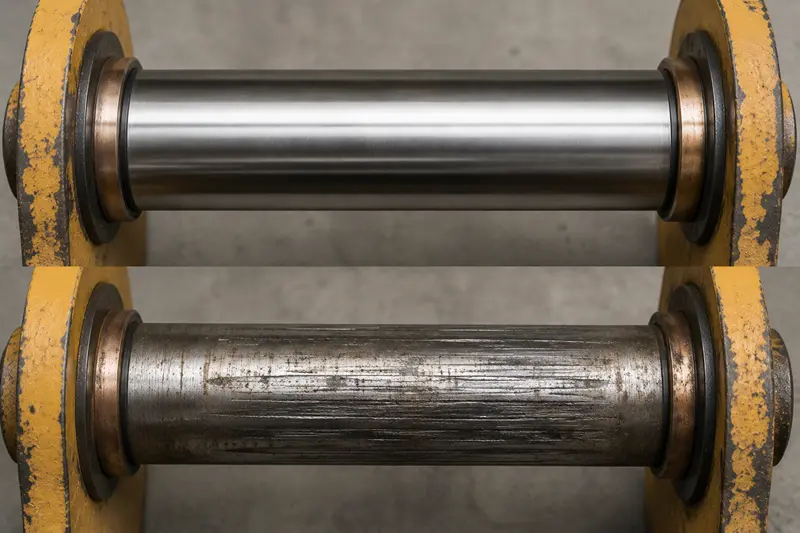
In our factory, we don't just think about the bushing; we think about the entire joint, which includes the bushing, the shaft, and the housing. The most important goal is to protect the most expensive and difficult-to-replace parts. Usually, that's the shaft or the equipment frame. A bronze bushing is intentionally made softer than a hardened steel shaft. This means the bushing wears down over time, acting as a "sacrificial" part. Replacing a small, inexpensive bushing is much easier and cheaper than replacing a large, custom-machined shaft. I once had a client who switched to hard steel bushings in his excavators to make them "last longer." A few months later, a lubrication line failed, and the steel bushing seized onto the main pivot pin, ruining both. The repair cost was ten times what a lifetime supply of bronze bushings would have been.
Key Trade-offs: Hardness vs. System Protection
| Factor | Hardened Steel Bushing | Bronze Bushing | The Factory Perspective |
|---|---|---|---|
| Failure Mode | Can seize and damage the shaft | Wears down predictably | Predictable wear is safer and cheaper. |
| System Cost | Low component cost, high risk of shaft repair | Higher component cost, protects the shaft | Protecting the shaft saves money in the long run. |
| Design Philosophy | Component strength is the priority | System reliability is the priority | We design for reliable, low-cost maintenance. |
So, When Should You Actually Choose a Steel Bushing?
You might have an application with extreme impacts and heavy loads. In those cases, using a softer material might lead to the bushing itself cracking or deforming under the stress.
Choose steel bushings for high-impact, heavy-load situations where structural rigidity is the top priority. They are perfect for applications like construction equipment pivots, where the bushing must withstand intense forces without deforming. But this requires excellent and consistent lubrication.
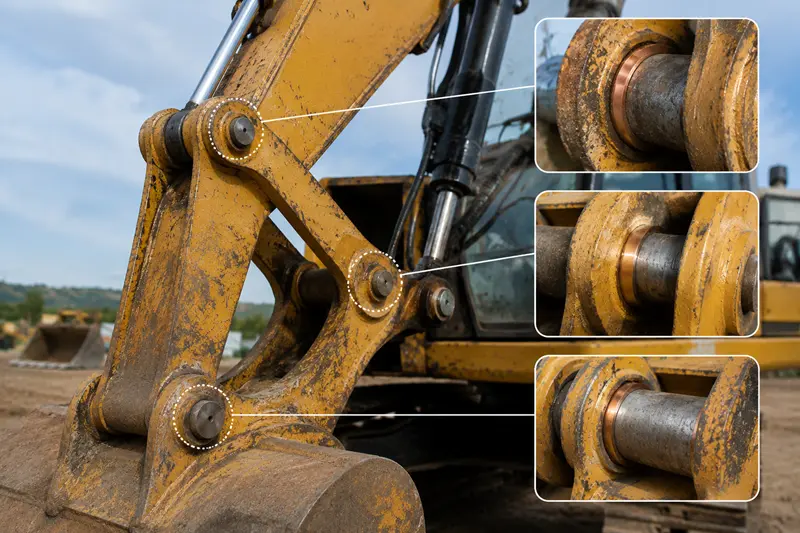
This is where the high strength of hardened steel bushings really shines. Think about the main joints in an excavator arm or a large industrial press. These points face incredible forces and constant shocks. The bushing must hold its shape and transfer that load without failing. A bronze bushing might be too soft and could get squeezed out of shape. However, this strength comes with a big responsibility: lubrication. Steel-on-steel contact generates a lot of friction and heat. Without a constant film of grease, the surfaces can gall, which means they scrape and stick to each other. This can quickly lead to a total seizure, locking up the joint and damaging the shaft. That's why, when we supply steel bushings, we always emphasize the importance of using them with hardened, polished shafts and a strict lubrication schedule.
Steel Bushing Application Guide
| Ideal Applications | Conditions to Avoid |
|---|---|
| High-impact pivots (e.g., excavators) | Poor or inconsistent lubrication |
| High-strength structural joints | Applications with soft or unhardened shafts |
| Situations needing maximum rigidity | Environments with high levels of abrasive dust |
Why Is Bronze Often the Go-To for Low-Speed, Heavy-Load Applications?
Your equipment might move slowly under very heavy loads, and any downtime is extremely expensive. A seized shaft could stop an entire production line or disable a critical machine on site.
Bronze bushings excel in low-speed, heavy-load conditions because of their natural lubricity and anti-seizure qualities.[^3] They are more "forgiving." If lubrication is briefly interrupted or contaminated, bronze is much less likely to seize and destroy the shaft. It acts as a reliable, sacrificial part.
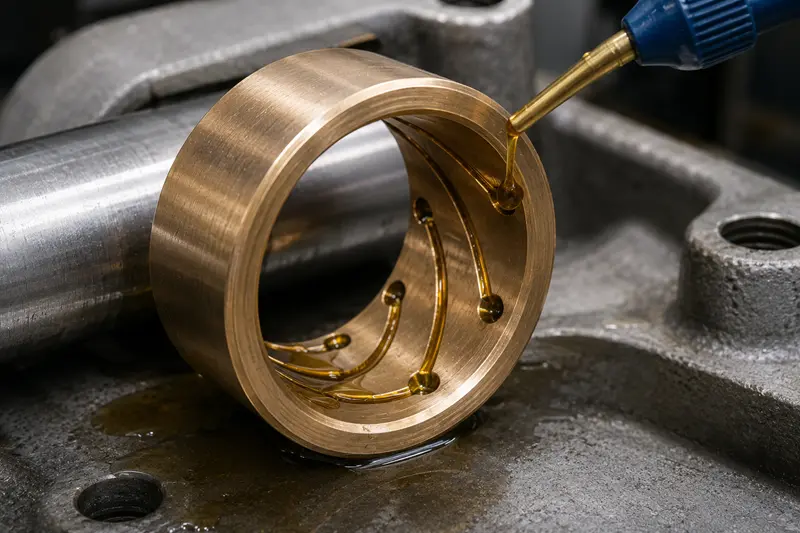
The magic of bronze is its relationship with steel. Because they are dissimilar metals, they have a much lower tendency to stick or weld together under pressure, a phenomenon called galling or seizure. This makes bronze incredibly reliable in applications where the motion is slow and the pressure is high. Furthermore, bronze is porous enough to absorb some lubricant, providing a bit of a safety net if the external grease supply is interrupted. It can also embed small particles of dirt or debris, which helps prevent them from scratching and scoring the expensive shaft. This is why you see bronze bushings everywhere in agricultural machinery, conveyor systems, and industrial mixers. They might wear out faster than a steel bushing in a perfect world, but in the real world of dirt, dust, and imperfect maintenance, their forgiving nature is a massive advantage.
Key Advantages of Bronze
- Anti-Seizure: As a dissimilar metal to a steel shaft, bronze greatly reduces the risk of galling and catastrophic failure.
- Embeddability: The material can absorb small contaminants, protecting the shaft from abrasive wear.
- Forgiving Nature: It performs more reliably under boundary lubrication conditions, where the grease film is not perfect.
Are Steel-Backed Bushings the Same as Solid Steel Bushings?
You might see "steel-backed" in a catalog and assume it's just another type of steel bushing. This confusion could lead you to specify the wrong part entirely for your application.
No, they are completely different parts for different jobs. A solid steel bushing is one piece of steel. A steel-backed bushing is a composite part with a steel base for strength and a different material, like PTFE or bronze powder, on the inside as the sliding surface.
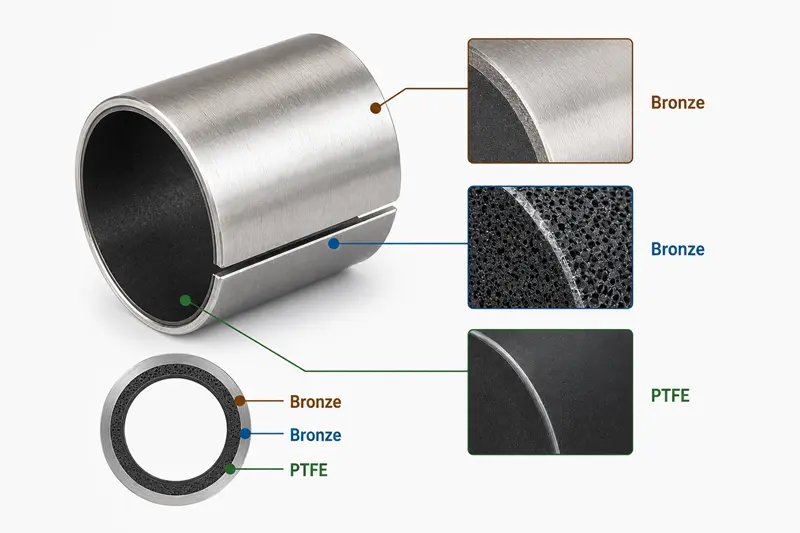
This is a critical distinction we make at our factory. Solid steel bushings are for structural strength. Steel-backed composite bushings are for low-friction or self-lubricating applications.[^4] The steel back provides excellent structural support and allows the bushing to be press-fit securely into a housing. But the work of sliding against the shaft is done by a special inner layer. For example, our SF-1 (DU-type) bushings have a PTFE layer for dry-running, maintenance-free applications like in office chairs or automotive hinges. Our bimetal bushings have a sintered bronze layer that holds grease exceptionally well, perfect for lubricated applications like engine components. These composite bushings combine the strength of steel with the friction properties of other materials, but they are not designed for the same extreme impact loads as a solid, hardened steel bushing.
Comparing Solid vs. Composite Bushings
| Bushing Type | Structure | Primary Use Case |
|---|---|---|
| Solid Steel | Single piece of hardened steel | High impact, structural strength |
| Steel-Backed (PTFE) | Steel + Sintered Bronze + PTFE | Dry running, self-lubricating |
| Steel-Backed (Bimetal) | Steel + Sintered Bronze | High load, lubricated applications |
Conclusion
The choice is not about hardness but a strategic decision. Choose steel for raw strength, but choose bronze to protect your expensive shafts and ensure predictable, low-cost maintenance.
[^1]: "TriSteel HMT – Hardened Steel Bushing for High Impact Use", https://www.tstar.com/technical-library/kelpdb650d1t5e39p4du85t12j. Steel bushings are commonly used in applications requiring high impact resistance due to their structural strength. Evidence role: mechanism; source type: encyclopedia. Supports: Steel bushings are suitable for high-impact applications due to their strength.. [^2]: "Galling", https://en.wikipedia.org/wiki/Galling. Steel bushings can cause damage to shafts under lubrication failure due to increased friction and galling. Evidence role: mechanism; source type: research. Supports: Steel bushings can damage shafts in the absence of proper lubrication.. [^3]: "FAQ - Why use Bronze Bushings?", https://www.ggbearings.com/en/resources/bearings-resources/faq/why-use-bronze-bushings. Bronze bushings are widely used in low-speed, heavy-load applications due to their lubricity and resistance to seizure. Evidence role: mechanism; source type: institution. Supports: Bronze bushings are effective in low-speed, heavy-load conditions.. [^4]: "Selecting Composite Bushings", https://www.youtube.com/watch?v=ik9BQM5Vpr4. Steel-backed composite bushings are designed for applications requiring low friction and self-lubrication. Evidence role: definition; source type: encyclopedia. Supports: Steel-backed composite bushings are used in low-friction, self-lubricating applications..