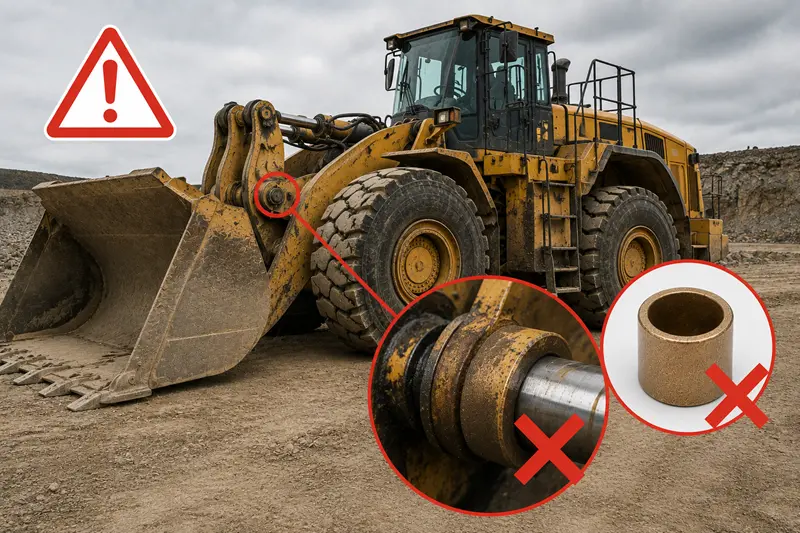
Constantly replacing worn bushings in your heavy machinery is costly. You suspect there's more to it than simple wear, but can't pinpoint the real issue. It's time for a better solution.
Bushing failure in heavy equipment is rarely just "wear and tear." It's often a symptom of system-wide issues like contamination, poor lubrication, misalignment, or improper assembly. Identifying the root cause, not just replacing the part, is key to a lasting fix and preventing future downtime.
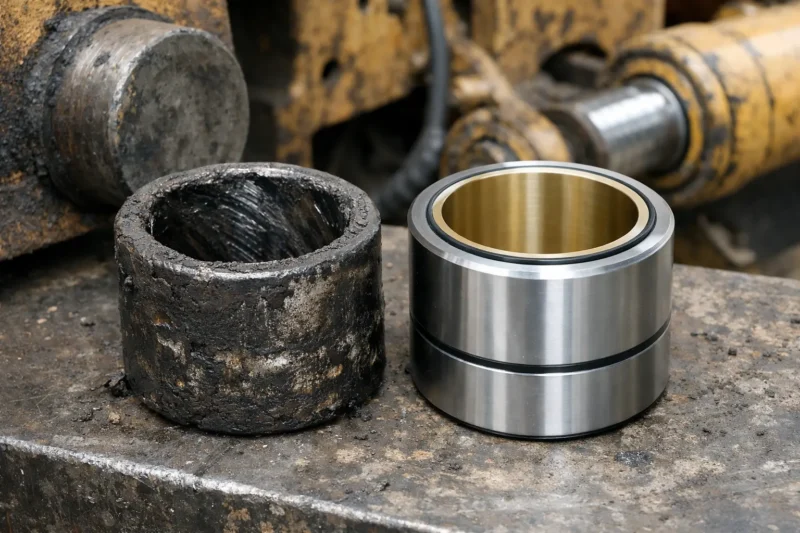
I've seen this happen time and again in our factory. A frustrated OEM buyer calls me, explaining that a new bushing they installed failed just as quickly as the old one. From my perspective in manufacturing, I know the bushing is only one component in a much larger system. To truly solve the problem, we need to look beyond the part itself. We must understand what's happening with the pin, the housing, the seals, and the lubrication. Let's break down the common signs of failure and what they're really telling you about your machine.
Why Does My Bushing Show Abnormal Wear So Quickly?
Your new bushing looks old and scored after only a short time in service. This premature failure is frustrating and makes you question the quality of the parts you're buying.
Abnormal wear is usually caused by external factors. Abrasive particles like dust getting past seals, insufficient lubrication to carry away heat and debris, or a rough or damaged shaft surface can all drastically shorten a bushing's life.
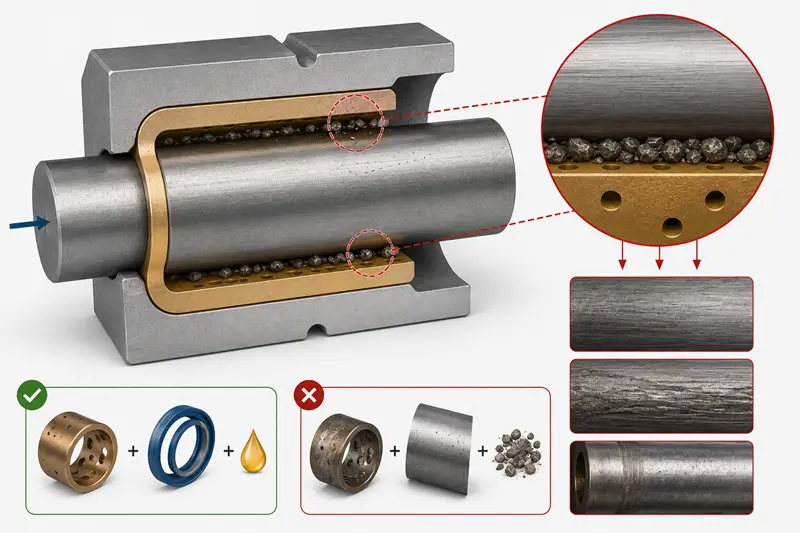
When we see a bushing that's worn out far too soon, the first thing we look for isn't a defect in the bushing, but a problem in its environment. From a factory standpoint, we build these parts to precise specifications, but they can't overcome a hostile operating system.
Contamination is the Enemy[^1]
In heavy equipment, dust, dirt, and grit are everywhere. If the seals on a joint fail, these particles get inside and act like sandpaper between the pin and the bushing. This is known as three-body abrasion, and it will grind down even the toughest materials in a very short time. It's the most common cause of premature wear I see.
The Lubrication and Shaft Surface Matter
Lubrication does more than reduce friction.[^2] It also creates a barrier and helps flush out small contaminants. If greasing is infrequent or insufficient, direct metal-to-metal contact occurs, accelerating wear. Furthermore, if you install a brand-new bushing onto a rough, scored, or damaged pin, the pin will act like a file and immediately destroy the bushing's smooth inner surface.
| Culprit | How it Causes Wear | What to Check First |
|---|---|---|
| Dust & Dirt | Acts as a third-body abrasive, grinding surfaces. | Integrity of the seals and wipers. |
| Poor Lubrication | Increases friction, heat, and direct metal contact. | Grease points, lubrication schedule, and type of grease. |
| Rough Pin | Scrapes and gouges the softer bushing material. | Pin surface finish, hardness, and any visible damage. |
What Causes a Bushing to Overheat and Seize?
A joint on your machine feels hot to the touch, and you're worried about seizure. This could lead to a catastrophic failure and expensive repairs if you don't address it quickly.
Overheating in bushings often points to an excessive PV value (Pressure x Velocity). This can be from too little clearance for the oil film, insufficient lubrication to dissipate heat, or the operating load and speed being higher than the bushing was designed for.
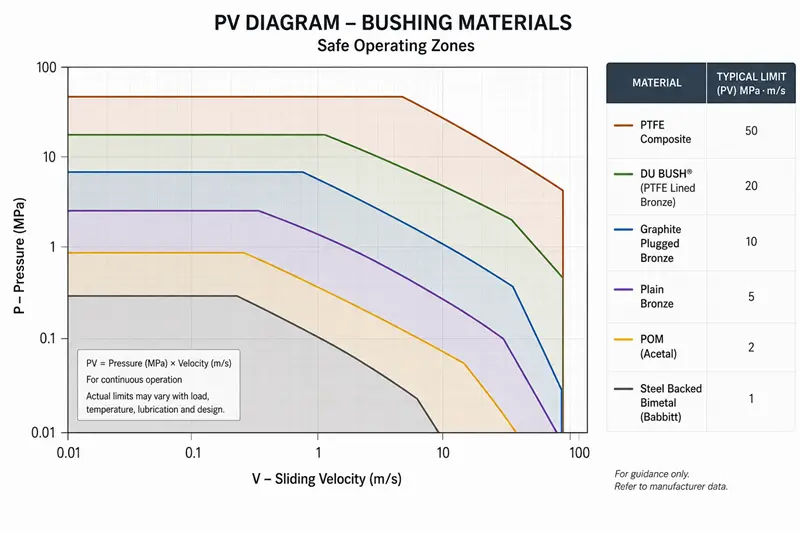
Heat is a clear signal that something is fundamentally wrong in the joint's mechanics. A bushing that runs hot will eventually fail, often by seizing to the pin, which can cause major damage to your equipment. The cause is almost always related to friction, and there are a few key reasons for that.
Understanding PV Value
Every bushing material has a PV limit, which is the maximum combination of pressure (load) and velocity (speed) it can handle before it starts to fail. If your application pushes the bushing beyond this limit, it will generate heat faster than it can dissipate it. This is a common issue when equipment is used for tasks it wasn't originally designed for.
The Importance of Clearance
The space between the pin and the bushing is critical. It must be large enough to allow a film of lubricant to form. If the fit is too tight (not enough clearance), the lubricant gets squeezed out. This leads to direct metal-to-metal contact, which generates a massive amount of friction and heat, leading to seizure.
| Symptom | Potential Cause | Factory Solution to Consider |
|---|---|---|
| High Heat | PV value exceeds material limits. | Review application data; select a higher-rated material. |
| Seizure | Clearance is too small; no room for oil film. | Check housing/shaft tolerances; adjust press-fit. |
| Discoloration | Lubrication breakdown from heat. | Verify lubrication type and frequency are correct for the load. |
Why Is My Bushing Cracking or Deforming Under Load?
You've discovered cracked or squashed bushings during maintenance. This is a serious red flag that suggests extreme forces are at play in your equipment, and a simple replacement won't fix it.
Cracking or deforming points to severe stress. This is often due to extreme impact loads that exceed the material's strength, choosing a material that's too brittle or soft for the job, or a design that concentrates stress on one small area of the bushing.
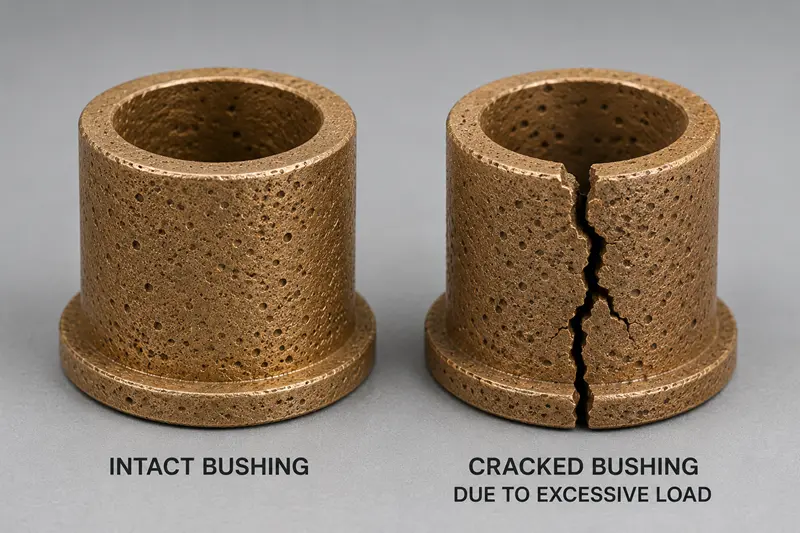
When a bushing physically breaks or changes shape, it's a sign of a force problem. The part was subjected to loads it simply wasn't designed to handle. This is more than just wear; it's a mechanical failure. As a manufacturer, this tells us there's a mismatch between the material properties and the real-world application.
Impact Loads vs. Static Loads
Heavy equipment, like an excavator bucket hitting a rock, generates massive shock loads. These are very different from the smooth, steady loads the machine might experience when lifting dirt. If the bushing material isn't tough enough to absorb this impact energy, it will crack. A very hard material might be good for wear, but it might be too brittle for high-impact environments.
Material Selection is Critical[^3]
This is where choosing the right bushing becomes so important. A bronze bushing might have excellent load capacity, but a steel-backed composite bushing might offer better performance in a dirty, poorly lubricated environment. Choosing a material that is too soft will cause it to deform or "squash" under heavy static loads.
| Failure Mode | Likely Cause | Design Consideration |
|---|---|---|
| Cracking | High impact load; material is too brittle. | Use a tougher, more ductile material. Analyze for shock loads. |
| Deformation | Static load exceeds material's yield strength. | Select a material with higher compressive strength. |
| Localized Damage[^4] | Stress concentration from housing design. | Ensure full support and add chamfers to edges. |
How Can I Stop Bushings from Coming Loose or Making Noise?
You hear a knocking or clunking sound from a joint, and find the bushing has worked its way loose. This looseness causes further damage to the housing and pin, creating a bigger problem.
Loosening and noise are classic signs of an improper press-fit. This can happen if the housing bore is oversized or worn, the bushing's outer diameter is undersized, or constant high-impact vibrations gradually "walk" the bushing out of its seat.
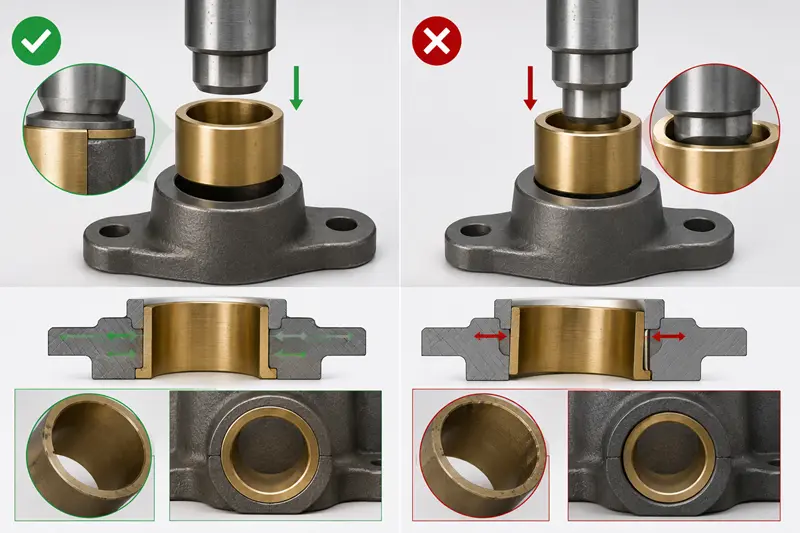
A bushing is supposed to be held tightly in its housing. If it moves, it can't do its job properly. This movement, or "spinning," quickly wears both the outside of the bushing and the inside of the housing bore, making the problem worse and leading to a very expensive repair.
The Science of Press-Fit
Bushings are held in place by a "press-fit" or "interference fit." This means the bushing's outside diameter is slightly larger than the housing's inside diameter. When pressed in, the housing compresses the bushing, holding it firmly. If the housing bore is worn and oversized, there's not enough interference, and the bushing will be loose from day one. This is why measuring the housing bore before installing a new bushing is so important.
When the Housing is the Problem
I've had many customers assume our bushings were made to the wrong size, only to find that their equipment's housing bore was worn far beyond the specified tolerance. In these cases, no standard bushing will fit correctly. The housing itself must be repaired or replaced first. Constant vibration and hammering can also slowly enlarge the bore over time, causing a once-tight fit to become loose.
| Problem | Root Cause | How to Check |
|---|---|---|
| Bushing Spins/Moves | Insufficient press-fit. | Measure housing bore ID and bushing OD with calipers. |
| Knocking Noise | Excessive clearance between pin/bushing or bushing/housing. | Check all component tolerances against specs. |
| Fretting (Red Dust) | Micro-movement from vibration causing corrosion. | Inspect housing for wear and a rusty powder residue. |
Conclusion
To truly solve bushing problems, look beyond the part. Address the system—lubrication, alignment, and loads—to prevent recurring failures and maximize your machine's uptime and long-term reliability.
[^1]: "Mechanical property analysis and dry sand three-body ... - PMC", https://pmc.ncbi.nlm.nih.gov/articles/PMC10794707/. This source explains how contamination, particularly dust and dirt, contributes to premature wear in mechanical joints, including bushings. Evidence role: mechanism; source type: research. Supports: Dust, dirt, and grit are everywhere in heavy equipment environments, and if seals fail, these particles act like sandpaper between the pin and the bushing.. Scope note: The source may focus on specific types of machinery or environments, limiting general applicability. [^2]: "Lubrication increases the efficiency and life-expectancy of ...", https://www.graco.com/gb/en/vehicle-service/solutions/articles/what-is-lubrication-and-why-is-it-important.html. This source explains the multiple roles of lubrication, including reducing friction and flushing out contaminants, in mechanical systems. Evidence role: mechanism; source type: education. Supports: Lubrication creates a barrier and helps flush out small contaminants in addition to reducing friction.. Scope note: The explanation may focus on specific types of lubrication or applications. [^3]: "Sliding material and bushing type selection guides", https://www.skf.com/us/products/plain-bearings/bushings-thrust-washers-strips/principles/type-selection-guides. This source provides guidelines for selecting bushing materials based on environmental factors and application requirements. Evidence role: expert_consensus; source type: education. Supports: Choosing the right bushing material, such as bronze or steel-backed composite, is essential for performance in specific environments.. Scope note: The recommendations may not cover all possible materials or applications. [^4]: "Stress Concentration Caused by Sudden Change in Form", https://web.njit.edu/~sengupta/met%20301/Stress%20Concentration.pdf. This source discusses how stress concentration from housing design can lead to localized damage in bushings. Evidence role: mechanism; source type: research. Supports: Stress concentration from housing design can cause localized damage to bushings.. Scope note: The discussion may focus on specific housing designs or applications.