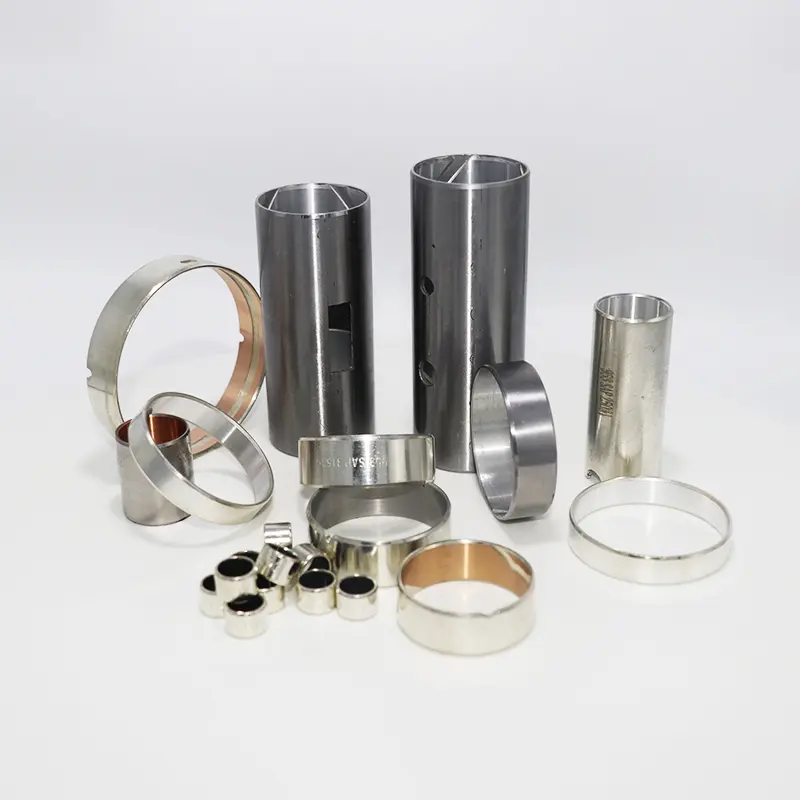
Your car's joints need lubrication but are hard to reach. This leads to high maintenance costs, noise, and potential failure, creating long-term problems for both drivers and manufacturers.
Self-lubricating bushings are critical because they shift reliability from post-assembly maintenance to the initial design phase. They reduce noise, lower failure risks, and ensure long-term performance in hard-to-reach automotive parts like suspension systems, seat mechanisms, and steering components.
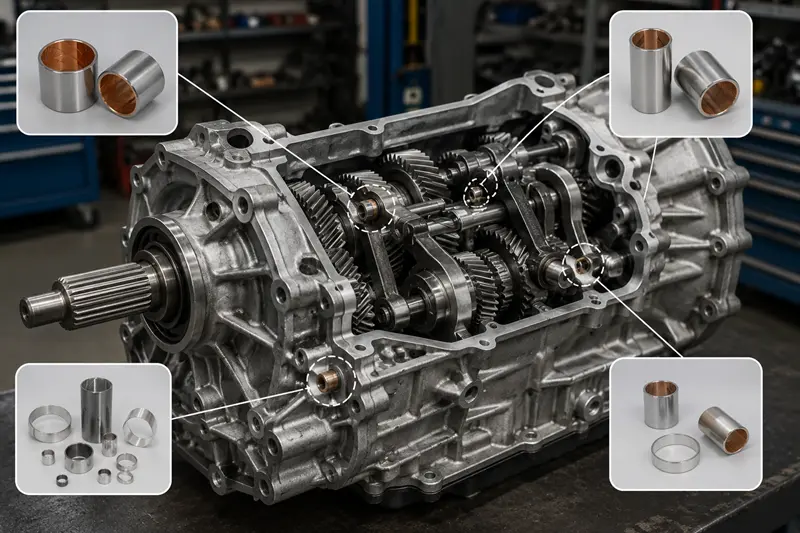
When we talk about self-lubricating bushings in cars, the goal isn't just about saving a bit of grease. The real value is in designing a component that works reliably for the vehicle's entire life without needing a mechanic to get to it. It's about building in reliability from day one. But not all self-lubricating solutions are the same. Choosing the right one is key, because a bushing designed for a car seat will fail instantly in a suspension joint. Let's break down the options.
Which Self-Lubricating Bushing Is Right for Quiet, Low-Friction Operations?
You need a smooth, silent motion inside the car, but standard bushings can squeak and wear out. This creates annoying noises and warranty claims that damage your brand's reputation.
For quiet, low-friction operations, PTFE and POM composite bushings are the ideal solution. PTFE offers the lowest friction for mechanisms like seat adjusters, while POM provides excellent wear resistance for applications like pedal systems.[^1]
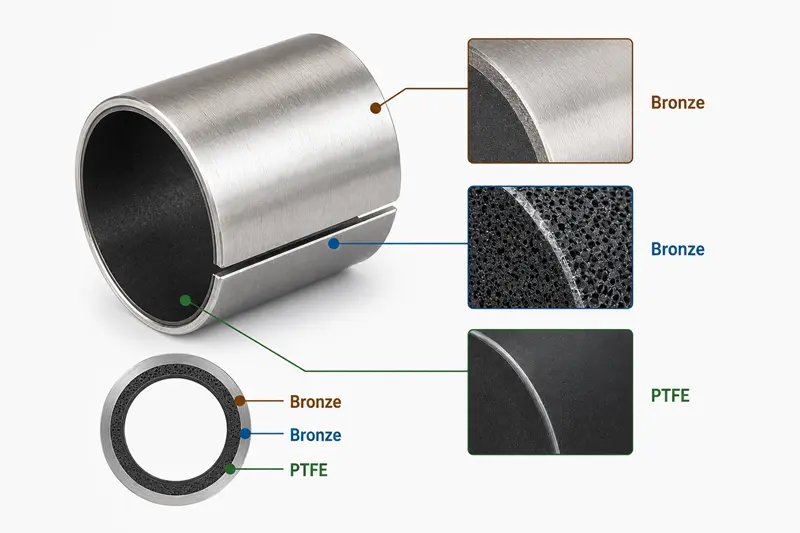
When a customer adjusts their car seat or presses the brake pedal, they expect a smooth and silent experience. This is where the material science of bushings becomes incredibly important for Noise, Vibration, and Harshness (NVH) control. As a factory, we often see a direct link between the right bushing material and customer satisfaction. PTFE and POM composite bushings are our go-to solutions for these applications. They are built with a steel backing for strength, a sintered bronze layer to bond the polymer, and a polymer sliding layer. The main difference is that top layer.
PTFE vs. POM: A Quick Comparison
PTFE is the material you know as Teflon. It has an extremely low coefficient of friction, which is perfect for smooth, repetitive sliding or oscillating motions. POM, or acetal, is a tough, wear-resistant plastic that can handle higher loads and is often more cost-effective.
Here's a simple breakdown:
| Feature | PTFE Composite Bushings | POM Composite Bushings |
|---|---|---|
| Friction | Extremely Low (Dry) | Low (Needs some grease) |
| Wear Resistance | Good | Excellent |
| Best Use Case | Seat adjusters, hinges, latches | Pedal systems, steering columns |
| Key Benefit | Silent, smooth motion | Durability and cost-effectiveness |
Choosing between them depends on the exact needs of the joint. For a premium feel and absolute silence, PTFE is unmatched. For a durable, long-lasting joint that sees a lot of use, POM is a very reliable choice.
How Do You Handle Lubrication in High-Load or High-Temperature Areas?
Some automotive parts get very hot or carry heavy loads. In these spots, traditional grease can break down, burn off, or be squeezed out, causing rapid wear and component failure.
For high-load or high-temperature areas, sintered oil-impregnated and graphite-plugged bushings are the answer. Sintered bushings release stored oil as needed, while solid graphite plugs provide lubrication at extreme temperatures where grease fails.
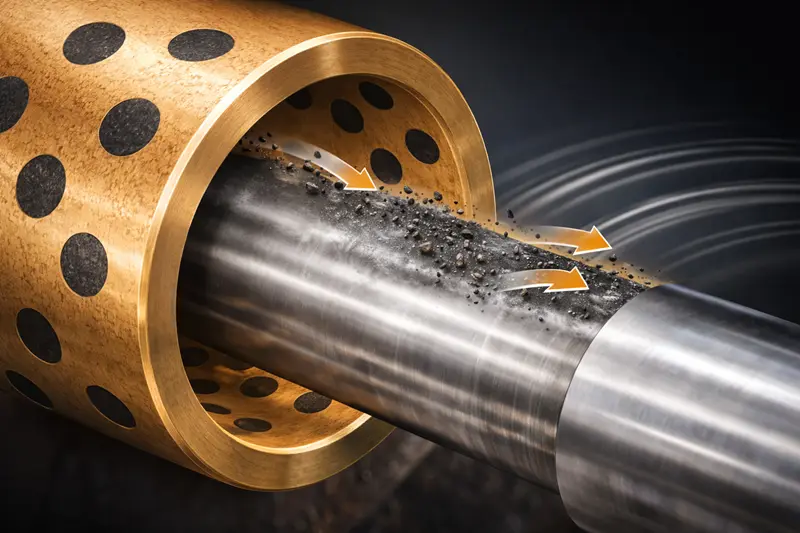
Think about the parts of a car that work the hardest, like suspension kingpins, or get the hottest, like components near the exhaust system. These are not places for standard plastic-lined bushings. You need a solution that is tough by design and doesn't depend on a thin layer of grease that will disappear quickly. I remember a client who was having issues with bushings in an EGR valve system. The heat was just too much. The solution was a bushing designed for extreme temperatures. This is where sintered and graphite-plugged bushings shine. They provide their own lubrication in completely different, but equally effective, ways.
Sintered vs. Graphite Plugged Bushings
Sintered bushings are made from powdered metal pressed into a shape and heated until it fuses, creating a porous structure. We then impregnate this structure with a high-performance oil. As the shaft spins, it warms the bushing, and the oil is released to create a lubricating film. When it stops, the oil is drawn back in.
Graphite plugged bushings are different. They are solid bronze bushings with holes drilled into them, which are then filled with solid graphite plugs. The bronze provides the strength to handle heavy loads, while the graphite provides lubrication as it wears, especially at temperatures that would burn off any oil.
| Feature | Sintered Bushings | Graphite Plugged Bushings |
|---|---|---|
| Load Capacity | Medium | High to Very High |
| Temperature Range | Moderate | Very High |
| Speed | Medium to High | Low Speed, High Load |
| Common Use | Small motors, fans, pumps | Exhaust systems, kingpins, industrial hinges |
The choice here is driven by the operating environment. If it's a small, fast-moving motor, a sintered bushing is perfect. If it's a slow, heavy, and hot joint, a graphite-plugged bushing is one of the only things that will survive.
Why Is Choosing the Right Bushing More Than Just Material Selection?
You picked a self-lubricating material, but your parts are still failing early or performing inconsistently. This leads to production line stops, expensive warranty claims, and a loss of trust from your customers.
Choosing the right bushing is about the entire system. You must match the material to the load, speed, temperature, and life cycle. From our factory perspective, press-fit tolerances and batch-to-batch consistency are just as critical as the material for OEM success.
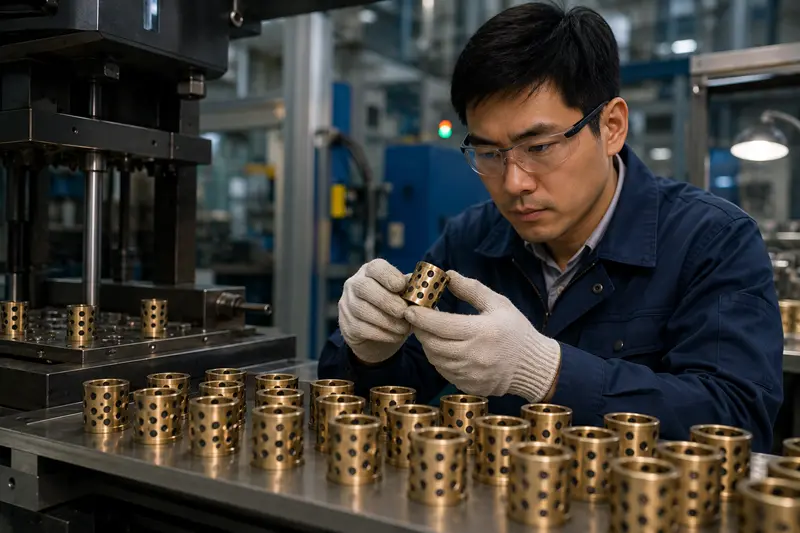
We often get requests from OEM buyers who say, "I need a self-lubricating bushing." But that's only the start of the conversation. A bushing that works perfectly in a car's center console hinge will not last five minutes in a suspension control arm. The real value we provide as a manufacturer is helping our clients move reliability from a maintenance issue to a design feature. This means looking beyond just the friction coefficient and considering the entire application. Is the part under constant load or intermittent shock load? What are the expected lifetime cycles? What are the NVH targets?
The Factory Perspective: What Really Matters for OEMs
As a factory focused on mass production for OEM projects, we know that consistency is everything. A perfectly designed bushing is useless if the 100,000th part doesn't perform exactly like the first.
Here's what we focus on to ensure success for our automotive clients:
- Application Analysis: We don't just sell a part number. We ask about load, speed, oscillation angle, temperature, and exposure to dirt or chemicals.
- Press-Fit & Tolerance Control: How the bushing is installed is critical. An incorrect press-fit can damage the sliding layer or cause the bushing to fail. We manufacture to tight tolerances to ensure a perfect fit every time.
- Batch-to-Batch Consistency: Through strict process controls and raw material verification, we ensure every batch of bushings meets the exact same performance standards.
- Life Cycle Validation: We help clients understand the expected life of the bushing in their specific application, preventing over-engineering (too costly) or under-engineering (failure).
Conclusion
Choosing the right self-lubricating bushing reduces maintenance and improves reliability. The key is to match the material and manufacturing specifications to the specific demands of the automotive application.
[^1]: "What Are The Applications of PTFE in The Automotive ...", https://www.chinafluoropolymer.com/info/what-are-the-applications-of-ptfe-in-the-autom-102508252.html. PTFE and POM are widely recognized for their low friction and wear resistance properties, respectively, in engineering applications. Evidence role: expert_consensus; source type: education. Supports: PTFE and POM are ideal materials for automotive applications requiring low friction and wear resistance.. Scope note: The source may not specifically address automotive seat adjusters or pedal systems. [^2]: "The Tribological Performance of Self-Lubricating Bearings ...", https://docs.lib.purdue.edu/cgi/viewcontent.cgi?article=2888&context=icec. The performance of self-lubricating bushings depends on the integration of material science, design, and manufacturing processes tailored to specific applications. Evidence role: expert_consensus; source type: research. Supports: The value of self-lubricating bushings lies in aligning material science, design, and manufacturing with application demands.. Scope note: The source may not focus exclusively on automotive applications.