Choosing the wrong bearing material can lead to costly downtime and equipment failure. Understanding bronze alloys helps you pick the right one, ensuring your machinery runs smoothly and reliably.
The best all-around bronze for most industrial bearings is tin bronze[^1], like CuSn8[^2], due to its excellent balance of wear resistance, load capacity, and manufacturability. However, for extreme heavy-load, low-speed applications, aluminum bronze[^3] offers superior strength and durability, making it the better choice.
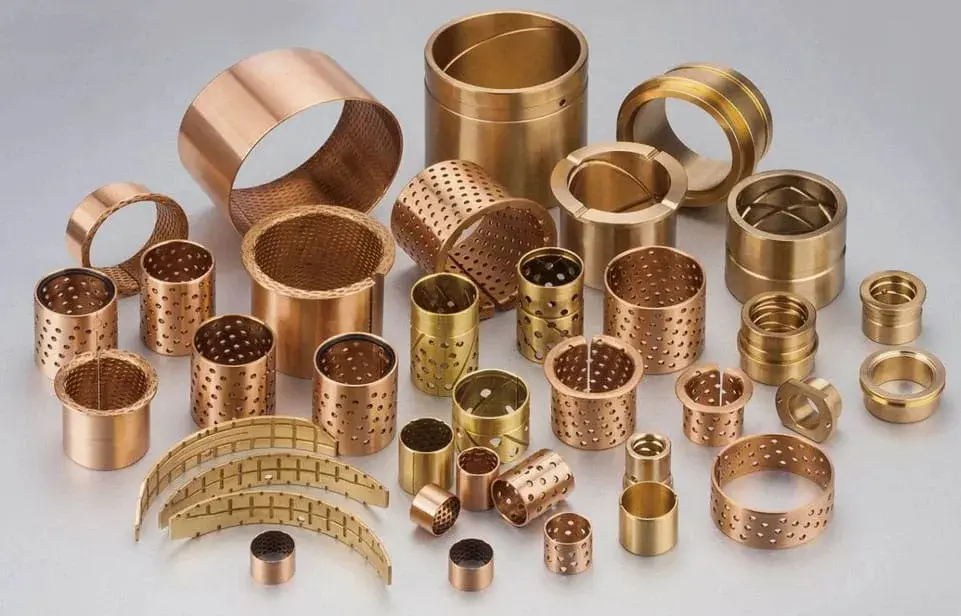
While that gives you a quick answer, the "best" material truly depends on the specific demands of your equipment. As a manufacturer, I've seen firsthand how matching the alloy to the application can make all the difference in performance and lifespan. Let's dive deeper into the most common options to help you make an informed decision for your next large-scale project.
Why is Tin Bronze the go-to choice for most bearings?
You need a dependable, all-purpose bearing for your equipment, but using an overly specialized material can hurt your budget. Tin bronze offers a fantastic balance of performance and cost-effectiveness.
Tin bronze, particularly alloys like CuSn6 and CuSn8, is the go-to choice because it provides excellent wear resistance, good machinability, and reliable performance with lubrication. It is a versatile workhorse material suitable for a vast range of industrial machinery, from gearboxes to agricultural equipment.
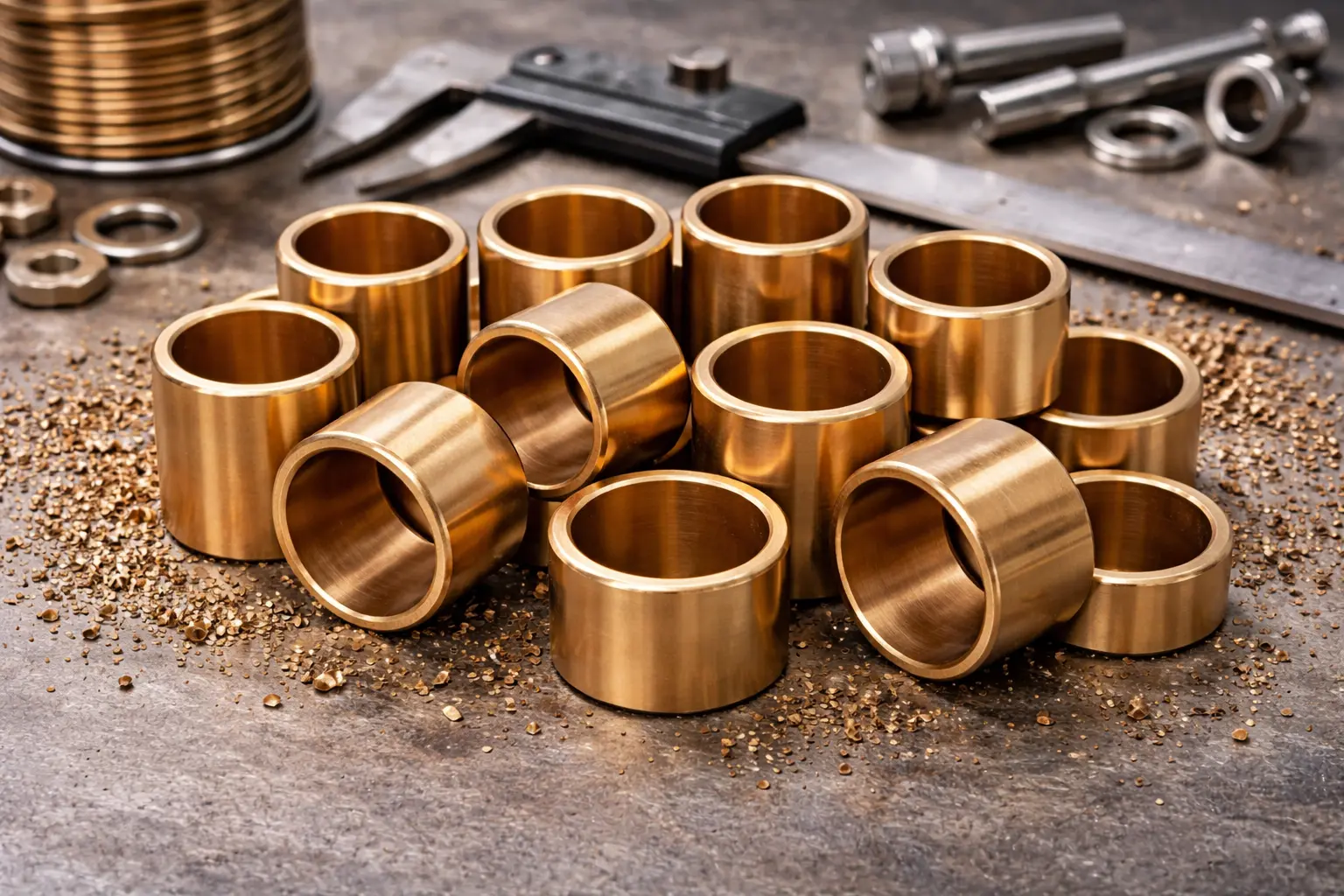
In our factory, we produce millions of tin bronze bushings every year, and for good reason. This material hits the sweet spot for most OEM and industrial applications. The "tin" in tin bronze is the key ingredient. It creates a strong crystalline structure that stands up to constant friction and wear. One of its best features is how well it works with lubrication. We manufacture our rolled bronze bushings with diamond or spherical oil pockets on the surface. These pockets act as reservoirs for grease, creating a consistent lubricating film that drastically reduces friction and extends the life of both the bushing and the shaft. This makes them perfect for applications where consistent maintenance is possible.
Here's a breakdown of its key advantages:
- Excellent Wear Resistance: Ideal for applications with oscillating movements and continuous rotation under load.
- Good Embeddability: It can absorb small contaminant particles, which protects the expensive shaft from scoring.
- Cost-Effective for Mass Production: Tin bronze, especially in strip form for rolled bushings (like our WB702/WB802 series), is perfect for large-scale, automated production, keeping costs down for our OEM partners.
| Property | Typical Tin Bronze (e.g., CuSn8) | Why it Matters for Bearings |
|---|---|---|
| Composition | ~92% Copper, ~8% Tin | The tin content provides hardness and wear resistance. |
| Load Capacity | Good to Excellent | Handles the moderate to high loads found in most industrial machinery. |
| Best For | Lubricated, moderate-speed, high-load applications. | A reliable default choice for conveyor rollers, kingpins, and linkages. |
I remember working with a manufacturer of packaging machinery. They were using a more expensive, custom-machined part. We switched them to our standard rolled CuSn8 bushings, and they not only cut their component costs by 40% but also saw a decrease in field failures[^4] due to the superior lubrication design.
When should you choose Aluminum Bronze over Tin Bronze?
Your equipment operates under extreme loads and high temperatures, causing standard bearings to fail. Aluminum bronze is engineered for these exact challenges, providing the strength you need when it matters most.
Choose aluminum bronze for bearings in heavy-duty, low-speed applications like mining equipment, landing gear, or large industrial presses. Its superior compressive strength and excellent corrosion resistance make it ideal for high-load environments where other bronze alloys would deform or wear out quickly.
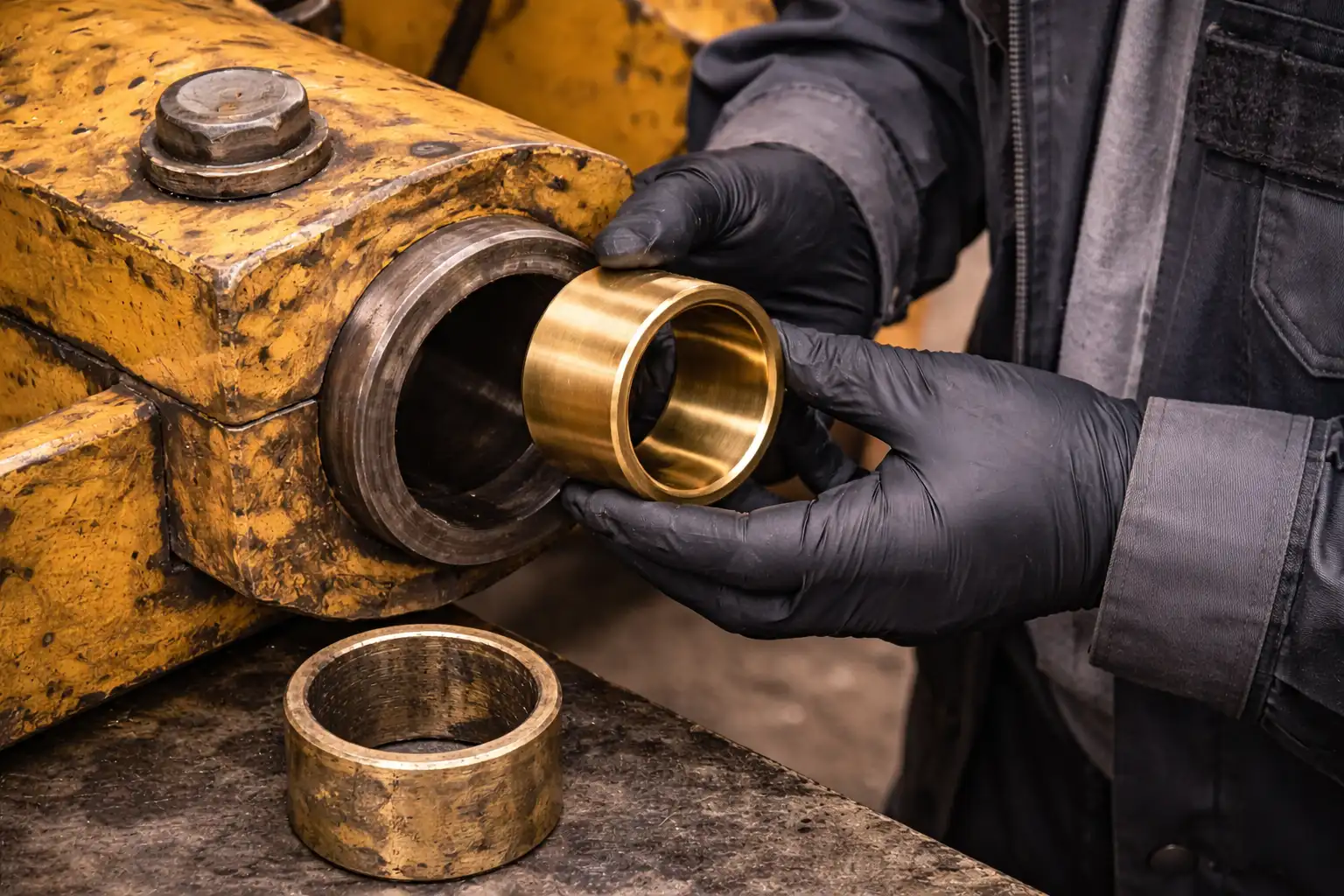
Aluminum bronze is a completely different beast compared to tin bronze. The addition of aluminum (and often iron and nickel) creates an incredibly strong and hard material. It doesn't flinch under the immense pressures found in earth-moving equipment, hydraulic cylinder pivots, and marine applications. Its strength is its number one selling point. Where a tin bronze bearing might deform under a massive static load, an aluminum bronze bearing holds its shape, ensuring joint integrity and operational safety. Another huge advantage is its natural corrosion resistance. It forms a tough, thin layer of aluminum oxide on its surface that protects it from a wide range of corrosive elements, including saltwater. This makes it a top choice for any equipment used in marine or chemical processing environments.
However, its strength comes with a trade-off. It's not as "forgiving" as tin bronze. It requires a hardened and smoothly finished shaft to run against, as it has less ability to embed dirt particles.
| Property | Aluminum Bronze (e.g., C95400) | Tin Bronze (e.g., CuSn8) |
|---|---|---|
| Tensile Strength | Very High (~85,000 psi) | Good (~55,000 psi) |
| Hardness (Brinell) | High (~170 HB) | Medium (~90 HB) |
| Corrosion Resistance | Excellent, especially to saltwater | Good |
| Primary Use Case | Low-speed, extreme high-load, corrosive environments. | General purpose, lubricated, moderate-load applications. |
A few years ago, a client who builds equipment for offshore drilling came to us. Their winch systems were failing because the standard bronze bushings were corroding and couldn't handle the shock loads. We worked with them to design and manufacture custom-machined bushings from C95400 aluminum bronze. This switch completely solved their field failures and became the new standard for their heavy-duty product line.
Are there other bronze alloys I should consider for my bearings?
Your application has unique needs, like high speeds or inconsistent lubrication, that standard bronzes don't meet. Exploring other alloys can unlock the perfect solution for your specific engineering challenge.
Yes, for high-speed applications where lubrication might be inconsistent, leaded bronzes offer superior self-lubricating properties. For components needing extreme structural strength and impact resistance, like bridge plates or propellers, manganese bronze[^5] is an excellent, though more specialized, choice.
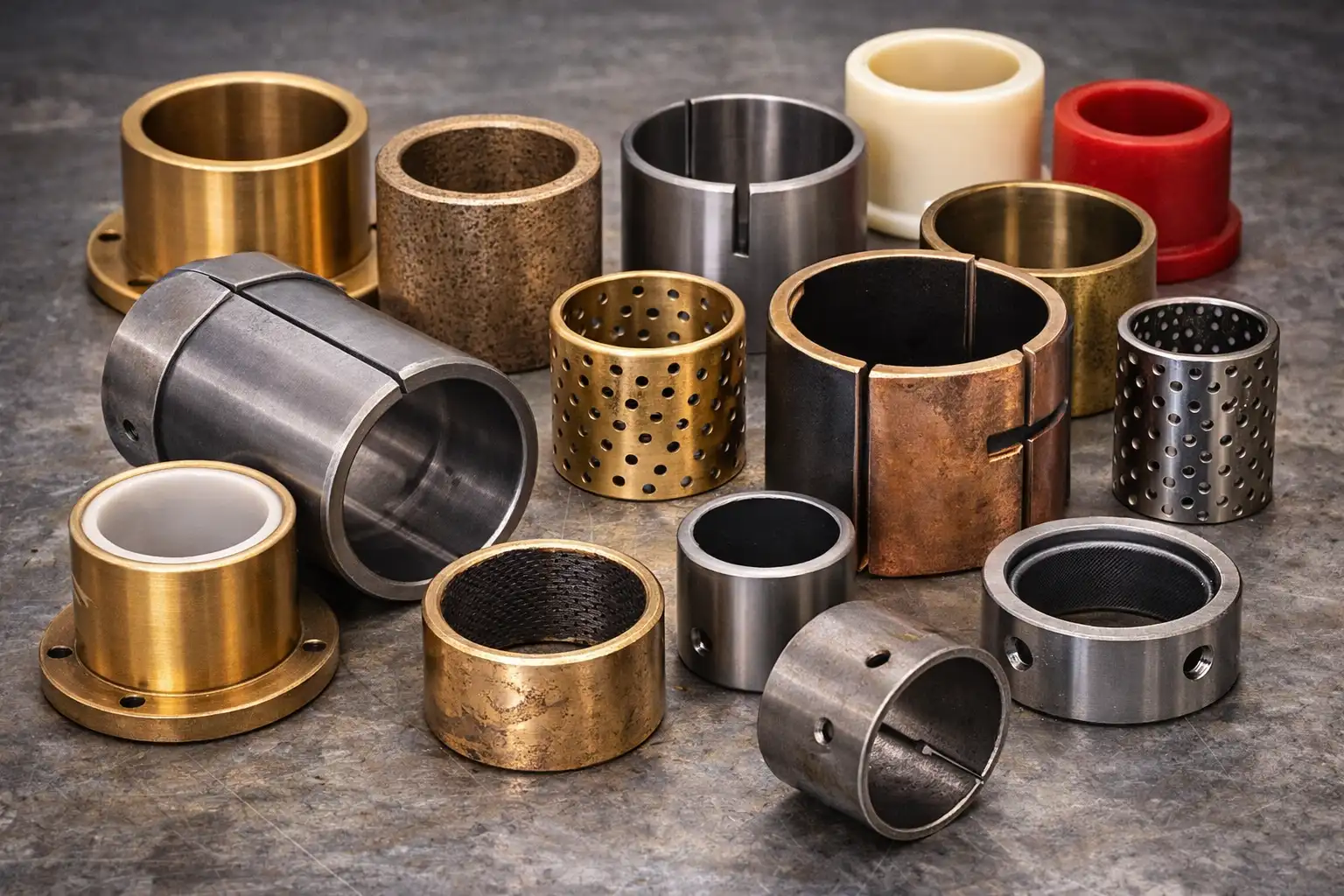
While tin and aluminum bronze cover about 90% of the applications we see, some situations call for a more tailored solution. As a manufacturer focused on providing the right component for large-scale needs, it's crucial we understand these niches to better guide our partners. Two other "bronzes" worth knowing are leaded bronze and manganese bronze.
Leaded Bronze: This is essentially a tin bronze with lead added to the mix. The lead is soft and doesn't fully mix into the alloy, acting as a built-in solid lubricant. If the primary grease or oil lubrication fails temporarily, the lead smears over the surface, protecting the shaft from immediate seizure. This makes it great for high-speed engines or machines where lubrication isn't always perfect. It is softer and has less strength than tin bronze, so it's not for high-load applications.
Manganese Bronze: This one is a bit of a misnomer; it's technically a high-strength brass. However, it's often discussed alongside bronzes because of its incredible strength and toughness. It has fantastic resistance to shock loads and wear, making it suitable for structural parts that also have a bearing function, like valve stems, heavy-duty gears, and even ship propellers. It's a specialized, high-cost material for when you absolutely need maximum durability.
| Bronze Alloy | Primary Advantage | Best Use Case | FESODA's Focus |
|---|---|---|---|
| Tin Bronze | Balanced, all-around performance | General industrial machinery, automotive, agriculture | Core Product (Rolled Bronze Bushings) |
| Aluminum Bronze | Extreme strength & corrosion resistance | Mining, marine, heavy construction equipment | Core Product (Machined Bushings) |
| Leaded Bronze | Self-lubricating, forgiving | High-speed engines, compressors | Niche, we guide clients on suitability |
| Manganese Bronze | Highest strength & impact resistance | Propellers, bridge plates, heavy gears | Niche, we guide clients on suitability |
We often consult with OEM clients who are in the design phase. One asked about using manganese bronze for a simple conveyor system. After discussing the load and speed, we showed them that our standard CuSn8 rolled bushings would perform perfectly well at a fraction of the cost for their 10,000-unit production run. This is where partnership matters—matching the right, most cost-effective material to the job.
Conclusion
In short, tin bronze is the versatile standard, while aluminum bronze excels under heavy loads. The best choice always depends on your specific application's load, speed, and operating environment.
[^1]: Explore the advantages of tin bronze, a versatile material ideal for various industrial machinery. [^2]: Learn about CuSn8, a popular tin bronze alloy known for its excellent wear resistance and load capacity. [^3]: Discover why aluminum bronze is preferred for extreme loads and high temperatures in industrial settings. [^4]: Explore common causes of field failures in bearings and how to prevent them. [^5]: Explore the strength and toughness of manganese bronze for demanding structural applications.