Choosing the wrong metal for your parts can lead to rapid wear and costly downtime. You need components that last, but telling these two common alloys apart can be confusing.
In most mechanical applications, bronze lasts significantly longer than brass. Bronze is a harder, stronger, and more wear-resistant material, making it the superior choice for high-load and high-friction parts like bushings and bearings. Brass, being softer, wears out much more quickly under similar stress.
When you're designing or sourcing parts for machinery, this single choice can be the difference between a reliable machine and a maintenance headache. I've seen firsthand how picking the right material from the start saves our clients countless hours and dollars down the line. But the "why" is just as important as the "what." Let's dig into the details to see what makes these two copper alloys so different in performance and lifespan.
What makes bronze more durable than brass?
Your equipment is failing faster than expected, causing production delays. The culprit might be the material in your wear parts, but how do you know if you made the right choice?
Bronze's durability comes from its primary alloying element: tin. Tin makes the copper alloy much harder and more resistant to wear and metal fatigue than the zinc used in brass. This inherent toughness allows bronze to withstand heavy loads and constant friction far better than brass.
In our factory, we work with these materials every day, and the difference is obvious right from the start. Bronze is fundamentally built for toughness. The main difference lies in the alloying metals mixed with copper.
- Bronze: Copper + Tin (and sometimes other elements like aluminum or phosphorus)
- Brass: Copper + Zinc
Tin creates a crystal structure that is much more robust and resistant to deformation under pressure. This is why it excels in high-load, low-speed applications. I remember a client who manufactured agricultural harvesters. They were using brass bushings in their pivot points and had to replace them every season. After we helped them switch to a tin-bronze bushing, they reported that the same parts were lasting for years. It's a perfect example of how choosing the right material directly impacts longevity.
Here is a simple breakdown of their key mechanical properties[^1]:
| Property | Bronze (Typical Tin Bronze) | Brass (Typical C360) | Winner for Longevity |
|---|---|---|---|
| Hardness | Higher (Harder to scratch/dent) | Lower (Softer, easier to deform) | Bronze |
| Tensile Strength | Higher (Resists pulling forces) | Lower (Stretches/breaks more easily) | Bronze |
| Wear Resistance | Excellent (Resists friction) | Poor to Fair (Wears down quickly) | Bronze |
| Corrosion Resistance | Very Good (Especially to saltwater) | Good (Prone to dezincification[^2]) | Bronze |
This table makes it clear. For any application where the part will be under load or subject to friction, bronze is engineered to last longer.
Is brass ever a better choice for longevity?
You need a part that resists corrosion, but you're worried about its lifespan. Choosing a material that fails prematurely, even if it doesn't rust, is a costly mistake.
In specific, low-stress environments, yes. Brass offers excellent corrosion resistance[^3], especially in water systems, and is easier to machine. If the primary enemy is corrosion and not mechanical wear, brass can be a cost-effective choice with a long service life, like in plumbing fittings[^4].
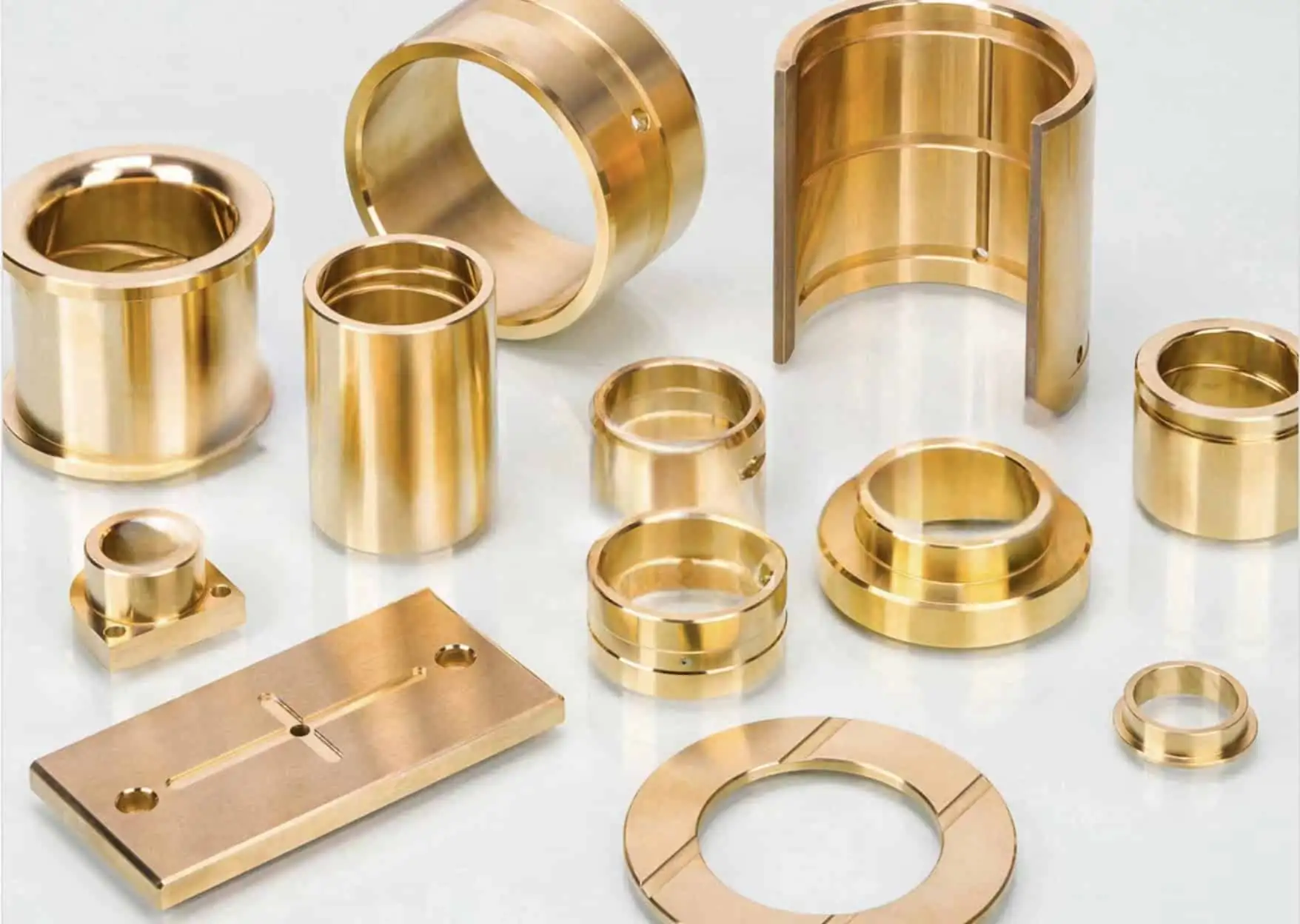
While bronze is the clear winner for mechanical durability, brass has its own unique strengths. Its "longevity" isn't about resisting wear, but about resisting chemical breakdown in certain environments. Think of household plumbing. The fittings and valves are almost always made of brass. Why? Because the main challenge isn't high loads or friction; it's constant exposure to water. Brass holds up exceptionally well here.
However, it's important to choose the right type of brass. Standard brass can suffer from a problem called dezincification, where the zinc is leached out of the alloy, leaving behind a weak, porous copper structure. This can lead to sudden failures. To combat this, corrosion-resistant brass alloys (like DZR brass) were developed.
Another factor is machinability. Brass is incredibly easy to machine. It cuts cleanly and doesn't wear out tooling as fast as bronze. For manufacturers producing huge volumes of complex parts, this can lead to lower production costs. If the application doesn't require high strength—like decorative hardware or electrical connectors—brass provides a long life at a lower cost. But never confuse this with mechanical durability. Using a brass part in a high-load bearing application because it's cheaper is a recipe for disaster.
How does lubrication affect the lifespan of brass and bronze bearings?
You know lubrication is key, but your bearings still wear out too fast. You might be using the right grease but on a material that can't use it effectively.
Lubrication extends the life of both, but bronze is far superior at retaining it. Many bronze bearings are intentionally made porous (sintered) or are machined with oil grooves, allowing them to hold lubricant and ensure consistent, long-term performance under load.
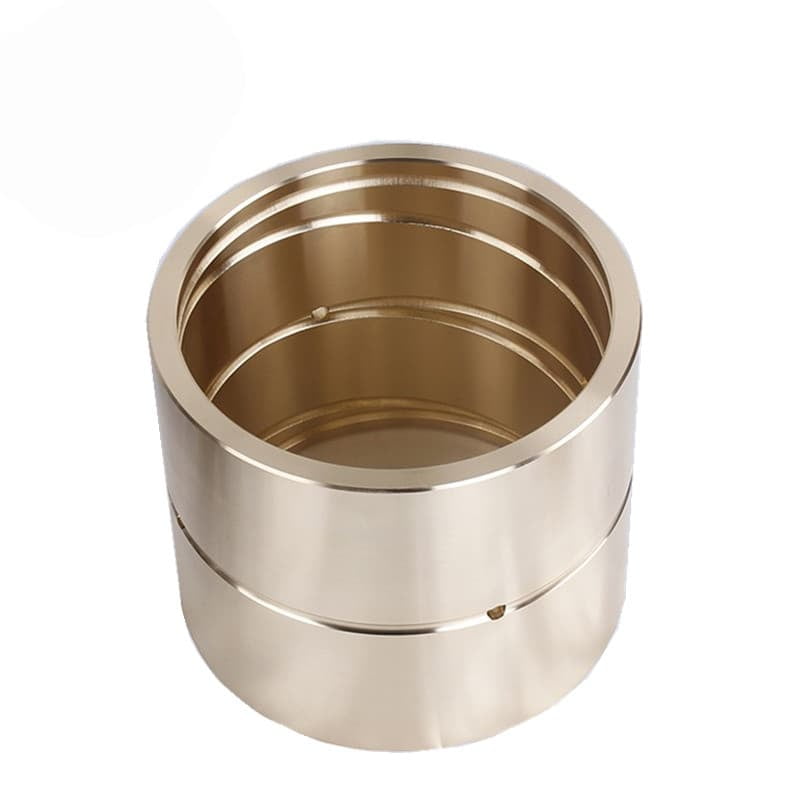
Think of a bearing material like a sponge for oil. You want a material that not only tolerates lubrication but actively holds onto it where it's needed most. This is where bronze truly shines, especially in the types of bearings we manufacture.
There are a few ways bronze is designed for superior lubrication:
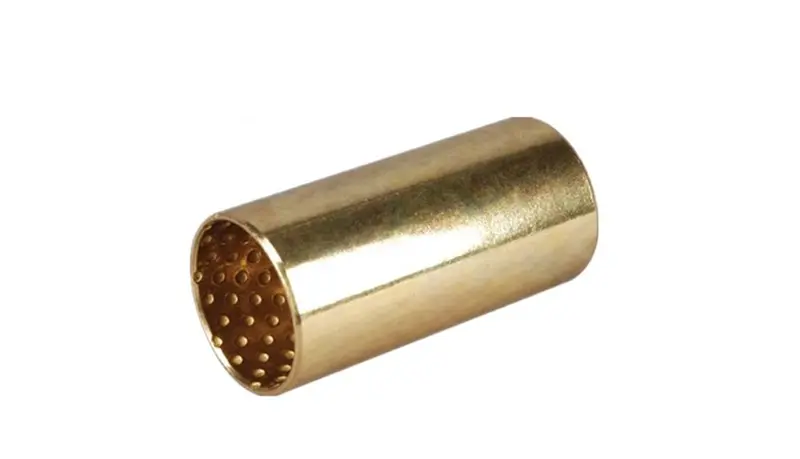
- Sintered Bronze: We make these bearings by pressing bronze powder into a shape and then heating it. This process creates a structure that is about 20-30% porous. We then impregnate these pores with oil. In operation, as the bearing heats up, it releases a thin film of oil. When it cools, it draws the oil back in. It's a perfect self-lubricating system.
- Machined Oil Grooves: For solid bronze bushings used in heavy equipment, we machine precise grooves and patterns onto the bearing surface. These grooves act as reservoirs, holding grease or oil and distributing it evenly across the entire load-bearing surface. This prevents metal-to-metal contact even under immense pressure.
- Graphite Plugs: For high-temperature or hard-to-maintain locations, we can even embed solid graphite plugs into the bronze. The graphite provides self-lubrication as the bearing moves.
While you can machine oil grooves into brass, it doesn't have the natural porosity of sintered bronze or the extreme wear resistance that makes grooved bronze so effective. Brass relies entirely on an external, constantly supplied film of lubricant. If that lubrication fails, the softer brass material will be destroyed very quickly. Bronze, on the other hand, has a built-in backup plan.
Can you use brass and bronze interchangeably in machine parts?
You need to replace a worn-out bronze bushing, but you have a brass one on hand that fits. Using it seems like a quick fix, but could it cause a bigger problem?
No, you absolutely cannot use them interchangeably in most cases. They are engineered for different purposes. Swapping a bronze part for a brass one in a load-bearing application will almost certainly lead to premature failure, potential damage to the machinery, and safety risks.
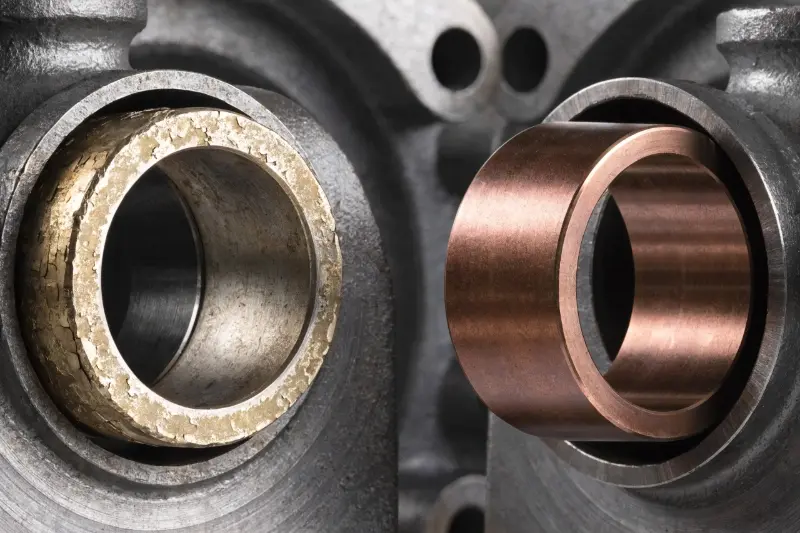
This is one of the most critical points I stress to new engineers and procurement managers like Sofia. Just because two parts look similar and have the same dimensions does not mean they perform the same function. It's like putting regular car tires on a heavy-duty dump truck. They might fit, but they will fail catastrophically under load.
The engineering specifications for a machine are there for a reason. When a designer specifies a bronze bushing, they have calculated the loads, speeds, and environmental factors. They chose bronze because its properties—high strength, wear resistance, and durability—are necessary for the machine to operate safely and reliably.
Here’s a simple guide to where each material typically belongs:
| Material | Typical Applications | Key Function |
|---|---|---|
| Bronze | Bushings, Bearings, Gears, Valve Guides, Wear Plates | Resisting high loads, heavy wear, and friction. Structural integrity. |
| Brass | Plumbing Fittings, Valves, Electrical Connectors, Musical Instruments, Decorative Hardware | Resisting corrosion, providing good conductivity, or being aesthetically pleasing. Low-stress roles. |
I once consulted on a case where a maintenance team used a brass bushing in a crane's pivot arm because it was readily available. The original part was specified as high-strength bronze. The brass bushing wore out in a matter of weeks, causing the arm to wobble and creating a massive safety hazard. The "quick fix" ended up costing them ten times more in downtime and repairs than if they had just sourced the correct bronze part from the beginning. Always stick to the original material specification.
How do you identify if a part is made of brass or bronze?
You have a bin of old metal parts and need to sort them. Telling the difference between brass and bronze by sight alone is tricky, and a wrong guess could be a costly mistake.
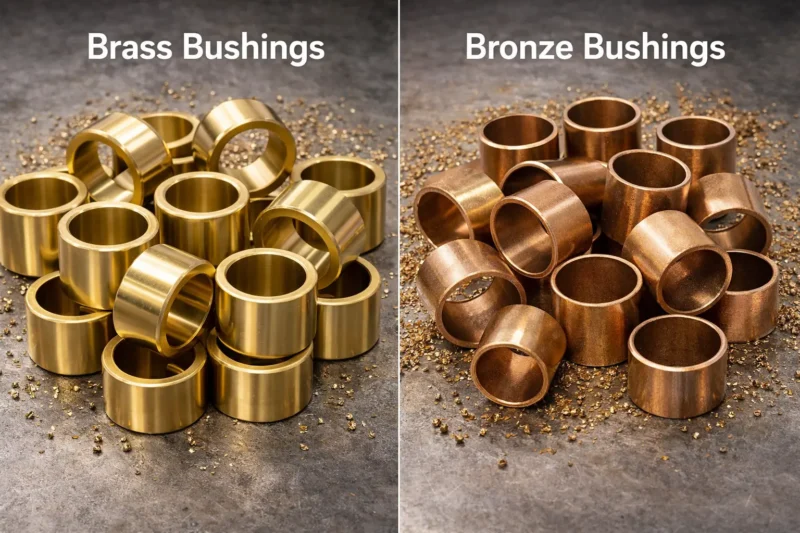
The easiest visual clue is color: brass is typically a bright, yellowish gold, while bronze is a duller, reddish-brown. However, for a more reliable check in a workshop, observe the metal chips during grinding or filing. Brass produces fine, powdery dust, while bronze creates larger, stringier shavings.
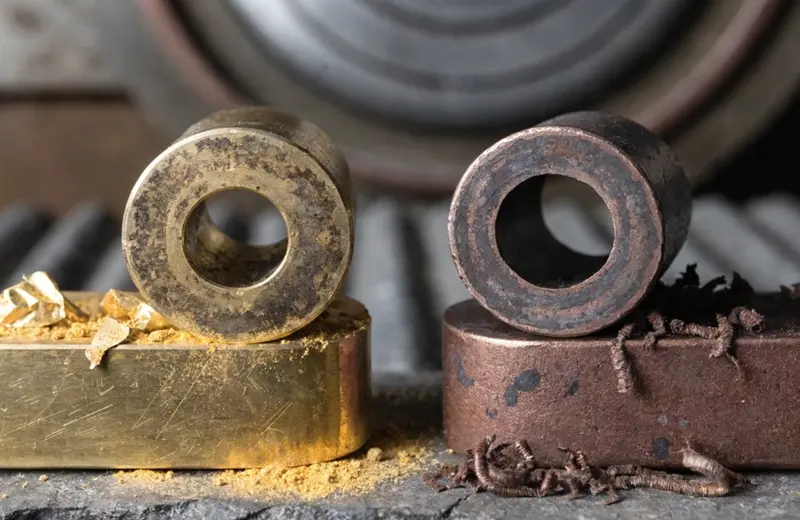
As a manufacturer, we have advanced tools like X-Ray Fluorescence (XRF) analyzers to get an exact elemental breakdown of our raw materials. But you don't need a lab to get a good idea of what you're holding. Here are a few practical methods you can use.
1. The Color Test
This is the fastest and simplest check.
- Brass: Think of a shiny trumpet or a new key. It has a distinct yellow, almost gold-like color.
- Bronze: Think of an old statue or a classic ship's bell. It has a much deeper, reddish-brown or coppery-brown hue. Warning: This method isn't foolproof. Oxidation, heat treatment, and different alloying elements can alter the surface color, making a bronze part look yellowish or a brass part look brownish.
2. The Machining/Filing Test
This is a very reliable method we see the results of every day on our factory floor. If you can file or grind a small, inconspicuous spot on the part, observe the waste material (the swarf).
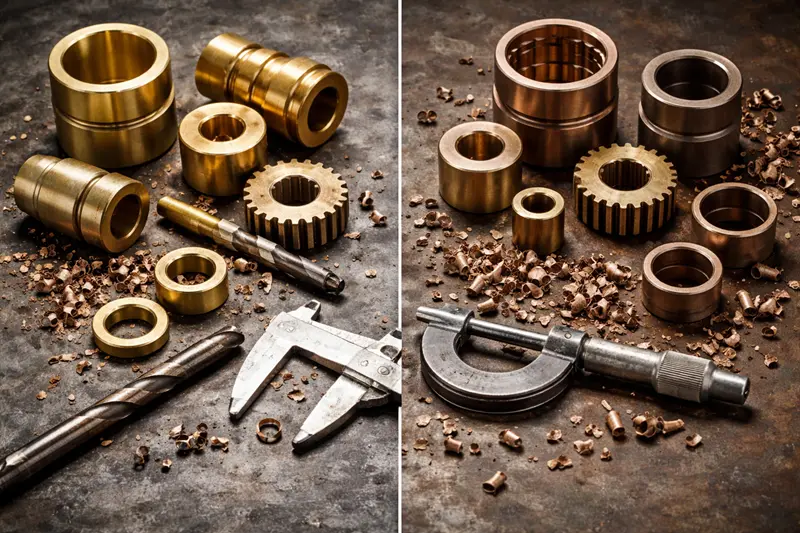
- Brass: Because it's more brittle, it will break off into a fine, sandy, or powdery dust. The chips will be short and broken.
- Bronze: Being tougher and more ductile, it will come off in longer, stringier, or more spiral-shaped shavings. It feels "gummier" when filing.
This difference in how they cut is a direct result of their mechanical properties and is a great indicator for telling them apart when color is ambiguous.
Conclusion
For any application that demands strength, wear resistance, and a long operational life, bronze is the clear winner over brass. Your choice directly impacts your machine's reliability and maintenance costs.
[^1]: Learn about the mechanical properties that differentiate bronze and brass in various applications. [^2]: Understand the risks of dezincification in brass and how to choose corrosion-resistant alloys. [^3]: Learn about the corrosion resistance properties of bronze and brass and their implications for use. [^4]: Explore the best materials for plumbing fittings to ensure longevity and resistance to corrosion.