Your equipment needs constant greasing, which is messy and costs you downtime. This maintenance cuts into your production schedule. Self-lubricating metals offer a clean, maintenance-free solution to keep things running smoothly.
Strictly speaking, no pure metal is truly self-lubricating. The term usually refers to engineered materials. These combine a metal structure with a built-in lubricant. Common types include graphite-plugged bronze, oil-impregnated sintered metal, and metal-polymer composite bushings[^1], each designed to eliminate external lubrication.
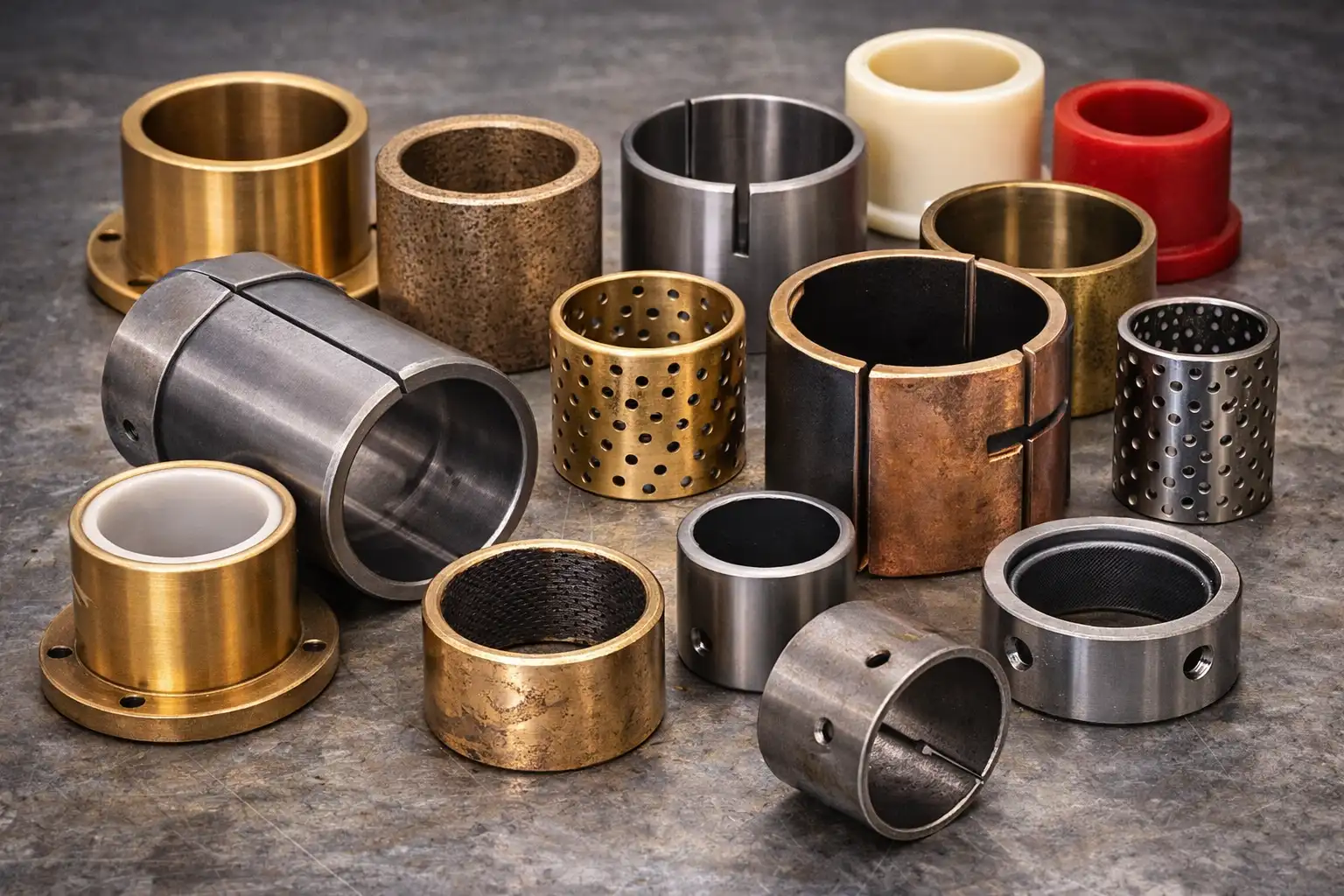
It can be confusing when you hear the term "self-lubricating metal." Many people think it's a special type of alloy that is naturally slippery. But in my experience as a bearing manufacturer, that's not really how it works. These materials are actually clever systems, where a strong metal provides the structure and another material provides the lubrication. This way, you get the best of both worlds: strength and low friction. Let's look at the most common types you'll find in the industry and see how they actually work.
How Do Graphite-Plugged Bronze Bushings Work?
Heavy loads and high heat can cook grease, causing it to break down. This leads to bearing seizure and expensive equipment failure. Graphite-plugged bronze provides reliable lubrication even in these tough conditions.
Graphite-plugged bronze bushings have solid graphite plugs fitted into a bronze base. As the shaft turns, it picks up a very thin film of graphite. This creates a durable, dry lubricating layer[^2] on all the moving surfaces, reducing friction without needing any oil or grease.
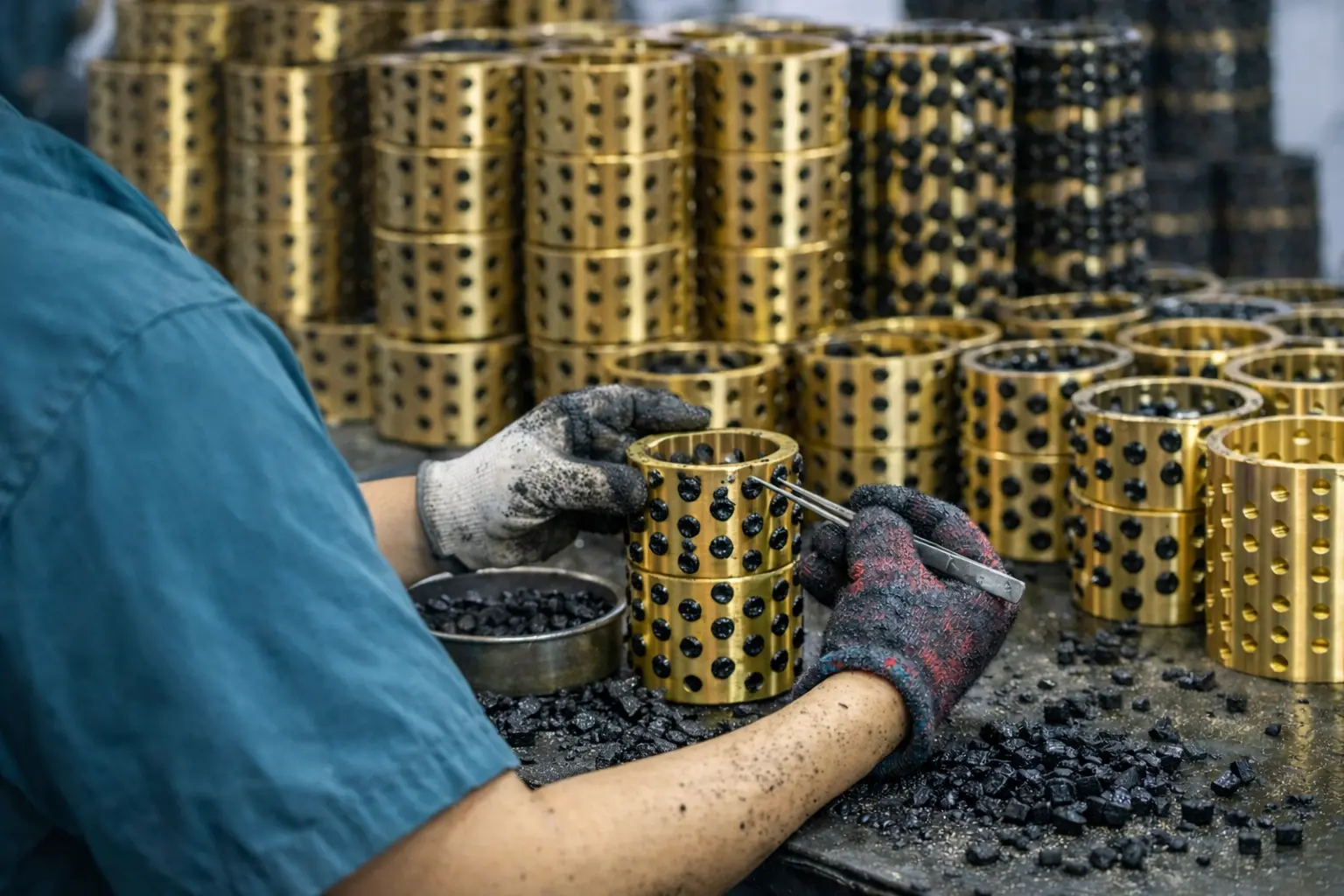
Let's dive deeper into how these components create a self-lubricating system. The main body is made from a strong bronze alloy. This gives the bushing its ability to handle very heavy loads and resist wear and corrosion. Then, we drill a precise pattern of holes into the bronze and press solid graphite plugs into them. The graphite is the key to the self-lubrication. It's a solid lubricant, so it doesn't run out or burn off like oil can.
When you first start using the bushing, the movement of the shaft against the graphite plugs transfers a fine layer of graphite onto the shaft. This layer then coats the entire contact surface, creating a solid lubricating film. I remember a client who ran a steel mill. They were constantly replacing bearings on a hot conveyor line because the grease kept failing. We helped them switch to graphite-plugged bushings, and their maintenance problem disappeared. The bearings could handle the heat and load without any extra attention.
Key Features of Graphite-Plugged Bushings
| Feature | Description | Main Benefit |
|---|---|---|
| Base Material | Cast Bronze (e.g., C86300, C93200) | Provides high load capacity and corrosion resistance. |
| Lubricant | Solid Graphite Plugs | Works at very high temperatures; provides clean operation. |
| Mechanism | Solid Film Transfer | Offers a long, maintenance-free service life. |
| Common Uses | Steel mills, dams, injection molding | Perfect for slow, heavy, and hot environments. |
Are Oil-Impregnated Bearings Truly Self-Lubricating?
Many small, fast-moving parts need light lubrication all the time. Adding it manually is often impossible or just not practical. Oil-impregnated bearings solve this by providing lubrication from the inside out.
Yes, for all practical purposes, they are. These bearings are made from powdered metal that is pressed and heated, a process called sintering. This creates a porous, sponge-like structure. The bearing is then soaked in oil, which fills all the tiny pores and provides lubrication during operation.
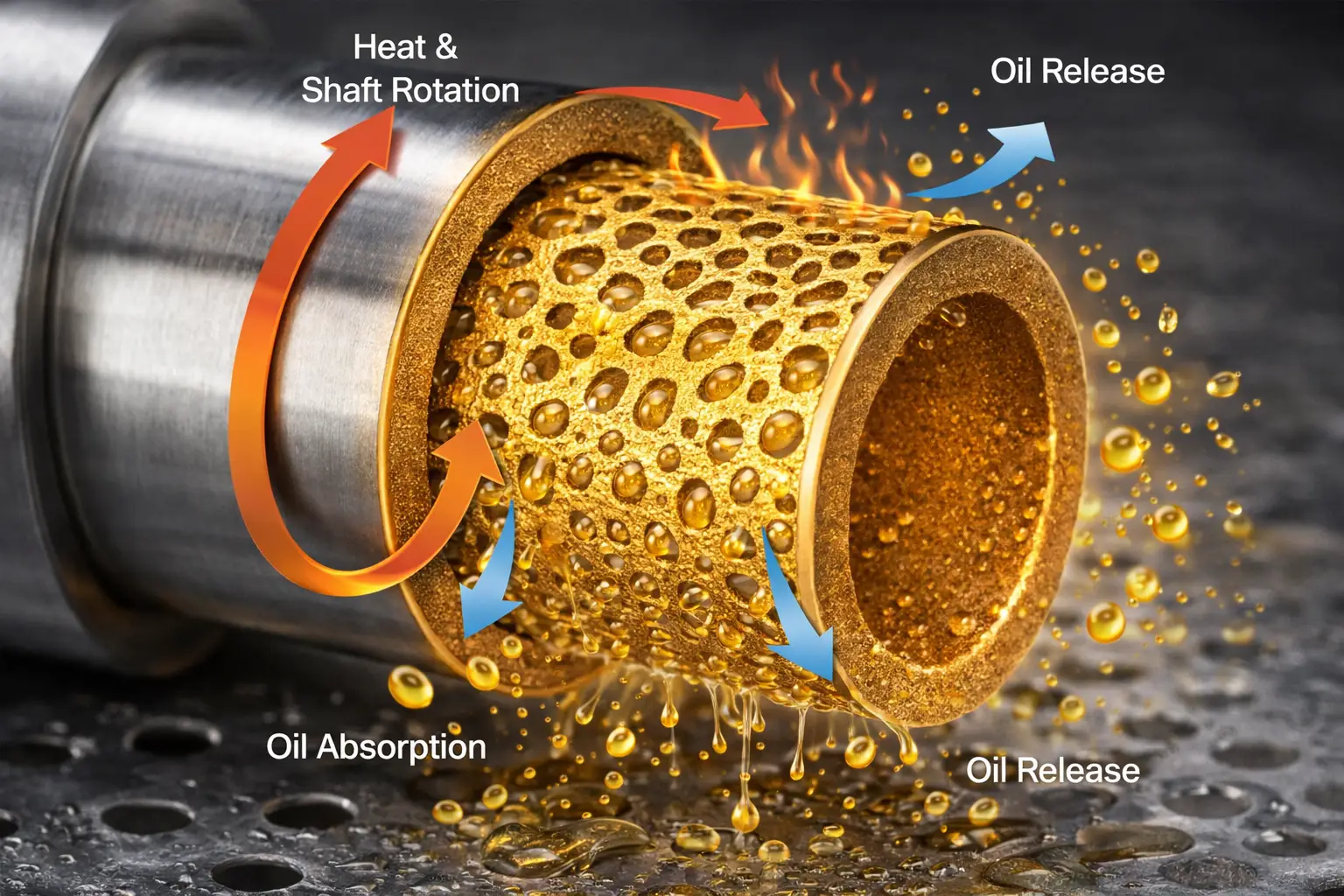
The magic behind these bearings is the manufacturing process, known as powder metallurgy. We start with a fine metal powder, usually iron or bronze, and press it into the shape of a bushing. Then, we heat it in a furnace to a temperature just below its melting point. This fuses the metal particles together but leaves a network of tiny, interconnected pores, making up about 15-30% of the total volume. The bushing is now like a hard metal sponge.
How The "Metal Sponge" Holds Oil
Finally, we place the porous bushing in a vacuum chamber and introduce a special lubricating oil. The vacuum pulls all the air out of the pores, and the oil rushes in to fill them completely. When the bearing is in use, the rotation of the shaft and the slight heat it generates draw the oil out of the pores through capillary action. This creates a perfect oil film between the shaft and the bearing. When the machine stops and cools down, the same capillary action pulls most of the oil back into the bearing. It’s a closed-loop system. We supply millions of these for small electric motors, fans, and automotive parts where reliability is key and maintenance is not an option.
What Are Metal-Polymer Composite Bushings?
Sometimes you need the strength of steel but the low friction of a polymer like Teflon. Using just one material means you have to compromise. Composite bushings give you the best of both worlds.
These are not a single metal but a multi-layered bearing. They usually have a steel backing for strength and a sintered bronze middle layer. The surface is a low-friction polymer like PTFE or POM, which provides the self-lubricating performance without needing any grease.
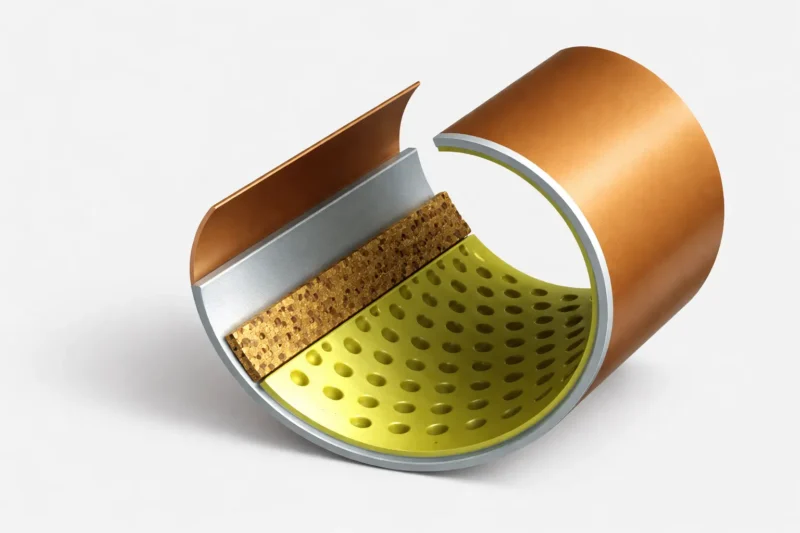
These bushings are an amazing piece of engineering, designed to be thin, light, and strong. They are made of three distinct layers bonded together into one part. Understanding this structure is key to seeing why they are so effective and versatile. We produce these for a huge range of applications, from car door hinges to complex hydraulic pumps, because they solve so many design challenges at once.
The Three-Layer Structure
- Steel Backing: This is the foundation. It provides the mechanical strength and rigidity for the bushing, allowing it to handle high loads and fit tightly into its housing without deforming.
- Sintered Bronze Layer: This porous bronze layer is fused onto the steel back. It does two important jobs. First, it acts as a strong mechanical lock between the steel and the polymer surface. Second, its porous structure holds the polymer layer securely in place.
- Lubricating Layer: This is the top layer and the contact surface. There are two main types:
- SF-1 (DU-type): The surface is a mix of PTFE (Teflon) and other fillers. It is designed for completely dry running conditions and has an extremely low coefficient of friction.
- SF-2 (DX-type): The surface is made of POM (Acetal), which has small indents or pockets to hold grease. It is designed for marginally lubricated conditions where an initial bit of grease is applied upon installation.
| Type | Lubricating Layer | Best For | Lubrication Needs |
|---|---|---|---|
| SF-1 (DU-type) | PTFE (Teflon) Mix | Completely Dry Running | None required |
| SF-2 (DX-type) | POM (Acetal) | Marginal Lubrication | Initial grease fill |
Conclusion
"Self-lubricating metal" isn't a single material. It is a category of engineered composites that combine metal strength with built-in lubricants, saving you time and money on maintenance.
[^1]: Find out how metal-polymer composite bushings combine strength and low friction for versatile applications. [^2]: Discover the advantages of dry lubricating layers in reducing friction and wear in mechanical systems.