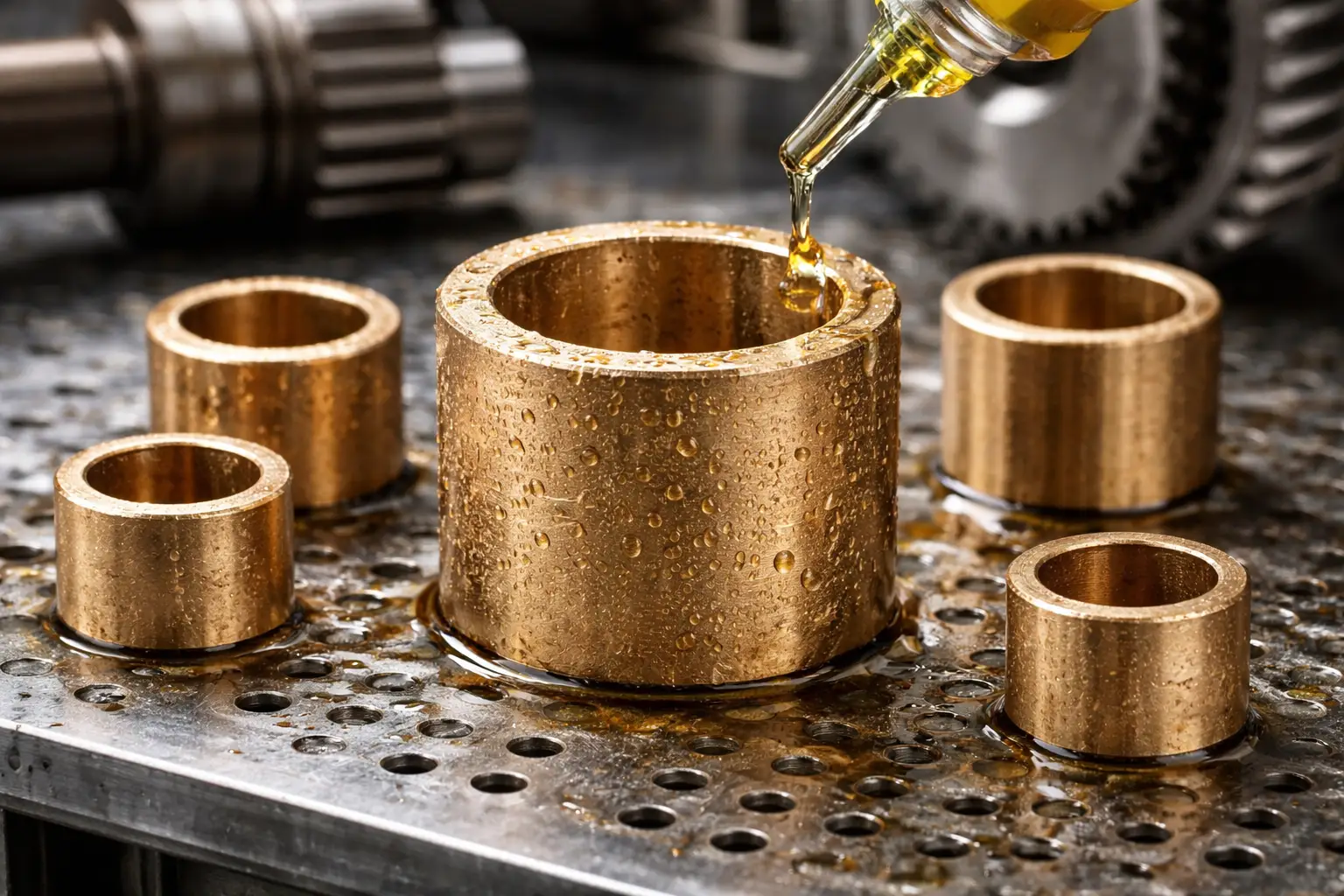
Tired of constant machine maintenance? Greasing hard-to-reach parts costs time and money. Oil-impregnated bushings offer a built-in lubrication solution, but how do they really function?
Oil-impregnated bushings work by holding lubricating oil within a porous metal structure created through sintering.[^1] When a shaft rotates, friction heat causes the oil to seep out, lubricating the surface. When it stops, the oil is reabsorbed, creating a self-sustaining cycle.
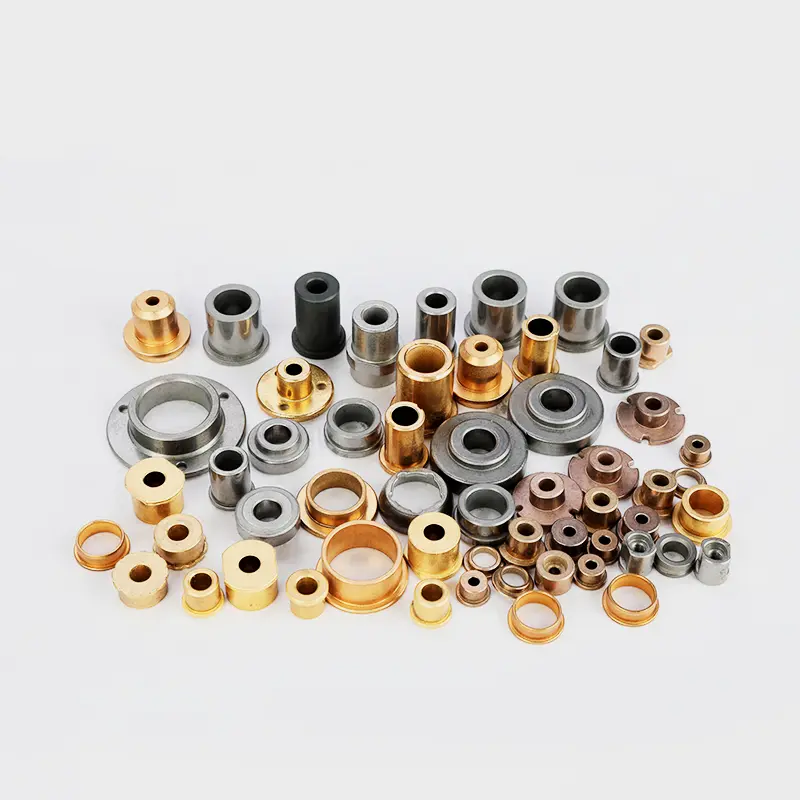
That's the quick answer. But as a manufacturer, I see many buyers misunderstand how this technology really works. It's not just a simple bronze sleeve with oil poured on it. The real magic is in the manufacturing process and the material's internal structure. Let's dive deeper to see what really makes them tick and where they fit best in your projects, because understanding this is key to avoiding costly application mistakes.
What Is the Secret Behind Their Self-Lubricating Ability?
Think a self-lubricating bushing is just bronze soaked in oil? This common mistake can lead to misapplication and premature failure. The real technology is far more advanced and precise.
The secret is powder metallurgy. Fine metal powders, usually bronze or iron, are compressed and heated in a process called sintering.[^2] This creates a solid part filled with microscopic, interconnected pores. These pores act like a sponge, holding oil deep within the bushing's structure.[^3]
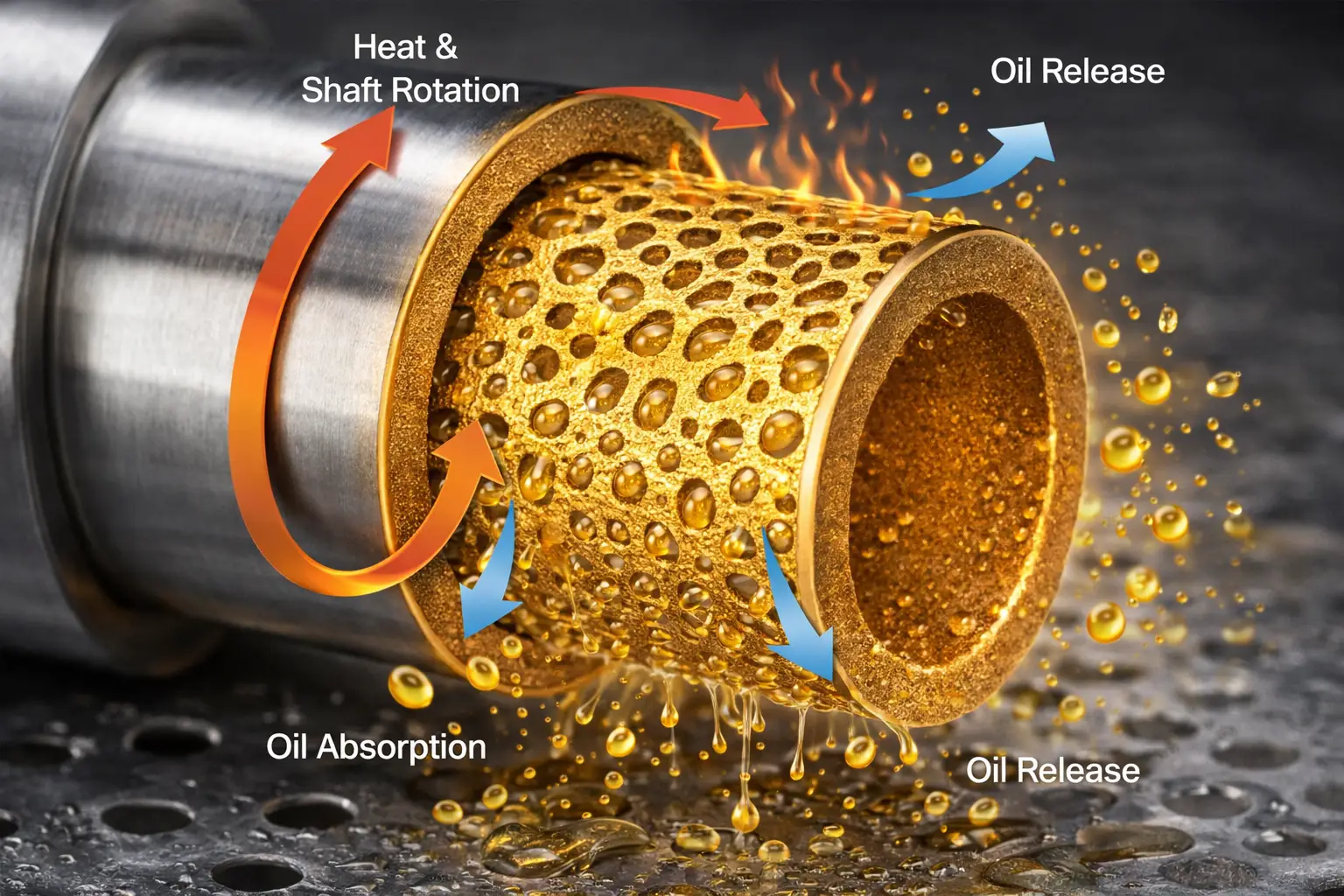
The entire process is designed to create a built-in lubrication reservoir. It’s a world away from simply machining a solid piece of metal.
The Sintering Process
First, we take very fine metal powder, typically bronze or iron, and pour it into a die shaped like the final bushing. This powder is then compressed under immense pressure to form a solid, yet fragile, part. Next, we move it to a high-temperature furnace for sintering. The part is heated to a temperature just below the metal's melting point. At this temperature, the individual metal particles fuse together, creating a strong, rigid structure. Crucially, this process leaves behind a network of tiny, interconnected voids or pores, making up about 15-30% of the bushing's total volume.
Vacuum Oil Impregnation
Just dipping the sintered bushing in oil isn’t enough. To ensure complete lubrication, we use a vacuum impregnation process. The bushings are placed in a sealed chamber, and a powerful vacuum pulls all the air out of the pores.[^4] Then, heated lubricating oil is flooded into the chamber. The vacuum ensures that the oil is drawn deep into every microscopic pore, completely saturating the material from the inside out. This makes the oil an integral part of the bushing itself.
| Feature | Solid Bronze Bushing | Sintered Oil-Impregnated Bushing |
|---|---|---|
| Structure | Solid, non-porous metal | Porous, like a metal sponge |
| Lubrication | Requires external grease/oil | Internal, self-releasing oil |
| Manufacturing | Machined from solid bar stock | Sintered from metal powder |
| Key Benefit | High load capacity | Low maintenance |
Where Are Oil Impregnated Bushings Most Effective?
Choosing the wrong bushing wastes money on over-engineering. Or worse, it can cause premature failure in applications that need a different type of lubrication. So, where do these parts excel?
They are most effective in light-load, medium-speed applications where regular maintenance is difficult or undesirable.[^5] Think of small electric motors, office equipment, home appliances, and automated machinery. Their main advantage is reducing the need for manual greasing, not handling extreme forces.
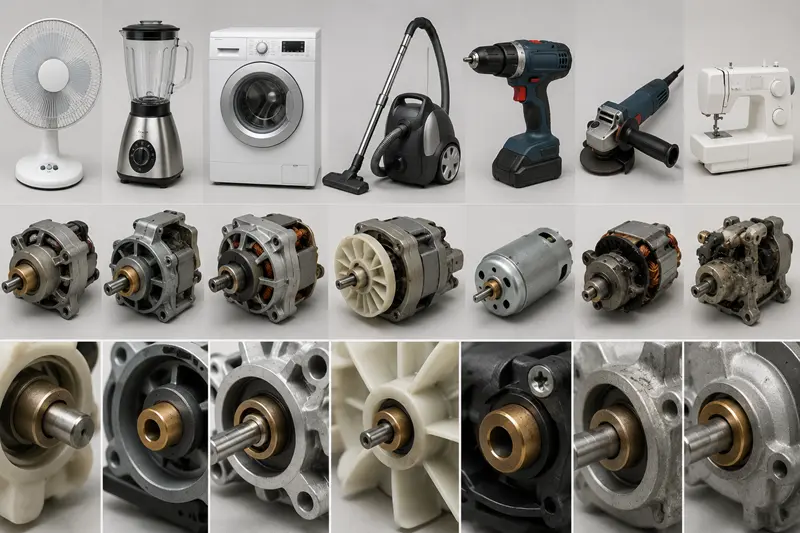
In our factory, we see these bushings as a "set it and forget it" solution for the right kind of equipment.
Why Low Maintenance is Key
The primary reason our clients choose oil-impregnated bushings is to eliminate maintenance. For many products, like a printer, a kitchen blender, or a small cooling fan, you cannot expect the end-user to perform regular lubrication. A component that is lubricated for its entire service life is not just a convenience; it's a design requirement. This is where sintered bushings provide immense value. They deliver consistent, reliable performance over thousands of hours without any intervention. I remember an OEM client who manufactured automated warehouse robots. They couldn't afford to have robots stop for greasing. Switching to sintered bronze bushings drastically cut their maintenance downtime and made their entire system more reliable.[^6]
Common Applications
You can find these bushings in countless devices you use every day. Their ability to run quietly and smoothly without external oiling makes them ideal for:
- Small Motors and Fans: The quiet, consistent lubrication is perfect for cooling fans in electronics or small motors in power tools.
- Household and Office Appliances: From printers and scanners to blenders and washing machines, these bushings keep things running smoothly behind the scenes.
- Automation and Conveyor Systems: In light-duty automation, where hundreds of small moving parts need to work reliably, sintered bushings are a cost-effective choice.
- Light-Duty Industrial Machines: They are also used in textile machinery, packaging equipment, and other industrial applications where loads are moderate and access for maintenance is limited.
When Should You Avoid Using Oil Impregnated Bushings?
A bushing fails and brings your heavy machinery to a halt. You investigate and find out the "self-lubricating" part couldn't handle the job. This is a costly error you can avoid.
Avoid using oil-impregnated bushings in high-load, high-impact, or high-temperature environments. The internal oil supply is limited and can be depleted or break down under extreme stress, leading to rapid wear and failure. Heavy construction and mining equipment are poor fits for this technology.
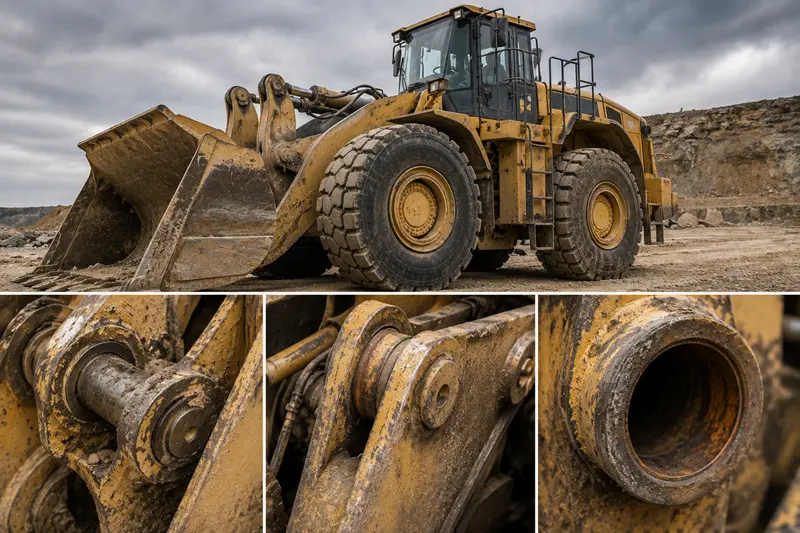
Knowing the limits of a component is just as important as knowing its strengths. From a manufacturing perspective, these bushings are a specialized tool, not a universal solution.
The Limits of Stored Lubrication
The oil stored inside a sintered bushing is finite.[^7] Under heavy loads, the immense pressure can literally squeeze the oil out of the pores faster than it can be reabsorbed, or it can even crush the porous structure itself. In high-temperature environments, the oil's viscosity drops, making it thin and less effective. It can even burn off or leak away permanently. At continuous high speeds, the bushing generates too much friction heat for the self-cooling and re-absorption cycle to work. The lubricating film eventually breaks down, resulting in direct metal-on-metal contact, galling, and seizure.
Better Alternatives for Heavy-Duty Work
For these tough jobs, you need a more robust solution. At our factory, we produce a range of alternatives for demanding applications:
- Solid Bronze Bushings with Grease Grooves[^8]: These are machined from solid bar stock and are incredibly strong. They are perfect for high-load, slow-speed applications, like in earth-moving equipment, as long as regular greasing is possible.
- Bimetal or Steel-Backed Bushings: These combine a strong steel backing with a layer of bearing material like bronze. They offer excellent strength and are great for high-load situations.
- Graphite-Plugged Bronze Bushings[^9]: For high-temperature applications or where liquid lubrication is not possible, solid bronze bushings with embedded graphite plugs provide reliable dry lubrication.
How Do We Choose the Right Bushing for an OEM Project?
Selecting a bushing seems simple, but the wrong choice can undermine an entire project. Guesswork leads to budget overruns, performance issues, and even product recalls. A systematic approach ensures success.
For OEM projects, we analyze several key factors to ensure the bushing matches the application. We look at the load (how much force), speed (how fast it turns), operating temperature, and duty cycle (how often it runs). This data tells us if an oil-impregnated bushing is suitable.
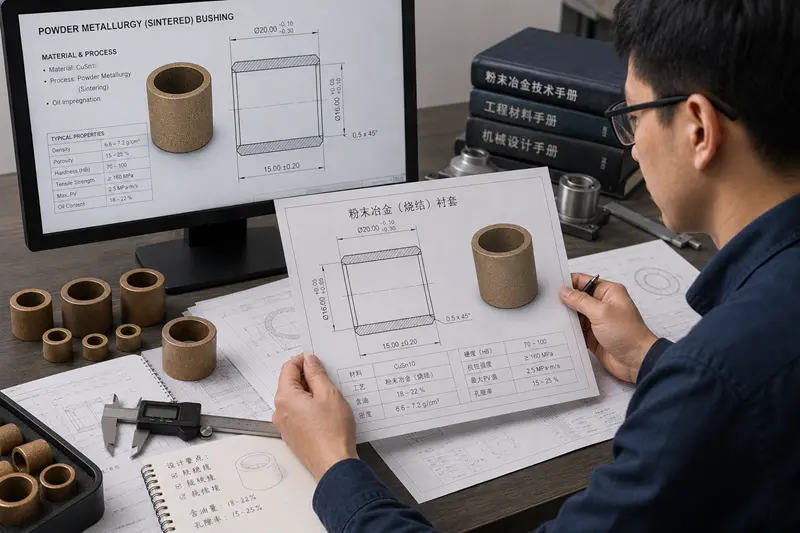
Before we even start a production run, we work with our clients to go through a checklist. This ensures the part we make will perform reliably in the real world.
Key Selection Factors
When a client comes to us with a new project, we don't just ask for dimensions. We need to understand the operating conditions. This conversation is critical for success. We focus on the "PV" value—Pressure (load) times Velocity (speed)—but other factors are just as important.[^10] By carefully evaluating these variables, we can confidently recommend a sintered bushing or guide a client toward a more robust solution, preventing future problems and ensuring the long-term reliability of their equipment.
| Factor | What We Ask | Why It Matters for Sintered Bushings |
|---|---|---|
| Load (P) | What is the force on the bushing? Is it a steady force or a shock load? | Sintered bushings are best for light to moderate loads. High pressure or shock can damage the porous structure. |
| Speed (V) | How fast will the shaft rotate? | They are ideal for medium speeds. If the speed is too slow, not enough oil is released. If it's too fast, it generates excessive heat. |
| Temperature | What is the expected operating temperature range? | Extreme heat degrades the oil and can cause it to leak out permanently.[^11] Extreme cold can make the oil too thick to flow. |
| Duty Cycle | Is the operation continuous or intermittent? | Intermittent use is perfect, as it allows the oil to be reabsorbed during rest periods, replenishing the surface film. |
| Environment | Will the bushing be exposed to dust, dirt, or moisture? | Contaminants can clog the pores, which blocks oil flow and causes rapid wear. A sealed design may be necessary. |
Conclusion
Oil-impregnated bushings are not a universal fix. They are a clever, low-maintenance solution for light-duty applications, using a porous structure to provide long-term, self-contained lubrication.
[^1]: "What are oil impregnated bronze bushings...", https://www.nationalbronze.com/News/what-are-oil-impregnated-bronze-bushings/. This source explains the mechanism of oil-impregnated bushings, including how sintering creates a porous structure that holds lubricating oil. Evidence role: mechanism; source type: education. Supports: Oil-impregnated bushings hold lubricating oil within a porous metal structure created through sintering.. [^2]: "Sintering - Wikipedia", https://en.wikipedia.org/wiki/Sintering. This source provides an overview of the sintering process, including the use of metal powders like bronze or iron. Evidence role: definition; source type: encyclopedia. Supports: Fine metal powders, usually bronze or iron, are compressed and heated in a process called sintering.. [^3]: "Comparison of sintered bushings: advantages and disadvantages", https://blog.igus.eu/comparison-of-sintered-bushings-advantages-and-disadvantages/. This source explains how the porous structure of sintered bushings retains oil, enabling self-lubrication. Evidence role: mechanism; source type: research. Supports: The pores in sintered bushings act like a sponge, holding oil deep within the structure.. [^4]: "Porosity sealing - Wikipedia", https://en.wikipedia.org/wiki/Porosity_sealing. This source describes the vacuum impregnation process used to saturate sintered bushings with oil. Evidence role: mechanism; source type: education. Supports: The vacuum impregnation process involves placing bushings in a sealed chamber and removing air from the pores before saturating them with oil.. [^5]: "How Oil Impregnated Bronze Bushings Improve Performance", https://pibsales.com/tutorials/how-oil-impregnated-bronze-bushings-improve-performance/?srsltid=AfmBOoozdb9MOjdNEr0Iwz-zR3eGaChl6vQXfYvj-ZafY4wMj3PR95uL. This source discusses the ideal applications for oil-impregnated bushings, emphasizing their suitability for light-load and medium-speed conditions. Evidence role: expert_consensus; source type: institution. Supports: Oil-impregnated bushings are most effective in light-load, medium-speed applications where regular maintenance is difficult or undesirable.. [^6]: "Comparison of sintered bushings: advantages and disadvantages", https://blog.igus.eu/comparison-of-sintered-bushings-advantages-and-disadvantages/. This source provides a case study or example showing how sintered bronze bushings reduced maintenance downtime in automated systems. Evidence role: case_reference; source type: institution. Supports: Switching to sintered bronze bushings drastically cut maintenance downtime and improved system reliability in automated systems.. Scope note: The support may be specific to the cited case and not universally applicable. [^7]: "Comparison of sintered bushings: advantages and disadvantages", https://blog.igus.eu/comparison-of-sintered-bushings-advantages-and-disadvantages/. This source explains the limitations of oil storage in sintered bushings, including the finite nature of the oil supply. Evidence role: mechanism; source type: education. Supports: The oil stored inside a sintered bushing is finite and can be depleted under extreme conditions.. [^8]: "Shoulder Bushings - Solid Bronze - PCS Company", https://www.pcs-company.com/shoulder-bushings-solid-bronze. This source explains the design and applications of solid bronze bushings with grease grooves, emphasizing their suitability for high-load conditions. Evidence role: definition; source type: education. Supports: Solid bronze bushings with grease grooves are designed for high-load, slow-speed applications.. [^9]: "Plug Graphite Bearings | National Bronze Mfg.", https://www.nationalbronze.com/plug-graphite-bearings.php. This source describes the design and function of graphite-plugged bronze bushings, highlighting their use in high-temperature applications. Evidence role: definition; source type: education. Supports: Graphite-plugged bronze bushings are designed for high-temperature applications or where liquid lubrication is not possible.. [^10]: "Bushing PV Calculations: A Comprehensive Guide - Bronzelube", https://www.bronzelube.com/bushing-pv-calculations/. This source explains the importance of the PV value in selecting bushings, detailing how pressure and velocity impact performance. Evidence role: definition; source type: education. Supports: The "PV" value—Pressure times Velocity—is a critical factor in selecting bushings for specific applications.. [^11]: "[PDF] OIL-IMPREGNATED SINTERED BEARINGS HANDBOOK", https://www.ntnglobal.com/en/products/catalog/pdf/9015E.pdf. This source discusses how high temperatures affect the oil in sintered bushings, leading to degradation and potential leakage. Evidence role: mechanism; source type: research. Supports: Extreme heat degrades the oil in sintered bushings and can cause it to leak out permanently..