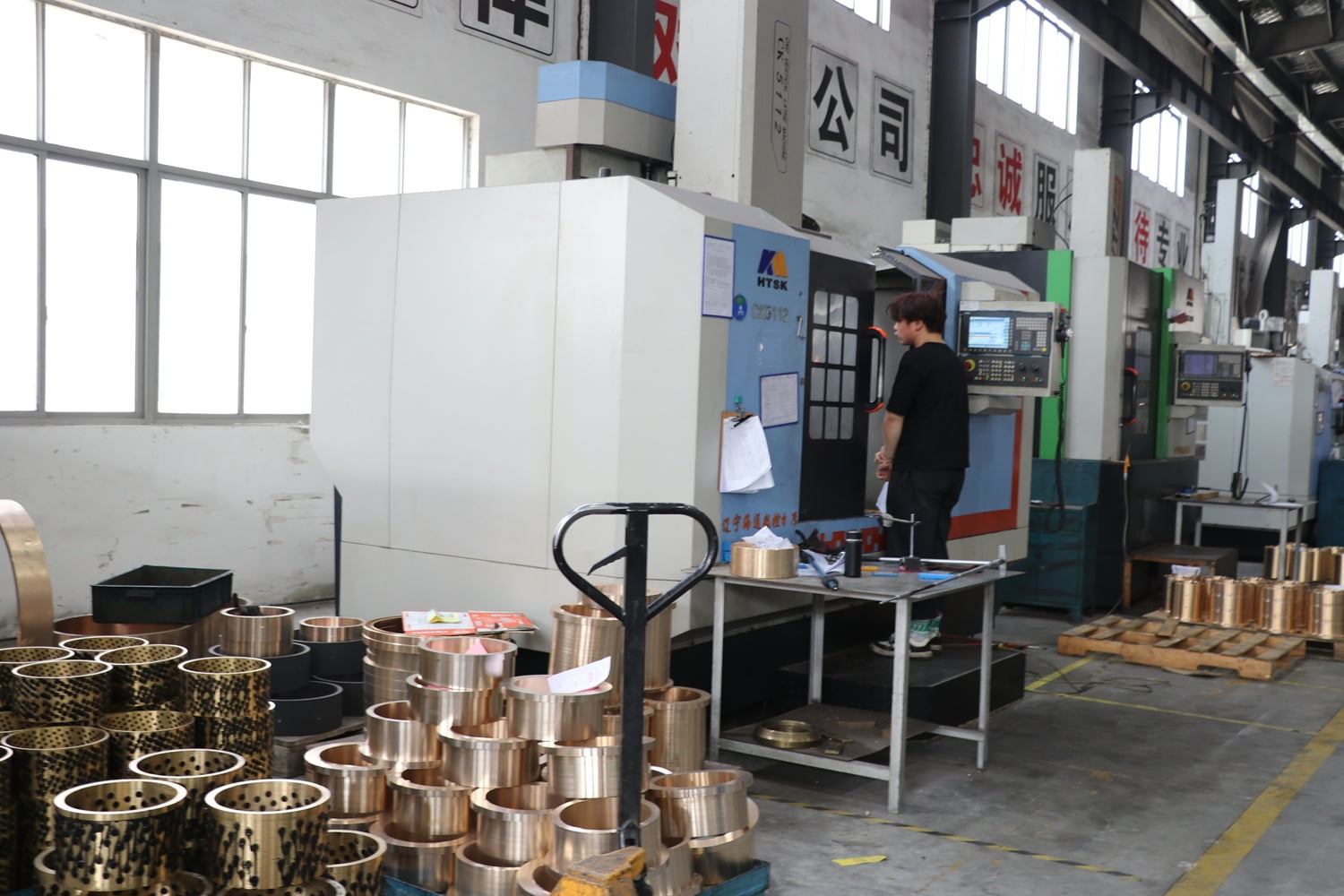
Struggling with inconsistent bushing quality? The hidden costs of bad purchases can hurt your production line. There is a better way to source parts from China.
The biggest mistake is focusing only on the lowest price. This often leads to ignoring crucial factors like material suitability for your application[^1], manufacturing tolerances[^2], and the supplier's ability to maintain consistent quality in mass production. A reliable partner is more valuable than the cheapest quote.
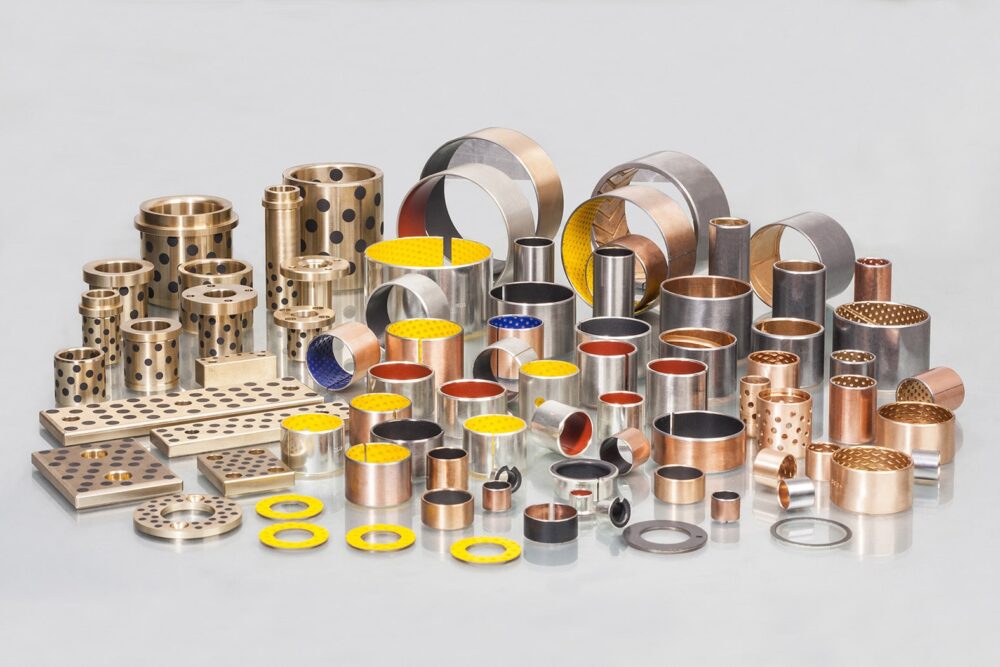
In my years at the factory, I've seen many international buyers make the same few errors. These mistakes seem small at first but can lead to huge problems like production stoppages and expensive rework. They often come from a simple misunderstanding of what makes a good supplier. Let's break down these common mistakes. I want to help you avoid them so you can build a supply chain you can truly depend on.
Are You Just Asking for a Material Grade Instead of Describing Your Needs?
You specified a material, but the bushings failed early. This happens when the material doesn't match the real work conditions, causing expensive equipment downtime and repairs.
Don't just provide a material code like 'CuSn8'. Instead, describe the application's load, speed, temperature, and lubrication. A good manufacturer can then recommend the best material structure, ensuring performance and reliability for your specific machine.
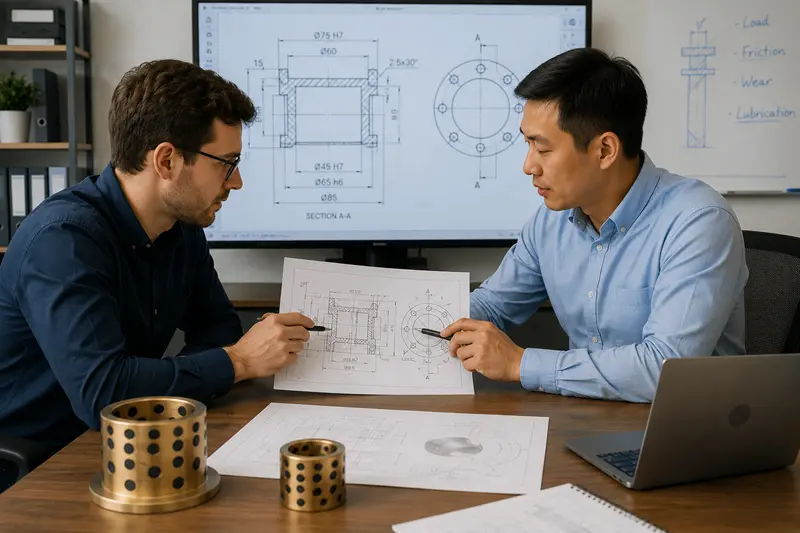
Many buyers believe that specifying a standard material grade is enough to get the right part. For example, a customer might ask for a quote on 10,000 "SF-1 bushings[^3]" of a certain size. While SF-1 (a common PTFE-based composite material) is excellent for many dry-running, low-speed applications, it might fail quickly under high shock loads or in a gritty, abrasive environment. In our factory, we see this all the time. A customer in the agricultural machinery sector once insisted on SF-1 for a pivot point on a harvester. The samples worked fine in the lab. But in the field, dust and dirt caused rapid wear. The right choice would have been a sealed bronze bushing with grease grooves, which can handle contamination much better. A good manufacturer's job is to ask why you need the part.
We need to understand the full picture. Here is what helps us select the perfect bushing for you:
| Information Needed | Why It's Important |
|---|---|
| Load (MPa) | Determines the required strength and material type. |
| Speed (m/s) | Affects heat generation and the choice of self-lubricating material. |
| Temperature (°C) | Plastic-based layers can fail at high temperatures. |
| Motion Type | Rotating, oscillating, or linear motion creates different wear patterns. |
| Environment | Is it clean, dusty, wet, or exposed to chemicals? |
By providing these details, you shift the conversation from "give me this part" to "help me solve this problem." This partnership approach is the key to getting a bushing that not only fits but lasts.
Is Comparing Only the Unit Price Costing You More in the Long Run?
You found a supplier with a 10% lower price. But now you're dealing with assembly issues and high rejection rates. The "cheaper" option is actually costing you more.
A low unit price often hides compromises in quality. You must also compare tolerances, inspection methods, and batch consistency guarantees. A slightly higher price from a reliable factory ensures every bushing fits and performs correctly, saving you money on rework and delays.
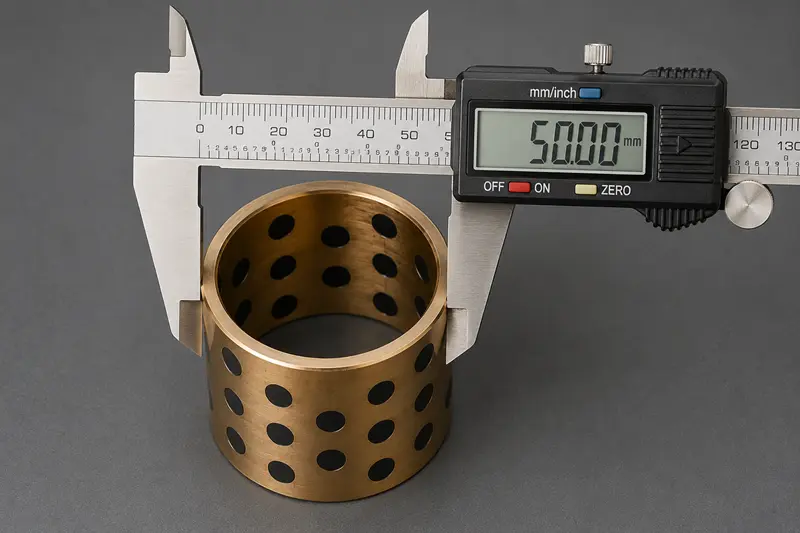
Price is always a factor, but the unit price is only one part of the total cost. I remember a case with a large OEM customer, let's call her Sofia. She was under pressure to reduce costs and decided to switch to a new supplier who offered a price that was $0.10 cheaper per bushing. The first batch of 20,000 pieces arrived. During assembly, her team found that nearly 30% of the bushings were too tight to be pressed into the housing. Their production line stopped. The cost of sorting the parts, the downtime, and the emergency order to fix the problem far exceeded the initial $2,000 she had "saved."
The cheap supplier had compromised on process control. They couldn't hold the required H7 outer diameter tolerance consistently across a large batch. A reliable manufacturer invests in the machinery and quality systems to prevent this.
Understanding the Total Cost
When you evaluate suppliers, think about the Total Cost of Ownership (TCO), not just the unit price.
| Cost Factor | Supplier A (Low Price) | Supplier B (Reliable Factory) |
|---|---|---|
| Unit Price | $0.90 | $1.00 |
| Internal Sorting & Rework | $0.15 | $0.00 |
| Production Downtime | $0.20 | $0.00 |
| Customer Complaints / Warranty | $0.10 | $0.00 |
| True Cost Per Part | $1.35 | $1.00 |
As you can see, the "cheaper" supplier ends up being 35% more expensive. When you ask for a quote, also ask about their tolerance capabilities, their inspection process for critical dimensions, and how they ensure every part in a batch of 50,000 is the same as the first one. That is where the real value is.
Are Your Technical Drawings Missing Critical Information?
You sent a drawing and got a quote, but the final parts don't work as expected. The factory made exactly what you drew, but the drawing was missing key details.
A basic drawing is not enough. Your technical package must include dimensions, tolerances, material, and also critical application data: operating conditions, assembly method, and lubrication details. This ensures the quote is accurate and the final product is fit for purpose.
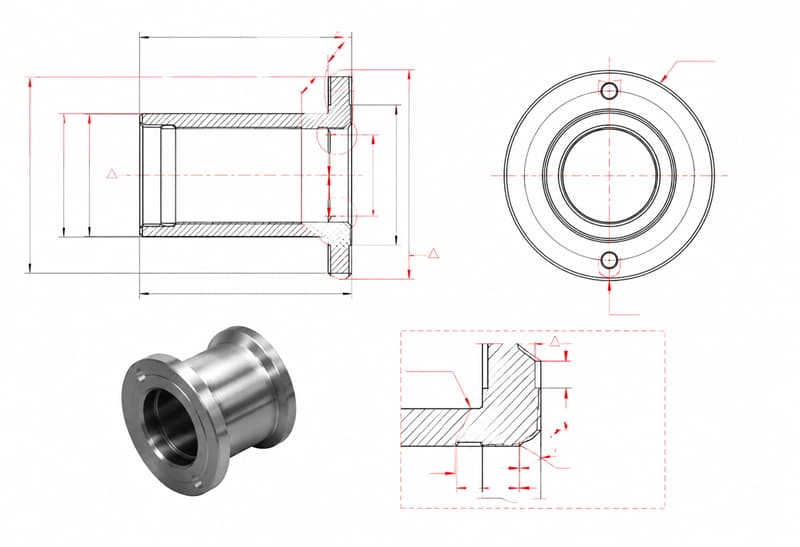
A drawing is a language. If it's not specific, the message gets lost. A drawing with just an inner diameter, outer diameter, and length is an incomplete sentence. It doesn't tell the full story of what the bushing needs to do. For example, a drawing that doesn't specify the chamfer (the angled edge) can cause big problems. Without the right lead-in chamfer, the bushing can shave off metal from the housing during press-fit assembly, creating contamination and damaging both parts. We once received an order for a simple sleeve bushing. The drawing was basic. We made the parts exactly to the drawing. Later, the customer complained that the bushings were failing. After a long discussion, we discovered the bushings were used in a high-speed rotating shaft. The drawing never mentioned the need for an oil groove[^4] to distribute lubrication. A simple spiral groove would have solved the problem from the start, but because the information was missing, the project was delayed and cost more.
The Anatomy of a Perfect RFQ (Request for Quotation)
To avoid this, your technical package should be comprehensive. Think of it as a complete instruction manual for us, the manufacturer.
- 1. Full Dimensions & Tolerances: Don't just specify ID/OD/Length. Include wall thickness tolerance, concentricity, and chamfer details. For press-fit parts, the OD tolerance is the most critical dimension.
- 2. Material & Hardness: Specify the exact material or, even better, describe the working conditions so we can recommend the best option.
- 3. Surface Finish: Note any requirements for the inner or outer surfaces, especially if the shaft finish is very smooth or rough.
- 4. Application Context: This is the most forgotten part. Briefly explain the part's function. Is it for a hinge? A gearbox? A hydraulic cylinder? This context helps us spot potential problems.
Providing this complete picture allows a good factory to act as your partner, not just an order-taker. We can use our experience to ensure the part you get is the part you actually need.
Do You Assume a Good Sample Guarantees Good Mass Production?
The sample bushing was perfect. You placed a large order, but the bulk delivery was a disaster. Now your production line is stopped, waiting for usable parts.
A perfect sample only proves a supplier can make one good part, not thousands. Before mass production, you must verify their process control, batch management, and quality inspection systems. Ask for their quality control plan for your specific part.
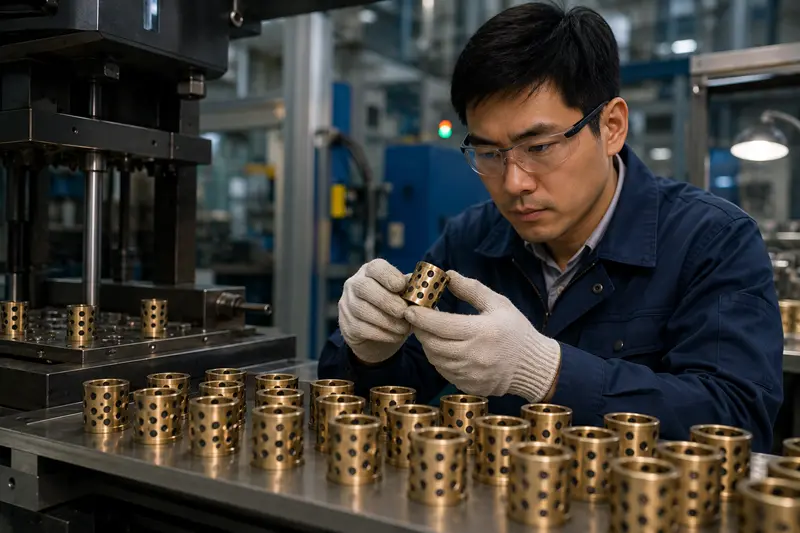
This is one of the most painful mistakes a buyer can make. It's easy to fall into this trap. A supplier sends you 5 or 10 beautifully made samples. They fit perfectly, the finish is excellent, and you feel confident. You sign off and place an order for 50,000 units. Six weeks later, a container arrives, and the parts are inconsistent. Some are good, some are out of tolerance, and the material finish varies. What happened? The supplier may have made the samples on a special machine with their best technician, a process that is not scalable for mass production. Or worse, they may be a trading company that sourced the sample from a high-quality factory and then placed your bulk order with a cheaper, less reliable one.
A true manufacturing partner can demonstrate how they will maintain quality from the first part to the last.
How to Verify Mass Production Capability
You don't need to fly over and audit the factory yourself. You can ask for simple evidence of their systems.
- Ask for a Process Control Plan: For your part, how will they measure critical dimensions during production? Will they check every 100 parts? Every 500? What equipment will they use?
- Inquire about Batch Traceability[^5]: Can they trace a specific box of bushings back to the raw material coil and the production date? This is crucial for quality control and problem-solving later.
- Request a Final Inspection Report[^6]: Ask for a sample report from a similar production run. This shows you what they check before the parts are allowed to leave the factory.
A good sample is the starting point, not the finish line. Verifying a supplier's ability to produce consistently at scale is the most important step in securing a reliable supply chain for your OEM project.
Conclusion
Avoiding these common mistakes is simple. Focus on finding a true manufacturing partner, not just a low price. This ensures stable quality, reliable delivery, and lower total costs.
[^1]: "Essential Components for Mechanical Engineers", https://www.fiveflute.com/guide/bearings-and-bushings-essential-components-for-mechanical-engineers/. This source explains how material properties influence the performance and durability of bushings in specific applications. Evidence role: mechanism; source type: education. Supports: Material suitability is a crucial factor in ensuring the reliability and performance of bushings in specific applications.. [^2]: "Why are Tolerances Important in Manufacturing?", https://www.pacific-research.com/why-are-tolerances-important-in-manufacturing-prl/. This source discusses the role of manufacturing tolerances in ensuring the proper fit and function of mechanical components. Evidence role: mechanism; source type: education. Supports: Manufacturing tolerances are critical for ensuring the proper fit and function of bushings in mechanical systems.. [^3]: "SF-1 Bushes", https://iskbearing.com/products/bushing-bearings/sf-1-bushes. This source provides an overview of SF-1 bushings, including their material composition and typical applications. Evidence role: definition; source type: encyclopedia. Supports: SF-1 bushings are commonly used in dry-running, low-speed applications but may fail under high shock loads or abrasive conditions.. Scope note: The source may not address specific failure scenarios or alternative materials for challenging environments. [^4]: "Oil Grooves for Bronze Bushings", https://www.nationalbronze.com/News/410/. This source explains the function of oil grooves in distributing lubrication and reducing wear in rotating components. Evidence role: mechanism; source type: education. Supports: Oil grooves are essential for distributing lubrication and reducing wear in rotating components like bushings.. Scope note: The source may not address specific design considerations for oil grooves in bushings. [^5]: "Traceability In Manufacturing: What Is It & How You Can… | Tulip", https://tulip.co/blog/traceability-in-manufacturing/. This source explains the importance of batch traceability in quality control and problem-solving in manufacturing. Evidence role: mechanism; source type: education. Supports: Batch traceability is crucial for quality control and problem-solving in manufacturing processes.. Scope note: The source may not address specific traceability methods for bushing production. [^6]: "Manufacturing Inspections: Why Are They Important?", https://goaudits.com/blog/manufacturing-inspection/. This source describes the role of final inspection reports in verifying product quality before shipment. Evidence role: mechanism; source type: education. Supports: Final inspection reports are essential for verifying product quality before shipment in manufacturing processes.. Scope note: The source may not provide specific examples related to bushing inspection.