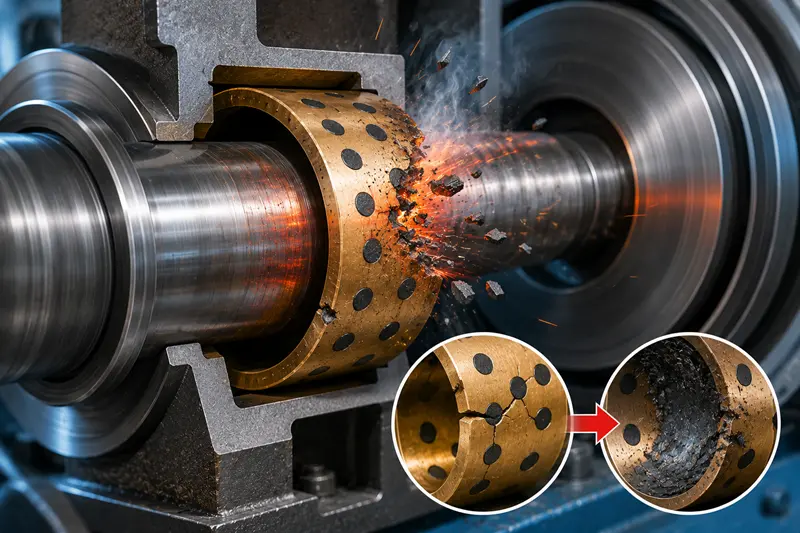
Your new bushings are already worn out, making noise, or showing excessive play. You immediately suspect poor material quality, but the real reason is often hidden in the operating conditions.
A bushing's lifespan is not measured in calendar months but in operating hours, load cycles, and the actual working environment. Early failures are typically caused by issues like improper lubrication, incorrect assembly, high impact loads, or contamination, not just the quality of the bushing material itself.
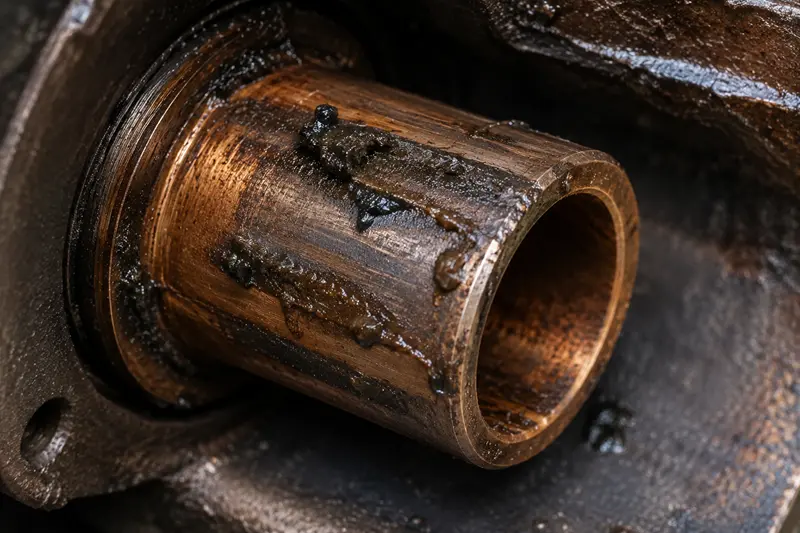
It’s a story I hear all the time from customers. They call me, frustrated, saying, "Your bushings only lasted three months!" But when we look closer, the story is always more complicated. The calendar doesn't tell us anything about the intensity of the work. To really understand why a bushing fails, we need to stop looking at the date and start acting like detectives. The clues are always there if you know where to look. Let's break down the most common reasons for early failure.
Is High Usage Disguised as 'Just a Few Months'?
You expected your new bushings to last for years, but they failed in a fraction of that time. Now you're facing unexpected downtime and questioning your supplier's quality.
A bushing in a machine that runs 20 hours a day can experience more wear in three months than a standard-use machine does in over a year. True lifespan is measured by the intensity of its work—operating hours and load cycles—not calendar days.[^1]
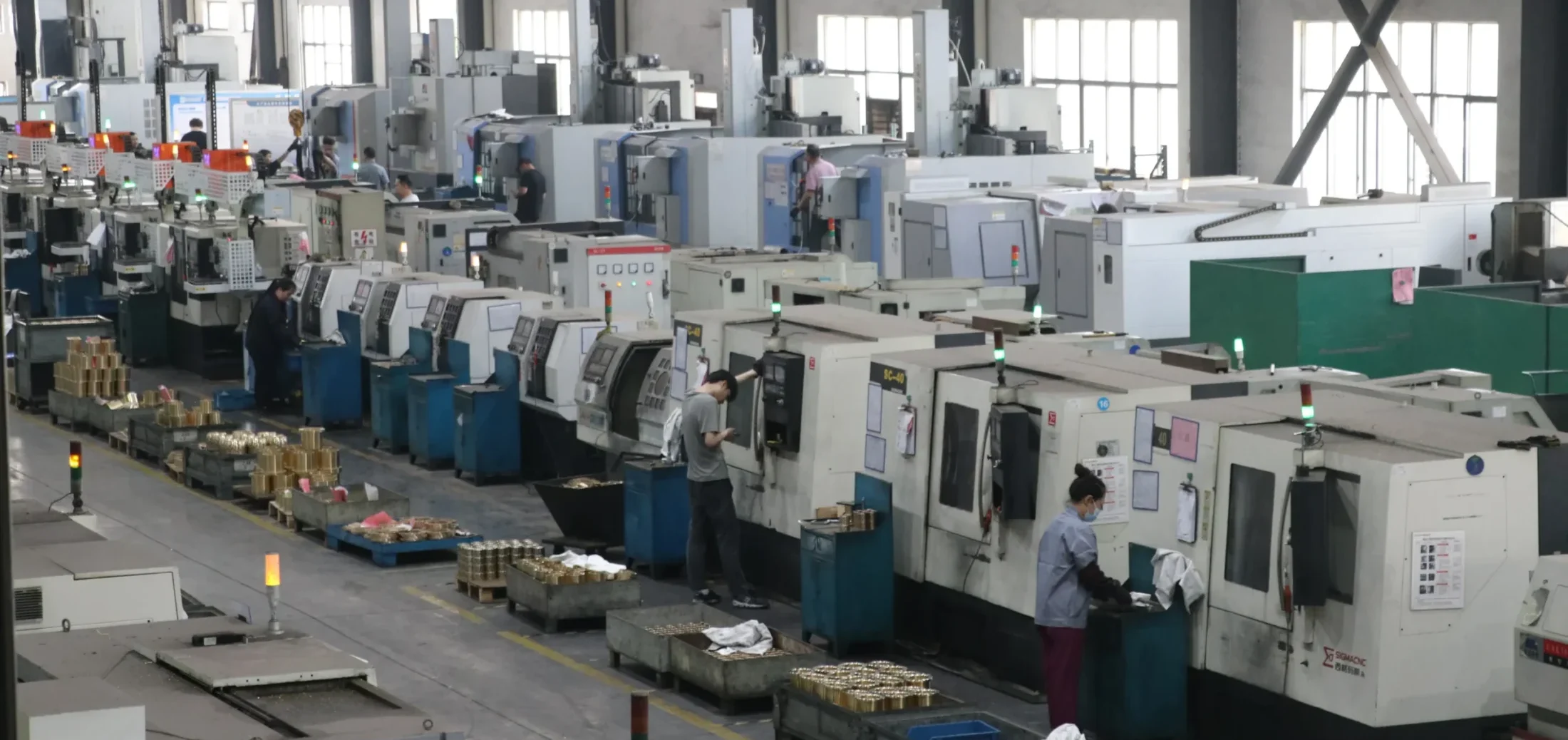
Think about it like this: a taxi that runs 24/7 will wear out its tires much faster than a personal car driven only on weekends, even if they are both "a few months old." The same principle applies to bushings. A piece of equipment in a high-production factory might see more action in three months than another machine sees in two years. The number of load cycles is just as important. A bushing in a stamping press that cycles thousands of times per hour is under far more stress than one in a slowly rotating pivot point. When a customer tells me a bushing failed quickly, my first question is always, "How many hours was it actually running?" This helps us shift the focus from calendar time to operational intensity, which is the only true measure of a bushing's service life.
| Factor | Low-Intensity Application | High-Intensity Application |
|---|---|---|
| Operating Hours/Day | 2-4 hours | 16-24 hours |
| Load Cycles/Hour | < 100 | > 1,000 |
| Equivalent Wear (3 months) | ~360 hours | ~2,160 hours (6x more) |
Could Your Assembly and Mating Parts Be the Real Problem?
You've installed a brand-new, high-quality bushing, but it's seizing up or wearing down unevenly. It's easy to blame the bushing, but the problem might be with its neighbors.
If the mating shaft is too soft, too rough, or misaligned, it will destroy the bushing. Similarly, a press-fit that is too tight eliminates the running clearance, causing the system to overheat and seize. A bushing cannot perform correctly in a flawed environment.[^2]
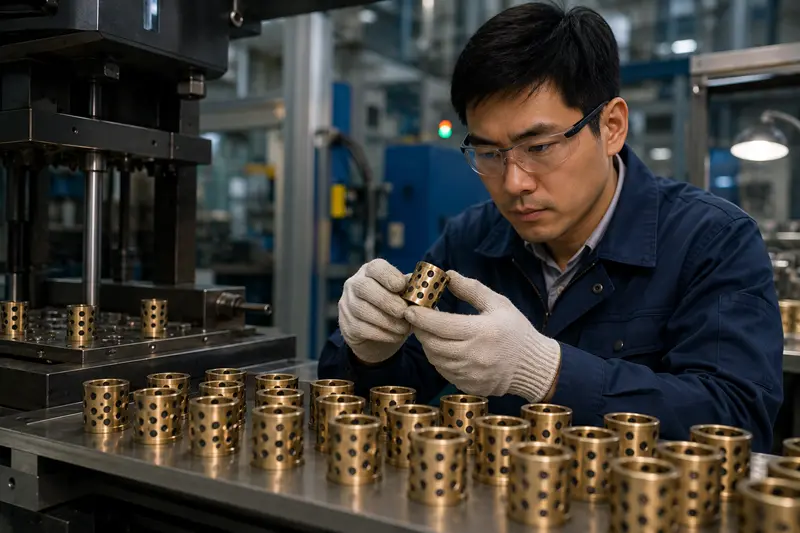
A bushing is only one part of a system. Its performance depends entirely on how it interacts with the housing and the shaft. We see this often in OEM projects where even small deviations from the design can cause big problems.
The Mating Shaft
The shaft is the bushing's direct partner. If the shaft's surface is too rough, it acts like sandpaper, grinding away the bushing's inner layer. If it's too soft, abrasive particles can embed themselves into the shaft, which then wears down the bushing. The shaft must be harder than the bushing and have a smooth surface finish to ensure a long service life.
Installation and Clearance
When you press a bushing into its housing, its internal diameter gets slightly smaller. This is by design. But if the press-fit is too tight, the internal diameter can shrink too much, leaving no room for the shaft to rotate freely or for a lubricating film to form. This "zero clearance" condition causes metal-to-metal contact, rapid overheating, and eventual seizure.[^3]
Alignment
Perfect alignment is critical. If the shaft and housing are not perfectly concentric, the load will be concentrated on the edges of the bushing instead of being distributed evenly across its surface. This "edge loading" creates immense pressure on a tiny area, causing rapid, localized wear and premature failure.
Are Lubrication and Contamination Silently Destroying Your Bushings?
Your maintenance team is lubricating the equipment on schedule, but the bushings are still failing. You're wasting money on grease and replacement parts, wondering why your efforts aren't working.
Using the wrong type of grease, an inconsistent lubrication schedule, or allowing contaminants like dust and grit into the joint can destroy a bushing faster than high loads.[^4] Proper lubrication is about cleaning and protecting the surface, not just reducing friction.
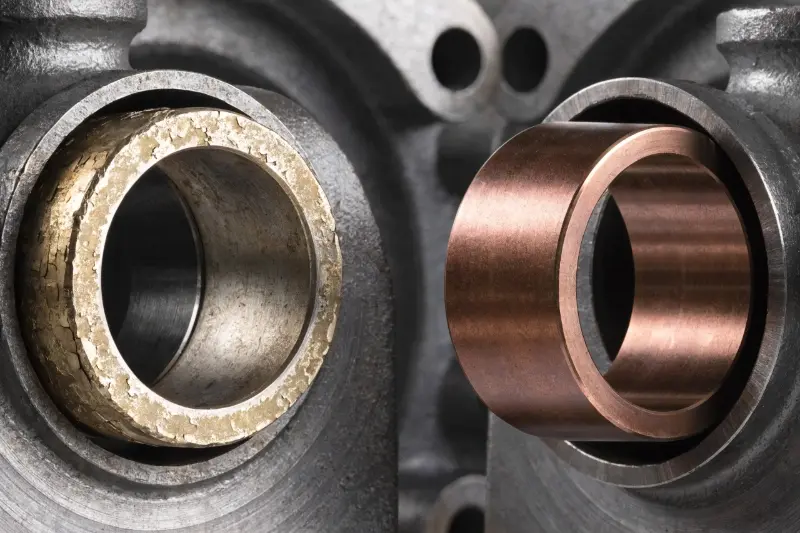
In harsh environments like agriculture, construction, or mining, lubrication and contamination are the top causes of bushing failure. Even self-lubricating bushings can suffer when conditions are severe.
The Right Lubricant, at the Right Time
Not all grease is the same. Some are designed for high pressure, while others are for high speed. Using the wrong one can be as bad as using none at all. The grease can break down under heat or be squeezed out under load, leaving the surfaces unprotected. The lubrication schedule is also key. In dirty or wet conditions, you need to re-grease more often. The new grease helps push out the old, contaminated grease, cleaning the joint from the inside out. Forgetting to do this allows abrasive particles to build up, turning your lubricant into a grinding paste.
Contamination is the Enemy
Dust, dirt, sand, and metal particles are a bushing's worst enemy. When these particles get between the shaft and the bushing, they embed into the softer bushing material. From there, they act like cutting tools, scratching deep grooves into the much harder and more expensive shaft. This damage is often irreversible. Good sealing is the first line of defense. If the seals are worn or damaged, contaminants will get in. This is why, in many cases, a failed bushing is actually a sign of a failed seal.
How Do You Read the Clues from a Failed Bushing?
When a bushing fails, your first instinct might be to throw it in the scrap bin. But that failed part is a valuable piece of evidence that can tell you exactly what went wrong.
Don't just replace a failed bushing—inspect it. The wear patterns, surface color, and leftover grease tell a story. By learning to read these signs, you can diagnose the root cause, whether it's misalignment, lubrication failure, overload, or something else entirely.
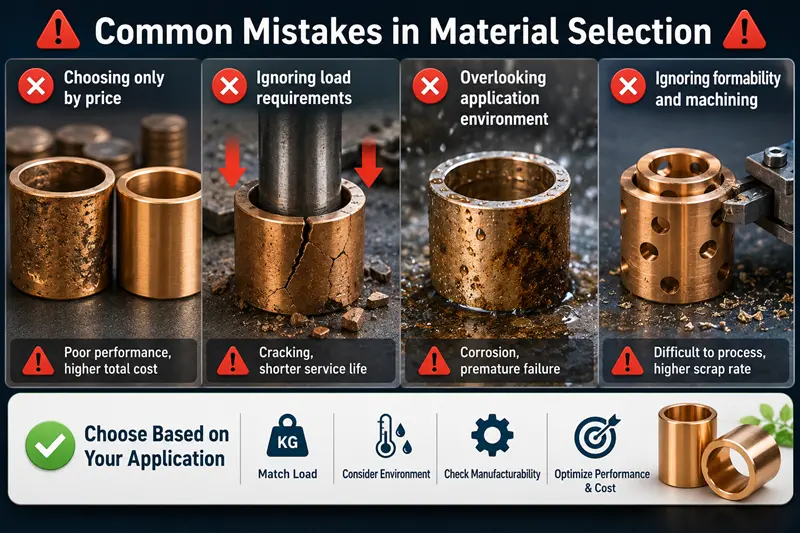
As a manufacturer, we analyze failed parts all the time to help our clients solve problems. You can do the same basic diagnosis on-site. By looking at the evidence, you can move from guessing the cause to knowing the cause. This allows you to fix the underlying problem instead of just treating the symptom. Before you order a replacement, grab the failed bushing and the mating shaft and look for these common clues. This simple inspection can save you from repeating the same failure over and over again. It's the most effective way to improve your machine's reliability and reduce long-term costs.
| Clue (What to Look For) | Possible Cause |
|---|---|
| Wear on one edge of the bushing | Misalignment or a bent shaft |
| Deep scratches/grooves inside the bushing | Contamination (dirt, metal particles) |
| Dark blue or brown discoloration | Overheating from lack of lubrication or clearance |
| Inner surface is smeared or melted | Seizure due to excessive load, speed, or heat |
| Wear is only on the top or bottom | A strong, unidirectional load |
| Scratches and scoring on the shaft | Abrasive particles were present in the joint |
Conclusion
A bushing that fails early is not a sign of bad material; it's a symptom of a larger system problem. Investigating the true cause is the key to a reliable fix.
[^1]: "What Design and Material Factors Impact the Wear and Corrosion ...", https://pmc.ncbi.nlm.nih.gov/articles/PMC4397764/. This source provides data on how operating hours and load cycles correlate with wear and tear in mechanical components. Evidence role: statistic; source type: research. Supports: True lifespan of bushings is determined by operating hours and load cycles rather than calendar days.. Scope note: The data may focus on specific industries or applications. [^2]: "Best Practices for Bushing Installation -", https://www.inmr.com/best-practices-for-bushing-installation/. This source outlines how environmental factors like assembly errors and material mismatches impact bushing performance. Evidence role: general_support; source type: education. Supports: Bushings require optimal environmental conditions to perform correctly.. Scope note: The source may focus on specific types of bushings or industries. [^3]: "Under extreme impacts, metals get stronger when heated", https://dmse.mit.edu/news/under-extreme-impacts-metals-get-stronger-when-heated/. This source explains how zero clearance conditions lead to overheating and seizure in mechanical systems. Evidence role: mechanism; source type: research. Supports: Zero clearance conditions result in metal-to-metal contact, overheating, and seizure in bushings.. Scope note: The explanation may focus on specific types of mechanical systems. [^4]: "Lubrication Contamination and the Effect on Pin Bushings", https://www.graco.com/us/en/vehicle-service/solutions/articles/lubrication-contamination-effect-on-pin-bushings.html. This source explains how lubrication type and contamination influence bushing wear and failure rates. Evidence role: mechanism; source type: research. Supports: Improper lubrication and contamination can accelerate bushing failure more than high loads.. Scope note: The source may not cover all types of bushings or grease formulations.