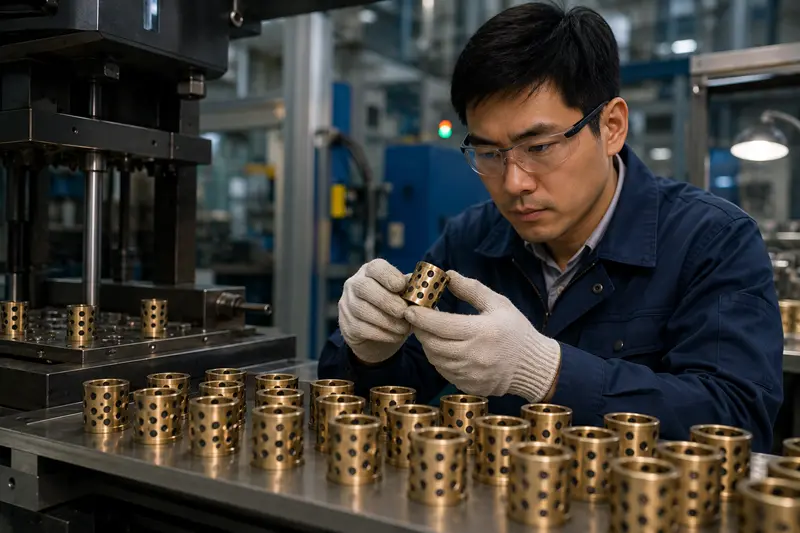
Are you worried about bushing procurement risks? The real dangers, like mass production failures, often appear after you've placed the order, not before. Let's look at how to secure your supply chain.
To reduce OEM bushing procurement risk, focus on the supplier's manufacturing capabilities, not just the price. Look for stable production processes[^1], comprehensive quality control, and proven experience in mass production to ensure long-term consistency and avoid costly post-purchase issues.
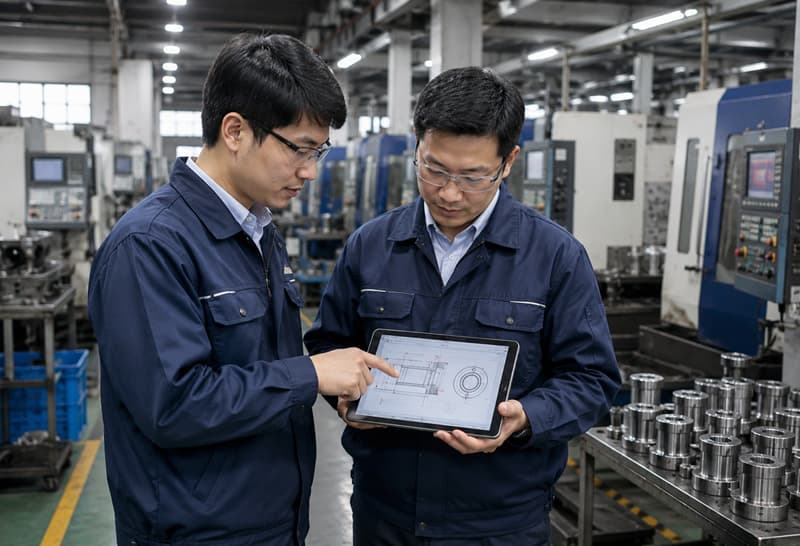
As a factory that produces millions of bushings, I see many OEM buyers focus on two things: price and delivery time. This makes sense on the surface. You have a budget to meet and a production schedule to keep. But I've learned that the biggest risks are not found in the quotation or the initial delivery date. The real problems show up later, during mass production or even after your product is in the field. These hidden risks[^2] can cost far more than a few cents saved on the initial purchase. We are going to explore what these risks are and how you can avoid them by asking your supplier the right questions.
Why Does a Perfect Sample Lead to Mass Production Failures?
Your sample bushing worked perfectly in tests. But now, with the full order, you're facing assembly issues and failures on the line. What went wrong? Let's uncover this inconsistency trap.
A perfect sample doesn't guarantee mass production quality. The real test is a supplier's ability to maintain dimensional consistency, material stability[^3], and process control across thousands of units. This requires a robust, repeatable manufacturing system, not just a one-off effort for the sample.
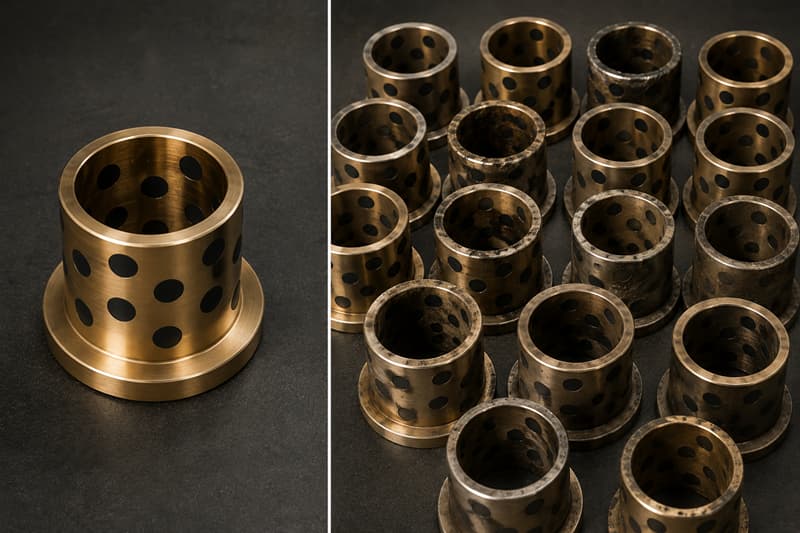
From our perspective as a manufacturer, creating a perfect sample is relatively easy. A factory can assign its best technician, use the best piece of raw material from a sheet, and run a machine slowly with extra checks to produce a flawless part. The goal is to win the order. However, this is not a reflection of their day-to-day mass production capability. Mass production is a completely different challenge. It involves multiple machines, different shifts of operators, and various batches of raw materials. The key to success here is not individual skill, but a strong system. A reliable manufacturer invests in statistical process control (SPC)[^4] to monitor consistency in real-time. They don't just check the final product; they control the process that makes it. This is the only way to ensure that the 10,000th bushing is identical to the first one.
Sample Mindset vs. Mass Production System
| Aspect | Sample Mindset (High Risk) | Mass Production System (Low Risk) |
|---|---|---|
| Goal | Win the order with a perfect part. | Deliver consistent quality for every batch. |
| Process | Manual, high-touch, often by top staff. | Automated, standardized, controlled process. |
| Quality Check | Final inspection of the one sample. | In-process monitoring (SPC) and batch testing. |
| Result | A perfect sample, but high risk of batch inconsistency. | Reliable, predictable parts from every order. |
Aren't All Bushings of the Same Material Grade Created Equal?
You specified the exact material grade for your bushings. Yet, performance varies wildly from batch to batch, causing unexpected wear and tear in your machines. Why isn't the technical spec enough to guarantee performance?
No, bushings of the same material grade are not always equal. The stability of the raw material supplier and the consistency of the manufacturing process (like sintering temperature) dramatically impact performance. The final product's quality depends on more than just a name on a datasheet.
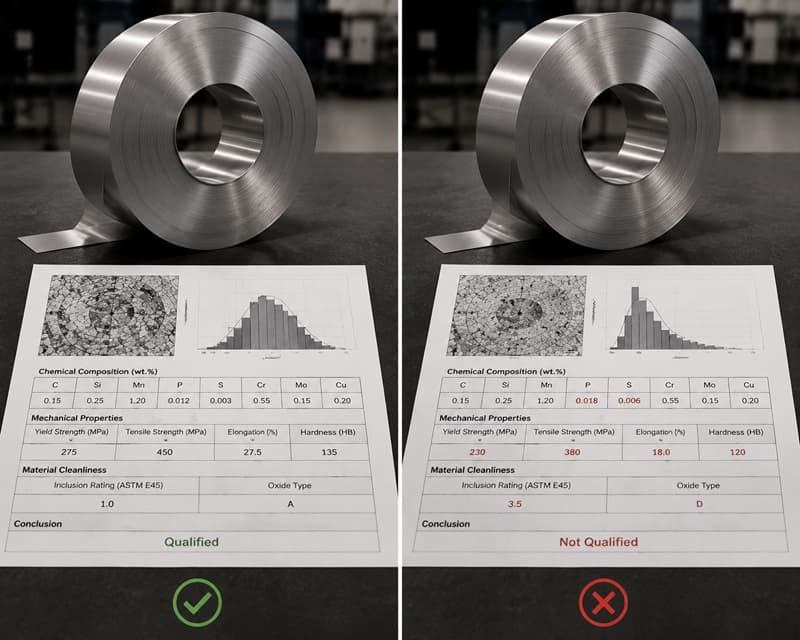
This is a problem we see often. A customer comes to us after experiencing failures with another supplier, even though they used the "same" material. For example, with SF-1 (also known as DU) composite bushings[^5], the final product is a layered material. The performance depends on the quality of the steel backing, the porosity of the sintered bronze layer, and the uniform application of the PTFE-lead mixture. A supplier might buy cheaper steel or have poor temperature control during the sintering process. This results in a bushing that technically meets the material name but will fail much faster under load. We control this risk by having long-term relationships with trusted raw material suppliers and maintaining strict control over our internal processes. We also implement batch traceability[^6], so if an issue ever arises, we can trace the part back to the exact material batch and production run.
Factors Beyond the Material Name
| Factor | Low-Cost Supplier Approach | Reliable Manufacturer Approach |
|---|---|---|
| Raw Material | Buys from the cheapest source, quality may vary. | Long-term partners, incoming material inspection. |
| Process Control | Wide process windows, potential for variation. | Tight control of temperature, pressure, and speed. |
| Testing | Basic checks on dimensions only. | Batch testing for wear, friction, and material structure. |
| Outcome | Unpredictable performance and service life. | Consistent, reliable performance you can count on. |
How Can a Correct Drawing Still Lead to Assembly Problems?
Your engineering drawings are perfect, checked and double-checked by your team. But the bushings you received are causing fitment issues on the assembly line. This mismatch is costing you valuable time and money.
A correct drawing isn't the whole story[^7]. Mismatched interpretations of tolerances, different measurement methods, or a supplier's inability to hold tight tolerances consistently can lead to parts that are technically "in-spec" but fail in assembly. True alignment on quality standards is crucial.
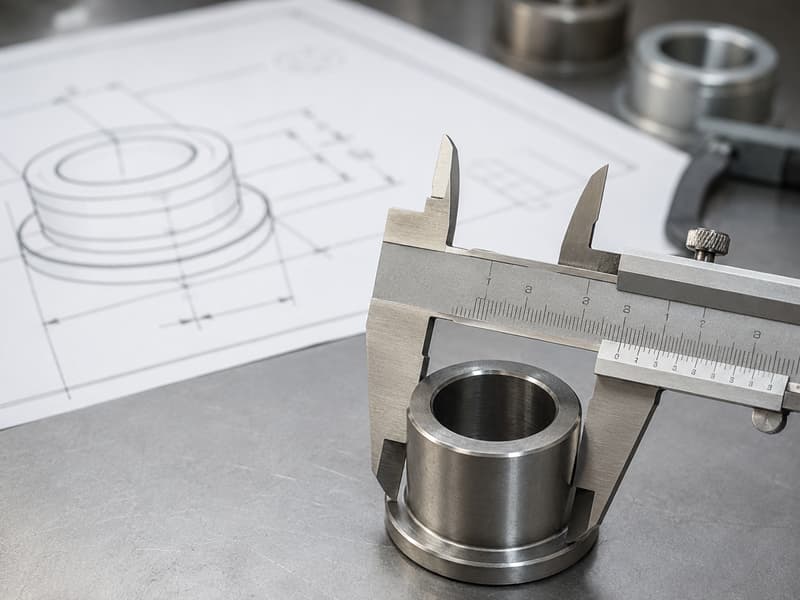
This is one of the most frustrating issues for an OEM buyer. The drawing seems clear, but the parts don't work. Why? The problem is often in the details of quality control. For instance, your drawing might specify a tolerance of ±0.05mm. A low-cost supplier might aim to simply be within that window. This means many of their parts could be at +0.04mm or -0.04mm. When these parts meet other components on your assembly line, the accumulated tolerances (tolerance stacking[^8]) can cause a jam. A high-capability manufacturer, on the other hand, uses process capability analysis (Cpk)[^9]. We aim to produce parts that are not just "in spec," but are centered on the nominal dimension with very little variation. This ensures that almost all parts are very close to the ideal size, making assembly smooth and predictable. We also work with customers to align on measurement methods to ensure we are both seeing the same results.
Drawing-Focused vs. Process-Focused Quality
| Aspect | Drawing-Focused Approach (High Risk) | Process-Focused Approach (Low Risk) |
|---|---|---|
| Tolerance View | "Is the part within the tolerance box?" | "How close is the part to the target dimension?" |
| Measurement | Final inspection, may use different tools. | Aligned measurement methods, in-process gauging. |
| Goal | Ship parts that pass a basic check. | Ensure high process capability (Cpk) for easy assembly. |
| Result | High risk of assembly line problems and rework. | Smooth, predictable assembly and reliable final product. |
Conclusion
Reducing OEM bushing risk means choosing a partner with proven mass production consistency and robust quality systems, not just the supplier with the lowest initial price for a sample.
[^1]: "Case Studies Examining Lean Manufacturing Strategies, Pollution ...", https://www.epa.gov/sites/default/files/2013-11/documents/perfection.pdf. This source explains how stable production processes and quality control systems contribute to reducing procurement risks in OEM manufacturing. Evidence role: mechanism; source type: research. Supports: Stable production processes and quality control are essential to reducing OEM procurement risks.. [^2]: "Hidden risk in supply chains", https://news.mit.edu/2013/hidden-risk-in-supply-chains-1216. This source identifies common hidden risks in OEM procurement and their potential cost implications. Evidence role: general_support; source type: education. Supports: Hidden risks in OEM procurement can lead to significant costs beyond initial savings.. [^3]: "A New Model Supporting Stability Quality of Materials and ...", https://pmc.ncbi.nlm.nih.gov/articles/PMC9267376/. This source discusses the importance of material stability in ensuring consistent manufacturing outcomes. Evidence role: mechanism; source type: research. Supports: Material stability is crucial for maintaining consistency across thousands of manufactured units.. [^4]: "What is Statistical Process Control (SPC) in Manufacturing?", https://www.autodesk.com/blogs/design-and-manufacturing/what-is-statistical-process-control/. This source provides an overview of statistical process control (SPC) and its role in maintaining manufacturing consistency. Evidence role: mechanism; source type: education. Supports: Statistical process control (SPC) is a reliable method for monitoring manufacturing consistency in real-time.. [^5]: "What Are DU Bushings? Meaning, Types & Size Chart", https://bkzindustry.com/blogs/what-are-du-bushings/. This source provides technical details on the layered material composition and performance characteristics of SF-1 composite bushings. Evidence role: definition; source type: encyclopedia. Supports: SF-1 composite bushings are layered materials with specific performance characteristics.. [^6]: "Traceability in Manufacturing: What It Is and Why It Matters", https://www.bradyid.com/intelligent-manufacturing/traceability-in-manufacturing. This source explains the concept of batch traceability and its benefits in identifying and resolving manufacturing issues. Evidence role: mechanism; source type: education. Supports: Batch traceability helps trace parts back to their material batch and production run for issue resolution.. [^7]: "What To Do When Measurement Methods Produce ...", https://www.nist.gov/blogs/taking-measure/what-do-when-measurement-methods-produce-different-answers. This source discusses how mismatched tolerance interpretations and measurement methods can lead to assembly issues despite correct drawings. Evidence role: mechanism; source type: education. Supports: Correct drawings can still lead to assembly issues due to mismatched tolerance interpretations or measurement methods.. [^8]: "Tolerance Stack Analysis Methods", https://faculty.washington.edu/fscholz/Reports/isstech-95-030.pdf. This source discusses tolerance stacking and its impact on assembly line operations. Evidence role: mechanism; source type: education. Supports: Tolerance stacking can cause jams in assembly lines due to accumulated tolerances.. [^9]: "Six Sigma Principles. Process Capability Index (Cpk) for ...", https://www.6sigma.us/process-improvement/process-capability-index-cpk/. This source explains process capability analysis (Cpk) and its role in ensuring manufacturing quality. Evidence role: mechanism; source type: education. Supports: Process capability analysis (Cpk) is used by high-capability manufacturers to ensure quality..