Your equipment runs hot, and your lubricant keeps failing. This causes frequent downtime and expensive repairs. Graphite bushings could be the reliable, long-lasting solution you are looking for.
Graphite bushings are the ideal choice for high-temperature, low-speed, and heavy-load equipment where traditional grease fails.[^1] They form a solid lubricating film, ensuring continuous operation and reducing maintenance needs in harsh environments like kilns, furnaces, or metallurgical machinery.
As a bushing manufacturer, I see many buyers first think about standard bronze or PTFE-lined bushings for their hot applications. These are common choices, and they work well in many situations. However, when the temperature gets high enough to burn off grease or degrade plastics, these traditional solutions can fail unexpectedly. This is where a different kind of thinking is needed. It's not just about finding a material that can survive the heat. It's about finding a system that can provide reliable lubrication when conventional methods are no longer an option. So, we need to look closer at how graphite bushings solve this specific problem.
How Do Graphite Bushings Actually Work in High Temperatures?
You are worried about grease burning off inside your machines. This leaves your bearings running dry, which quickly leads to severe wear and catastrophic failure. Graphite offers a self-lubricating solution.
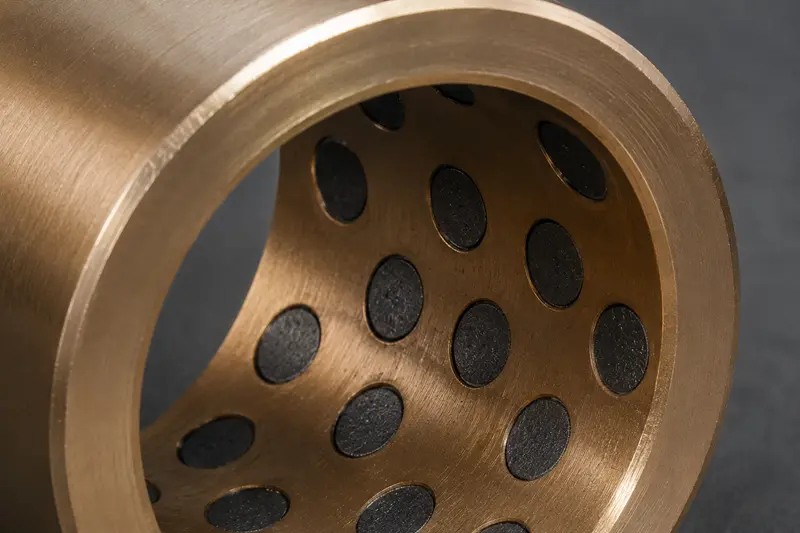
Graphite bushings work by using a solid metal base, like bronze, with graphite plugs embedded in it. At high temperatures, the graphite transfers to the shaft, forming a stable, low-friction solid film. This film provides continuous lubrication without needing any grease or oil.
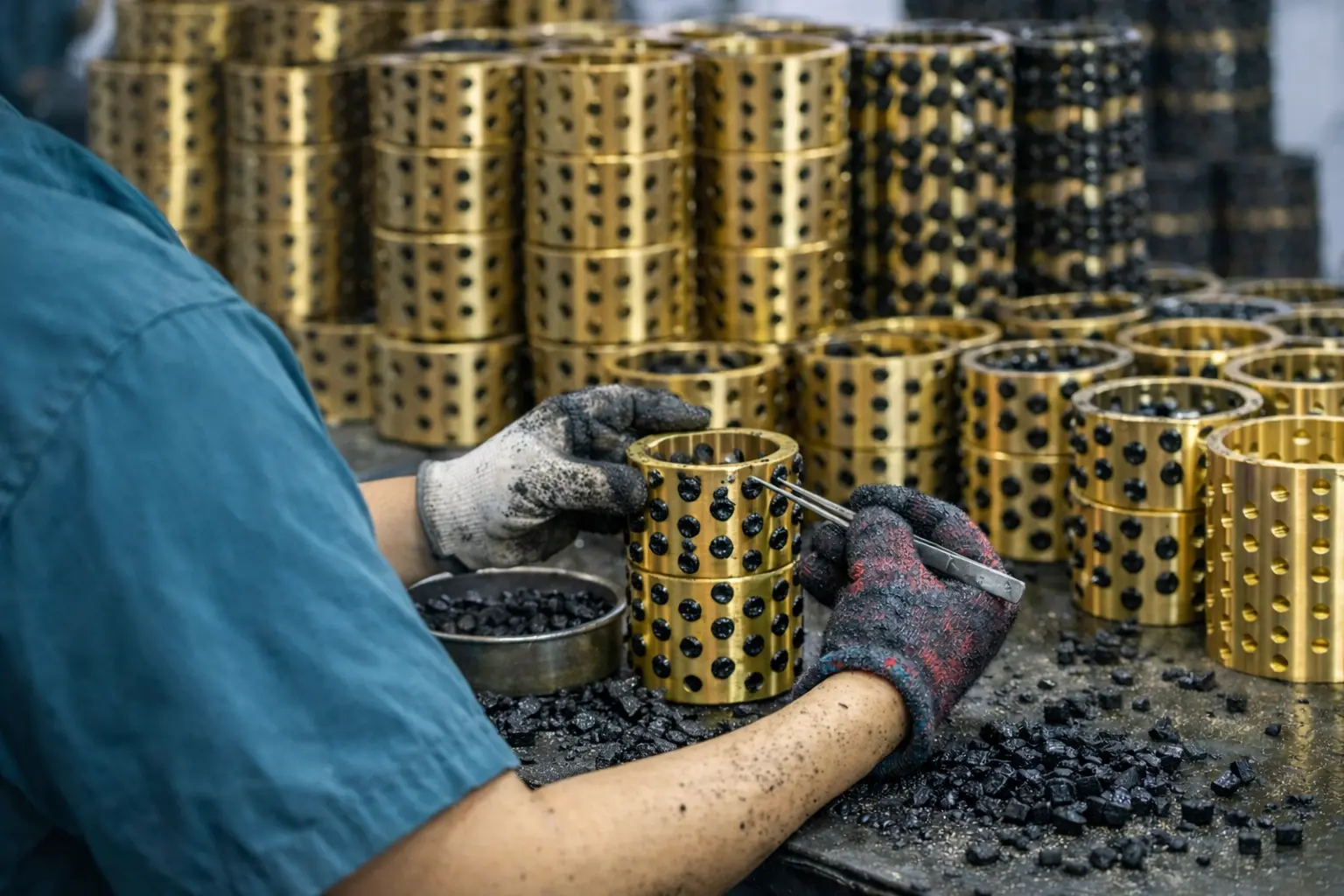
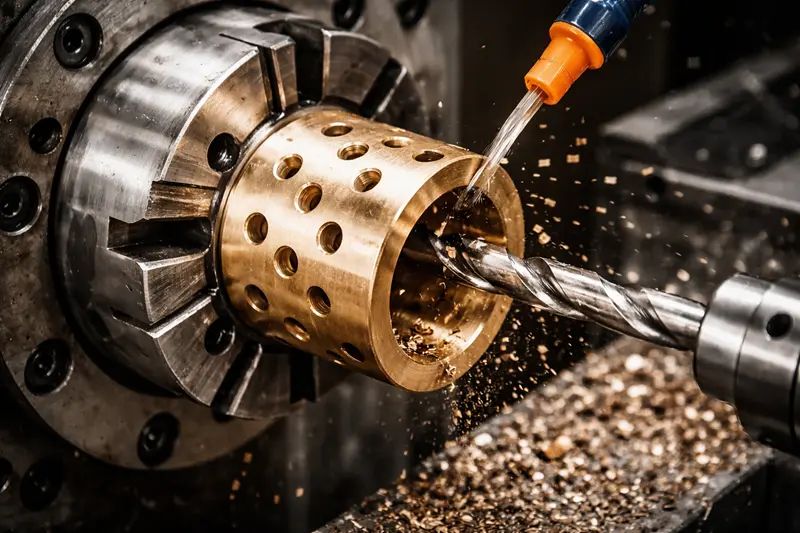
Let's break this down further. The core idea is simple but very effective. We start with a strong metal body, usually a bronze alloy. This bronze provides the mechanical strength to handle heavy loads and impacts. It’s the backbone of the bushing. Then, we drill precise holes into this bronze body and press solid graphite plugs into them. These graphite plugs are the key to self-lubrication.
When the equipment starts moving, the shaft rubs against the bushing surface. This action transfers a very thin layer of graphite from the plugs onto the shaft. Over a short run-in period, this process creates a continuous, slick film of solid lubricant covering all contact surfaces. This film has a very low coefficient of friction and is extremely durable at high temperatures where oil and grease would simply vaporize or turn to carbon. This is why these bushings are essential in equipment like die casting molds, steel mill machinery, drying ovens, and heavy-duty pivot joints on construction equipment.
| Feature | Traditional Grease/Oil | Graphite Bushing |
|---|---|---|
| Temp Limit | Fails or burns off | Very high |
| Lubrication | Liquid film | Solid film |
| Maintenance | Frequent re-lubrication | Minimal to none |
| Ideal Condition | Moderate temp, accessible | High temp, difficult access |
| Failure Mode | Seizure from no lubrication | Gradual, predictable wear |
When Are Graphite Bushings the WRONG Choice for Hot Equipment?
You might be thinking of using graphite bushings for all your hot machines. But using them in the wrong application can lead to poor performance or even premature failure.
Avoid graphite bushings in high-speed, continuous rotation applications.[^2] The solid lubricant film may not form properly or can be worn away too quickly. For light-load, high-speed situations, other solutions focusing on heat dissipation and different materials might be more effective.
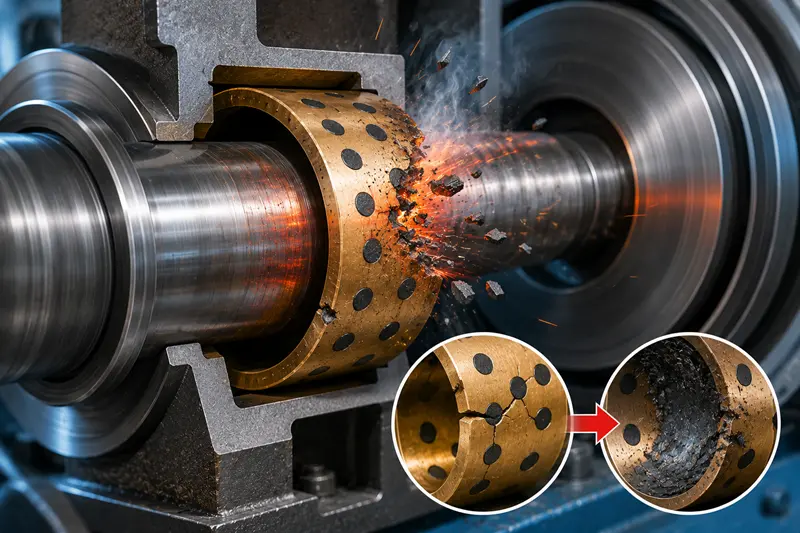
Graphite bushings are not a magic solution for every high-temperature problem. Their effectiveness depends on specific operating conditions. The solid lubrication film needs the right combination of pressure and movement to form and maintain itself.
The biggest limitation is speed. In high-speed continuous rotation, like in an electric motor or a high-speed fan, there isn't enough time for the graphite film to transfer and stabilize properly. The high speed can generate excessive heat from friction and can even wear away the graphite film faster than it can be replaced. In these cases, you are better off looking at solutions designed for speed, such as special high-speed bearings, active cooling systems, or synthetic lubricants with very high temperature stability. Load is another factor. Graphite bushings perform best under heavy loads, as the pressure helps embed the graphite film onto the mating surfaces. In very light-load applications, there may not be enough pressure to create an effective lubricating layer.
Here is a simple checklist to see if your application is a poor fit:
- Is the rotation speed high and continuous (e.g., > 2 m/s)? If yes, a graphite bushing may not be suitable.
- Is the load very light? If yes, the lubricating film may not form well.
- Does the application require extremely precise, low-friction movement? Other bearing types might offer better performance.
How Do I Decide if Graphite Bushings Are Right for My OEM Product?
Choosing the wrong bushing can damage your product's reputation. A field failure is expensive to fix and, more importantly, it breaks the trust your customer has in your brand.
To decide, ask three key questions. First, does heat cause your current lubricant to fail? Second, is the equipment's motion low-speed and under a heavy load? Third, is regular maintenance difficult or impossible? If you answer 'yes' to these, graphite bushings are likely your solution.
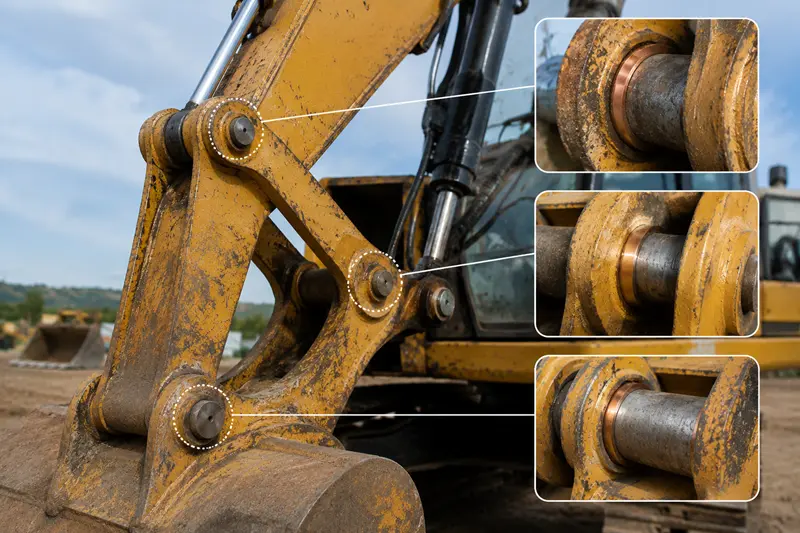
As an OEM buyer, your goal is to build a reliable machine that performs well for your end customer. The choice of a small component like a bushing can have a huge impact on that goal. From our factory's perspective, here is the practical framework we use to help our OEM clients make the right decision.
First, does high temperature cause your lubricant to fail? If your operating temperature is consistently above 150°C (300°F), most standard greases will break down, lose viscosity, or cook into a hard residue.[^3] This starves the bearing of lubrication. If this describes your problem, you need an alternative to grease.
Second, is the equipment low-speed and heavy-load? Think of a furnace door hinge, a pivot on an excavator arm, or a conveyor moving through a baking oven. These are slow, powerful movements. This is the perfect environment for a graphite film to form and provide durable lubrication. It is the opposite of a high-speed motor shaft.
Third, is maintenance difficult? If the bushing is located in a place that's hard to reach, sealed inside a unit, or in an environment so harsh that you can't stop for regular greasing, then a self-lubricating solution is not just a preference; it's a necessity. Graphite bushings offer a "fit and forget" advantage that is invaluable in these situations.[^4]
I remember working with a client who manufactured industrial bread ovens. Their conveyor bushings were failing every month because the high heat cooked the grease. After we switched them to our graphite-plugged bronze bushings, their maintenance calls for that issue dropped to zero. It solved the root problem.
Conclusion
Graphite bushings solve lubricant failure in high-temp, low-speed, heavy-load equipment.[^5] Assess your application's conditions carefully to choose the most reliable solution for long-term performance and minimal maintenance.[^6]
[^1]: "Choosing And Applying Lubricating Grease - Purdue Agriculture", https://ag.purdue.edu/department/extension/ppp/resources/ppp-publications/mobile/ppp-1451.html. This source explains the suitability of graphite bushings for high-temperature, low-speed, and heavy-load applications, providing technical insights into their performance. Evidence role: expert_consensus; source type: education. Supports: Graphite bushings are ideal for high-temperature, low-speed, and heavy-load equipment where traditional grease fails.. [^2]: "[PDF] Gas Bearings for Microturbomachinery - rotor lab.tamu.edu", https://rotorlab.tamu.edu/me626/Notes_pdf/Gas%20Bearings%20for%20MTM%20IFToMM%202010.pdf. This source explains the limitations of graphite bushings in high-speed, continuous rotation applications due to insufficient lubrication film formation. Evidence role: expert_consensus; source type: education. Supports: Graphite bushings are unsuitable for high-speed, continuous rotation applications.. [^3]: "Study of the changes in the microstructures and properties of grease ...", https://pmc.ncbi.nlm.nih.gov/articles/PMC11056365/. This source provides temperature thresholds at which standard greases fail, supporting the claim about their breakdown above 150°C. Evidence role: statistic; source type: government. Supports: Standard greases break down, lose viscosity, or cook into a hard residue above 150°C (300°F).. Scope note: The temperature threshold may vary depending on the specific type of grease used. [^4]: "[PDF] Gas Bearings for Microturbomachinery - rotor lab.tamu.edu", https://rotorlab.tamu.edu/me626/Notes_pdf/Gas%20Bearings%20for%20MTM%20IFToMM%202010.pdf. This source explains the low-maintenance benefits of graphite bushings, supporting their "fit and forget" advantage. Evidence role: general_support; source type: education. Supports: Graphite bushings offer a "fit and forget" advantage due to their low-maintenance design.. Scope note: The maintenance benefits may depend on specific operational conditions. [^5]: "Choosing And Applying Lubricating Grease - Purdue Agriculture", https://ag.purdue.edu/department/extension/ppp/resources/ppp-publications/mobile/ppp-1451.html. This source confirms the ability of graphite bushings to address lubricant failure in high-temperature, low-speed, heavy-load equipment. Evidence role: general_support; source type: education. Supports: Graphite bushings solve lubricant failure in high-temperature, low-speed, heavy-load equipment.. Scope note: The effectiveness may depend on specific operational conditions and material properties. [^6]: "Bushings - Industrial Solutions Lab - UNC Charlotte", https://isl.charlotte.edu/bushings/. This source provides guidelines for assessing application conditions to select the most reliable bushing solution. Evidence role: expert_consensus; source type: education. Supports: Careful assessment of application conditions is necessary to choose the most reliable solution for long-term performance and minimal maintenance.. Scope note: The guidelines may not cover all possible application scenarios.