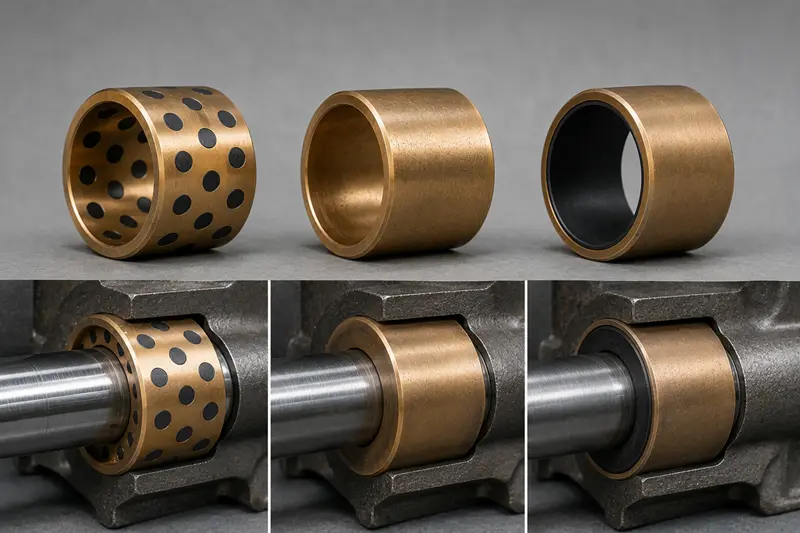
Choosing the wrong bushing can lead to equipment failure and costly downtime. To avoid this, you need to understand the fundamental difference between self-lubricating and grease-lubricated types.
The best choice isn't about which bushing is more advanced, but which one matches your equipment's real-world maintenance conditions. Self-lubricating bushings are for low-maintenance scenarios, while grease-lubricated bushings excel under high loads when regular greasing is guaranteed.
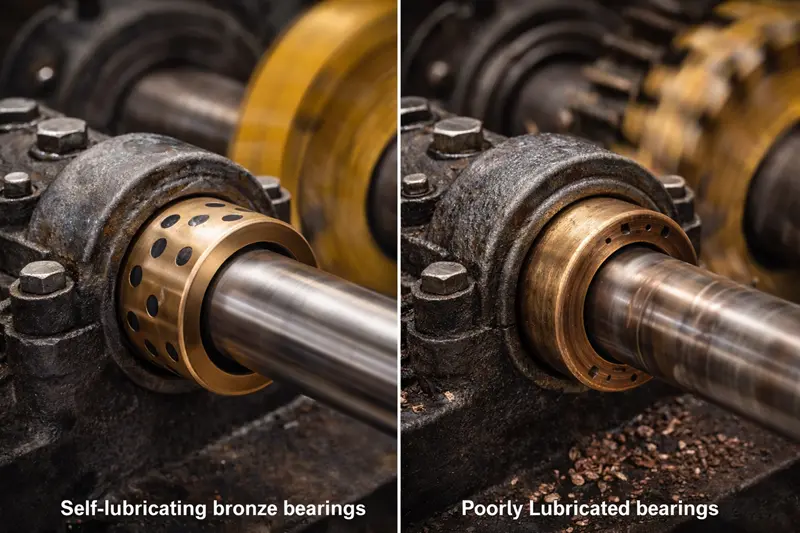
Many buyers see self-lubricating bushings as a modern upgrade to older grease-lubricated ones. But from a factory perspective, that's not the right way to look at it. They are two different solutions for two different problems. Understanding this distinction is the key to preventing premature failure and ensuring your equipment runs reliably for years. Let's break down when and why you should choose each type.
Why Choose Self-Lubricating Bushings for Your Equipment?
Your equipment has moving parts in hard-to-reach places. This makes regular maintenance difficult and expensive, leading to downtime. Self-lubricating bushings solve this by eliminating the need for grease.[^1]
Choose self-lubricating bushings for applications where frequent greasing is impossible, too costly, or undesirable. They are perfect for reducing maintenance labor, preventing grease contamination, and ensuring reliable operation in sealed or inaccessible joints where you can just "set it and forget it."
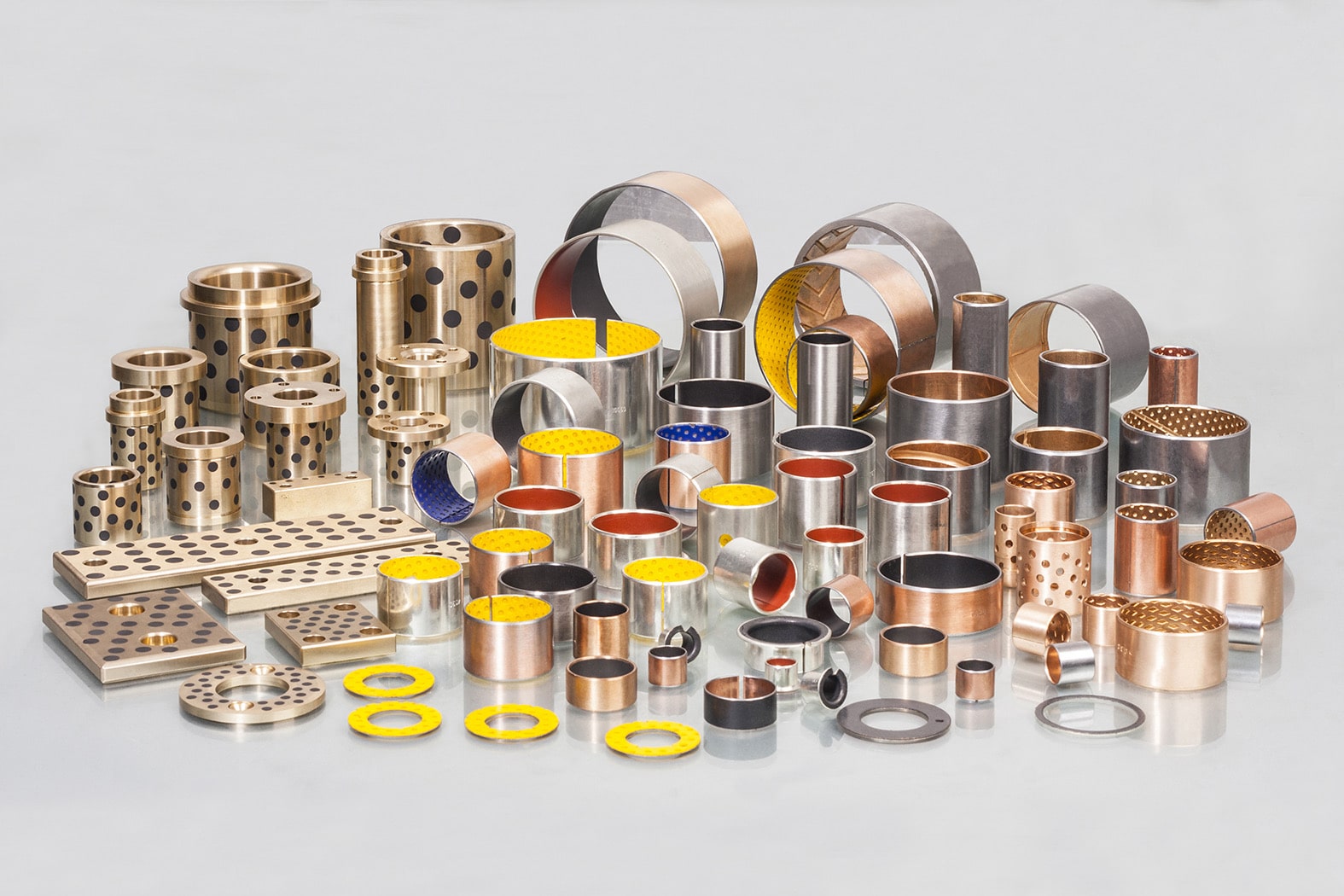
From our manufacturing experience, self-lubricating bushings are designed to solve one primary problem: inconsistent or non-existent maintenance. They are ideal for applications where you can't rely on an end-user to follow a strict greasing schedule. I once worked with a client in the food packaging industry. Their machinery kept failing because grease would contaminate the products, and cleaning it was a nightmare. We switched them to PTFE-lined composite bushings. The problem disappeared overnight. Their equipment ran cleaner and more reliably, with far less downtime. This is where self-lubricating bushings shine.
Common Self-Lubricating Bushing Types
| Bushing Type | Key Feature | Best For |
|---|---|---|
| PTFE Composite | A polymer layer bonded to a metal backing. | Low-speed, high-load, zero maintenance. |
| Graphite-Plugged Bronze | Solid bronze with graphite plugs for lubrication. | High-temperature, high-load applications. |
| Sintered (Oil-Impregnated) | Porous metal structure filled with oil. | High-speed, low-load, like in small motors. |
These bushings provide consistent, maintenance-free performance, reducing the risk of human error and extending the life of your equipment in challenging conditions.
When Are Grease Lubricated Bushings the Better Choice?
Heavy-duty equipment faces intense loads and impacts. Using the wrong part here leads to rapid wear and catastrophic failure. Grease lubricated bushings provide the toughness needed to survive.[^3]
Grease lubricated bushings are the best option for high-load, heavy-impact machinery where a consistent maintenance schedule is in place.[^4] With a steady supply of grease, they offer superior load-bearing capacity and impact resistance, often at a lower initial cost than specialized self-lubricating types.
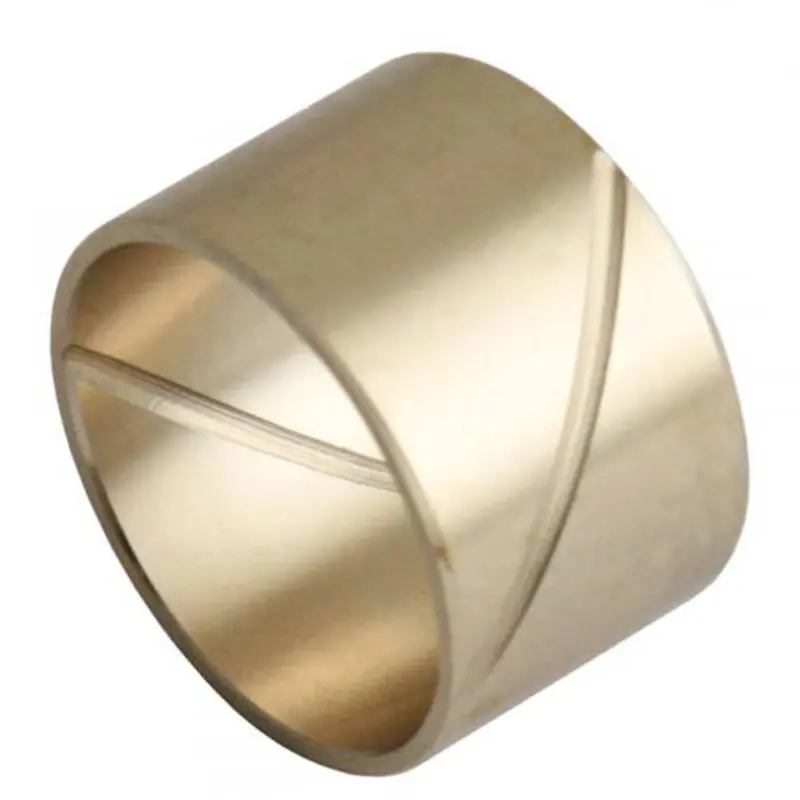
Grease lubricated bushings solve a different problem: balancing cost, durability, and performance under extreme loads.[^5] Think of construction equipment, agricultural machinery, or heavy industrial presses. These applications need the robust strength that a solid bronze or bimetal bushing can provide. The grease doesn't just reduce friction; it creates a protective film that absorbs shock and carries away contaminants.[^6] The trade-off is that they are completely dependent on that grease. I've seen countless warranty claims where a perfectly good bronze bushing failed simply because it was run dry. The design called for daily greasing, but in the field, it was forgotten. This is the critical weakness: their reliability is tied directly to the discipline of the end-user.
Common Grease Lubricated Bushing Types
Their performance depends on an external lubricant being introduced regularly.
| Bushing Type | Key Feature | Best For |
|---|---|---|
| Solid Bronze Bushings | Machined from solid metal, often with grooves. | Very high loads, low speeds, and harsh environments. |
| Bimetal Bushings | A steel backing with a bronze inner layer. | High loads with good fatigue resistance. |
| Hardened Steel Bushings | Made from through-hardened steel. | Extreme loads and abrasive conditions. |
When maintained properly, these bushings offer an unbeatable combination of strength and cost-effectiveness for the toughest jobs.
How Do You Choose the Right Bushing for Your Application?
Choosing a bushing based only on material specs is a common mistake. This approach ignores the most important factor and leads to failures that could have been easily avoided.
Don't start by asking which material is "better." First, ask whether the end-user will actually perform regular maintenance. The answer to this single question is the most critical factor in selecting the right bushing and will guide you to the correct solution for your project.
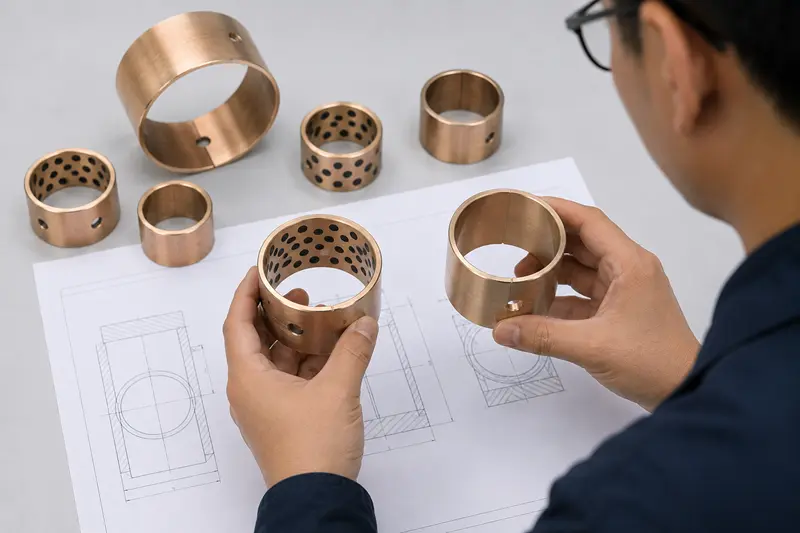
As a manufacturer, we see the end results of both good and bad decisions. The most common failure we see is a mismatch between the bushing chosen at the design stage and the maintenance it receives in the real world. An engineer specifies a grease-lubricated bronze bushing for its high load capacity, but the equipment ends up in a location where the operator never greases it.[^7] The bushing fails, and the OEM gets a warranty claim. The problem wasn't the bushing; it was the selection process.
To avoid this, you must think like your end-user. Ask these questions first:
Key Decision-Making Questions
- Is the bushing easily accessible? If a technician needs to disassemble half the machine to grease it, they won't. Choose self-lubricating.
- Is grease contamination a risk? For food, textile, or cleanroom equipment, self-lubricating is the only safe choice.
- Does the end-user have a strict maintenance program? If you are selling to large industrial operations with dedicated teams, grease-lubricated is a viable, cost-effective option. If you're selling to smaller users, assume maintenance will be forgotten.
- What is the primary failure risk? Is it overload, or is it neglect?
Self-lubricating bushings solve the problem of maintenance uncertainty. Grease-lubricated bushings solve the problem of high load vs. cost. Start your decision there.
Conclusion
Choosing the right bushing is not about picking a "better" material. It's about matching the product's design to the real-world maintenance reality. Prioritize that, and you'll build more reliable equipment.
[^1]: "Plain bearing - Wikipedia", https://en.wikipedia.org/wiki/Plain_bearing. Self-lubricating bushings are designed to operate without external lubrication by incorporating solid lubricants or low-friction materials into their structure. Evidence role: mechanism; source type: encyclopedia. Supports: Self-lubricating bushings eliminate the need for grease in applications.. [^2]: "[PDF] Tribological Performance of PM400 Bushings in Oscillatory Sliding ...", https://ntrs.nasa.gov/api/citations/20190000817/downloads/20190000817.pdf. Self-lubricating bushings utilize embedded solid lubricants or inherently low-friction materials to reduce wear and eliminate the need for external lubrication. Evidence role: mechanism; source type: education. Supports: Self-lubricating bushings reduce wear by embedding solid lubricants or using low-friction materials.. [^3]: "How Oil Impregnated Bronze Bushings Improve Performance", https://pibsales.com/tutorials/how-oil-impregnated-bronze-bushings-improve-performance/?srsltid=AfmBOordSAIGdQKupbIwk1RsyB_JupDF0UvlC7Row0RS6RWF7xFpdVOA. Grease lubricated bushings are known for their ability to handle high loads and impacts due to the protective film created by grease. Evidence role: mechanism; source type: research. Supports: Grease lubricated bushings are durable under high loads and impacts.. [^4]: "Pins and Bushings for Heavy Equipment: Why Do They Matter?", https://www.conequip.com/wp/conequip-101-learning/pins-and-bushings?srsltid=AfmBOoohN56oXy7r9zu1D4y15DIHkBPt1Xfr8O37-tsDeURs5S-LkKTp. Grease lubricated bushings are recommended for high-load machinery with regular maintenance due to their superior load-bearing capacity. Evidence role: expert_consensus; source type: research. Supports: Grease lubricated bushings are optimal for high-load machinery with consistent maintenance.. [^5]: "How Much Grease Do Bronze Bushings Need? | Tristar Plastics", https://www.tstar.com/blog/how-much-grease-do-bronze-bushings-really-need-see-the-picture. Grease lubricated bushings are designed to balance cost-effectiveness with durability and performance in high-load applications. Evidence role: expert_consensus; source type: research. Supports: Grease lubricated bushings balance cost, durability, and performance under extreme loads.. [^6]: "Treatability of Oil and Grease Discharged to Publicly Owned ...", https://nepis.epa.gov/Exe/ZyPURL.cgi?Dockey=9101XCE5.TXT. Grease in lubricated bushings forms a protective film that reduces friction, absorbs shock, and helps remove contaminants. Evidence role: mechanism; source type: education. Supports: Grease in lubricated bushings creates a protective film with multiple benefits.. [^7]: "[PDF] TESTING AND MAINTENANCE OF HIGH-VOLTAGE BUSHINGS", https://www.usbr.gov/power/data/fist/fist3_2/vol3-2.pdf. Grease-lubricated bronze bushings require consistent maintenance to perform effectively under high loads. Evidence role: case_reference; source type: education. Supports: Grease-lubricated bronze bushings fail without regular maintenance.. Scope note: The support is contextual and may not apply to all operational environments.