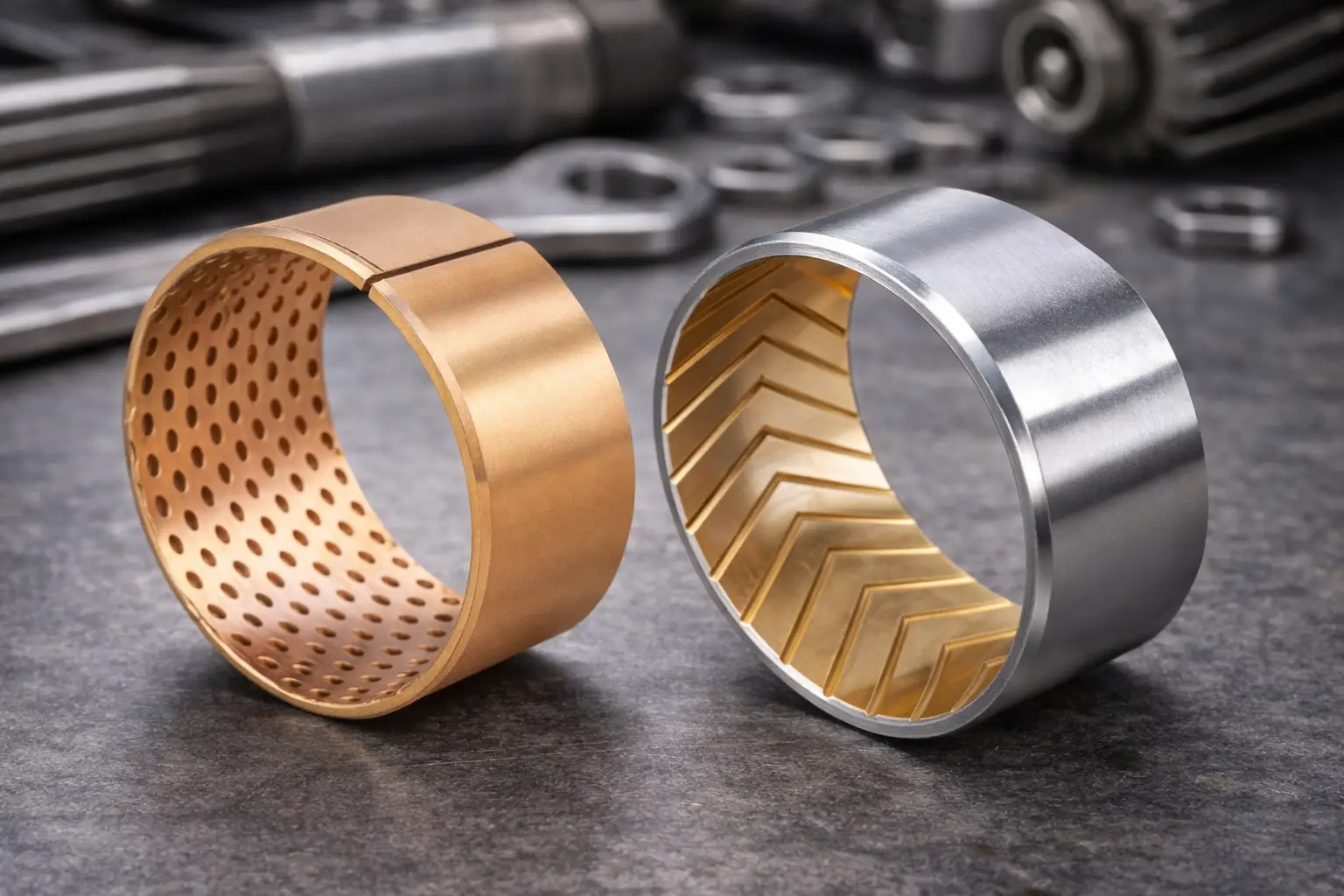
Choosing between bronze and plastic bushings feels complicated. Making the wrong call can lead to equipment failure, costing you time and money. Let's make this choice simple.
Bronze bushings are for high-load, heavy-duty jobs where strength is key. Plastic bushings are perfect for lightweight, corrosion-resistant needs with low noise. The best choice is not about the material, but about matching it perfectly to your machine's operating conditions.
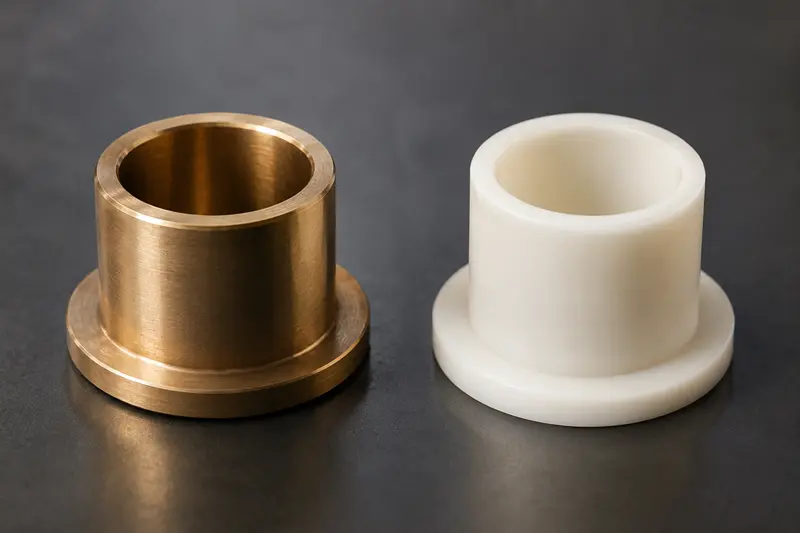
It's clear this isn't about which material is "better" overall, but which is "right" for your specific project. But how do you confidently make that call when you're looking at spec sheets? Let's dig into the details to see where each one truly shines. This will help you avoid costly mistakes down the road.
When Should You Absolutely Choose Bronze Bushings?
Your machine faces heavy loads and constant impacts. A weak bushing could break, causing serious damage and expensive downtime. Bronze bushings provide the tough, reliable strength you need.
You should choose bronze bushings for high-load, low-speed applications where strength and impact resistance are critical. They are the standard for construction machinery, hydraulic systems, and heavy pivot points, giving you better structural integrity and a longer service life under tough conditions.
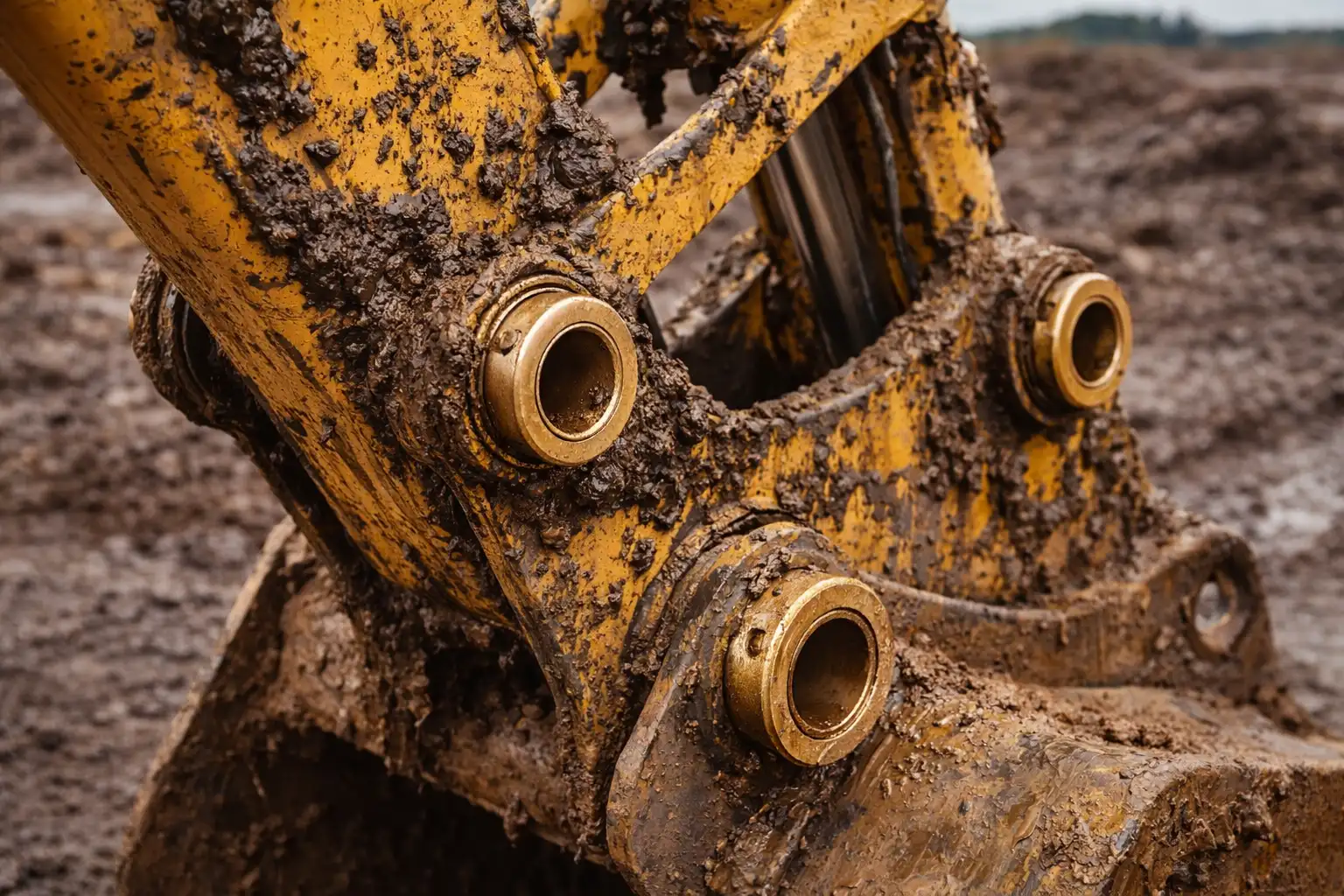
From our factory's perspective, bronze is the go-to material when strength is non-negotiable. The reason is simple: bronze alloys have a very high compressive strength. They don't deform or "creep" under sustained heavy loads the way some other materials can. This is essential for heavy-duty applications where the bushing must support significant weight without failing. I remember a client who tried to switch to a high-strength plastic for a hydraulic arm pivot to save on costs. The plastic bushing deformed within a few weeks under the constant load. They came back to us for the bronze bushings they should have used from the start. It was a costly lesson in material science for them.
Here’s a breakdown of where bronze excels:
High Load Capacity & Impact Resistance
Bronze is tough.[^1] It can handle the sudden shocks and vibrations common in heavy machinery like excavators or agricultural harvesters. This ability to absorb energy without fracturing is something plastic just can't match in heavy-duty scenarios.
Dimensional Stability
Bronze also holds its shape and size very well across a range of operating temperatures.[^2] This stability is critical for maintaining the tight tolerances needed in precision equipment, ensuring parts move smoothly and predictably.
| Application Scenario | Why Bronze is the Right Choice |
|---|---|
| Construction Machinery (e.g., excavators) | Handles extreme loads, impacts, and abrasive dirt. |
| Agricultural Equipment (e.g., tractors) | Resists shock loads and provides long life in harsh environments. |
| Hydraulic Cylinder Pivots | Withstands immense pressure and provides reliable structural support. |
| Heavy Industrial Presses | Maintains integrity under constant, high-force compression. |
The main thing to remember with bronze is that it almost always requires lubrication. You must design your system to provide grease or oil to the bushing to prevent metal-on-metal wear.
Is a Plastic Bushing the Smarter Choice for Your Application?
You need a part for a wet, clean, or quiet environment. A metal bushing could rust or require messy grease. Plastic offers a clean, quiet, and corrosion-proof solution.
A plastic bushing is the smarter choice for lightweight, low-noise, or corrosion-prone applications. They are perfect for food processing, packaging machinery, and office equipment where maintenance-free operation and cleanliness are top priorities. They also perform perfectly in wet or humid environments.
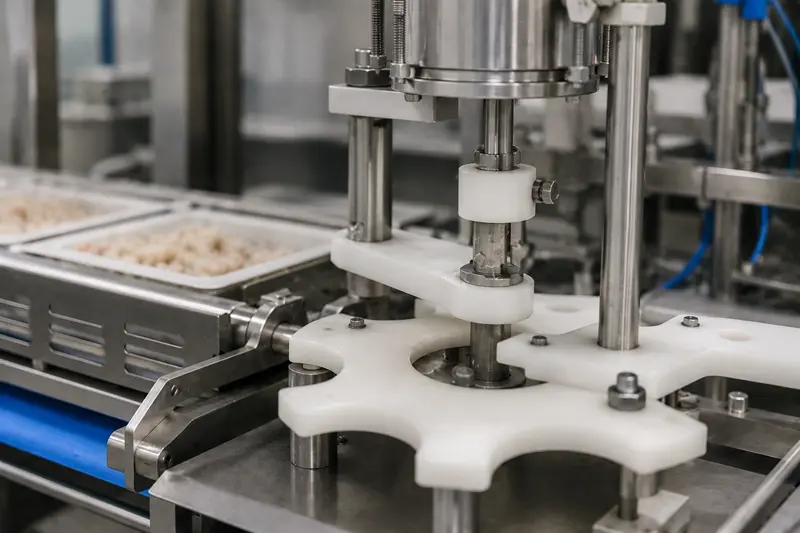
Plastic bushings solve a completely different set of problems than bronze.[^3] Their biggest advantage is their resistance to the environment. Unlike bronze, plastic simply doesn't rust. We supply thousands of plastic bushings for marine equipment, food processing lines, and chemical handling systems for this very reason. They can be fully submerged in water or exposed to cleaning agents without any risk of corrosion.
Another key benefit is their self-lubricating nature. Many engineering plastics have lubricants like PTFE mixed directly into the material.[^4] As the bushing wears, it releases fresh lubricant. This makes them truly maintenance-free, which is a huge plus for consumer products or machines in hard-to-reach places.
Here are the primary benefits of plastic:
Corrosion and Chemical Resistance
Plastic bushings are immune to rust and can withstand exposure to a wide range of chemicals, making them ideal for sterile or harsh environments.
Lightweight and Low Noise
Plastic is significantly lighter than bronze, which is a critical factor in industries like automotive or aerospace where weight reduction is key. They also run much quieter than metal bushings, a great feature for office equipment or home appliances.
| Application Scenario | Why Plastic is the Right Choice |
|---|---|
| Food Packaging Machinery | No grease needed, won't contaminate products, washdown-safe. |
| Office Printers & Scanners | Quiet operation, lightweight, and maintenance-free for life. |
| Medical Devices | Sterile, clean, and resistant to cleaning chemicals. |
| Outdoor Furniture & Equipment | Will not rust or seize up when exposed to rain and humidity. |
But it's crucial to know their limits. We always caution customers against using standard plastic bushings in high-temperature or high-load situations. The material can soften, deform, or wear out quickly. It's all about matching the right grade of plastic to the right job.
How Can You Avoid the High Cost of Choosing the Wrong Bushing?
Choosing a bushing based on unit price seems smart.[^5] But a cheap part that fails can cost thousands in downtime and repairs. A proper evaluation prevents this expensive mistake.
You can avoid high costs by looking past the initial price tag. A professional selection process matches the bushing to your exact load, speed, temperature, and environment. The wrong material often leads to premature failure, downtime, and repair bills that dwarf any initial savings.
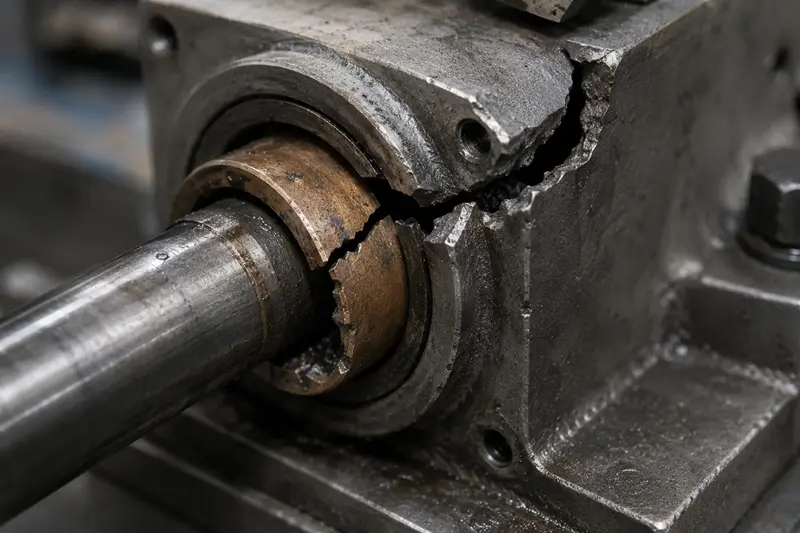
As a manufacturer, the most painful conversations I have are with customers dealing with field failures. In almost every case, the problem started because the wrong type of bushing was chosen to save a few cents per unit. The real cost of a bushing isn't its purchase price; it's the cost of downtime, warranty claims, reputational damage, and emergency repairs when it fails. That cost is always much, much higher.
Bronze and plastic bushings are not interchangeable.[^6] They are engineered solutions for different problems. Choosing the wrong one is not a compromise; it's a design flaw. To make the right decision, you need to stop asking "Which is cheaper?" and start asking "Which is right for the job?"
Use this checklist to guide your decision:
| Decision Factor | Questions to Ask Yourself | Lean Towards Bronze | Lean Towards Plastic |
|---|---|---|---|
| Load | Will the bushing support heavy weight or face strong impacts? | Yes, for high loads/impacts. | No, for light to medium loads. |
| Speed | How fast will the shaft rotate? | Better for very low speeds. | Good for low to medium speeds. |
| Temperature | What is the operating temperature range? | Wide temperature range. | Limited by material's melting point. |
| Environment | Will it be exposed to moisture, chemicals, or dirt? | Requires protection from corrosion. | Excellent for wet/chemical areas. |
| Maintenance | Is regular lubrication possible and acceptable? | Yes, lubrication is required. | No, ideal for maintenance-free needs. |
| Noise | Is quiet operation a priority? | Can be noisy without lubrication. | Very quiet operation. |
Think of it this way: the bushing isn't just a component; it's insurance for your machine's performance. The small price difference between bronze and plastic is the premium you pay for the right coverage. A few extra dollars for a bronze bushing in a heavy-duty application is cheap insurance against a multi-thousand-dollar failure.
Conclusion
Bronze and plastic bushings are designed for different jobs. Match the material to your application's specific needs to ensure reliability and avoid the high cost of a premature failure.
[^1]: "Bronze - Wikipedia", https://en.wikipedia.org/wiki/Bronze. Bronze is recognized for its toughness and ability to withstand heavy loads and impacts, making it suitable for industrial applications. Evidence role: mechanism; source type: encyclopedia. Supports: Bronze is tough and suitable for heavy-duty applications.. [^2]: "[PDF] Thermal expansion of some bronzes", https://nvlpubs.nist.gov/nistpubs/jres/30/jresv30n1p75_a1b.pdf. Bronze is known for its dimensional stability under varying temperatures, which is critical for maintaining precision in mechanical applications. Evidence role: mechanism; source type: education. Supports: Bronze maintains dimensional stability across a range of operating temperatures.. [^3]: "Advantages of plastic bushings - Design World", https://www.bearingtips.com/advantages-of-plastic-bushings/. Plastic bushings are often chosen for their corrosion resistance and self-lubricating properties, which make them suitable for environments where metal bushings may fail. Evidence role: mechanism; source type: research. Supports: Plastic bushings are better suited for environments requiring corrosion resistance and self-lubrication.. [^4]: "Polytetrafluoroethylene - Wikipedia", https://en.wikipedia.org/wiki/Polytetrafluoroethylene. Engineering plastics such as PTFE are often used in bushings for their self-lubricating properties, reducing the need for external lubrication. Evidence role: mechanism; source type: research. Supports: Many engineering plastics have lubricants like PTFE mixed directly into the material for self-lubrication.. [^5]: "How much does it matter to buy more expensive trucks ... - Reddit", https://www.reddit.com/r/NewSkaters/comments/1jf1r23/how_much_does_it_matter_to_buy_more_expensive/. Selecting bushings based solely on unit price can lead to higher long-term costs due to premature failure and downtime. Evidence role: expert_consensus; source type: institution. Supports: Choosing a bushing based on unit price can lead to higher costs due to failure and downtime.. [^6]: "Bronze Vs. Plastic Bushings: What's The Difference?", https://buntingbearings.com/blog/bronze-vs-plastic-bushings-whats-the-difference/. Bronze and plastic bushings are designed for distinct applications, with bronze excelling in high-load scenarios and plastic in corrosion-resistant environments. Evidence role: expert_consensus; source type: education. Supports: Bronze and plastic bushings are not interchangeable due to their distinct material properties and application suitability..