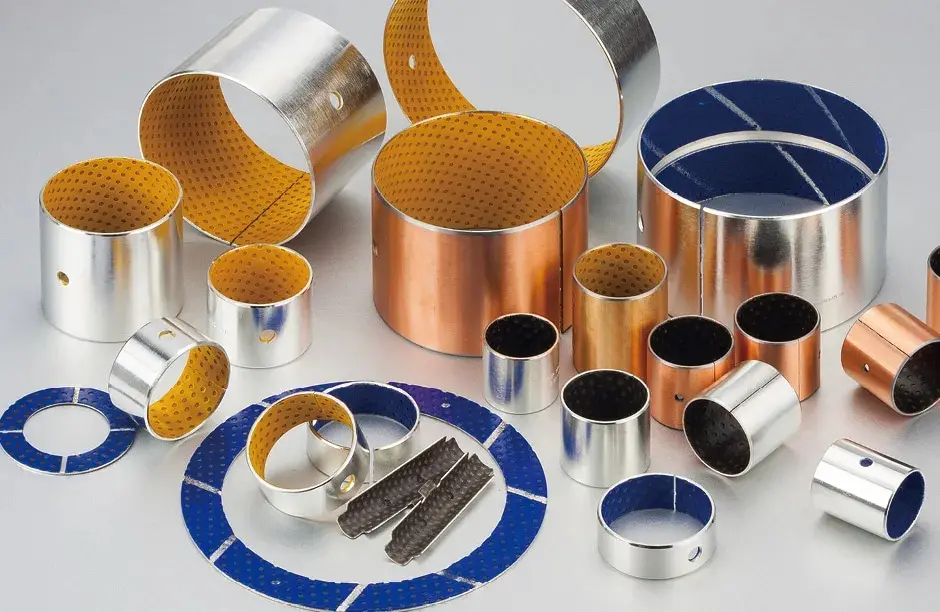
Choosing the right bushing feels complicated. You pick the wrong one, and your equipment wears out too fast. We'll help you understand the key difference to make the right choice.
The simplest answer is this: choose PTFE bushings for oil-free, low-maintenance applications. Pick POM bushings for lubricated, higher-load, and cost-sensitive projects. It's not about which is better, but which fits the job.
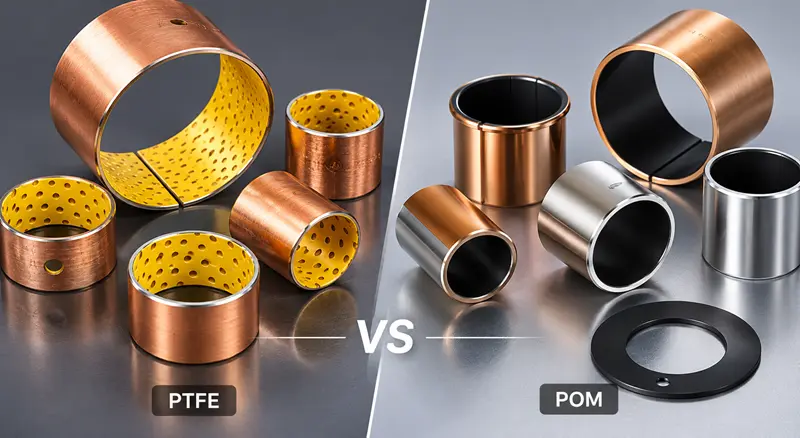
I've seen many buyers get stuck on this choice. From our perspective as a factory, the decision between PTFE and POM[^1] isn't about which material is "more advanced." It's about matching the material to the specific lubrication conditions and the intensity of the work it needs to do. Getting this right is the most important step for ensuring long-term performance and avoiding unnecessary costs. Let's break down when to use each one.
When Should You Choose a PTFE Bushing for Your Equipment?
You need a bushing for a spot that's hard to grease. Using a standard bushing means constant maintenance or failure. PTFE bushings are made exactly for these no-oil situations.[^2]
PTFE bushings are the best choice for dry or minimally lubricated conditions.[^3] Their extremely low friction is perfect for smooth, quiet operation where regular maintenance isn't possible, like in office equipment or medical devices.
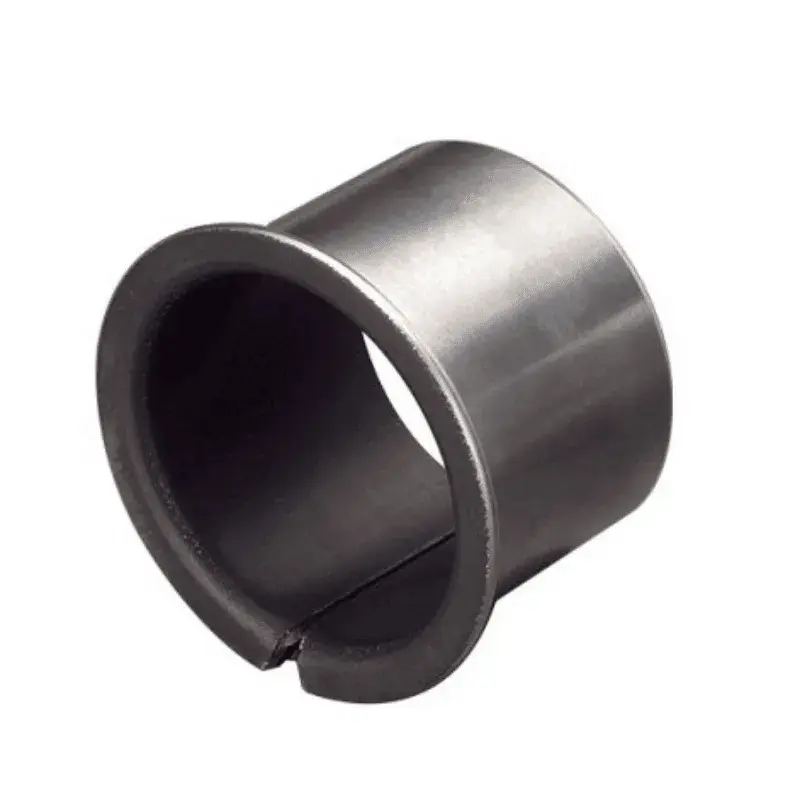
When we talk about PTFE bushings, we're talking about a self-lubricating system. The magic is in the PTFE layer.[^4] As the shaft rotates, it creates a very thin, solid lubricant film on the mating surface. This film is what allows the joint to move smoothly without needing any external oil or grease. It's a fantastic solution for applications where adding lubrication is impractical or undesirable.
Key Characteristics of PTFE Liners
- Dry Running: They are designed to work without any oil or grease.
- Low Friction: This results in smooth, quiet movement and less energy loss.
- Maintenance-Free: Once installed, they don't require ongoing lubrication.
Common Applications
| Application Area | Reason for Choosing PTFE |
|---|---|
| Office & Furniture | Quiet operation (e.g., chair swivels) |
| Automotive Interiors | Smooth, silent adjustments (e.g., seat tracks) |
| Food Processing | No grease contamination is allowed |
| Medical Devices | Cleanliness and low maintenance are critical |
However, remember that the PTFE layer is thin. If your application involves high shock loads or heavy abrasive dust, this layer can wear away faster than expected.
Is a POM Bushing a Better Choice for High-Frequency, Lubricated Jobs?
Your machine part moves constantly and has a grease system. A fully self-lubricating bushing might not be strong enough. POM bushings offer a great balance of durability and cost for these jobs.[^5]
POM bushings are perfect for applications with regular lubrication.[^6] Their strong mechanical properties and wear resistance suit higher loads and frequent movement, often at a better price point for large-scale production.
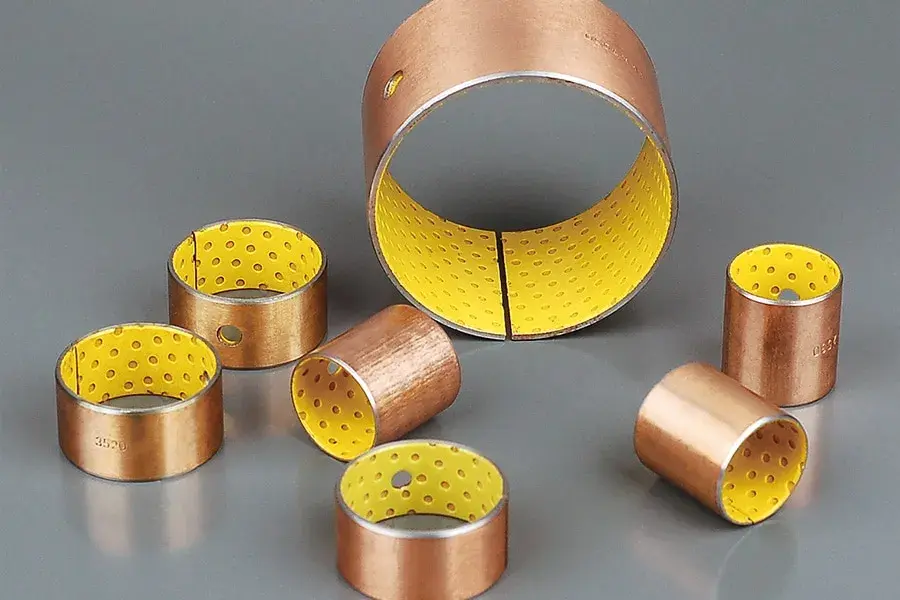
Unlike PTFE, POM (also known as Acetal) is not a true self-lubricating material in the same way. It's a very tough and durable polymer that performs best under boundary lubrication conditions. This is why you see indentations, or pockets, on the surface of POM bushings. These pockets are designed to hold grease or oil, creating a stable lubricant film that reduces wear and friction during operation. This makes them incredibly reliable in demanding environments where lubrication is part of the design.
Why POM Needs Lubrication
- Mechanical Strength: POM is harder than PTFE and can handle higher loads and impacts.[^7]
- Wear Resistance: With grease, it offers excellent durability in high-cycle applications.
- Cost-Effectiveness: It provides a great balance of performance and price for OEM projects.
Ideal Use Cases
| Application Area | Reason for Choosing POM |
|---|---|
| Automotive Chassis | Handles high loads and vibration (e.g., suspension parts) |
| Agricultural Machinery | Durable against dirt and heavy use with regular greasing |
| Hydraulic Systems | Resists wear in high-pressure, moving parts |
| Construction Equipment | Tough enough for pivot points and auxiliary structures |
The key is that POM needs that lubricant. If you run it completely dry, friction and heat will build up, reducing its service life.
How Do OEM Buyers Make the Final Decision Between PTFE and POM?
You know the basics, but choosing for a large production run is still stressful. A wrong choice can hurt your product's reputation. A simple framework helps you pick the right bushing every time.
For OEM buyers, the choice is clear. Prioritize PTFE for oil-free, quiet, and low-maintenance needs. Choose POM for lubricated, high-frequency, and cost-sensitive projects.[^8] For extreme loads, re-evaluate the entire design.
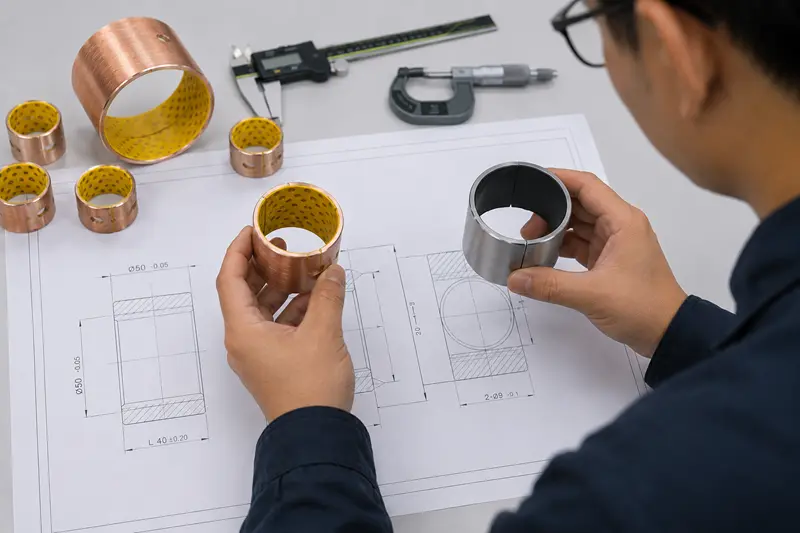
From our factory floor, we see this decision as a simple trade-off analysis. It's not about upselling you to a "premium" material. It’s about giving you the most reliable and cost-effective solution for your specific machine. A more expensive bushing is not better if it’s wrong for the job. For example, putting a PTFE bushing in a high-impact, gritty environment is a mistake, as the liner will wear out. Likewise, using a POM bushing without a plan for lubrication is asking for early failure.
Here is a simple decision table to guide your selection:
| Factor | Choose PTFE Bushing When... | Choose POM Bushing When... |
|---|---|---|
| Lubrication | Application must be oil-free or maintenance-free. | Regular greasing or oil lubrication is possible. |
| Load & Speed | For light to medium loads and lower speeds. | For medium to high loads and higher frequencies. |
| Noise | Quiet operation is a critical requirement. | Some operational noise is acceptable. |
| Environment | Clean environments are preferred. | Can handle tougher, dirtier environments (with grease). |
| Cost | Performance justifies a slightly higher unit cost. | Cost-effectiveness for large volumes is a priority. |
The best approach is to be clear about your operating conditions. When you talk to a manufacturer like us, tell us about the load, speed, lubrication plan, and environment. We can then ensure you get the right part.
Conclusion
PTFE and POM bushings are not rivals; they are different tools for different jobs.[^9] PTFE solves the no-maintenance problem.[^10] POM balances wear resistance and cost when lubrication is present.[^11]
[^1]: "POM and PTFE: A Tale Of Two Polymers - CCTY Group", https://cctygroup.com/pom-vs-ptfe-polymer/. This source explains the factors influencing the choice between PTFE and POM bushings, emphasizing their suitability for different lubrication conditions and mechanical requirements. Evidence role: mechanism; source type: encyclopedia. Supports: The decision between PTFE and POM bushings depends on lubrication conditions and the mechanical demands of the application.. [^2]: "Oilless Bearing & Teflon Bush - Always Self-lubricating - Viiplus.com", https://www.viiplus.com/product/plain-bearings-and-bushes/. This source confirms the suitability of PTFE bushings for applications where oil or grease is impractical. Evidence role: general_support; source type: education. Supports: PTFE bushings are designed for applications where oil or grease is impractical.. Scope note: The source may not address all potential limitations of PTFE bushings in no-oil situations. [^3]: "[PDF] Performance of PTFE-Lined Composite Journal Bearings", https://ntrs.nasa.gov/api/citations/19820009389/downloads/19820009389.pdf. This source explains the suitability of PTFE bushings for dry or minimally lubricated conditions, highlighting their self-lubricating properties. Evidence role: mechanism; source type: education. Supports: PTFE bushings are ideal for dry or minimally lubricated conditions due to their self-lubricating properties.. [^4]: "Preparation and Tribological Properties Study of Self- ...", https://scalar.usc.edu/works/preparation-and-tribological-properties-study-of-self-lubricating-ptfepeek-composites-for-robotic/index. This source explains the role of the PTFE layer in providing self-lubrication and reducing friction in bushings. Evidence role: mechanism; source type: education. Supports: The PTFE layer in bushings provides self-lubrication and reduces friction.. Scope note: The source may not cover all potential limitations of the PTFE layer. [^5]: "POM Composite Bushing vs Bronze Bushing: Which Is Right for You?", https://www.plainbushing.com/knowledge/pom-composite-bushing-vs-bronze-bushing-which-is-right-for-you. This source discusses the cost-effectiveness and durability of POM bushings in applications requiring regular lubrication. Evidence role: general_support; source type: research. Supports: POM bushings are durable and cost-effective for applications with regular lubrication.. Scope note: The source may not address all specific applications of POM bushings. [^6]: "POM Composite Bushings | Oil-Retaining Self-Lubricating Bearings", https://www.wkooa.com/product/pom-composite-bushings-oil-retaining-self-lubricating-bearings/?srsltid=AfmBOoqsFfiBusOh90p79OQPKehY2wS7iH5_l8H7-UsmUC2CGB60lUmE. This source highlights the suitability of POM bushings for applications requiring regular lubrication. Evidence role: general_support; source type: education. Supports: POM bushings are suitable for applications requiring regular lubrication.. Scope note: The source may not address all types of lubricated applications for POM bushings. [^7]: "Optimization of Mechanical Properties for Polyoxymethylene/Glass ...", https://pmc.ncbi.nlm.nih.gov/articles/PMC6414925/. This source compares the mechanical properties of POM and PTFE, highlighting POM's higher hardness and load capacity. Evidence role: statistic; source type: research. Supports: POM is harder than PTFE and can handle higher loads and impacts.. Scope note: The comparison may vary depending on specific formulations of POM and PTFE. [^8]: "The 4 Top Performing Polymer Bushings for High Speed Applications", https://advanced-emc.com/the-4-top-performing-polymer-bushings-for-high-speed-applications/. This source discusses the advantages of POM bushings in high-frequency, lubricated, and cost-sensitive applications. Evidence role: general_support; source type: research. Supports: POM bushings are suitable for high-frequency, lubricated, and cost-sensitive projects.. Scope note: The source may not cover all high-frequency applications of POM bushings. [^9]: "POM and PTFE: A Tale Of Two Polymers - CCTY Group", https://cctygroup.com/pom-vs-ptfe-polymer/. This source explains the complementary roles of PTFE and POM bushings in various applications. Evidence role: expert_consensus; source type: education. Supports: PTFE and POM bushings serve different purposes and are not direct competitors.. Scope note: The source may not address all possible overlaps in the use of PTFE and POM bushings. [^10]: "PCMF 353926 E PTFE composite flanged bushing - SKF", https://www.skf.com/us/products/plain-bearings/bushings-thrust-washers-strips/bushings/productid-PCMF%20353926%20E. This source explains how PTFE bushings eliminate the need for maintenance in specific applications. Evidence role: mechanism; source type: education. Supports: PTFE bushings eliminate the need for maintenance in specific applications.. Scope note: The source may not address all scenarios where maintenance-free operation is required. [^11]: "Small Tolerance Pom Plastic Bushing(818) - Alibaba.com", https://www.alibaba.com/showroom/small-tolerance-pom-plastic-bushing.html. This source discusses how POM bushings provide a balance of wear resistance and cost-effectiveness in lubricated environments. Evidence role: general_support; source type: research. Supports: POM bushings balance wear resistance and cost in lubricated environments.. Scope note: The source may not cover all specific use cases of POM bushings.