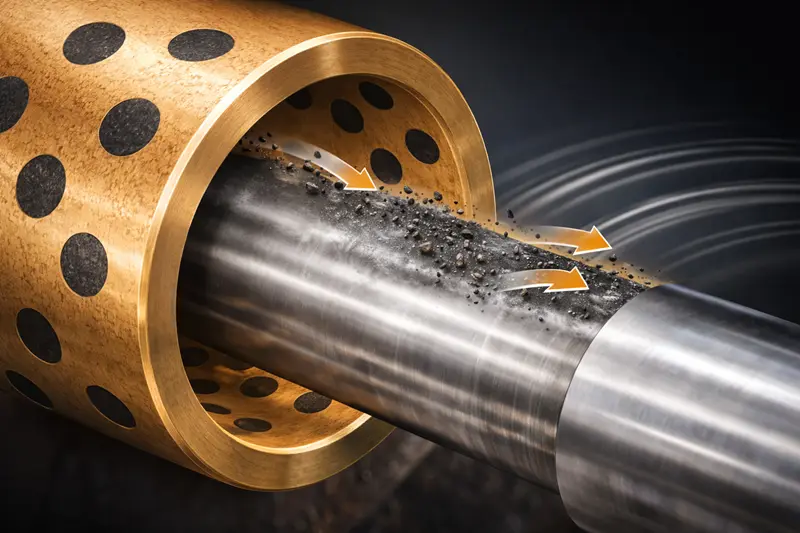
Choosing the right bushing for high-heat machinery is a major concern. A wrong choice can lead to sudden failures, costly downtime, and even damage to expensive equipment.
Yes, bronze bushings can work in high heat, but it's not as simple as checking the material's melting point. Success depends on whether the entire system—lubrication, operating clearance, and load—remains stable at the target temperature.[^1] The bushing itself is rarely the first thing to fail.
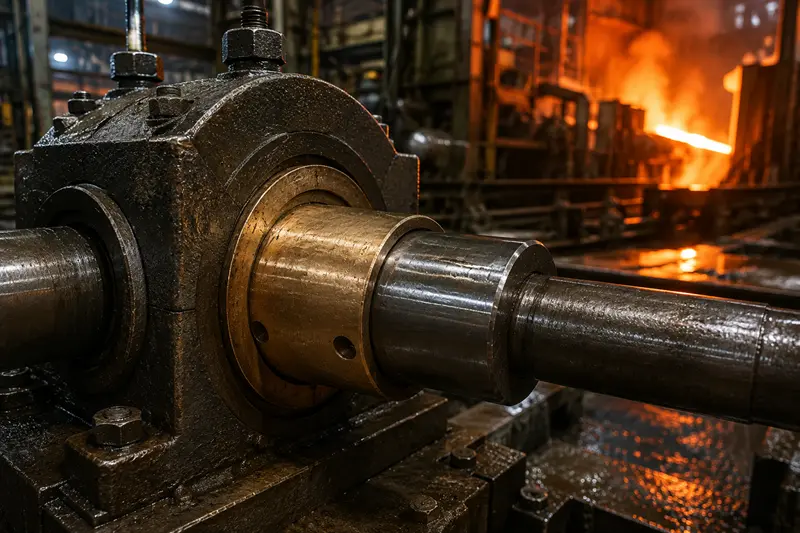
As a factory that produces millions of bushings, I've seen many engineers focus only on the bronze alloy's temperature limit. This is a mistake. The real problems that cause failure in hot environments are often more subtle. Before the bronze itself is at risk, other critical parts of the mechanical system start to break down. Let's look at what really happens when the temperature rises and how you can ensure your equipment runs reliably.
What Really Happens to Lubrication at High Temperatures?
You specified a high-quality bronze bushing, but it still seized up in your machine. This is frustrating and stops production. The problem is often not the bushing, but the grease.
High heat makes lubricating grease and oil thin out, reducing their ability to form a protective film.[^2] At even higher temperatures, the lubricant can oxidize or burn, leaving behind hard carbon deposits that increase friction and cause the bushing to wear out or seize completely.[^3]
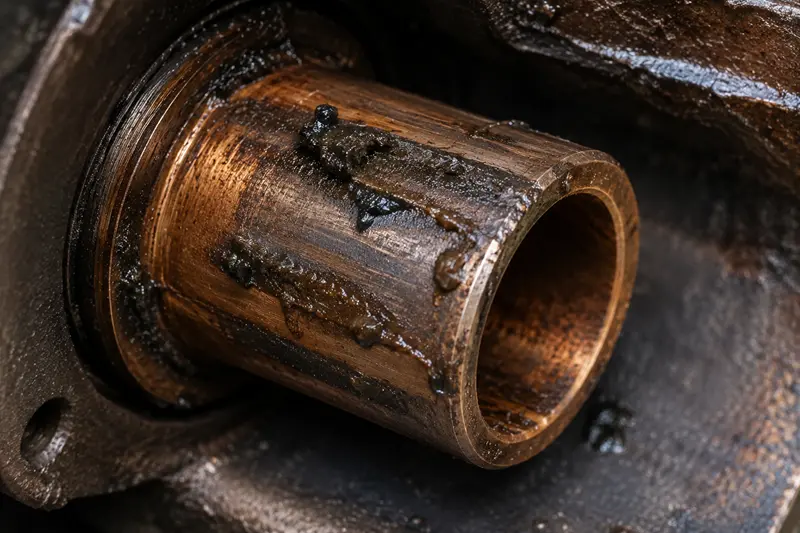
From our manufacturing perspective, we see lubricant failure as the most common issue in high-heat applications. When the temperature goes up, the viscosity of the oil within the grease drops. This means the protective film separating the shaft and the bushing becomes too thin. Metal-to-metal contact begins, friction spikes, and the temperature climbs even higher in a vicious cycle. If the heat is extreme, the lubricant itself will chemically break down. We call this carbonization. The grease essentially cooks, leaving a sticky, hard residue.[^4] This abrasive gunk does the opposite of lubricating; it grinds away at the bushing and shaft, leading to catastrophic failure. That's why selecting a lubricant designed for your specific operating temperature is just as important as selecting the bushing itself.
Lubricant Performance at Different Temperatures
| Lubricant Type | Typical Max. Operating Temp. | Behavior at High Temperature |
|---|---|---|
| Standard Lithium Grease | ~120°C (250°F) | Thins out quickly, oil separates |
| High-Temp Synthetic Grease | ~200°C (390°F) | More stable viscosity, resists oxidation |
| Solid Lubricants (Graphite) | >350°C (660°F) | Very stable, provides dry lubrication |
How Does Thermal Expansion Affect Bushing Clearance?
Your machine seems to run perfectly when it's cool, but after running for a while, it starts to bind and eventually seizes. This sudden failure is confusing and can halt your entire operation.
All materials expand when heated.[^5] In a bushing assembly, both the bushing and the shaft grow larger. If this expansion isn't accounted for in the design, the running clearance between them can shrink to zero, causing direct metal-to-metal contact, rapid overheating, and seizure.
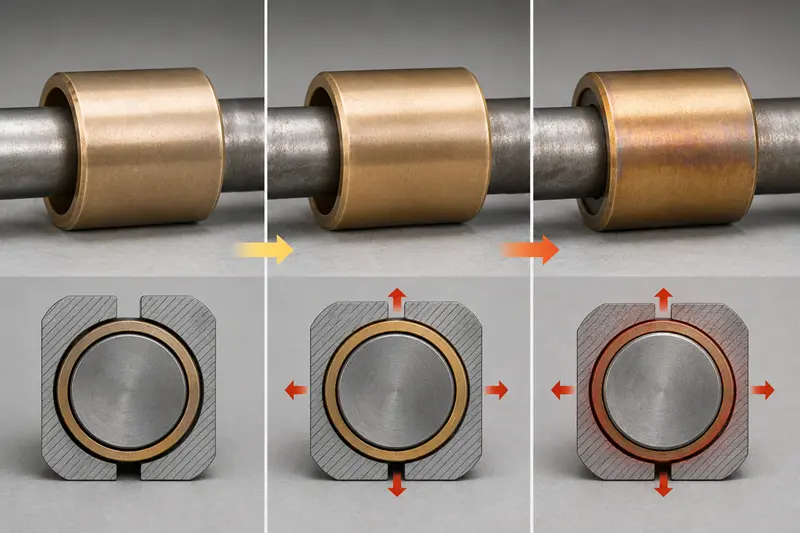
This is a problem we frequently discuss with OEM customers. The issue is about the coefficient of thermal expansion (CTE). Bronze, steel, and aluminum all expand at different rates.[^6] For example, a bronze bushing pressed into a steel housing will expand differently than the housing itself. We also have to consider two heat sources: the ambient temperature of the environment and the frictional heat generated by the rotation. Together, they can cause a significant temperature rise. When the clearance disappears, the parts lock up.[^7] As manufacturers, we help clients calculate the correct initial clearance needed for their specific operating temperature. This ensures that even at maximum heat, there is still enough room for a lubricant film to protect the components.
Example: Clearance Reduction with Temperature
| Operating Temp. | Initial Clearance | Shaft Expansion | Bushing Contraction | Final Clearance | Status |
|---|---|---|---|---|---|
| 25°C (77°F) | 0.050 mm | 0.000 mm | 0.000 mm | 0.050 mm | OK |
| 150°C (302°F) | 0.050 mm | +0.021 mm | -0.025 mm | 0.004 mm | Risky |
| 200°C (392°F) | 0.050 mm | +0.028 mm | -0.033 mm | -0.011 mm | Seizure |
Note: Table shows a simplified example for illustrative purposes.
When is a Standard Bronze Bushing Not the Right Choice?
You've already accounted for high-temperature grease and proper clearance, but your bronze bushings are still wearing out too quickly. This leads to high maintenance costs and frequent downtime.
Standard bronze bushings are not ideal for conditions with high heat, heavy loads, and difficult lubrication combined.[^8] In these extreme scenarios, the bronze material itself softens and loses wear resistance. Self-lubricating bushings, like those with embedded graphite, are a far more reliable solution.[^9]
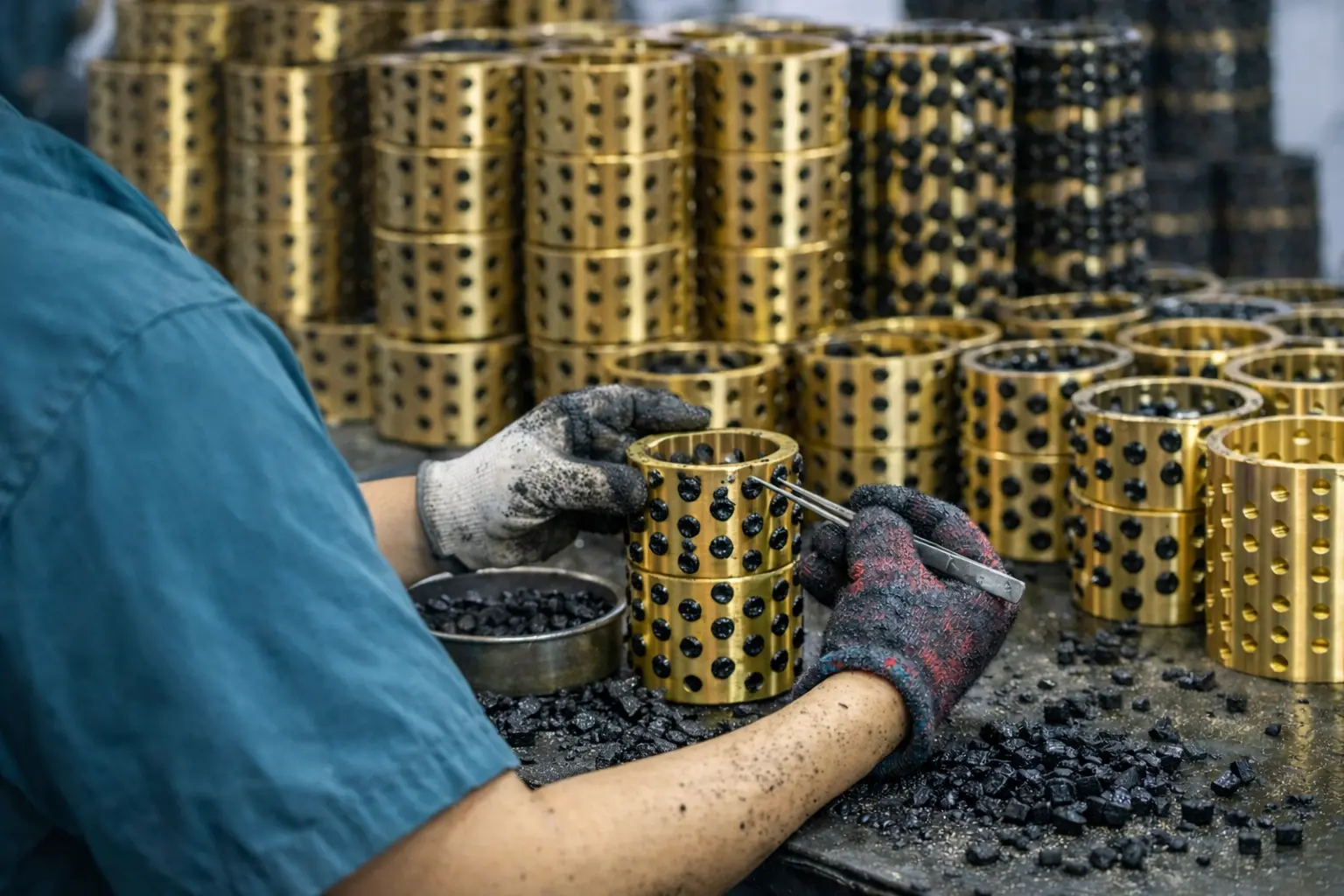
There are limits to what a standard lubricated bronze bushing can handle. As temperature increases, the strength and hardness of the bronze alloy decrease. This means its ability to withstand heavy pressure without deforming or wearing away is reduced. When you combine this with slow speeds and heavy loads, where it's hard to maintain a consistent lubricant film, failure is almost guaranteed. This is where we advise customers to switch to a different solution. For instance, graphite-plugged bronze bushings are an excellent alternative. The solid graphite plugs create a dry lubricating film on the moving surfaces.[^10] This film is extremely stable at temperatures where grease would have already failed.[^11] These bushings are designed for the toughest jobs, providing reliable, maintenance-free operation in extreme heat.
Application Suitability: Standard vs. Graphite-Plugged Bronze
| Application Condition | Standard Bronze Bushing | Graphite-Plugged Bronze Bushing |
|---|---|---|
| High Heat + Heavy Load | Poor | Excellent |
| Intermittent Lubrication | Risky | Excellent |
| Contaminated Environment | Poor | Good |
| High Speed + Light Load | Good | Not Ideal |
Conclusion
Bronze bushings can work well in high heat, but success depends on managing the entire system. You must consider the lubricant, clearance, and load, not just the bushing material itself.
[^1]: "[PDF] DYNAMICS AND STABILITY OF MECHANICAL SYSTEMS WITH ...", https://ntrs.nasa.gov/api/citations/19720005258/downloads/19720005258.pdf. This source explains how lubrication, operating clearance, and load interact to affect the performance of bronze bushings in high-temperature environments. Evidence role: mechanism; source type: education. Supports: The performance of bronze bushings in high heat depends on the stability of lubrication, operating clearance, and load.. Scope note: The source may focus on general mechanical systems rather than bronze bushings specifically. [^2]: "Comparative Study on the Performance of Gel Grease for High-End ...", https://pmc.ncbi.nlm.nih.gov/articles/PMC11431682/. This source provides data on how high temperatures affect the viscosity and protective properties of lubricating grease and oil. Evidence role: mechanism; source type: research. Supports: High temperatures reduce the viscosity of lubricating grease and oil, compromising their protective film.. Scope note: The source may not address specific types of grease or oil used in bronze bushing applications. [^3]: "Evaluating the oxidation properties of lubricants via non-isothermal ...", https://www.sciencedirect.com/science/article/pii/S0301679X22001426. This source discusses the chemical breakdown of lubricants at high temperatures and the formation of carbon deposits. Evidence role: mechanism; source type: research. Supports: Lubricants oxidize or burn at high temperatures, forming carbon deposits that increase friction and wear.. Scope note: The source may focus on general lubricant behavior rather than specific applications in bronze bushings. [^4]: "[PDF] Measuring Thermal Degradation of a Polyol Ester Lubricant in ...", https://drchristinegrant.wordpress.ncsu.edu/files/2016/09/2005-Measuring-Thermal-Degradation-of-a-Polyol-Ester-Lubricant-in-Liquid-Phase.pdf. This source describes the process of grease carbonization at high temperatures and its impact on mechanical systems. Evidence role: mechanism; source type: research. Supports: Grease carbonizes at high temperatures, leaving residues that increase wear and friction in mechanical systems.. Scope note: The source may not specifically address grease used in bronze bushing applications. [^5]: "Thermal expansion - Wikipedia", https://en.wikipedia.org/wiki/Thermal_expansion. This source explains the principle of thermal expansion and its impact on mechanical systems. Evidence role: definition; source type: encyclopedia. Supports: Materials expand when heated, which can affect mechanical systems like bushings.. Scope note: The source may not specifically address bronze bushings or their applications. [^6]: "[PDF] Material Expansion Coefficients", https://psec.uchicago.edu/thermal_coefficients/cte_metals_05517-90143.pdf. This source provides data on the coefficients of thermal expansion for bronze, steel, and aluminum. Evidence role: statistic; source type: education. Supports: Bronze, steel, and aluminum expand at different rates due to their unique thermal expansion coefficients.. Scope note: The source may not address specific alloys or conditions relevant to bushings. [^7]: "Heat induced temperature dysregulation and seizures in Dravet ...", https://pmc.ncbi.nlm.nih.gov/articles/PMC5512282/. This source discusses how thermal expansion can reduce clearance in mechanical systems, leading to seizure. Evidence role: mechanism; source type: education. Supports: Thermal expansion can reduce clearance in mechanical systems, causing parts to lock up.. Scope note: The source may not specifically address clearance issues in bronze bushings. [^8]: "What Are The Disadvantages Of Bronze Bushings? Understanding ...", https://kintek-solution.com/faqs/what-are-the-disadvantages-of-bronze-bushings. This source discusses the limitations of standard bronze bushings under extreme conditions like high heat and heavy loads. Evidence role: expert_consensus; source type: research. Supports: Standard bronze bushings perform poorly under high heat, heavy loads, and difficult lubrication conditions.. Scope note: The source may generalize across different bronze alloys without specifying particular types. [^9]: "Exploring the Benefits: Bronze Bushings with Graphite Plugs", https://www.roccarbon.com/bronze-bushings/. This source highlights the advantages of self-lubricating bushings with embedded graphite in extreme conditions. Evidence role: expert_consensus; source type: research. Supports: Self-lubricating bushings with embedded graphite are more reliable in extreme conditions than standard bronze bushings.. Scope note: The source may generalize the benefits of self-lubricating bushings without focusing on specific applications. [^10]: "Dry lubricant - Wikipedia", https://en.wikipedia.org/wiki/Dry_lubricant. This source explains how solid graphite plugs provide dry lubrication in high-temperature applications. Evidence role: mechanism; source type: research. Supports: Solid graphite plugs create a dry lubricating film, improving performance in high-temperature applications.. Scope note: The source may focus on general graphite lubrication rather than its use in bronze bushings. [^11]: "[PDF] Solid lubricant materials for high temperatures - a review", https://ntrs.nasa.gov/api/citations/19890015265/downloads/19890015265.pdf. This source explains the stability of graphite lubrication films at high temperatures compared to grease. Evidence role: mechanism; source type: research. Supports: Graphite lubrication films remain stable at high temperatures, outperforming grease in extreme conditions.. Scope note: The source may not compare graphite lubrication directly to grease in bronze bushing applications.