Your equipment runs hot, and the wrong bushings keep failing. This downtime is costing you money. The solution isn't just a higher temp rating, but a smarter material choice.
The best bushings for high temperatures often include graphite-plugged bronze for dry-run conditions and high-strength bronze for lubricated systems. The key is matching the material to the entire operating environment, including lubrication and thermal expansion, not just looking at a temperature number on a spec sheet.
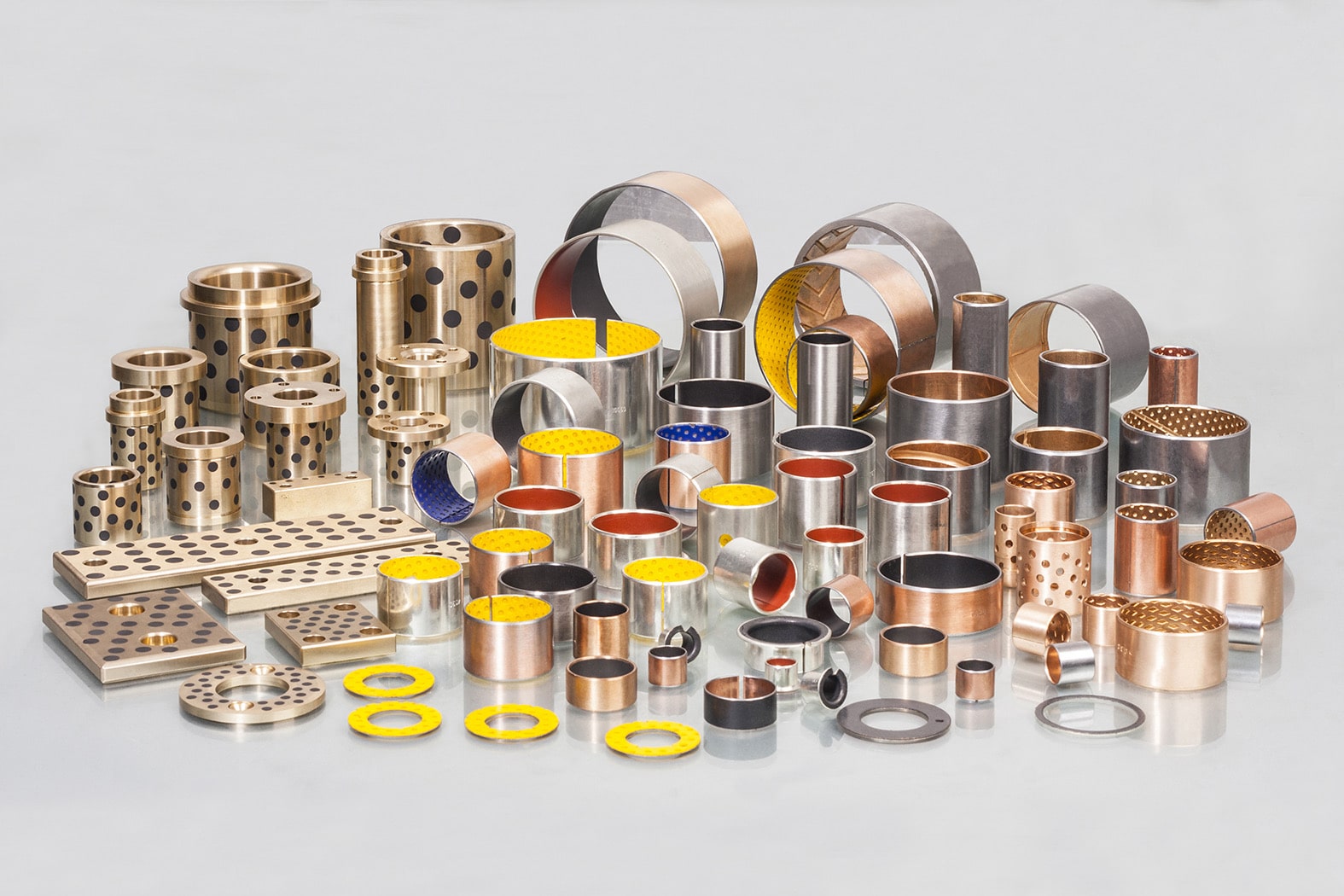
Many buyers I talk to believe the highest temperature rating automatically means the best bushing. But after years of manufacturing these parts, I've seen countless failures that had nothing to do with the material melting. It's the hidden factors that cause the real problems. Let's break down what you really need to look for when your equipment heats up.
Why Do High-Temperature Bushings Fail If They Don't Melt?
You chose a bushing with a high temperature rating, but it still failed prematurely. This unexpected downtime is frustrating. The real culprit is often not the heat itself, but its side effects.
High-temperature bushings often fail because the lubricant breaks down or evaporates first.[^1] Heat also causes the bushing and shaft to expand at different rates, changing the clearance and leading to seizure.[^2] Finally, prolonged heat can weaken the material itself, reducing its load-carrying capacity.
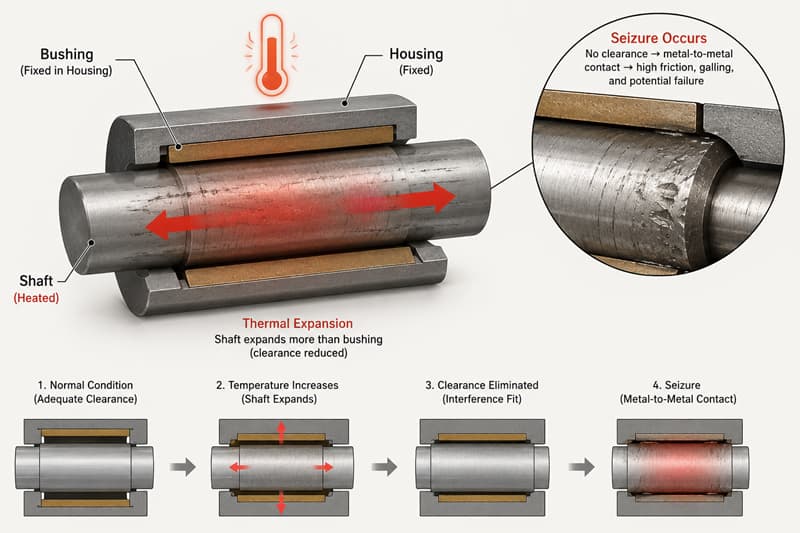
From our factory floor, we see that the temperature rating on a datasheet is just a starting point. The real story of high-temperature failure is more complex. It's a chain reaction that usually begins long before the bushing's material reaches its limit.
Lubrication Breakdown[^3]
Most greases and oils have a much lower operating temperature limit than the bushing material itself. Once heat causes the lubricant to thin out, burn off, or carbonize, you're left with metal-on-metal contact. This dramatically increases friction and wear, leading to rapid failure. This is the most common point of failure we see.
The Problem of Thermal Expansion[^4]
Different materials expand at different rates when heated. This is called the coefficient of thermal expansion. If the bushing expands more than the housing, or the shaft expands more than the bushing's inner diameter, the running clearance disappears. This leads to jamming, high friction, and ultimately, seizure.
| Failure Mode | Cause | Consequence |
|---|---|---|
| Lubricant Failure | Heat exceeds the lubricant's stable temperature. | Increased friction, rapid wear, scoring. |
| Clearance Loss | Uneven thermal expansion of parts. | Jamming, seizure, high stress. |
| Material Degradation | Prolonged exposure to high heat. | Softening, reduced load capacity, creep. |
This is why a holistic view is critical. You must consider the entire system, not just one component's specifications.
Which Material is Truly Right for Your Hot Application?
You see options like bronze, graphite, and composites, but you are not sure which is best for high heat. A wrong guess leads to more failures and wasted money.
For high heat with no lubrication, graphite-plugged bronze bushings are ideal as the solid graphite acts as a lubricant. For medium-high heat with reliable oil or grease, high-strength bronze is a robust choice. Special composite bushings can work, but you must respect their continuous temperature limits.[^5]
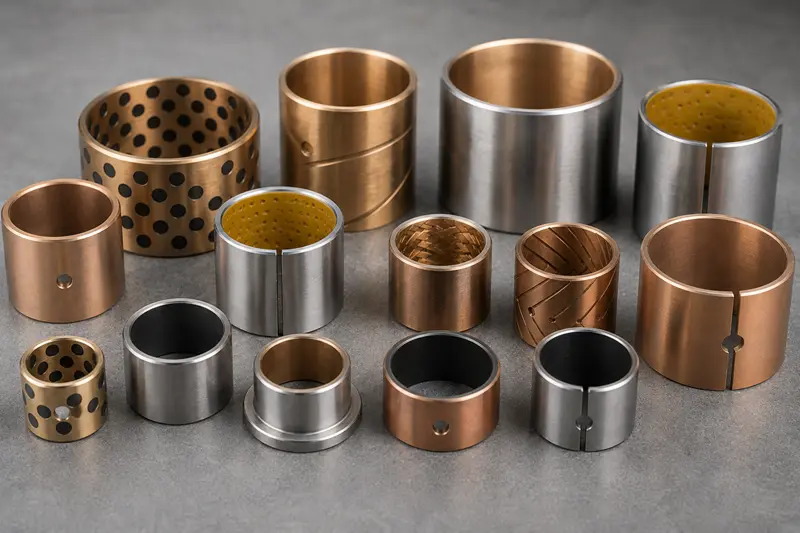
Selecting the right material is about understanding its strengths and weaknesses in a high-temperature environment. It is not a one-size-fits-all solution. As a manufacturer, we guide our clients through these choices daily based on their specific application.
A Material Breakdown for High-Temp Use
Here’s a look at the most common options and where they fit best:
-
Graphite Plugged Bronze Bushings: These are my top recommendation for environments that are both hot and difficult to lubricate. The solid graphite plugs embedded in the bronze provide continuous self-lubrication that will not burn off like grease. They are perfect for ovens, furnaces, and drying equipment.
-
High-Strength Bronze Bushings: If you have a reliable lubrication system, solid bronze or wrapped bronze bushings are excellent. They have great strength and can handle high loads, as long as the lubricant is present and effective at the operating temperature.
-
Special Composite & Plastic Bushings: Some advanced PTFE-lined or polymer bushings are rated for higher temperatures. However, you must be careful. They often have a lower load capacity at high temperatures and can be prone to "creep"—deforming under load over time. Always check the continuous operating temperature, not just the peak temperature.
| Material Type | Best For | Key Consideration |
|---|---|---|
| Graphite Plugged Bronze | High heat, low speed, no lubrication. | Higher initial cost, but excellent reliability. |
| High-Strength Bronze | High load, medium-high heat, with lubrication. | The lubrication system must be reliable. |
| Special PTFE Composite | Moderate heat, lower load. | Check continuous temp limit and creep data. |
| Engineering Plastics | Lower temperatures only. | Prone to softening and dimensional change. |
Is Just Checking the Temperature Spec Enough for OEM Buyers?
As an equipment manufacturer, you need parts that perform reliably to protect your brand. Relying only on a temperature spec can lead to field failures and warranty claims.
No, a temperature spec alone is not enough. OEM buyers must consider the complete operating environment: load, speed, lubrication method, and thermal expansion of all mating parts.[^6] True reliability comes from matching the bushing's total performance profile to the machine's specific working conditions.

For my OEM partners, like many I work with in heavy industry, the conversation goes far beyond a single number on a datasheet. Your reputation depends on the long-term reliability of every component. A bushing that simply "survives" its temperature rating is not good enough; it needs to perform consistently for thousands of hours.
Thinking Like a Manufacturer
When you come to us for a high-temperature application, we ask more questions. What is the load? The speed? Is the movement oscillating or rotating? What is the shaft material? What is the housing material? How often is maintenance performed?
The answers help us build a complete picture. We can then recommend a material and design that accounts for thermal expansion, ensures proper clearance is maintained at operating temperature, and matches a lubrication strategy to the material. For example, we might suggest a specific bronze alloy with a custom oil groove pattern for a lubricated system, or a specific graphite percentage for a self-lubricating one. This system-level thinking is what separates a successful design from a future field failure. It is about ensuring the material choice is a perfect match for its long-term home.
Conclusion
Choosing the right high-temperature bushing means looking beyond the temperature rating. Consider lubrication, expansion, and the entire system for true reliability and long life.
[^1]: "Solid Lubrication at High-Temperatures—A Review - PMC", https://pmc.ncbi.nlm.nih.gov/articles/PMC8911202/. This source explains how lubricant breakdown due to high temperatures can lead to increased friction and wear in mechanical systems. Evidence role: mechanism; source type: education. Supports: Lubricant breakdown is a common cause of high-temperature bushing failure.. [^2]: "Thermal Expansion and Shrinkage of the Bushing - 謙淳UM", https://unionmaterial.com/en/thermal-expansion-and-shrinkage-of-the-bushing/. This source discusses the impact of thermal expansion on mechanical components, including bushings and shafts. Evidence role: mechanism; source type: education. Supports: Thermal expansion differences between bushings and shafts can lead to clearance loss and seizure.. [^3]: "Graphalloy High Temperature Bearings and Bushings", https://www.graphalloy.com/html/high_temperature_bearings.html. This source explains how high temperatures can cause lubrication breakdown, leading to increased wear and failure in mechanical systems. Evidence role: mechanism; source type: research. Supports: Lubrication breakdown is a common failure mode for high-temperature bushings.. Scope note: The source may focus on specific types of lubricants. [^4]: "Fundamentals of Thermal Expansion and Thermal Contraction - PMC", https://pmc.ncbi.nlm.nih.gov/articles/PMC5506936/. This source discusses the role of thermal expansion in mechanical design and its impact on component performance. Evidence role: mechanism; source type: education. Supports: Thermal expansion can significantly impact the performance of mechanical components like bushings.. Scope note: The source may not specifically address bushings. [^5]: "[PDF] Performance of PTFE-Lined Composite Journal Bearings", https://ntrs.nasa.gov/api/citations/19820009389/downloads/19820009389.pdf. This source discusses the limitations of composite bushings, including their continuous temperature ratings and load capacities. Evidence role: general_support; source type: research. Supports: Composite bushings have specific continuous temperature limits that must be respected.. Scope note: The source may not cover all types of composite bushings. [^6]: "Understanding Bushings: A Comprehensive Guide - SC Industries, Inc.", https://www.scindustriesinc.com/blog/understanding-bushings-a-comprehensive-guide/. This source outlines the factors OEM buyers should evaluate when selecting bushings for high-temperature applications. Evidence role: expert_consensus; source type: education. Supports: OEM buyers need to evaluate multiple factors beyond temperature ratings when selecting bushings.. Scope note: The source may focus on specific industries or applications.