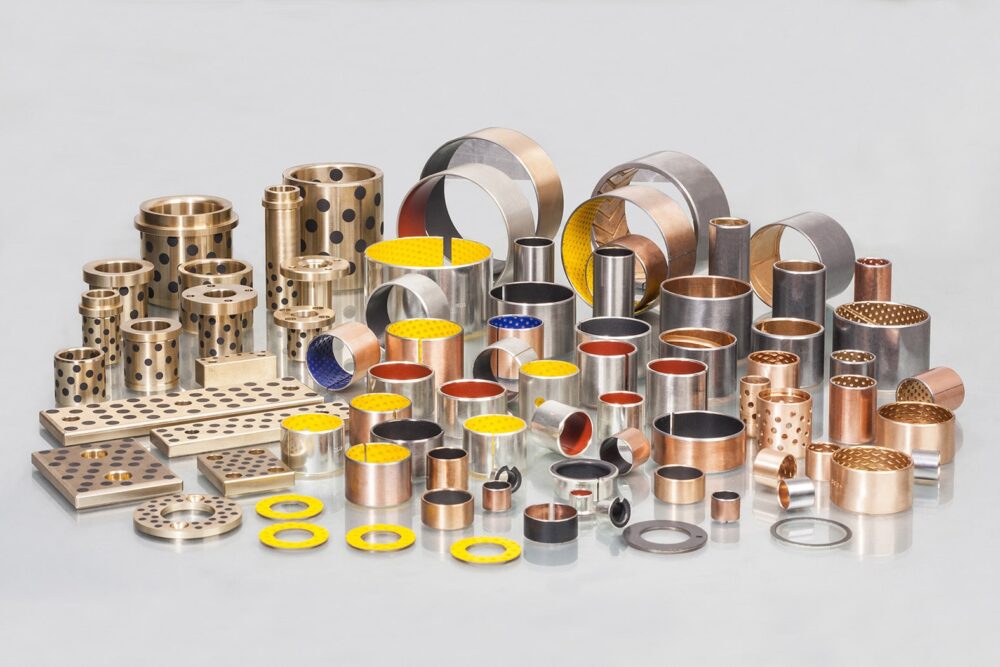
Struggling to choose the right bushing process? A wrong choice can lead to costly downtime and equipment failure, damaging your reputation and your bottom line.
Casting bushings[^1] offer higher strength and are ideal for heavy-load applications, while powder metallurgy bushings provide self-lubrication[^2] and are better suited for medium-load, high-volume applications. The best choice depends on load, speed, and maintenance requirements.
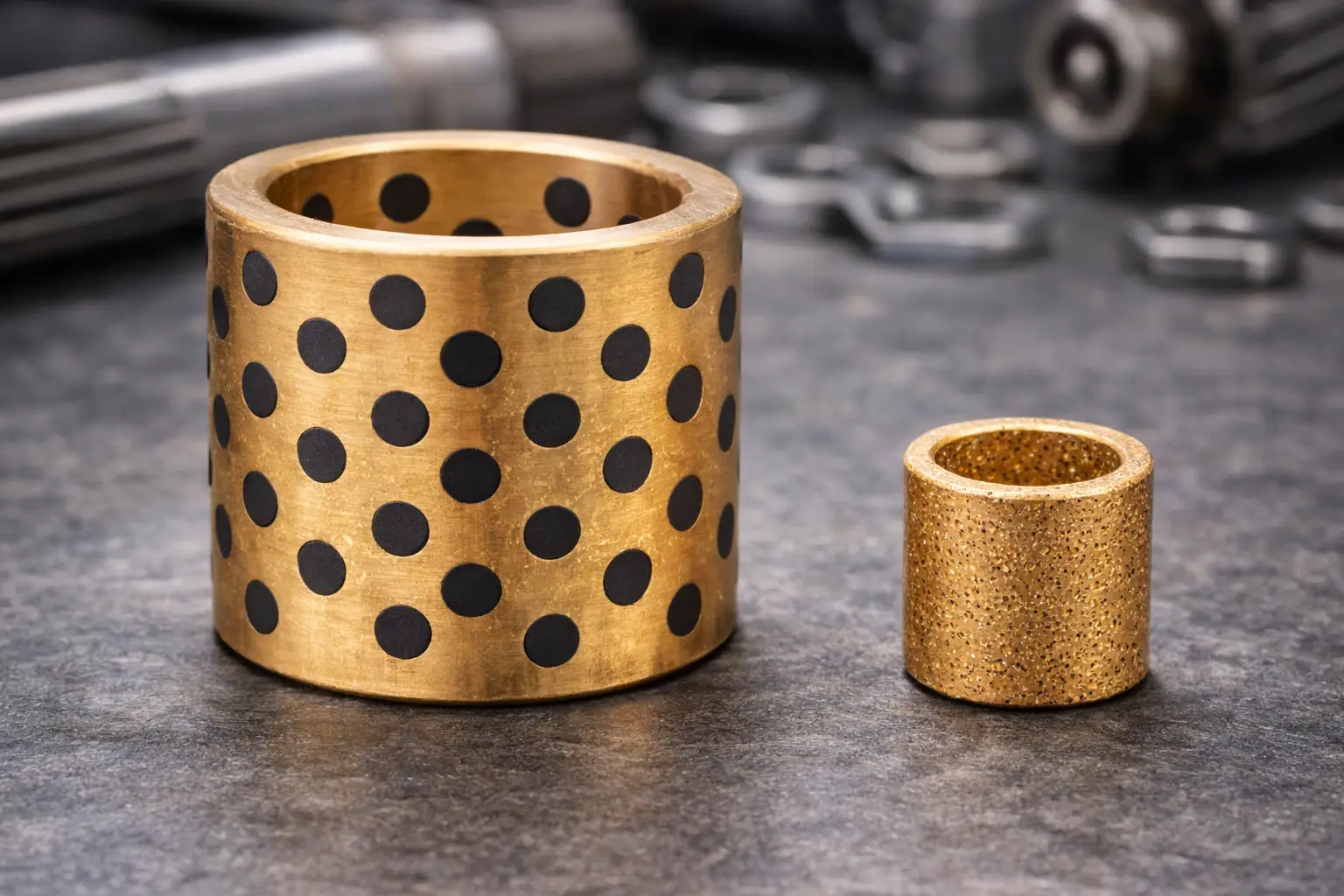
That's the quick answer. But as a factory that produces both types for our OEM clients, we know the decision is much more nuanced. It isn't just about strength or self-lubrication. The best choice comes from a deeper understanding of how these parts are made, what they cost at scale, and most importantly, the exact conditions they will face in your machine. Let's break down the factors that really matter from a manufacturer's perspective.
How Do Their Manufacturing Processes Affect Performance?
You see two bushings that look similar, but one costs significantly more. Choosing based on price alone is a huge risk that can lead to premature failure.
Casting involves pouring molten metal into a mold and then machining it, creating a solid, dense part with high strength. Powder metallurgy sinters metal powders under heat and pressure, creating a porous structure[^3] ideal for self-lubrication but with lower impact strength[^4].
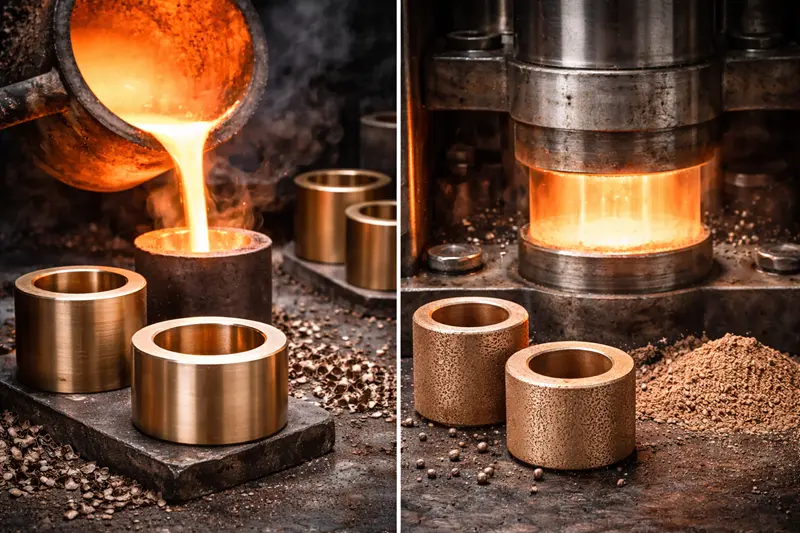
Let's dive deeper into how these two methods create parts with fundamentally different characteristics. As a manufacturer, we see these differences every day on the factory floor.
Understanding the Casting Process
When we talk about cast bushings, we are typically referring to bronze alloys that are cast into a solid bar or tube and then precision-machined to the final dimensions. This is a subtractive process. We start with a larger piece of material and cut away what we don't need using CNC lathes and mills[^5].
The result is a fully dense, non-porous part. This density gives it excellent mechanical strength and the ability to withstand very high loads and shock forces. It's a robust, traditional method perfect for demanding applications.
Understanding Powder Metallurgy
Powder metallurgy, or sintering, is the opposite. It's an additive process. We start with a fine metal powder, often a bronze or iron mix, and press it into a die under extreme pressure to form the desired shape. This "green" part is then heated in a controlled-atmosphere furnace to a temperature just below its melting point. The metal particles bond, or "sinter," together, forming a solid but porous structure[^3]. This porosity, typically 15-30% by volume, is then impregnated with lubricating oil.
| Feature | Casting (Machined Bronze) | Powder Metallurgy (Sintered) |
|---|---|---|
| Density | High (Fully Dense) | Medium (Controlled Porosity) |
| Strength | Very High | Good to Medium |
| Structure | Solid, Homogeneous | Porous, Oil-Impregnated |
| Lubrication | Requires External Lubrication | Self-Lubricating |
| Impact Resistance | Excellent | Fair to Good (Can be brittle) |
Why Is There Such a Big Cost Difference Between Them?
Your project budget is tight, and you need a cost-effective solution. But choosing the cheapest bushing without understanding the cost structure can end up costing you more in failures.
Casting is more expensive for high volumes due to extensive machining and material waste. Powder metallurgy has high initial tooling costs but becomes very cost-effective for large production runs because it has minimal material waste and less post-processing.
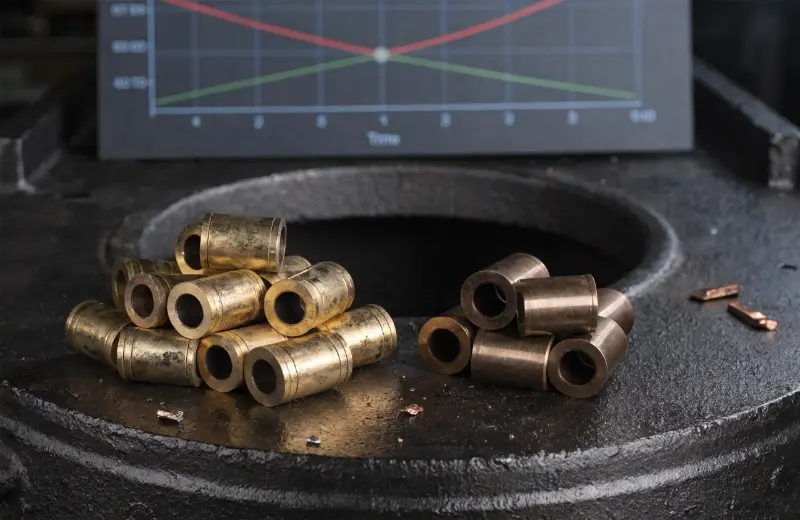
The cost per part is a critical factor for any OEM project. The economics of these two processes are completely different, especially when you scale from prototypes to mass production.
I remember a client, let's call her Sofia, who was scaling up her production of small gearboxes. She was used to machined cast bronze bushings for her prototypes and small initial batches. They worked perfectly. But when she needed to order 100,000 units, the price for machined parts was too high for her target market.
We walked her through the economics.
Cost Factors for Cast Bushings
For cast bushings, the cost is largely tied to material and machine time. Bronze is expensive, and since we machine the part from a solid block, a significant amount of that expensive material becomes scrap. Each part requires individual time on a CNC machine, so labor and machine-hour costs add up quickly. This makes it ideal for low-volume runs, custom one-off sizes, or prototypes where you don't want to invest in tooling.
Cost Factors for Powder Metallurgy Bushings
Powder metallurgy has a high upfront cost: the die, or tooling. This precision tool can be expensive to create. However, once it's made, we can press parts very quickly with almost zero material waste. The process is highly automated. For Sofia's 100,000-unit order, the initial tooling investment was quickly paid back, and her per-unit cost dropped by over 60% compared to the machined option, making her product commercially viable.
Which Bushing Is Better for My Specific Application?
You know the material differences, but you're still not sure how to apply them. Making the wrong choice means risking premature wear, seizure, and catastrophic equipment failure.
There is no "better" process, only a "more suitable" working condition. The key is matching the bushing's properties to your application's PV value[^6], temperature, contamination risk, and installation needs. Let us help you analyze these critical factors.
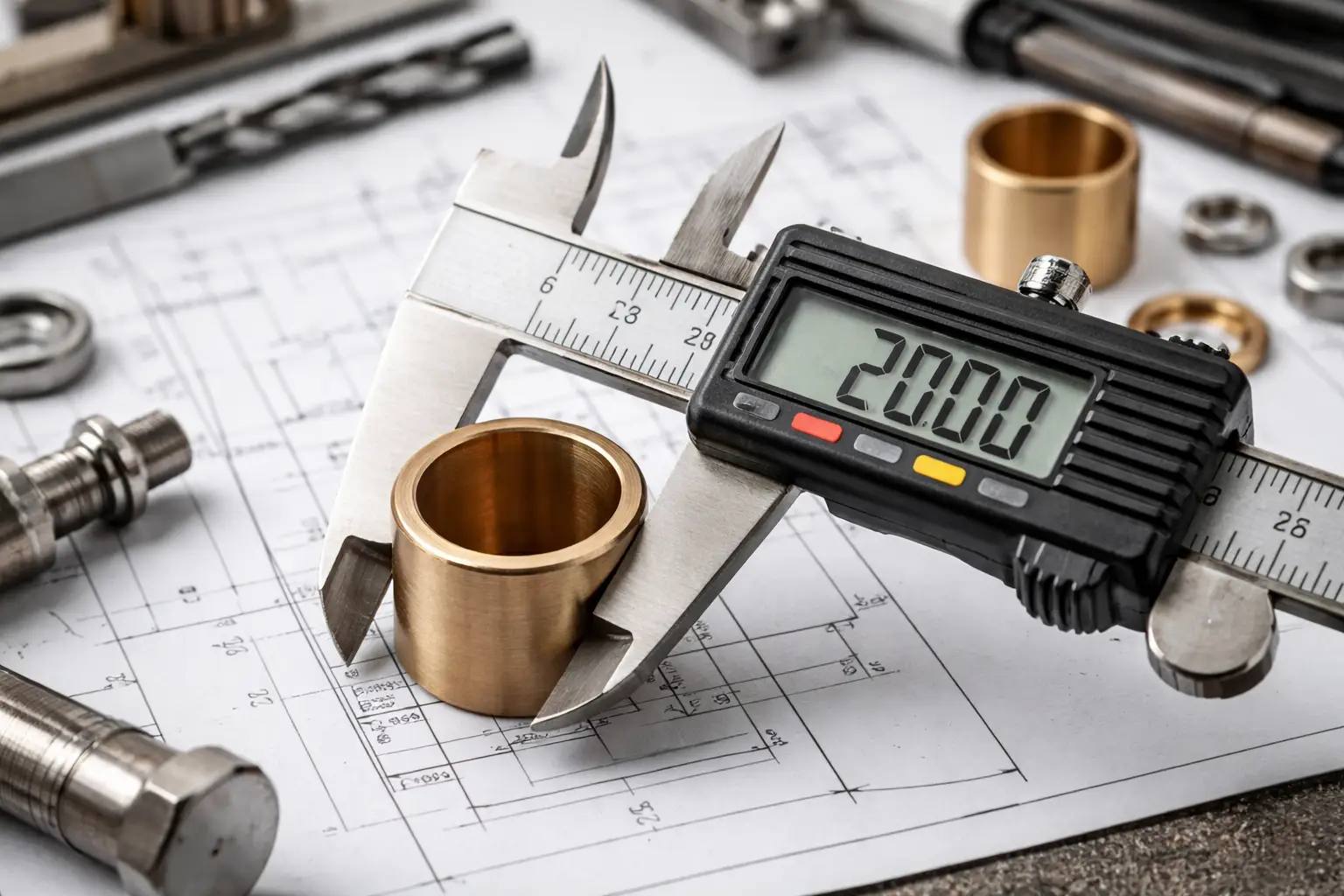
This is the most important question, and the one we focus on with our OEM partners. As a factory, we don't have a favorite technology; we have a goal to provide a bushing that works reliably for its intended lifespan. To do that, we stop asking "casting or powder metallurgy?" and start asking for the application details.
The Deciding Factor: Your Working Conditions
The final choice should never be based on a spec sheet alone. It must be based on a complete picture of the environment where the bushing will operate.
1. PV Value (Pressure × Velocity)
This is the single most important parameter for selecting a plain bearing. It combines the load (Pressure) on the bushing and the rotational speed (Velocity).
- High Pressure, Low Velocity: Think of the pivot points on a piece of construction equipment like an excavator arm. The loads are immense, but the movement is slow and intermittent. A solid, machined cast bronze bushing excels here due to its superior load-carrying capacity.
- Medium/Low Pressure, High Velocity: Consider a small electric motor or a fan. The load is light, but the shaft is spinning constantly and quickly. A self-lubricating sintered bushing is perfect here, as the rotation helps draw oil out of the pores to create a consistent lubricating film.
2. Environmental and Installation Factors
Beyond PV, we must consider other real-world conditions.
- Contamination: Will the bushing be exposed to dust, dirt, or moisture? The porous nature of a sintered bushing can act like a sponge, absorbing contaminants that can cause abrasive wear. A solid cast bushing, combined with proper seals, might offer better protection in dirty environments.
- Temperature: Extreme temperatures can affect the viscosity of the oil impregnated in a sintered bushing, reducing its effectiveness. Cast bronze alloys can often be selected to handle a wider temperature range.
- Installation: Sintered bushings are more brittle than their cast counterparts. If your assembly process involves aggressive press-fitting, there is a higher risk of cracking a sintered part. Cast bronze is more ductile and forgiving of slight misalignments or heavy-handed installation.
The best way to start is to send us your working conditions. We can then provide the right support.
Conclusion
Choosing between casting and powder metallurgy depends on your specific needs. Analyze your load, speed, volume, and operating environment to find the most reliable and cost-effective solution for your project.
[^1]: Explore the benefits of casting bushings for heavy-load applications and their superior strength. [^2]: Understand how self-lubrication can reduce maintenance and improve efficiency in machinery. [^3]: Find out how a porous structure contributes to the performance of sintered bushings. [^4]: Learn about the significance of impact strength in ensuring bushing reliability. [^5]: Discover how CNC technology enhances precision in machining bushings. [^6]: Understand the importance of PV value in selecting the right bushing for your application.