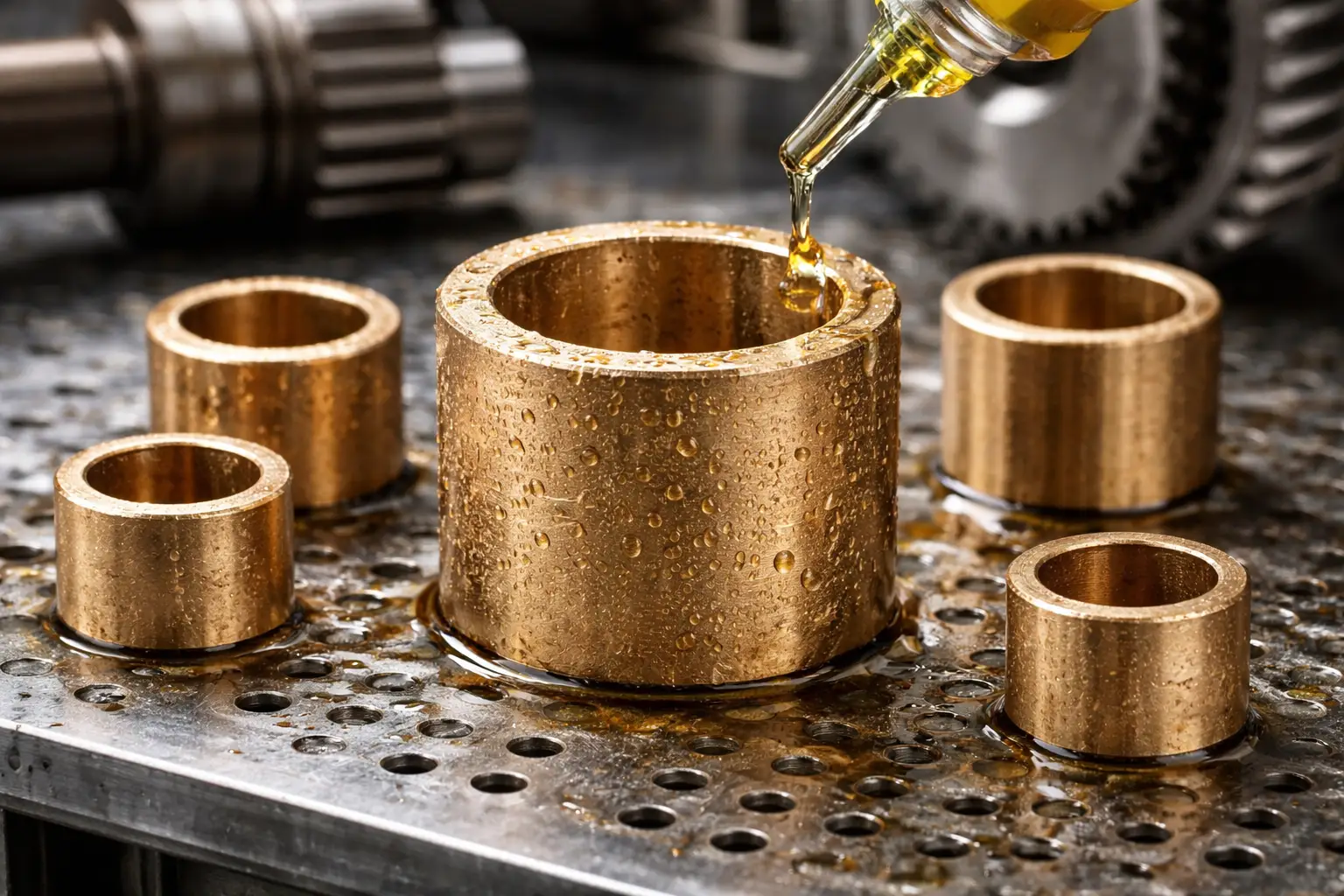
Struggling with bushing selection? The question of lubrication can be confusing. Making the wrong choice leads to equipment failure and high costs. Let's clarify which bushings need oil and why.
Not all bushings need external lubrication. Self-lubricating bushings, like PTFE composite or graphite-plugged types, work without added oil.[^1] However, traditional bronze or bimetal bushings require lubrication to prevent wear and failure. The choice depends on the bushing material and your equipment's maintenance plan.
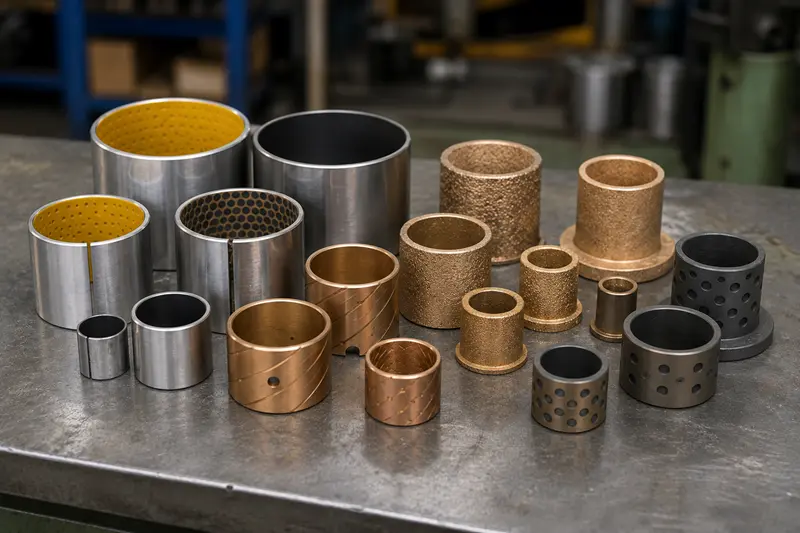
So, the answer isn't a simple yes or no. As a manufacturer, I see this question come up all the time from OEM buyers. They want a reliable part, but they also need to manage costs and maintenance schedules for their customers. The real difference comes down to the material the bushing is made from. Let's look at the types that absolutely depend on lubrication to function correctly and have a long service life.
When is Lubrication Absolutely Necessary for a Bushing?
Thinking about using bronze or bimetal bushings? Ignoring their lubrication needs can lead to sudden, catastrophic equipment failure. Let's look at why lubrication is not just an option, but a necessity.
Lubrication is essential for traditional bronze and bimetal bushings.[^2] It creates a protective film that separates the shaft and bushing, reducing friction, carrying away heat, and preventing metal-to-metal contact. Without it, these bushings will quickly overheat, wear down, and seize the shaft.
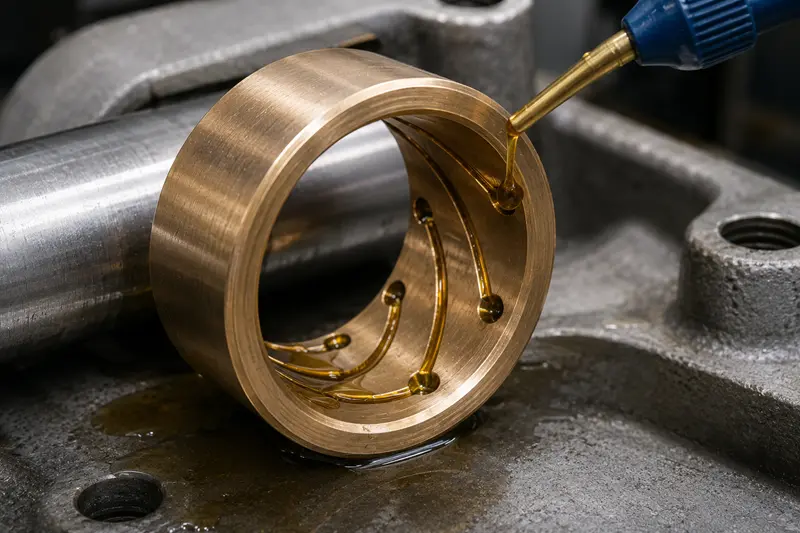
From our factory's perspective, when we manufacture traditional bronze or bimetal bushings, we design them with lubrication in mind. We often machine features like oil grooves, circular channels, or through-holes directly into the bushing wall. These aren't for decoration; they are critical channels designed to hold and distribute lubricant exactly where it's needed. The lubricant performs several key jobs, and it's not just about making things slippery. It creates a thin, high-pressure film of oil—a principle called hydrodynamic lubrication[^3]—that physically separates the rotating shaft from the stationary bushing. This prevents the direct metal-on-metal contact that causes galling, catastrophic wear, and seizure. The flowing lubricant also carries damaging heat away from the friction zone and helps flush out tiny wear particles or external contaminants that could score the surfaces. For many of our OEM clients building heavy industrial equipment that can be regularly maintained, these lubricated bushings are the best choice because they offer excellent load capacity at a very reasonable cost.
| Lubricant Function | Impact on Bronze/Bimetal Bushings | Consequence of Failure |
|---|---|---|
| Reduce Friction | Creates a low-friction film between surfaces. | High energy loss, heat generation. |
| Prevent Wear | Separates metal parts, avoiding direct contact. | Rapid wear, galling, seizure. |
| Dissipate Heat | Carries heat away from the bearing. | Overheating, material softening, failure. |
| Prevent Corrosion | Protects metal surfaces from moisture and oxygen. | Rust formation, surface damage. |
How Can Some Bushings Work Without Any Lubrication?
The idea of a bushing that never needs oil seems too good to be true. This doubt can lead to complex, costly designs. Let's explore how self-lubricating bushings actually work.
Self-lubricating bushings work by having solid lubricants embedded within their structure. Materials like PTFE (Teflon) or graphite are part of the bushing itself. As the shaft rotates, a microscopic layer of this solid lubricant transfers to the shaft, creating a low-friction surface without any external oil.
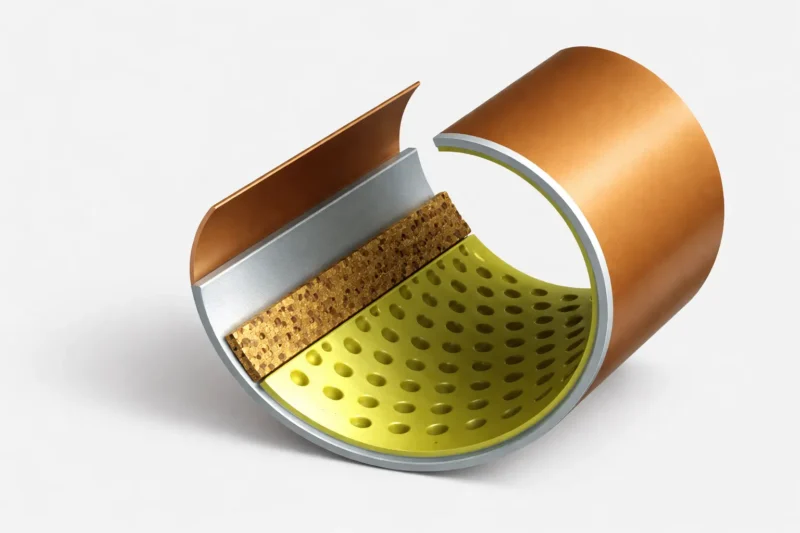
The magic of self-lubricating bushings isn't magic at all; it's advanced material science. Instead of relying on an external liquid like oil or grease, the lubricant is an integral part of the bearing material itself. Take our popular PTFE composite bushings (also known as DU or SF-1 type bushings)[^4]. They have a unique layered structure: a steel backing for strength, a sintered bronze middle layer to anchor the liner, and a top layer of PTFE mixed with fillers. During the initial run-in period, a microscopic, slick layer of this PTFE material transfers from the bushing to the shaft. This "transfer film" permanently coats the shaft and does the job of grease, providing an ultra-low-friction surface. Other types, like our graphite-plugged bronze bushings, use solid graphite plugs that continuously deposit lubricant as they wear.[^5] This technology is a game-changer for equipment where regular maintenance is difficult, impossible, or simply not desired by the end-user. It reduces lifetime operating costs and eliminates a common point of failure—forgetting to add grease.[^6]
| Self-Lubricating Type | Lubrication Mechanism | Best Use Case |
|---|---|---|
| PTFE Composite | A transfer film of low-friction PTFE coats the shaft. | High load, low speed, no maintenance. |
| Graphite Plugged | Solid graphite plugs embedded in bronze wear down to lubricate. | High temperature, heavy load. |
| Sintered Bronze | A porous metal structure is impregnated with oil from the factory. | High speed, low load (e.g., small motors). |
| Engineering Plastic | The plastic material itself has low-friction properties. | Light load, corrosion resistance. |
How Do I Choose the Right Lubrication Strategy for My Equipment?
Knowing the options is one thing; choosing the right one is another. A wrong decision can hurt your product's reliability and your company's reputation. Let's simplify this choice.
The best strategy depends on your equipment's maintenance access and operating environment. If regular greasing is easy and acceptable, lubricated bronze bushings offer high performance for less cost.[^7] If maintenance is difficult or in a dirty environment, self-lubricating bushings are a more reliable, long-term solution.
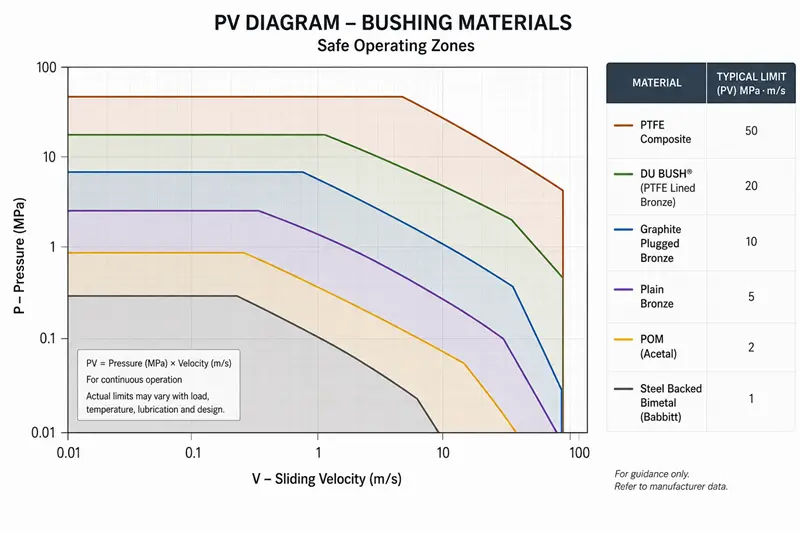
The core question I always ask our B2B clients is not "do you want lubrication?" but "can your end-user reliably perform maintenance?" Your answer to that question guides the entire selection process. I remember working with a client, Sophia, who was procuring parts for a new line of construction excavators. For the main boom pivots, which are exposed and have grease nipples, we supplied our heavy-duty bronze bushings. They handle immense loads, and the maintenance crew can easily grease them daily. But for the internal control linkages inside the operator cab, which are sealed and never accessed, we supplied our maintenance-free PTFE composite bushings. A "fit-and-forget" part was the only logical choice there. This hybrid approach is very common and effective. You must look beyond the initial purchase price of the bushing and consider the total cost of ownership, which includes maintenance labor, downtime, and potential warranty claims.[^8]
Key Decision Factors:
- Maintenance Access:
- Easy Access: Lubricated bronze or bimetal bushings are a strong, cost-effective choice.
- Difficult Access: Self-lubricating bushings are almost always the better option.[^9]
- Environment:
- Clean: Either type works well.
- Dirty/Dusty: Self-lubricating can be better as excess grease attracts abrasive particles.[^10]
- Cost:
- Upfront Cost: Lubricated bushings are generally cheaper to purchase.
- Lifetime Cost: Self-lubricating bushings reduce maintenance labor and potential downtime costs.
Conclusion
Choosing a bushing isn't about lubrication, but about matching the material to your equipment's real-world maintenance conditions. Make that your focus, and you will select the right part every time.
[^1]: "Performance of PTFE-Lined Composite Journal Bearings", https://ntrs.nasa.gov/api/citations/19820009389/downloads/19820009389.pdf. Self-lubricating bushings are designed with embedded solid lubricants, such as PTFE or graphite, which reduce friction without external oil. Evidence role: mechanism; source type: education. Supports: Self-lubricating bushings do not require external lubrication due to their embedded solid lubricants.. Scope note: The effectiveness of self-lubricating bushings may vary depending on load and speed conditions. [^2]: "[PDF] The Tribological Performance of Self-Lubricating Bearings Following ...", https://docs.lib.purdue.edu/cgi/viewcontent.cgi?article=2888&context=icec. Bronze and bimetal bushings require lubrication to prevent wear and overheating, as supported by tribological studies. Evidence role: expert_consensus; source type: research. Supports: Lubrication is critical for the proper functioning of traditional bronze and bimetal bushings.. Scope note: The necessity of lubrication may depend on specific operating conditions such as load and speed. [^3]: "[PDF] Fundamentals of Fluid Film Lubrication", https://ntrs.nasa.gov/api/citations/19910021217/downloads/19910021217.pdf. Hydrodynamic lubrication involves the formation of a thin film of fluid that separates moving surfaces, reducing friction and wear. Evidence role: definition; source type: encyclopedia. Supports: Hydrodynamic lubrication is a key principle in reducing friction and wear in lubricated bushings.. Scope note: The principle applies primarily to systems with sufficient relative motion to maintain the fluid film. [^4]: "[PDF] Performance of PTFE-Lined Composite Journal Bearings", https://ntrs.nasa.gov/api/citations/19820009389/downloads/19820009389.pdf. PTFE composite bushings, often referred to as DU or SF-1 types, are engineered with a layered structure for self-lubrication. Evidence role: definition; source type: education. Supports: PTFE composite bushings are designed with a layered structure that facilitates self-lubrication.. Scope note: The description may not cover all variations of PTFE composite bushings available in the market. [^5]: "Self-Lubricating Graphite Plugged Bronze Sleeve Bushings Now ...", https://www.nationalbronze.com/News/self-lubricating-graphite-plugged-bronze-sleeve-bushings-now-available-online/. Graphite-plugged bushings use embedded solid graphite to provide continuous lubrication during operation. Evidence role: mechanism; source type: research. Supports: Graphite-plugged bushings provide continuous lubrication through embedded solid graphite plugs.. Scope note: The effectiveness of graphite lubrication may vary under extreme load or temperature conditions. [^6]: "Self-Lubricating Bearings: The Silent Revolution Transforming ...", https://buntingbearings.com/blog/self-lubricating-bearings/. Self-lubricating bushings reduce operating costs and mitigate failure risks associated with missed maintenance. Evidence role: general_support; source type: education. Supports: Self-lubricating bushings reduce lifetime operating costs and eliminate risks tied to missed greasing.. Scope note: The reduction in operating costs may depend on the specific application and maintenance schedule. [^7]: "How Oil Impregnated Bronze Bushings Improve Performance", https://pibsales.com/tutorials/how-oil-impregnated-bronze-bushings-improve-performance/?srsltid=AfmBOopoNC-zIHprFLvaCSxeG-1qhBWGd6xbVIJ9ibAFStXYsJPKm0jK. Lubricated bronze bushings are cost-effective and provide high load capacity when properly maintained. Evidence role: general_support; source type: institution. Supports: Lubricated bronze bushings are a cost-effective option for high-performance applications.. Scope note: Performance may depend on regular maintenance and appropriate lubrication. [^8]: "[PDF] TOTAL COST OF OWNERSHIP (TCO) 1. Facilities - Chaffey College", https://www.chaffey.edu/purchasing/docs/tco-implementation-summary.pdf. Total cost of ownership for bushings includes factors like maintenance labor, downtime, and warranty claims, as analyzed in industrial cost studies. Evidence role: statistic; source type: research. Supports: Total cost of ownership for bushings encompasses maintenance labor, downtime, and warranty claims.. Scope note: The total cost of ownership may vary significantly across industries and equipment types. [^9]: "The Advantages of Self-Lubricating Bushings", https://www.astbearings.com/blog/advantages-self-lubricating-bushings.html. Self-lubricating bushings are preferred in environments where maintenance is difficult or access is limited. Evidence role: expert_consensus; source type: education. Supports: Self-lubricating bushings are generally preferred in maintenance-challenged environments.. Scope note: The preference for self-lubricating bushings may not apply to all industrial scenarios. [^10]: "Information for Engineers - SelfLube Mold and Die Products", https://selflube.com/more/Information. Self-lubricating bushings reduce the risk of abrasive particle accumulation compared to grease-lubricated options. Evidence role: mechanism; source type: research. Supports: Self-lubricating bushings are advantageous in dirty environments due to reduced grease-related particle accumulation.. Scope note: The advantage may depend on the specific environmental conditions and particle types.