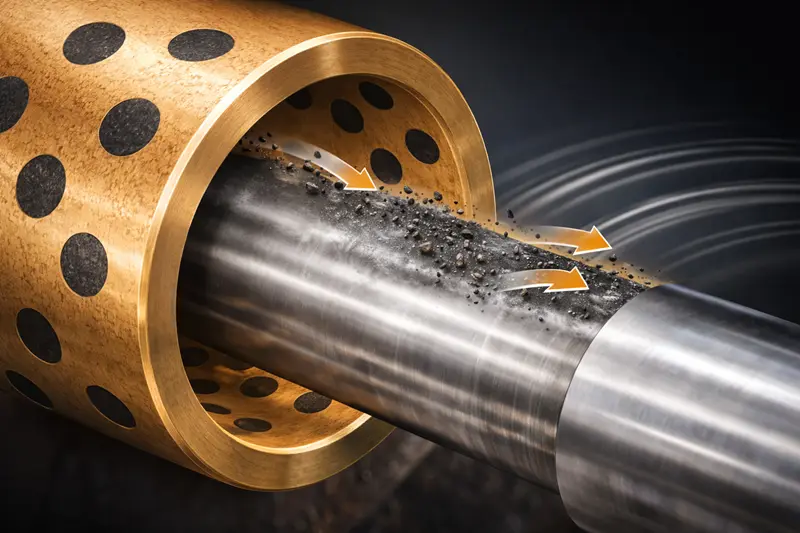
Are you choosing graphite plugged bushings thinking they are just bronze parts with graphite stuffed inside? This simple view can lead to costly equipment failures and unexpected downtime.
The manufacturing of graphite plugged bushings is a precise engineering process.[^1] It involves selecting a specific bronze alloy, machining it to tight tolerances, drilling a calculated pattern of holes, pressing in solid graphite plugs, and finishing the surface for smooth, reliable operation.
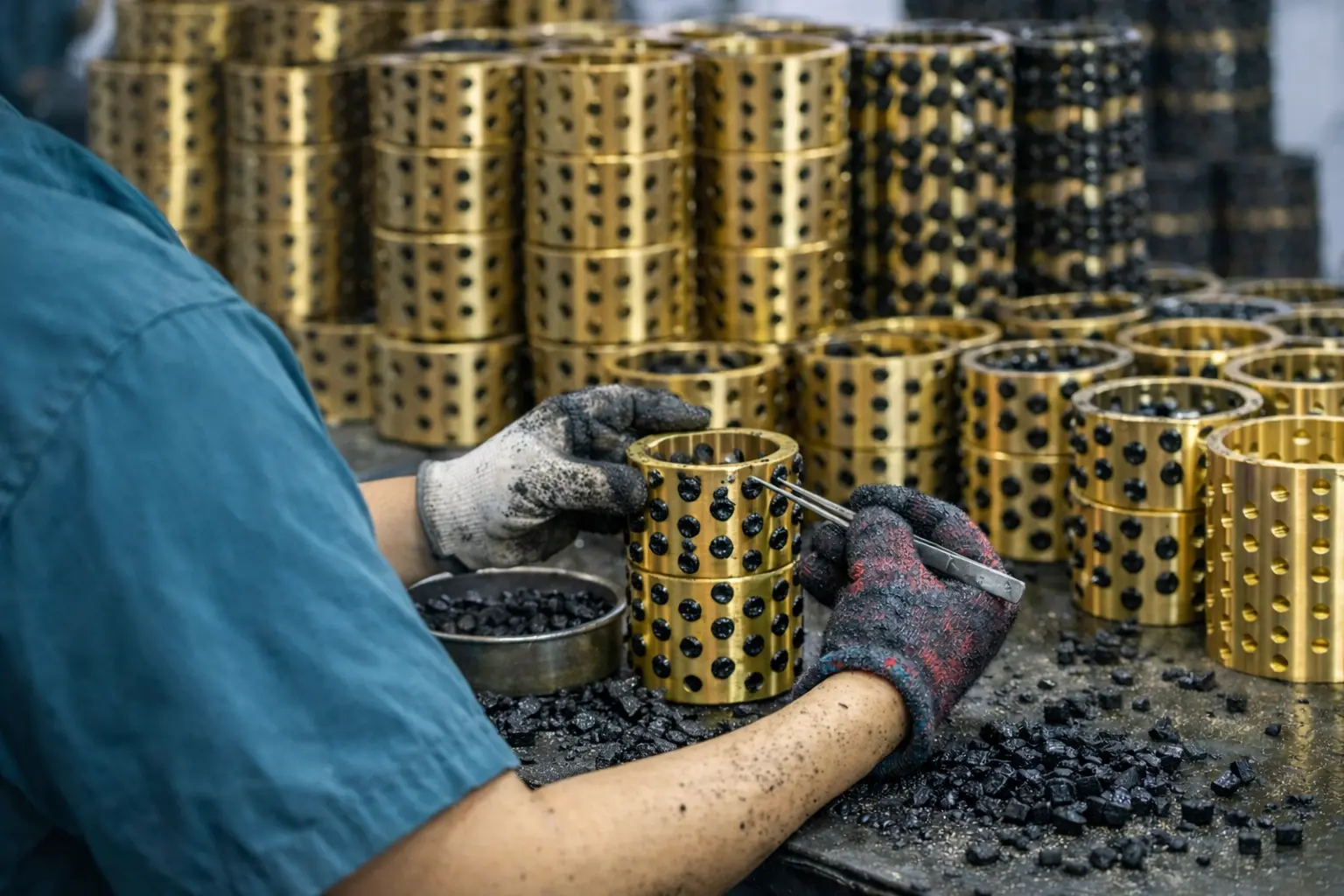
It sounds straightforward, but from a factory perspective, every single step is critical to performance. The goal isn't just to add a lubricant; it's to create a self-lubricating system where the strong bronze base carries the heavy load and the graphite provides a continuous, low-friction film. Let's walk through how these durable components are really made.
What's More Important, the Bronze or the Graphite?
Do you focus only on the self-lubricating graphite? Many buyers do, but if the bronze base fails under load, the graphite's lubricating properties become completely useless.
The bronze alloy is the foundation.[^2] It determines the bushing's load capacity, impact resistance, and structural strength. The graphite provides lubrication, but the bronze base must first be strong enough to handle the mechanical stress of your application.
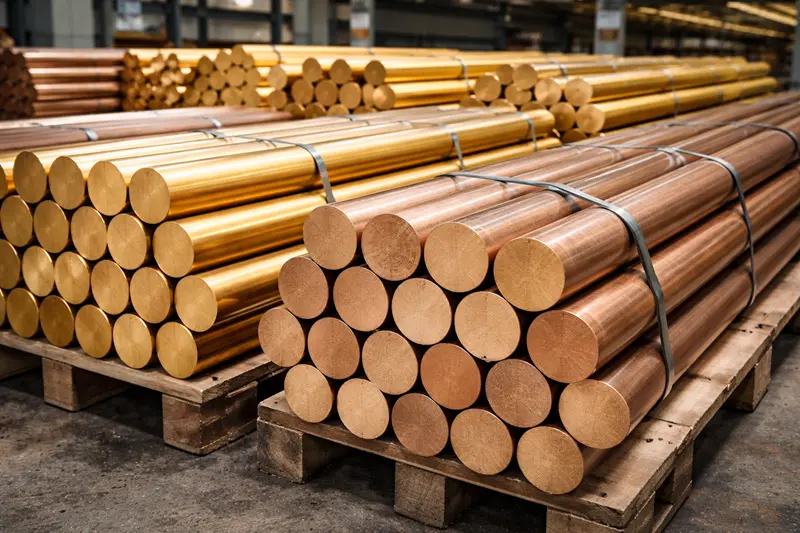
In our factory, the process always starts with the base material. We don't just pick any bronze; we select the alloy based on your specific needs—the load, speed, and working environment. For example, a heavy-duty excavator arm needs a different material than a component in a precision mold. The initial blank is formed through casting, forging, or centrifugal casting to create a dense, solid structure. Then, we begin machining. We use CNC machines to turn, bore, and chamfer the bushing, ensuring the inner diameter, outer diameter, and length all meet the exact drawing specifications. This precision is not just about fit; it's about ensuring even load distribution and preventing stress points that could lead to cracks.
| Bronze Alloy Type | Key Properties | Common Applications |
|---|---|---|
| High-Strength Brass | Excellent strength, good wear resistance | Construction machinery, heavy vehicle joints |
| Tin Bronze | Good corrosion resistance, reliable under load | Marine equipment, pump components |
| Aluminum Bronze | High strength, superior wear & corrosion resistance | Mining equipment, landing gear bushings |
How Does Graphite Placement Affect Performance?
You might think the holes for graphite can be drilled anywhere. But putting them in the wrong spots can create weak points and leave areas unlubricated, causing rapid failure.
Graphite placement is a critical design element.[^3] The holes are drilled in a calculated pattern to ensure complete lubrication coverage across the entire moving surface while maintaining the structural strength of the bronze base, preventing weak points under heavy load.
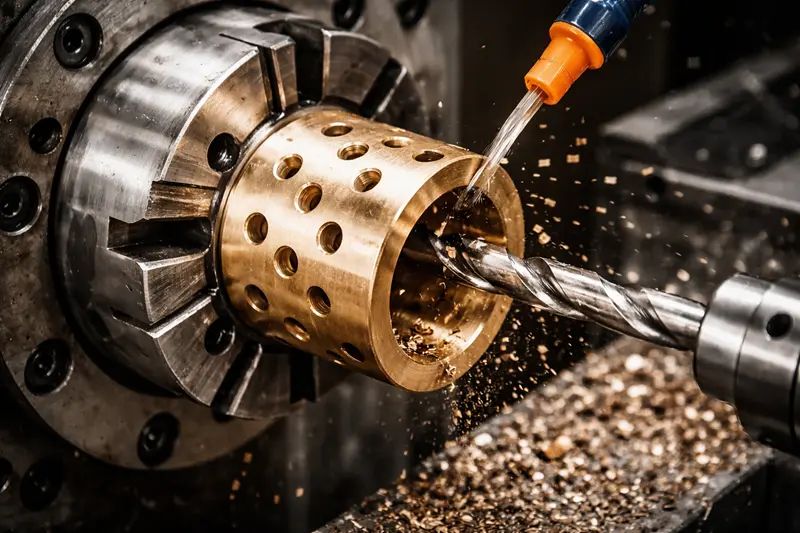
After the bushing is machined to its basic shape, we move to what many consider the defining step: creating the spaces for the graphite. But this isn't random. We drill the holes according to a specific, engineered pattern. The angle, depth, and spacing are all designed to maximize lubrication coverage as the shaft rotates or slides. If the holes are too close, the bronze wall between them can weaken and crack under load. If they are too far apart, you get dry spots that cause friction and wear. Once the holes are drilled, we press solid graphite plugs into them. The graphite itself isn't one-size-fits-all, either.[^4] We can adjust the graphite formula based on the application's temperature, humidity, or exposure to chemicals to ensure the lubricating film remains stable and effective.
Why Is the Final Finish So Critical?
Once the graphite is in, the bushing looks finished, right? But putting it to work now would be a mistake. A rough or uneven surface can cause immediate scoring and damage.
The final finishing step is critical because it creates a perfectly smooth, uniform surface between the bronze and the graphite. This prevents initial scratching and allows the graphite to form a stable, effective lubricating film right from the start.
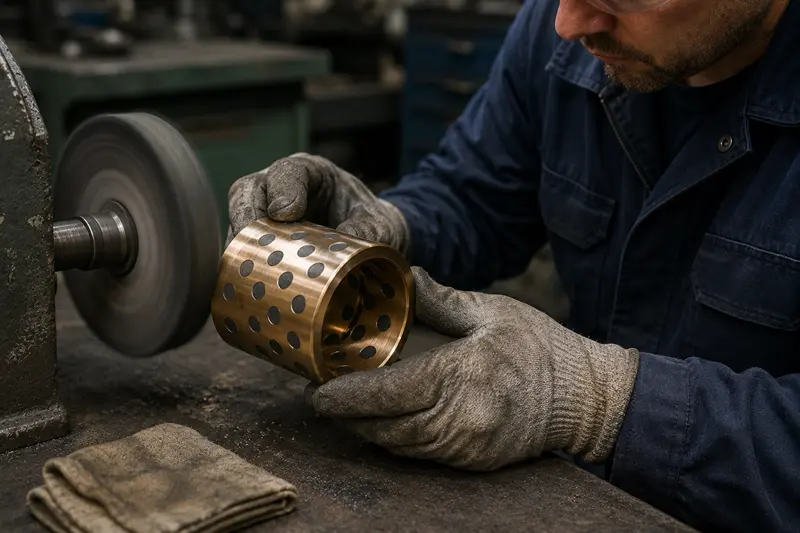
After the graphite plugs are inserted, the bushing's surface is no longer perfectly smooth. To fix this, we perform a final finishing pass. This step involves re-machining or polishing the entire bearing surface to make the bronze and graphite perfectly flush. This ensures there are no high spots that could scratch the shaft during the initial run-in period. It creates the ideal condition for the graphite to transfer to the shaft and form a solid lubricant film.[^5] Finally, every bushing goes through quality control.[^6] We inspect everything: dimensional accuracy, surface roughness, and the firmness of the graphite plugs. For heavy-duty projects, we also verify the material hardness and check the internal structure of the bronze to ensure there are no hidden defects. This guarantees that the part you receive performs exactly as designed.
Is a Graphite Plugged Bushing Always the Best Choice?
These bushings seem like a perfect maintenance-free solution for any tough spot. But using them in the wrong application is a waste of money and can even cause new problems.
No, a graphite plugged bushing is not always the best solution.[^7] It excels in low-speed, high-load, and hard-to-lubricate areas. For high-speed operations or applications with reliable grease lubrication, a standard bronze or bimetal bushing might be more effective and economical.
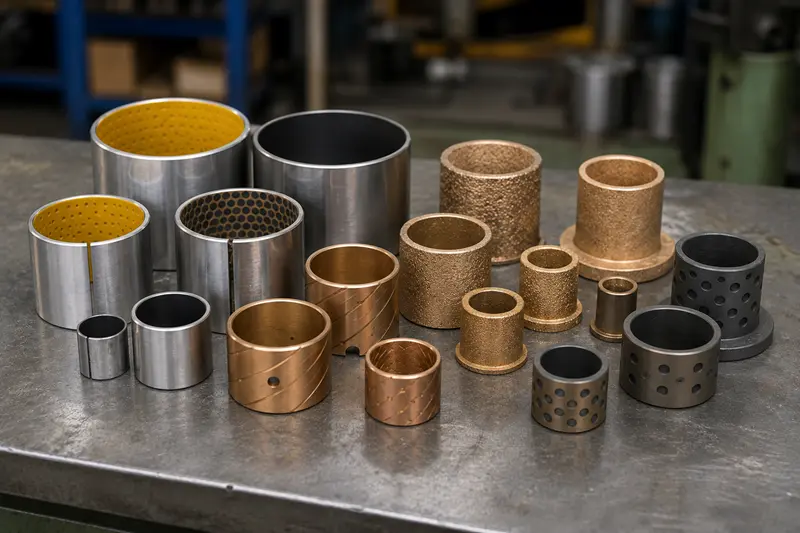
Graphite plugged bushings are specialist components.[^8] They are the ideal choice for applications where regular lubrication is difficult or impossible, like the pivot points on construction machinery, guide components in industrial molds, or underwater gates in hydroelectric projects. In these low-speed, high-load environments, the solid graphite provides reliable, long-lasting lubrication. However, they are not a universal fix. If your equipment runs at high continuous speeds, the graphite film may not form properly, leading to overheating and wear. If your machine already has a reliable grease or oil lubrication system, a simpler, more affordable standard bronze bushing might be all you need. The key takeaway for you as a buyer is to look beyond the name.[^9] Confirm that the bushing's material, graphite distribution, and manufacturing quality match your actual load, movement, and operating conditions.
Conclusion
A quality graphite plugged bushing relies on the right bronze, precise graphite placement, and expert machining—not just the simple presence of graphite.
[^1]: "Quality Graphite Plugged Bushings - Let Machine Running", https://bronzeoilless.com/services/graphite-plugged-bushings/. This source explains the detailed steps involved in manufacturing graphite plugged bushings, including material selection, machining, and finishing. Evidence role: mechanism; source type: education. Supports: The manufacturing of graphite plugged bushings involves a series of precise engineering steps.. [^2]: "Bronze - Wikipedia", https://en.wikipedia.org/wiki/Bronze. This source discusses the importance of bronze alloy selection in determining the mechanical properties of bushings. Evidence role: expert_consensus; source type: research. Supports: The bronze alloy determines the bushing's load capacity, impact resistance, and structural strength.. [^3]: "Exploring the Benefits: Bronze Bushings with Graphite Plugs", https://www.roccarbon.com/bronze-bushings/. This source explains how the placement of graphite plugs affects lubrication coverage and structural integrity in bushings. Evidence role: mechanism; source type: education. Supports: Graphite placement affects lubrication coverage and structural strength in bushings.. [^4]: "Graphite - Wikipedia", https://en.wikipedia.org/wiki/Graphite. This source discusses how graphite formulas are adjusted based on temperature, humidity, and chemical exposure. Evidence role: mechanism; source type: research. Supports: Graphite formulas are adjusted based on environmental factors like temperature and humidity.. [^5]: "Effect of Surface Finishing and Nitriding on the Wetting Properties of ...", https://pmc.ncbi.nlm.nih.gov/articles/PMC11721200/. This source explains how surface finishing facilitates the transfer of graphite to the shaft, forming a lubricant film. Evidence role: mechanism; source type: education. Supports: Surface finishing facilitates the transfer of graphite to the shaft, forming a lubricant film.. [^6]: "Influence of Machining Parameters on the Dimensional Accuracy of ...", https://pmc.ncbi.nlm.nih.gov/articles/PMC11174993/. This source outlines the quality control measures for bushings, including dimensional accuracy and material hardness checks. Evidence role: mechanism; source type: education. Supports: Quality control measures ensure dimensional accuracy and material hardness in bushings.. [^7]: "Exploring the Benefits: Bronze Bushings with Graphite Plugs", https://www.roccarbon.com/bronze-bushings/. This source discusses the limitations of graphite plugged bushings in high-speed or well-lubricated applications. Evidence role: expert_consensus; source type: research. Supports: Graphite plugged bushings are not suitable for high-speed or reliably lubricated applications.. [^8]: "Exploring the Benefits: Bronze Bushings with Graphite Plugs", https://www.roccarbon.com/bronze-bushings/. This source explains the specific applications where graphite plugged bushings are most effective, such as low-speed, high-load environments. Evidence role: case_reference; source type: education. Supports: Graphite plugged bushings are ideal for low-speed, high-load environments.. [^9]: "Sliding material and bushing type selection guides - SKF", https://www.skf.com/us/products/plain-bearings/bushings-thrust-washers-strips/principles/type-selection-guides. This source emphasizes the importance of matching bushing material and design to specific operating conditions. Evidence role: expert_consensus; source type: education. Supports: Buyers should match bushing material and design to specific operating conditions..