Are you buying sintered bronze bushings based on material alone? Many buyers do, but this overlooks the real secret to their performance and can lead to choosing the wrong part.
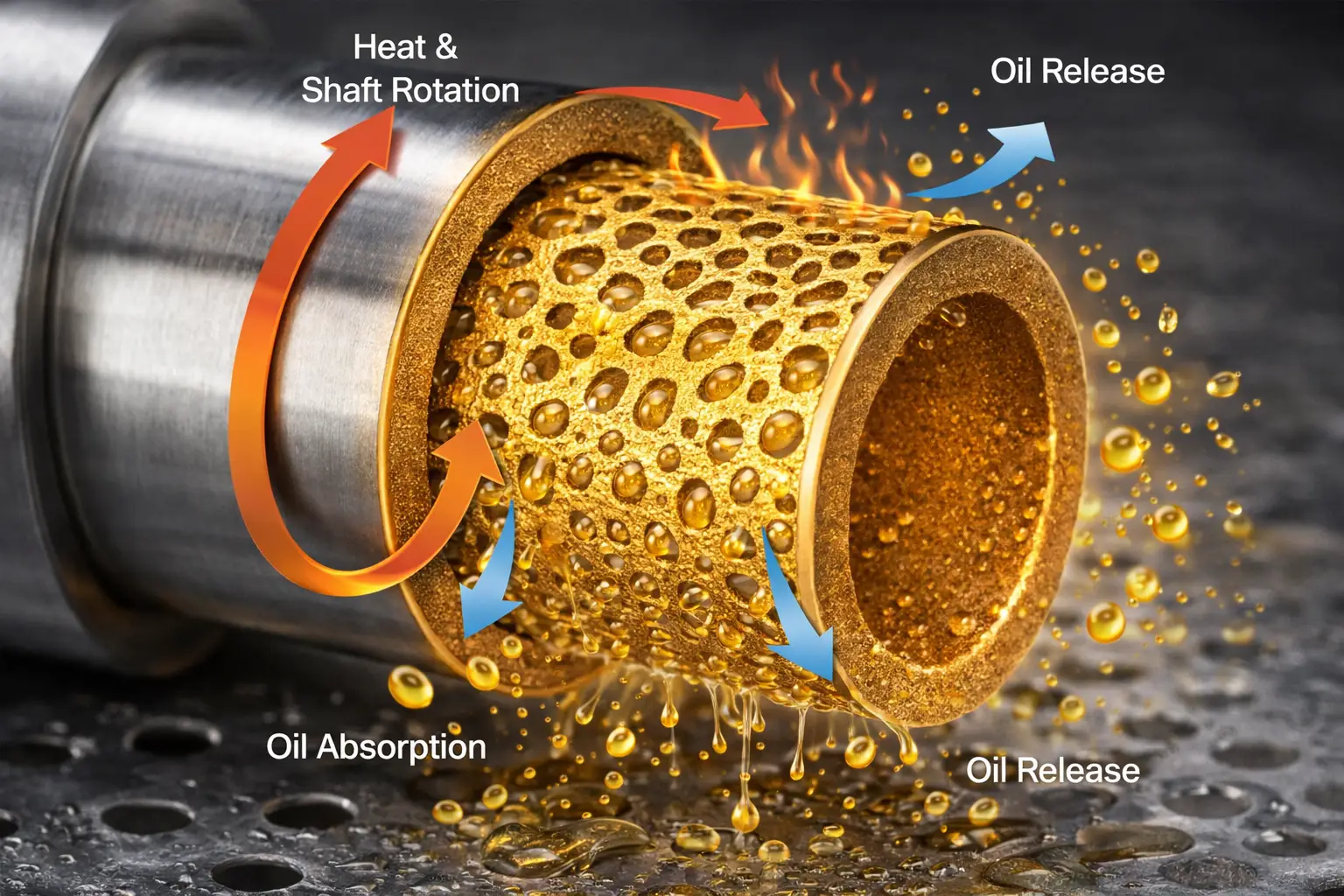
The sintered bronze process is a powder metallurgy method that creates a strong, porous bronze structure.[^1] These microscopic pores are then filled with oil, allowing the bushing to self-lubricate during operation. The process, not just the bronze, defines its unique capabilities.
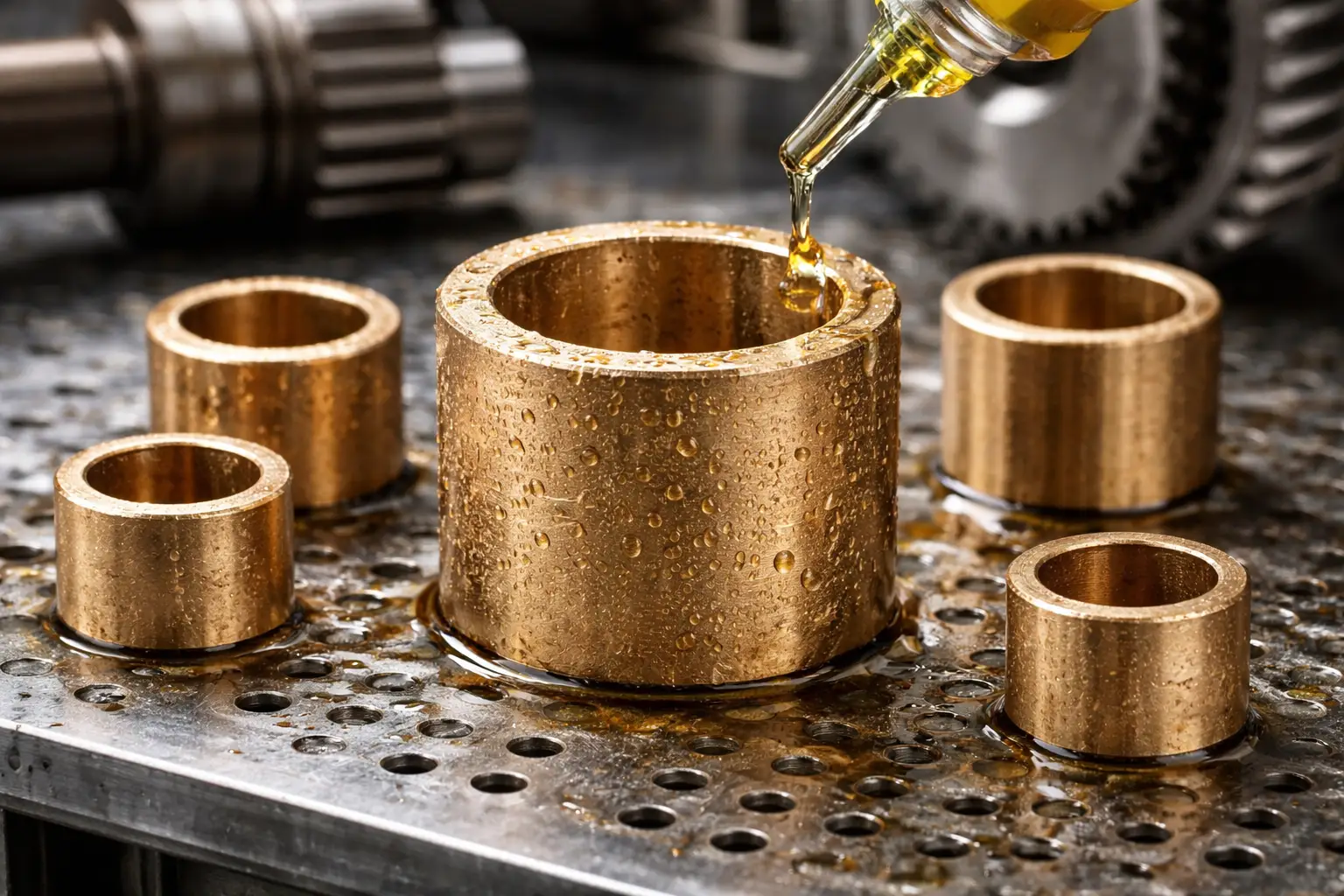
When we talk to buyers, a common point of confusion comes up. They look at a sintered bronze bushing and see a solid metal part. Then we tell them it lubricates itself. It sounds a bit like magic, but it’s actually a very precise manufacturing technology. Understanding this process is the first step to knowing if this bushing is the right fit for your equipment. So, let’s break down exactly how we turn simple metal powder into a sophisticated, self-lubricating component.
How does powder metallurgy create a self-lubricating bushing?
You see a solid-looking bushing but are told it lubricates itself. It seems confusing, making it hard to trust its reliability without understanding how it's made.
Powder metallurgy fuses metal powder under heat, well below its melting point.[^2] This creates a strong part with a network of tiny, interconnected pores. We then fill these pores with lubricating oil, which is released during operation to achieve self-lubrication.
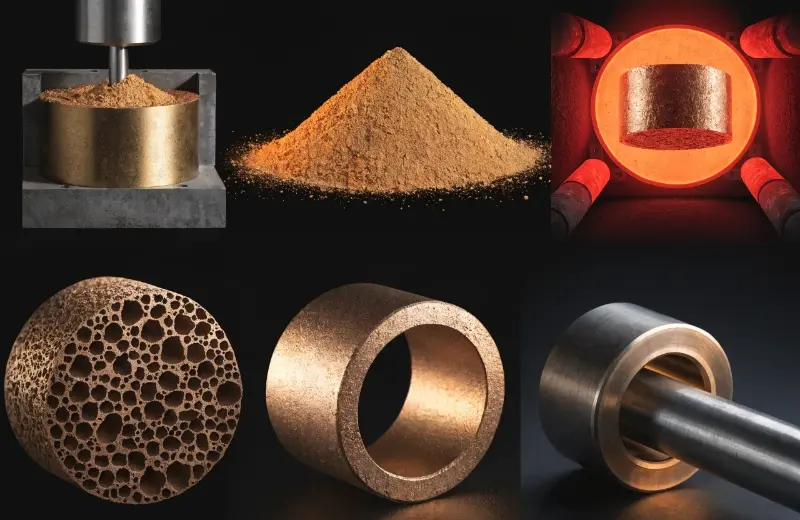
From our factory floor, the creation of a sintered bronze bushing is a carefully controlled, multi-step process. It's not about melting and casting bronze; it's about building a specific structure from the ground up. Each step is critical to achieving the final self-lubricating properties. As a manufacturer, we see the value not in just making a bronze part, but in creating this intelligent micro-structure. Here is a breakdown of how it works:
- Metal Powder Preparation: Everything starts with the raw material—a specific blend of copper and tin powders, along with other elements. The size and shape of these powder particles are crucial. They directly influence the porosity and final strength of the bushing. We select the powder mix based on the performance requirements of the final application.
- Powder Compaction: We load the precisely measured metal powder into a die. A high-pressure press then compacts the powder into the shape of the bushing. This initial part is called a "green compact." It's solid enough to be handled but hasn't yet developed its final strength or porous structure.
- Sintering: The green compacts are moved into a furnace with a controlled, protective atmosphere. They are heated to a high temperature, but one that is still below the melting point of the bronze alloy. At this temperature, the metal particles bond and fuse together, a process called sintering. This is where the strong, permanent porous structure is formed.
- Sizing and Calibration: After sintering, the bushing might have slight dimensional changes. We run it through a sizing or calibration die to ensure the inner diameter, outer diameter, and concentricity meet strict tolerance requirements for a perfect fit.
- Oil Impregnation: This is the final, vital step. We place the bushings in a vacuum chamber, which removes all the air from the pores. Then, we introduce lubricating oil, and the vacuum pulls the oil deep into the porous network. This ensures the bushing is fully saturated and ready to self-lubricate.
| Process Step | Purpose |
|---|---|
| 1. Powder Preparation | Define the final material properties and porosity. |
| 2. Compaction | Form the initial shape of the bushing ("green compact"). |
| 3. Sintering | Fuse powder particles to create a strong, porous structure. |
| 4. Sizing | Ensure precise dimensions and tight tolerances. |
| 5. Oil Impregnation | Fill the pores with lubricant for self-lubricating capability. |
This entire process is designed to create one thing: a part that can hold its own oil supply and release it reliably over its service life.
When should you choose sintered bronze bushings over other types?
Sintered bronze bushings seem versatile and low-cost. But choosing them for the wrong application, like heavy machinery, often leads to premature failure and expensive downtime for your projects.
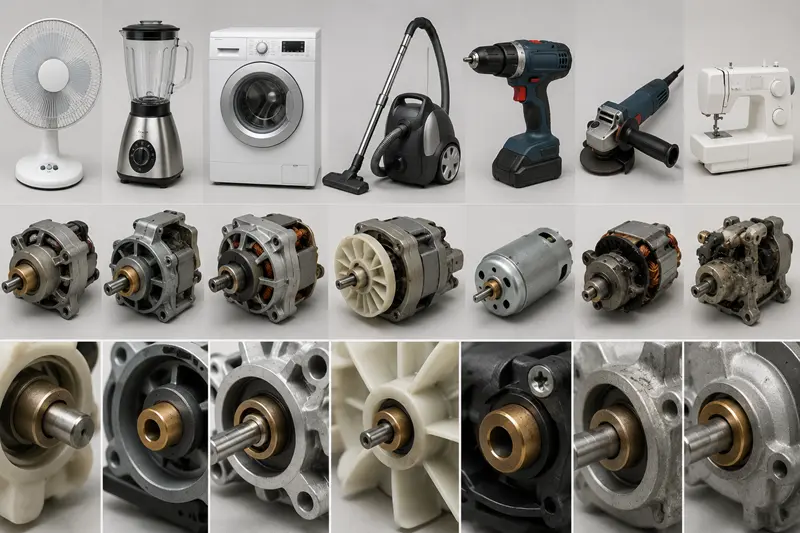
Choose sintered bronze bushings for medium-to-low load applications that require long-term, maintenance-free operation. They are perfect for small motors, fans, home appliances, and office equipment where consistent, quiet self-lubrication is a key benefit.
A common mistake we see buyers make is assuming that because a bushing is made of bronze, it can handle any high-load or high-impact situation. This is not true for sintered bronze bushings. Their strength comes from their self-lubricating ability, not their brute force load capacity.[^3] Their porous structure, which is so good at holding oil, makes them less suitable for the extreme pressures found in heavy construction or agricultural machinery. For those applications, a solid bronze, bi-metal, or graphite-plugged bushing is a much better choice.[^4]
So, where do sintered bronze bushings shine? They are the ideal solution for equipment that needs to run smoothly and quietly for a long time without anyone having to grease it. Think about the small electric motors in your car's power windows, the fans in your computer, or the moving parts inside a printer. These applications typically have moderate loads and relatively high speeds. The bushing's ability to release a thin film of oil as it heats up from friction is exactly what's needed.[^5] It reduces noise, minimizes wear, and ensures a long, maintenance-free life. This makes them extremely cost-effective for mass-produced goods.[^6]
Here is a simple comparison to help you decide:
| Bushing Type | Best For | Not Good For |
|---|---|---|
| Sintered Bronze | Medium/low load, high speed, maintenance-free | Heavy loads, strong impacts, extreme dirt |
| Solid Bronze | High load, low speed, requires regular lubrication | High speed, maintenance-free applications |
| Bi-Metal | High load, good fatigue resistance, boundary lubrication | Applications where lubrication is impossible |
| Graphite-Plugged | High load, high temperature, dry running | High-speed applications |
As a factory, our goal is to match your need with the right product. If you need a reliable, cost-effective bushing for a long-running, medium-load device, sintered bronze is an excellent choice.
Conclusion
The sintered bronze process creates a unique, porous structure for self-lubrication.[^7] This makes these bushings perfect for long-term, maintenance-free use in medium-load equipment but unsuitable for heavy-duty applications.
[^1]: "Sintering Metal Process - YouTube", https://www.youtube.com/watch?v=z5327SSM6G0. This source explains the powder metallurgy process used to create sintered bronze bushings, including the formation of porous structures. Evidence role: mechanism; source type: education. Supports: The sintered bronze process creates a strong, porous bronze structure through powder metallurgy.. [^2]: "Sintering - Wikipedia", https://en.wikipedia.org/wiki/Sintering. This source describes the powder metallurgy process, including the fusion of metal powder below its melting point. Evidence role: mechanism; source type: education. Supports: Powder metallurgy fuses metal powder under heat, well below its melting point.. [^3]: "Sintered Bronze Material - Products, Properties, & Specifications", https://www.atlasbronze.com/841-sintered-bronze-product-sheet-s/1960.htm. This source explains the self-lubricating properties of sintered bronze bushings and their limitations in high-load applications. Evidence role: mechanism; source type: research. Supports: The strength of sintered bronze bushings is derived from their self-lubricating properties rather than their load capacity.. Scope note: The explanation may not cover all types of sintered bronze bushings. [^4]: "Bushings vs. Bearings: Key Factors to Consider - PIB Sales", https://pibsales.com/bearings/bushings-vs-bearings-key-factors-to-consider/?srsltid=AfmBOoqJ2q4kfFYrdEa_dGO7pmRhK05qeGf26FhqVvBX5mxwkHEH_6gM. This source compares the suitability of solid bronze, bi-metal, and graphite-plugged bushings for high-load applications. Evidence role: expert_consensus; source type: institution. Supports: Solid bronze, bi-metal, and graphite-plugged bushings are better suited for high-load applications than sintered bronze bushings.. Scope note: The comparison may not account for all operational variables. [^5]: "What are oil impregnated bronze bushings...", https://www.nationalbronze.com/News/what-are-oil-impregnated-bronze-bushings/. This source discusses the mechanism by which sintered bronze bushings release oil during operation. Evidence role: mechanism; source type: research. Supports: Sintered bronze bushings release a thin film of oil as they heat up from friction during operation.. Scope note: The mechanism may vary slightly depending on the type of lubricating oil used. [^6]: "Sintered Bronze Bushing | Viiplus.com", https://www.viiplus.com/sintered-bushing/. This source evaluates the cost-effectiveness of sintered bronze bushings in mass production scenarios. Evidence role: statistic; source type: institution. Supports: Sintered bronze bushings are cost-effective for mass-produced goods.. Scope note: Cost-effectiveness may depend on specific production scales and market conditions. [^7]: "Porous Bronze FAQ, Sintering & Applications, Part 3 | ISM", https://www.industrialspec.com/about-us/blog/detail/sintered-porous-bronze-fuel-filters-part-3?srsltid=AfmBOoox10KZHreVUhXyflcPQ-zztBdcdvBQOlE8RzXXnA9x5a44X5Kz. This source describes how the sintered bronze process creates a porous structure for self-lubrication. Evidence role: mechanism; source type: education. Supports: The sintered bronze process creates a unique, porous structure for self-lubrication.. Scope note: The description may not cover all variations of the sintered bronze process.