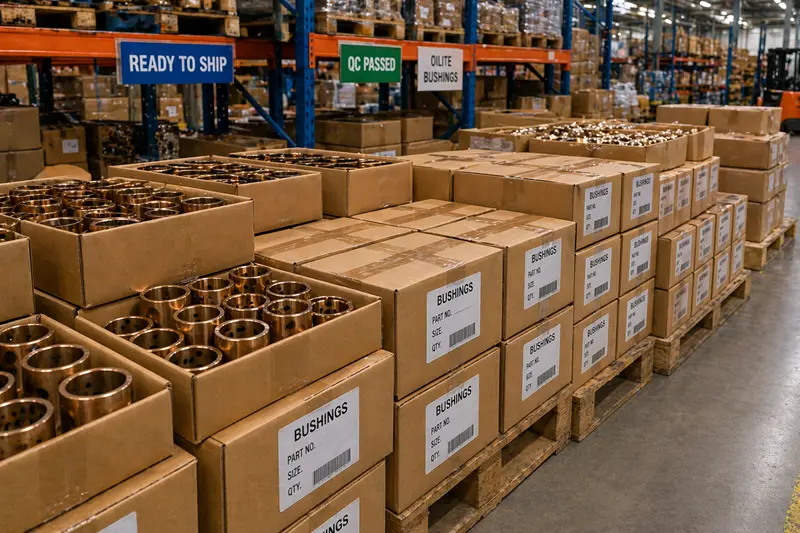
Struggling to choose between a factory and a trading company for bushings? The wrong choice can cause major headaches. Let's clarify which is best for your specific needs.
For custom or high-spec OEM projects, a factory offers direct engineering support and better quality control. For sourcing multiple standard part types, a trading company can simplify logistics. Your project's technical needs, not just price, should guide your decision.
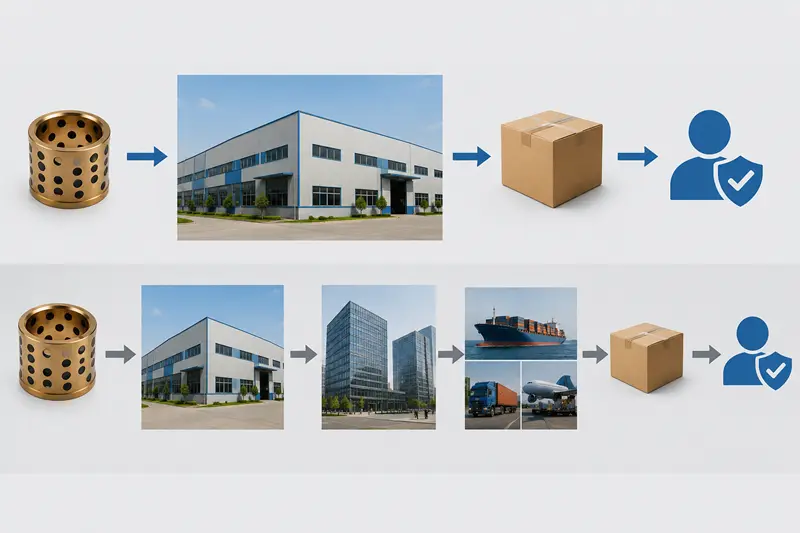
So, the choice seems simple on the surface. But my experience in OEM projects shows that the real differences are much deeper. Many buyers make a critical mistake by focusing on the wrong things. Let's break down when a factory is the clear winner, and why it's not always about the price tag.
When is a Factory the Best Choice for Bushings?
Your project has unique technical needs for bushings. Miscommunication through a middleman can lead to disaster. Direct factory collaboration ensures your specifications are met perfectly.[^1]
Choose a factory when your project involves custom dimensions, material selection, or specific tolerance requirements. Direct access to engineers is vital for troubleshooting issues like premature wear or noise, making factories ideal for complex OEM applications and ensuring long-term quality control.
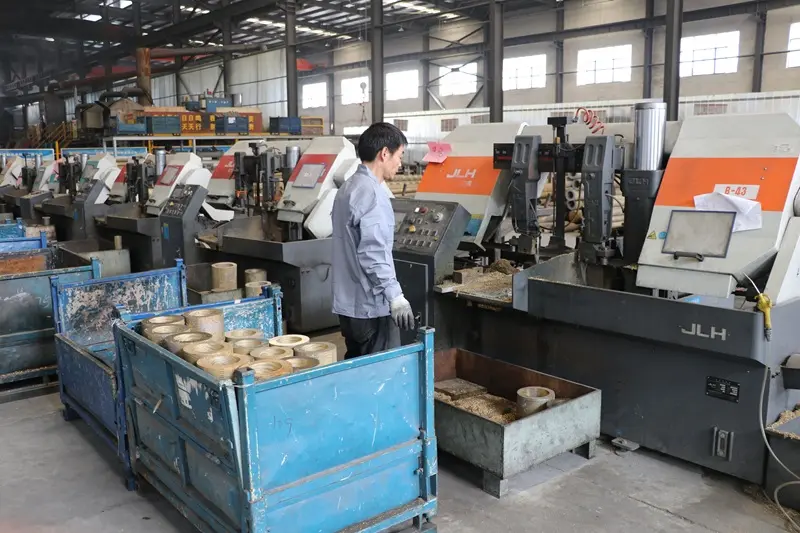
From my experience with OEM projects, the factory's biggest advantage isn't always price; it's control and direct technical communication. When a problem happens in the field, you need to talk to the people who made the part, not a sales agent. I remember a client who made construction equipment. They were experiencing severe shaft scoring with their bronze bushings. The trading company they used before could only offer a refund. When they came to us, our engineers got the failed parts. We analyzed the wear patterns and the material composition. We found the issue was not the bushing quality, but the material choice. The application had high intermittent loads and dust exposure. We recommended a switch to a metal-composite bushing with a PTFE layer.[^2] This direct feedback loop is what solves real-world engineering problems. For any serious OEM project, this level of partnership is non-negotiable. You are not just buying a part; you are ensuring the reliability of your final product.
Key Factory Advantages for Technical Projects
| Technical Challenge | Factory Advantage | Trading Company Limitation |
|---|---|---|
| Material Selection | Direct advice from engineers on the best alloy or composite for the specific load, speed, and environment.[^3] | Limited technical depth. They often just offer standard options from a catalog without understanding the application. |
| Custom Dimensions | We can adjust tooling and CNC programs to produce non-standard parts with tight tolerances. | Relies on their factory partner's willingness to customize, which may not be possible for small runs. |
| Failure Analysis | We have an in-house process to analyze wear, noise, or material failure and provide a corrective action plan.[^4] | Acts as a message-passer. This slows down problem-solving and details can be lost in translation. |
| Quality Control | We manage the entire process, from inspecting raw materials to final dimensional checks on every batch. | Depends entirely on the quality system of the factory they happen to source from for that order.[^5] There is less consistency. |
Why Would You Use a Trading Company for Bushings?
You need bushings, bearings, seals, and other parts. Managing multiple factory orders is a huge headache.[^6] A trading company can simplify this by acting as your single procurement point.
A trading company excels at supply chain consolidation.[^7] Use them when your order includes multiple product categories like bronze bushings, bearings, and seals. They simplify procurement and logistics, which is especially helpful for smaller, diverse orders where convenience outweighs the need for deep technical support.
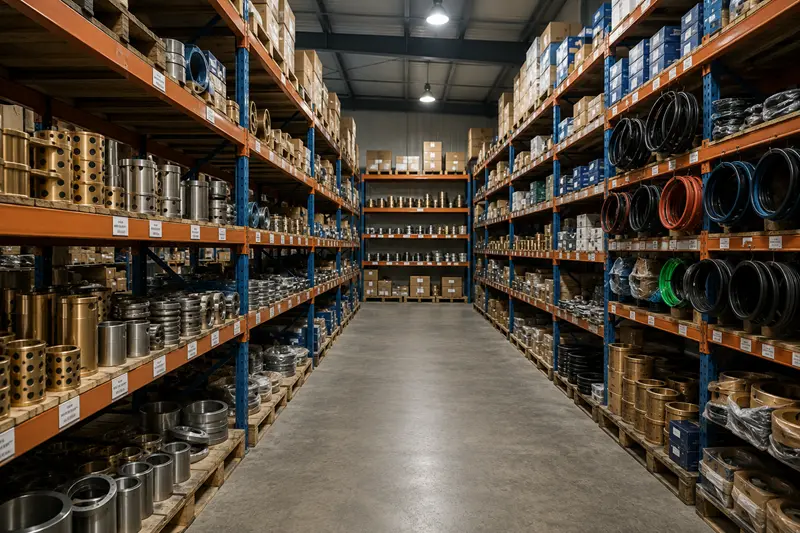
The real value of a good trading company is its network and logistical expertise. They are project managers for procurement. Imagine your purchasing department needs to source parts for a new assembly. Your bill of materials is long. You need a few hundred bronze bushings, some sintered bearings for a motor, a handful of polymer bushings, plus standard bearings, oil seals, and fasteners. As a factory, we specialize in bushings. We don't make seals or fasteners. So, you would have to find, vet, and manage separate suppliers for each of those items. That means multiple purchase orders, multiple payments, and multiple shipments to coordinate. A trading company solves this problem. They do the legwork of sourcing everything, consolidate it into one shipment, and give you one invoice. For a purchasing manager like Sofia, who is responsible for sourcing hundreds of different SKUs for her company in the Middle East, this is a massive value. She trades deep technical support on one item for broad logistical support across many items. For standard, off-the-shelf components, this is often a very smart and efficient way to buy.
Sourcing Scenarios Suited for a Trading Company
- Multi-Product Procurement: When your bill of materials is diverse and includes items beyond just one specialty.
- Bronze Bushings
- Sintered Bushings
- Graphite Plugged Bushings
- Ball Bearings
- Oil Seals
- Machined Parts
- Small to Medium Volume Orders: When your required quantity for a specific part does not meet the high minimum order quantity (MOQ) of a large factory.
- Standard Components: When you are ordering common, off-the-shelf parts with standard specifications and no customization is needed.
What's More Important Than Price When Choosing a Bushing Supplier?
Tempted by a low unit price for your bushings? Be careful. Hidden costs from poor quality and production delays can be devastating.[^8] Let's look at what truly determines project success.
Focus on a supplier's problem-solving ability, not just their price. Evaluate their understanding of your application, their quality control systems, and their engineering support.[^9] The ability to diagnose and fix issues like wear or failure is far more valuable than a small saving on the initial invoice.

As a manufacturer, I see buyers make this mistake every single day. They get two quotes, and one is 10% cheaper. They choose the cheaper one without asking why it's cheaper. This is a huge risk. The real cost of a bad bushing is not its purchase price. The real cost is your assembly line stopping for hours because a batch of bushings has an out-of-spec outer diameter. The real cost is your brand's reputation damage when your product fails in the field after six months because the material was wrong. The real cost is a delayed product launch because your supplier couldn't deliver on time. These hidden costs are massive compared to the few cents you saved per part. Instead of asking "Are you a factory or a trading company?", you need to ask better questions. "What is your process for quality control?", "How do you ensure batch-to-batch consistency?", "If a part fails, can I speak directly to an engineer who can help me?". The supplier who can answer these questions with confidence is your true partner. Their ability to prevent and solve problems is where the real value is.
Key Supplier Evaluation Checklist
| Evaluation Area | Key Question to Ask | Why It Matters |
|---|---|---|
| Application Understanding | Can you explain why this material is right for my load, speed, and environment?[^10] | This shows if they are just selling a part or providing an engineered solution. It prevents future failures. |
| Quality System | How do you ensure dimensional consistency from the first part to the 10,000th part? | Inconsistent parts cause assembly problems and downtime.[^11] You need a supplier with robust process control. |
| Technical Support | What is your process for analyzing a failed part from the field? Who will I talk to? | When problems happen, you need fast, expert support, not a game of telephone through a middleman. |
| Production Capability | Can you handle my volume needs and provide a stable, long-term supply chain? | This ensures they can grow with you and won't cause production bottlenecks as your demand increases. |
Conclusion
Ultimately, don't choose a supplier based on their label. Choose a partner based on their ability to solve your technical problems and deliver consistent quality for your specific application.
[^1]: "Why Engineering Collaboration Benefits Both Parties", https://www.excelco.net/manufacturing-engineering/collaboration-starts-early-good-things-happen/. This source explains how direct collaboration with manufacturers can improve adherence to technical specifications in engineering projects. Evidence role: mechanism; source type: education. Supports: Direct factory collaboration ensures your specifications are met perfectly.. [^2]: "PTFE Bushings Alternatives - PTFE-Lined, Metal-Backed - viiplus", https://www.viiplus.com/ptfe-bushings-alternatives/. This source provides information on the advantages of metal-composite bushings with PTFE layers in high-load and dusty environments. Evidence role: mechanism; source type: research. Supports: We recommended a switch to a metal-composite bushing with a PTFE layer.. Scope note: The source may not directly reference the specific case described but supports the general application of PTFE-layered bushings. [^3]: "24-651 Material Selection for Mechanical Engineers", https://www.meche.engineering.cmu.edu/education/courses/24-651.html. This source outlines how engineering expertise can guide material selection based on load, speed, and environmental factors. Evidence role: mechanism; source type: education. Supports: Direct advice from engineers on the best alloy or composite for the specific load, speed, and environment.. [^4]: "Key Topic: Developing a Corrective Action Plan", https://www.dol.gov/agencies/ilab/sourcingstrong/steps-to-a-social-compliance-system/step-6-remediate-violations/key-topic-developing-a-corrective-action-plan. This source explains the benefits of in-house failure analysis processes in identifying and resolving issues in mechanical components. Evidence role: mechanism; source type: research. Supports: We have an in-house process to analyze wear, noise, or material failure and provide a corrective action plan.. [^5]: "Octave Reliance Quality Events", https://www.octave.com/products/asset-performance-management/reliance/quality-events. This source discusses how trading companies rely on the quality systems of their partner factories, which can lead to inconsistencies. Evidence role: mechanism; source type: research. Supports: Depends entirely on the quality system of the factory they happen to source from for that order.. Scope note: The source may not address trading companies specifically but supports the general concept of dependency on external quality systems. [^6]: "What are the operational challenges of managing custom orders in e ...", https://twikit.com/what-are-the-operational-challenges-of-managing-custom-orders-in-e-commerce/. This source discusses the challenges of managing multiple factory orders in procurement processes. Evidence role: general_support; source type: education. Supports: Managing multiple factory orders is a huge headache.. [^7]: "Strategic Spot Trading Benefits Supply Chains", https://www.gsb.stanford.edu/insights/strategic-spot-trading-benefits-supply-chains. This source explains how trading companies simplify procurement by consolidating supply chains for diverse product categories. Evidence role: mechanism; source type: education. Supports: A trading company excels at supply chain consolidation.. [^8]: "[PDF] Assessing the Costs Attributed to Project Delays", https://library.ctr.utexas.edu/hostedpdfs/tti/project-delay-summary.pdf. This source highlights the impact of hidden costs such as quality issues and production delays on overall project expenses. Evidence role: statistic; source type: research. Supports: Hidden costs from poor quality and production delays can be devastating.. [^9]: "Supplier evaluation and assessment: The what, how, and why - Ignite", https://www.ignite.no/blog/supplier-evaluation-and-assessment-the-what-how-and-why. This source outlines key criteria for evaluating suppliers, including application understanding, quality control, and engineering support. Evidence role: expert_consensus; source type: education. Supports: Evaluate their understanding of your application, their quality control systems, and their engineering support.. [^10]: "The Importance of Material Selection in Mechanical Engineering", https://www.agt-tech.co.il/blog-posts/the-importance-of-material-selection-in-mechanical-engineering-ensuring-optimal-performance-and-longevity. This source discusses the importance of material selection based on load, speed, and environmental factors in engineering applications. Evidence role: definition; source type: education. Supports: Can you explain why this material is right for my load, speed, and environment?. [^11]: "Inconsistent Component Variation. Bad for Assembly & Product Quality", https://www.agiliantech.com/blog/why-inconsistent-component-variation-is-bad-for-assembly-product-quality/. This source explains how inconsistent parts can lead to assembly issues and production downtime in manufacturing. Evidence role: mechanism; source type: research. Supports: Inconsistent parts cause assembly problems and downtime..