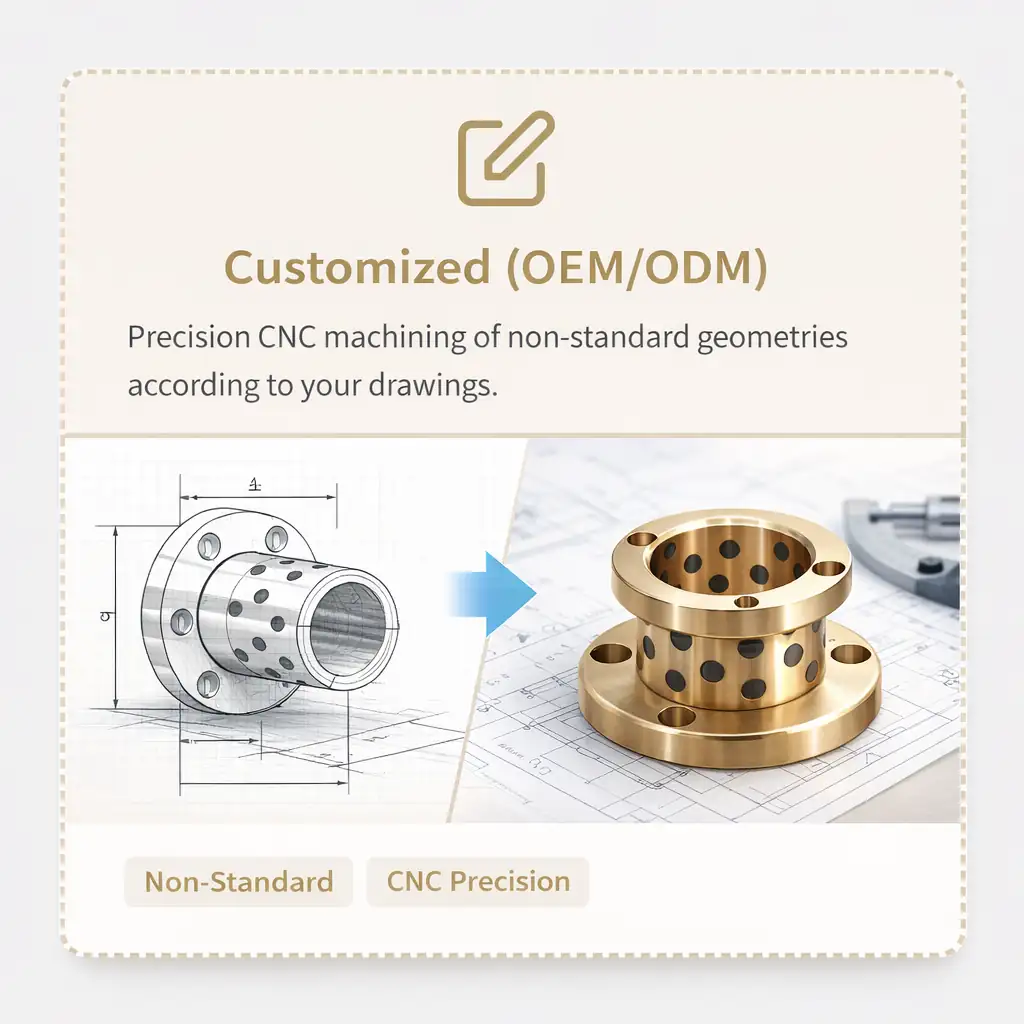
Struggling to get an accurate quote for your custom bushings? Vague requests often lead to guesswork and project delays. Providing the right details upfront ensures a precise and reliable solution.
To get an accurate custom bushing quote, provide more than just basic dimensions. Include application details, working environment, shaft specifications, annual quantity, and expected service life. This complete picture allows a manufacturer to recommend the right material and provide a truly reliable price and product.
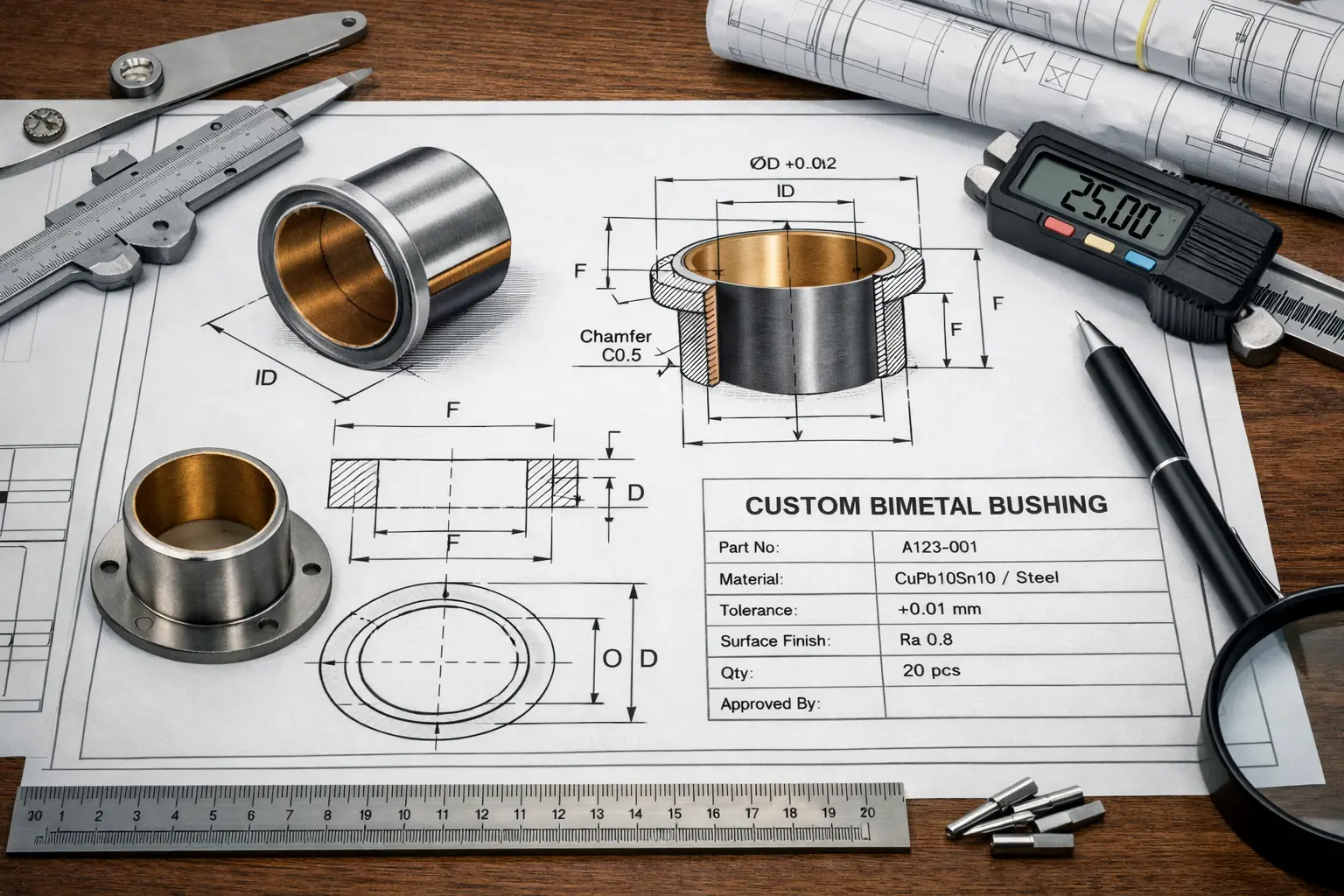
I've been in the bushing manufacturing business for a long time, and I see a common pattern. A buyer sends an email that just says, "Please quote this bushing," with a simple drawing attached. While we can give a price based on that, it's often not the price for the right bushing. To prevent future problems like premature wear or failure, we need to dig a little deeper. Let's walk through what a factory like ours really needs to know.
Are Basic Dimensions Enough for a Quote?
You have a drawing with all the key dimensions ready to go. But when you get a quote back, it feels uncertain, leaving you worried if it's the right part.
Basic dimensions like Inner Diameter (ID), Outer Diameter (OD), and Length are the essential first step.[^1] They determine material usage and initial processing costs. However, for a reliable engineering part, this information alone is not enough to guarantee performance or provide an accurate, final price.
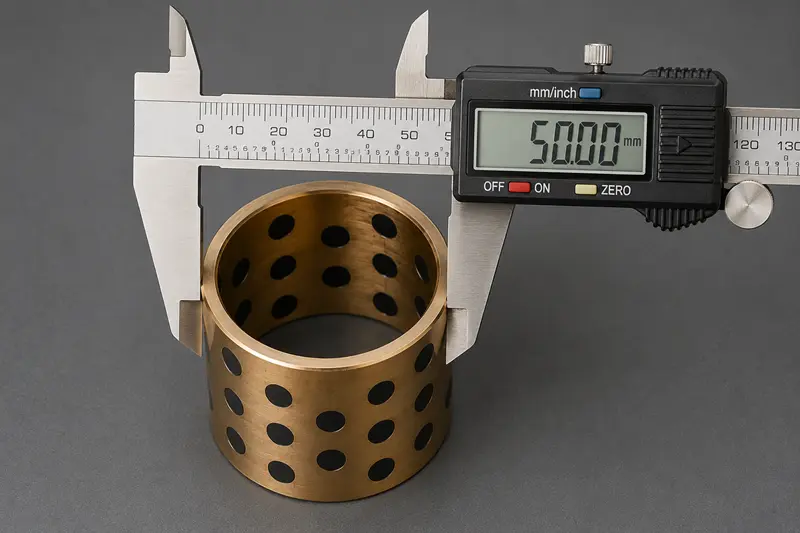
When we receive an inquiry for a custom bushing, the first thing we look at are the core dimensions. These numbers define the physical shape of the part and are the foundation of any quote.
- Inner Diameter (ID): This defines the fit with the shaft.
- Outer Diameter (OD): This defines the fit within the housing.
- Length: This determines the surface area for load distribution.
- Flange Dimensions: If it's a flanged bushing, we need the flange OD and thickness.
- Tolerances: Your required precision for these dimensions is critical.
From a manufacturing standpoint, these details tell us how much raw material is needed and which machines to use. For example, a part with very tight tolerances requires more precise CNC machining, which affects the cost. The table below shows how these basics translate into production planning.
| Dimension | Factory Consideration | Impact on Cost |
|---|---|---|
| ID, OD, Length | Raw material volume, material utilization | High |
| Flange | Additional forming or machining step | Medium |
| Tolerances | Machining process (e.g., standard vs. precision CNC) | Medium to High |
But here's the key: these dimensions only tell us what to make, not how it needs to perform. A bushing for an office chair and one for a bulldozer arm might share the same dimensions, but their functional requirements are worlds apart. That's why this is just the beginning.
Why Is Application Information So Important?
You selected a bushing based on its size and an attractive price. But soon after installation, it failed, causing unexpected downtime and costly repairs for your equipment.
Application information, such as the type of equipment, load conditions, and operating speed, is critical.[^2] It dictates the material selection and design features needed for the bushing to survive and perform well. A bushing for a high-load excavator needs a different solution than one for a high-speed motor.[^3]
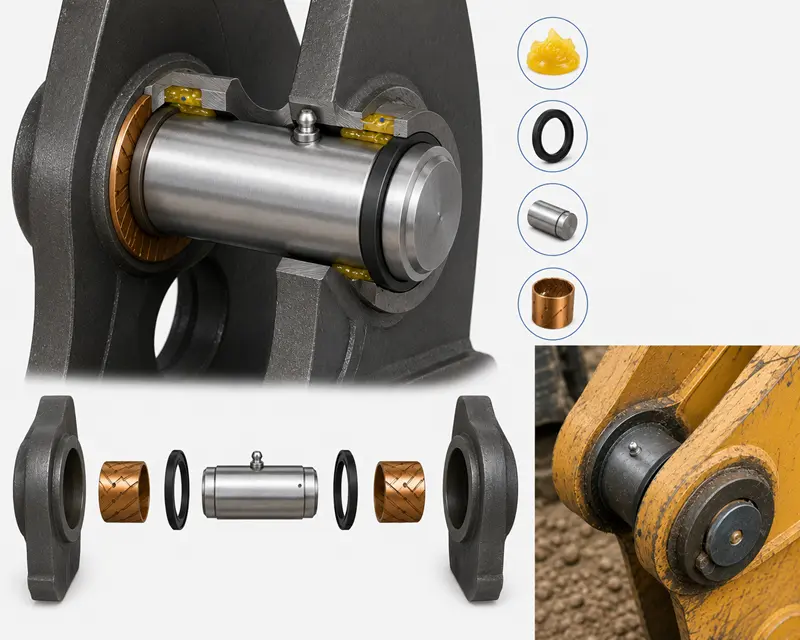
This is where many projects go wrong. A buyer picks a material based on price, not performance. To avoid this, we always ask about the application. Knowing where and how the bushing will be used is just as important as knowing its size. We need to understand the forces at play.
Here are the key questions we ask:
- What type of equipment is it? (e.g., conveyor, pump, construction machinery)
- What kind of motion is involved? (e.g., rotating, oscillating, linear)
- What is the load? (The force applied to the bushing, measured in MPa or psi)
- What is the speed? (The surface speed of the shaft, measured in m/s)
Think about it: a bushing in a crane pivot sees massive loads but moves very slowly. A bushing in a small electric motor sees very light loads but spins incredibly fast. These two scenarios require completely different materials.
| Application Factor | Why It Matters | Example Material Choice |
|---|---|---|
| High Load, Low Speed | Needs high strength and wear resistance | Graphite-plugged bronze bushing |
| Low Load, High Speed | Needs low friction to manage heat | PTFE-lined composite bushing |
| Oscillating Motion | Prone to lubrication breakdown | Metal-polymer bushing with indents |
Providing this context helps us move from being just an order-taker to a true manufacturing partner. It allows us to recommend a material that is engineered to succeed in your specific application, preventing costly failures down the line.
How Does the Shaft Affect the Bushing's Performance?
You've installed a new custom bushing that was made perfectly to your drawing. Yet, it wears out surprisingly fast, and you can't figure out why the brand-new part failed.
The shaft's properties—its diameter, material, hardness, and surface finish—are just as important as the bushing.[^4] The bushing and shaft work as a system. A mismatch, like a rough shaft surface, can dramatically reduce the bushing's lifespan, even if the bushing itself is flawless.
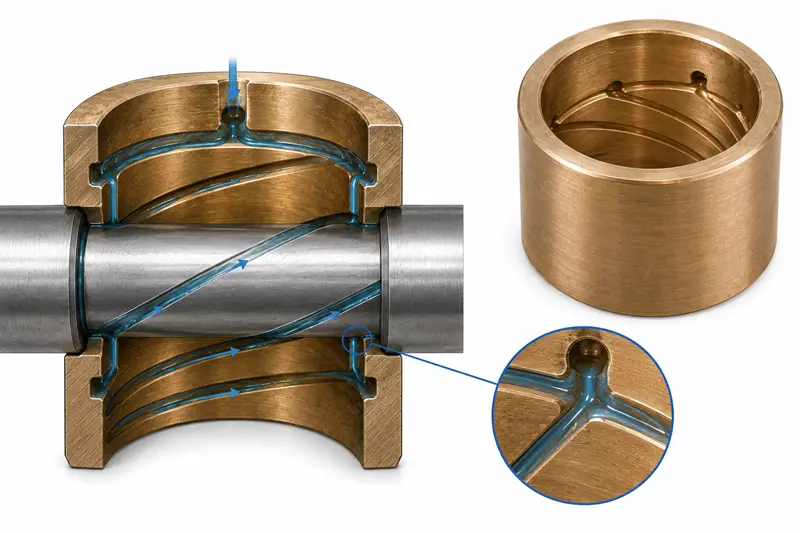
Many inquiries I receive only include a drawing of the bushing. But a bushing never works alone; it always works with a shaft. The condition of that shaft has a massive impact on the performance and life of the bushing. I've seen countless cases where a customer reports premature failure, and the root cause wasn't the bushing at all—it was the shaft.
To ensure success, we need to know about the mating shaft:
- Shaft Material: Is it standard steel, hardened steel, or stainless steel?
- Shaft Hardness: A soft shaft will wear down, while a very hard shaft puts more demand on the bushing.
- Surface Finish (Ra): This is one of the most critical and overlooked factors. A rough shaft surface will act like sandpaper, quickly grinding away the bushing material, especially soft, self-lubricating layers like PTFE.
For example, a metal-polymer composite bushing performs best when paired with a hardened shaft that has a very smooth surface finish (typically Ra < 0.4 μm). If you install that same bushing on a rough, unhardened shaft, its life could be cut by 90%.
| Shaft Condition | Mating Bushing | Expected Outcome |
|---|---|---|
| Hardened, smooth shaft | PTFE Composite Bushing | Long service life, low friction |
| Soft, rough shaft | PTFE Composite Bushing | Rapid wear of the PTFE layer, early failure |
| Hardened, smooth shaft | Bronze Bushing | Good performance with lubrication |
Providing shaft details allows us to verify that the entire system is set up for success, not just one component.
What Role Does the Working Environment Play?
Your equipment operates in a tough environment—it's dusty, wet, or exposed to extreme temperatures. Standard bushings keep failing, leading to constant maintenance and downtime.
The working environment—including temperature, dust, moisture, and chemicals—directly influences the material choice.[^5] A material that works well in a clean factory might quickly fail in a wet, corrosive outdoor application. Specifying the environment is essential for long-term reliability.
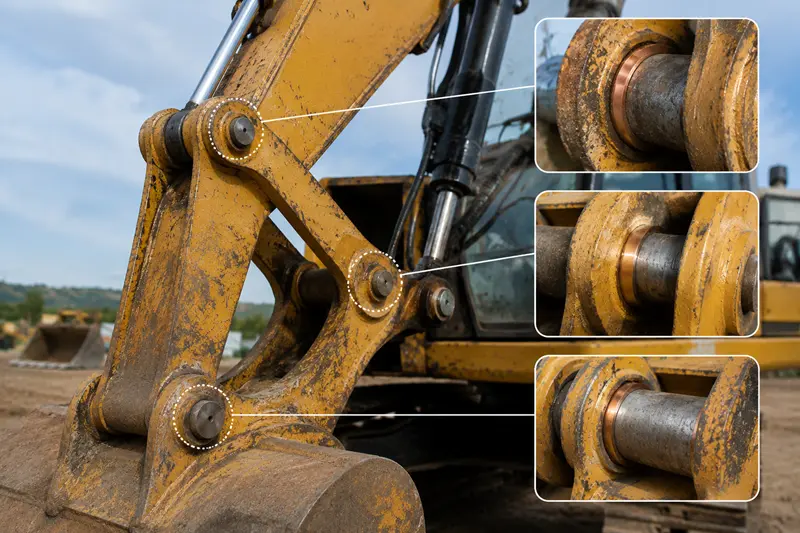
A bushing that performs perfectly in a clean, temperature-controlled warehouse could fail in a matter of weeks on a farm or at a port. The environment is a silent killer of bearing components if not accounted for during the design phase. That's why we always ask about the conditions the bushing will face.
Key environmental factors include:
- Temperature: Extreme heat can melt plastic liners, while extreme cold can make materials brittle.[^6]
- Moisture or Water: Water can cause corrosion on standard steel-backed bushings.
- Dust and Debris: Abrasive particles can get into the bearing clearance and grind away the shaft and bushing.
- Chemicals or Corrosive Agents: Exposure to certain chemicals requires specialized, resistant materials.
For instance, if you tell us the bushing will be used in a food processing plant and subject to frequent washdowns, we immediately know a standard steel-backed part is a bad idea due to rust. We would instead recommend a solution with a stainless steel or bronze back. If it's for mining equipment in a dusty quarry, we might suggest a sealed bushing or one with graphite plugs that can operate without grease.
| Environment | Problem | Recommended Solution |
|---|---|---|
| High Temperature (>150°C) | Plastic liners can melt or degrade | All-metal bronze or bimetal bushings |
| Wet / Humid | Steel backing can rust | Stainless steel-backed or solid bronze bushings |
| Dusty / Abrasive | Debris causes rapid wear | Sealed bushings or graphite-plugged bronze |
| Chemical Exposure | Material degradation and corrosion | Specialized polymer or stainless steel bushings |
Don't let the environment be an afterthought. Telling us about it upfront helps us select a material that is built to survive.
How Does Annual Quantity Change the Production Plan?
You need a custom bushing, but you're not sure about the total quantity for the year. The price for a small test batch seems high, and you wonder if it gets better.
Your estimated annual quantity is crucial because it determines the most cost-effective manufacturing process.[^7] A small run of 100 pieces might be machined, while a run of 100,000 would justify custom tooling, which drastically lowers the per-unit cost.
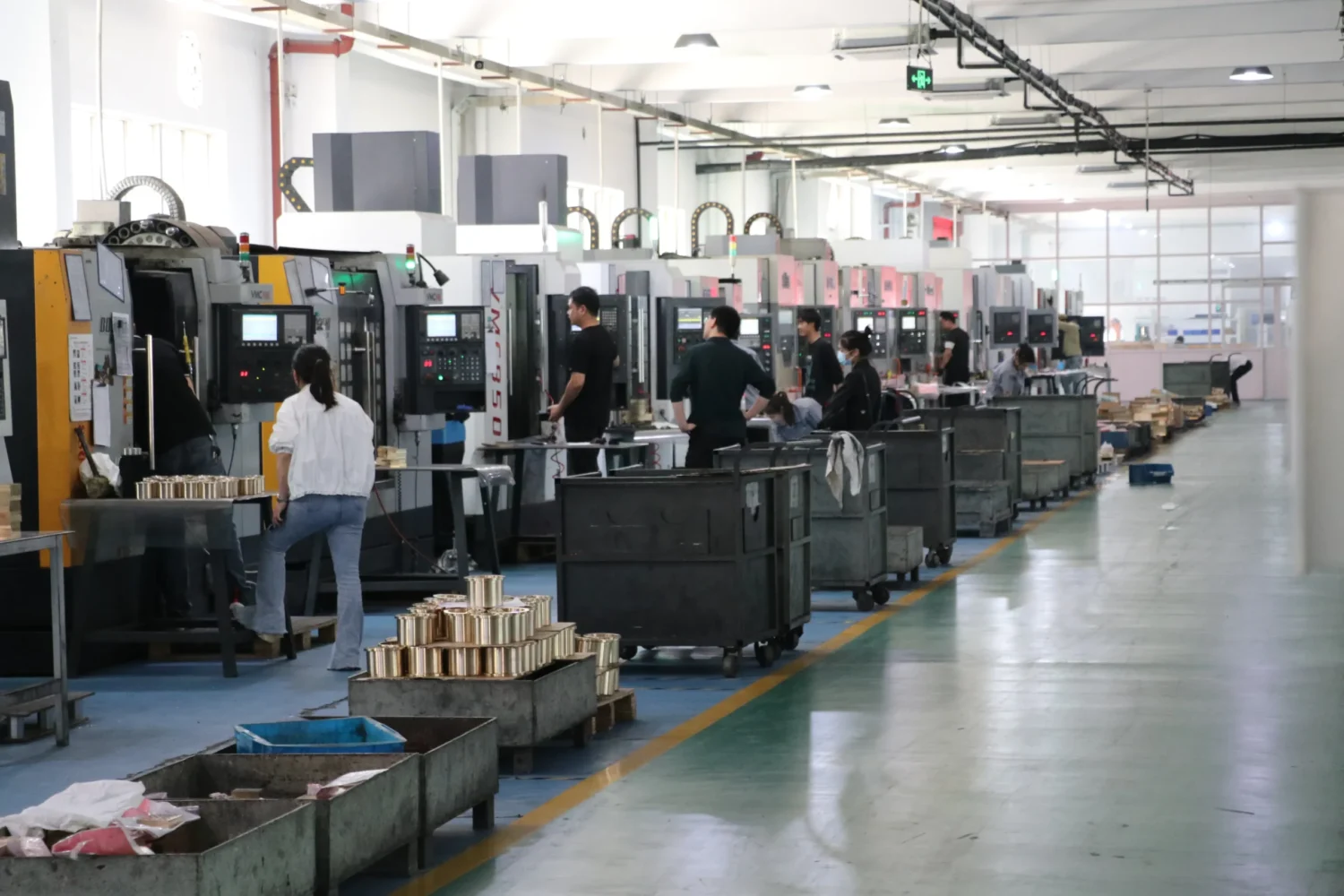
As a factory that specializes in B2B mass production, this question is fundamental to how we operate. We don't do single-piece retail orders. The production method for 100 pieces is completely different from the method for 100,000 pieces, and that difference has a huge impact on price.
Here's how quantity changes our approach:
- Low Volume (e.g., 100-500 pcs): We would likely machine these from solid bar stock. This requires no custom tooling, so the setup cost is low, but the labor and material waste make the per-unit cost high.
- Medium Volume (e.g., 5,000-20,000 pcs): For this, it might be worth creating semi-automated tooling for stamping and rolling. This has a moderate tooling cost, but the unit price drops significantly.
- High Volume (e.g., 100,000+ pcs): At this scale, we would invest in fully automated progressive dies. The upfront tooling cost is high, but it's spread across so many units that the final per-piece price becomes extremely low.
| Annual Quantity | Typical Process | Tooling Cost | Unit Cost |
|---|---|---|---|
| ~100 pcs | CNC Machining | None | High |
| ~10,000 pcs | Stamping & Rolling | Medium | Medium |
| ~100,000 pcs | Automated Progressive Die | High | Low |
Sharing your estimated annual usage allows us to quote you based on the most efficient method for your scale.[^8] It also helps us plan our production capacity for a long-term partnership. Paired with your expected service life requirements, it gives us the complete picture to support your project for years to come.
Conclusion
A complete inquiry with dimensions, application, environment, shaft details, and quantity helps us provide an accurate quote and a reliable product, building a successful partnership from the very beginning.
[^1]: "Application Solutions for Inner and Outer Diameter Measurement", https://www.keyence.com/products/measure/applications/dimension-measurement/inner-and-outer-diameter-measurement.jsp. These dimensions are foundational for determining material usage and initial processing costs in manufacturing custom bushings. Evidence role: mechanism; source type: education. Supports: Basic dimensions are essential for determining material usage and initial processing costs.. [^2]: "Design of bushing arrangements - SKF", https://www.skf.com/us/products/plain-bearings/bushings-thrust-washers-strips/bushings/design-bushing-arrangements. Application details are vital for selecting materials and design features that ensure the bushing's performance under specific conditions. Evidence role: expert_consensus; source type: research. Supports: Application information is critical for determining material and design requirements for bushings.. [^3]: "Types of Bushings: 5 Designs, 9 Materials & How to Choose", https://www.lily-bearing.com/resources/blog/types-of-bushings?srsltid=AfmBOorek_ZGBdTbLxRrCe14IFAq33_hXyxNWHPXahHAWwBx0N1X62jW. Different applications require tailored bushing materials and designs to meet specific load and speed conditions. Evidence role: mechanism; source type: research. Supports: High-load and high-speed applications require different bushing solutions.. [^4]: "Transient thermomechanical interactions of shaft-bushing ...", https://repository.lsu.edu/cgi/viewcontent.cgi?article=1201&context=gradschool_theses. The shaft's characteristics significantly influence the performance and lifespan of bushings, as they operate as a system. Evidence role: mechanism; source type: research. Supports: Shaft properties are crucial for the performance and lifespan of bushings.. [^5]: "Aging Failure Mechanism of Transformer Bushing Sealing Rings ...", https://pmc.ncbi.nlm.nih.gov/articles/PMC12897839/. Environmental factors like temperature and moisture are critical in selecting materials for bushings to ensure durability and reliability. Evidence role: mechanism; source type: research. Supports: Working environment directly influences material choice for bushings.. [^6]: "[PDF] Performance of High Temperature Plastics", https://www.appstate.edu/~clementsjs/polymerproperties/plastics_high_temp. Temperature extremes affect the physical properties of bushing materials, leading to failure under unsuitable conditions. Evidence role: mechanism; source type: research. Supports: Extreme temperatures can compromise bushing materials like plastic liners.. [^7]: "A systematic review of decision tools for process selection ... - PMC", https://pmc.ncbi.nlm.nih.gov/articles/PMC12592300/. Annual production volume dictates the choice of manufacturing methods, balancing tooling costs and unit prices. Evidence role: mechanism; source type: education. Supports: Annual quantity determines the most cost-effective manufacturing process for bushings.. [^8]: "Engineering Cost Estimation Method | www.waru.edu", https://www.waru.edu/acquipedia-article/engineering-cost-estimation-method. Annual usage estimates help manufacturers select the most efficient production methods, optimizing costs and scalability. Evidence role: mechanism; source type: education. Supports: Annual usage estimates enable cost-efficient production planning for bushings..