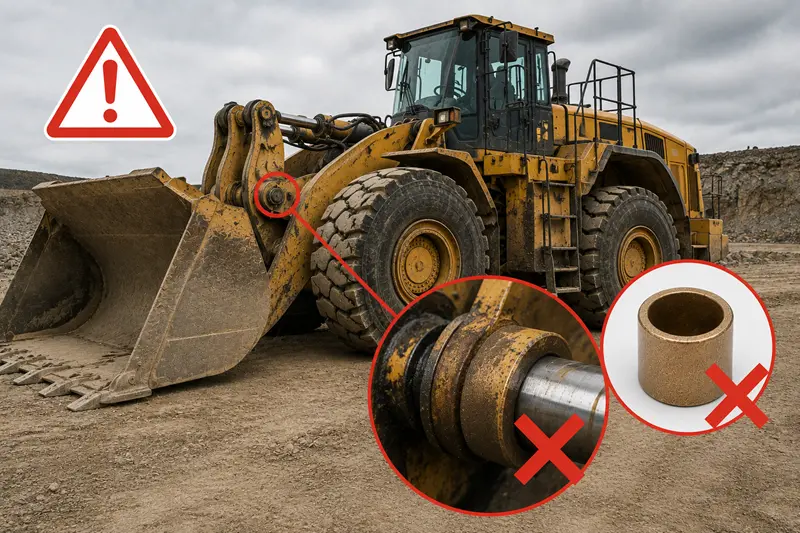
Choosing the wrong bushing can lead to costly failures. Are you overpaying for heavy-duty parts or risking breakdowns with standard ones? Let's clarify the real difference.
Heavy-duty bushings are not just stronger standard bushings.[^1] They are designed for high loads, shock, and harsh conditions. Standard bushings suit regular loads with stable lubrication. The right choice depends entirely on your machine's specific operating environment, not just a simple "stronger is better" mindset.
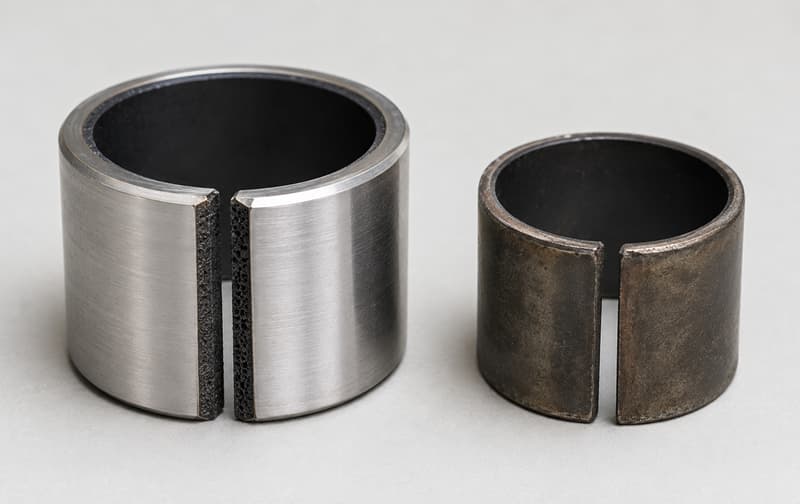
It's a common mistake I see all the time. A buyer thinks "heavy-duty" is just a marketing term for a thicker, more robust version of a standard part. But from my perspective as a manufacturer, the difference goes much deeper than just material thickness or hardness. It's about a completely different design philosophy. To really get this, we need to break down what each type of bushing is actually designed to do. Let's start by looking at what standard bushings are really for.
When Is a Standard Bushing the Smartest Choice?
You need reliable bushings without overspending on your project. But using expensive, over-engineered parts for simple jobs just wastes money. Let's see when standard bushings are the perfect fit.
Standard bushings are ideal for applications with consistent loads, stable lubrication, and minimal shock.[^2] Think electric motors, light industrial machinery, and general equipment. Their main advantages are cost-effectiveness, quick delivery times, and suitability for high-volume, standardized purchasing, making them a very efficient choice for many projects.
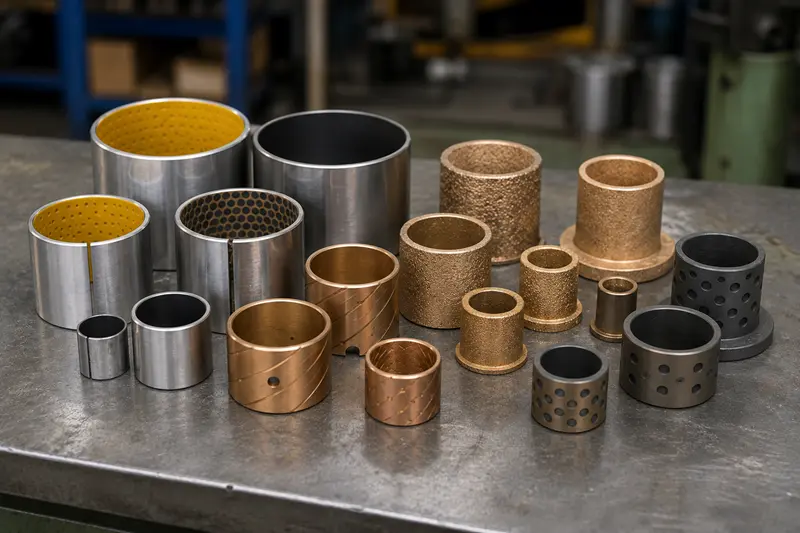
From a factory standpoint, "standard" means optimized for efficiency and widespread use. These bushings are the workhorses of the industrial world. They are designed for predictable environments where the operating conditions don't fluctuate wildly. For example, the self-lubricating composite bushings we produce are perfect for continuous, smooth rotation where external lubrication is difficult. Similarly, our wrapped bronze bushings are excellent where a grease schedule is maintained. The key is predictability. They perform exceptionally well within their designed load and speed limits.[^3] However, if you introduce heavy shocks, severe contamination like dust, or inconsistent lubrication, their lifespan can be drastically shortened. They simply aren't designed to handle those surprises.
Common Standard Bushing Applications
| Bushing Type | Typical Application | Key Feature |
|---|---|---|
| Metal-Polymer Composite | Electric Motors, Office Equipment | Self-lubricating, low friction |
| Wrapped Bronze | Conveyor Systems, Light Machinery | Good for lubricated conditions |
| Sintered Bronze | Small Gearboxes, Fans | Porous, holds oil for self-lubrication |
So, What Makes a Bushing Truly "Heavy-Duty"?
Your machinery faces high impacts, heavy loads, and gritty environments. Standard parts just don't last, causing constant breakdowns and costly repairs. Let's define what makes a bushing heavy-duty.
A heavy-duty bushing is a system designed for survival.[^4] It's not just about being "thicker." It involves stronger materials, specific wall thickness for load distribution, and features like oil grooves or solid lubricant plugs to handle high pressure, shock loads, and contaminated environments with poor lubrication.
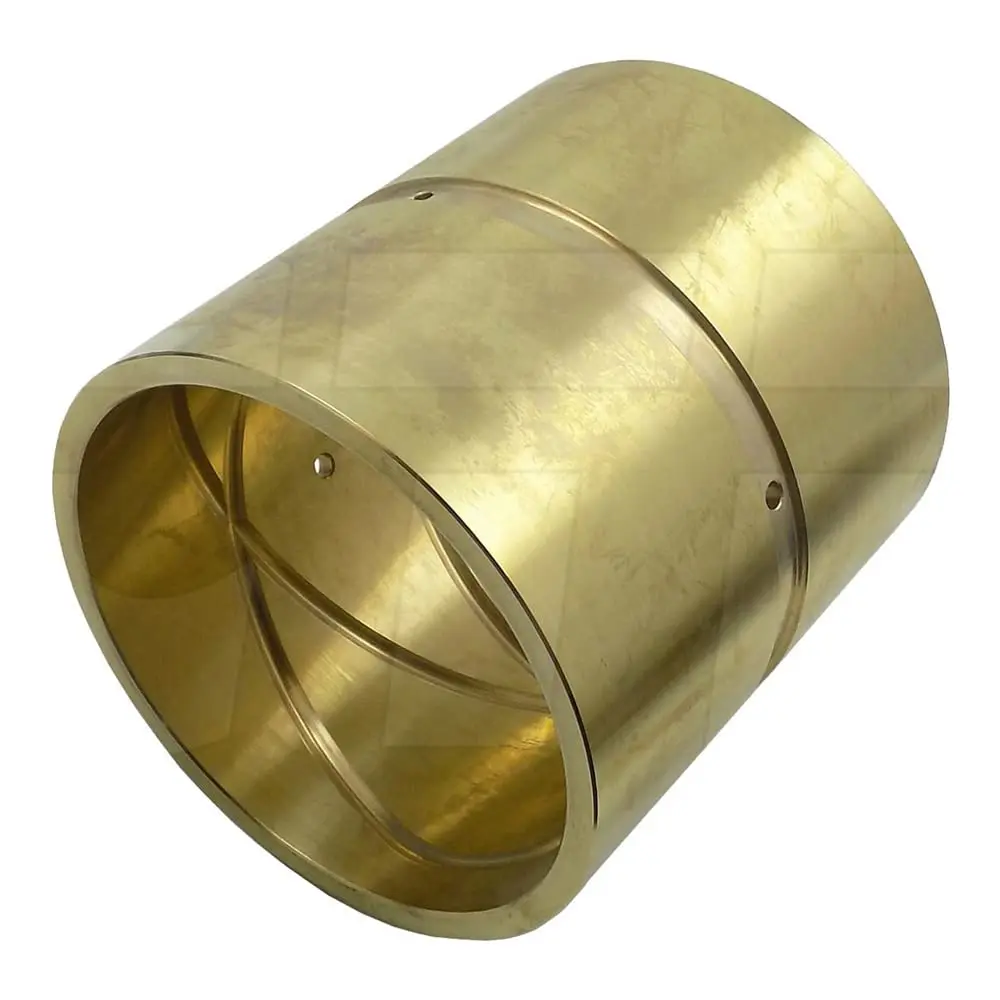
When we manufacture a heavy-duty bushing, we're not just making a standard part "stronger." We're engineering a solution for a specific set of problems: high loads, low-speed oscillation, impact, and contamination. For a pivot point on an excavator arm, for instance, the bushing must withstand immense force and constant, jarring movements.[^5] A simple standard bushing would wear out in days. So, we might use a solid bronze bushing with precisely machined oil grooves to ensure grease gets to the load zone, or a bimetal bushing with a steel back for structural strength and a bronze layer for wear resistance. Sometimes, we embed solid graphite plugs into the bronze, creating a self-lubricating surface that works even when covered in dust and grime.[^6] It's a complete system designed to endure abuse.
Key Features of Heavy-Duty Bushings
| Feature | Purpose | Common in... |
|---|---|---|
| Thicker Wall | Better load distribution, resists deformation | Excavators, Bulldozers |
| Oil Grooves/Holes | Distributes grease under high pressure | Hydraulic Cylinder Pivots |
| Solid Lubricant Plugs | Self-lubricates in dirty/dry conditions | Mining, Steel Mills |
| High-Strength Materials | Withstands extreme force and impact | Agricultural Harvesters |
How Do You Choose the Right Bushing for Your Application?
You're stuck choosing between standard and heavy-duty, and it feels like a gamble. A wrong choice wastes money or leads to failure. Let's replace the guesswork with a clear checklist.
Don't just ask for "heavy-duty." Instead, analyze your application's specific risks. Is there high impact? Is the environment dusty? Is lubrication difficult or inconsistent? Is there a risk of misalignment? Answering these questions will guide you to the right bushing system, whether standard or heavy-duty.
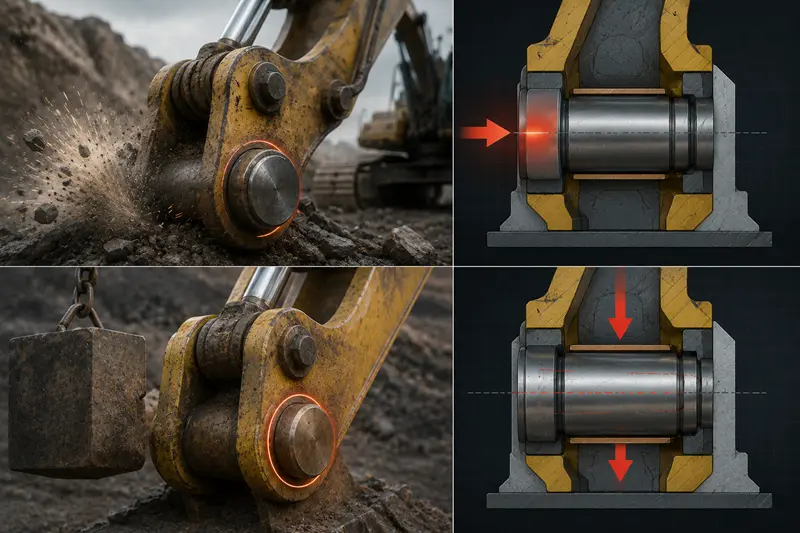
As a manufacturer, the best conversations I have with buyers start not with a part number, but with a description of the machine's job. Stop thinking in terms of "standard vs. heavy-duty" and start thinking about risk factors.[^7] If your application has none of the risks listed below, a standard bushing is likely your most cost-effective and reliable choice. But if you check one or more of these boxes, you need to discuss a heavy-duty solution with your supplier. Blindly choosing a heavy-duty part for a simple job is just paying for features you don't need.[^8] Conversely, ignoring these risks is planning for failure.[^9] This approach ensures you get a part that performs reliably without overspending.
Your Application Risk Checklist
| Risk Factor | Ask Yourself... | If Yes, Consider Heavy-Duty |
|---|---|---|
| Impact & Shock | Does the joint experience sudden, high-force impacts? | Yes |
| Contamination | Is the operating environment dusty, dirty, or wet?[^10] | Yes |
| Lubrication | Is it difficult to maintain a consistent grease/oil film? | Yes |
| High Load | Does the bushing support an extreme static or dynamic load?[^11] | Yes |
| Misalignment | Is there potential for the shaft and housing to be off-axis? | Yes |
Conclusion
Choosing the right bushing isn't about picking standard or heavy-duty.[^12] It's about matching the bushing's design system to your machine's real-world operating risks for optimal performance and cost.
[^1]: "Types of Bushings: 5 Designs, 9 Materials & How to Choose", https://www.lily-bearing.com/resources/blog/types-of-bushings?srsltid=AfmBOooaQjy-Jo5sEYoziEQFbhXQZELTbc5rfZaZpNnCsnqzqt_heeiX. This source explains the design differences between heavy-duty and standard bushings, emphasizing their distinct engineering purposes. Evidence role: definition; source type: education. Supports: Heavy-duty bushings are fundamentally different from standard bushings in design and purpose.. [^2]: "[PDF] TESTING AND MAINTENANCE OF HIGH-VOLTAGE BUSHINGS", https://www.usbr.gov/power/data/fist/fist3_2/vol3-2.pdf. This source provides examples and conditions where standard bushings are most effective, supporting their suitability for predictable environments. Evidence role: mechanism; source type: education. Supports: Standard bushings are best suited for predictable environments with consistent loads and stable lubrication.. [^3]: "Performance Suspension Bushings (and why you need them)!", https://www.youtube.com/watch?v=5CsMlpUe80E. This source discusses the performance characteristics of standard bushings under specific load and speed conditions. Evidence role: mechanism; source type: research. Supports: Standard bushings perform well within their designed load and speed limits.. Scope note: The support may not cover all types of standard bushings. [^4]: "Custom Large Bushings For Heavy Duty - Bearingface.com", https://www.bearingface.com/large-bushings/. This source explains the engineering features that make heavy-duty bushings suitable for extreme conditions. Evidence role: definition; source type: education. Supports: Heavy-duty bushings are engineered to endure extreme conditions and high-impact environments.. [^5]: "Pins & Bushings for Heavy Equipment - ConEquip Parts", https://www.conequip.com/parts/parts-by-component/attachments/heavy-equipment-pins-bushings?srsltid=AfmBOorQJyC0bWBMt_sERKXpZE1tJ5mUrYodw04Fn_MZ_67WwbqiQchL. This source provides examples of heavy-duty bushing applications, such as excavator arms, and their required durability. Evidence role: case_reference; source type: institution. Supports: Heavy-duty bushings are essential for applications like excavator arms due to their ability to handle immense force and jarring movements.. Scope note: The support may focus on specific machinery types like excavators. [^6]: "Shoulder Bushing. Graphite Plug 3", https://shop.procomps.com/products/shoulder-bushing-graphite-plug-23. This source explains the use of solid graphite plugs in bushings for self-lubrication under contaminated conditions. Evidence role: mechanism; source type: research. Supports: Solid graphite plugs in bushings provide self-lubrication even in dusty and grimy environments.. Scope note: The support may not cover all self-lubricating bushing designs. [^7]: "Sliding material and bushing type selection guides", https://www.skf.com/us/products/plain-bearings/bushings-thrust-washers-strips/principles/type-selection-guides. This source emphasizes the importance of assessing risk factors over part categories when selecting bushings. Evidence role: expert_consensus; source type: education. Supports: Risk factors should guide bushing selection rather than simply choosing between standard and heavy-duty categories.. Scope note: The support may focus on general selection principles rather than specific examples. [^8]: "What is the going rate per suspension bushing? - Facebook", https://www.facebook.com/groups/682972148543977/posts/1826044414236739/. This source discusses the cost implications of using heavy-duty parts in applications that do not require them. Evidence role: expert_consensus; source type: education. Supports: Using heavy-duty parts unnecessarily can lead to overspending without added benefits.. Scope note: The support may focus on general cost-efficiency principles rather than specific examples. [^9]: "[PDF] Impact of Environmental Factors on Pavement Performance in the ...", https://www.fhwa.dot.gov/publications/research/infrastructure/pavements/16084/16084.pdf. This source highlights the risks of using standard bushings in high-impact or contaminated environments. Evidence role: expert_consensus; source type: education. Supports: Ignoring environmental and operational risks when choosing bushings can lead to equipment failure.. Scope note: The support may not address all risk factors comprehensively. [^10]: "Aging Failure Mechanism of Transformer Bushing Sealing Rings ...", https://pmc.ncbi.nlm.nih.gov/articles/PMC12897839/. This source explains how environmental factors like dust, dirt, and moisture affect bushing performance and lifespan. Evidence role: mechanism; source type: research. Supports: Dust, dirt, and moisture in the operating environment can significantly impact bushing performance and lifespan.. Scope note: The support may not cover all environmental conditions comprehensively. [^11]: "Friction Characteristics Analysis of Rubber Bushing with a Bionic ...", https://pmc.ncbi.nlm.nih.gov/articles/PMC9919655/. This source discusses the impact of extreme loads on bushing performance and the need for heavy-duty designs. Evidence role: mechanism; source type: research. Supports: Extreme static or dynamic loads require bushings designed to handle high stress and pressure.. Scope note: The support may focus on specific load conditions rather than general applications. [^12]: "What Is a Bushing? Applications, Types & Uses Explained - Lesjöfors", https://www.lesjofors.com/en/technology/insights/what-is-a-bushing/. This source emphasizes the importance of matching bushing design to specific operating conditions rather than defaulting to standard or heavy-duty categories. Evidence role: expert_consensus; source type: education. Supports: Bushing selection should prioritize matching design to operating conditions over defaulting to standard or heavy-duty categories.. Scope note: The support may focus on general selection principles rather than specific examples.