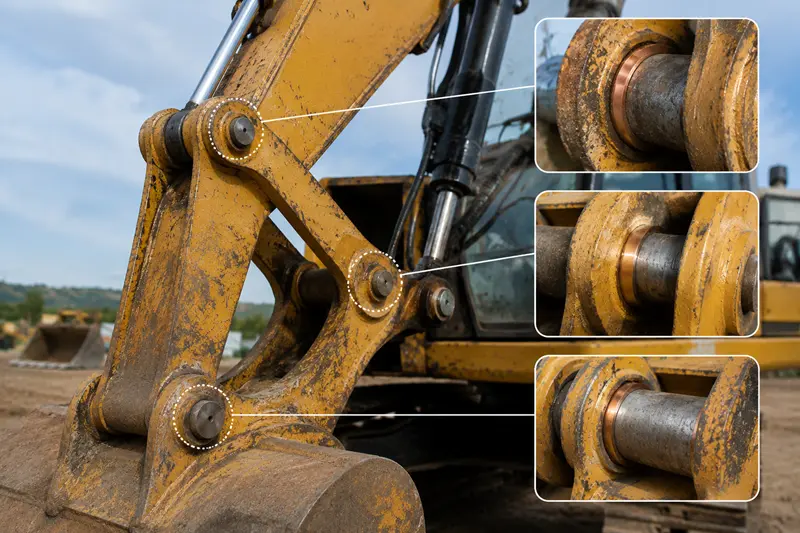
Your heavy machinery bushings wear out too fast, causing costly downtime and repairs. You've tried expensive materials, but the problem persists, which is frustrating and hurts your budget.
To improve bushing life in heavy machinery, you should focus on optimizing the entire operating system. This means ensuring consistent lubrication, preventing contamination with effective seals, and using a shaft with the correct hardness and finish. These system-level improvements are often more effective than just upgrading to a more expensive bushing material.
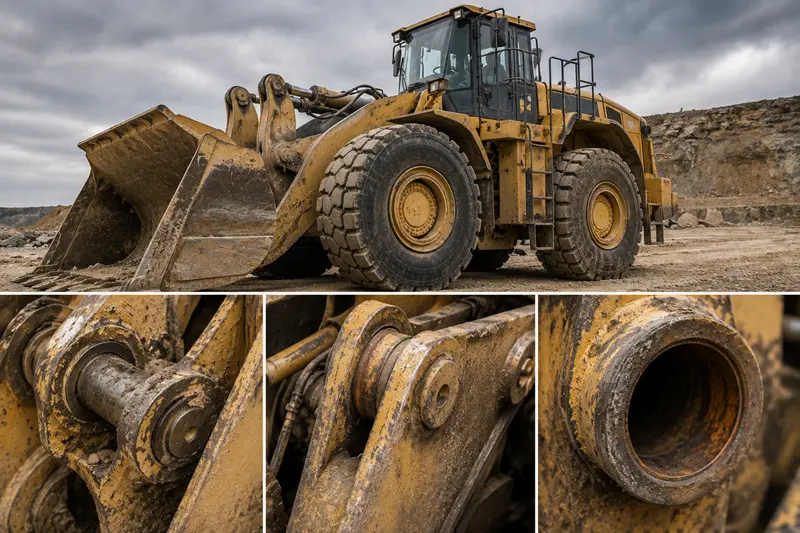
That might sound simple, but in my years running a bushing factory, I have seen these "simple" details make all the difference. Many of our customers, especially OEMs, first ask for a stronger material to solve a wear problem. But that's often not the root cause of the failure. Let's break down why focusing on the entire friction system is the key. It can help you unlock a 50% or even 100% increase in your bushing's service life[^1].
Should You Always Choose a Stronger Bushing Material?
You assume a stronger, more expensive bushing is the clear solution for a tough application. But after installing it, you see little improvement, which feels like a waste of money.
A stronger material is not always better. The best material is one that matches the specific operating conditions, like load, speed, and environment. For heavy machinery, resistance to contamination and lubrication failures can be more important than just raw strength[^2]. Choosing the right material is about suitability, not just price.
From our factory's perspective, the goal is to match the material to the job. Simply choosing the material with the highest load capacity is a common mistake. In heavy equipment like excavators or tractors, the biggest enemies are often shock loads, dirt, and lack of grease, not the steady load itself. A very hard but brittle material might crack under impact, while a slightly softer, more forgiving material would have survived.
I remember working with a client who made agricultural harvesters. They were having issues with bushings in the pivot points of the cutting head. They insisted on upgrading from our standard wrapped bronze bushings to a high-strength solid bronze material, thinking strength was the issue. The failures continued. After we inspected the failed parts, we found the problem was abrasive dust from the field getting into the joint[^3]. The solution wasn't a stronger material, but a better-sealed system. We switched them to a metal-polymer composite bushing, which has better dry-run performance, and helped them add a better seal. The lifespan more than doubled, and the new bushing was actually cheaper.
Here’s a simple way to think about it:
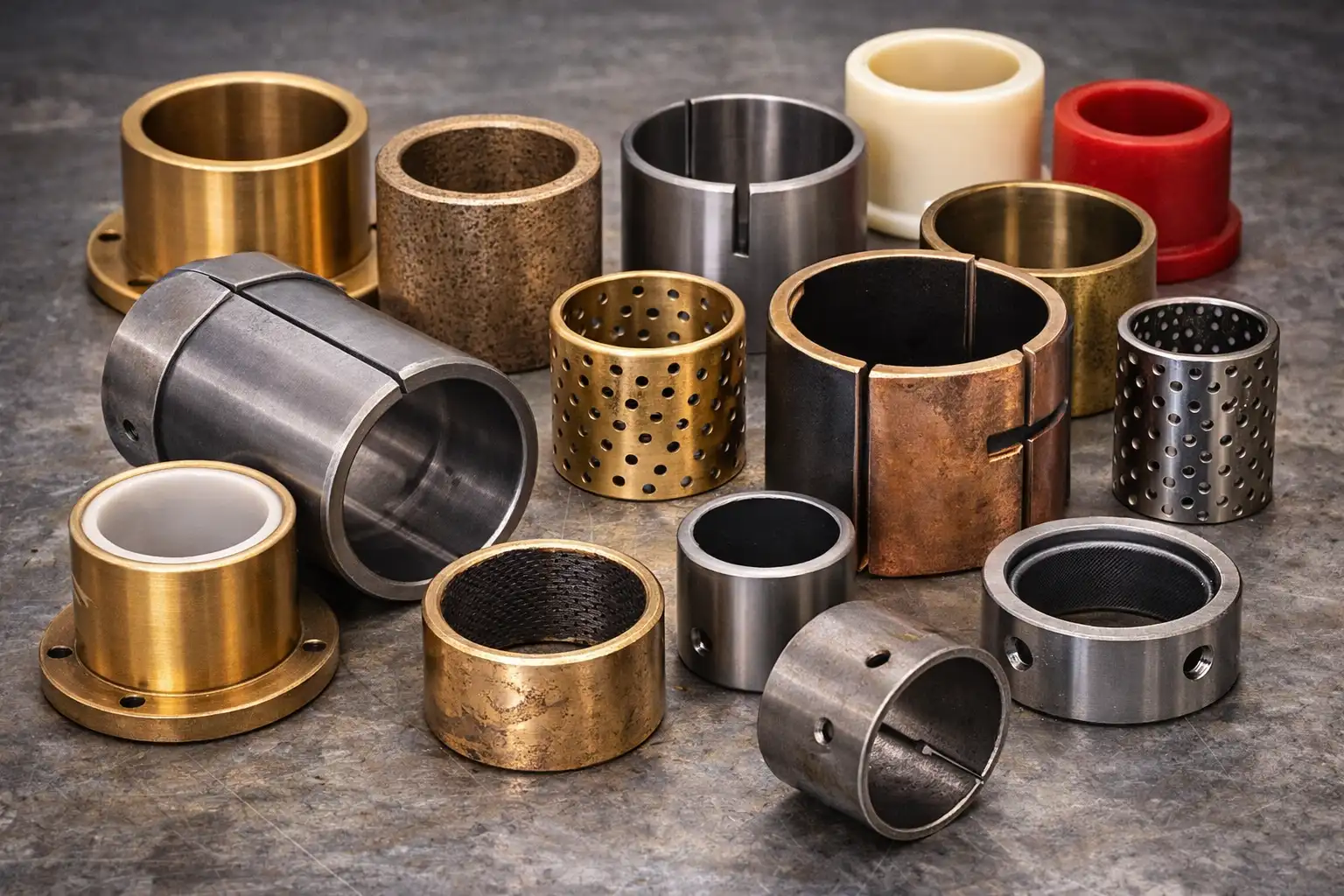
| Bushing Type | Best For... | Not Ideal For... |
|---|---|---|
| Metal-Polymer (e.g., DU, DX) | Low-speed, high-load, maintenance-free, or boundary lubrication. | Very high temperatures or extremely abrasive conditions without seals. |
| Wrapped Bronze (e.g., FB090) | High loads with regular grease lubrication. The pockets hold grease well. | Dry running conditions. They need consistent lubrication. |
| Solid Bronze (Machined) | Very high loads, slow speeds, custom shapes, and corrosive environments. | High-speed applications. They are also typically more expensive. |
| Sintered Bronze (Oil-Impregnated) | High-speed, low-load applications like small motors. Self-lubricating. | Heavy, high-impact loads found in construction machinery. |
The key takeaway is to analyze the failure first. Is the bushing being crushed, or is it being worn away by dirt? The answer tells you whether you need a stronger material or a cleaner operating environment.
How Does Lubrication Truly Affect Bushing Lifespan?
You know lubrication is important, but it's often the first maintenance task to be skipped. This neglect leads to premature failure, unplanned downtime, and emergency repairs on the job site.
Lubrication creates a critical film that separates the shaft and bushing, preventing metal-to-metal contact and drastically reducing wear. Consistent and clean lubrication is the single most effective way to extend bushing life. Even self-lubricating bushings perform better when the system is designed to retain lubricant and prevent dry running.
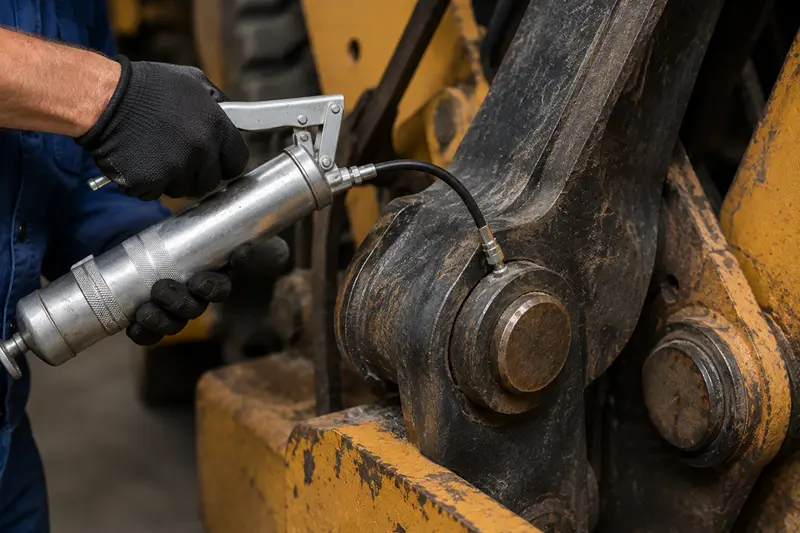
The difference between a well-lubricated bushing and a dry one is night and day. A film of grease or oil does two main things. First, it reduces friction, which prevents heat buildup and wear. Second, it acts as a barrier, helping to flush out small contaminants and prevent moisture from causing corrosion. When that film disappears, the shaft and bushing are in direct metal-to-metal contact. Under the heavy loads of industrial machinery, this will destroy the bushing very quickly.
For many of our B2B customers who manufacture equipment, we don't just supply a part; we discuss the lubrication strategy. For example, with our wrapped bronze bushings, we can machine different types of grease grooves into the surface.
Common Lubrication Strategies
- Grooves and Pockets: These are patterns machined into the bushing surface to hold grease and distribute it evenly. A simple straight groove is good, but a figure-eight pattern can distribute grease more effectively during rotation[^4].
- Through Holes: These allow grease to be pumped from the outside of the housing directly to the contact surface.
- Self-Lubricating Layers: Materials like our metal-polymer bushings have a PTFE layer that transfers to the shaft, creating a solid lubricant film. They are great for places that are hard to reach for regular greasing, but they still have a finite life.
I once visited a large quarry that used our bushings in their rock crushers. They had two identical machines, but one was going through bushings three times faster than the other. The machine operators swore they were greasing them on schedule. We found the issue was the type of grease. One team was using a standard multi-purpose grease, while the other was using a grease with solid additives like graphite. In that high-pressure, high-vibration environment, the graphite grease held up much better and maintained the lubricating film[^5]. We helped them standardize the grease, and the problem was solved.
Why Do Sealing and Shaft Condition Matter So Much?
You've selected the right bushing and you have a solid lubrication plan, but it still fails early. It's maddening because you feel like you have done everything right to protect your equipment.
Contaminants like dirt, dust, and water are highly abrasive and can destroy a bushing faster than a heavy load. Effective seals prevent these particles from getting in[^6]. Also, a smooth, hard shaft surface is crucial for minimizing wear and helping the lubrication film form correctly.
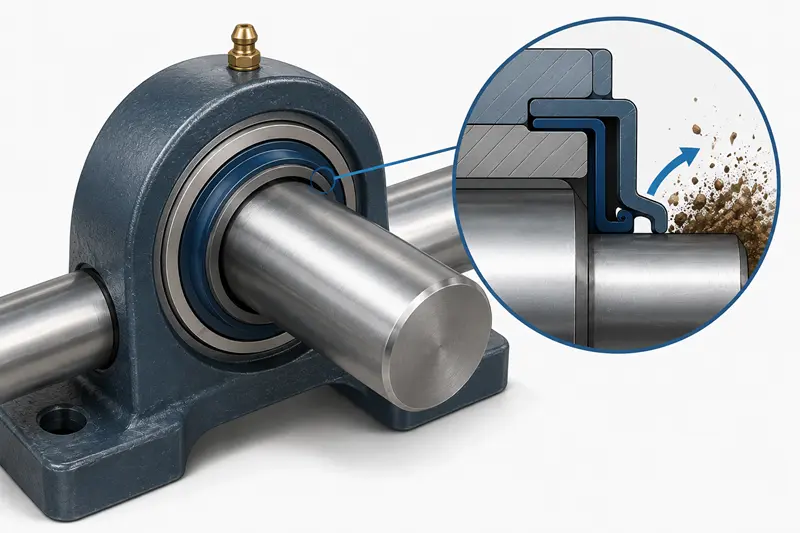
Think of your bushing and shaft as a system. The bushing is only one part of it. If you put a brand-new bushing into a system with a worn-out shaft or a failed seal, you are setting it up for failure. From our experience as a manufacturer, a huge percentage of bushing failures in heavy-duty applications are caused by contamination. A single grain of sand in the wrong place can cut a groove into the bushing and shaft, starting a chain reaction of wear.
A good seal is the bushing's first line of defense. It keeps the grease in and the dirt out. In dusty environments like mining, agriculture, or construction, the quality of the seal is just as important as the quality of the bushing.
The shaft itself is the other half of the friction pair. Its condition is critical.
- Shaft Hardness: The shaft should almost always be harder than the bushing[^7]. This ensures that the bushing, which is the cheaper and more easily replaceable part, wears out first. If the shaft is too soft, it will wear down, and then even a new bushing will fit poorly and fail quickly.
- Shaft Surface Finish: The shaft surface needs to be smooth. A rough surface will act like a file, grinding away the bushing material. We typically recommend a surface finish of Ra 0.4 to Ra 0.8 for the best performance[^8]. A surface that is too smooth can also be a problem, as it can prevent the lubricant from sticking to the surface.
We worked on an OEM project for a forestry equipment company. Their log grapples were failing in the field. They were using our bronze bushings, and the design seemed fine. After talking with their engineers, we asked about their shaft specifications and sealing. It turned out the shaft was a bit too soft, and the seals were not robust enough for the environment. They would get damaged by wood debris. The customer hardened their shafts and upgraded to a more protected, multi-lip seal[^9]. The bushing life instantly tripled[^10], with no change to the bushing itself. This is a perfect example of how optimizing the system is more effective than just focusing on one component.
Conclusion
To truly extend bushing life, look beyond the bushing itself. Optimizing the entire system—lubrication, sealing, and shaft condition—offers the most cost-effective and significant improvements[^11] for your heavy machinery.
[^1]: "Accelerated wear testing shows that thermoplastic bushings could ...", https://pmc.ncbi.nlm.nih.gov/articles/PMC9742721/. This source provides data on how system-level improvements, such as lubrication and sealing, can significantly extend bushing service life. Evidence role: statistic; source type: research. Supports: Optimizing the operating system can lead to a substantial increase in bushing service life.. Scope note: The percentage increase may vary depending on specific machinery and operating conditions. [^2]: "[PDF] TESTING AND MAINTENANCE OF HIGH-VOLTAGE BUSHINGS", https://www.usbr.gov/power/data/fist/fist3_2/vol3-2.pdf. This source explains the importance of contamination resistance and lubrication in determining bushing material suitability. Evidence role: mechanism; source type: education. Supports: Resistance to contamination and lubrication failures is often more critical than raw strength in bushing material selection.. Scope note: The emphasis on contamination resistance may not apply to all machinery types. [^3]: "Accelerated wear testing shows that thermoplastic bushings could ...", https://pmc.ncbi.nlm.nih.gov/articles/PMC9742721/. This source discusses how environmental contaminants like dust can lead to bushing failure. Evidence role: mechanism; source type: research. Supports: Abrasive dust entering the joint can cause bushing failure by accelerating wear.. Scope note: The focus on agricultural environments may not generalize to all machinery types. [^4]: "Figure Eight Oil Groove with Acorn 6 DIY CNC on a lathe, no CAM", https://www.youtube.com/watch?v=aOEqrvFCPNU. This source explains how specific grease groove patterns, like figure-eight designs, improve lubrication distribution. Evidence role: mechanism; source type: education. Supports: Figure-eight grease groove patterns enhance lubrication distribution during rotation.. Scope note: The effectiveness of groove patterns may depend on the specific machinery and operating conditions. [^5]: "Why is graphite a lubricant in machines? - Facebook", https://www.facebook.com/groups/239813995017875/posts/710127817986488/. This source provides insights into the advantages of graphite grease in high-pressure, high-vibration environments. Evidence role: case_reference; source type: research. Supports: Graphite grease performs better in maintaining lubrication under high-pressure, high-vibration conditions.. Scope note: The findings may not apply to all types of grease or machinery. [^6]: "Aging Failure Mechanism of Transformer Bushing Sealing Rings ...", https://pmc.ncbi.nlm.nih.gov/articles/PMC12897839/. This source highlights the role of seals in protecting bushings from contaminants like dirt and water. Evidence role: mechanism; source type: education. Supports: Effective seals protect bushings by preventing contaminants from entering the system.. Scope note: The effectiveness of seals may vary based on the type and quality of the seal used. [^7]: "How does shaft hardness affect the life of a linear ball bushing?", https://www.linearmotiontips.com/how-does-shaft-hardness-affect-the-life-of-a-linear-ball-bushing/. This source explains why shaft hardness is critical for ensuring the bushing wears out before the shaft. Evidence role: mechanism; source type: education. Supports: Shaft hardness is crucial for ensuring the bushing wears out first, protecting the shaft from damage.. Scope note: The recommendation may not apply to all bushing and shaft materials. [^8]: "The Comprehensive Guide To Surface Finishes For Slide Bearing ...", https://www.viiplus.com/the-comprehensive-guide-to-surface-finishes-for-slide-bearing-plain-bushings/. This source provides recommended surface finish values for shafts to optimize bushing performance. Evidence role: definition; source type: education. Supports: A surface finish of Ra 0.4 to Ra 0.8 is optimal for minimizing wear and ensuring lubrication effectiveness.. Scope note: The recommended Ra values may not apply to all bushing types or applications. [^9]: "Multi-Lip Cartridge Seal | Flexaseal Engineered Seals and Systems", https://www.flexaseal.com/products/mechanical_seals/multi-lip-cartridge-seal/. This source explains the advantages of multi-lip seals in protecting bushings from environmental debris. Evidence role: mechanism; source type: research. Supports: Multi-lip seals offer enhanced protection against environmental debris, extending bushing life.. Scope note: The effectiveness of multi-lip seals may depend on the specific application and environment. [^10]: "A Case Study on Basic Requirements for the Design of High Voltage ...", https://www.academia.edu/82987151/A_Case_Study_on_Basic_Requirements_for_the_Design_of_High_Voltage_Bushings. This source provides a case study showing how system optimization, including shaft hardening and seal upgrades, significantly increased bushing life. Evidence role: case_reference; source type: research. Supports: System optimization, including shaft hardening and seal upgrades, can significantly increase bushing life.. Scope note: The tripling of bushing life may not generalize to all machinery or operating conditions. [^11]: "High-performance building design | GSA", https://www.gsa.gov/real-estate/highperformance-building-design. This source discusses the importance of system-level optimization for improving machinery performance and reducing costs. Evidence role: expert_consensus; source type: institution. Supports: System-level optimization is the most cost-effective way to improve machinery performance and extend bushing life.. Scope note: The cost-effectiveness of system optimization may vary depending on the specific machinery and operational context.