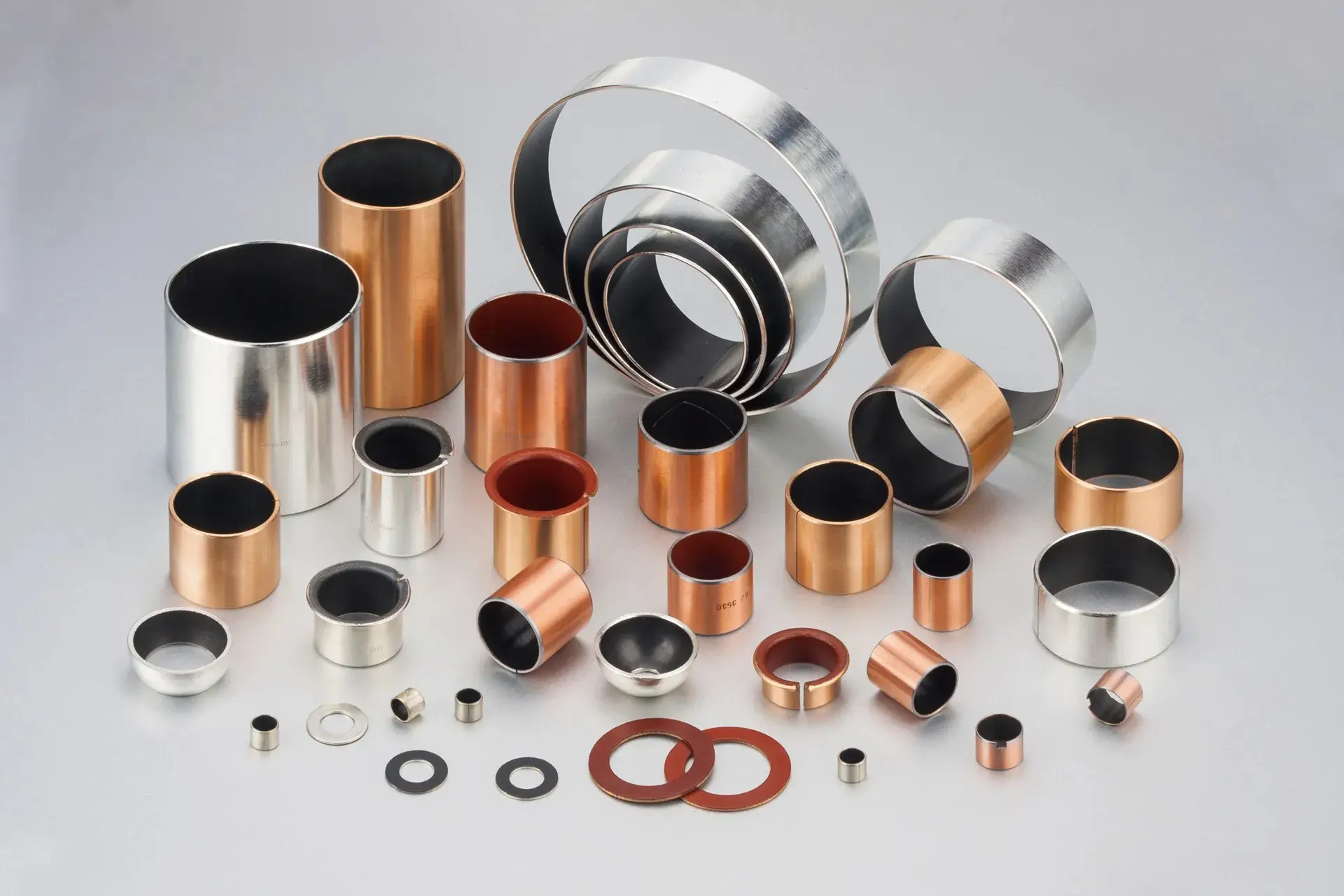
Struggling to understand how PTFE bushings are really made? This confusion can lead to costly mistakes. Let's explore the true multi-layer manufacturing process behind these essential components.
A PTFE composite bushing is made by bonding three distinct layers together[^1]: a steel backing for strength, a porous sintered bronze layer for bonding, and a PTFE-based sliding layer for low-friction performance. This composite material is then rolled and machined into its final bushing shape.
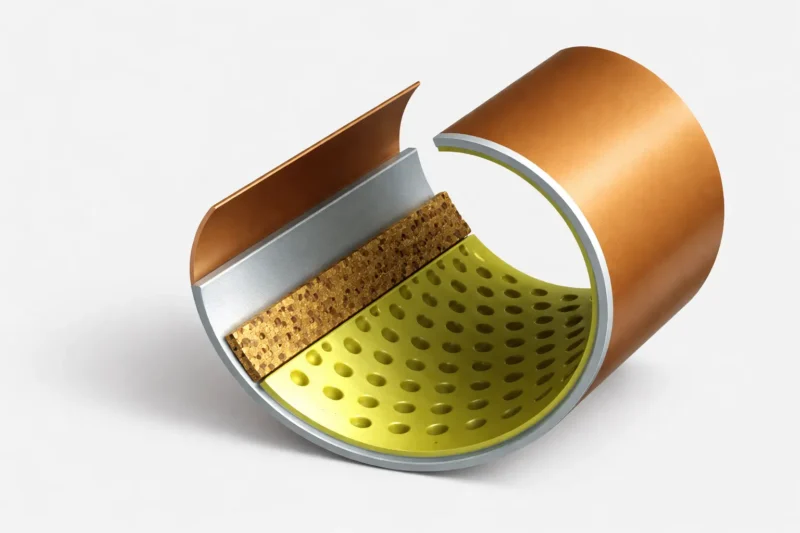
When I talk to buyers, I often find they think of a PTFE composite bushing as just a metal tube with a non-stick coating. From our factory's perspective, this view misses the most important part. The real innovation isn't just the PTFE surface; it's the engineered structure that lies beneath it[^2]. This structure is what gives the bushing its unique ability to handle high loads without needing grease or oil[^3]. To truly understand its value, we need to look closer at how each layer contributes. Let’s dive into what really makes up one of these high-performance parts.
What Is the Real Structure of a PTFE Composite Bushing?
Do you think PTFE bushings are just a simple coated metal part? This common misunderstanding can cause you to specify the wrong component for your equipment, leading to premature wear.
A standard PTFE composite bushing is built from three essential layers. The steel back provides the main structural strength. A sintered porous bronze layer connects the steel to the PTFE layer. Finally, the PTFE-based top layer creates a self-lubricating surface[^4] that allows parts to move smoothly.
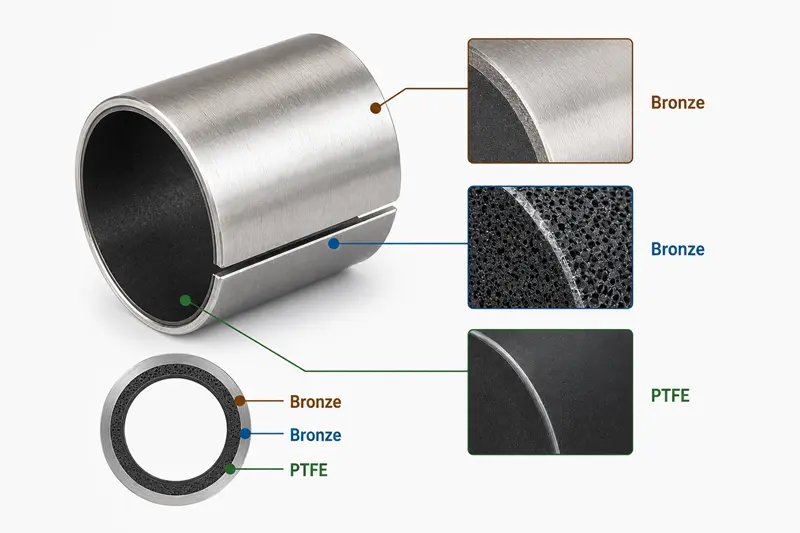
On our production lines, we see every day how this layered design is much more than just a surface treatment. It's a sophisticated engineering solution where each layer performs a specific, critical function. Without this synergy, the bushing simply wouldn't work in demanding, maintenance-free applications.
The Three Critical Layers
The real performance of the bushing comes from how these layers work together as a single unit. It's like a well-coordinated team.
| Layer | Material | Primary Function |
|---|---|---|
| Backing Layer | Low-Carbon Steel | This is the backbone of the bushing. It provides the mechanical strength to handle heavy loads and ensures the bushing holds its shape once installed. |
| Intermediate Layer | Sintered Porous Bronze | This layer acts like a strong glue, bonding the steel back to the sliding layer. Its porous structure also creates tiny pockets that mechanically lock the PTFE layer in place. |
| Sliding Layer | PTFE + Fillers | This top layer provides the low-friction, self-lubricating surface. We mix pure PTFE with special fillers like carbon or glass fiber to improve its wear resistance and load-carrying capacity. |
This clever three-part structure is what allows the bushing to support heavy machinery parts while running smoothly without any external lubrication. It’s a perfect solution for modern equipment that demands reliability and less maintenance.
How Does the Manufacturing Process Actually Work?
Are you curious about how these separate layers are combined into one solid part? Without understanding the manufacturing process, it is difficult to judge the quality and consistency of a bushing.
The process begins with a prepared steel strip. Bronze powder is then sintered onto its surface to form a porous middle layer. Next, a PTFE mixture is applied and bonded through heat and pressure. Finally, this composite material is cut, rolled into a bushing, and machined to its final dimensions.
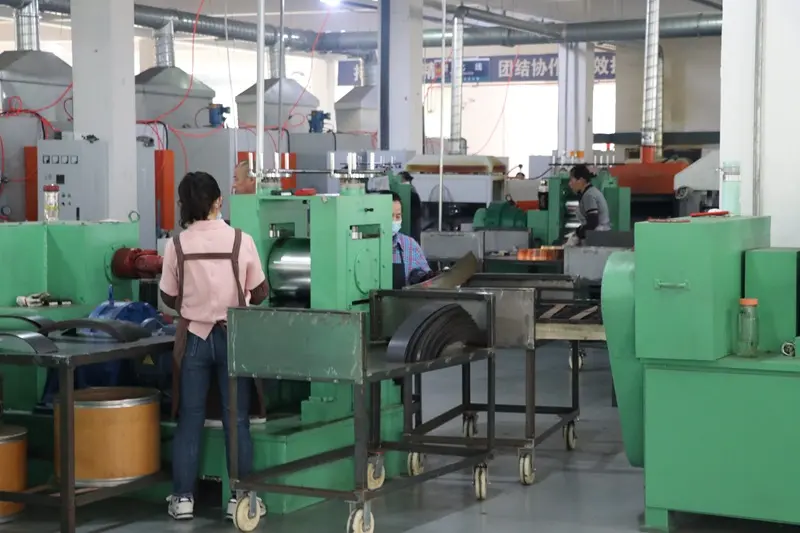
Transforming raw steel, bronze, and PTFE into a finished, high-performance bushing involves a sequence of precise, controlled steps. Here at our factory, we have spent years perfecting this process to guarantee every bushing we ship meets the strict consistency and quality standards our OEM clients demand. Let me walk you through how we do it.
From Steel Coil to Finished Bushing
Every stage of production is vital for the performance and reliability of the final product.
- Steel Strip Preparation: Everything starts with a coil of high-quality, low-carbon steel. This steel becomes the foundation, providing the essential strength and rigidity for the bushing. We clean and prepare its surface for the next step.
- Bronze Powder Sintering: We then spread an even layer of fine, spherical bronze powder onto the steel strip[^5]. The strip moves through a high-temperature furnace, which sinters the powder. This melts the bronze particles just enough to fuse them to each other and to the steel back, creating a strong but porous intermediate layer.
- PTFE Mixture Application: Next, we prepare our proprietary paste-like mixture of PTFE and other performance-enhancing fillers. This mixture is carefully applied over the sintered bronze layer, filling all its pores.
- Rolling and Bonding: The three-layer strip is then passed through a series of heavy rollers. The combination of high pressure and heat compacts the layers and permanently bonds them into a single, unified composite sheet.
- Forming and Machining: Finally, the flat composite sheet is cut to the correct size. It is then rolled into a cylindrical shape to form a bushing. We then perform final machining steps like chamfering the edges to ensure it meets the exact dimensional tolerances for a perfect fit.
Why Is This Multi-Layer Structure So Important for Your Application?
Not sure if a PTFE composite bushing is the right choice for your machine? Choosing the wrong type of bushing can lead to unexpected downtime and costly repairs.
This structure is vital because it combines high strength with self-lubrication. This makes it ideal for applications that must run without oil[^6], such as in automotive suspensions, hydraulic cylinder pivots, and other hard-to-reach industrial joints. However, you must always consider its operational limits.
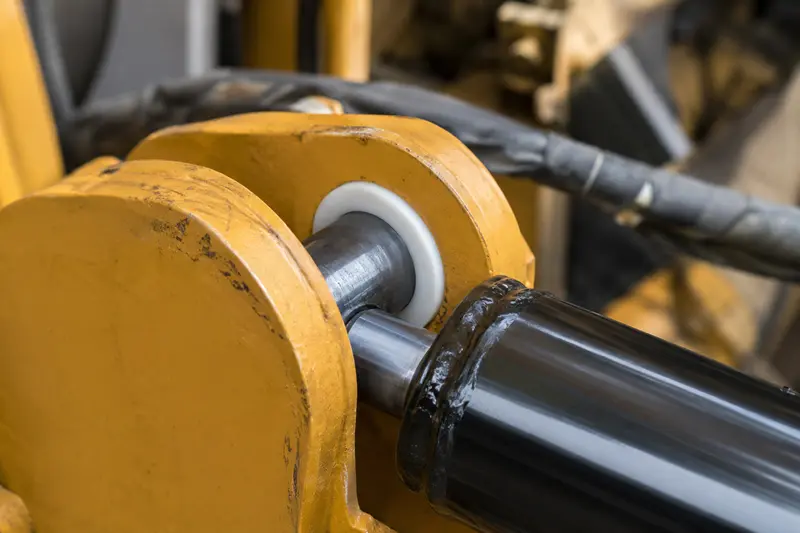
For our OEM and project-based customers, the most important question is always, "Will this part work reliably in my equipment?" The multi-layer structure of a PTFE bushing provides a clear advantage in situations where regular lubrication is impractical or undesirable. This is why you see them used so often in automotive parts, construction machinery, and hydraulic systems where maintenance-free operation is a key design goal.
Matching the Bushing to the Job
But it's important to remember that these bushings are not a universal solution for every single application. The self-lubricating PTFE layer has its limits and can wear down if used outside of its intended operating conditions.
- High Loads & Impact: If the load is too heavy or the joint experiences frequent, sharp impacts, the PTFE surface can wear away faster than expected.
- Abrasive Contamination: In dirty or dusty environments, abrasive particles like sand or grit can get between the bushing and the shaft[^7]. This will act like sandpaper and quickly damage the soft sliding layer.
- PV Value: We always advise our customers to check the PV value (Pressure × Velocity) of their application[^8]. If the combination of pressure and speed is too high, it can generate excessive heat, causing the bushing to fail prematurely.
The key takeaway for any buyer is this: the competitive advantage of a PTFE composite bushing comes from the entire engineered system[^9] working together. It’s not just about the PTFE itself. You should focus on whether the layer design, PTFE formula, and manufacturing quality are a good match for your specific working conditions.
Conclusion
In summary, a PTFE composite bushing is an engineered system. Its true value comes from the synergy of its steel, bronze, and PTFE layers, not just its self-lubricating surface.
[^1]: "[PDF] Performance of PTFE-Lined Composite Journal Bearings", https://ntrs.nasa.gov/api/citations/19820009389/downloads/19820009389.pdf. This source explains the layered structure of PTFE composite bushings, including the steel backing, sintered bronze, and PTFE sliding layer. Evidence role: definition; source type: education. Supports: A PTFE composite bushing is made by bonding three distinct layers together: a steel backing for strength, a porous sintered bronze layer for bonding, and a PTFE-based sliding layer for low-friction performance.. [^2]: "Bushing Design Notes - Daemar Inc", https://daemar.com/bushings_dryslide_design_notes_142.html/. This source discusses the innovative aspects of the layered structure in PTFE bushings compared to other designs. Evidence role: expert_consensus; source type: research. Supports: The real innovation isn't just the PTFE surface; it's the engineered structure that lies beneath it.. Scope note: The source may focus on specific applications rather than general innovation. [^3]: "[PDF] Performance of PTFE-Lined Composite Journal Bearings", https://ntrs.nasa.gov/api/citations/19820009389/downloads/19820009389.pdf. This source provides data on the load-handling capabilities of PTFE bushings and their self-lubricating properties. Evidence role: statistic; source type: institution. Supports: This structure is what gives the bushing its unique ability to handle high loads without needing grease or oil.. Scope note: The data may be specific to certain types of PTFE bushings. [^4]: "Polytetrafluoroethylene - Wikipedia", https://en.wikipedia.org/wiki/Polytetrafluoroethylene. This source explains the self-lubricating properties of PTFE and its applications in bushings. Evidence role: mechanism; source type: encyclopedia. Supports: The PTFE-based top layer creates a self-lubricating surface.. Scope note: The source may focus on general PTFE properties rather than specific bushing designs. [^5]: "Bronze - Wikipedia", https://en.wikipedia.org/wiki/Bronze. This source describes the sintering process of bronze powder in composite material manufacturing. Evidence role: mechanism; source type: education. Supports: We then spread an even layer of fine, spherical bronze powder onto the steel strip.. Scope note: The source may focus on general sintering techniques rather than specific bushing applications. [^6]: "[PDF] Performance of PTFE-Lined Composite Journal Bearings", https://ntrs.nasa.gov/api/citations/19820009389/downloads/19820009389.pdf. This source lists applications where PTFE bushings are used for oil-free operation, including automotive and hydraulic systems. Evidence role: case_reference; source type: institution. Supports: This structure is vital because it combines high strength with self-lubrication. This makes it ideal for applications that must run without oil, such as in automotive suspensions, hydraulic cylinder pivots, and other hard-to-reach industrial joints.. Scope note: The examples may not cover all possible applications. [^7]: "Understanding PTFE Wear Properties and the Role of Fillers in ...", https://polyfluoroltd.com/blog/understanding-ptfe-wear-properties-and-the-role-of-fillers-in-enhancing-performance/. This source discusses the impact of abrasive particles on the wear and durability of PTFE bushings. Evidence role: statistic; source type: paper. Supports: In dirty or dusty environments, abrasive particles like sand or grit can get between the bushing and the shaft. This will act like sandpaper and quickly damage the soft sliding layer.. Scope note: The study may focus on specific types of contaminants. [^8]: "Critical Fastened Joints - Solar PV Industry", https://industrialapplications.lbl.gov/publications/maturing-rational-design. This source explains the significance of PV value in determining the suitability of bushings for specific applications. Evidence role: definition; source type: education. Supports: We always advise our customers to check the PV value (Pressure × Velocity) of their application.. Scope note: The explanation may focus on general PV value principles rather than specific PTFE bushings. [^9]: "[PDF] Low-Cost Production of Composite Bushings for Jet Engine ...", https://ntrs.nasa.gov/api/citations/19980235568/downloads/19980235568.pdf. This source compares the performance of engineered PTFE bushings to other bushing technologies, highlighting their advantages. Evidence role: expert_consensus; source type: research. Supports: The competitive advantage of a PTFE composite bushing comes from the entire engineered system working together.. Scope note: The comparison may focus on specific use cases rather than general advantages.