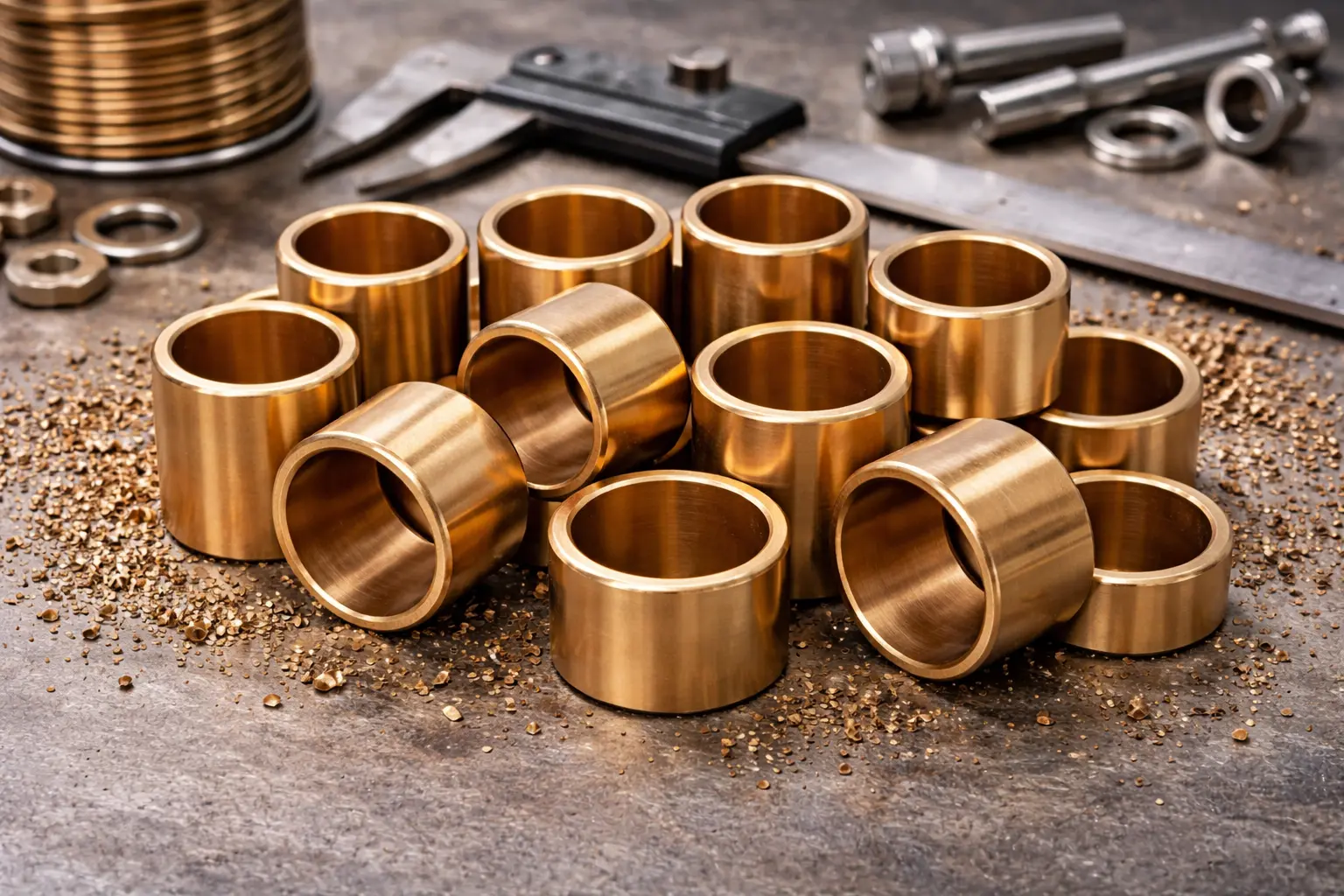
Worried about high quotes or late deliveries for your bushings? The real, expensive risks often appear after installation, causing downtime and rework that far exceed the part's initial cost.
The key to reducing bushing procurement risk is to minimize uncertainty early in the process. This involves verifying the supplier's understanding of your application, their material capabilities, and their production consistency, not just focusing on the lowest price or a perfect sample.
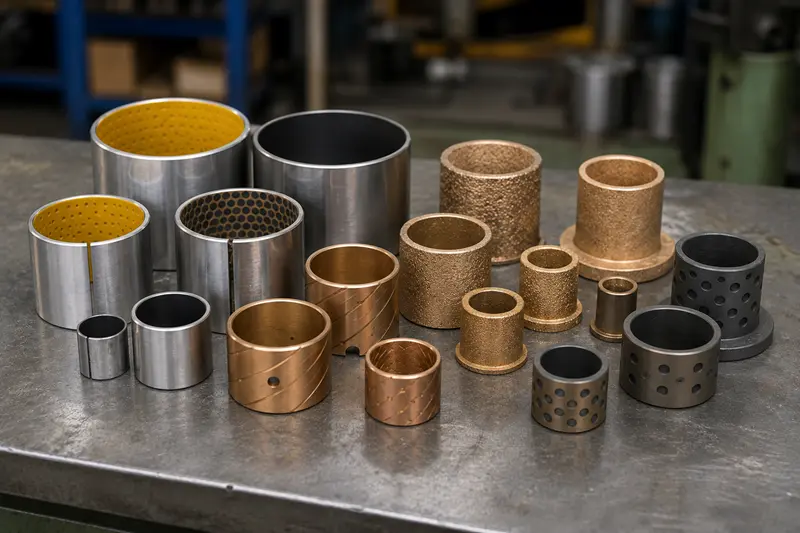
From my years running a bushing factory, I've seen that the most significant procurement failures don't come from paying a few cents more per unit. They come from catastrophic machine failures caused by a bushing that was technically made to the drawing's dimensions but was completely wrong for the job. The cost of a single day of stopped production can eclipse the entire bushing order.[^1] The following points are what we've learned are the most critical areas to focus on to prevent these expensive mistakes and ensure you're not just buying a part, but a reliable solution.
Why shouldn't you buy bushings based on drawings alone?
You send a detailed drawing for a quote, confident you've provided all the information. But the bushings you receive fail prematurely, and the supplier simply points back to the drawing.
A drawing tells a factory how to make a part, but it doesn't explain how the part will be used. Application conditions like load, speed, and environment are often more critical than dimensions for selecting the correct material and ensuring long-term performance.[^2]
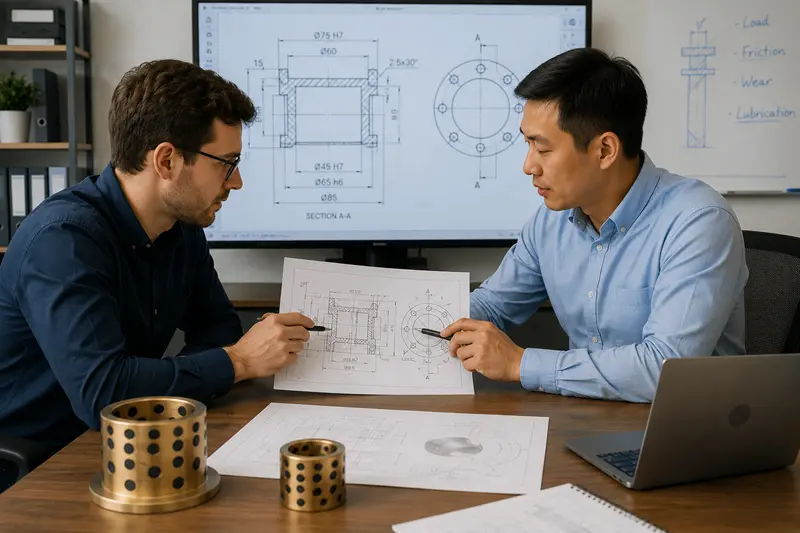
I see this happen all the time. A purchasing manager sends us a perfect technical drawing, and my first question is always, "What is this for?" The drawing shows the size and shape, but the real story is in the application. A bushing with the exact same dimensions could be used in a high-speed rotating motor or a slow-moving, high-load construction arm.[^3] These two scenarios require completely different material solutions to prevent failure. A good supplier should proactively ask about the operating conditions because they know that's where the real risk lies. Simply manufacturing to a print without understanding the context is a recipe for problems down the line.
Understanding Application Before Manufacturing
The most important conversation you can have with a bushing supplier happens before a single part is made. It's about the five key factors of the application:
- Load: Is it a heavy, static load or a light, dynamic one?
- Speed: Is it high-speed rotation or low-speed oscillation?
- Temperature: What are the minimum and maximum operating temperatures?
- Lubrication: Will it be lubricated, or does it need to run dry?
- Environment: Is it exposed to dirt, chemicals, or moisture?
Here’s a simple table showing how these factors change the material choice for the same bushing:
| Application Condition | Potential Material Solution | Why it Matters |
|---|---|---|
| High Load, Low Speed | Bronze Bushing with Grease | Needs strength and a way to manage friction. |
| High Speed, Low Load | Sintered Bronze (Oil-Impregnated) | Self-lubrication is key for high RPMs. |
| Dry, Clean Environment | Metal-Polymer Composite (PTFE) | No external lubrication is needed. |
| Dirty, Abrasive Area | Hardened Steel with Seals | Must resist wear from external contaminants. |
By discussing these points, you shift the focus from "make this shape" to "solve this engineering problem." This collaborative approach is the first and most crucial step in de-risking your procurement.
Is verifying material names enough for quality control?
You specified "CuSn8 bronze" in your order, assuming you'll get the performance you need. But the bushings from a new supplier wear out twice as fast as your old ones.
Specifying a material name like 'CuSn8' or 'PTFE Composite' is only the starting point.[^4] You must also verify the supplier's ability to control the material's properties through testing, process control, and chemical analysis to ensure consistent performance.
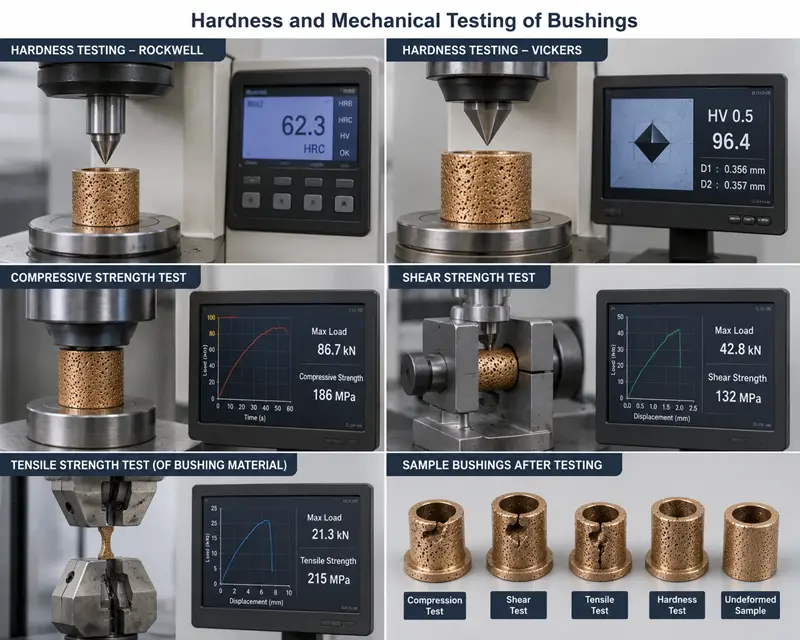
As a manufacturer, I know that two factories can start with the same raw material name and produce parts with vastly different performance characteristics. The name "CuSn8" doesn't guarantee the alloy composition is precise, the hardness is correct, or the grain structure is optimal. These properties are determined by the entire manufacturing process—from how the raw material is sourced and verified to the sintering temperatures and cooling rates used. A supplier who just tells you "Yes, we use CuSn8" is not giving you the full picture. A reliable partner will be able to show you how they verify and control these critical properties throughout production.
Looking Beyond the Material Label
True material capability is about process, not just a label. When we evaluate a new project, we look at the whole system. The same applies when you evaluate a supplier. Instead of just asking "What material is this?", you should be asking questions that reveal their level of control.
Here are the key areas to investigate:
- Material Certification: Do they get and verify mill test reports for all incoming raw materials? This confirms the basic chemical composition.
- In-Process Testing: What tests do they perform during manufacturing? This could include:
- Hardness Testing: Ensures the material has the right strength and wear characteristics. A soft bushing will deform, while a brittle one might crack.
- Density Checks (for sintered parts): Verifies the sintering process was successful and the part has the correct porosity for oil impregnation.
- Process Controls: How do they ensure every batch is the same? Look for documented procedures for things like furnace temperatures, press pressures, and machining speeds.
A supplier's confidence in their process control is a much better indicator of future performance than a simple material name on a quote.
| What You Specify | What You Should Verify | Why It's Critical |
|---|---|---|
| "CuSn8 Bronze" | Chemical analysis, hardness verification (HRC/HB) | Ensures strength, wear resistance, and avoids brittleness. |
| "PTFE Composite" | PTFE layer thickness, bond strength | Guarantees low-friction properties and prevents delamination. |
| "Bimetal" | Steel backing hardness, overlay alloy integrity | Confirms load capacity and the quality of the bearing surface. |
| "Sintered" | Porosity, oil content, density | Ensures proper self-lubrication and service life. |
By digging deeper into their quality processes, you are verifying their capability to produce a good part, not just their ability to purchase the right-sounding raw material.
Why is production consistency more important than samples?
The samples from a new supplier were perfect. You placed a large order, but when the bulk shipment arrived, you found dimension inconsistencies that caused assembly problems on your line.
A perfect sample only proves a supplier can make one good part.[^5] True reliability comes from their ability to make ten thousand good parts. Evaluating their batch consistency, process stability, and quality control systems is far more important for long-term success.
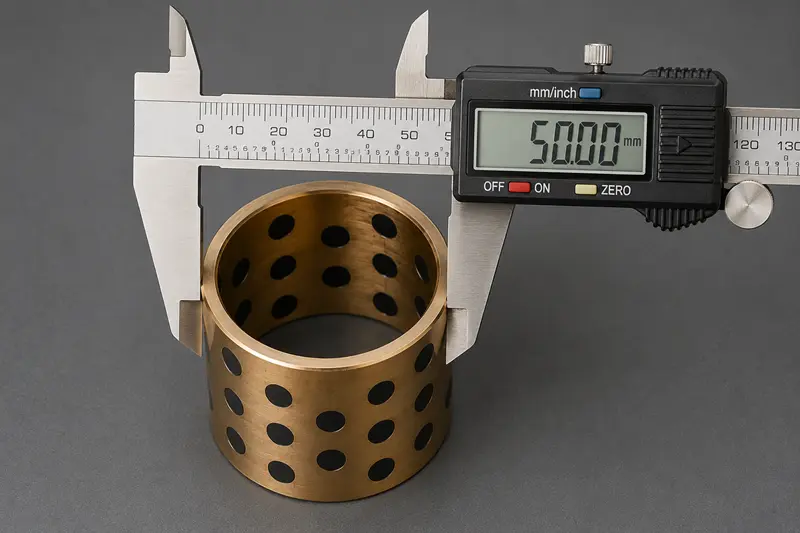
In my experience with OEM projects, the real problems rarely show up in the sample stage. They appear during the first mass production run, when an order is scaled up, or six months into a repeat order contract. Why? Because making a few perfect samples is easy. An expert machinist can hand-craft them. But maintaining that quality over thousands of units requires a robust, repeatable system. This is where many suppliers fall short. The focus should shift from "Can you make this sample?" to "Can you show me how you guarantee the 5,000th part will be identical to the 5th?"
Evaluating for Scale and Repetition
When you move from sampling to production, you are no longer buying a part; you are buying a process. A supplier's ability to deliver consistent quality at scale is the bedrock of a low-risk supply chain. You need to look for evidence of systems designed for repetition, not just one-off success.
Here's what to focus on to evaluate a supplier's consistency:
- Batch Traceability: Can they trace a specific batch of finished parts back to the raw material coil and the production date? This is critical for troubleshooting if a problem arises.
- Statistical Process Control (SPC): Do they use SPC to monitor key dimensions during production? This is a proactive approach that detects and corrects deviations before they result in a bad batch. Ask to see their control charts.
- Standard Operating Procedures (SOPs): Are machine setup and operation documented and followed by all operators? This reduces variability between shifts or different workers.
- Calibration Records: Are their measuring tools (calipers, micrometers, CMMs) regularly calibrated? Inaccurate tools can lead to an entire batch being produced out of tolerance.
A supplier who can confidently show you these systems is demonstrating that their quality is built into their process, not just inspected at the end. They aren't just hoping for a good outcome; they are engineering it.
How does tolerance control impact bushing performance?
The material is correct, and the bushing looks fine, but it's causing noise and overheating in your assembly. The issue isn't the material; it's a tolerance problem causing a poor fit.
Bushings are mating parts, so their performance depends entirely on proper fit.[^6] Even with the right material, incorrect tolerances for clearance, roundness, or concentricity can lead to rapid wear, heat generation, noise, and even seizure during operation.
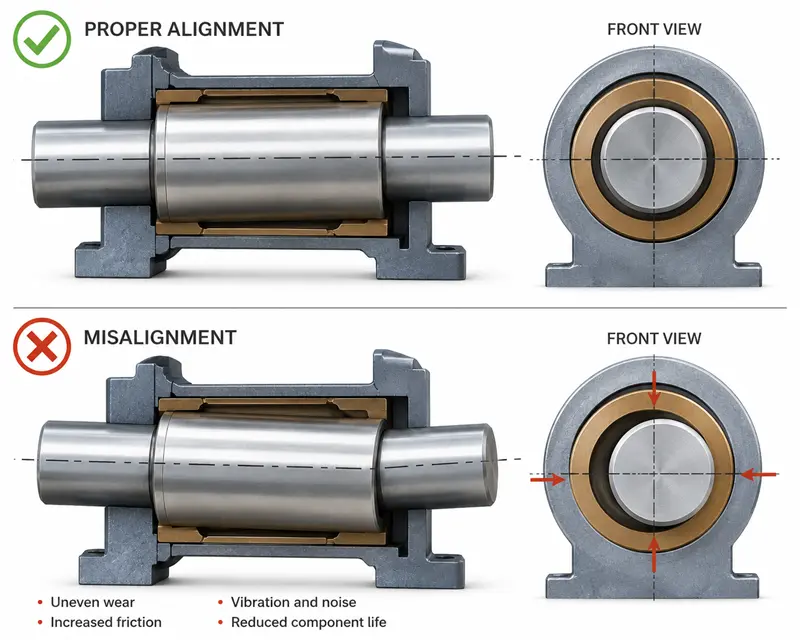
Many post-delivery problems that get blamed on "bad material" are actually fitment issues. I've seen cases where a customer reports premature wear, and when we investigate, we find the bushing was made to the correct outer and inner dimensions, but its roundness was off. After being pressed into the housing, it was no longer perfectly circular, creating high spots that wore down quickly. This is a tolerance control issue, not a material one. Controlling these geometric characteristics is just as important as controlling the dimensions you see on a print. It’s the invisible quality that determines real-world performance.
The Critical Role of Geometric Tolerances
A bushing's job is to maintain a precise gap, or clearance, with a shaft.[^7] This gap holds the lubricant and allows for smooth movement. If the tolerances are not controlled, this system breaks down. It's not just about the inner diameter (ID) and outer diameter (OD).
Here are the critical tolerances to discuss with your supplier:
- Clearance: The space between the shaft and the bushing's inner wall.
- Too little: Can cause seizure from heat expansion.
- Too much: Leads to vibration, noise, and uneven load distribution.
- Press-Fit Interference: How tightly the bushing fits into its housing.
- Too tight: Can deform the bushing, reducing its inner diameter (known as "bore closure") and eliminating the necessary clearance.
- Too loose: The bushing could spin in the housing, causing damage.
- Roundness (Circularity): How close the bushing is to a perfect circle. Poor roundness creates high spots that wear out fast.
- Concentricity: How well the center of the inner diameter aligns with the center of the outer diameter. Poor concentricity causes uneven wall thickness and unbalanced loads.
A professional manufacturer understands these relationships and can advise on the appropriate tolerances for your assembly. They should also have the CNC machining and quality control equipment to ensure these tolerances are held consistently in mass production.
| Tolerance Issue | Potential Consequence | How to Prevent It |
|---|---|---|
| Incorrect Clearance | Seizure or Vibration | Define operating clearance, not just pre-install dimensions. |
| Excessive Press-Fit | Bore closure, loss of clearance | Test press-fit and measure the bushing ID after installation. |
| Poor Roundness | High spots, rapid and uneven wear | Specify roundness tolerance and verify with CMM or roundness tester. |
| Poor Concentricity | Unbalanced load, premature failure on one side | Specify concentricity and ensure supplier has capable CNC equipment. |
Focusing on tolerance control turns a simple part into a precision component.
What's the best way to start with a new supplier?
You need a large quantity of bushings for a new product line and want to avoid risk. Placing a massive first order feels like a gamble, even if the supplier's quote is competitive.
Never go directly from a quote to a large-volume order with a new supplier.[^8] The safest approach is a phased validation process: start with samples for testing, move to a small pilot order for on-line validation, and only then scale up to mass production.
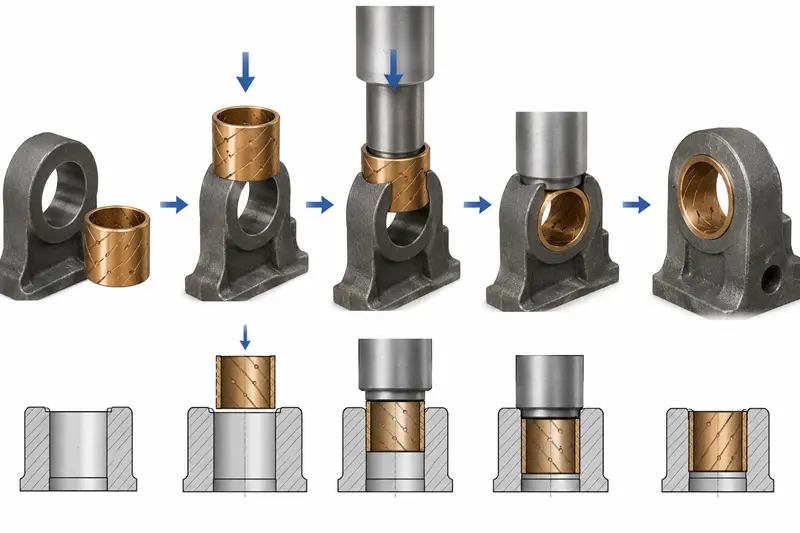
I always advise new clients, especially on critical OEM projects, to walk before they run. There can be a surprising gap between how a part performs in a lab and how it holds up in the real world. A pilot order of, say, 50 or 100 pieces that you can install on a few test units in the field is invaluable.[^9] It might reveal subtle issues with installation, or how the bushing behaves after 100 hours of real-world use—things that a lab test would never show. This phased a
[^1]: "The Monthly Metric: Unscheduled Downtime", https://www.ismworld.org/supply-management-news-and-reports/news-publications/inside-supply-management-magazine/blog/2024/2024-08/the-monthly-metric-unscheduled-downtime/. This source provides industry data on the financial impact of production downtime, supporting the claim that downtime costs can exceed the initial part cost. Evidence role: statistic; source type: institution. Supports: Production downtime can result in costs that far exceed the initial expense of parts like bushings.. Scope note: The data may vary depending on industry and production scale. [^2]: "Role of Materials Selection in the Resilience of the Built Environment", https://pmc.ncbi.nlm.nih.gov/articles/PMC6506836/. This source explains how application-specific factors like load and speed influence material selection and performance in engineering components. Evidence role: mechanism; source type: education. Supports: Application-specific factors are more critical than dimensions for material selection and performance.. Scope note: The source may focus on general engineering principles rather than bushings specifically. [^3]: "[PDF] HIGH SPEED ELECTRIC DRIVE APPLICATIONS-AN ... - OAKTrust", https://oaktrust.library.tamu.edu/bitstreams/9d31968e-0573-42dd-bc14-2e5688d7304b/download. This source discusses how identical components can require different materials based on their application environments. Evidence role: mechanism; source type: education. Supports: Identical components can require different materials based on their application environments.. Scope note: The examples may not directly reference bushings but similar engineering components. [^4]: "Specification (technical standard) - Wikipedia", https://en.wikipedia.org/wiki/Specification_(technical_standard). This source explains why material names alone are insufficient for ensuring performance, emphasizing the importance of process control. Evidence role: expert_consensus; source type: research. Supports: Material names alone are insufficient for ensuring performance; process control is critical.. Scope note: The source may focus on general material science rather than bushings specifically. [^5]: "[PDF] Sampling Methodologies | Comptroller's Handbook | OCC.gov", https://www.occ.gov/publications-and-resources/publications/comptrollers-handbook/files/sampling-methodologies/pub-ch-sampling-methodologies.pdf. This source discusses the limitations of sample-based evaluations in manufacturing quality control. Evidence role: expert_consensus; source type: education. Supports: Sample-based evaluations are insufficient for assessing long-term manufacturing quality.. Scope note: The source may focus on general manufacturing practices rather than bushings specifically. [^6]: "Types of Fit in Engineering: Clearance, Transition, and ...", https://www.fictiv.com/articles/engineering-fits-clearance-transition-interference. This source explains the importance of fit and tolerances in the performance of mating engineering components. Evidence role: mechanism; source type: education. Supports: The performance of mating parts like bushings depends entirely on proper fit and tolerances.. Scope note: The source may focus on general engineering principles rather than bushings specifically. [^7]: "Bushing - Wikipedia", https://en.wikipedia.org/wiki/Bushing. This source explains the role of clearance in the performance of bushings and similar components. Evidence role: definition; source type: education. Supports: A bushing's primary function is to maintain a precise gap or clearance with a shaft.. Scope note: The source may focus on general engineering components rather than bushings specifically. [^8]: "What Are the Various Risks in Supply Chain Management?", https://www.apu.apus.edu/area-of-study/business-and-management/resources/what-are-the-various-risks-in-supply-chain-management/. This source discusses the risks of scaling up orders with new suppliers without phased validation. Evidence role: expert_consensus; source type: education. Supports: Scaling up orders with new suppliers without phased validation poses significant risks.. Scope note: The source may focus on general supplier evaluation practices rather than bushings specifically. [^9]: "FDA PreCheck Pilot Program", https://www.fda.gov/industry/fda-precheck-pilot-program. This source explains the benefits of pilot orders for testing supplier reliability and product performance. Evidence role: case_reference; source type: education. Supports: Pilot orders are invaluable for testing supplier reliability and product performance in real-world conditions.. Scope note: The source may focus on general pilot testing practices rather than bushings specifically.