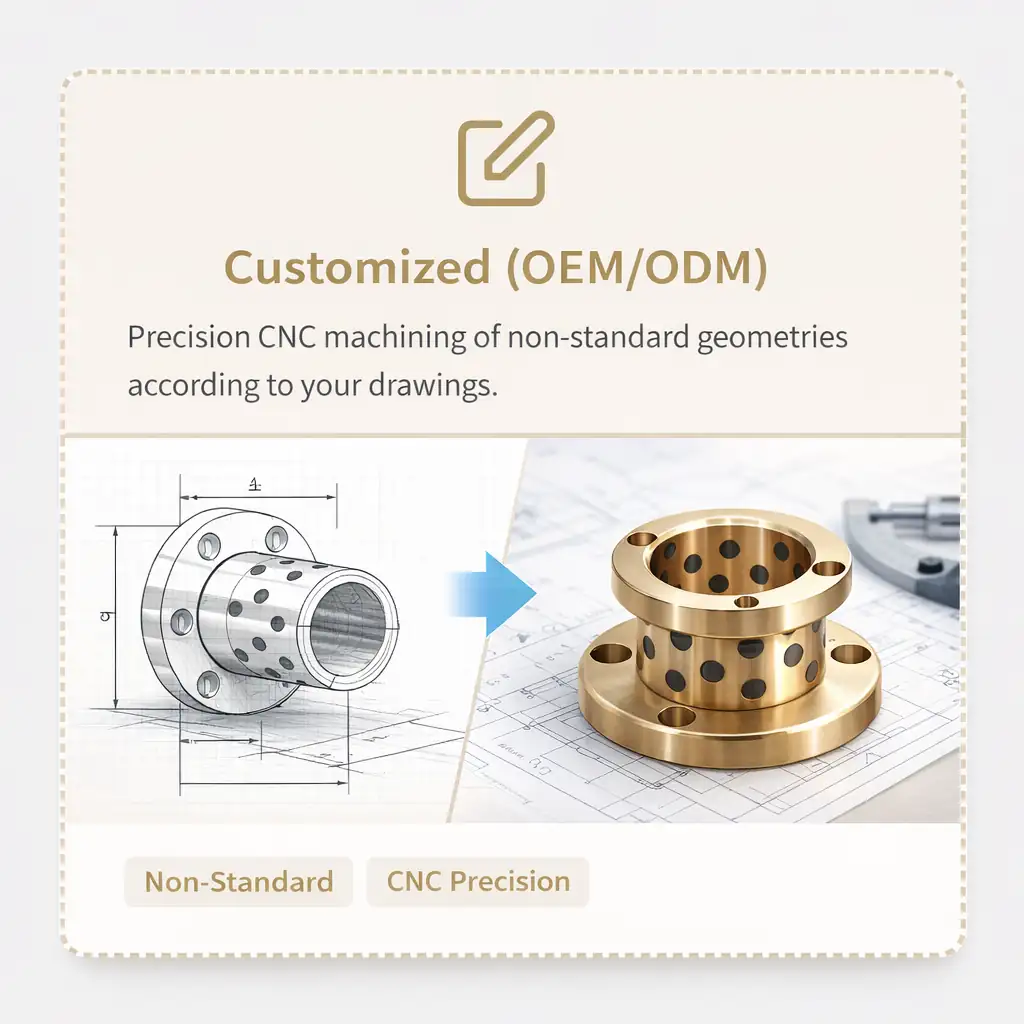
Struggling to get accurate quotes for your custom bushings? Providing just a size isn't enough and often leads to delays and incorrect parts.
A successful custom bushing project depends on four key factors: a complete drawing, the correct material choice for the application, precise tolerance control, and a feasible minimum order quantity (MOQ). Getting these right from the start ensures accurate pricing, reliable performance, and smooth production.
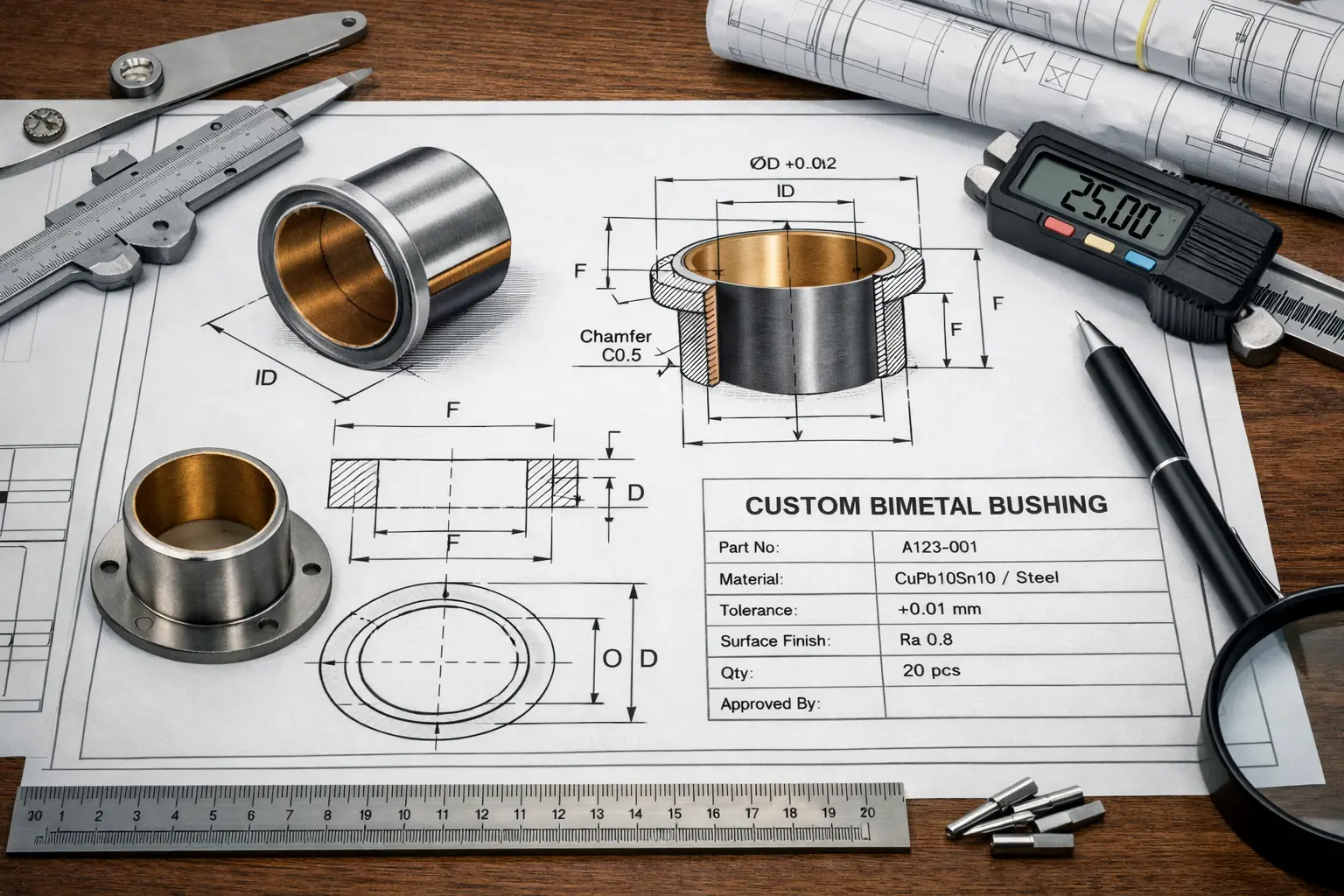
From my experience on the factory floor, I've seen countless projects get stuck. A buyer sends an email saying, "Please quote this bushing," with just a photo attached. While we can see the general shape, we can't give an accurate price or even confirm if we can make it properly. To really help our OEM clients succeed, we need to look deeper. It's about building a part that works perfectly in your machine, not just a piece of metal that looks right. Let's break down the four pillars that every successful custom bushing project is built on.
Is a Good Drawing Really That Important for Custom Bushings?
Think a quick sketch is enough for a quote? This common mistake can cause major headaches and delays for your project down the line.
A good drawing is crucial because it provides all necessary manufacturing details, from dimensions to special features.[^1] It eliminates guesswork, ensures an accurate quote, and prevents costly assembly problems later. It is the blueprint for success.
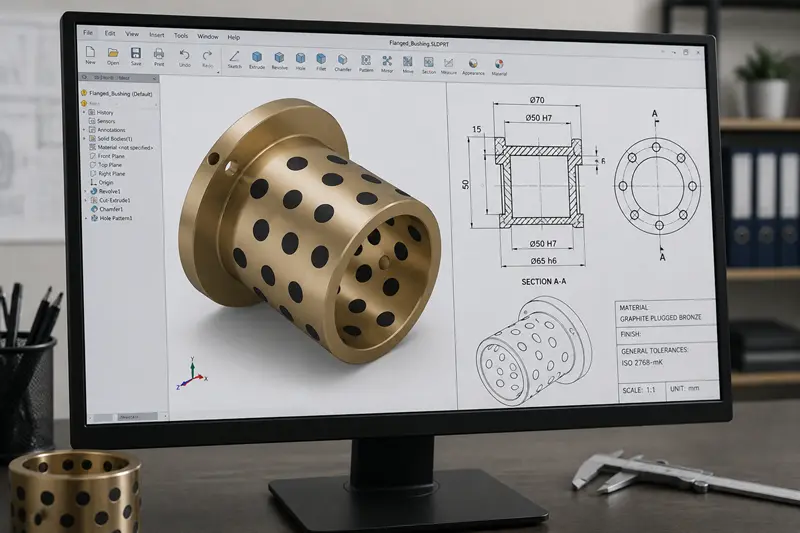
A drawing is the starting point for any custom project. It is our shared language. When an OEM buyer sends a complete drawing, it tells me they are serious about the project and understand what it takes to get it done right. It saves everyone time.[^2] We don't have to go back and forth asking for basic information. On the other hand, a vague request with a photo or a hand-drawn sketch with missing details forces us to make assumptions. These assumptions can lead to a quote that is either too high or, worse, for a part that won't actually work. For an OEM project, where hundreds or thousands of machines depend on this small part, a good drawing isn't just helpful; it's essential for a smooth assembly line and a reliable final product.
The Anatomy of a Perfect Drawing
A complete drawing should clearly specify all the details needed for manufacturing. Anything less creates risk.
| Essential Drawing Information | Why It Matters |
|---|---|
| ID, OD, & Length | The basic dimensions that define the bushing's size. |
| Flange Dimensions | If it's a flanged bushing, we need the flange OD and thickness. |
| Chamfers | Eased edges that help with installation and prevent damage to the shaft. |
| Grooves or Holes | Defines the lubrication system, which is critical for performance. |
| Surface Finish | Affects friction and wear; a smoother finish is not always better. |
| Tolerance Requirements | The most critical part for fit and function, which we'll discuss next. |
Without this information, we are just guessing. And in manufacturing, guessing costs time and money.
Why Does Material Choice Matter for Bushings of the Same Size?
You found a cheaper bushing of the exact same size. But will it work? Choosing the wrong material can lead to rapid failure and equipment downtime.[^3]
Bushings of the same size can be made from vastly different materials.[^4] Each material is designed for specific conditions like load, speed, and temperature. Choosing the wrong one, even if it fits, can cause premature wear and costly breakdowns.
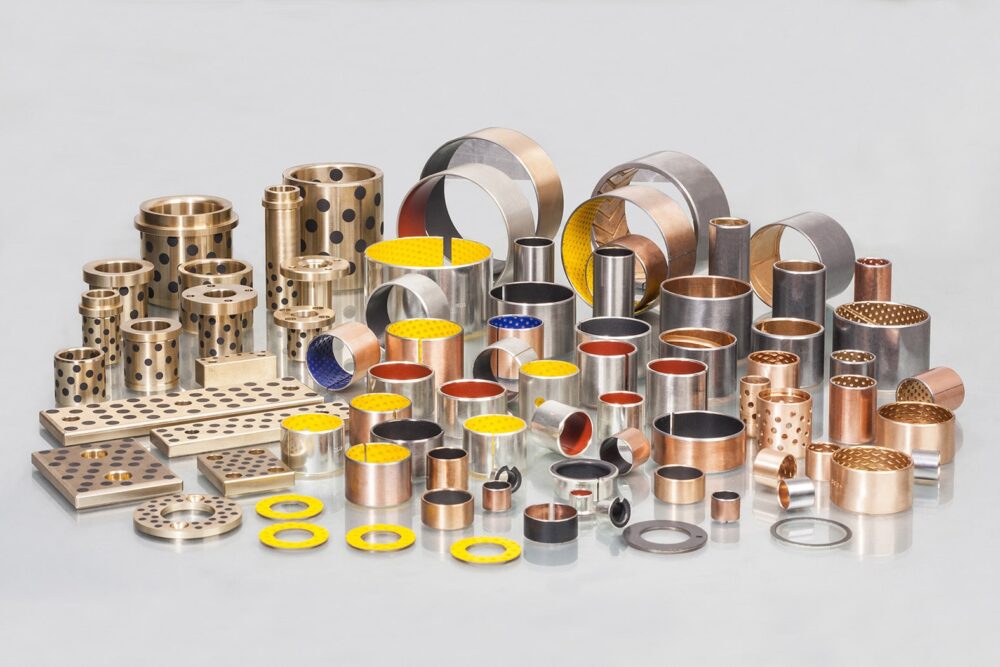
This is the mistake I see most often. A buyer focuses only on getting the dimensions right and then chooses the cheapest material option. But the material is the heart of the bushing. It determines how the bushing will perform under pressure. Imagine you have a high-performance race car. You wouldn't put cheap, all-season tires on it and expect it to win a race. The same logic applies to bushings. A bronze bushing might be great for high loads and slow speeds, but it could fail quickly in a high-speed, no-lube application where a PTFE composite bushing would be perfect.[^5] As a manufacturer, our goal is to provide a bushing that lasts. To do that, we need to know the working conditions. The right material choice isn't about the price; it's about matching the material's strengths to the application's demands.[^6]
Matching Material to Your Application
The key is to select a material based on its intended use, not its price tag.
| Material Type | Best For... | Key Characteristics |
|---|---|---|
| PTFE Composite | High speed, low load, dry running | Self-lubricating, low friction |
| Bimetal | High load, medium speed, lubricated | Strong steel backing, good wear layer |
| Solid Bronze | Very high load, low speed, lubricated | Excellent load capacity, can be custom machined |
| Sintered Bronze | Medium speed & load, self-lubricating | Porous structure holds oil, quiet operation |
Thinking about the load, speed, temperature, and lubrication environment will always lead you to a better, more reliable bushing solution.
Could Wrong Tolerances Cause Failure Faster Than Wrong Materials?
You specified the right material, but your equipment is still failing. The problem might be something you overlooked: the tolerance. It is a silent killer.
Yes, incorrect tolerances can absolutely cause failure faster than the wrong material. Bushings work as part of a system with a shaft and housing. If the fit is too tight, it will seize. If it's too loose, it will vibrate and wear out quickly.
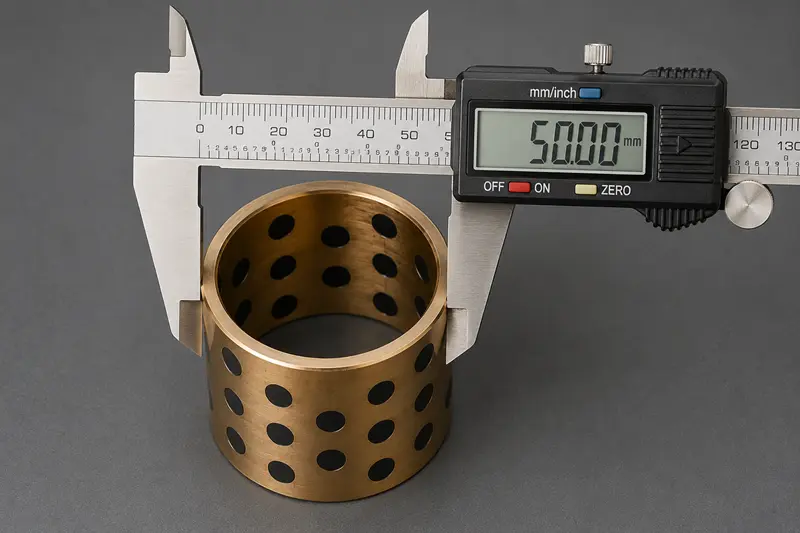
Many buyers focus heavily on the material but only list a nominal size for the dimensions. In reality, the small variations allowed by tolerances are often more important. A bushing doesn't work alone. It needs to be pressed into a housing and have a shaft rotate inside it. The small space between the bushing and the shaft, known as the operating clearance, is critical.[^7] If that clearance is wrong, the bushing will fail. It doesn't matter if it's made from the most advanced material in the world. As a factory, we control tolerances to microns. We also need to account for how much the bushing will compress when it's pressed into the housing. This is called press-fit compensation. If a buyer's drawing doesn't specify tolerances, we have to use a general standard, which might not be right for their specific shaft and housing.
The Critical Role of Clearance
The right fit is everything. Too tight or too loose both lead to failure.
| Tolerance Issue | The Problem | The Result |
|---|---|---|
| Clearance Too Small | Not enough space for the shaft or lubricant. | Overheating, seizure, and catastrophic failure. |
| Clearance Too Large | The shaft can move around and vibrate. | Noise, vibration, and rapid, uneven wear. |
| Poor Concentricity | The inner and outer diameters are not perfectly centered. | The load is concentrated on one spot, causing localized wear. |
For any OEM project, specifying the tolerances for the inner diameter (ID), outer diameter (OD), and any concentricity or roundness requirements is not optional.[^8] It is essential for function.
Why Does Minimum Order Quantity (MOQ) Change My Custom Bushing Price so Much?
Surprised by the high price for a small batch of custom bushings? The quantity you order fundamentally changes the cost structure of manufacturing.
The MOQ is critical because the initial costs of tooling, machine setup, and testing must be spread across the total number of parts.[^9] For small orders, these fixed costs make each individual bushing much more expensive.[^10]
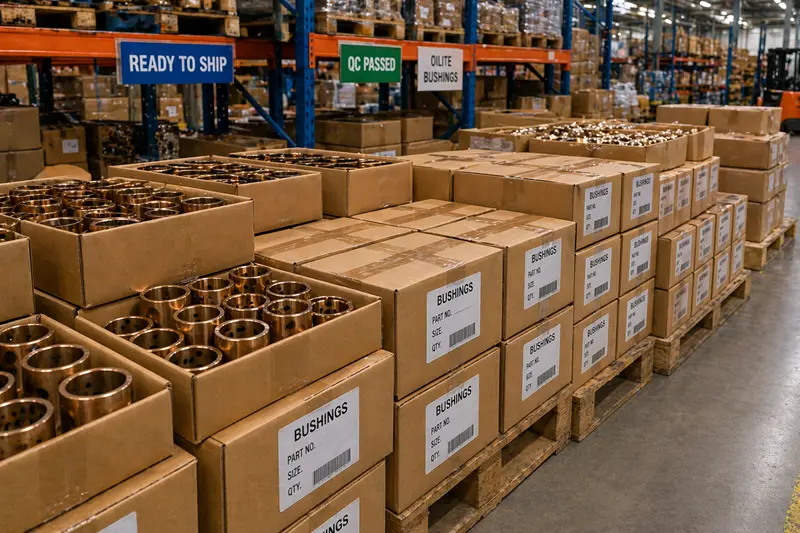
Many times, a buyer asks for a quote for 100 custom pieces and is shocked by the unit price. They think, "It's just a small part, why is it so expensive?" What they don't see are the upfront costs. For a new custom size, we may have to create new tooling or molds. We have to stop a production line, take out the old setup, and install the new one. Then we run test pieces and measure them carefully to ensure they are perfect. All of this costs time and money before we've even produced a single good part for the customer. If we are making 10,000 pieces, that setup cost gets divided by 10,000, so it adds very little to each part. But if we are only making 100 pieces, that same setup cost gets divided by 100, making each part significantly more expensive.
How Quantity Impacts Your Unit Cost
Understanding the breakdown of costs makes it clear why volume matters.
| Cost Component | Example Cost | Cost per piece (100 units) | Cost per piece (10,000 units) |
|---|---|---|---|
| Tooling & Setup | $500 | $5.00 | $0.05 |
| Material & Labor | $0.50 per piece | $0.50 | $0.50 |
| Total Unit Cost | - | $5.50 | $0.55 |
This is why MOQ is not just a rule for the factory; it's a reflection of manufacturing economics. For small quantities, the project might not be financially viable unless the buyer is willing to cover the high per-unit cost. That's why we focus on B2B bulk production—it's where we can deliver the most value.
Conclusion
A complete inquiry with a drawing, material specs, tolerances, and quantity is key to a successful custom bushing project.[^11] This saves time and ensures you get the right part.
[^1]: "[PDF] Engineering Working Drawings Basics - S3VI", https://s3vi.ndc.nasa.gov/ssri-kb/static/resources/Engineering+Working+Drawing+Basics.pdf. This source explains the importance of detailed engineering drawings in manufacturing, emphasizing their role in reducing errors and ensuring accurate production. Evidence role: expert_consensus; source type: education. Supports: A good drawing is crucial because it provides all necessary manufacturing details, from dimensions to special features.. [^2]: "How to Improve Manufacturing Efficiency in 4 Steps - dataPARC", https://www.dataparc.com/blog/improve-manufacturing-efficiency/. This source discusses how detailed project specifications reduce communication delays and improve manufacturing efficiency. Evidence role: expert_consensus; source type: education. Supports: It saves everyone time.. [^3]: "4. Labor, Material and Equipment Utilization", https://www.cmu.edu/cee/projects/PMbook/04_Labor,_Material,_And_Equipment_Utilization.html. This source discusses how material selection impacts the durability and performance of mechanical components, including bushings. Evidence role: mechanism; source type: research. Supports: Choosing the wrong material can lead to rapid failure and equipment downtime.. [^4]: "What material is used for bushings? - SC Industries, Inc.", https://www.scindustriesinc.com/blog/what-material-is-used-for-bushings/. This source provides an overview of different materials used in bushing manufacturing and their applications. Evidence role: definition; source type: encyclopedia. Supports: Bushings of the same size can be made from vastly different materials.. [^5]: "PTFE Composite Bushing - Straight (Cylindrical) Or Flange?", https://www.bronzelube.com/products/ptfe-composite-bushings/. This source compares the performance characteristics of bronze and PTFE composite bushings under different operating conditions. Evidence role: mechanism; source type: research. Supports: A bronze bushing might be great for high loads and slow speeds, but it could fail quickly in a high-speed, no-lube application where a PTFE composite bushing would be perfect.. [^6]: "The Importance of Material Selection in Mechanical Engineering", https://www.agt-tech.co.il/blog-posts/the-importance-of-material-selection-in-mechanical-engineering-ensuring-optimal-performance-and-longevity. This source discusses the importance of aligning material properties with application requirements in engineering design. Evidence role: expert_consensus; source type: education. Supports: The right material choice isn't about the price; it's about matching the material's strengths to the application's demands.. [^7]: "Where is operating clearance mesured? - Answers.com", https://math.answers.com/math-and-arithmetic/Where_is_operating_clearance_mesured. This source explains the concept of operating clearance in mechanical systems and its importance for proper function. Evidence role: definition; source type: education. Supports: The small space between the bushing and the shaft, known as the operating clearance, is critical.. [^8]: "The Role of Tolerance Analysis in Reducing Manufacturing Costs", https://www.sigmetrix.com/blog/role-tolerance-analysis-reducing-manufacturing-costs. This source highlights the necessity of specifying tolerances in OEM projects to ensure compatibility and performance. Evidence role: expert_consensus; source type: education. Supports: For any OEM project, specifying the tolerances for the inner diameter (ID), outer diameter (OD), and any concentricity or roundness requirements is not optional.. [^9]: "[PDF] Raw Material Minimum Order Quantity Optimization - DSpace@MIT", https://dspace.mit.edu/bitstream/handle/1721.1/121302/1240293813-MIT.pdf?sequence=1. This source outlines how minimum order quantities affect manufacturing costs, particularly in custom production. Evidence role: mechanism; source type: education. Supports: The MOQ is critical because the initial costs of tooling, machine setup, and testing must be spread across the total number of parts.. [^10]: "7 Strategies to Boost Small Batch Manufacturing Profit Margins", https://financialmodelslab.com/blogs/profitability/small-batch-production?srsltid=AfmBOoo5Q3-JEAI2055GwRKBaq2bWG-GBuFKQBRo3JCC2IlbbnuKYEk0. This source explains how fixed costs in manufacturing disproportionately affect the unit price of small production runs. Evidence role: mechanism; source type: education. Supports: For small orders, these fixed costs make each individual bushing much more expensive.. [^11]: "Cutting Edge: Production - Cornell University", https://courses.cit.cornell.edu/cuttingedge/production/04_production.htm. This source emphasizes the importance of detailed inquiries in custom manufacturing projects to ensure accuracy and efficiency. Evidence role: expert_consensus; source type: education. Supports: A complete inquiry with a drawing, material specs, tolerances, and quantity is key to a successful custom bushing project..