Choosing the wrong transmission bushing can cause system failure and costly recalls.[^1] This tiny part can stop a whole machine, hurting your reputation. Understanding key factors ensures you pick a reliable bushing.
To choose the right transmission bushing, you must balance material properties with design specifics. Select materials like bimetal for high loads or sintered bronze for self-lubrication. Then, match this choice with critical design factors like lubrication method, dimensional precision, and operating temperature for overall system stability.
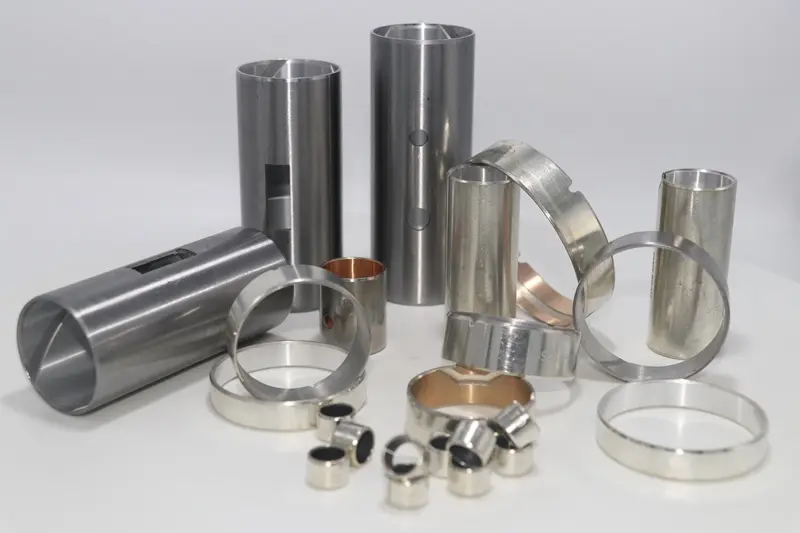
It’s easy to get lost looking at material spec sheets. From my years in the factory, I've learned that real success comes from matching the right material to the specific job inside the transmission. A bushing isn't just a wear part; it's a key piece for smooth operation and low noise. Let's break down the most common material choices to see which one is the best fit for your equipment.
Which Material Is Best for Your Transmission Application?
Are you stuck choosing between bimetal, sintered bronze, and composite bushings? Picking based on just one feature, like wear resistance, can cause unexpected failures. Let's clarify which material works best in different transmission jobs.
Bimetal bushings are great for high-load, lubricated systems.[^2] Sintered bronze is perfect for self-lubricating, low-noise needs.[^3] Composites give you low friction but need care in high-heat conditions.[^4] For extreme loads, high-strength bronze is the answer, but it needs good lubrication.
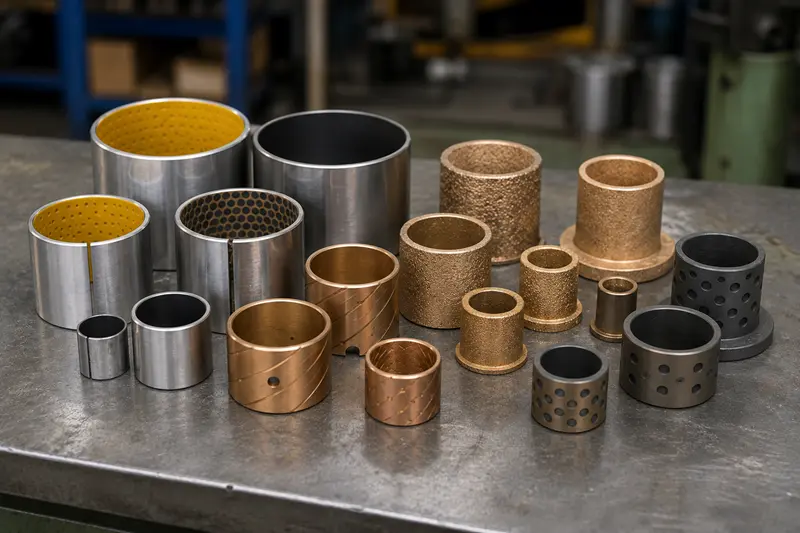
When we manufacture bushings, we see firsthand how material choice impacts performance. It’s not just about what a material is made of, but how it behaves under pressure, heat, and constant motion inside a gearbox. Getting this right is fundamental to building a reliable transmission.
Bimetal Bushings: The Balanced Workhorse
These are a go-to choice for many transmission applications, and for good reason. They have a strong steel back that provides excellent structural support. A layer of bronze alloy is bonded to the steel, providing a durable, low-friction surface. This combination is ideal for medium to high loads where a consistent supply of oil or grease is available. From a manufacturing standpoint, they offer a great balance between cost and performance, making them perfect for mass-produced equipment where reliability and budget are both important.
Sintered Bronze: The Quiet, Self-Sufficient Operator
Imagine a sponge made of metal. That’s a sintered bronze bushing. We create it by pressing metal powder into a shape and then heating it, which leaves a porous structure. This structure soaks up oil and releases it during operation, creating a self-lubricating film. This makes them perfect for applications where maintenance is difficult or in smaller transmissions that need to run quietly and continuously. They handle medium-low loads very well and are champions at keeping noise levels down, a critical factor in many modern machines.
PTFE / POM Composite Bushings: The Low-Friction Specialist
These bushings are a multi-layered solution. They typically have a steel backing, a sintered bronze middle layer, and a top layer of a polymer like PTFE or POM. They are designed for dry-running or very limited lubrication conditions. Their main advantage is extremely low friction, which can improve efficiency. However, you must be careful. In high-temperature or high-speed transmissions, this plastic layer can wear quickly or deform, so we always work with customers to carefully check the heat limits and load conditions.
High-Strength Bronze Bushings: The Heavy Lifter
For the toughest jobs, like in heavy construction or agricultural machinery transmissions, solid bronze bushings are often the answer. Machined from a single piece of high-strength bronze alloy, they can handle very high loads and impact. Their success, however, depends entirely on excellent lubrication and very precise machining and alignment. As manufacturers, we emphasize that these bushings require a robust lubrication system and a perfectly matched shaft to perform reliably under stress.
Here is a simple table to help you compare:
| Material Type | Load Capacity | Lubrication Needs | Best For | Key Limitation |
|---|---|---|---|---|
| Bimetal | Medium to High | Required (Oil/Grease) | General purpose, cost-effective | Needs consistent lubrication |
| Sintered Bronze | Low to Medium | Self-lubricating (oil-impregnated) | Low noise, continuous operation | Lower load capacity |
| PTFE/POM Composite | Low to Medium | Dry-running or minimal | Low friction, maintenance-free | Sensitive to high temperatures |
| High-Strength Bronze | Very High | Essential (Good lubrication) | Extreme loads, harsh conditions | Higher cost, needs precision |
What Design Details Can't Be Ignored for Transmission Bushings?
You picked the right material, but your bushings are still failing too soon. Small design mistakes in tolerance or lubrication can ruin even the best material. Focusing on these details ensures your bushing works as planned.
Key design details include the shaft speed, load, lubricant type, and operating temperatures.[^5] You also have to specify tolerances, concentricity, the hardness of the mating shaft, and any needed oil grooves or holes. These factors are just as important as the material for ensuring long life and low noise.
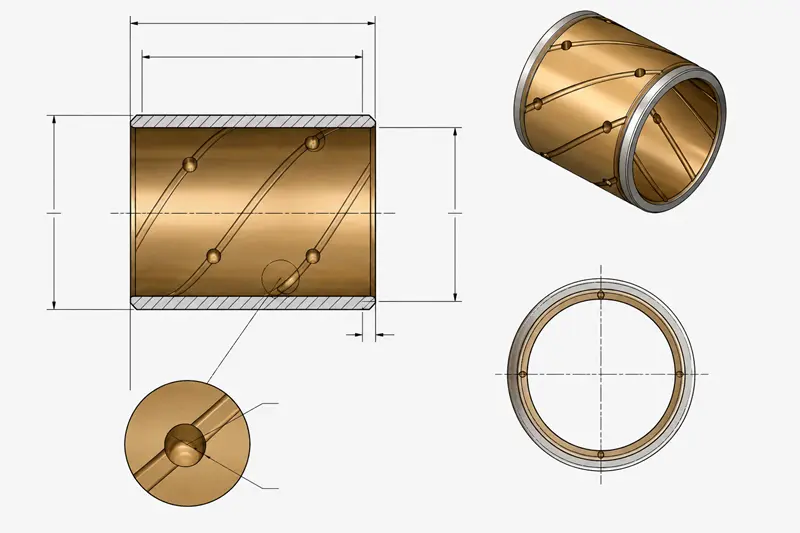
From a factory perspective, the material is just the starting point. The real success of a transmission bushing comes from getting the design details right. When an OEM buyer like Sofia sends us a drawing for a new project, these are the details we focus on to guarantee performance and consistency across thousands of parts. A bushing is not just a tube; it's a precision component that has to work perfectly with everything around it. Failure to consider these points can lead to noise, vibration, and ultimately, system failure.[^6]
Defining the Operating Environment
First, we need to know the bushing’s exact job.
- Shaft Speed & Load: Is it a high-speed, low-load application or a slow-moving, high-load one? This tells us how much pressure and friction the bushing will face, which directly influences material selection and the need for lubrication features.
- Temperature Range: Transmissions get hot. We need to know the minimum and maximum operating temperatures to ensure the material won't soften, expand too much, or cause the lubricant to break down. This is crucial for polymer-lined bushings.
- Lubrication: What kind of oil will be used? How will it get to the bushing? Is it a splash system, a pressurized feed, or does the bushing need to hold its own oil? The design must support the lubrication method to maintain a stable oil film.
Precision, Fit, and Mating Parts
This is where tiny details make a huge difference in performance.
- Tolerances & Concentricity: The inner and outer diameters must be incredibly precise. If the fit is too tight, the shaft can seize when things heat up. If it's too loose, you get vibration and uneven wear. Concentricity—making sure the inner and outer circles are perfectly centered—is vital for preventing uneven loading and premature failure.
- Mating Shaft: The shaft that runs inside the bushing is just as important. Its surface finish and hardness must be compatible with the bushing material. A shaft that is too rough will act like sandpaper on the bushing, while one that's too smooth might not hold an oil film properly.
Custom Features for Performance
Finally, we often add features to enhance performance based on the application's needs.
- Oil Grooves and Holes: These are not random patterns. We design specific grooves—like straight lines, circles, or figure-eights—to distribute lubricant evenly across the entire load-bearing surface. Holes can help feed oil directly where it's needed most, preventing starvation under load.
- Noise and Vibration (NVH): For many modern transmissions, low noise is a primary requirement. This goes back to precision. Tight tolerances, good surface finishes, and stable lubrication all work together to create a quiet, smooth-running system. Thinking about these details from the start prevents problems later. It’s the difference between a part that just fits and a part that actually performs reliably.
Conclusion
Choosing the right transmission bushing means looking beyond just the material. A reliable solution balances material with precision design and proper lubrication to ensure stable, long-lasting, and quiet performance.[^7]
[^1]: "Troubleshooting Power Transmission Bushing Failures", https://www.mechanicalpower.net/blog/power-transmission/troubleshooting-power-transmission-bushing-failures-causes-and-solutions/?srsltid=AfmBOooPjwu4QWR8QM9PdUiNjnQ0hXDZ13bh8KNVZf-l63n0mZJqt3tF. This source explains how improper selection of transmission bushings can lead to mechanical failures and recalls, emphasizing the importance of material and design compatibility. Evidence role: case_reference; source type: education. Supports: Choosing the wrong transmission bushing can cause system failure and costly recalls.. [^2]: "Metal & Bimetal - Bronze Bearings - Steel Bushings | GGB", https://www.ggbearings.com/en/our-products/metal-and-bimetal-bearings. This source provides technical details on the performance characteristics of bimetal bushings in high-load, lubricated systems. Evidence role: mechanism; source type: research. Supports: Bimetal bushings are great for high-load, lubricated systems.. Scope note: The support may focus on specific types of bimetal bushings rather than all variants. [^3]: "Sintered Bronze Material - Products, Properties, & Specifications", https://www.atlasbronze.com/841-sintered-bronze-product-sheet-s/1960.htm. This source discusses the self-lubricating properties and noise reduction capabilities of sintered bronze bushings. Evidence role: mechanism; source type: research. Supports: Sintered bronze is perfect for self-lubricating, low-noise needs.. Scope note: The findings may be specific to certain manufacturing processes of sintered bronze. [^4]: "[PDF] Performance of PTFE-Lined Composite Journal Bearings", https://ntrs.nasa.gov/api/citations/19820009389/downloads/19820009389.pdf. This source explains the low-friction properties of composite bushings and their limitations in high-temperature environments. Evidence role: mechanism; source type: research. Supports: Composites give you low friction but need care in high-heat conditions.. Scope note: The support may not cover all types of composite bushings. [^5]: "[PDF] Tribological Performance of PM400 Bushings in Oscillatory Sliding ...", https://ntrs.nasa.gov/api/citations/20190000817/downloads/20190000817.pdf. This source elaborates on the importance of design factors like shaft speed, load, and lubrication in transmission bushing performance. Evidence role: mechanism; source type: education. Supports: Key design details include the shaft speed, load, lubricant type, and operating temperatures.. Scope note: The support may not address all design factors comprehensively. [^6]: "Transmission Line Design Manual", https://www.usbr.gov/tsc/techreferences/mands/mands-pdfs/TrnsLine.pdf. This source explains how neglecting design factors can result in noise, vibration, and system failure in transmission bushings. Evidence role: mechanism; source type: education. Supports: Failure to consider these points can lead to noise, vibration, and ultimately, system failure.. Scope note: The support may focus on specific failure modes rather than general outcomes. [^7]: "Understanding Bushings: A Comprehensive Guide - SC Industries, Inc.", https://www.scindustriesinc.com/blog/understanding-bushings-a-comprehensive-guide/. This source emphasizes the importance of balancing material selection, design precision, and lubrication for optimal bushing performance. Evidence role: expert_consensus; source type: education. Supports: A reliable solution balances material with precision design and proper lubrication to ensure stable, long-lasting, and quiet performance.. Scope note: The support may not address all aspects of reliability comprehensively.