Choosing the wrong suspension bushing can ruin your product's performance. It’s a small part that causes big problems, leading to noise, premature failure, and unhappy customers down the line.
The best suspension bushing material depends entirely on your application's main goal. For comfort, choose rubber. For handling, pick polyurethane (PU). For extreme loads, use metal. For a low-maintenance, lightweight design, composite bushings are the ideal solution. It is not about which is universally "best."


Now that we have a quick overview, let's break down each material. Understanding where each one shines and what its limits are is the key to making the right choice from a manufacturing perspective. It helps you match the perfect bushing to your specific engineering needs, avoiding costly mistakes and ensuring your final product performs exactly as designed. Let's get into the details.
Is Rubber the Best Choice for Comfort and Noise Reduction?
Your equipment needs to be quiet and smooth for the end-user. Harsh vibrations and loud noises can make even the most robust machine feel cheap, leading to complaints and a poor reputation.
Yes, for any application where comfort and low noise (NVH) are the top priorities, rubber is often the perfect choice. It is fantastic at damping vibrations and is very cost-effective for mass production, making it the standard for passenger cars and light-duty equipment where a smooth ride is essential.
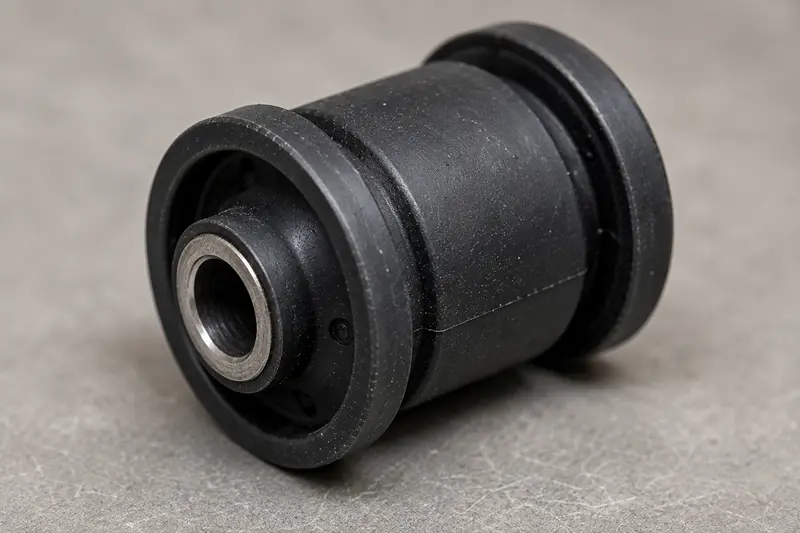
From my experience on the factory floor, rubber's main job is to isolate. It acts like a sponge for vibration and noise, which is why it has been the go-to material in passenger vehicles for decades. It provides that cushion between metal parts that prevents harshness from reaching the driver or operator. This makes the final product feel more refined and comfortable. However, rubber is not a perfect solution for every situation. Its biggest weakness is its vulnerability. It breaks down when exposed to oils, chemicals, and extreme temperatures. Over time, it also ages and can become brittle or crack, especially under sustained heavy loads. For an OEM, this means you have to consider the working environment. If the bushing is near an engine or in a chemically harsh setting, you might see premature failure.
Here is a simple breakdown from our perspective:
| Feature | Rubber Bushing Performance |
|---|---|
| Comfort (NVH) | Excellent |
| Handling Response | Moderate |
| Durability | Fair to Good |
| Cost | Low |
| Best For | Passenger cars, light equipment, comfort-focused designs |
So, while rubber is a fantastic and affordable choice for NVH control, you must weigh its environmental and load limitations against your product's expected life cycle.
Should You Upgrade to PU Bushings for Better Handling and Durability?
Maybe standard rubber bushings feel too soft and wear out too quickly in your application. This leads to sloppy handling, poor feedback for the operator, and the hassle of frequent replacement.
An upgrade to polyurethane (PU) is a great move if you need better handling, a more direct steering response, and a longer service life under stress. PU is much harder and more resistant to wear, oils, and chemicals than rubber, making it a top choice for performance vehicles and demanding industrial applications.
When we get requests for a "tougher" bushing, customers are often talking about polyurethane. Unlike rubber, which flexes and absorbs energy, PU is much stiffer. This stiffness reduces the deflection in the suspension joint, which translates directly to sharper, more responsive handling. It’s a material that connects the driver or operator more directly to the road or the work being done. In our factory, we see PU being specified for projects that need to withstand abuse. It holds up exceptionally well against oils, grease, and road salt that would destroy rubber. But this hardness comes with a trade-off. PU does not absorb vibrations as well as rubber, so it can make the ride harsher and introduce more noise into the cabin or operator station. If not installed with the right lubricant, PU bushings can also develop an annoying squeak.
Here's how we see PU stacking up for B2B buyers:
| Feature | Polyurethane (PU) Bushing Performance |
|---|---|
| Comfort (NVH) | Fair to Poor |
| Handling Response | Excellent |
| Durability | Excellent |
| Cost | Moderate |
| Best For | Performance upgrades, high-wear areas, industrial equipment |
For OEMs, the choice is clear: if the end product is sold on performance and durability, PU is a strong contender. But if comfort is a key selling point, you may be sacrificing too much.
When are Metal Bushings the Only Option for High-Load Applications?
Your equipment operates under extreme loads where a rubber or PU bushing would be crushed or torn apart in seconds. A bushing failure in heavy machinery isn't an inconvenience; it's a critical safety risk.
Metal bushings are essential for high-load, low-speed, and heavy-duty structural joints. Think of the massive pivot points on construction equipment, agricultural machinery, or industrial presses. Their incredible strength and rigidity are unmatched by any polymer, but they require proper lubrication to function.
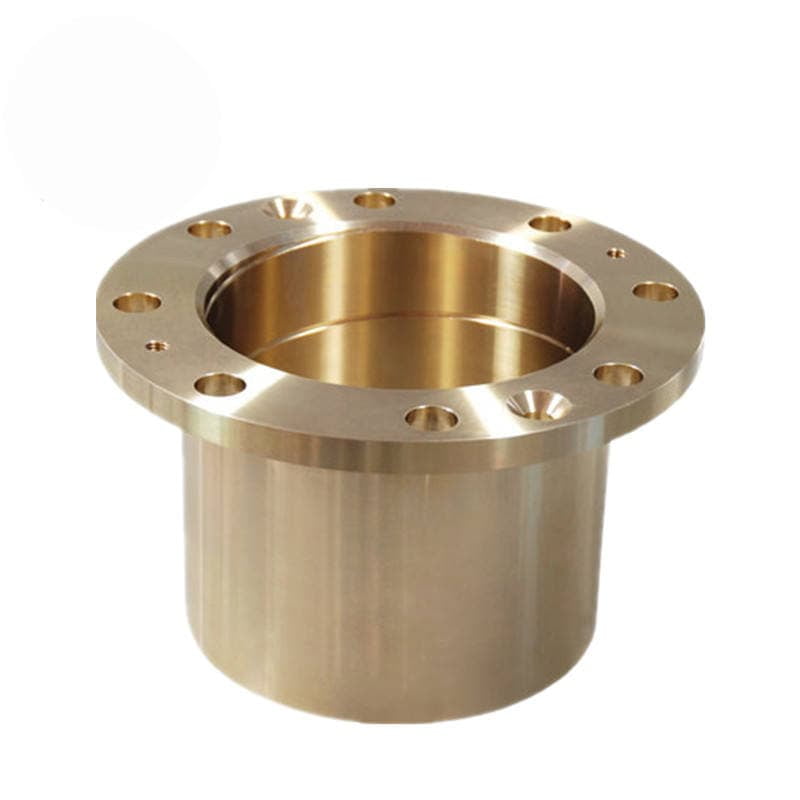
In our plant, when we manufacture metal bushings, like our bronze rolled bearings or machined copper sleeves, we are thinking about one thing above all else: load capacity. These parts are designed to withstand immense forces without deforming. They provide a solid, rigid connection point that is necessary for the precision and safety of heavy equipment. Unlike rubber or PU, a metal bushing offers zero vibration damping. Its purpose is pure strength. This is why you will never find them in a passenger car's suspension for comfort. Their job is to bear weight and allow for slow, powerful rotational movement. The critical factor for metal bushings is lubrication. Without a consistent film of grease, you get metal-on-metal contact, which leads to rapid wear, high friction, and eventual seizure of the joint. This makes regular maintenance absolutely mandatory.
Here’s the factory perspective on metal bushings:
| Feature | Metal Bushing Performance |
|---|---|
| Comfort (NVH) | Very Poor (Not its purpose) |
| Load Capacity | Unmatched |
| Durability (with lube) | Excellent |
| Cost | Moderate to High |
| Best For | Heavy machinery pivots, high-load/low-speed joints |
So, for any project involving serious tonnage and structural integrity, metal is not just an option; it's a necessity. The design must, however, include a clear and reliable lubrication strategy.
Are Composite Bushings the Future of Low-Maintenance Design?
You need a bushing that is strong and durable but doesn't require constant greasing. Maintenance downtime costs money, and traditional metal bushings can be heavy and need frequent attention from service teams.
Yes, for many modern designs, composite bushings are the future. They combine low friction, self-lubricating properties, and good load capacity in a lightweight package. This makes them ideal for applications that prioritize low maintenance, weight savings, and consistent performance over a long service life.
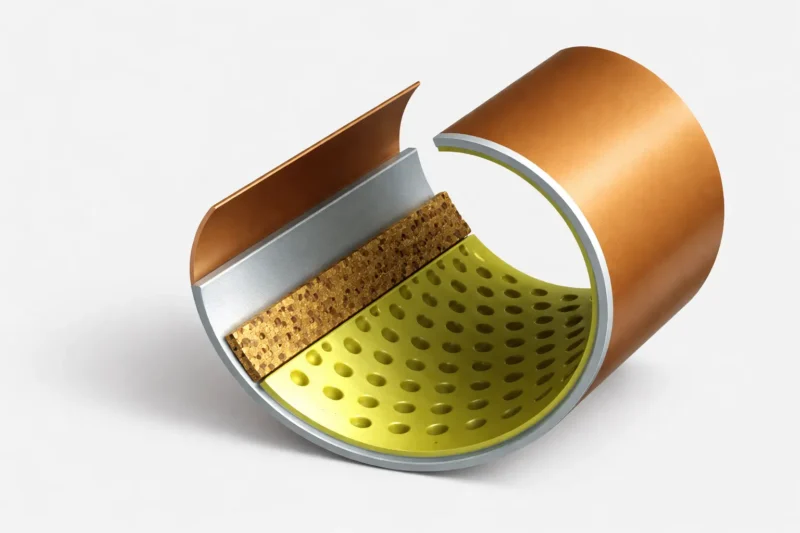
Composite bushings are one of our core products at FESODA, and they solve a very modern problem. They are typically made of a steel backing for strength, a sintered bronze middle layer to bond everything, and a PTFE-based liner on the inside surface. This PTFE layer is the magic. It provides an extremely low-friction surface that transfers onto the mating pin, creating a solid lubricant film. This means the joint never needs grease. This is a huge selling point for equipment that operates in hard-to-reach places or for OEMs who want to offer a "maintenance-free" product. They are also much lighter than solid metal bushings and can handle significant loads, though not as extreme as a solid bronze part. The main consideration is the environment. Severe contamination with abrasive dust or very high impact loads can potentially damage the soft liner over time.
This is how composite bushings fit into the manufacturing landscape:
| Feature | Composite Bushing Performance |
|---|---|
| Low Maintenance | Excellent (Self-Lubricating) |
| Load Capacity | Good to Very Good |
| Weight | Excellent (Lightweight) |
| Cost | Moderate (Saves on long-term maintenance) |
| Best For | Maintenance-free joints, lightweight designs, consistent friction |
For any OEM looking to innovate and reduce the total cost of ownership for their customers, composite bushings offer a powerful, modern alternative to traditional lubricated metal bearings.
Conclusion
The right bushing choice is not about finding the "hardest" material. It is about matching the material's strengths to your product's specific goals for comfort, handling, load capacity, or maintenance.