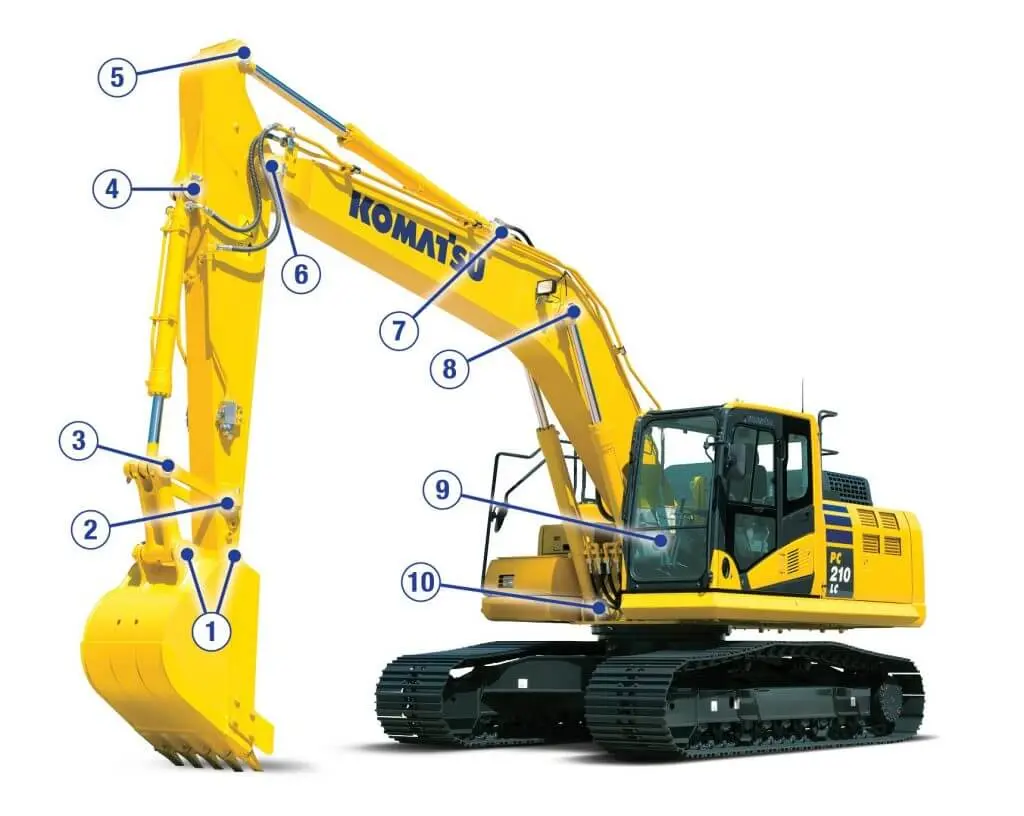
Choosing the wrong excavator bushing leads to costly downtime and repairs. You need a part that can handle extreme conditions, but picking the right one feels like a difficult guess.
The best way to choose an excavator bushing is to look beyond simple wear resistance. You must select a material that can handle the real-world challenges of high loads, low-speed oscillating movements, impact, contamination from dirt and sand, and insufficient lubrication.
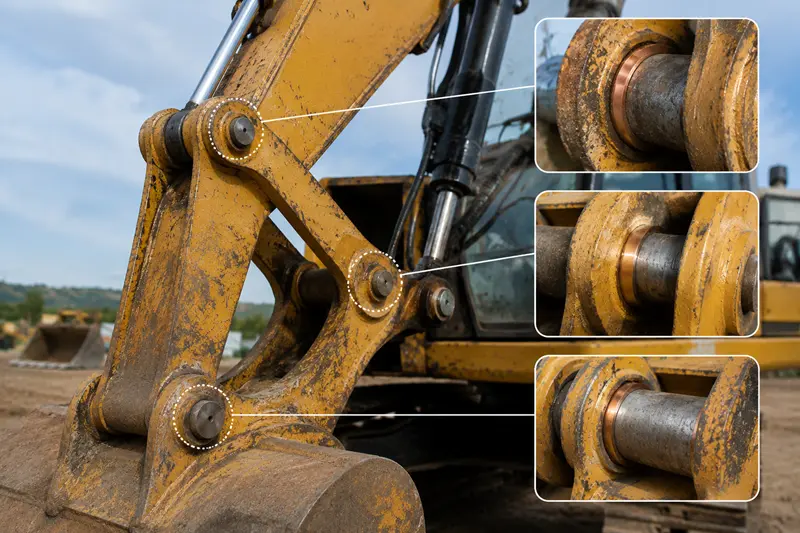
From my experience in the factory, I've seen countless bushings that failed early. The reason is often a mismatch between the material and the actual job it needs to do. An excavator doesn't work like other machines. Its joints face constant, heavy, and dirty work. Simply choosing a "wear-resistant" bushing isn't enough. You have to think about the entire system. Understanding what happens at each connection point—from the boom and arm to the bucket—is the first step. Let's break down the material choices based on these real-world challenges so you can make a more informed decision for your equipment.
What Makes High Strength Bronze Bushings Ideal for Key Pivot Points?
Your excavator's critical joints face immense stress and impact. A weak bushing in these spots can lead to major failures and expensive downtime, which no one wants to deal with.
High-strength bronze bushings are perfect for these key pivot points because their material structure provides excellent strength and anti-seizure properties.[^1] They can handle the intense loads and shocks found in an excavator's most demanding joints, ensuring reliability and a longer service life.
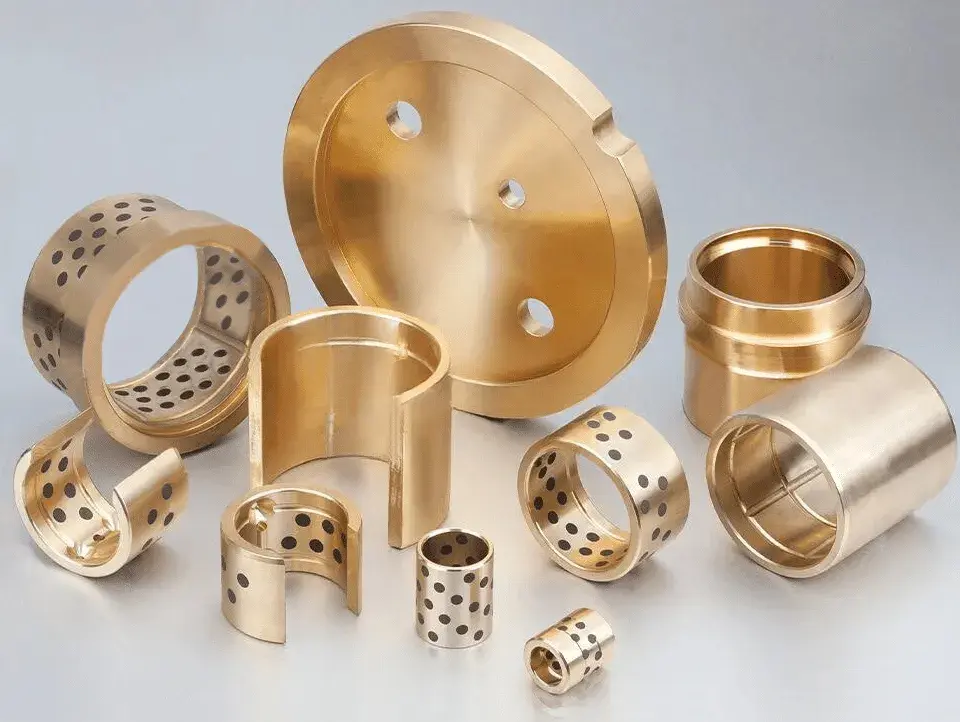
When we talk about high-strength bronze, we're referring to specific copper alloys designed for toughness. These materials are not just hard; they are resistant to being squeezed out of shape under extreme pressure and can absorb the shock from digging into hard ground without cracking. This is why we see them used so often in the main pivot points of an excavator.
Where They Work Best
The most critical joints are where the biggest forces are concentrated.[^2] Think about the connection points for the boom, the stick (or arm), and the hydraulic cylinders. These areas experience constant, heavy loads and jarring impacts. A standard bushing would deform or wear out quickly here. High-strength bronze provides the necessary durability.
Key Performance Characteristics
Here's a simple breakdown of why bronze is a top choice for these spots:
| Feature | Why It Matters for Excavators |
|---|---|
| High Load Capacity | Resists deformation under the weight of the boom and bucket. |
| Impact Resistance | Absorbs shocks from digging and hitting objects without fracturing. |
| Good Anti-Seizure | Prevents the bushing and pin from welding together under pressure. |
| Corrosion Resistance | Performs well in wet and dirty environments, resisting rust. |
From a manufacturing perspective, a solid bronze bushing offers the most straightforward reliability for the highest-stress applications on an excavator.
When Should You Use Graphite Plugged Bronze Bushings?
Regular lubrication in hard-to-reach excavator joints is often difficult or gets forgotten. This leads to dry running, which causes rapid wear, high friction, and eventual seizure of the joint.
Use graphite plugged bronze bushings for low-speed, heavy-load areas where lubrication is difficult or maintenance intervals are long.[^3] The solid graphite plugs create a self-lubricating film, reducing wear and friction even when grease is absent, which greatly extends the joint's service life.
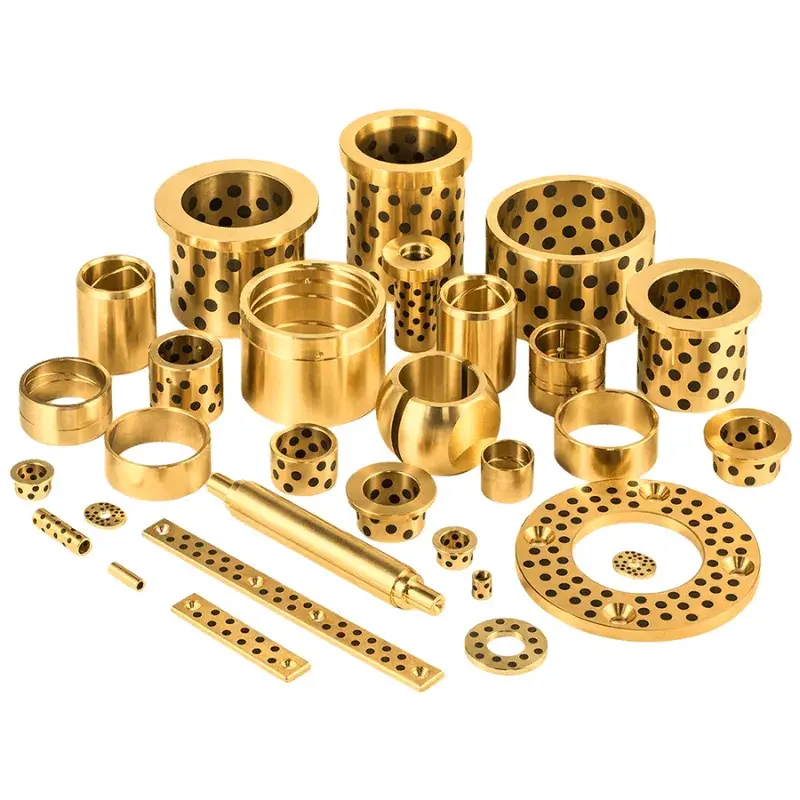
Think of graphite plugged bushings as a standard bronze bushing with a built-in backup plan. We take a solid bronze bushing and drill a precise pattern of holes into it. Then, we press solid graphite plugs into these holes. This combination gives you the strength of bronze with the self-lubricating properties of graphite.
How Solid Lubrication Works
When the joint moves, a tiny amount of the graphite rubs off and transfers onto the surface of the steel pin. This process creates a very thin, slippery layer of solid lubricant between the bushing and the pin. This film dramatically reduces friction and protects the metal surfaces from grinding against each other, especially during startup or when regular grease isn't present. It's a perfect solution for the oscillating, high-pressure movements common in excavators.
Typical Applications
These bushings are ideal for spots that are either hard to get to with a grease gun or are simply overlooked during routine maintenance.[^4] Common places we see them used include:
- Bucket linkage pins
- Arm and boom connection points
- Kingpin pivots
For an OEM buyer, specifying graphite plugged bushings in these locations shows a deep understanding of real-world equipment use. It's a feature that reduces maintenance needs and prevents premature failures caused by a lack of lubrication.
Are Bimetal Bushings a Good Choice for OEM Projects?
As an OEM, you need reliable components that also fit within your budget for large-scale production. Choosing parts that are too expensive hurts your margins, but under-specced parts damage your brand's reputation.
Yes, bimetal bushings are often an excellent choice for cost-sensitive, high-volume OEM projects. They provide a smart balance of performance and cost by combining a strong steel back with a reliable bronze alloy wear layer, making them suitable for many mid-to-high load applications.
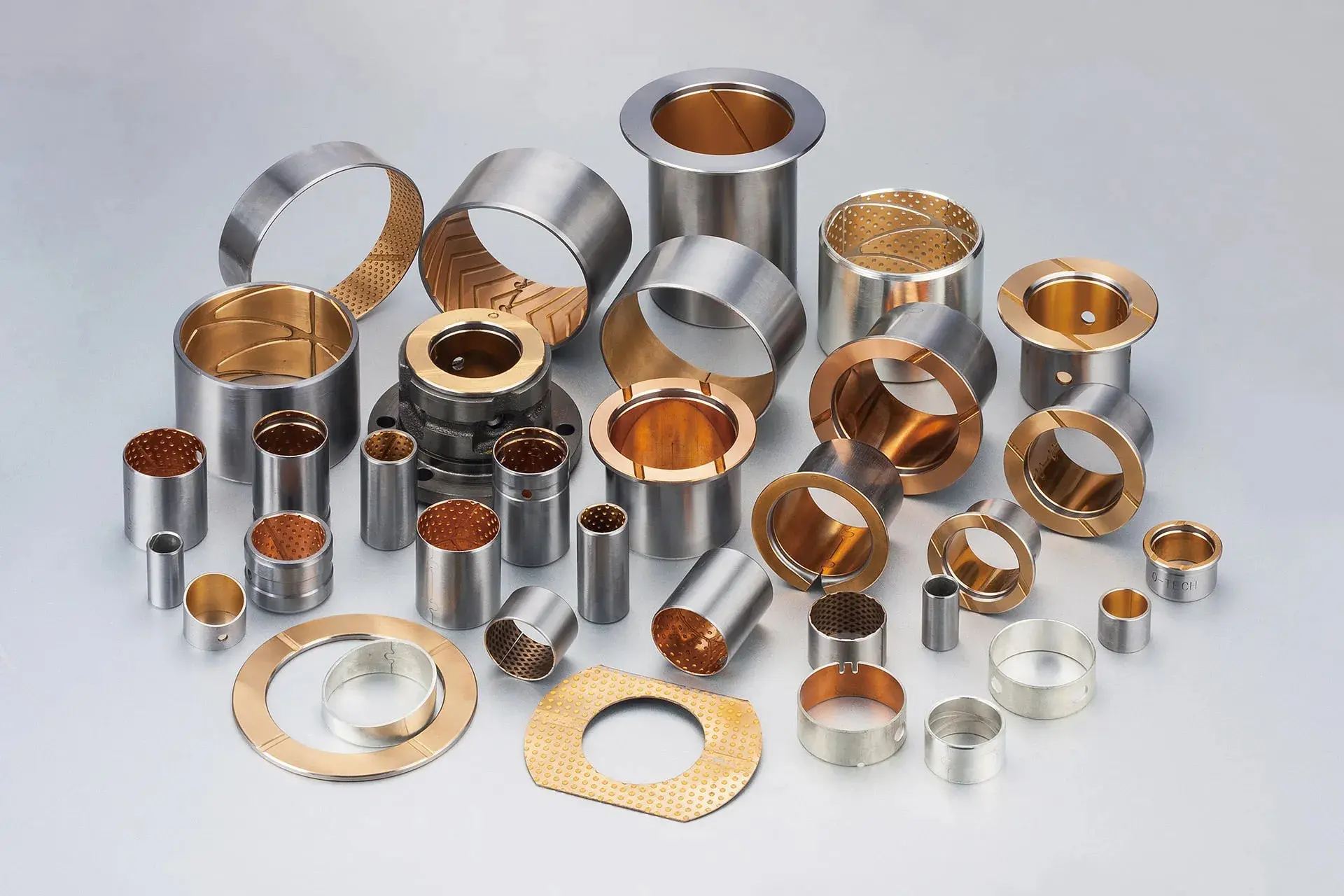
A bimetal bushing is a composite part.[^5] It's not made from a single block of metal. Instead, we start with a steel strip for the outer shell. This steel backing provides excellent structural strength and allows the bushing to be press-fit securely into its housing without deforming. Then, we bond a layer of bronze alloy powder onto the inside surface of the steel through a sintering process. This inner layer is the part that makes contact with the pin, and it's designed for low friction and good wear resistance.
The Cost-Performance Balance
This two-part construction is key to its value. Steel is strong and inexpensive, while the specialized bronze alloy provides the necessary bearing properties.[^6] By using just a thin layer of the more expensive bronze material, we can produce a high-performance part at a fraction of the cost of a solid bronze bushing.[^7] This makes bimetal bushings a go-to solution for mass production.
Strengths and Considerations
Here's how they stack up for an OEM project:
| Feature | Benefit for OEMs | Consideration |
|---|---|---|
| Steel Back | High structural strength, secure press-fit. | Needs protection from corrosion. |
| Bronze Layer | Good wear resistance with lubrication. | Relies on some grease or oil. |
| Low Cost | Ideal for mass production and cost control. | Not for the most extreme impact loads. |
For many locations on an excavator that have consistent lubrication and don't face the absolute highest impact forces, bimetal bushings offer a reliable and commercially smart solution.
Why Is It More Than Just Material Hardness?
Have you ever specified a very "hard" material for your bushings, only to see them fail anyway? It's a frustrating and expensive problem that can make you second-guess your engineering choices.
Because hardness alone doesn't solve wear problems in excavators. A reliable joint is a complete system. This system includes the bushing material, the hardness of the pin it runs on, the lubrication design, and how well it's sealed from contamination. A mismatch in any one of these areas will lead to failure.[^8]
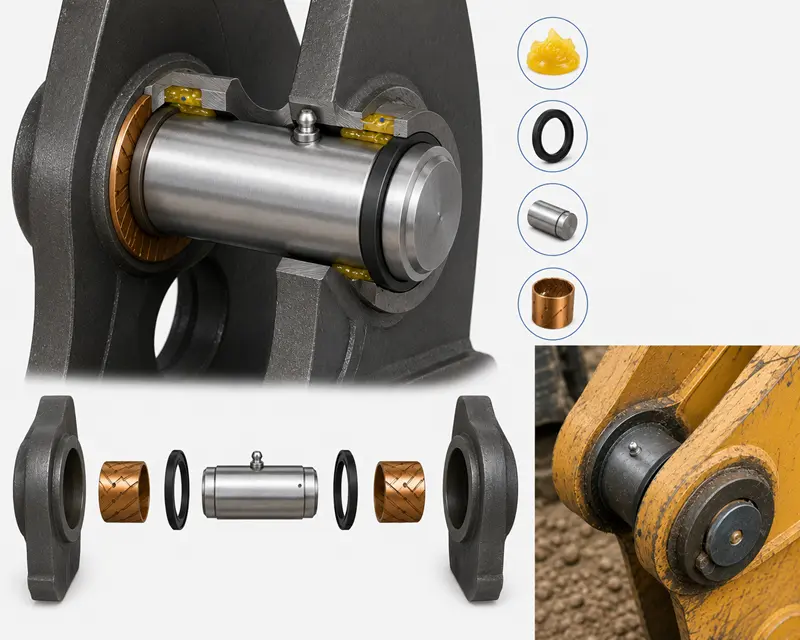
As a manufacturer, the most common mistake I see customers make is focusing only on the bushing. They might ask for the "hardest" material possible, thinking it will be the most durable. But that's not how it works in the real world. An excavator joint is a partnership between several components, and they all have to work together.[^9]
The Role of the Pin and Seals
First, consider the pin. If you pair a super-hard bushing with a relatively soft steel pin, the bushing won't wear out—it will grind away the expensive pin instead. The ideal setup is a compatible pairing where the bushing is designed to be the sacrificial part over a long service life.[^10] Second, think about contamination. An excavator works in dirt, sand, and water. Without effective seals, that abrasive material gets inside the joint and acts like sandpaper, destroying even the best bushing and pin in no time.[^11]
A System Checklist for Buyers
Instead of just asking for a material, you will get a much better result by providing details about the system. Here is what your bushing supplier needs to know:
| System Component | Key Question to Answer |
|---|---|
| Application | Where will it be installed? (Boom, bucket, etc.) |
| Loads & Motion | What are the forces? Is it rotating or oscillating? |
| Pin / Shaft | What is its hardness and surface finish? |
| Lubrication | How will it be greased? Are grooves needed? |
| Seals | How will you keep dirt and water out? |
When you provide this information, you allow us as manufacturers to recommend a complete solution. It's about building a durable wear system, not just selling a single part.
Conclusion
Choosing the right excavator bushing is about matching the material to the job and creating a robust wear system. It's more than just hardness; it's about a complete, engineered solution.
[^1]: "[PDF] nonferrous metals and alloys - Advanced Materials Manufacturing", https://mie.njit.edu/sites/mie/files/lcms/docs/ME215-7.pdf. This source explains the mechanical properties of high-strength bronze alloys, including their anti-seizure characteristics and suitability for high-load applications. Evidence role: mechanism; source type: education. Supports: High-strength bronze bushings are ideal for key pivot points due to their strength and anti-seizure properties.. Scope note: The source may not specifically address excavator bushings but focuses on general material properties. [^2]: "Structural optimization of the excavator boom under extreme ... - PMC", https://pmc.ncbi.nlm.nih.gov/articles/PMC12637966/. This source identifies the high-stress areas in excavators, such as boom and arm connection points, and their mechanical demands. Evidence role: case_reference; source type: education. Supports: Critical joints in excavators, such as boom and arm connections, experience the highest forces.. Scope note: The source may not provide exhaustive coverage of all critical joints in excavators. [^3]: "Plug Graphite Bearings | National Bronze Mfg.", https://www.nationalbronze.com/plug-graphite-bearings.php. This source discusses the self-lubricating properties of graphite plugged bronze bushings and their applications in heavy machinery. Evidence role: mechanism; source type: research. Supports: Graphite plugged bronze bushings are suitable for low-speed, heavy-load areas with difficult lubrication conditions.. Scope note: The source may focus on general machinery rather than excavators specifically. [^4]: "iglide® Plastic Bushings: The Self-Lubricating Effect - Igus", https://www.igus.com/company/self-lubrication-for-bearings?srsltid=AfmBOoo_ejb1Lct5qIfEckwf2dqBxBjGkUyfW89lpqCYeP8k07g5BIDE. This source highlights the advantages of self-lubricating bushings in hard-to-reach or low-maintenance areas of heavy machinery. Evidence role: case_reference; source type: institution. Supports: Self-lubricating bushings are suitable for hard-to-reach or low-maintenance areas in heavy machinery.. Scope note: The source may not specifically address excavators but focuses on general machinery applications. [^5]: "[PDF] The Tribological Performance of Self-Lubricating Bearings Following ...", https://docs.lib.purdue.edu/cgi/viewcontent.cgi?article=2888&context=icec. This source explains the construction and advantages of bimetal bushings, including their steel backing and bronze alloy layer. Evidence role: definition; source type: encyclopedia. Supports: Bimetal bushings are composite parts made of steel backing and bronze alloy layers.. Scope note: The source may not address excavator-specific applications. [^6]: "Evaluating the Cost Effectiveness of Corrosion Resistant Metals", https://www.arka-parcel-lockers.com/blog/articles/evaluating-the-cost-effectiveness-of-corrosion-resistant-metals. This source provides information on the cost-effectiveness and mechanical properties of steel and bronze alloys in composite bushings. Evidence role: statistic; source type: research. Supports: Steel and bronze alloys in bimetal bushings offer a balance of strength and cost-effectiveness.. Scope note: The source may not provide specific cost data for excavator bushings. [^7]: "Solid Bronze Bushings Vs. Other Bearings: A Comprehensive ...", https://www.jxtisens.com/news/solid-bronze-bushings-vs-other-bearings-a-co-78076688.html. This source discusses the cost advantages of using composite materials like bimetal bushings in heavy machinery. Evidence role: statistic; source type: research. Supports: Composite materials like bimetal bushings offer cost advantages over solid bronze bushings.. Scope note: The source may not provide specific cost comparisons for excavator bushings. [^8]: "Detecting Mismatches in Machine-Learning Systems", https://www.sei.cmu.edu/blog/detecting-mismatches-machine-learning-systems/. This source discusses how mismatched components in machinery systems can lead to premature failure. Evidence role: expert_consensus; source type: research. Supports: Mismatched components in machinery systems can lead to premature failure.. Scope note: The source may focus on general machinery systems rather than excavators specifically. [^9]: "Excavator joint node-based pose estimation using lightweight fully ...", https://www.sciencedirect.com/science/article/abs/pii/S0926580522003089. This source discusses the interdependence of components in heavy machinery joints, including bushings, pins, and seals. Evidence role: mechanism; source type: education. Supports: Excavator joints require coordinated functioning of bushings, pins, and seals for durability.. Scope note: The source may focus on general heavy machinery rather than excavators specifically. [^10]: "Process of Making Three-dimensional Microstructures using ... - PMC", https://pmc.ncbi.nlm.nih.gov/articles/PMC3969899/. This source explains the concept of sacrificial components in machinery systems and their role in extending service life. Evidence role: mechanism; source type: education. Supports: Bushings are often designed as sacrificial components to extend the service life of machinery systems.. Scope note: The source may not specifically address excavator bushings but discusses general machinery design principles. [^11]: "Mechanical Seals: Functions, Types, Applications, and Materials", https://www.espint.com/products/mechanical-seals. This source explains the role of seals in preventing contamination in heavy machinery joints and their impact on wear. Evidence role: mechanism; source type: research. Supports: Effective seals prevent contamination and reduce wear in heavy machinery joints.. Scope note: The source may not specifically address excavators but focuses on general machinery.