Are your bushings failing sooner than expected? You've checked the material and size, but the problem persists. The hidden cause might be the shaft's surface finish.
The surface finish of the mating shaft is critical for bushing performance.[^1] It directly impacts friction, wear, and lubrication. An incorrect finish, whether too rough or too smooth, can significantly shorten a bushing's life, even if you've chosen the right material and dimensions.
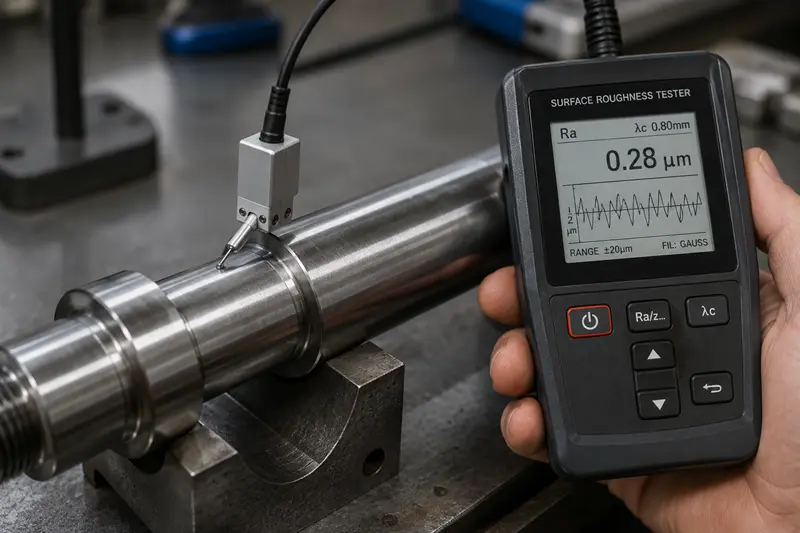
As a manufacturer, we see many B2B buyers focus intensely on the bushing's material, hardness, and dimensions. These are all very important, of course. But they often overlook the surface it will run against. I've seen many cases of premature bushing failure where the root cause wasn't a faulty bushing but a mismatch between the shaft and the bushing. This one detail can make or break the performance of your entire assembly. Let's look at why this happens and how to get it right.
Is a Smoother Surface Always Better for Bushings?
Everyone thinks a mirror-smooth surface is the ideal goal. But this common belief can lead to unexpected failures and increased maintenance costs for certain applications.
No, a smoother surface is not always better.[^2] For lubricated bushings like bronze, a slightly textured surface helps hold the oil film. An overly smooth, polished surface can prevent proper lubrication, leading to higher friction and wear.
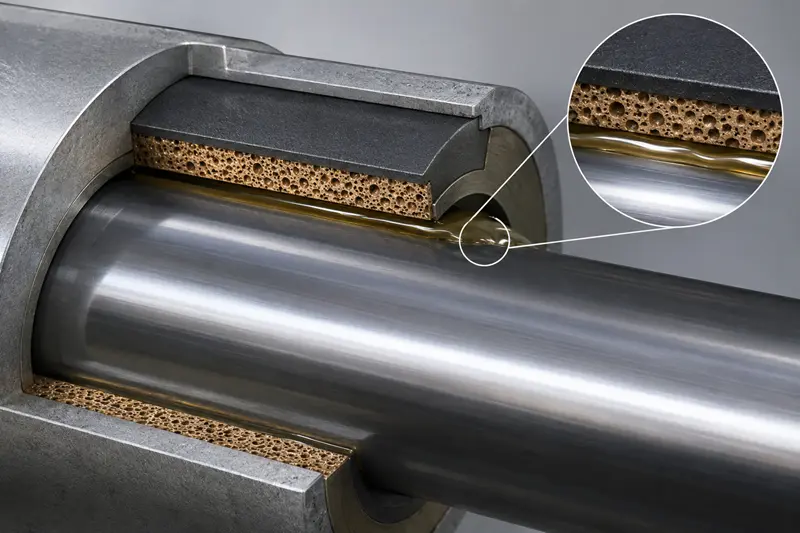
One of the biggest myths I encounter is the idea that "smoother is always better." It seems logical, right? Less friction should mean less wear. But in the world of bearings, it's more complex. If a shaft surface is too rough, its tiny peaks act like sandpaper, scraping away the surface of the bushing. This is especially damaging for softer materials like PTFE composite or plastic bushings, where the thin sliding layer can be destroyed very quickly, causing heat and seizure.
However, going to the other extreme—a mirror-like polish—can also cause problems. For bushings that rely on oil or grease, like many bronze or bimetal types, a perfectly smooth surface is actually bad. It doesn't have the microscopic "valleys" needed to hold onto the lubricant. The oil gets squeezed out easily, especially under high loads or during startup. Without that protective oil film, you get metal-to-metal contact, which defeats the purpose of lubrication.
I remember a client who made hydraulic pumps. They polished the shafts to a mirror finish, thinking it would improve efficiency. Instead, their bronze bushings started failing. The oil film just couldn't stick. We advised them to switch to a standard ground finish, which has a controlled texture. The problem disappeared completely.
| Surface Condition | Effect on Lubrication (e.g., Bronze Bushing) | Consequence for Bushing Performance |
|---|---|---|
| Too Rough | The sharp peaks can break through the oil film. | Causes abrasive wear, scratches the bushing, and shortens life. |
| Too Smooth | The surface cannot retain an adequate oil film. | Leads to oil starvation, increased friction, and risk of seizure. |
| Just Right | Provides enough valleys to hold lubricant and enough smoothness to reduce friction. | Creates a stable hydrodynamic film, ensuring low wear and long life. |
How Does Surface Finish Impact Different Bushing Materials?
You chose the perfect bushing material for your application, but it's still not performing well. The issue might be a mismatch between that material and the shaft's finish.
Different bushing materials require different shaft surface finishes.[^3] Soft materials like PTFE need a very smooth surface to prevent abrasion.[^4] Harder, lubricated materials like bronze benefit from a controlled texture that helps retain lubricant.[^5]
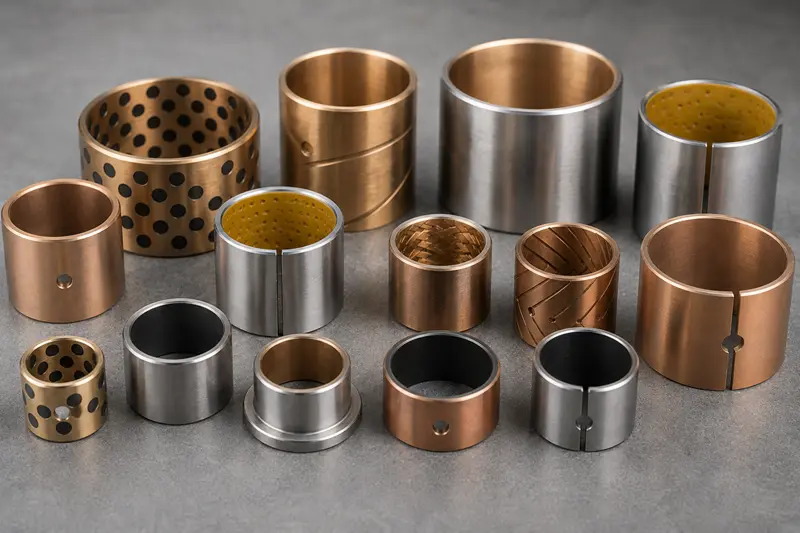
You can't think about surface finish in isolation. It has to be considered together with the bushing material you are using. The ideal shaft finish for a plastic bushing might destroy a lubricated bronze bushing, and vice versa. Each material has its own unique needs to form a stable friction system. As a factory that produces all these types, we always ask our OEM clients about their shaft preparation. Let's break it down for the most common materials we manufacture.
For PTFE Composite Bushings[^6]
These bushings, like our SF-1 series, have a very thin, soft layer of PTFE on the surface. This layer provides excellent low-friction performance, but it's not very resistant to abrasion. If you run it against a rough shaft, the shaft's surface will act like a file and wear away the PTFE layer in no time. Once that layer is gone, the bushing fails. For these materials, you need a very smooth shaft finish, often with a surface roughness (Ra) of 0.4 μm or less. The goal is to minimize mechanical wear on the soft sliding layer.
For Bronze and Bimetal Bushings[^7]
These bushings are often used with grease or oil lubrication. Here, the goal is to create and maintain a stable oil film between the shaft and the bushing. As we discussed, a mirror-smooth surface is not good for this. You need a surface that is smooth enough to prevent wear but has enough texture to hold the lubricant. A ground or fine-turned surface with an Ra between 0.4 and 1.6 μm is often a good starting point. The small valleys in the surface act as tiny reservoirs for the oil.
For Plastic Bushings[^8]
Solid plastic bushings are generally softer than metal bushings and are very sensitive to the shaft's condition. A rough shaft will cause high wear and shorten their life significantly. The exact requirement depends on the specific type of plastic, but in general, a smoother shaft is better. For many engineering plastics, a shaft finish with an Ra below 0.8 μm is recommended to ensure a long service life.
| Bushing Material Type | Recommended Shaft Finish (Ra) | Key Reason for this Finish |
|---|---|---|
| PTFE Composite | < 0.4 μm | To prevent rapid abrasive wear of the soft PTFE sliding layer. |
| Bronze / Bimetal | 0.4 - 1.6 μm | To balance low friction with the ability to retain an oil or grease film. |
| Plastic Bushings | < 0.8 μm | To prevent the rough shaft from "plowing" or abrading the softer plastic material. |
| Graphite Plugged | < 1.6 μm | To ensure even wear on the bronze base material between the solid lubricant plugs. |
What's More Important: Bushing Material or Shaft Surface Finish?
Are you spending a lot on high-end bushings but still not seeing a longer lifespan? The real solution might be cheaper and simpler than you think.
Both are important, but optimizing the shaft surface finish often provides a better return on investment. A standard bushing with a proper shaft finish can easily outperform an expensive bushing with a poor shaft finish.[^9]
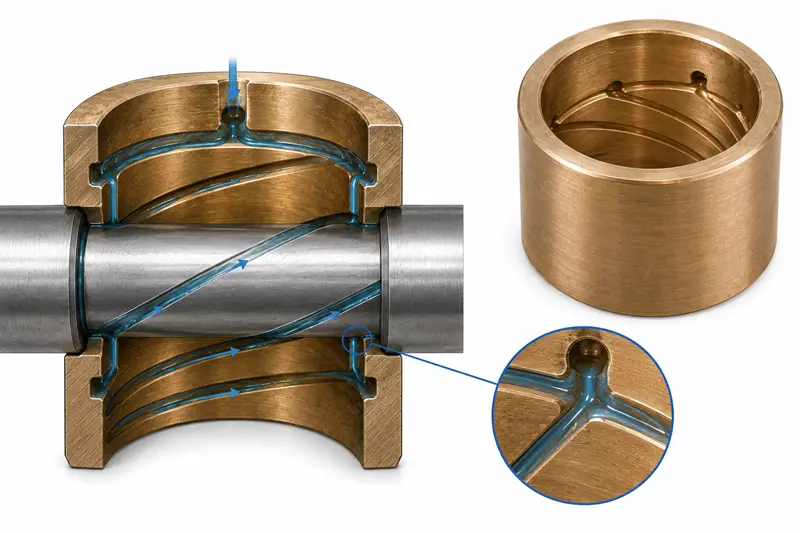
This is a question I discuss with procurement managers and engineers all the time. They face a budget and need the most reliable performance. My answer, from a factory perspective, is always the same: treat the bushing and shaft as a single system. One part cannot fully make up for the other's flaws.
I once worked with a large construction equipment OEM. They were using some very expensive, custom polymer bushings in one of their joints, and they were failing much faster than expected. We discovered their shafts had a rough, turned finish. They were about to switch to an even more expensive, high-tech bushing. My suggestion was different. I told them to keep using a standard, much cheaper bronze bushing but to invest in improving their shaft finishing process by adding a final grinding step. They were skeptical but tried it. The result? The service life more than doubled, and their total assembly cost went down significantly.
This story shows a key principle: a good shaft surface protects any bushing. It reduces friction, lowers operating temperature, and minimizes wear from day one. Often, the cost of adding a grinding or polishing step to your shaft production is much lower over thousands of units than the cost of upgrading every single bushing to a premium material.
| Scenario | Bushing Choice | Shaft Finish | Resulting Cost | Resulting Lifespan |
|---|---|---|---|---|
| A | Expensive Polymer Bushing | Poor (Rough Turned) | High | Low |
| B | Standard Bronze Bushing | Good (Ground) | Medium | High |
For B2B buyers and OEM projects, focusing on the shaft finish is one of the most cost-effective ways to increase the reliability and lifespan of your products.
Conclusion
Don't just focus on the bushing itself. The shaft's surface finish is critical. It's not about being "smoother," but about finding the right finish that matches your material and application.
[^1]: "[PDF] Tribological Performance of PM400 Bushings in Oscillatory Sliding ...", https://ntrs.nasa.gov/api/citations/20190000817/downloads/20190000817.pdf. Surface finish directly affects friction, wear, and lubrication in mechanical systems, as supported by tribology studies. Evidence role: expert_consensus; source type: research. Supports: The surface finish of the mating shaft is critical for bushing performance.. [^2]: "Tribological properties of high-speed steel surface with texture and ...", https://pmc.ncbi.nlm.nih.gov/articles/PMC10425402/. Tribological research indicates that overly smooth surfaces can hinder lubricant retention, increasing friction and wear. Evidence role: expert_consensus; source type: research. Supports: No, a smoother surface is not always better.. [^3]: "Research | Center for Surface Engineering and Tribology", https://www.mccormick.northwestern.edu/research/surface-engineering-tribology-center/research/. Material-specific tribology studies show that optimal shaft finishes vary depending on bushing material properties. Evidence role: expert_consensus; source type: research. Supports: Different bushing materials require different shaft surface finishes.. [^4]: "Performance of PTFE-Lined Composite Journal Bearings", https://ntrs.nasa.gov/api/citations/19820009389/downloads/19820009389.pdf. Tribological studies confirm that PTFE bushings require smooth surfaces to minimize mechanical wear. Evidence role: mechanism; source type: research. Supports: Soft materials like PTFE need a very smooth surface to prevent abrasion.. [^5]: "Tribological Investigation of Textured Surfaces in Starved ... - PMC", https://pmc.ncbi.nlm.nih.gov/articles/PMC9738694/. Tribological research supports that textured surfaces improve lubricant retention for bronze bushings. Evidence role: mechanism; source type: research. Supports: Harder, lubricated materials like bronze benefit from a controlled texture that helps retain lubricant.. [^6]: "[PDF] Performance of PTFE-Lined Composite Journal Bearings", https://ntrs.nasa.gov/api/citations/19820009389/downloads/19820009389.pdf. Research on PTFE composites confirms the need for smooth shaft finishes to prevent rapid wear. Evidence role: mechanism; source type: research. Supports: For PTFE Composite Bushings, smooth shaft finishes are essential to prevent wear.. [^7]: "[PDF] The Tribological Performance of Self-Lubricating Bearings Following ...", https://docs.lib.purdue.edu/cgi/viewcontent.cgi?article=2888&context=icec. Tribological studies show that controlled surface textures improve lubrication and reduce wear in bronze and bimetal bushings. Evidence role: mechanism; source type: research. Supports: For Bronze and Bimetal Bushings, controlled surface textures improve lubrication and reduce wear.. [^8]: "[PDF] The Tribological Performance of Self-Lubricating Bearings Following ...", https://docs.lib.purdue.edu/cgi/viewcontent.cgi?article=2888&context=icec. Studies confirm that smoother shaft finishes reduce wear in plastic bushings, extending their lifespan. Evidence role: mechanism; source type: research. Supports: For Plastic Bushings, smoother shaft finishes reduce wear and extend lifespan.. [^9]: "What material for bushing on 30hrc shaft? - Facebook", https://www.facebook.com/groups/769782850345135/posts/1914485929208149/. Case studies in mechanical engineering demonstrate that shaft finish optimization often yields better performance than upgrading bushing materials. Evidence role: case_reference; source type: education. Supports: A standard bushing with a proper shaft finish can easily outperform an expensive bushing with a poor shaft finish.. Scope note: The support may vary depending on specific application conditions.