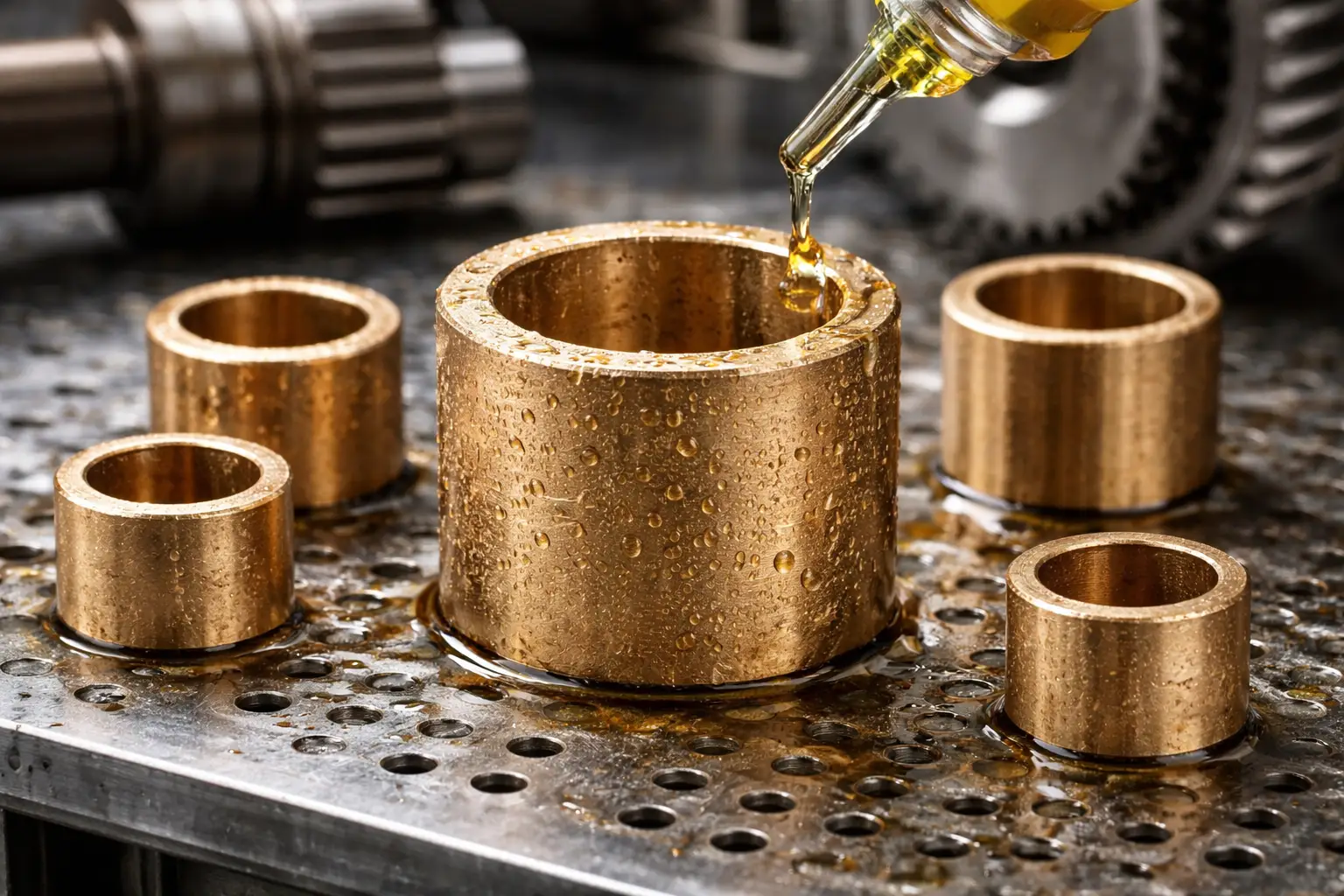
Are your sintered bushings failing earlier than you expect? The problem might not be the size or material, but a hidden factor: porosity. Let's uncover why this matters for your equipment.
Porosity is essential for sintered bronze bushings because it enables self-lubrication.[^1] These microscopic pores are designed to hold oil, which is released during use to reduce friction. This structure is the core of their function, not a defect, and directly impacts performance and lifespan.
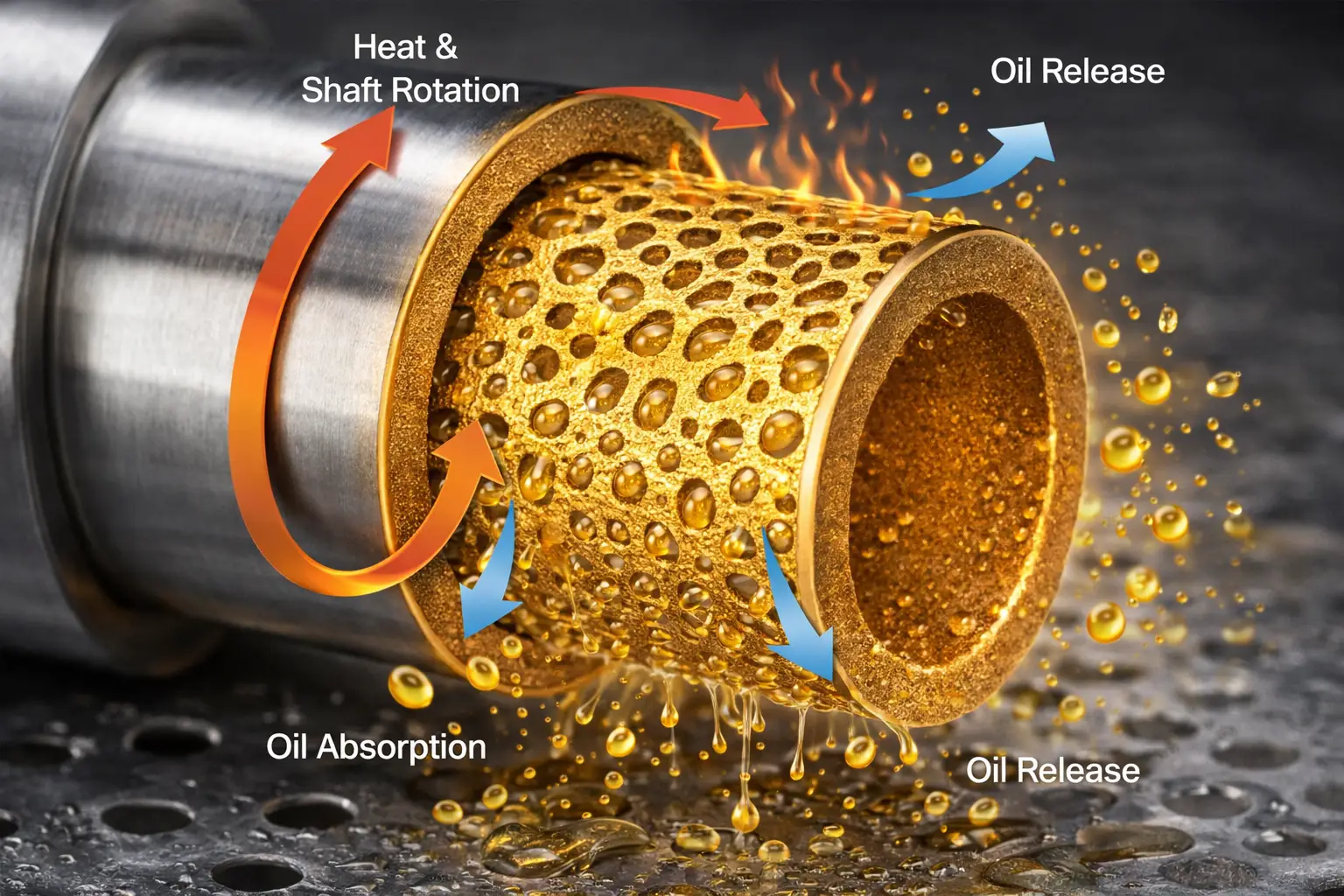
When I talk to buyers, many focus on dimensions, tolerances, and material composition. These are important, of course. But from my experience in the factory, the true key to a sintered bushing's performance is its porosity. For a solid bronze part, pores are a defect. For a sintered bushing, those same pores are the entire point. They are what allow the bushing to be self-lubricating. But this leads to a critical question that many buyers overlook. If pores are good, does that mean more pores are always better? The answer isn't as simple as you might think, and understanding it is crucial for making the right purchasing decision.
Is Higher Porosity Always Better for Sintered Bushings?
Thinking more pores mean better lubrication? This common assumption can lead to unexpected failures. Let's explore the critical balance between oil capacity and the bushing's structural strength.
No, higher porosity is not always better.[^2] While it improves oil retention, it compromises the bushing's mechanical strength and density. The best sintered bushings balance porosity for self-lubrication with the structural integrity needed to handle specific loads without failing.
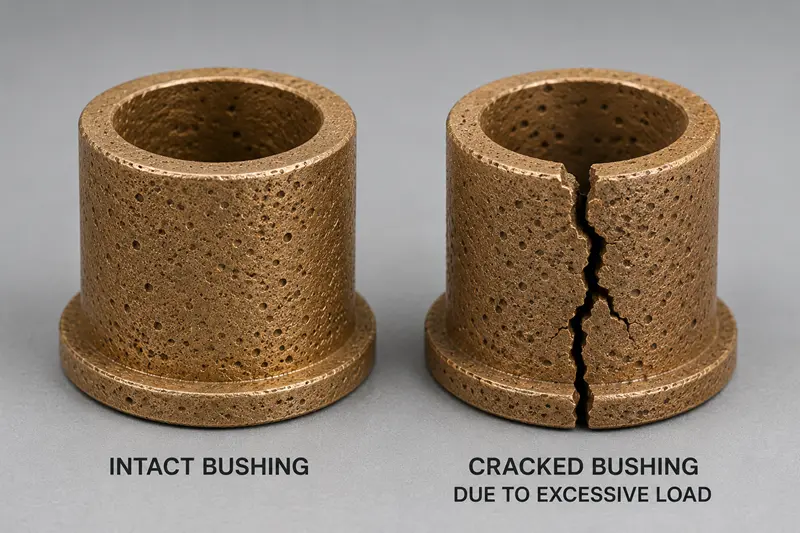
In our factory, we don't aim for the highest possible porosity. We aim for the optimal porosity. It’s a delicate balancing act. On one hand, you need enough interconnected pores to store a sufficient amount of lubricating oil. On the other hand, every pore is a space where solid metal could be, which contributes to the part's strength.
The Problem of Too Little vs. Too Much Porosity
Getting this balance wrong has clear consequences. It’s a trade-off between lubrication performance and mechanical strength.
| Porosity Level | Advantages | Disadvantages |
|---|---|---|
| Too Low | Higher mechanical strength & density. | Insufficient oil storage, poor self-lubrication, shorter operational life. |
| Too High | Excellent oil storage capacity. | Lower density, reduced compressive strength, weaker load capacity, prone to cracking. |
Ultimately, a high-quality sintered bushing isn't one with the most pores. It's one where the pore structure is perfectly engineered to provide reliable lubrication without sacrificing the strength needed for its specific application.
How Do We Control Porosity for Optimal Performance?
Ever wonder why two bushings that look identical can perform so differently? The secret isn't visible; it's in the manufacturing process. Let's see how we precisely control porosity for consistent performance.
We control porosity by meticulously managing key manufacturing variables.[^3] This includes the metal powder's particle size, compacting pressure, and the specific temperature and time of the sintering process. Each step is calibrated to create the desired pore structure for optimal performance.
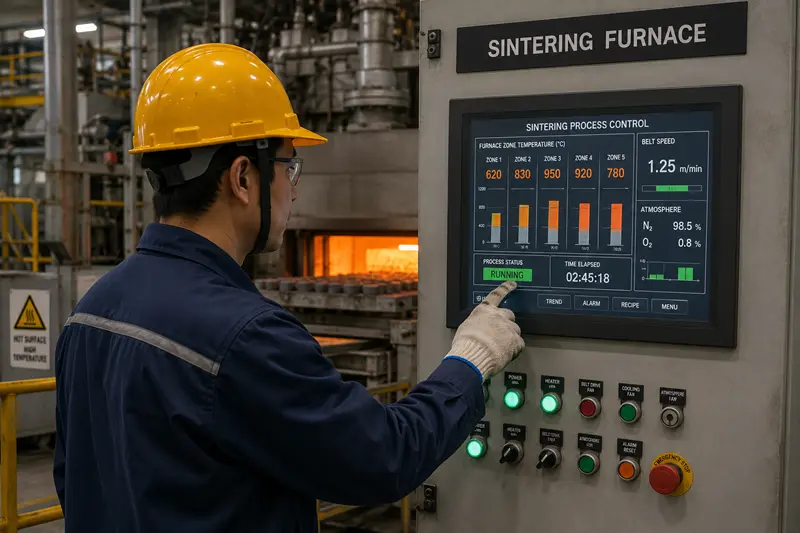
Creating the right pore structure is a science we've refined over years of production. It's not something that happens by accident. The entire powder metallurgy process is designed around achieving a specific, repeatable outcome. From the very first step to the last, we are controlling the variables that will define the final porosity.
Key Manufacturing Levers
Several key factors in the powder metallurgy process directly influence the final pore structure:
- Metal Powder: The size and shape of the initial bronze powder particles determine the initial packing density and the size of the gaps between them.[^4]
- Compacting Pressure: When we press the powder into the shape of the bushing, the amount of pressure used directly affects how tightly the particles are packed. More pressure leads to lower porosity.[^5]
- Sintering Cycle: This is where the magic happens. We heat the compacted part to a temperature just below the melting point. The time and temperature of this cycle cause the powder particles to bond together, forming a solid structure.[^6] This process must be carefully controlled to create the right level of interconnected porosity without making the part too dense or too weak.
Finally, the bushing is submerged in oil under a vacuum.[^7] This process ensures the oil penetrates deep into the porous network, fully charging the part for a long, self-lubricating life.
When Is a Sintered Bronze Bushing the Right Choice for Your Application?
Choosing the wrong bushing type can lead to costly downtime and repairs. A sintered bushing is a fantastic solution, but only in the right context. Let's clarify where they excel and where to avoid them.
Sintered bronze bushings are best for moderate-load, high-speed applications where continuous lubrication is difficult.[^8] They are perfect for small electric motors, fans, home appliances, and automotive systems where their self-lubricating properties ensure long, maintenance-free operation.
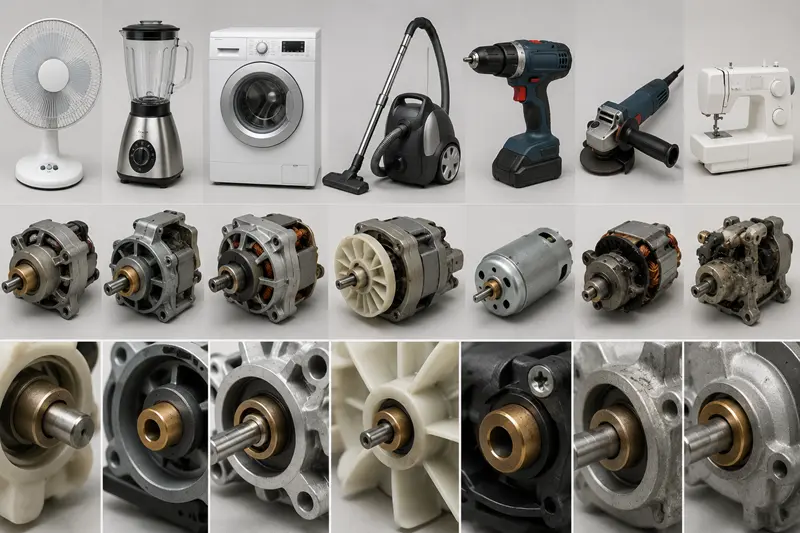
A sintered bushing's greatest strength is its ability to run smoothly for a long time without any external maintenance. This makes it an amazing product, but it's not a universal solution. Because of the trade-off between porosity and strength, these bushings have a sweet spot where they perform best. Placing them in the wrong application is a recipe for failure.[^9]
Where Sintered Bushings Excel
The self-lubricating and low-maintenance nature of sintered bushings makes them ideal for:
- Small Electric Motors[^10]
- Household Appliances (e.g., blenders, fans)
- Office Equipment (e.g., printers, scanners)
- Automotive Systems (e.g., window lift motors, seat adjusters)
In these cases, the loads are generally moderate and predictable, and the ability to operate quietly for thousands of hours without needing to be oiled is a huge advantage.
When to Consider Alternatives
However, the inherent porosity limits their structural strength. We would not recommend them for:
- Heavy Construction Machinery[^11]
- High-Impact Industrial Equipment
- Applications with very high static loads
In these heavy-duty scenarios, the forces involved can exceed the compressive strength of a porous material, leading to deformation or cracking. For those jobs, a solid bronze bushing or a metal-backed composite bearing would be a much safer and more reliable choice.
Conclusion
For sintered bushings, porosity is a feature, not a flaw.[^12] The best performance comes from balancing oil capacity and strength, a key factor for buyers to consider for their applications.
[^1]: "Oilite - Wikipedia", https://en.wikipedia.org/wiki/Oilite. Porosity in sintered bronze bushings allows for oil retention, which facilitates self-lubrication during operation. Evidence role: mechanism; source type: encyclopedia. Supports: Porosity enables self-lubrication in sintered bronze bushings.. [^2]: "PERFORMANCE OF PM COMPONENTS DURING ...", https://web.wpi.edu/Images/CMS/MPI-PMRC/0301-3.pdf. Excessive porosity in sintered bushings can reduce mechanical strength while improving oil retention. Evidence role: expert_consensus; source type: research. Supports: Higher porosity compromises mechanical strength despite improving oil retention.. Scope note: The optimal porosity level may vary depending on specific application requirements. [^3]: "Impact of Sintering Temperature Variation on Porous Structure ...", https://pmc.ncbi.nlm.nih.gov/articles/PMC10456261/. Manufacturing variables such as particle size, compacting pressure, and sintering temperature directly influence porosity in sintered bushings. Evidence role: mechanism; source type: education. Supports: Porosity in sintered bushings is controlled through manufacturing variables like compacting pressure and sintering temperature.. Scope note: Specific methods may vary across manufacturers. [^4]: "The Effect of Particle Shape on Sintering Behavior and Compressive ...", https://pmc.ncbi.nlm.nih.gov/articles/PMC6073734/. Particle size and shape in bronze powder influence packing density and pore formation during sintering. Evidence role: mechanism; source type: research. Supports: Particle size and shape affect packing density and pore formation in sintered bronze bushings.. Scope note: The relationship may depend on specific powder metallurgy techniques. [^5]: "Effects of compaction pressure and particle shape on the porosity ...", https://pubmed.ncbi.nlm.nih.gov/18076095/. Higher compacting pressure during manufacturing reduces porosity in sintered materials. Evidence role: mechanism; source type: education. Supports: Higher compacting pressure reduces porosity in sintered bushings.. Scope note: The degree of porosity reduction may vary with material type and pressure levels. [^6]: "Effect of sintering temperature on silica gels and their bone bonding ...", https://pubmed.ncbi.nlm.nih.gov/7578776/. Sintering time and temperature determine the bonding of powder particles and the final structure of sintered materials. Evidence role: mechanism; source type: research. Supports: Sintering time and temperature influence the bonding and structure of sintered bushings.. Scope note: Optimal parameters may vary depending on material composition. [^7]: "Research Progress on Factors Affecting Oil-Absorption Performance ...", https://pmc.ncbi.nlm.nih.gov/articles/PMC10141591/. Vacuum oil impregnation ensures deep penetration of oil into the porous structure of sintered bushings. Evidence role: mechanism; source type: institution. Supports: Vacuum oil impregnation enhances oil penetration in sintered bushings.. Scope note: The effectiveness may depend on the vacuum level and oil viscosity. [^8]: "Comparison of sintered bushings: advantages and disadvantages", https://blog.igus.eu/comparison-of-sintered-bushings-advantages-and-disadvantages/. Sintered bronze bushings are commonly used in moderate-load, high-speed applications due to their self-lubricating properties. Evidence role: case_reference; source type: institution. Supports: Sintered bronze bushings are ideal for moderate-load, high-speed applications requiring self-lubrication.. Scope note: Specific application examples may vary based on industry standards. [^9]: "The effect of porous compliance bushings in a dental implant ... - PMC", https://pmc.ncbi.nlm.nih.gov/articles/PMC10796672/. Using sintered bushings in high-load or high-impact applications can lead to mechanical failure due to their limited strength. Evidence role: case_reference; source type: government. Supports: Sintered bushings fail in high-load or high-impact applications due to limited strength.. Scope note: Failure scenarios may depend on specific load conditions. [^10]: "The Ultimate Guide to Electric Motor Bushings for Optimal ...", https://www.loyal.sg/article/the-ultimate-guide-to-electric-motor-bushings-for-optimal-performance.html. Sintered bronze bushings are widely used in small electric motors due to their self-lubricating properties. Evidence role: case_reference; source type: institution. Supports: Sintered bronze bushings are suitable for small electric motors.. Scope note: Specific motor types may vary in their compatibility with sintered bushings. [^11]: "Bearings in Construction Equipment I CCTY", https://cctygroup.com/bearings-in-construction-equipment-enabling-heavy-loads-and-durability/. Solid bronze or composite bearings are preferred over sintered bushings for heavy construction machinery due to higher load capacity. Evidence role: case_reference; source type: government. Supports: Solid bronze or composite bearings are better suited for heavy construction machinery than sintered bushings.. Scope note: Specific machinery types may have varying requirements. [^12]: "Understanding lubrication mechanisms in Engineered Al2O3-B2O3 ...", https://scholarwolf.unr.edu/entities/dissertation/9005ab65-6386-4b8e-98e3-76828298b303. Porosity in sintered bushings is intentionally engineered to enable self-lubrication and improve performance. Evidence role: definition; source type: encyclopedia. Supports: Porosity in sintered bushings is an engineered feature for self-lubrication.. Scope note: The benefits of porosity may not apply to all sintered materials.