You want your machine to run smoothly, but a bad bushing fit can cause major failures. The right clearance is key, but finding that perfect number feels like a guessing game.
Bushing clearance is not one single value. It is a calculated space that depends on the bushing's material, operating temperature, load, and how it is installed. The correct clearance prevents the shaft from seizing while ensuring stability and preventing premature wear, noise, and vibration.
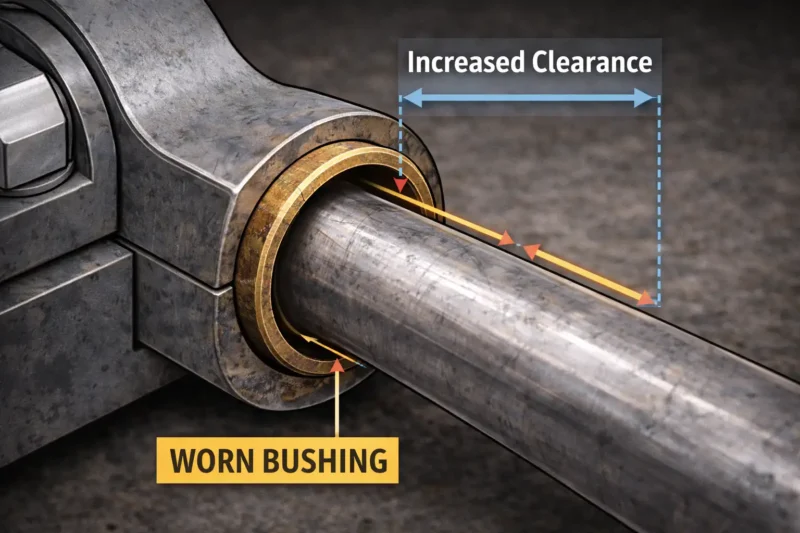
I get asked this question a lot. "How much clearance do I need?" It seems like a simple question that should have a simple answer. But from my experience in the factory, the most dangerous answer is a single number given without context. The truth is, the ideal clearance is a balance. It's a result of careful calculation, not a number you can just look up on a generic chart. Let's dive into the factors that really matter, so you can stop guessing and start engineering the right fit for your application.
Why Does Bushing Material Change the Required Clearance?
You picked a bushing material, but now the fit is wrong. Using the same clearance for a metal and a plastic bushing can lead to either a seized shaft or a rattling joint.
Different materials expand and compress differently. A plastic bushing will expand much more with heat than a bronze one. So, you cannot use one clearance standard for all materials. The material choice directly dictates the necessary running clearance to avoid failure.
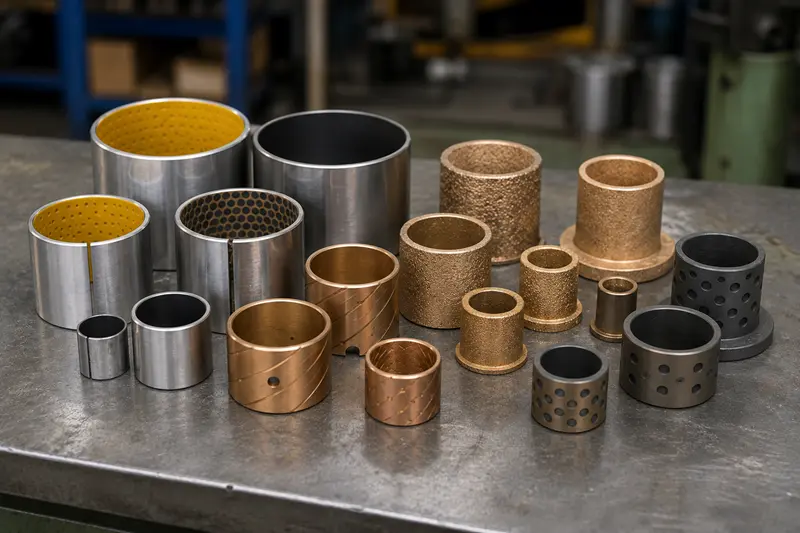
The type of material you use is the foundation for calculating clearance. Each material has its own personality, especially when it comes to heat and pressure. For example, self-lubricating composite bushings with a PTFE layer are very different from solid bronze bushings. The same goes for polymer (plastic) bushings compared to bimetal ones.
I remember a client who switched from a bronze bushing to a POM (plastic) one for a food processing machine to eliminate grease. They used the same shaft and housing dimensions. The machine seized up within an hour. Why? The plastic bushing expanded with the operational heat far more than the old bronze one did. The original clearance was simply not enough.
Here’s a simple way to think about it:
| Material Type | Thermal Expansion | Press-Fit Deformation | Key Consideration |
|---|---|---|---|
| Bronze / Bimetal | Low | Moderate | Needs space for oil film. |
| POM / Plastic | High | High | Needs more initial clearance for heat expansion. |
| PTFE Composite | Moderate | Low | Needs to protect the thin liner. |
As a factory, we always start with the material. It tells us how the bushing will behave when it gets hot and when it's pressed into its housing. This is the first and most critical step in determining a safe and effective clearance.
How Do Lubrication and Temperature Affect Bushing Clearance?
Your parts are getting hot and failing, even with lubrication. The problem might be that your clearance is working against you, either choking off the oil or creating too much heat itself.
Lubricated bushings need enough clearance to form a protective oil film. High temperatures cause parts to expand, reducing that clearance. The right gap ensures lubrication works correctly and parts do not seize up as they heat up during operation.
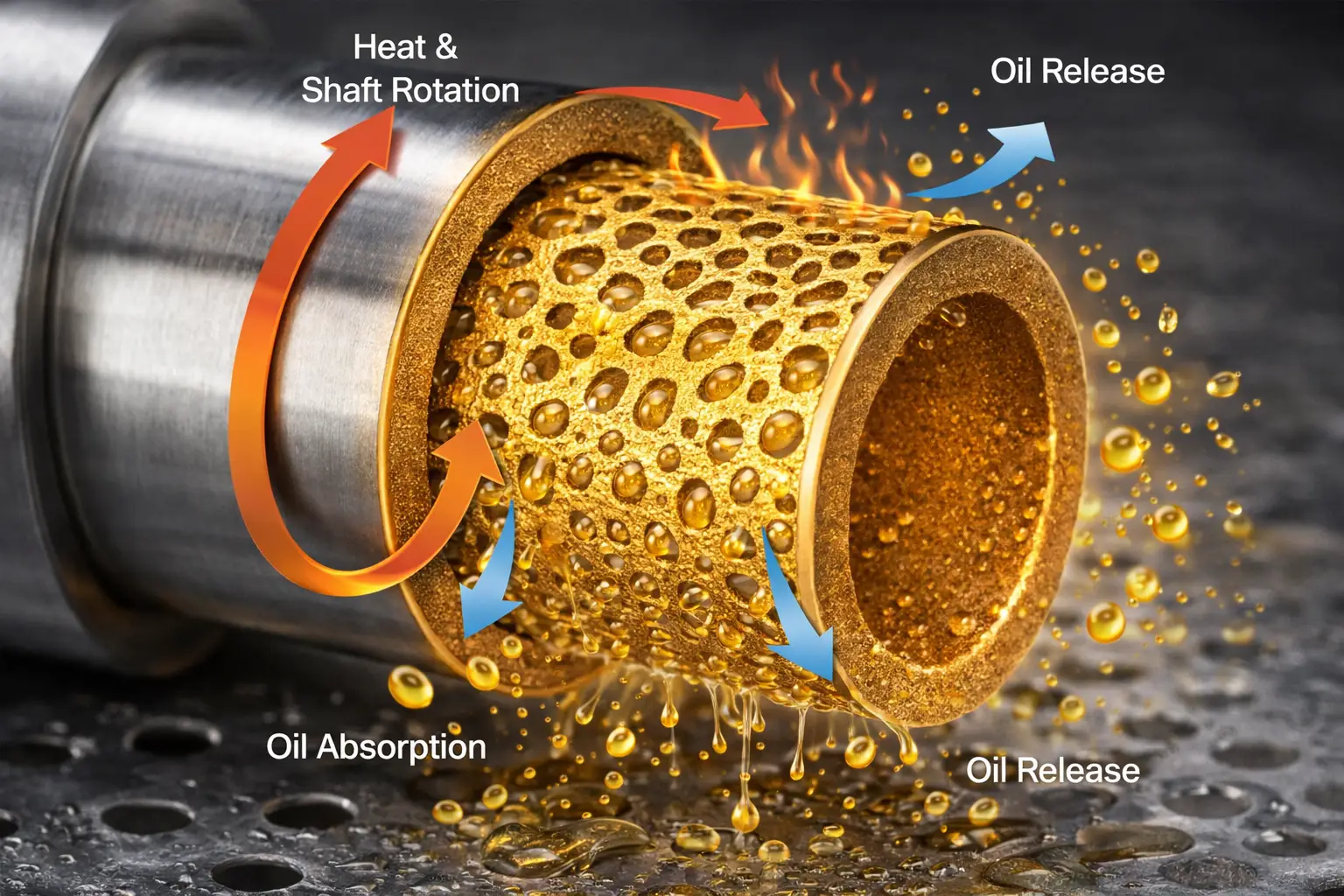
Lubrication and temperature are a team. What happens to one directly affects the other, and clearance is caught in the middle. Let's break it down.
First, think about oil-lubricated bushings, like our bronze wrapped bushings. The goal of the clearance is to create a space for a hydrodynamic film. This is a thin layer of oil that the shaft floats on, preventing metal-to-metal contact. If the clearance is too tight, this film gets squeezed out. The result is higher friction, more heat, and eventually, seizure.
Now, let's add temperature. All materials expand when they get hot. A shaft running at 100°C will be physically larger than when it was at room temperature. The bushing and its housing will expand too, but often at different rates. This change eats into your clearance. A gap that was perfect when cold can become zero when hot.
For self-lubricating bushings, like our PTFE-lined composite bearings, the story is a bit different but just as important. These materials have a solid lubricant layer. The clearance must be tight enough to provide stability and prevent vibration, which could damage the thin liner. But it still needs to be loose enough to allow for thermal expansion without creating a high-friction, binding fit. It’s a very delicate balance.
Does Press-Fitting a Bushing Change Its Internal Size?
You measured your bushing and it was perfect. But after you pressed it into the housing, the shaft wouldn't fit. This common problem happens when you forget that installation changes the bushing's dimensions.
Yes, absolutely. When a bushing is pressed into its housing, the outer pressure squeezes it and reduces its inner diameter (ID). This is called "press-fit close-in." You must calculate clearance based on the final, installed ID, not the free-state ID before installation.
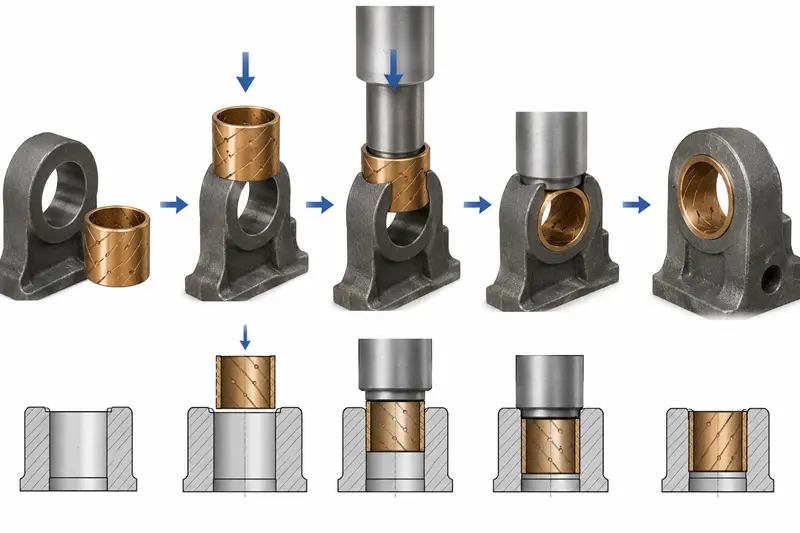
This is one of the most common mistakes I see buyers make. They measure the bushing right out of the box, see that it has, for example, a 20.10 mm inner diameter for a 20.00 mm shaft, and think they have 0.10 mm of clearance. But that's wrong.
When you press that bushing into a housing bore, the housing squeezes the bushing. This is a good thing—it's what holds the bushing in place. But that squeeze has an effect: the inner diameter gets smaller. We call this phenomenon "close-in." The amount of close-in depends on the bushing's material, its wall thickness, and the tightness of the fit (interference) with the housing.
For example, a metal bushing might close in by 70% to 90% of the interference fit value. A plastic bushing might close in even more.
Let's look at a quick example:
| Dimension | Before Installation (Free State) | After Installation (In Housing) |
|---|---|---|
| Bushing ID | 20.10 mm | 20.04 mm |
| Shaft Diameter | 20.00 mm | 20.00 mm |
| Apparent Clearance | 0.10 mm | 0.04 mm (Actual Running Clearance) |
As you can see, the real operating clearance is less than half of what it appeared to be initially. As a manufacturer, our technical data always accounts for this. When we recommend a tolerance, we are calculating it based on the final dimensions after the bushing is properly installed in your housing.
Why Do Shaft Tolerances Matter for Bushing Clearance?
You've designed the perfect clearance for your bushing, but some assemblies are tight and others are loose. The problem isn't your bushing; it's the variation in your shaft and housing.
The final operating clearance is a result of three parts: the bushing ID, the housing bore, and the shaft OD. Because each of these has a manufacturing tolerance, the final clearance will always be a range, not a single number. You must consider this "tolerance stack-up."
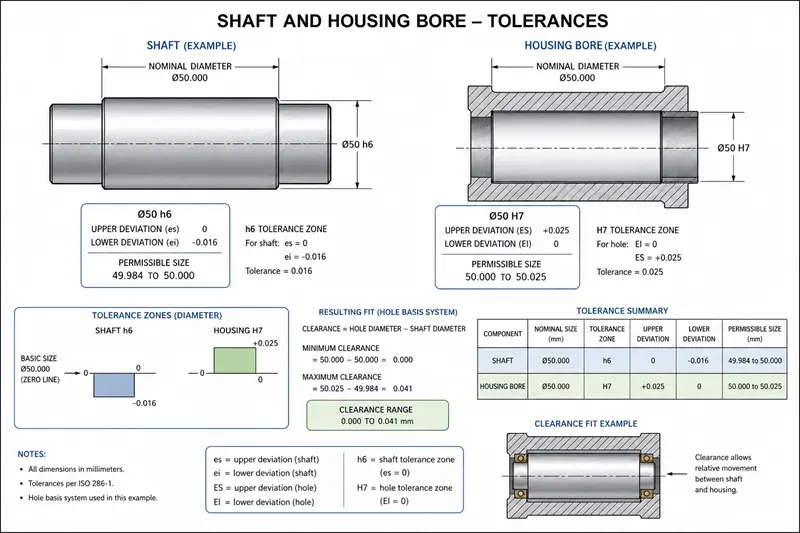
A bushing never works alone. It's part of a system: Shaft + Bushing + Housing. We just talked about how the housing affects the bushing's ID. Now, let's talk about the shaft.
No manufacturing process is perfect. A shaft specified as 20 mm will not be exactly 20.000 mm every time. It will have a tolerance, for example, 20.00 mm +0.02/-0.00. This means any shaft can be between 20.00 mm and 20.02 mm. The same is true for your housing bore.
So, when we calculate clearance, we have to think in terms of worst-case scenarios.
- Minimum Clearance (Tightest Fit): This happens when you have the largest possible shaft with the smallest possible installed bushing ID. This is where you risk seizure.
- Maximum Clearance (Loosest Fit): This happens with the smallest possible shaft and the largest possible installed bushing ID. This is where you risk vibration, noise, and poor positioning.
The shaft's surface finish also plays a role. A rougher shaft surface has microscopic peaks and valleys. These peaks can act as if the shaft is slightly larger, and they can accelerate wear on the bushing liner. That's why we always ask about the shaft's material, hardness, and surface roughness (Ra value). It helps us predict how the system will perform over its lifetime. It's not just about the initial fit; it's about how that fit will last.
Conclusion
The right bushing clearance is a balance, not a fixed number. It must prevent seizure from heat and installation, but avoid the vibration and wear caused by an overly loose fit.