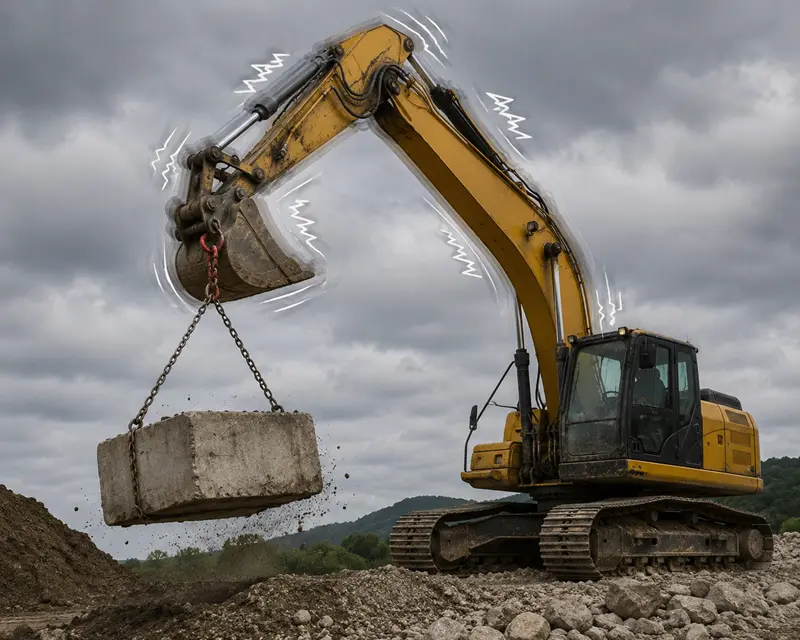
Your equipment is down because a bushing cracked. You blame poor quality, but the problem persists. The real issue is often a mismatch between the part and its application.
Bushings crack when localized stress exceeds the material's limits. This is often caused by underestimated loads, improper installation, or a mismatch between the bushing material and the actual working conditions, not just poor product quality.
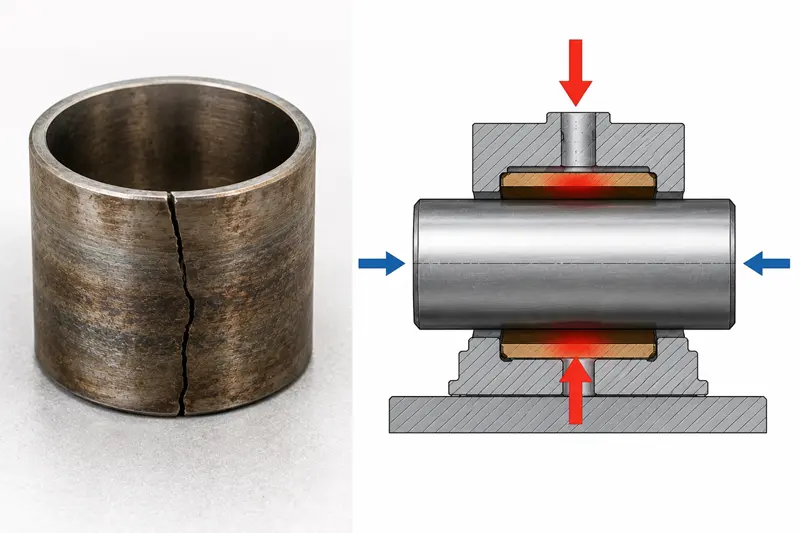
It's frustrating to see a component fail. Many of our customers initially point to the bushing's material as the culprit. But in my years of manufacturing experience, I've found that the story is almost always more complex. The crack is a symptom, not the disease. To find a real solution, we need to look deeper into how the bushing is actually used in your machine. Let's start by examining the load.
Is the Actual Load on Your Bushing Higher Than You Think?
You've done the math on static load, but bushings keep cracking. This leads to unexpected downtime and repair costs. You might be missing the impact of dynamic and eccentric forces.
Yes, actual loads are often much higher than theoretical calculations. Factors like impact, vibration, frequent starts and stops, and eccentric loading dramatically increase stress on the bushing, leading to fatigue and eventual cracking.
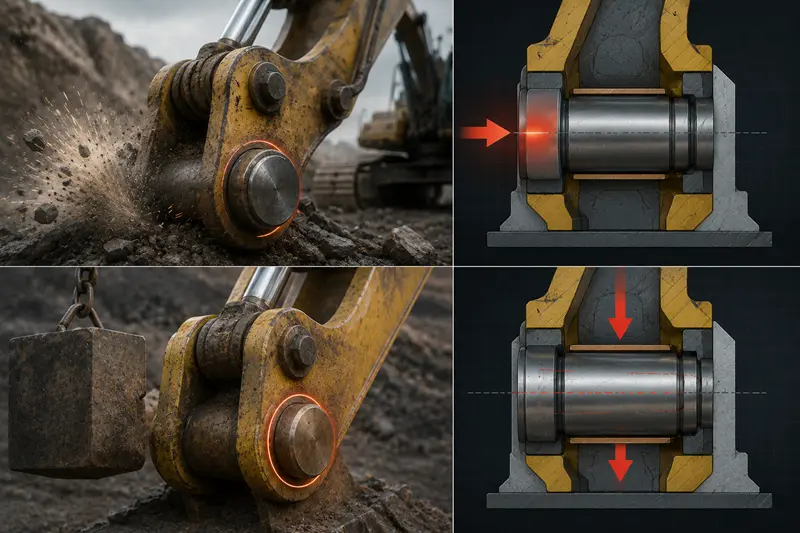
When we select a bushing, we often start with the static load. This is the constant force the bushing supports. But in the real world, especially in heavy equipment, other forces are at play.
Understanding Different Load Types
Many applications in construction or agricultural machinery involve more than just a steady weight. Think about the hydraulic arm on an excavator. It experiences sudden jolts (impact loads) and forces that are not perfectly centered (eccentric loads). Bushings in these joints also undergo constant small movements (oscillating loads). These dynamic forces create stress peaks that are far higher than the simple static load calculation. Over time, these repeated stress cycles cause material fatigue. Tiny, invisible cracks form and slowly grow until the bushing fails completely. This is why a bushing rated for the static load can still crack in the field.
The Risk of Underestimation
If your selection is based only on theoretical static load, you are likely under-specifying the bushing. You must consider the entire operational cycle to understand the true peak stress. It’s critical to account for these real-world conditions to prevent premature failure.
Could Improper Installation Be Causing Your Bushings to Crack?
You install a new, high-quality bushing, but it cracks soon after. This is incredibly frustrating and costly. The failure might be caused by hidden stresses introduced during the installation process.
Absolutely. Excessive press-fit force, misalignment between the shaft and housing, or using improper tools can create micro-cracks in the bushing during assembly. These invisible cracks then become the starting point for complete failure under operational load.
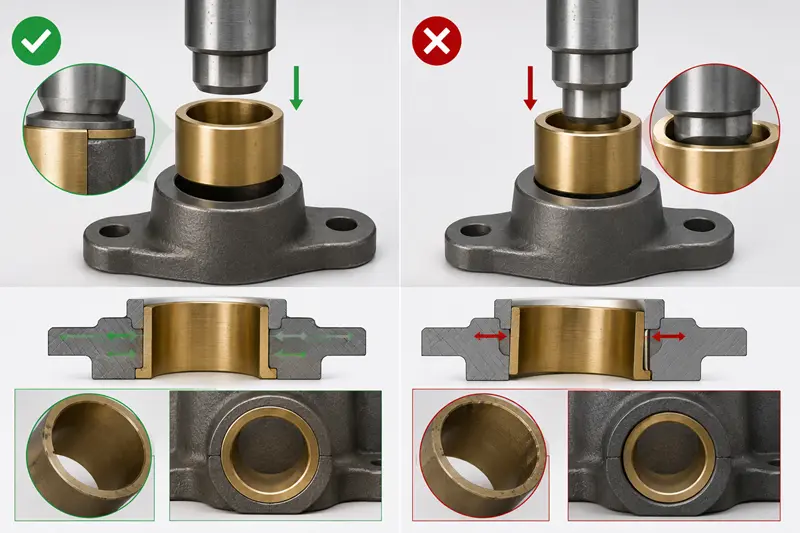
A bushing's life can be compromised before it even begins its work. The assembly process is critical. If not done correctly, you are essentially pre-damaging the part.
The Dangers of Installation Stress
Think of a press-fit. We need a tight fit, but too tight is dangerous. An overly aggressive press-fit puts the bushing material under immense compressive stress. Similarly, if the housing bore and shaft are not perfectly aligned (concentric), the bushing will be squeezed unevenly. Even a small detail like a missing or insufficient lead-in chamfer on the housing or shaft can cause the edge of the bushing to catch and deform during installation. Any of these issues can create tiny surface fractures. You cannot see them, but they are weak points waiting to fail.
Common Installation Mistakes to Avoid
| Mistake | Consequence | Solution |
|---|---|---|
| Excessive Force | Creates internal stress & micro-cracks | Use proper press-fit calculations and tools |
| Misalignment | Uneven pressure, localized stress | Ensure housing and shaft are concentric |
| No Chamfer | Edge damage during insertion | Machine a proper lead-in chamfer on the housing |
| Hammering | Creates impact fractures | Use a steady press, never a hammer |
Are You Using the Right Bushing Material for the Job?
You picked a bushing that met the specs, but it still cracked or deformed. This makes you second-guess your material choices. The solution isn't a "stronger" material, but the right one.
Choosing the right material is critical. Using a plastic bushing in a high-impact application, or a standard metal bushing where there's significant misalignment, can lead to cracking. The material's properties must match the load, speed, temperature, and potential for misalignment.
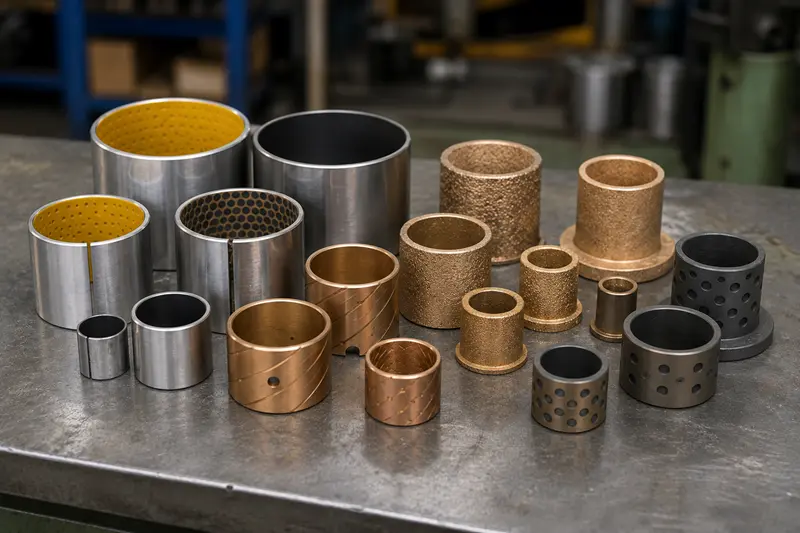
Not all bushings are created equal. As a manufacturer, we offer a wide range of materials because each one is designed for a specific set of problems. A mismatch is a common cause of failure.
Scenario-Based Material Failure
For example, a plastic or metal-polymer bushing is great for self-lubrication and low friction. But if you put it in a high-impact, heavy-load joint on a piece of construction equipment, it might crack or deform. Conversely, a hard, solid bronze bushing is very strong, but it is less forgiving of misalignment. If your shaft and housing are not perfectly aligned, all the load will concentrate on one edge of the bronze bushing. This localized stress can cause it to crack.
Don't Forget the Mating Surfaces
The condition of the shaft and housing is also part of the system. A rough shaft surface will act like a file and wear the bushing down quickly. A soft shaft can be damaged by the bushing. A deformed housing bore means the bushing is not supported evenly. All these factors create stress concentrations, which are the real enemy. Cracking rarely happens because the entire bushing is too weak; it happens because one small area is overloaded.
How Can You Correctly Diagnose and Fix Cracking Issues?
Replacing a cracked bushing only to have it fail again is a major headache. This cycle wastes resources and damages your reputation. You can break this cycle by diagnosing the problem correctly.
To fix cracking, stop focusing only on the material. Instead, analyze the entire system. Confirm the true dynamic loads, check your installation procedures and tolerances, and verify that the bushing's structure and material are a perfect match for the application.
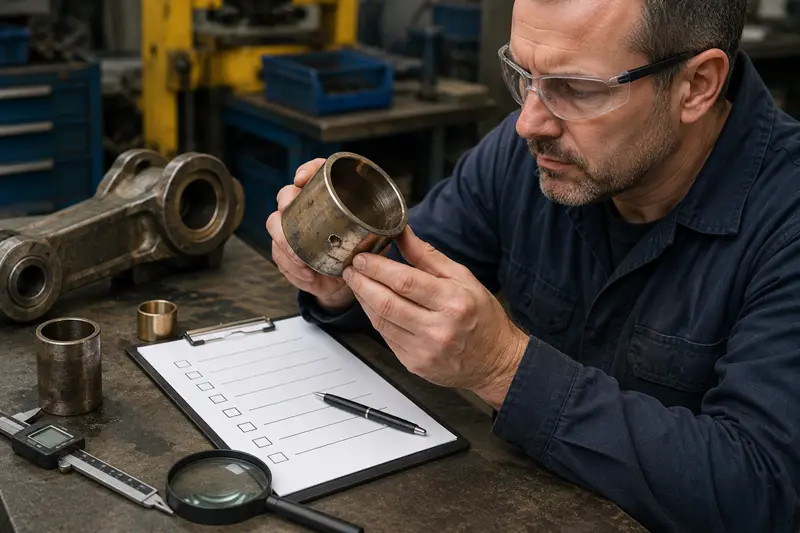
From our factory's perspective, a cracked bushing is a data point. It tells a story about the system it was in. The solution is rarely as simple as "use a harder material." In fact, a harder, more brittle material might crack even faster if the root cause is misalignment or impact load.
A Practical Checklist for Diagnosis
When a customer comes to us with a cracking problem, we don't just look at the failed part. We ask them to review the entire application. Here is a checklist you can use:
- Re-evaluate the Load: Are there impact shocks, vibrations, or eccentric forces you missed in your initial design?
- Inspect Installation: Are your press-fit tolerances correct? Is there a proper chamfer? Is the assembly process controlled and repeatable?
- Check Mating Components: Is the shaft hard enough and smooth enough? Is the housing bore round, clean, and within tolerance?
- Review the Material Choice: Is the bushing material and its structure (e.g., wall thickness) suitable for the actual working conditions, including potential misalignment?
The key takeaway is to shift your focus from simply replacing the part to understanding why it failed. True reliability comes from ensuring the bushing, shaft, housing, and load all work together in harmony.
Conclusion
Bushing cracking is a system problem, not just a material one. By matching the load, installation, and material choice correctly, you can prevent these failures and ensure equipment reliability.