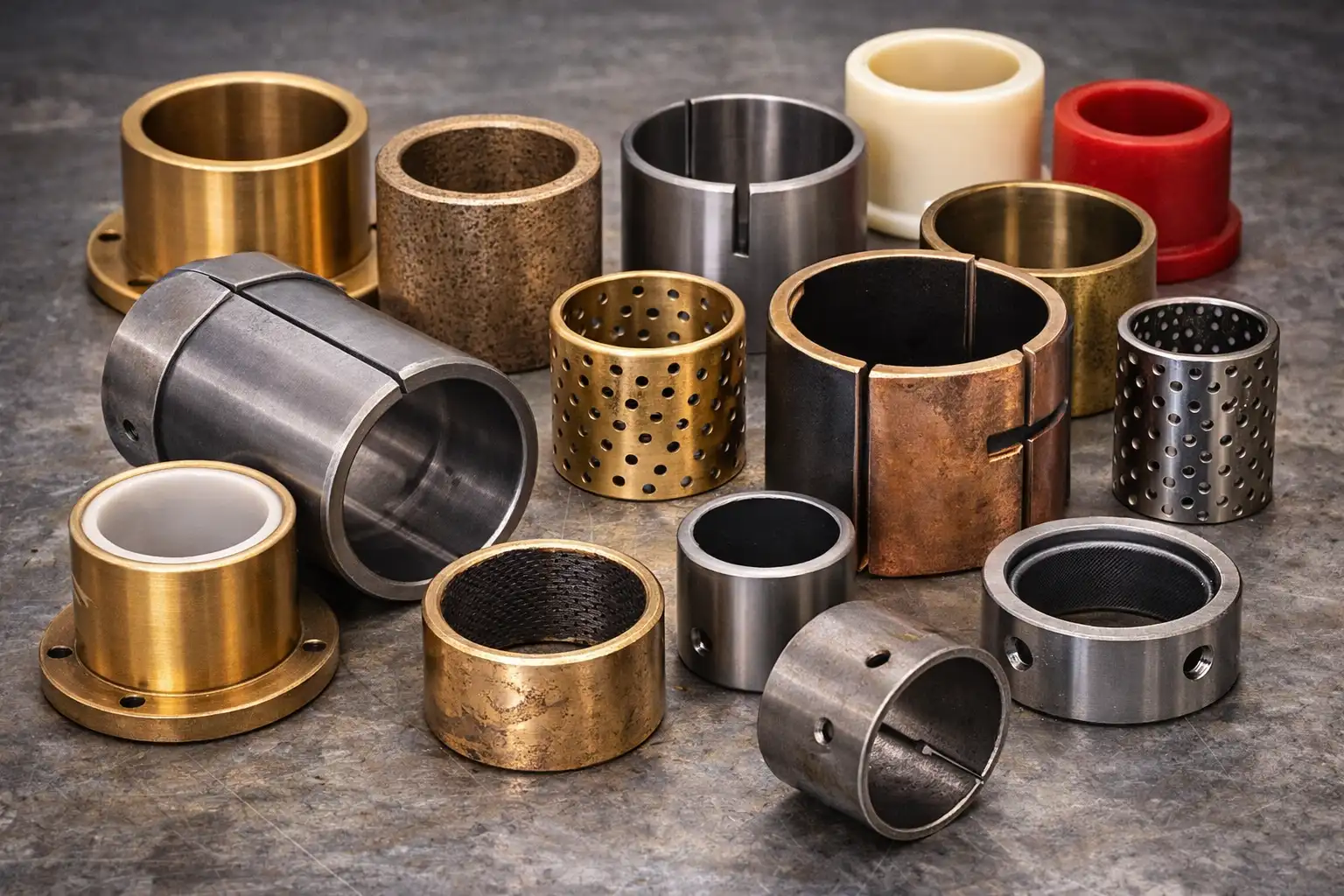
Your construction equipment bushings fail too often, causing expensive downtime and repairs. Understanding the real cause is the first step to choosing the right part and keeping your machines running.
Bushings in construction machinery are used in high-load pivot points like booms, arms, and buckets. Materials like graphite plugged bronze[^1] and cast bronze are preferred for their ability to handle heavy loads, shock, and harsh environments. Failure often comes from poor lubrication, contamination, and incorrect material selection.
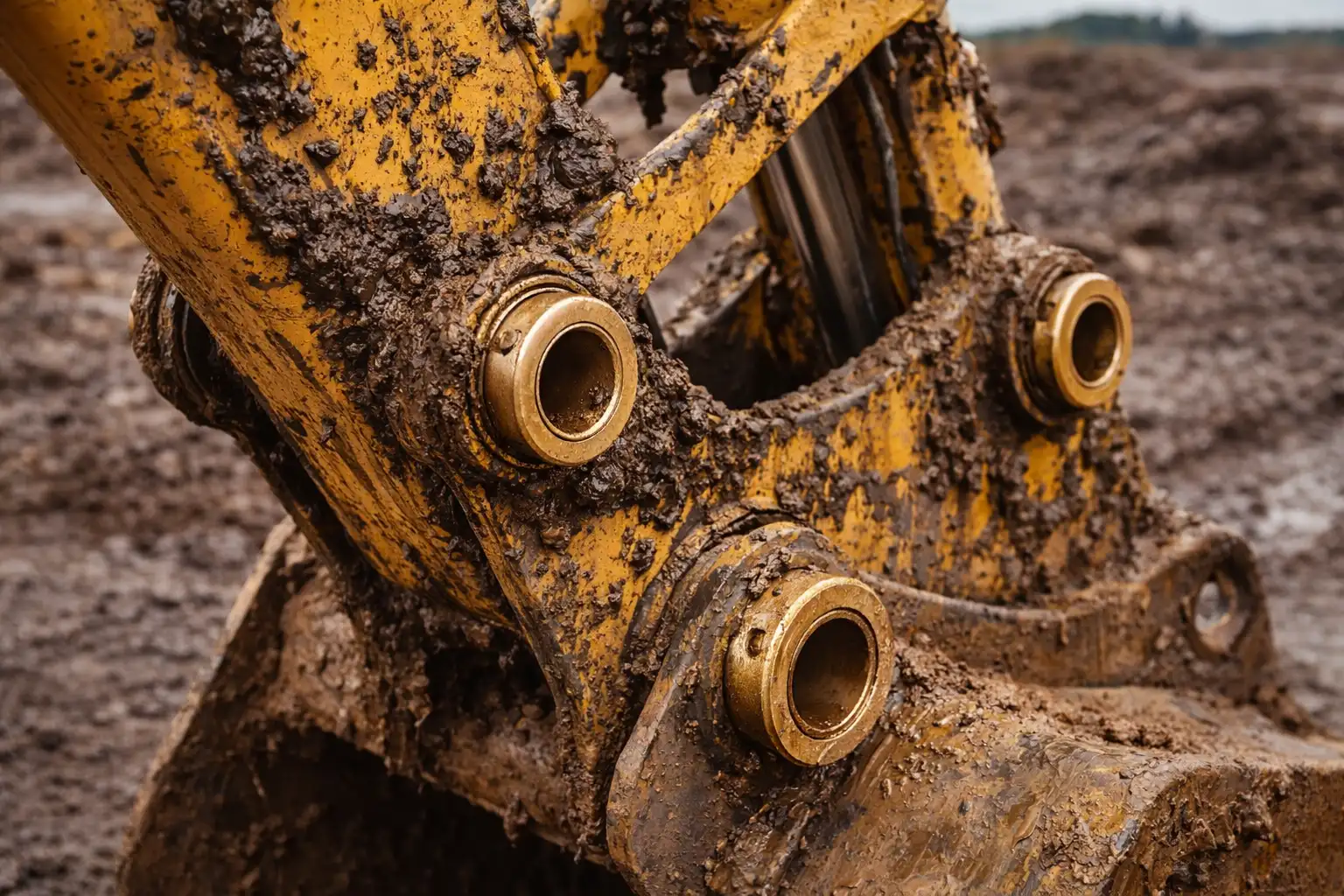
As a factory that specializes in manufacturing bushings, we talk to OEM clients and engineers every day. One of the most common problems we help solve is premature bushing failure[^2], especially in heavy equipment. The conditions on a construction site are completely different from a clean, indoor factory. The right choice isn't just about specifications on a datasheet; it's about surviving in the real world. Let's break down what really matters when you're choosing a bushing that needs to last.
Where are bushings typically used in construction machinery?
Do you know exactly where bushings are working the hardest on your equipment? Ignoring these critical points leads to unexpected breakdowns. Let's pinpoint these high-stress areas on your machines.
In construction machinery like excavators and loaders, bushings are essential in high-load pivot points. This includes the boom, arm, and bucket joints, as well as steering mechanisms[^3] and hydraulic cylinder connections[^4]. These areas all experience low-speed, high-impact movement.
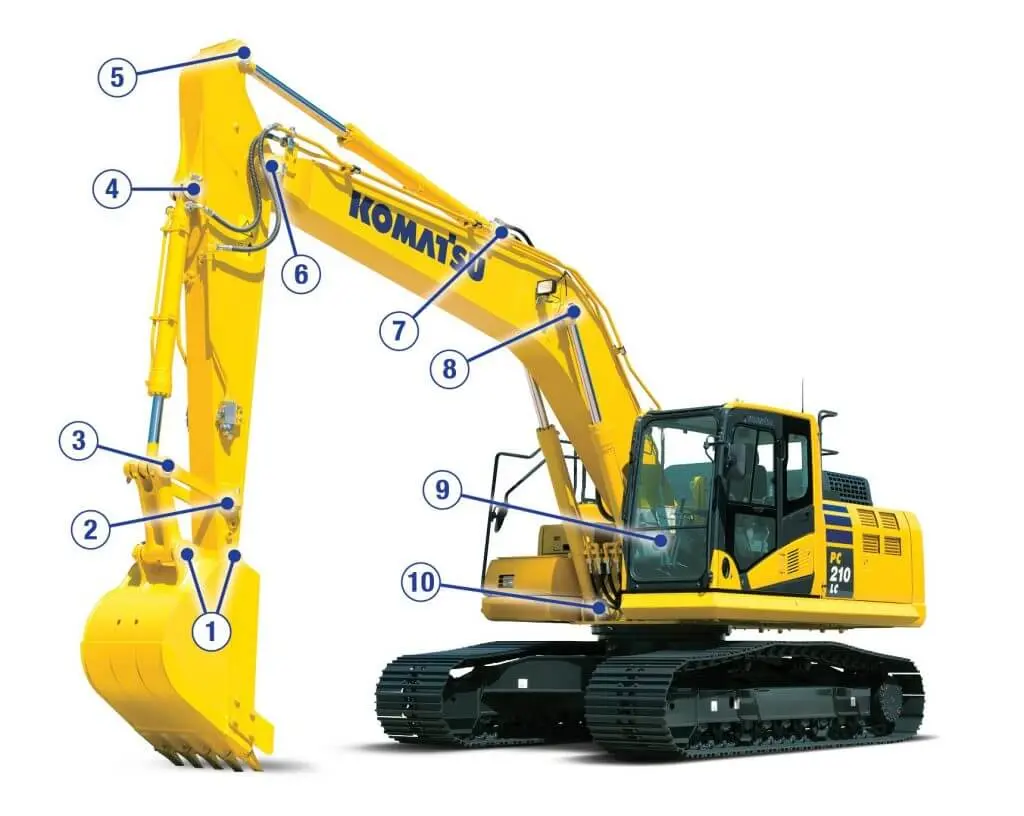
When we manufacture bushings for the construction industry, we focus on a few key application points because they bear the brunt of the machine's work. These aren't just random parts; they are the joints that allow massive pieces of steel to move tons of material. The most common locations we supply parts for are the boom, arm, and bucket pivot points on excavators and loaders. We also see them in steering joints and at the connection points for hydraulic cylinders.
What do all these locations have in common?
- Low-Speed Movement: The parts don't spin fast, they oscillate or pivot back and forth.
- High Impact Loads: Every time a bucket hits the ground or lifts a heavy load, a shockwave travels through these joints.
- High Wear Risk: The combination of heavy loads and a dirty environment creates a perfect storm for abrasive wear.
This is why you can't just use a standard industrial bushing in these spots. They simply aren't built to withstand the constant shock and grinding that happens on a construction site.
| Application Point | Primary Challenge | Why It's Demanding |
|---|---|---|
| Boom & Arm Joints | High Static & Dynamic Loads | Supports the entire weight and force of digging operations. |
| Bucket Linkage | Extreme Impact & Abrasive Wear | Constantly in contact with dirt, rocks, and debris. |
| Hydraulic Cylinder Mounts | High Directional Force | Must handle the immense push/pull forces from the hydraulics. |
| Steering Mechanisms | Repetitive Stress & Vibration | Endures constant movement and vibration during operation. |
What are the common types of bushings used in heavy equipment?
Confused by the different bushing types available for your machines? Choosing the wrong one can lead to rapid wear and damage. We'll break down the most common options for heavy-duty applications.
The most common types for heavy equipment are graphite plugged bronze bushings for self-lubricating heavy loads, cast bronze bushings for high-impact and lubricated systems, bimetal bushings for cost-effective medium loads, and composite bushings for maintenance-free, lower-load situations.
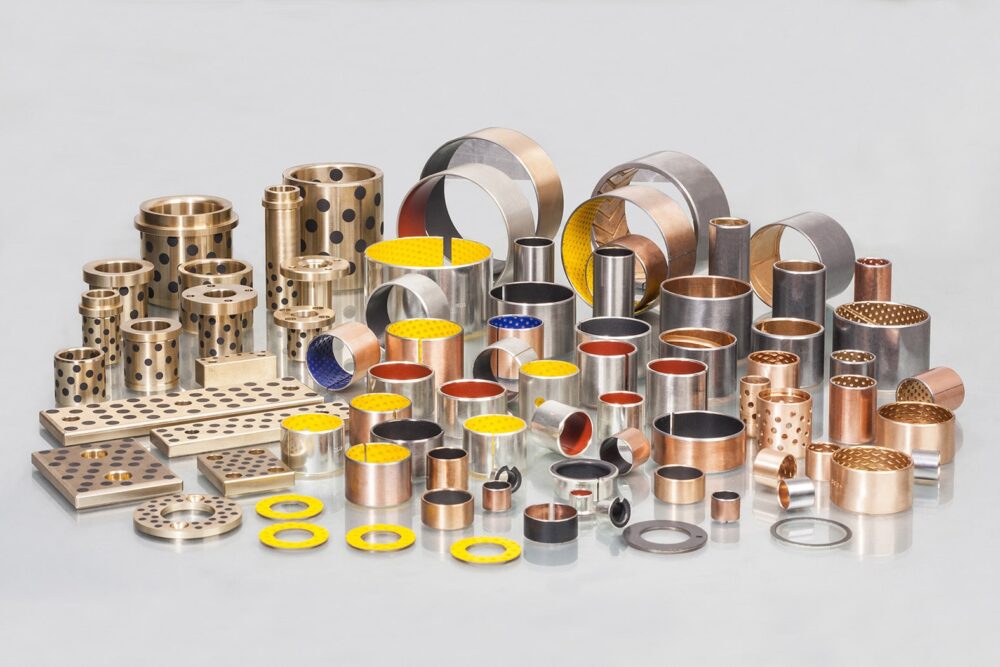
From our factory floor, we see four main types of bushings consistently ordered for construction equipment. Each one has a specific job it's best suited for, and understanding the difference is key to long-term performance. It's not about which one is "best," but which one is "right" for the load, environment, and maintenance schedule.
Graphite Plugged Bronze Bushings
This is one of the most popular solutions for heavy-duty applications. We start with a strong cast bronze base and then drill holes into it, which we fill with solid graphite plugs. The bronze provides the high load capacity and impact resistance, while the graphite acts as a continuous, solid lubricant. This means the bushing can work reliably even if regular greasing is missed. It's the go-to choice for critical pivot points that are hard to reach and maintain.
Cast Bronze Bushings
This is a traditional but incredibly reliable option. A solid piece of bronze is machined to the exact dimensions needed. Its main strength is its toughness and ability to withstand very high impact loads without cracking or deforming. However, it relies completely on external lubrication, like grease, to work properly. When a machine has a well-designed central lubrication system that is regularly maintained, cast bronze bushings offer excellent durability and a very long service life.
Bimetal Bushings
Bimetal bushings offer a great balance of performance and cost. They are made of two layers: a strong steel backing and a sintered bronze alloy layer on the inside. The steel provides structural strength and a tight press-fit, while the bronze layer offers a good wear surface. These bushings also require regular lubrication. They are perfect for medium-load applications where cost is a major factor, but you still need better performance than a simple steel bushing.
Composite Self-Lubricating Bushings
These bushings are built with layers of different materials, often a steel backing, a porous bronze layer, and a top layer of a polymer like PTFE. They are completely maintenance-free and have a very low friction coefficient. However, their main limitation is load capacity. They are excellent for control linkages or other low-to-medium load joints, but they are not suitable for the extreme impact and pressure found in a main bucket joint.
Why do bushings on construction machinery fail so often?
Are you constantly replacing bushings on your construction fleet? This downtime is costing you money and delaying your projects. Let's look at the real reasons behind these frequent failures.
Bushings on construction machinery often fail due to inadequate lubrication, severe contamination from dust and sand, and extreme impact loads. A common mistake is selecting a bushing material not designed for the high-stress, abrasive environment, leading to rapid wear and breakdown.
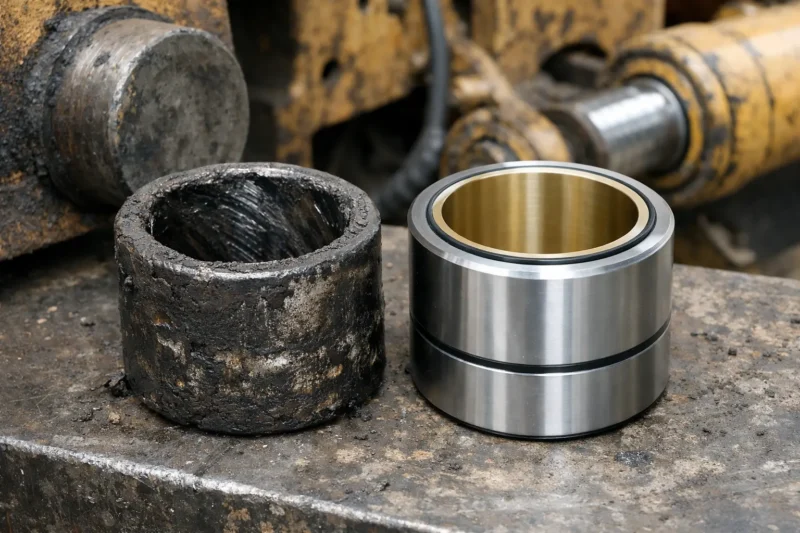
We've analyzed countless failed bushings sent to us by customers, and the reasons for failure usually fall into a few clear categories. It's rarely a single issue, but rather a combination of the harsh environment and operational stresses that standard industrial parts are not designed to handle.
Inadequate Lubrication
This is the number one killer of bushings. On a busy construction site, maintenance schedules can be hard to follow. Grease fittings get covered in mud and are easily missed. Sometimes, the wrong type of grease is used, which gets squeezed out under heavy loads. When lubrication fails, you get direct metal-on-metal contact, which generates immense heat and causes rapid, destructive wear. The bushing and the pin can quickly grind each other away.
Severe Contamination
Construction sites are full of dust, sand, mud, and water. These contaminants work their way into the tiny spaces between the bushing and the pin. Once inside, this gritty mixture acts like a grinding paste. Every time the joint moves, the abrasive particles scrape away at the bushing surface. This is known as three-body abrasion and it dramatically accelerates wear, far beyond what would happen in a clean environment.
Extreme Impact Loads
Think about an excavator bucket hitting rock. That massive shock load is transferred directly through the pins and bushings. A bushing material that isn't tough enough will crack, deform, or shatter under this repeated impact. Material fatigue is a major issue. The material might handle the load once, but thousands of impact cycles can cause microscopic cracks to form and grow until the part fails completely.
Incorrect Material Selection
This is a mistake we see all too often. To save on initial costs, a machine might be fitted with a bushing designed for a less demanding application. For example, using a simple oil-impregnated sintered bearing in a bucket pivot is a recipe for disaster. It lacks the impact strength and contamination resistance needed, and it will fail in a fraction of the time a proper heavy-duty bushing would last.
How should we choose the right bushing from a factory's perspective?
Do you feel like you're guessing when selecting a bushing? The wrong choice leads to premature failure. We'll give you a simple, factory-approved logic for making the right decision every time.
From a manufacturing standpoint, the selection process is simple. For high loads with difficult maintenance, choose graphite plugged bronze. For high impact with good lubrication, use cast bronze. For cost-sensitive, medium-load jobs, bimetal bushings are suitable. For maintenance-free, lower-load applications, use composite bushings.
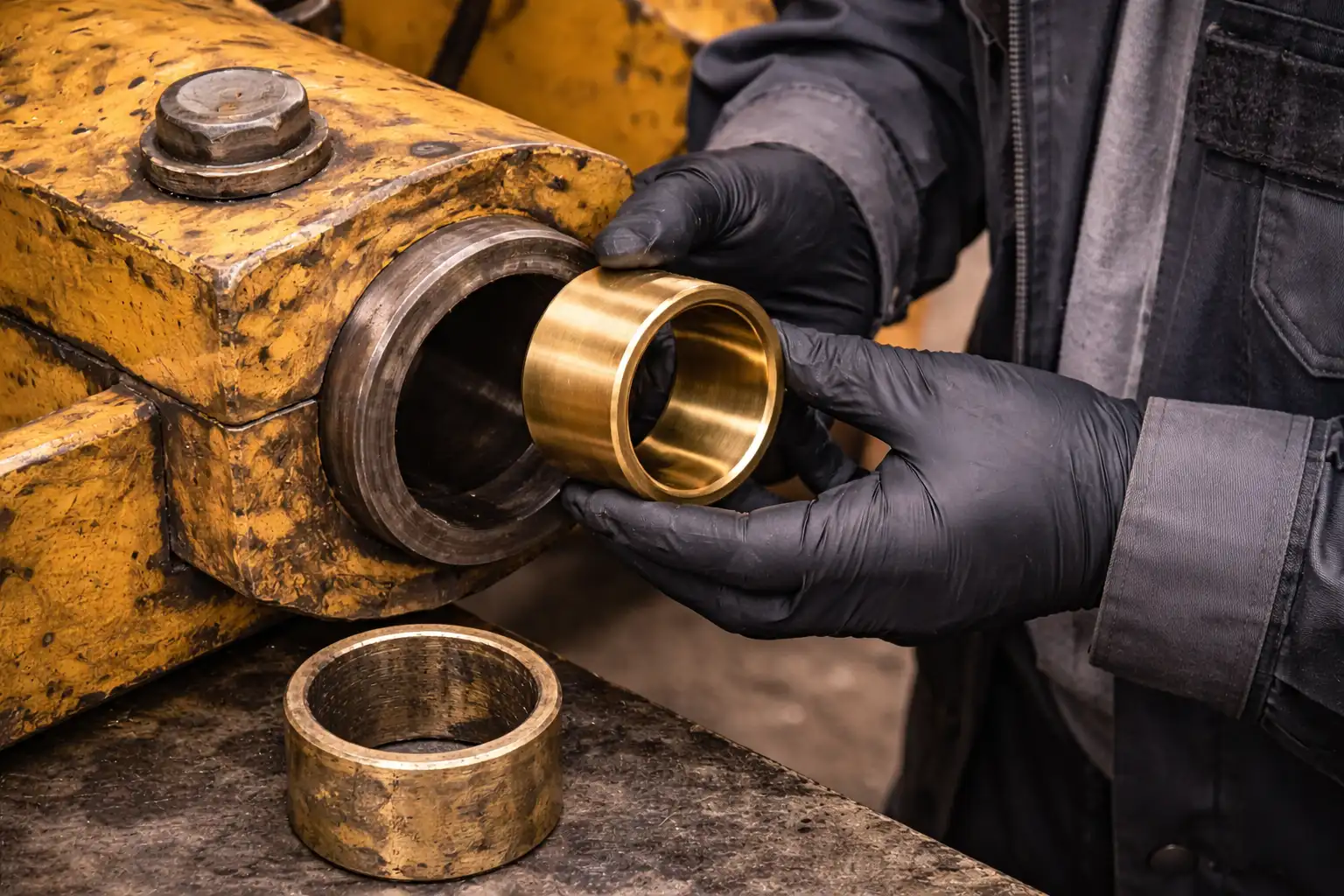
As a manufacturer, our goal is to provide a product that performs reliably for its expected lifespan. To do that, we guide our OEM customers to think about the application conditions first, not the price. The selection logic is straightforward and always starts with the working environment. The core principle for construction machinery is that a bushing must prioritize impact resistance and contamination resistance over low friction. A super slick, low-friction bearing that shatters on the first impact is useless.
Here is the decision-making framework we use:
| Working Condition | Recommended Bushing Type | Why It's the Right Choice |
|---|---|---|
| High Load + Low Speed + Difficult Maintenance | Graphite Plugged Bronze | The solid lubricant works when grease doesn't. The bronze base is strong enough for the heavy loads. |
| High Impact + Good Lubrication System | Cast Bronze | Unmatched toughness and strength to absorb shock. Relies on the grease to prevent wear. |
| Medium Load + Cost-Sensitive | Bimetal | A balanced choice that offers good strength from the steel back and a reliable wear surface from the bronze layer. |
| Low-to-Medium Load + Needs Maintenance-Free | Composite (Polymer) | Ideal for sealed joints or control linkages where contamination is low and maintenance is impossible. |
I recently worked with a client in the Middle East, Sophia, who was having issues with bushings on a fleet of loaders. They were failing every few hundred hours. After discussing the application—a very sandy environment with inconsistent maintenance—we recommended they switch from a standard lubricated bronze bushing to our graphite plugged bronze type. The self-lubricating nature provided a failsafe, and the robust bronze body handled the loads. Their service life more than tripled, drastically reducing their downtime and maintenance costs. This is a perfect example of matching the product to the real-world problem.
Conclusion
Choosing the right construction machinery bushing is key. It's about matching material strength, lubrication, and contamination resistance to the specific high-impact, dirty conditions of the job site.
[^1]: Explore how this material can enhance the performance and longevity of your machinery. [^2]: Understanding the causes can help you prevent costly downtime and repairs. [^3]: Learn about the importance of bushings in ensuring smooth steering operations. [^4]: Explore the critical role of bushings in hydraulic systems for construction machinery.