Struggling to find reliable bushing suppliers in China? Worried about inconsistent quality[^1] and missed deadlines? We know the feeling of a supply chain breaking down at a critical moment.
To source high-quality bushings from China, you must first clearly define your application's technical needs. Then, meticulously vet suppliers to ensure they are true factories, not just traders. Prioritize sample testing and production consistency over the lowest price to build a reliable, long-term partnership.
Sourcing from China seems easy on the surface. Thousands of suppliers pop up with a simple search. But for an OEM, the real challenge isn't finding a supplier; it's finding the right partner. A partner who ensures quality, meets deadlines, and grows with you. Let's break down how you can build that kind of supply chain, step by step.
Why Must You Define Your Application Needs First?
Ever received a batch of bushings that failed prematurely? The root cause is often a mismatch between the product and its real-world use. This costly mistake is entirely avoidable.
Defining your application needs—like load, speed, and temperature—is the critical first step. It allows the factory to select the correct material and design. Without this information, any quote is a guess, and you risk sourcing a product that is doomed to fail in your equipment.
From my experience as a manufacturer, many sourcing failures happen right at the beginning. Before you even contact a supplier, you must have a clear picture of your technical requirements. A professional factory will always ask for this information first.
Key Parameters for Correct Bushing Selection
Without knowing the operating conditions, we can't give an accurate quote or recommend the right product. We need to know the load, speed, temperature, lubrication conditions, and required lifespan to engineer a bushing that actually works. This initial conversation separates a real engineering partner from a simple order-taker. A quote without these details is just a number; it’s not a solution.
Here is a simple breakdown of how different materials suit different conditions:
| Material Type | Best For... | Key Characteristics |
|---|---|---|
| PTFE Composite Bushing | Dry running, maintenance-free | Low friction, good for oscillating movements |
| Sintered Bronze Bushing | Continuous, medium-speed rotation | Self-lubricating with oil, quiet operation |
| Graphite-Plugged Bronze | High load, low speed | Handles high temperatures, self-lubricating |
| Wrapped Bronze Bushing | High load, lubricated conditions | Can have oil grooves, very durable |
Getting this first step right saves immense time and money down the line.
How Can You Tell a Real Factory from a Trading Company?
You found a supplier with a great price, but can they actually make your parts? Many online "suppliers" are just middlemen, adding cost and risk without adding any manufacturing value.
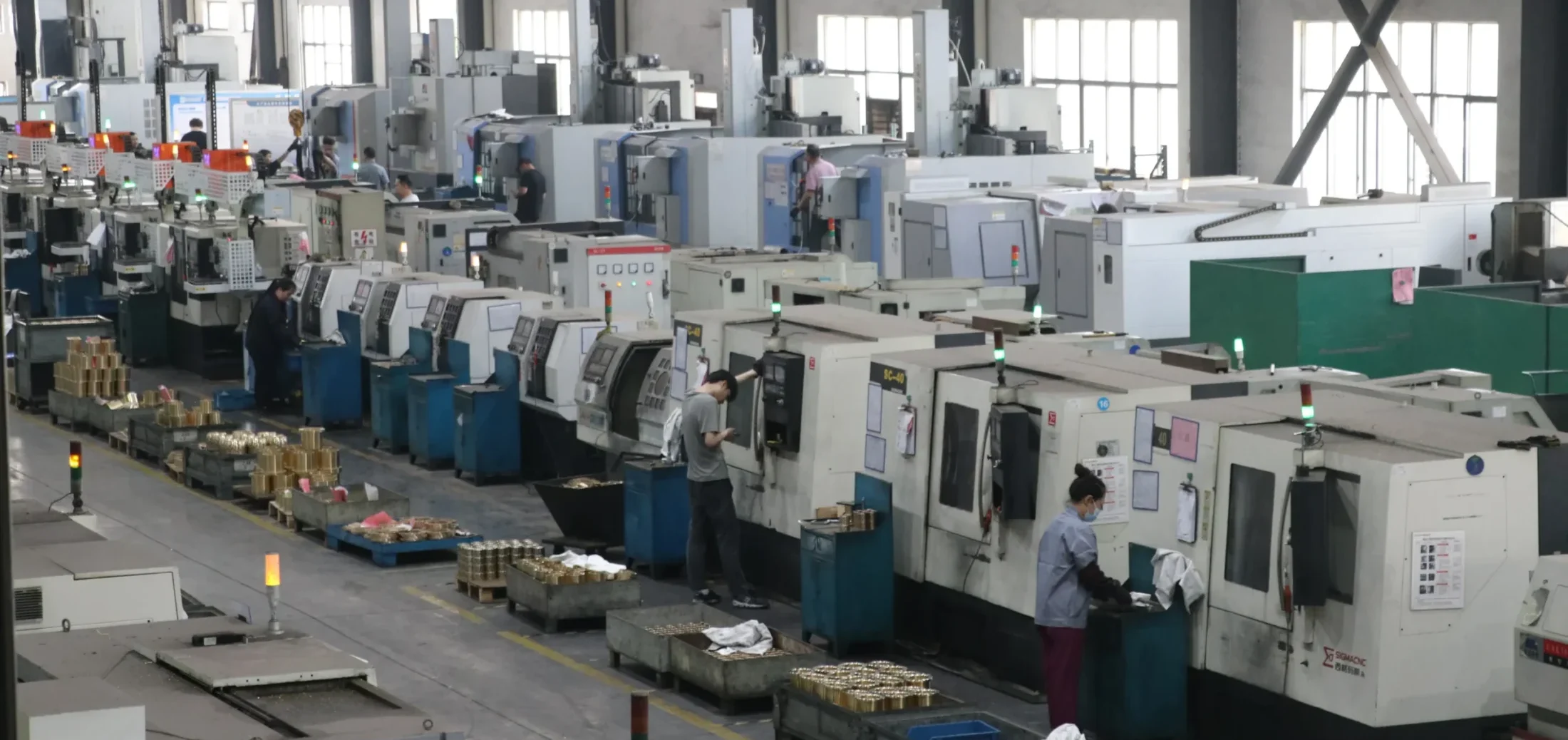
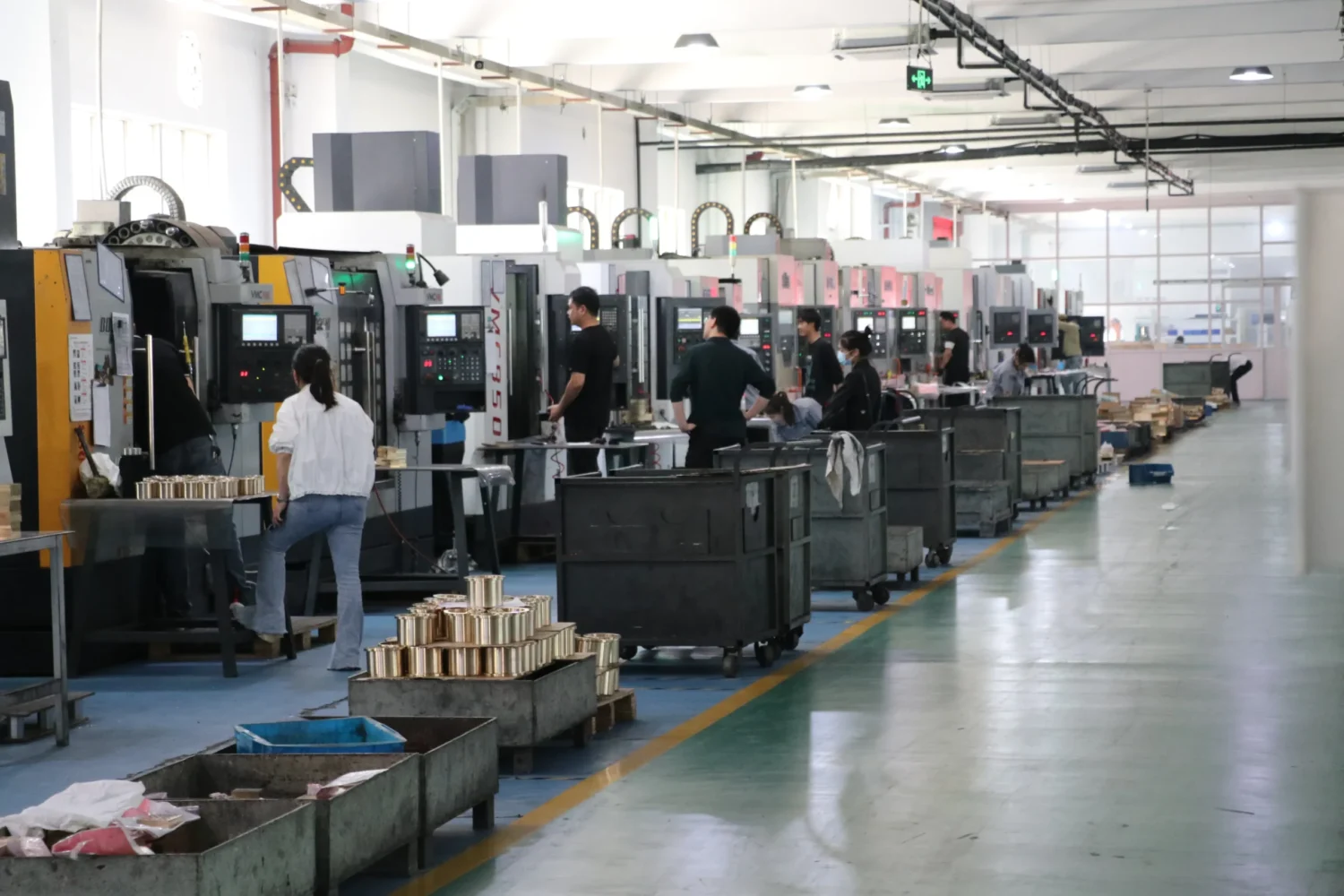
To identify a true factory, ask for production videos or live tours. Inquire about their specific manufacturing capabilities (sintering, machining, etc.) and their Minimum Order Quantity (MOQ)[^2]. A real factory will confidently discuss technical details, while a trader will often pivot back to price.
In the Chinese market, the word "supplier" does not always mean "factory." For an OEM, this distinction is everything. You need a partner who controls the manufacturing process, not one who subcontracts it to someone else.
Verification Checklist: Factory vs. Trader
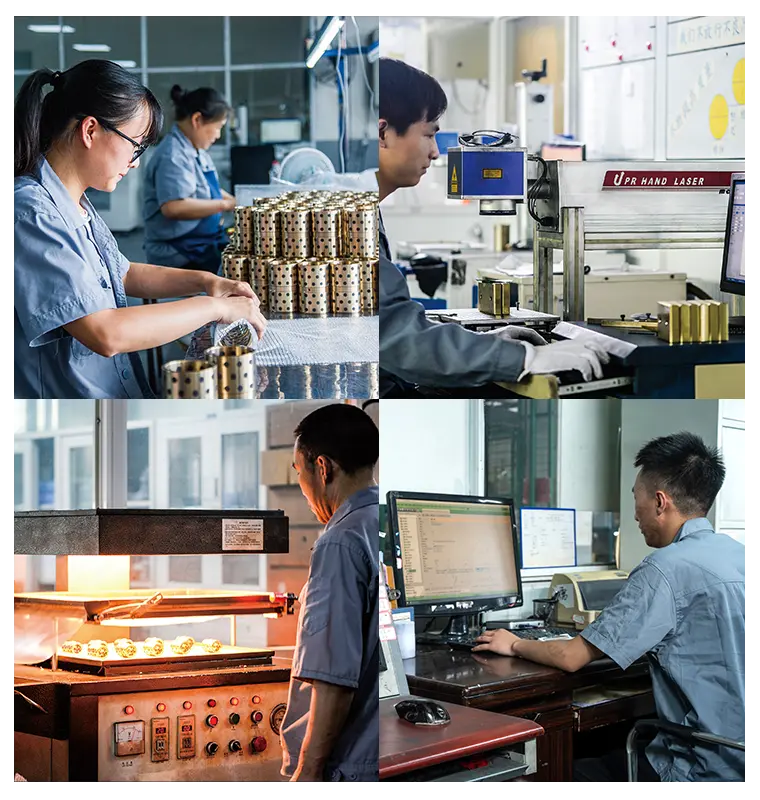
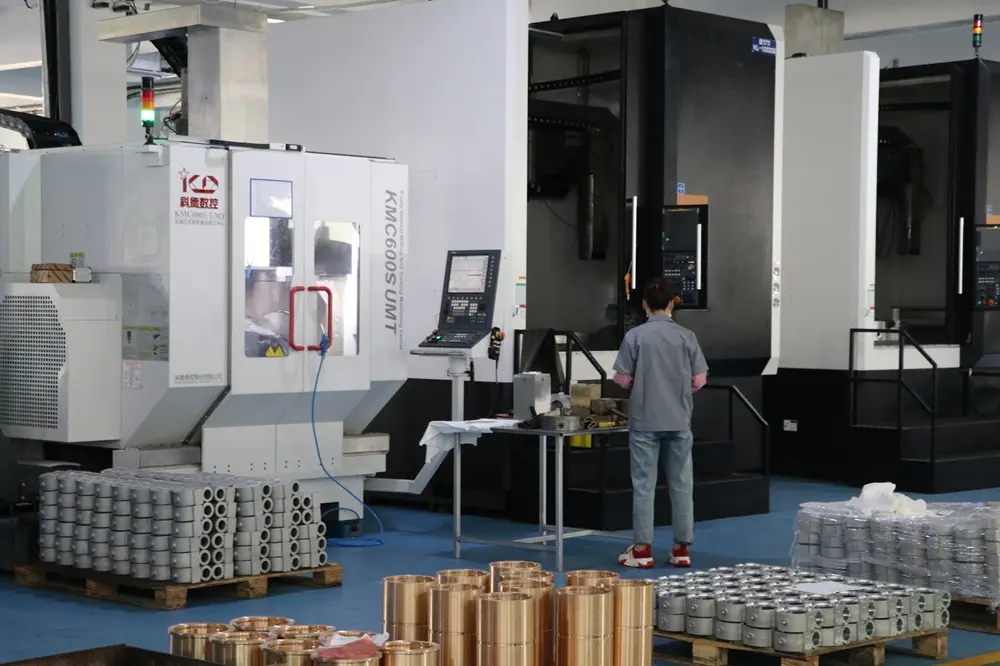
As a factory, we are proud of our production lines. We can show you our CNC machines, our sintering furnaces, and our quality control lab. We welcome technical questions because it's what we do every day. A trader can't do that. Their expertise is in logistics and sales, not engineering. Here is how you can quickly tell the difference:
| Verification Point | What to Look For in a Factory | Red Flag (Likely a Trader) |
|---|---|---|
| Production Assets | Provides factory videos, photos, or welcomes audits. | Vague about equipment; only shows finished products. |
| Technical Knowledge | Can discuss material science, tolerances, and processes. | Avoids technical questions; focuses only on price. |
| MOQ and Lead Time | Has a clear MOQ based on production runs. | Very low or no MOQ; acts like a retail shop. |
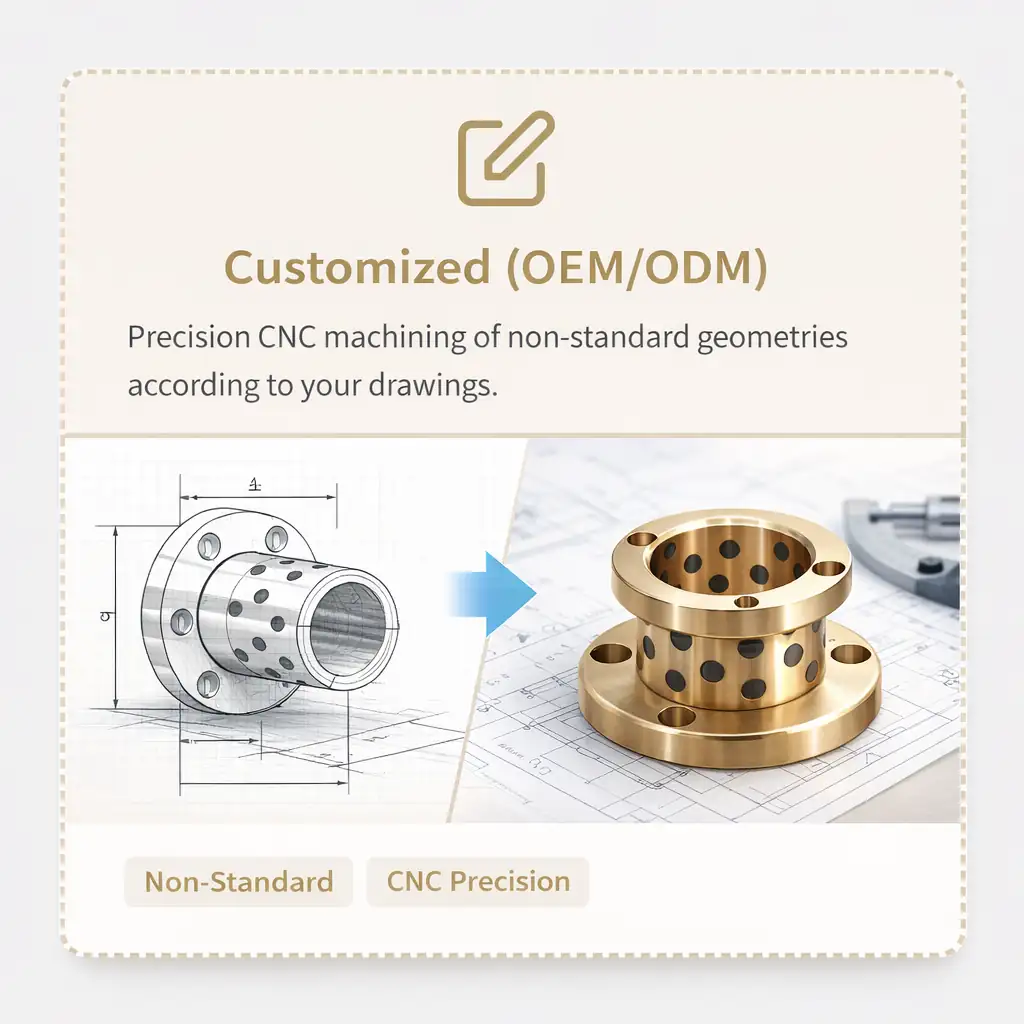
| OEM/ODM Capability | Eager to discuss custom designs and show case studies. | Prefers to sell standard, off-the-shelf parts. |
This simple check helps you filter out the noise and focus on partners who can actually build what you need.
Why is Sample Testing More Important Than the Initial Price?
Tempted to choose the supplier with the lowest quote? This common shortcut often leads to expensive failures and production delays when the parts don't perform as expected under real-world stress.
A low price means nothing if the bushing fails. Sample testing is your only way to verify performance before committing to a large order. It allows you to check critical factors like dimensional tolerance, surface finish, and wear resistance in your actual application.
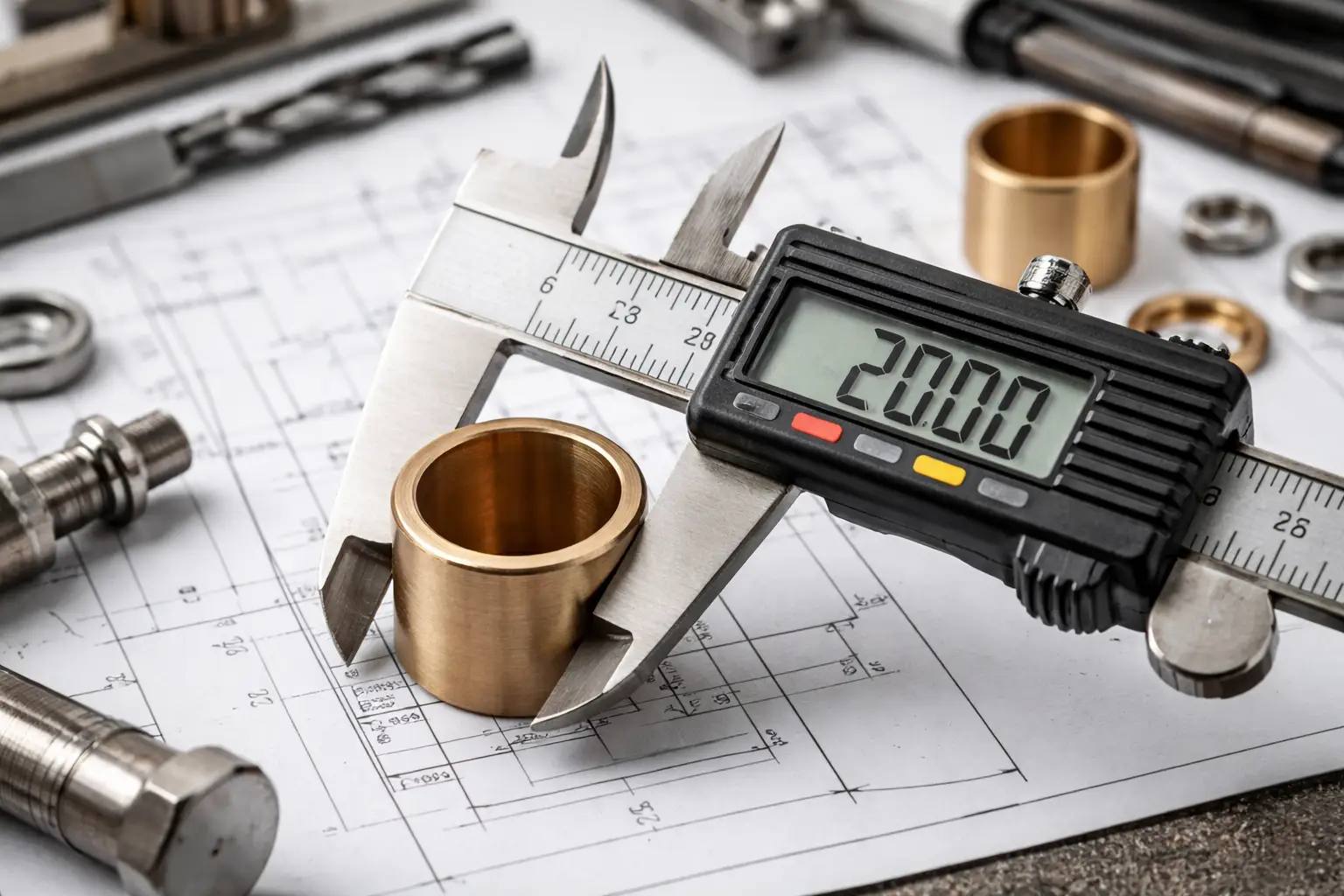
I have seen too many buyers get burned by focusing only on the price tag. The correct process is to select 2–3 promising factories, request samples from each, and then put those samples through a rigorous testing process.
What to Look for During Sample Testing
A good supplier is not afraid of testing; in fact, they should encourage it. It's their chance to prove their quality. When you get your samples, don't just look at them. Test them. Here's what we recommend focusing on:
- Dimensional Tolerance: Does the bushing fit correctly in your assembly? A part that is too tight or too loose can cause immediate problems. Check the inner diameter, outer diameter, and length against your drawings.
- Surface Finish: A smooth, consistent surface is crucial for low friction and long life. Look for any imperfections, burrs, or inconsistencies that could accelerate wear.
- Initial Wear Behavior: Run the bushing in your application for a short period. How does it wear? Excessive initial wear is a sign of poor material quality or improper manufacturing.
- Noise and Friction: A well-made bushing should operate smoothly and quietly. Any grinding, squeaking, or high friction points to a problem.
A supplier who is hesitant to provide samples should be a major red flag. Confidence in our product means we are confident in your tests.
How Do You Ensure Consistent Quality Across All Batches?
The first batch of bushings was perfect, but the next one caused assembly line chaos. This inconsistency is a supply chain nightmare, eroding trust and halting production for your business.
To ensure consistency, you need a supplier with robust quality control (QC) processes. Ask about their batch management[^3], raw material traceability[^4], and their ability to provide quality documents like PPAP. This focus on process is key for long-term B2B supply.
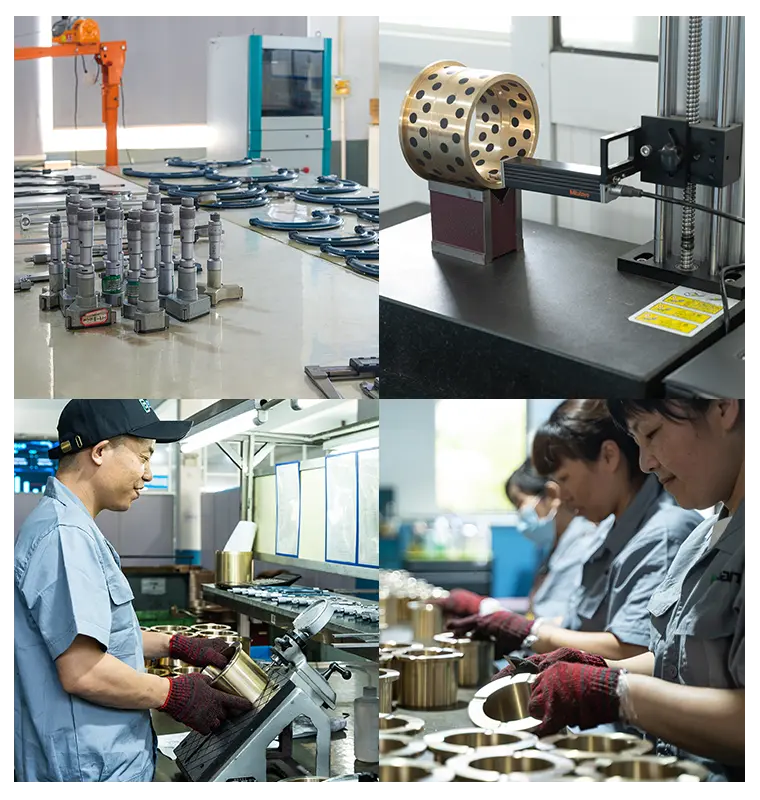
For B2B and OEM supply, the quality of a single batch means very little. The real goal is predictable, repeatable quality over months and years. A single perfect sample is easy to make. Making 100,000 perfect parts is hard.
Key Indicators of a Consistent Supplier
As a factory focused on long-term partnerships, batch-to-batch consistency is our core promise. It’s achieved through rigorous process control, from raw material inspection to final outbound checks. This is the difference between making one good part and being a reliable OEM supplier.
| Factor | Consistent Supplier (Reliable Partner) | Inconsistent Supplier (Risky) |
|---|---|---|
| QC Process | Has a documented QC process for each production step. | Quality checks are random or only done at the end. |
| Material Traceability | Can trace raw materials back to their source for each batch. | Cannot provide material certificates or batch records. |
| Standardization | Uses automated or standardized processes to reduce human error. | Relies heavily on manual labor with high variability. |
| Reporting | Can provide inspection reports, PPAP, and other quality documents. | Resists providing any documentation. |
When you interview a potential supplier, ask them about their process for handling a quality issue. Their answer will tell you everything you need to know about their commitment to consistency.
Why Does Clear Communication Matter So Much?
Your project is delayed, but your supplier doesn't understand the technical issue. Miscommunication creates frustration, costs time, and can derail even the simplest of sourcing projects.
Many projects fail because of poor communication, not poor products. Your supplier must be able to clearly discuss technical requirements in English, understand OEM needs beyond standard parts, and respond quickly. You need an engineering partner, not just a passive order-taker.
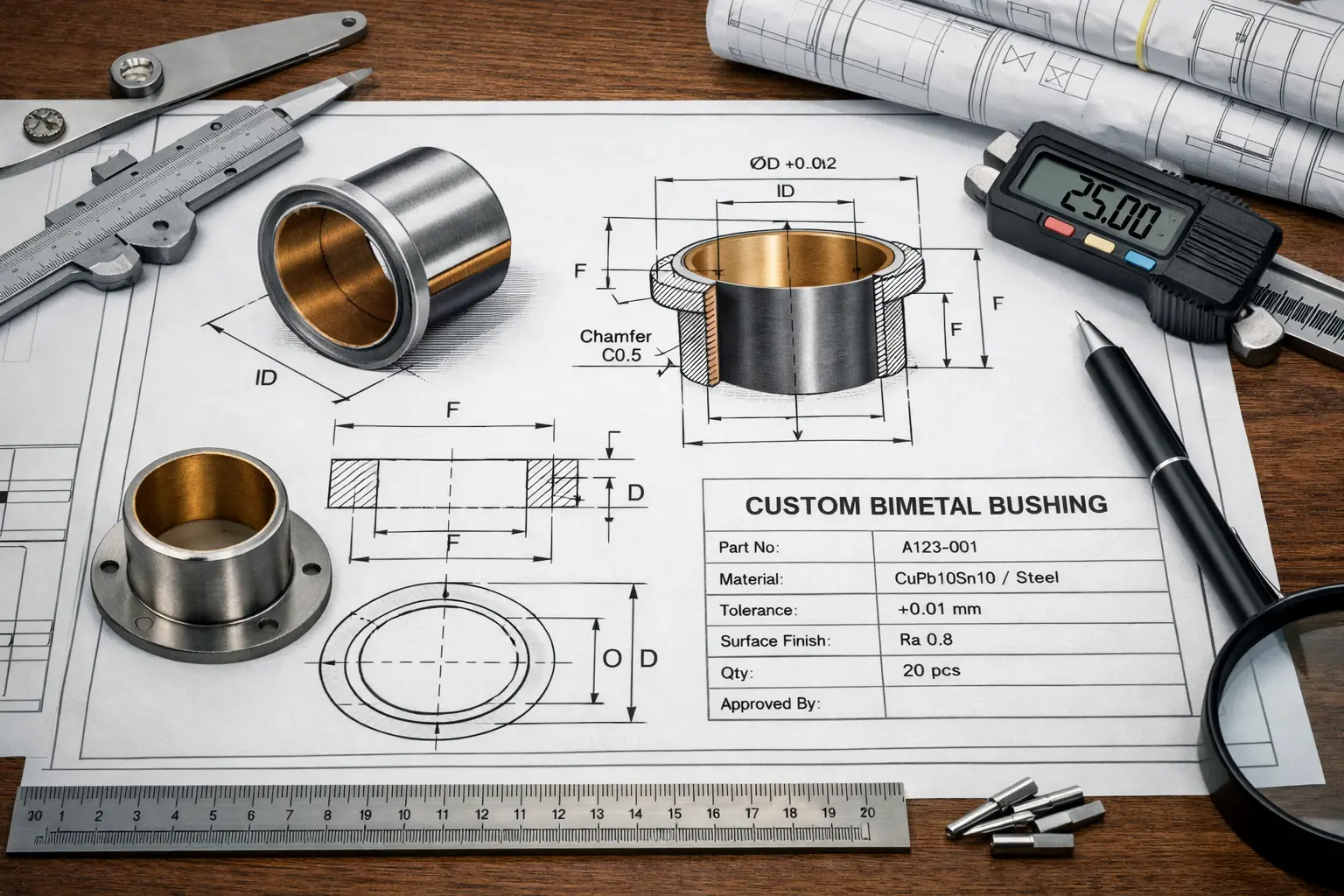
After years in this business, I can tell you that a supplier's communication ability is a direct reflection of their internal organization and technical depth. If they can't answer your questions clearly, it's often because they don't know the answers themselves.
The Difference Between an "Order Taker" and an "Engineering Partner"
You aren't just buying a part; you are buying a solution to an engineering problem. This requires a supplier who thinks like an engineer. This is the difference between a simple "order-taking" factory and a true "engineering-type" supplier.
| Characteristic | Engineering Partner | Order Taker |
|---|---|---|
| Communication | Asks "why" to understand the application. Suggests improvements. | Only asks "how many?" and "what part number?" |
| Problem-Solving | Proactively identifies potential issues and offers solutions. | Passively waits for your instructions. Blames you for issues. |
| OEM Needs | Understands the importance of customization and consistency. | Pushes standard products because they are easier. |
| Response Speed | Responds to technical queries within 24-48 hours. | Slow to respond or ignores complex questions. |
Ultimately, you need a partner who can be an extension of your own engineering team. They should help you solve problems, not create new ones.
How Can You Avoid the "Lowest Price" Trap?
That unbelievably low price seems too good to be true, right? It probably is. Opting for the cheapest quote often leads to hidden costs from premature failure, frequent replacements, and equipment downtime.
In the bushing industry, an extremely low price is a warning sign. It often means the supplier is using substandard materials or skipping crucial manufacturing steps. You must look at the total cost of ownership, not just the initial purchase price.
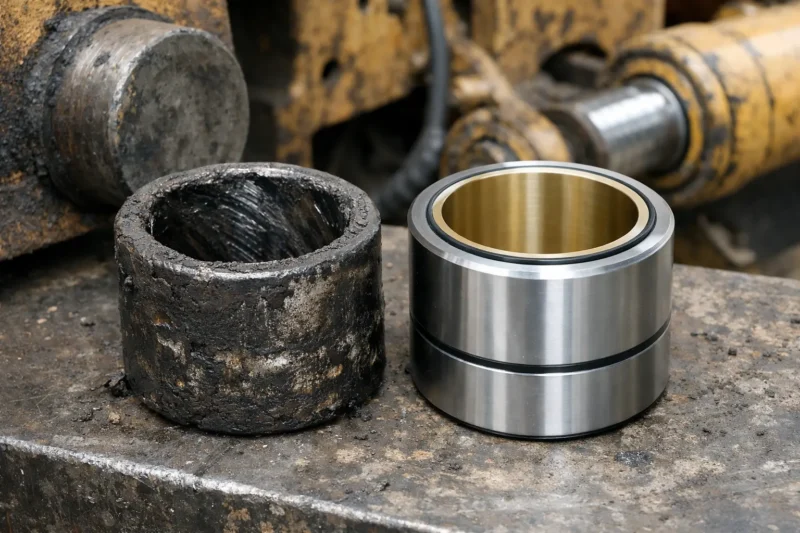
I've seen it happen again and again. A purchasing manager saves 10% on the unit price but ends up with a product that lasts half as long. The cost of equipment downtime and replacement labor quickly erases any initial savings.
What a Low Price Really Means
In a competitive market, prices are often tight. If one supplier's price is significantly lower than others, you have to ask yourself where that cost is being cut. Usually, it's one of these areas:
- Material Downgrades: Using a cheaper bronze alloy with less tin, or using recycled materials with impurities. This directly impacts wear resistance and lifespan.
- Skipped Processes: Rushing the sintering process or skipping a final sizing operation. This leads to poor dimensional accuracy and inconsistent performance.
- Reduced Quality Control: Only inspecting a tiny fraction of the parts, or not inspecting them at all. This means defective parts are shipped directly to you.
The right approach is to calculate the Total Cost of Ownership (TCO)[^5]. A bushing that costs $1.10 and lasts for 5,000 hours is much cheaper than one that costs $0.90 but fails after 2,000 hours. We price our products to reflect our material quality, process integrity, and the reliability we guarantee.
What is the Best Way to Build a Long-Term Partnership?
Committing to a new, large-scale supplier feels risky. What if the quality isn't right? What if they can't handle your volume? Jumping in too fast can lead to costly mistakes.
The best way to build a partnership is to start small and grow together. Begin with a small trial order for testing. Once validated, move to stable, batch-based supply. This phased approach minimizes your risk while building a reliable, long-term supply chain.
From our perspective as a factory that seeks long-term OEM clients, this is the ideal way to collaborate. It builds trust on both sides and ensures that we are perfectly aligned with your needs before we scale up.
A Phased Approach to OEM Collaboration
This step-by-step process allows you to gradually reduce risk and build a deeply integrated supply chain. We recommend structuring the partnership in three phases:
- Phase 1: Validation. This starts with clear technical communication, followed by a small trial order. The goal here is not volume, but to test the product in your real-world application and to verify the supplier's quality and communication.
- Phase 2: Stabilization. Once the samples are approved, you can move to stable, recurring batch orders. In this phase, we work on aligning our quality control systems with yours and establishing a smooth logistics flow.
- Phase 3: Integration. In the final phase, the supplier becomes a true partner. This can involve joint development of custom-designed bushings, creating exclusive specifications for your company, and working together on long-term cost-down and efficiency initiatives.
This isn't just a transaction; it's about building a supply chain t
[^1]: Learn strategies to maintain consistent quality in manufacturing processes and avoid costly mistakes. [^2]: Understand the concept of MOQ and its implications for your sourcing strategy. [^3]: Explore batch management techniques that help maintain quality and efficiency. [^4]: Learn about the significance of material traceability for quality assurance in production. [^5]: Understand TCO to make informed purchasing decisions that consider long-term costs.