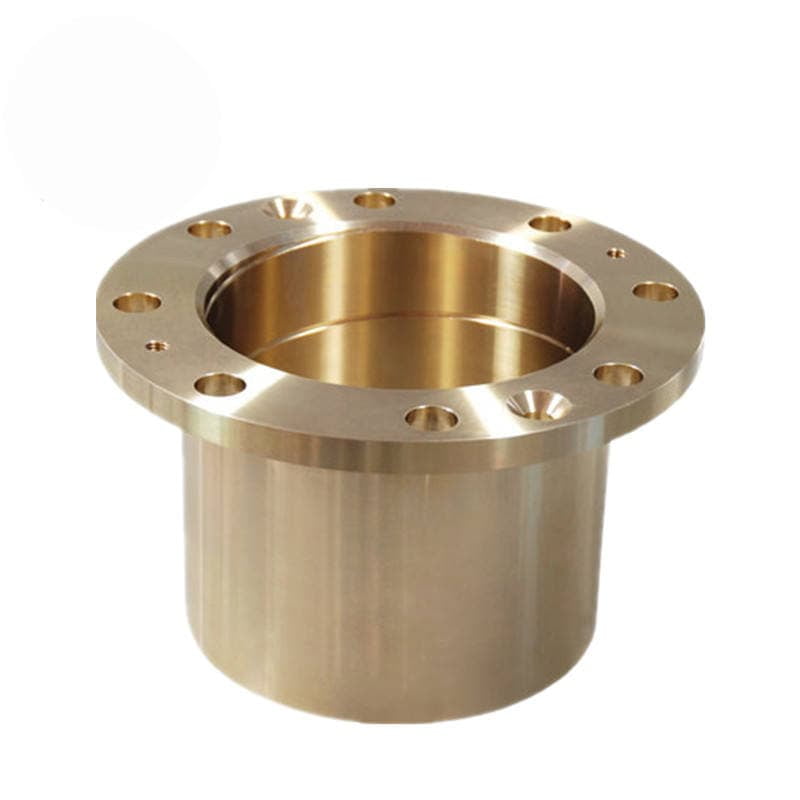
Your shaft keeps moving sideways, causing issues. This forces complex designs with extra parts. A flanged bushing offers a simple, all-in-one solution for control and stability.
A flanged bushing adds a rim, or flange, to a standard sleeve bushing. This flange provides precise axial positioning[^1], supports thrust loads, and prevents the bushing from moving, which simplifies both design and assembly for manufacturers.
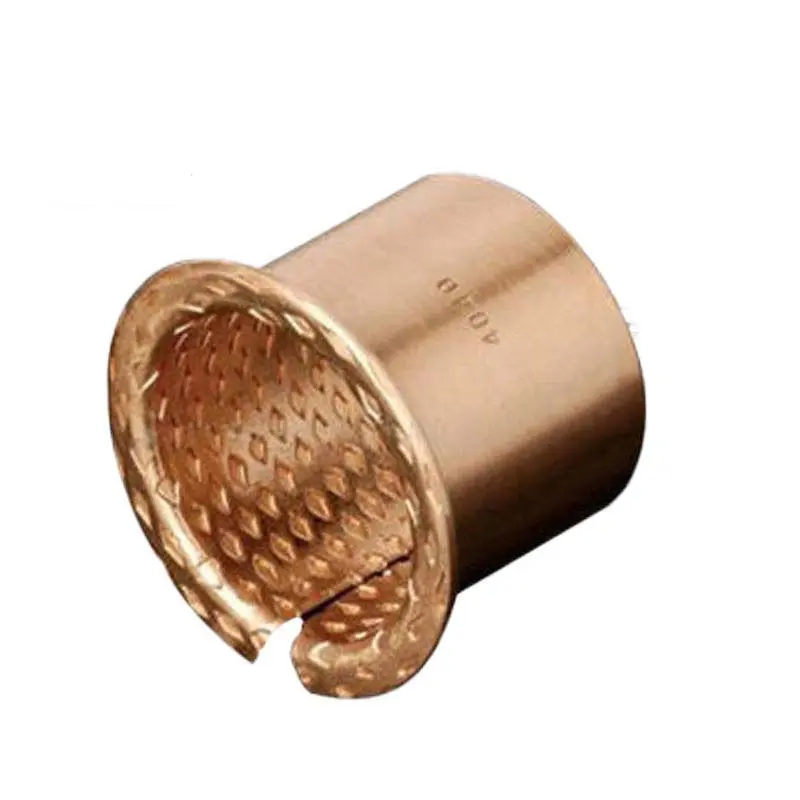
If a standard bushing is like a protective sleeve for a shaft, a flanged bushing adds a sturdy shoulder pad. This small addition makes a huge difference. Let's break down why this component is so critical in many mechanical designs[^2].
How does a flange handle both positioning and axial loads?
Your shaft moves along its axis, forcing you to add washers or snap rings. This complicates the design and assembly. A flanged bushing solves this problem with one part.
The flange on a bushing acts as a physical stop to control the shaft's axial position accurately. At the same time, this flange surface directly bears thrust loads, combining the functions of a bearing and a thrust washer.
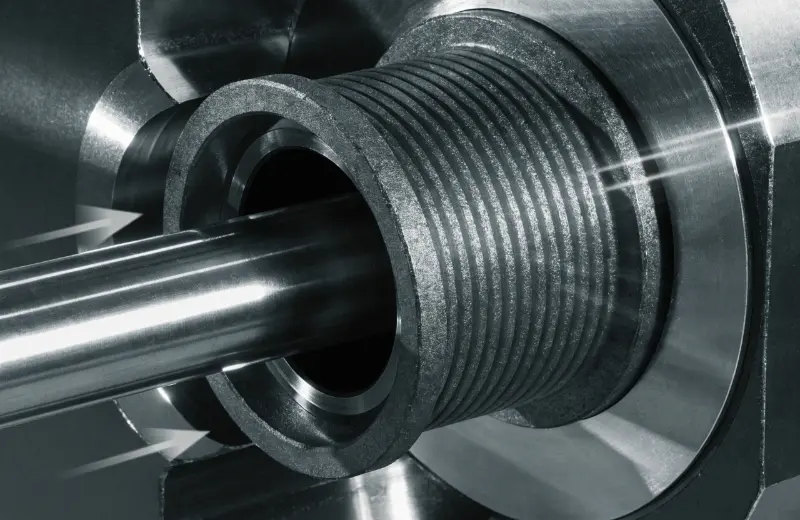
A standard straight bushing is great at handling radial loads—the forces that push on the side of the shaft. But it does nothing to stop the shaft from sliding back and forth along its length. This is where the flange becomes essential.
The Flange as a Positioning Stop
The most basic purpose of the flange is to act as a stop surface. When you install the bushing, the flange sits firmly against the housing. This precisely locates the bushing and, in turn, the shaft. For equipment manufacturers, this is a huge advantage.
| Feature | Plain Bushing | Flanged Bushing |
|---|---|---|
| Axial Control | None | Built-in stop surface |
| Extra Parts | Needs thrust washers or snap rings | None needed for positioning |
| Design | More complex housing/shaft needed | Simplified, cleaner design |
The Flange as a Load-Bearing Surface
That same flange surface doesn't just sit there; it can also do work. In many machines, like in gear mechanisms or motor assemblies, there are forces pushing along the shaft's axis. We call these "thrust loads." The flange provides a solid surface to push against, effectively making it a built-in thrust washer. It's a two-in-one solution that saves space and cost.
Why are flanged bushings easier to install and more secure?
Vibration and impact can cause standard bushings to loosen and shift. This leads to misalignment and costly failures. A flange provides a simple, powerful anchor against these forces.
The flange creates a large, stable contact surface against the housing, preventing the bushing from shifting or being pushed out. This built-in stop also makes installation foolproof, as the assembly depth is always perfect.
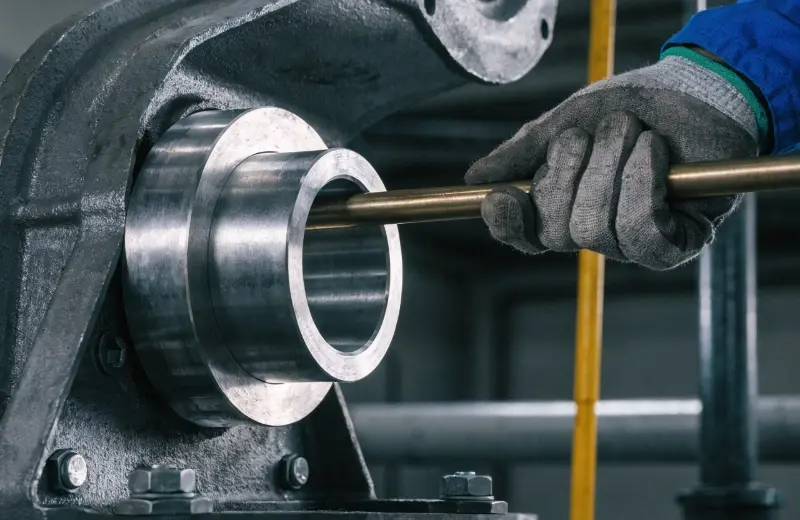
In the real world, machines vibrate and experience sudden shocks. These forces can cause a press-fit straight bushing to slowly work its way out of its housing. This is a common failure point that a flanged bushing is specifically designed to prevent.
A Secure Anchor Against Movement
The flange acts as a positive mechanical lock[^3]. It provides a much larger surface area that rests against the face of the housing. This makes it almost impossible for vibration to cause the bushing to shift or for a strong axial force to push the bushing completely through the housing. It provides peace of mind that the bushing will stay exactly where you installed it.
Simplified and Faster Assembly
From my experience in the factory, assembly efficiency is everything. A flanged bushing is much easier for an operator to install correctly.
| Installation Step | Plain Bushing | Flanged Bushing |
|---|---|---|
| Positioning | Requires a fixture or a measured depth stop | Pushes in until flange is flush |
| Risk of Error | Can be installed too deep or not deep enough | Almost zero risk of incorrect depth |
| Speed | Slower, requires more care | Faster, more repeatable process |
For our OEM customers, this means fewer assembly errors and higher production throughput[^4]. It's a simple feature that saves real time and money on the production line.
When should you choose a flanged bushing over a standard one?
Choosing the wrong bushing can lead to poor performance or a complete redesign. The options can be confusing. Let's clarify exactly when a flanged bushing is the right choice.
Use a flanged bushing when you must control axial movement, support thrust loads, or simplify your assembly process[^5]. They are ideal for tight spaces and provide extra protection in dirty environments.
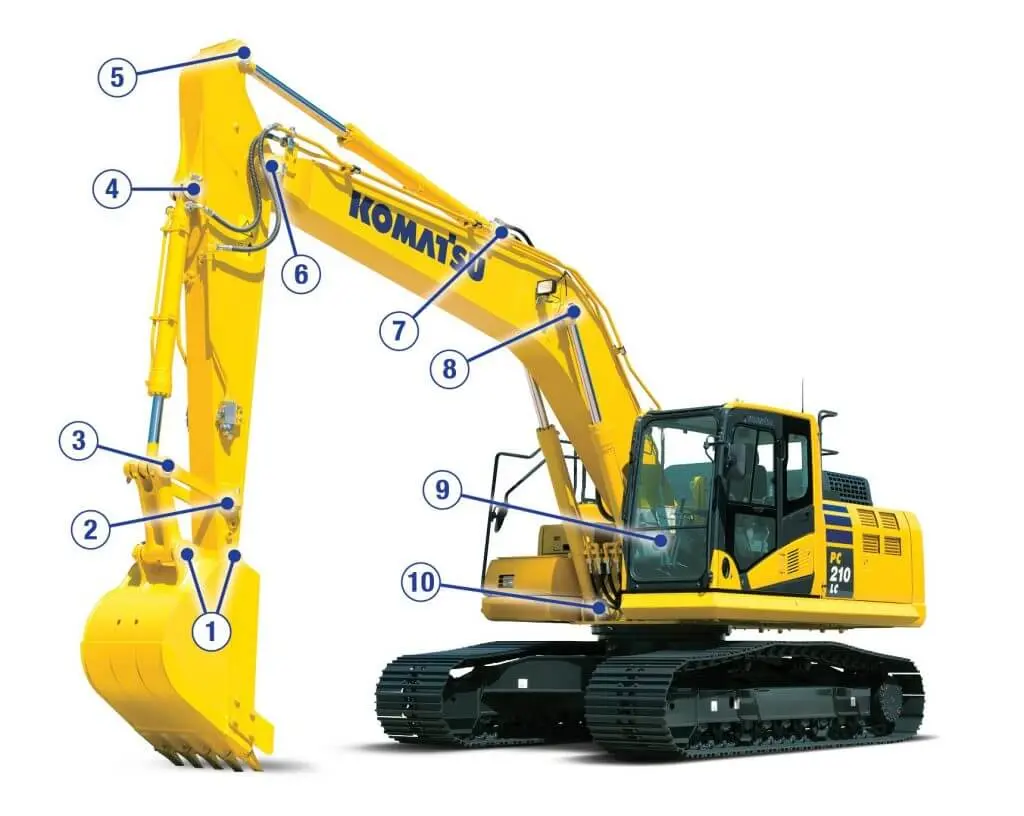
So, you know what a flanged bushing does, but how do you decide if you need one for your specific project? It usually comes down to a few key application requirements. If your design has one or more of these needs, a flanged bushing is likely the best choice over a standard straight bushing.
Key Application Scenarios
- Axial Location is Critical: Any time a shaft needs to be held in a precise position along its length.
- Thrust Loads are Present: When there are forces pushing along the axis of the shaft, not just from the side.
- Assembly Must be Simple: In high-volume production, where reducing installation time and errors is a priority.
- Space is Limited: When you don't have room to add a separate thrust washer or shoulder to your design.
The Bonus: A Built-in Shield
There's another benefit that is often overlooked. In dirty, dusty, or muddy environments—think agricultural machinery or construction equipment—the flange acts as a simple shield. It helps block large contaminants[^6] from getting directly into the bearing surface. While it's not a true seal, this extra barrier can significantly extend the service life of the bearing, especially in applications that don't receive regular maintenance. It adds a layer of toughness right where it's needed most.
Conclusion
In short, a flanged bushing is a smart, integrated solution. It provides axial positioning, thrust load support, and secure installation, making it a valuable problem-solver in many mechanical designs.
[^1]: Learn about axial positioning to see how it impacts the efficiency and functionality of mechanical systems. [^2]: Learn about the essential factors in mechanical design to create effective and reliable machinery. [^3]: Explore the concept of mechanical locks to understand their role in securing components in machinery. [^4]: Explore ways to increase production throughput for better efficiency and profitability in manufacturing. [^5]: Discover best practices for assembly processes to enhance productivity and minimize errors in manufacturing. [^6]: Understanding the impact of contaminants can help in designing better protective measures for machinery.