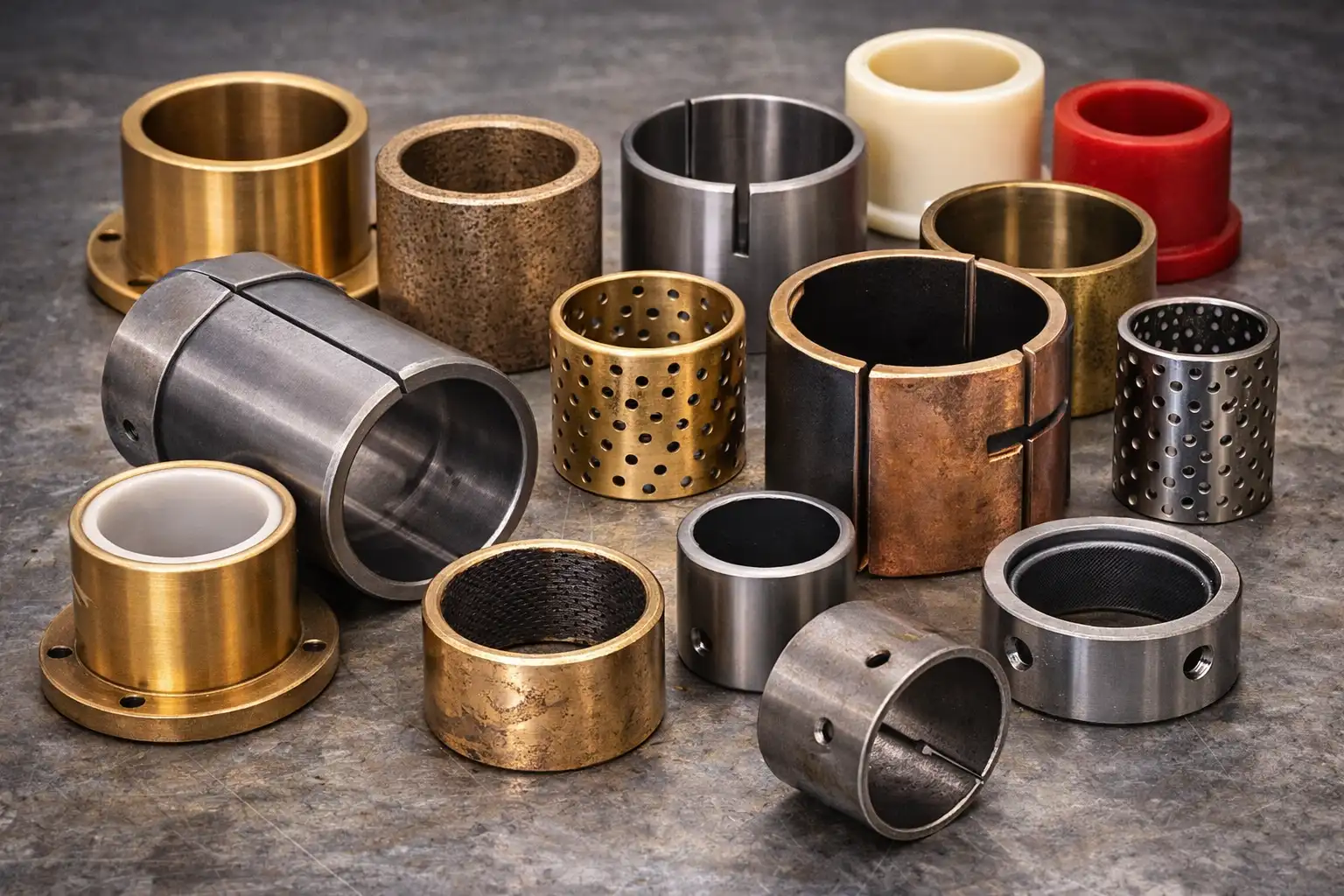
Choosing the wrong bearing material causes equipment failure and expensive downtime. You need a reliable part, but the options are confusing, and a bad choice can have serious consequences.
There is no single "best" material for a self-lubricating bearing. The ideal choice depends entirely on your application's load, speed, temperature, and environment. For oil-free precision, choose composite bushings (SF-1). For general-purpose durability and value, use POM-coated bearings (SF-2). For extreme heat and load, graphite-plugged bronze is best.
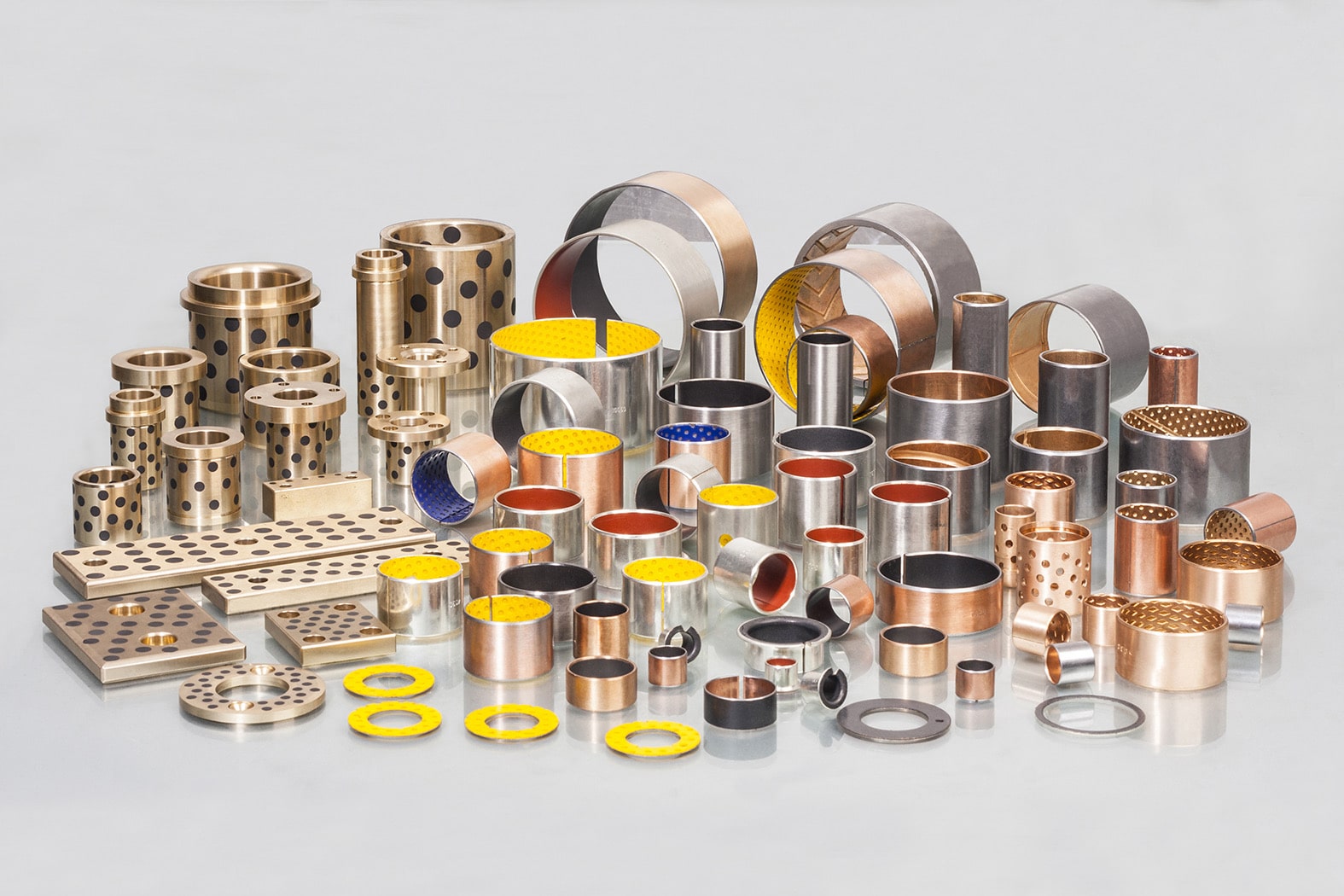
I've been in the bearing manufacturing business for a long time. A common question I get from engineers and purchasing managers is, "Just tell me what the best one is." I wish it were that simple. The "best" bearing for a food processing line would fail instantly in a steel mill. The truth is, selecting the right material is a process of matching its strengths to your machine's needs. To do that, you need to understand the main options available. Let's break them down one by one so you can make a confident choice for your project.
Do you need a completely oil-free, low-friction bearing?
Your machine operates in a clean environment where oil or grease is forbidden. Any contamination could ruin your product or process, but you still need smooth, reliable motion.
For truly oil-free applications, metal-polymer composite bushings (often called SF-1, DU, or DP4 type) are the ideal solution. They use a PTFE layer[^1] to provide extremely low friction without needing any liquid lubricant, ensuring your environment stays perfectly clean.
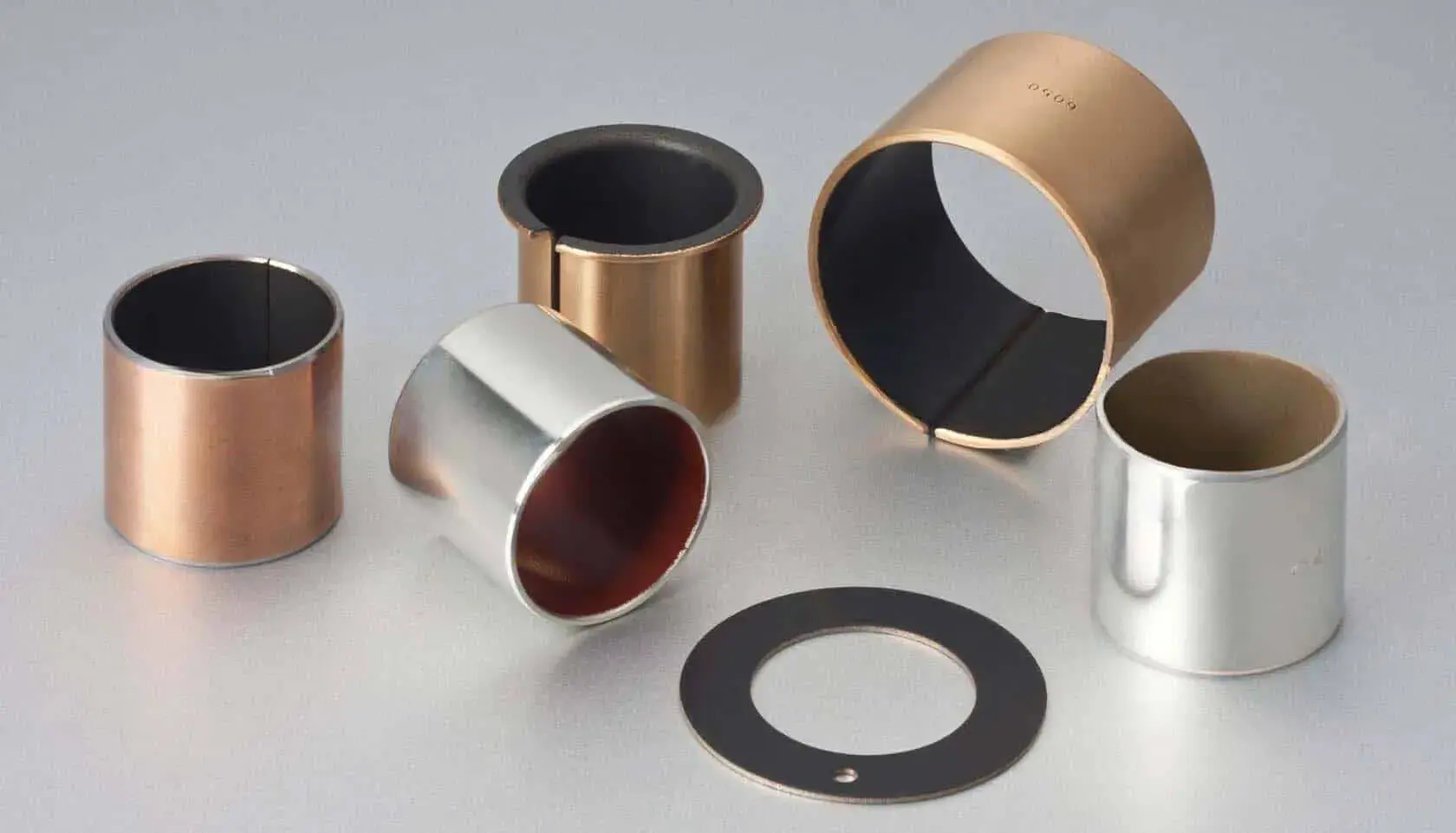
I always recommend these bushings for applications where precision and cleanliness are critical. Think about a high-end printing press. A single drop of oil could ruin a thousand-dollar print job. The same goes for textile machinery or sensitive lab equipment. The magic of this bearing is in its structure. It has a strong steel backing for support. On top of that is a porous bronze layer, which acts like a sponge and helps bond the final layer. The top, or sliding layer, is a mix of PTFE (the same stuff in non-stick pans) and special fillers. During the initial run-in, a tiny amount of this PTFE transfers to the shaft, creating a solid lubricant film. This film is what allows for smooth, stick-slip-free movement for thousands of cycles. It is a perfect solution for maintenance-free operation[^2].
| Feature | SF-1 (PTFE Composite) Performance |
|---|---|
| Lubrication | Completely dry, self-lubricating |
| Friction | Very Low (0.02 - 0.20) |
| Load Capacity | Moderate |
| Speed Limit | Good for low to moderate speeds |
| Temperature | -195°C to +280°C |
| Best For | Clean environments, precision motion, maintenance-free |
What if you need good durability but also great value?
You need a bearing for a tough job, like in construction or farm equipment. It will see heavy use and some dirt, but you also have a budget to meet.
When you need a balance of good load capacity, wear resistance, and cost-effectiveness, POM composite bushings (known as SF-2 or DX type) are the answer. They are designed for lubricated conditions.
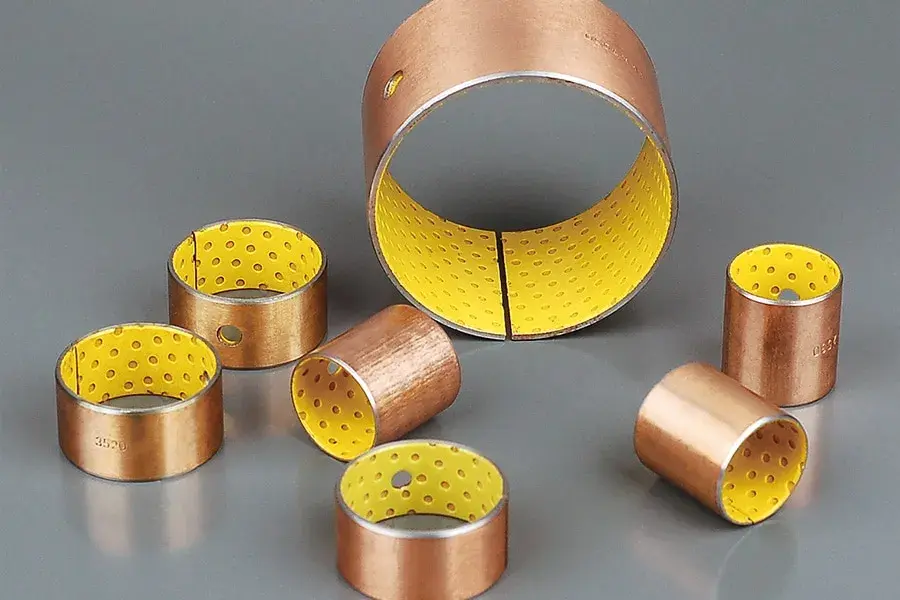
These bearings are the workhorses I see in many industrial applications. They are structurally similar to the SF-1 type, with a steel back and a sintered bronze interlayer. The key difference is the sliding surface. Instead of PTFE, it uses a tough, wear-resistant polymer called POM (Polyoxymethylene). This surface is covered in a pattern of small indents or pockets. These pockets are designed to hold grease for a long time. So, while it's not a "run-dry" bearing like the SF-1, it's what we call a "marginally lubricated" or "pre-lubricated" bearing. You apply grease upon installation, and it can then operate for very long intervals before needing more. This makes it much more robust than a plain plastic bushing and more forgiving in dirty environments. It can handle higher loads than SF-1 and is generally more affordable, offering a fantastic performance-to-price ratio.
| Feature | SF-2 (POM Composite) Performance |
|---|---|
| Lubrication | Pre-lubricated (grease), requires periodic re-lubrication |
| Friction | Low (0.05 - 0.25) |
| Load Capacity | Good to High |
| Speed Limit | Best for low speeds |
| Temperature | -40°C to +120°C |
| Best For | Medium-to-heavy loads, cost-sensitive, long lubrication intervals |
Are you facing extreme loads and high temperatures?
Your equipment operates in the toughest conditions imaginable. It's incredibly hot, under immense pressure, and stopping to add grease is not an option. Standard bearings would melt or seize instantly.
For extreme heat and heavy loads where liquid lubricants fail, graphite-plugged bronze bushings are the only reliable choice. These are solid metal bearings with a built-in solid lubricant that never runs out.
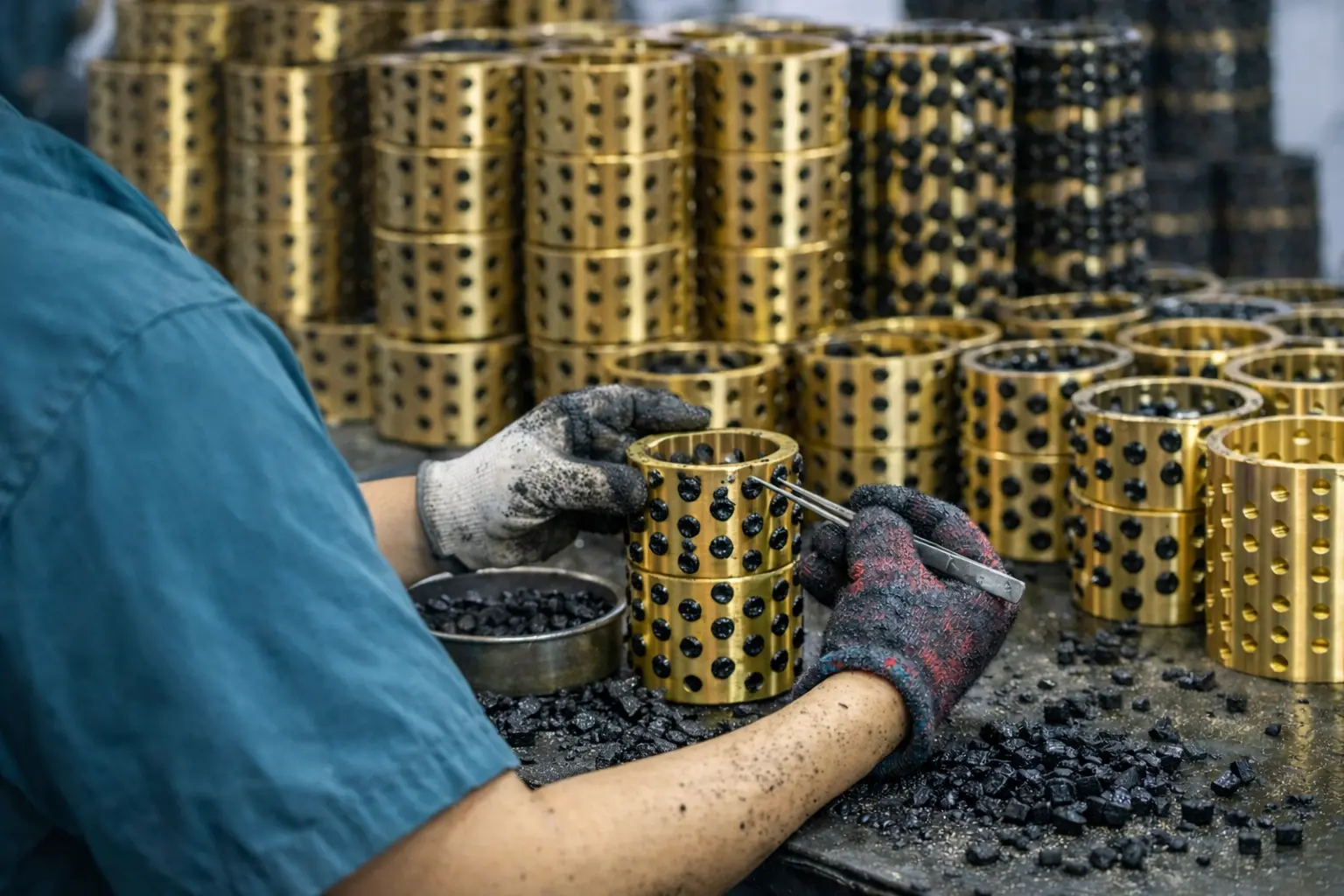
When a customer comes to us with a problem from a steel mill, a plastic injection molding machine, or a hydro-dam gate, my mind immediately goes to graphite-plugged bronze. These are the champions of harsh environments. We start with a solid, high-strength bronze alloy casting. Then, we machine it to the exact dimensions and drill a precise pattern of holes all over it. We then force solid graphite plugs into these holes under high pressure. The bronze body provides immense strength to handle crushing loads. The graphite, a natural solid lubricant, handles the movement. As the bearing moves, a fine layer of graphite is deposited onto the shaft, creating a permanent lubricating film. It works from freezing temperatures up to hundreds of degrees Celsius, where oil would burn off and grease would turn to carbon. They are an investment, but for applications where failure is not an option, they provide peace of mind.
| Feature | Graphite-Plugged Bronze Performance |
|---|---|
| Lubrication | Solid graphite, maintenance-free for life |
| Friction | Moderate (higher than composites) |
| Load Capacity | Extremely High |
| Speed Limit | Low speed, oscillating motion |
| Temperature | -200°C to over +400°C (depending on alloy) |
| Best For | Extreme loads, high temperatures, inaccessible locations |
Is quiet, high-speed operation your main goal?
You are designing a small appliance, a computer fan, or a small electric motor. The product needs to run smoothly and silently for years, often at high rotational speeds.
For quiet, high-speed applications, sintered bearings are the standard. These oil-impregnated bearings, made through powder metallurgy, provide a consistent, silent, and self-lubricating film of oil.
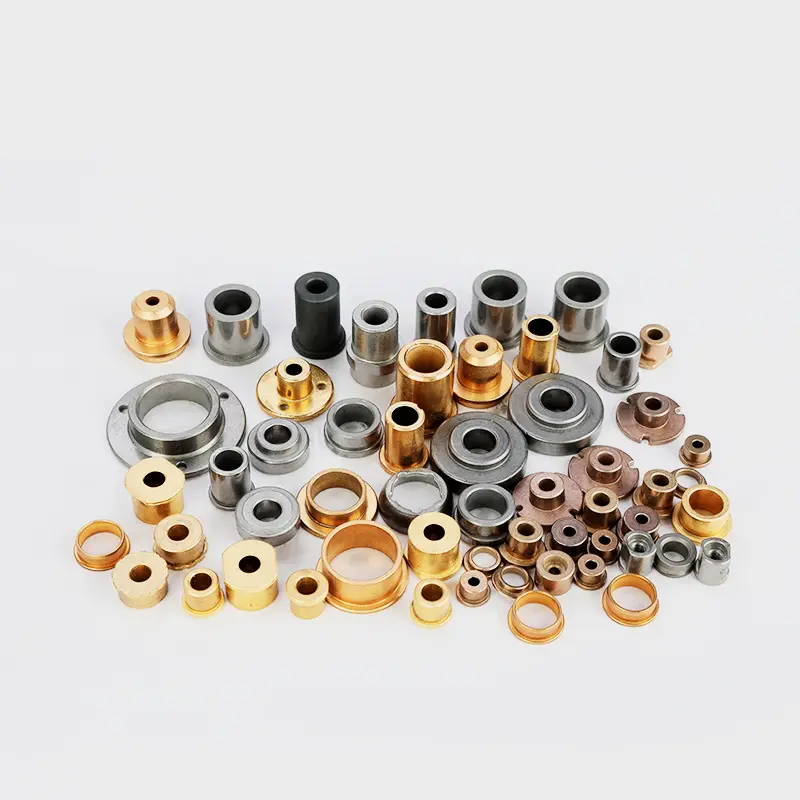
Whenever we get a high-volume order for the home appliance or small motor industry, it's almost always for sintered bearings. These are unique because they are like a metal sponge. We start with fine bronze or iron powder and press it into shape. Then, we heat it in a furnace in a process called sintering. The metal particles fuse together but leave a network of tiny, interconnected pores, making up about 25% of the bearing's volume. Finally, we soak the bearing in a high-quality lubricating oil, which fills up all these pores. When the shaft starts to spin, the heat and motion draw the oil out of the pores and onto the surface, creating a perfect hydrodynamic film. When it stops, the oil is drawn back in. This process makes them very quiet, perfect for high RPMs, and very cost-effective to produce in large quantities.
| Feature | Sintered Bearing Performance |
|---|---|
| Lubrication | Oil-impregnated, self-contained |
| Friction | Very Low (in hydrodynamic state) |
| Load Capacity | Low to Moderate |
| Speed Limit | Very High |
| Temperature | -20°C to +100°C (limited by oil) |
| Best For | High rotational speeds, quiet operation, cost-effective mass production |
What about traditional machines with lubrication systems?
Your machine is a classic heavy-duty design, like a large gearbox or an industrial press. It already has grease nipples or a centralized oiling system built right in.
If your equipment already has a reliable external lubrication system, traditional solid bronze or bimetal bushings are often the most robust and economical choice. Their performance is directly tied to the lubrication you provide.
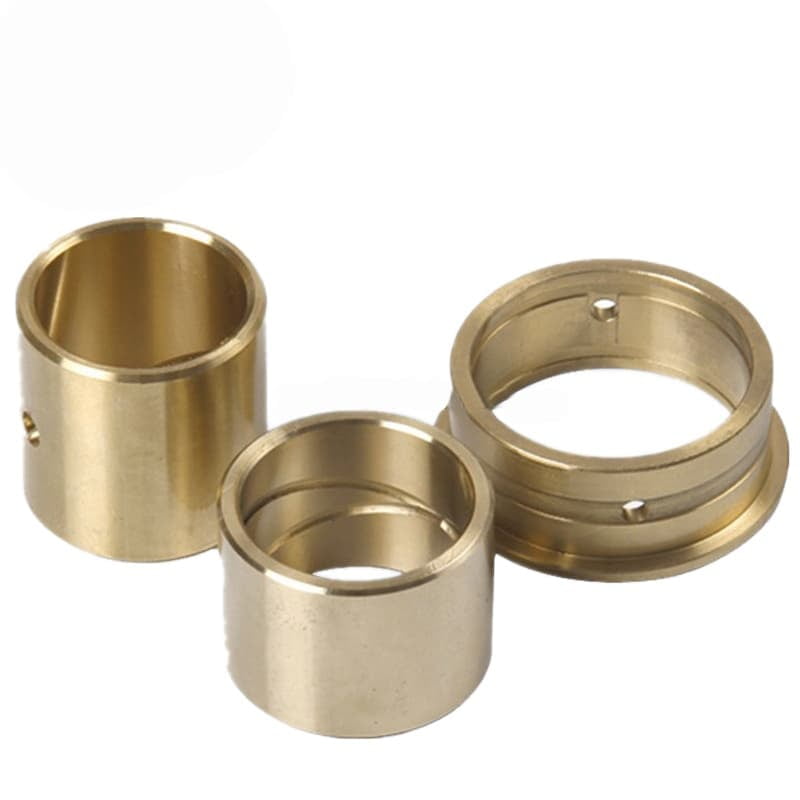
Sometimes, you don't need to reinvent the wheel. Many heavy machines were designed around the principle of regular, forced lubrication. In these cases, using a complex self-lubricating bearing is unnecessary and might not even be strong enough. Here, simple is better. A solid bronze bushing, machined from a strong alloy like C93200 Bearing Bronze, can withstand enormous forces as long as it gets its diet of oil or grease. We often machine oil grooves and holes into them to help distribute the lubricant evenly. For even higher loads or to save on cost, bimetal bearings are a great option. They have a strong steel backing with a layer of bronze or aluminum alloy bonded to the inside. They rely completely on an external oil film but offer incredible strength and fatigue resistance in a compact space. They are not "self-lubricating," but they are a critical part of the bearing family.
| Feature | Solid Bronze / Bimetal Performance |
|---|---|
| Lubrication | External (grease or oil) is mandatory |
| Friction | Varies with lubrication |
| Load Capacity | High to Very High |
| Speed Limit | Varies with lubrication design |
| Temperature | Limited by the external lubricant |
| Best For | Heavy-duty machinery with existing lubrication systems |
Conclusion
Choosing the right bearing is about matching the material to your specific load, speed, and working environment. There is no single "best" option, only the most suitable one.
[^1]: Explore how PTFE enhances lubrication and reduces friction in bearings. [^2]: Explore the benefits of maintenance-free bearings for reducing operational costs.