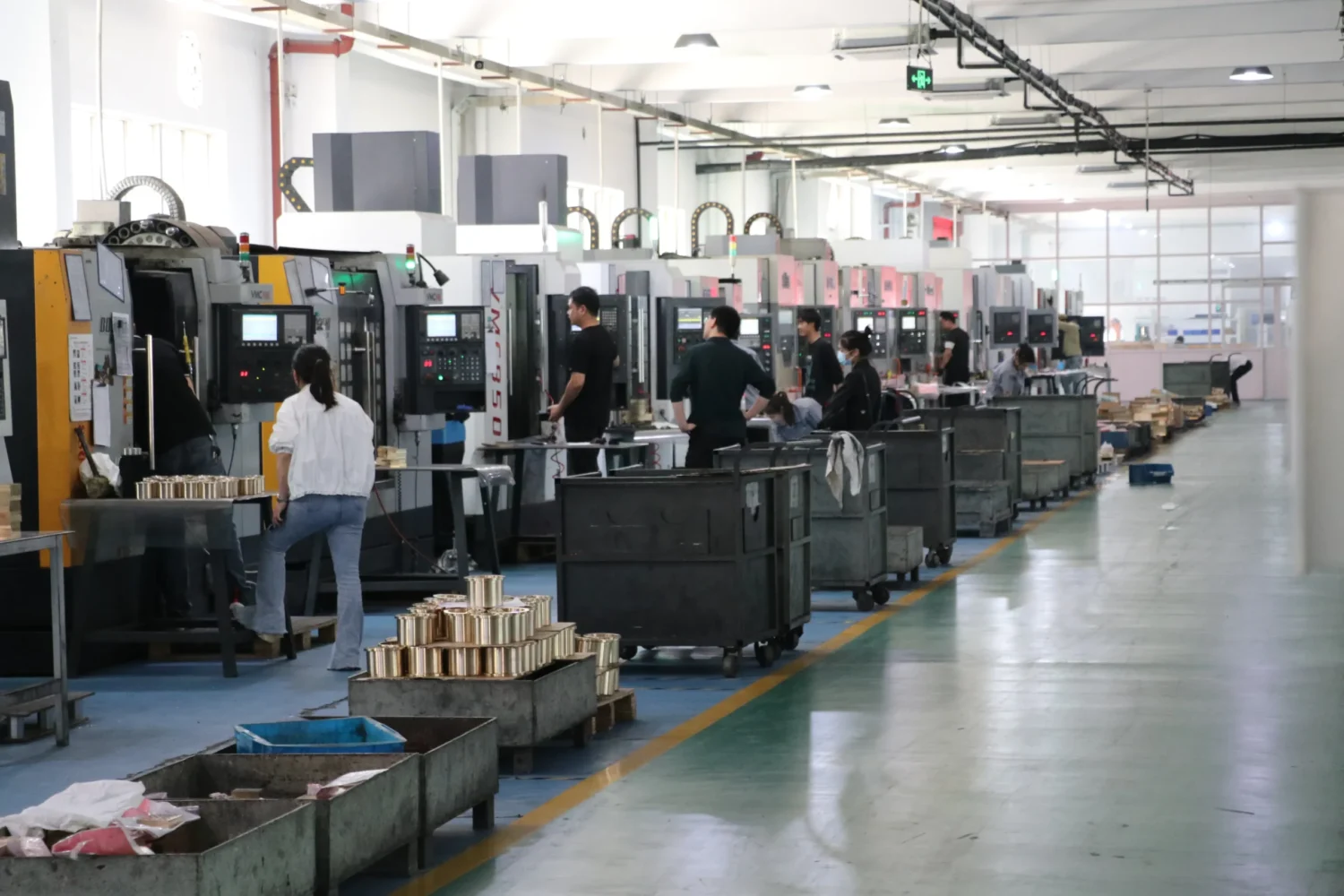
Are you worried about whether your supplier is a real factory or just a trader? This uncertainty can risk your project’s quality and timeline, making supplier selection a stressful process.
To truly verify a bushing manufacturer, you must go beyond confirming their existence. Evaluate their engineering expertise, quality control systems, customization capabilities, and their ability to consistently mass-produce quality parts.[^1] This ensures you find a partner, not just a supplier.
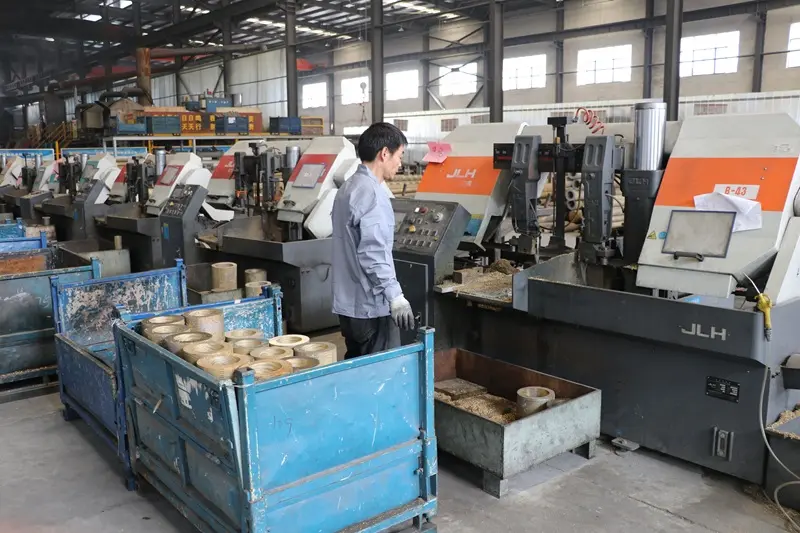
Many buyers I talk to feel a sense of relief when they receive factory photos or a business license. They think they've successfully vetted a manufacturer. However, from my experience running a factory, I know this is only the first step. The real validation comes from digging deeper into their actual capabilities. Let’s explore the questions you should be asking to secure a reliable, long-term manufacturing partner for your OEM projects.
Don't Just Verify the Factory—Verify the Manufacturing Process?
You have factory photos and a business license, but you're still unsure if they can make your specific part. These documents don't guarantee capability, leading to potential production issues later.
Go beyond basic documents. Ask what types of bushings they produce and the specific processes they use. A supplier who can't clearly explain their manufacturing process might not be the actual producer of the goods.[^2]
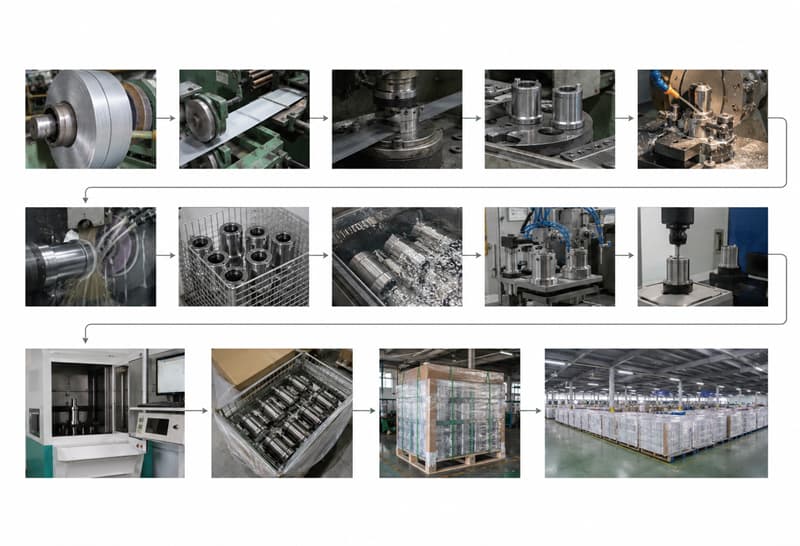
When a potential customer asks me about my factory, I know that photos and videos are important for building initial trust. But they don't tell the whole story. These things prove we exist, but they don't prove our capability. The most critical step is to match your product needs with the supplier's core manufacturing technology. Different bushings require completely different production methods.[^3] For example, you can’t make a sintered bushing on a casting line. A true manufacturer will be able to explain their process in detail. If you ask a supplier how they make a specific bushing and they give a vague answer, it's a major red flag. They are likely outsourcing the work or are simply a trading company with little technical knowledge.
| Bushing Type | Required Core Manufacturing Process |
|---|---|
| Bronze Bushings | Casting or Continuous Casting + CNC Machining |
| Sintered Bushings | Powder Metallurgy (Mixing, Compacting, Sintering) |
| PTFE Composite Bushings | Composite Rolling and Bonding |
| Graphite Plugged Bushings | Machining + Graphite Plug Insertion |
Should You Ask Technical Questions, Not Just Commercial Ones?
Focusing only on price and lead time can feel efficient. But if the bushing fails in the field because of poor engineering, that low initial price becomes very expensive.
Yes, absolutely. Shift the conversation from commercial terms like MOQ and price to technical details.[^4] Ask how they control tolerances or select materials. A real manufacturer provides engineering answers, not just quotes.
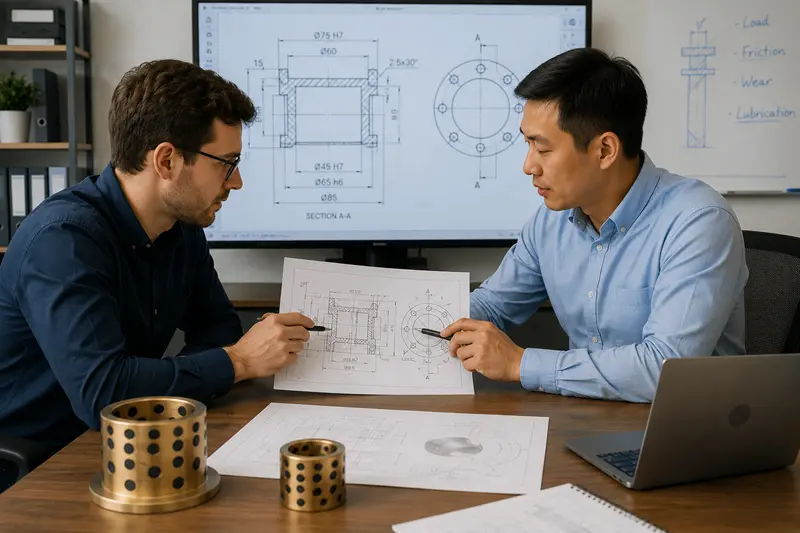
This is one of the fastest ways I've found to separate professional manufacturers from intermediaries. A trading company's expertise is in logistics and sales. Their conversations will almost always circle back to price, minimum order quantity (MOQ), and lead time. As a manufacturer, my expertise is in engineering and production. I welcome technical questions because they allow me to demonstrate my value. When a client asks me about material selection, I can discuss the trade-offs between different bronze alloys based on their load and speed requirements. When they ask about tolerance control, I can explain our CNC machining capabilities and in-process gauging methods. A supplier who can't engage in this type of conversation is unlikely to have the in-house expertise needed to support a complex OEM project. They are simply relaying messages to an actual factory, which adds delays and increases the risk of miscommunication.
Why Review Their Quality Control System?
You approved a perfect sample and are ready for production. But what if the first mass-produced batch has inconsistent dimensions and fails on your assembly line, halting your operations?
For OEM projects, a supplier’s quality control system is more critical than their machinery. It ensures consistency from the first part to the last. Look for documented procedures for every stage, from raw materials to final shipment.[^5]
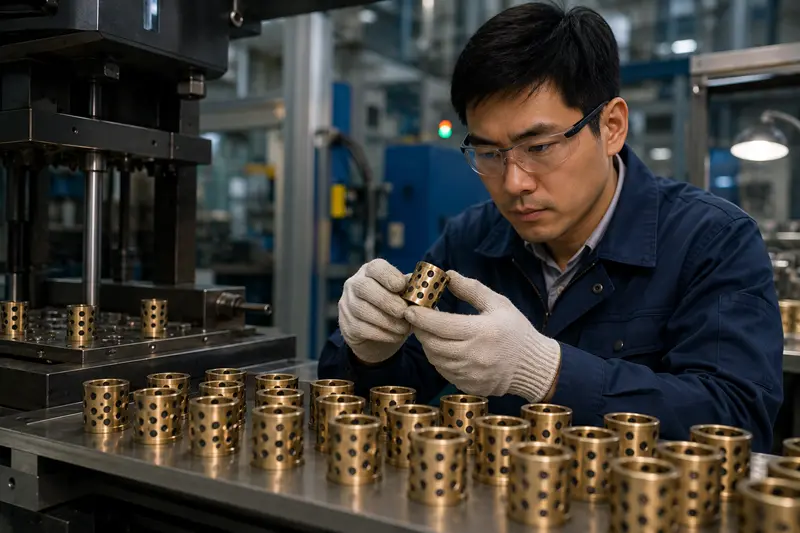
A perfect sample is great, but it can be misleading. It might have been made by a senior technician in a lab, separate from the main production line. For an OEM buyer, the real question is: can they make ten thousand more, all with the same quality? This is where a robust quality control (QC) system becomes non-negotiable. It's the framework that ensures consistency. I always encourage clients to ask about our QC process. We can show them our documented procedures for each step, from checking raw material certificates to final dimensional inspection reports. Having in-house testing capabilities is also crucial, as it allows for quick verification and troubleshooting.
| QC Stage | Key Checks & Capabilities |
|---|---|
| Incoming Material Inspection | Chemical Analysis (Spectrometer), Hardness Testing |
| In-Process Inspection | Real-time dimensional checks, Process parameter monitoring |
| Final Inspection | CMM for complex dimensions, Visual Inspection, Surface Roughness |
| Material Testing | Metallographic Analysis to check microstructure |
A supplier without a detailed QC system is gambling with your production.[^6]
How Important is Evaluating Their Customization Capability?
Many suppliers can sell you standard, off-the-shelf parts. But your project has special requirements for size, material, or performance that a standard bushing simply cannot meet.
It is extremely important for OEM projects. A supplier's true value is shown in their ability to handle custom dimensions, special materials, or unique features like oil grooves. An experienced manufacturer will ask about your application to offer better solutions.
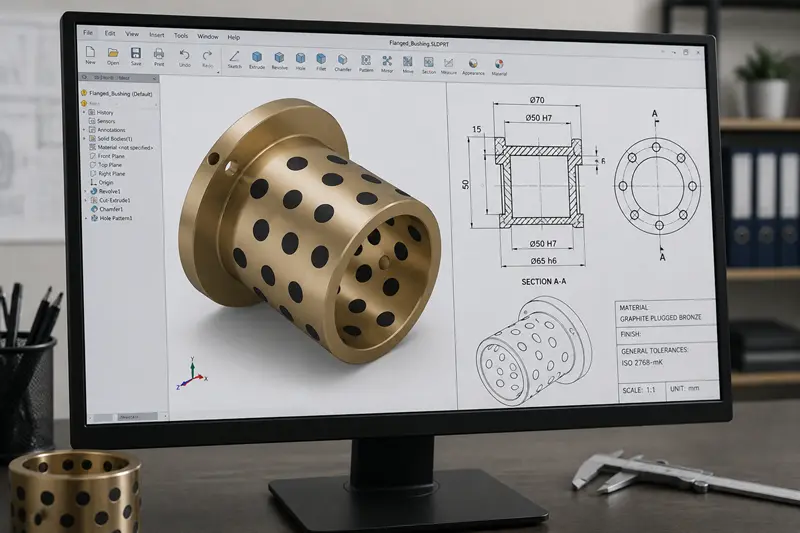
The ability to customize is what separates a parts seller from a manufacturing partner. For OEM projects, you are often designing something new, and standard components just won't work. The real test is to see how a supplier responds to a custom drawing. A less experienced supplier might just give you a price based on the drawing. A true manufacturing partner will start a conversation. When I receive a custom request, my first step isn't to calculate the price; it's to understand the application. I ask about the load, speed, lubrication, and operating environment. This discussion often leads to suggestions that improve the design, such as a different material for longer life or a more effective oil groove pattern for better lubrication. This collaborative approach is a sign that the supplier has deep engineering experience and is invested in your success, not just in getting the order.
What Can You learn from How They Handle Problems?
The quoting and sample process went smoothly. But soon after installation, your machine is experiencing issues like overheating or premature wear. How will your supplier react?
A supplier's true strength is revealed not in smooth orders, but in how they respond to problems. A great partner analyzes the root cause with you instead of immediately blaming your installation or operating conditions.
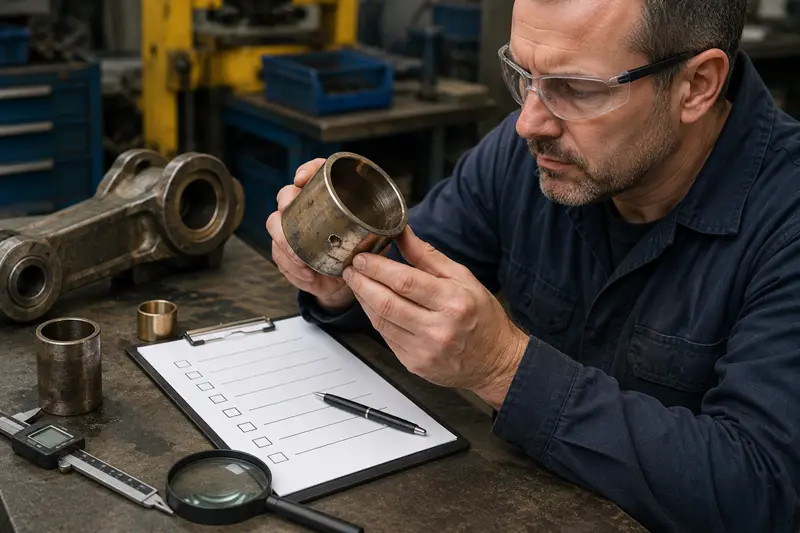
In my years of manufacturing, I can tell you that even with the best planning, problems can happen. A material might behave unexpectedly, or an unforeseen operating condition can cause an issue. The defining quality of a top-tier supplier is what they do next. A poor supplier will become defensive. They'll say, "We made it to your print," and shift the blame. A great supplier sees a problem as an opportunity to prove their expertise. They become a partner in troubleshooting. They will ask for data, analyze the failed parts, and work with your engineering team to find a solution. They will investigate everything from the shaft's surface finish to the actual loads in the application. This problem-solving mindset is invaluable. It shows they are committed to a long-term relationship and are confident in their ability to provide solutions, not just products.
Why Verify Production Consistency, Not Just Samples?
The sample you received was perfect and passed every test. You placed a large order with confidence. But the first mass production batch arrives with high defect rates, stalling your assembly line.
A perfect sample only proves a supplier can make one good part. For OEM projects, you need thousands. You must verify their capacity for mass production by checking process stability and batch-to-batch consistency records.
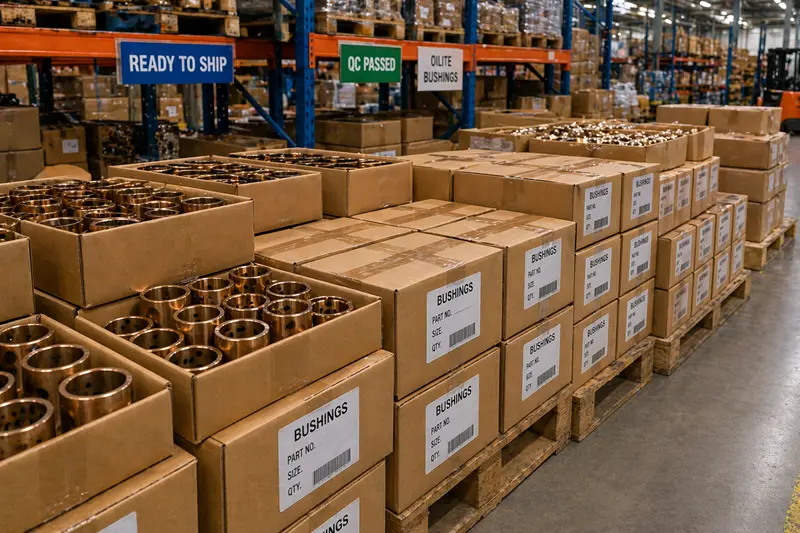
This is one of the most common and costly mistakes I see buyers make. They fall in love with a sample without investigating the supplier's ability to replicate it at scale. Making one perfect bushing is an act of craftsmanship. Making 10,000 identical bushings is an act of industrial science.[^7] It requires stable processes, well-maintained machinery, and rigorous controls. To verify this, you should ask about their actual production capabilities. What is their monthly capacity? How do they ensure the first piece of a batch is identical to the last? Ask to see their production process control plans or batch inspection records.[^8] A confident manufacturer will have this data readily available. It demonstrates that their quality is built into the process, not just inspected at the end. Remember, you are buying a production stream, not just a single part.
Conclusion
Verifying a manufacturer means checking their engineering, quality systems, and production consistency.[^9] A reliable partner solves application problems, delivering long-term value that goes far beyond a single successful sample.
[^1]: "What does a manufacturing engineer do? Read this to find out!", https://insideuni.uni.edu/stem/what-does-manufacturing-engineer-do-read-find-out. This source outlines key criteria for assessing manufacturing partners, including engineering expertise, quality control systems, and mass production capabilities. Evidence role: expert_consensus; source type: education. Supports: Evaluating these aspects ensures you find a reliable manufacturing partner.. [^2]: "How can I distinguish manufacturers from trading ...", https://www.v-trust.com/de/blog/how-can-i-distinguish-manufacturers-from-trading-companies. This source explains how a supplier's inability to detail their manufacturing process may indicate they are a trading company rather than a manufacturer. Evidence role: mechanism; source type: education. Supports: Suppliers unable to explain their manufacturing process may not be the actual producers.. [^3]: "Production of pins and bushes - process and applications - Radmot", https://radmot.com/blog/production-of-pins-and-bushes. This source explains the distinct manufacturing processes required for various types of bushings, such as sintering for powdered metal bushings and casting for bronze bushings. Evidence role: mechanism; source type: education. Supports: Different types of bushings require specific production methods.. [^4]: "[PDF] A Discussion on Supplier Selection Modeling Approaches", https://digitalcommons.odu.edu/cgi/viewcontent.cgi?article=1010&context=msvcapstone. This source supports the importance of discussing technical specifications over commercial terms when selecting a manufacturing partner. Evidence role: expert_consensus; source type: education. Supports: Focusing on technical details helps identify true manufacturers over intermediaries.. [^5]: "Quality assurance: Importance of systems and standard operating ...", https://pmc.ncbi.nlm.nih.gov/articles/PMC3088954/. This source highlights the importance of documented procedures in quality control systems for ensuring production consistency. Evidence role: mechanism; source type: education. Supports: Documented procedures are essential for maintaining quality control in manufacturing.. [^6]: "The Risks of Skipping Quality Control - GQC.io", https://www.gqc.io/articles/the-risks-of-skipping-quality-control. This source discusses the risks of working with suppliers lacking robust quality control systems, particularly for OEM projects. Evidence role: mechanism; source type: education. Supports: Suppliers without detailed QC systems pose risks to production quality and consistency.. [^7]: "How Does Standard Work Ensure Consistency in Manufacturing?", https://www.orcalean.com/article/ensuring-consistency-across-shifts:-the-power-of-standard-work-in-manufacturing. This source discusses the challenges and requirements for achieving production consistency in manufacturing. Evidence role: mechanism; source type: education. Supports: Mass production consistency requires stable processes and rigorous controls.. [^8]: "Batch production record checklist - Department of Cannabis Control", https://www.cannabis.ca.gov/licensees/manufacturing/batch-production-record-checklist/. This source highlights the importance of reviewing production control plans and batch inspection records to verify manufacturing consistency. Evidence role: mechanism; source type: education. Supports: Production control plans and batch inspection records are essential for verifying manufacturing consistency.. [^9]: "[PDF] CLIA Verification of Performance Specifications - CMS", https://www.cms.gov/regulations-and-guidance/legislation/clia/downloads/6064bk.pdf. This source outlines the key aspects to verify when selecting a manufacturing partner, including engineering, quality systems, and production consistency. Evidence role: expert_consensus; source type: education. Supports: Verifying these aspects ensures a reliable manufacturing partner..